
Riding a motorcycle in adverse weather requires sharp decision-making. This lesson provides a structured framework for assessing risks, evaluating road conditions, and making informed choices. Building on previous topics, it prepares you to handle challenging weather safely, directly relevant to the Category A theory exam.

Lesson content overview
Riding a motorcycle offers a unique sense of freedom, but it also demands a heightened level of awareness and skill, especially when facing adverse weather or challenging seasonal conditions. For anyone preparing for the Polish Motorcycle Theory – Comprehensive Licence Preparation for Category A, understanding how to assess risks and make sound decisions in these situations is not just recommended, it is crucial for safety and legal compliance. This lesson provides a structured approach to managing the inherent dangers of riding in less-than-ideal environments.
Adverse conditions – such as heavy rain, snow, ice, dense fog, or strong winds – significantly alter the dynamics of motorcycle control, braking, and visibility. These changes can rapidly increase the probability of losing control, leading to serious accidents. Therefore, every rider must develop the ability to anticipate hazards, adjust their riding style proactively, and make informed choices to mitigate risks. This proactive approach not only enhances personal safety but also ensures compliance with Polish traffic law, which mandates specific adjustments under various challenging conditions.
Adverse weather and seasonal conditions profoundly affect a motorcycle's stability, grip, and the rider's ability to perceive and react to hazards. Integrating scientific knowledge, legal requirements, and practical experience is essential for making informed go/no-go decisions and dynamic adjustments during a ride.
The underlying logic for risk mitigation stems from basic physics and safety reasoning. Poor traction, limited visibility, and altered vehicle dynamics drastically increase the risk of losing control. For instance, the friction coefficient between tires and the road surface, which is critical for braking and cornering, can drop significantly on wet or icy roads. Aerodynamic forces, particularly cross-winds, can also destabilize a motorcycle. Polish traffic law (Prawo o ruchu drogowym) reinforces these safety principles by mandating specific actions, such as reduced speed and the use of appropriate lighting, to protect all road users when conditions are unfavorable.
This lesson builds upon foundational knowledge covered in earlier units, specifically Speed Management, Stopping Distances, and Braking (Unit 5) and Safe Riding in Different Traffic Environments (Unit 6), and serves as a vital precursor to Hazard Perception and Defensive Riding Strategies (Unit 8).
Effective risk assessment and decision-making rely on a set of core principles that guide a motorcyclist's actions before and during a ride in adverse conditions.
The Hazard Perception Framework is a systematic mental process designed to help riders quickly identify, evaluate, and prioritize environmental and vehicular hazards. This framework provides a repeatable structure for rapid decision-making, especially under stressful or evolving conditions. By consistently applying this framework, riders learn to scan their environment, anticipate potential dangers (such as slippery surfaces or strong gusts of wind), and adjust their speed, position, or other riding parameters before a hazard fully materializes.
A safety margin refers to the extra distance or time buffer that a rider adds to their calculated stopping distance or reaction time. This buffer is crucial for accounting for uncertainties, such as an unexpectedly wet patch on the road, a slower reaction from another driver, or a sudden change in road grip. By maintaining a generous safety margin, a rider ensures they can stop safely even if conditions deteriorate or an unforeseen event occurs. This principle directly influences critical decisions like following distance, chosen speed, and when to overtake other vehicles.
The Go/No-Go Decision Matrix is a structured, binary assessment tool that uses predefined thresholds to determine whether it is safe to commence or continue a ride. These thresholds typically include factors like current and forecasted visibility, available traction, the rider's physical and mental fitness, and the readiness of their equipment. Applying this matrix helps prevent exposure to unacceptable levels of risk, directly informing whether a trip should be postponed, a route altered, or specific riding constraints (e.g., significantly reduced speed) imposed.
Dynamic speed adjustment involves the continuous modulation of a motorcycle's speed based on a real-time assessment of various factors. These factors include the available road grip, the prevailing traffic flow, and any changes in weather conditions. The purpose is to align the motorcycle's kinetic energy with the available friction, thereby maintaining optimal control. This principle directly affects how a rider uses the throttle, selects gears, and determines braking points, requiring constant attention to the evolving environment.
Contingency planning means having predefined alternative actions ready to be executed if conditions unexpectedly worsen. This might include identifying safe pull-over spots, planning alternative routes to avoid particularly hazardous sections, or having an emergency communication plan. By mentally rehearsing these actions and knowing safe locations to stop, riders can significantly reduce their reaction time during emergencies, enabling a calm and controlled response rather than panic.
Before embarking on any ride, especially one that might encounter adverse conditions, it is vital to integrate reliable meteorological data into the planning process. Weather forecast integration involves reviewing information on temperature, precipitation probability, wind speed, and direction. This allows riders to anticipate road conditions and plan accordingly, potentially shifting major risk assessments to the planning phase. This proactive step can influence decisions on route choice, timing of the ride, and essential equipment preparation, such as selecting appropriate tires or clothing.
Motorcyclists must continuously evaluate the current state of the pavement – whether it's dry, wet, oily, slushy, snowy, or icy. This assessment uses both visual cues (e.g., glistening surfaces, tire tracks, puddles) and, where safe to do so, subtle tactile feedback through the handlebars and seat. Understanding the current grip level enables the appropriate selection of speed, braking technique, and cornering angle. This dynamic assessment is crucial as conditions can change rapidly over short distances.
To effectively apply the core principles, motorcyclists must understand several key concepts that define and influence safe riding in challenging environments.
Weather forecast assessment involves more than just glancing at a symbol. It requires a detailed review and interpretation of meteorological data to anticipate how conditions will translate to the road. This includes considering short-term forecasts (0-6 hours) for immediate trip planning and medium-term forecasts (6-24 hours) for longer journeys or multi-day rides.
Always check multiple reliable weather sources before a ride, and note not just precipitation but also temperature, especially if it's near freezing, which indicates potential black ice.
Practical Meaning: Based on the expected conditions, a rider decides whether to ride, delay departure, or select an alternate route. For instance, if a forecast predicts an 80% chance of heavy snow overnight, a prudent rider might choose to postpone a planned morning trip or ensure their motorcycle is equipped with appropriate winter tires if the journey is unavoidable.
Associated Rules: Polish law requires the use of headlights whenever visibility is reduced, typically defined as less than 100 metres, or during any precipitation (rain, snow, fog, etc.). This is vital for being seen by other road users.
Common Misunderstandings: A frequent mistake is assuming that "light rain" has no significant impact on grip. In reality, even light precipitation, especially after a dry spell, can mix with oil and dust on the road surface to create a surprisingly slippery film, drastically reducing the friction coefficient.
The road surface condition is the most direct factor influencing tire-road friction, or traction. It dictates how much grip your tires have for accelerating, braking, and cornering.
Practical Meaning: Understanding the surface condition directly determines safe cornering speed, required braking distance, and appropriate throttle response. After a sudden rain shower, for example, a rider should anticipate a shining, potentially oily surface and immediately reduce speed and increase following distance.
Associated Rules: In Poland, there is a mandatory obligation for motorcycles to be equipped with tires bearing the "M+S" (Mud & Snow) marking during specific winter months (typically 1 November to 31 March) on certain state road categories. This regulation is crucial for improving grip on cold, icy, or snowy surfaces.
Common Misunderstandings: Many riders mistakenly believe that modern tires or ABS will completely compensate for ice. While these technologies improve safety, physics dictates that significant friction loss on ice is non-linear and cannot be entirely overcome by vehicle technology or rider skill.
Visibility range refers to the distance at which an object—be it a road sign, another vehicle, a pedestrian, or an obstacle—can be clearly seen under current conditions. This range is critical for determining a safe speed, as you must be able to stop within the distance you can see.
Practical Meaning: If dense fog reduces visibility to only 30 metres, a rider must limit their speed to a level that guarantees they can stop completely within that 30-metre range, even considering their perception-reaction time and the reduced traction.
Associated Rules: Polish law mandates the minimum use of headlights at all times during the night, as well as during rain, fog, and snowfall. This is to ensure the vehicle is visible to others and to illuminate the road ahead.
Never assume your vehicle's lights alone guarantee sufficient visibility. The atmospheric conditions (fog, heavy rain) themselves can drastically limit the effective range, even with powerful lights.
Stopping distance is the total distance a motorcycle travels from the moment a hazard is perceived until the motorcycle comes to a complete stop. It comprises two main components:
In adverse conditions, both components increase. Perception-reaction time lengthens due to reduced visibility, and braking distance increases significantly due to lower traction.
Practical Meaning: A rider must add a substantial safety margin (e.g., 30-50% extra) to their standard stopping distance calculation to account for these uncertainties. For example, if a motorcycle can brake from 80 km/h in approximately 36 metres on dry asphalt, on a wet road, this distance might increase to 60 metres or more. Adding a 15-metre safety margin would mean needing 75 metres of clear road ahead to stop safely.
Associated Rules: Polish law requires maintaining a safe following distance. While no specific numerical value (like a two-second rule) is explicitly codified, legal jurisprudence interprets it as a distance sufficient to stop safely without endangering the preceding vehicle. This distance must be actively increased in adverse conditions.
The traction coefficient (µ) is a fundamental physics concept critical to motorcycle safety. It is the ratio of the maximum friction force between the tire and the road surface to the normal force pressing the tire down. This coefficient varies significantly with:
Practical Meaning: The traction coefficient directly determines the maximum achievable cornering speed. The formula v = √(µ * g * r) (where v is velocity, µ is traction coefficient, g is acceleration due to gravity, and r is cornering radius) shows that a lower µ value drastically reduces the safe cornering speed. For instance, with µ = 0.5 and a cornering radius of 30 metres, the safe cornering speed is approximately 38 km/h. Any attempt to exceed this could lead to a loss of grip.
Never assume that higher engine power can compensate for low traction. Physics dictates that grip is limited by the traction coefficient, regardless of engine output. Applying too much power on a low-grip surface will only cause wheelspin and loss of control.
Cross-wind refers to a lateral force exerted by moving air masses that can significantly disturb a motorcycle’s balance, especially in open areas, on bridges, or at higher speeds.
Practical Meaning: When encountering strong cross-winds, a rider must actively countersteer (pushing the handlebar on the side the wind is coming from) and anticipate the motorcycle being pushed sideways. Speed may need to be significantly reduced to maintain stability and control. For example, riding on a bridge with a 25 km/h cross-wind might require reducing speed by 30% and adopting a slightly wider lane position to allow for lateral movement.
Associated Rules: While there is no explicit Polish regulation for specific speed reductions in cross-winds, road safety authorities universally recommend reducing speed to maintain control. Motorcycles, due to their lighter weight and exposed profile, are particularly vulnerable to cross-winds compared to larger vehicles.
The Go/No-Go Decision Matrix provides a structured checklist for assessing ride feasibility under specific conditions. It combines several critical factors:
Subcategories:
Practical Meaning: This matrix provides a clear, objective outcome. If visibility is, for example, 30 metres (a "Red Light" condition for visibility) and traction is low (another "Red Light"), the matrix dictates a "Red Light" overall, meaning the ride should be postponed.
Associated Rules: Riders have a legal obligation to ensure their motorcycle is properly equipped, for instance, with appropriate winter tires and functional lights during the winter season. Ignoring these requirements would automatically push the decision towards a "Red Light."
Even with the best preparation, conditions can deteriorate unexpectedly. Contingency planning involves pre-identifying alternative actions to take if this happens.
Practical Meaning: This preparation enables rapid, calm, and informed actions when conditions worsen beyond planned thresholds. Before riding a mountain pass, a rider might mentally note a specific rest area with lighting as a designated stop if dense fog suddenly rolls in.
Associated Rules: Polish law mandates that riders carry a functional means of communication (e.g., a mobile phone) and wear appropriate reflective clothing, especially during night or reduced visibility, to enhance safety in an emergency.
Always inform a trusted person about your route and estimated arrival time, especially for longer rides or those in remote areas. This can be crucial for your safety in case of an unforeseen event.
Adhering to specific Polish traffic laws is paramount when riding in adverse conditions. These regulations are designed to minimize risks for all road users.
| Rule | Statement | Applicability | Legal Status | Rationale |
|---|---|---|---|---|
| Mandatory Headlights | Headlights must be on at all times when visibility is reduced (e.g., less than 100 metres) or during rain, snow, fog, or at night. | All road conditions where visibility is limited. | Mandatory (Polish Traffic Code – Art. 55 § 1). | Ensures the motorcycle is visible to other road users, reducing collision risk. |
| Winter Tire Obligation | Motorcycles must be equipped with tires bearing the "M+S" (Mud & Snow) marking during winter months (1 November–31 March) on certain state roads. | Mandatory during the defined period on specified road categories. | Mandatory (Ustawa o Ruchu Drogowym). | Improves grip, braking performance, and steering response on cold, icy, or snowy surfaces. |
| Speed Reduction in Adverse Conditions | Drivers must adjust speed so that they can stop within the distance they can see; speed limits may be further reduced by local signage during adverse weather. | All road users, particularly relevant on motorways and rural roads. | Mandatory (Rule of reasonable speed – Art. 82). | Aligns kinetic energy with available friction and visible stopping distance, preventing overdriving one's headlights. |
| Following Distance | The distance to the vehicle ahead must be sufficient to stop safely under current conditions. This distance must be actively increased in adverse weather. | Applies to all following maneuvers. | Mandatory (Polish Traffic Code – Art. 84). | Prevents rear-end collisions by providing adequate space for reaction and braking. |
| Use of Horn | The horn may only be used to warn of imminent danger. Excessive or unnecessary use, especially in reduced visibility conditions like fog, is prohibited. | Any situation where visibility is reduced, or as a warning. | Mandatory (Art. 41 § 1). | Prevents confusion, unnecessary noise pollution, and distraction for other drivers. |
| Vehicle Lighting while Moving | In rain, snow, or fog, both low-beam (dipped) headlights and front fog lights (if equipped) may be used while the vehicle is in motion. Rear fog lights are for visibility < 50m. | Nighttime and reduced-visibility conditions. | Mandatory (Art. 55 § 1, Art. 55 § 4). | Improves road illumination directly ahead and enhances vehicle detection by others, ensuring appropriate light use for specific conditions. |
Even experienced riders can make mistakes in adverse conditions. Recognizing and actively avoiding these common errors is vital for safety.
Risk assessment is not a one-size-fits-all process. It must adapt to specific conditions, road types, vehicle states, and interactions with other road users.
Understanding the direct links between actions, conditions, and outcomes is key to developing safe riding habits.
Let's examine how these principles apply in real-world riding situations.
Mastering risk assessment and decision-making in adverse conditions involves a multi-faceted approach, integrating preparation, real-time evaluation, and proactive adjustments.
Final Checklist Before Riding in Potential Adverse Conditions:
This lesson teaches motorcyclists a structured approach to risk assessment in adverse conditions, combining the Hazard Perception Framework, Go/No-Go Decision Matrix, and dynamic speed adjustment principles. Key factors covered include traction coefficients for different surfaces (dry, wet, snow, ice), visibility-based speed limits, and the physics linking kinetic energy to available friction. Critical Polish legal requirements are outlined, including mandatory headlights when visibility is below 100 metres, the M+S winter tire obligation (1 November to 31 March), and the requirement to maintain sufficient following distance. The lesson includes practical scenarios demonstrating correct and incorrect responses to heavy rain, frost on mountain passes, and cross-wind situations, helping riders develop the judgment needed for both the Category A theory exam and real-world safe riding.
A short set of high-value points that capture the most important learning from this lesson.
Apply the Hazard Perception Framework to systematically identify, evaluate, and prioritize environmental and vehicular hazards before they fully materialize.
Use the Go/No-Go Decision Matrix with criteria for visibility, traction, rider fitness, equipment status, and legal compliance to make objective ride/no-ride decisions.
Maintain a 30-50% safety margin beyond your calculated stopping distance in adverse conditions to account for unexpected grip loss or delayed reactions.
Reduce speed to ensure you can always stop within your visible range; visibility in fog or heavy rain directly limits your maximum safe speed.
Plan contingencies before riding by identifying safe pull-over locations, alternate routes, and emergency contacts for when conditions deteriorate unexpectedly.
Explore all units and lessons included in this driving theory course.
Traction coefficients drop dramatically: dry (0.7-0.9), wet (0.4-0.6), snow (<0.3), ice (<0.2); lower grip means proportionally longer stopping distances and lower safe cornering speeds.
Winter M+S tires are mandatory in Poland from 1 November to 31 March on certain state roads; summer tires harden below 7°C and lose grip even without visible snow or ice.
Polish law mandates headlights whenever visibility is reduced below 100 metres or during any precipitation (rain, snow, fog) to ensure visibility to other road users.
Hydroplaning occurs when speed creates a water layer between tire and road, eliminating steering and braking control; reduce speed significantly in heavy rain or standing water.
Cross-winds above 30 km/h can cause significant instability; reduce speed, lean gently into the wind, and maintain a wider lane position for buffer space.
Riding at the posted speed limit in heavy rain because it feels manageable, without recognizing that standing water can cause hydroplaning where steering and brakes become ineffective.
Continuing to ride with summer tires once temperatures drop below 7°C, not realizing that hardened rubber compounds dramatically reduce grip even without visible ice or snow.
Using high-beam headlights in rain, fog, or snow, which reflects off precipitation particles and creates glare that reduces the rider's own visibility instead of improving it.
Assuming modern tires or ABS will compensate for ice; while these technologies improve safety, physics dictates that friction loss on ice is non-linear and cannot be fully overcome.
Failing to check tire pressure before cold-weather rides; under-inflated tires have a distorted contact patch that reduces grip and increases the risk of instability or blowout.
Lesson content overview
A short set of high-value points that capture the most important learning from this lesson.
Apply the Hazard Perception Framework to systematically identify, evaluate, and prioritize environmental and vehicular hazards before they fully materialize.
Use the Go/No-Go Decision Matrix with criteria for visibility, traction, rider fitness, equipment status, and legal compliance to make objective ride/no-ride decisions.
Maintain a 30-50% safety margin beyond your calculated stopping distance in adverse conditions to account for unexpected grip loss or delayed reactions.
Reduce speed to ensure you can always stop within your visible range; visibility in fog or heavy rain directly limits your maximum safe speed.
Plan contingencies before riding by identifying safe pull-over locations, alternate routes, and emergency contacts for when conditions deteriorate unexpectedly.
Explore all units and lessons included in this driving theory course.
Traction coefficients drop dramatically: dry (0.7-0.9), wet (0.4-0.6), snow (<0.3), ice (<0.2); lower grip means proportionally longer stopping distances and lower safe cornering speeds.
Winter M+S tires are mandatory in Poland from 1 November to 31 March on certain state roads; summer tires harden below 7°C and lose grip even without visible snow or ice.
Polish law mandates headlights whenever visibility is reduced below 100 metres or during any precipitation (rain, snow, fog) to ensure visibility to other road users.
Hydroplaning occurs when speed creates a water layer between tire and road, eliminating steering and braking control; reduce speed significantly in heavy rain or standing water.
Cross-winds above 30 km/h can cause significant instability; reduce speed, lean gently into the wind, and maintain a wider lane position for buffer space.
Riding at the posted speed limit in heavy rain because it feels manageable, without recognizing that standing water can cause hydroplaning where steering and brakes become ineffective.
Continuing to ride with summer tires once temperatures drop below 7°C, not realizing that hardened rubber compounds dramatically reduce grip even without visible ice or snow.
Using high-beam headlights in rain, fog, or snow, which reflects off precipitation particles and creates glare that reduces the rider's own visibility instead of improving it.
Assuming modern tires or ABS will compensate for ice; while these technologies improve safety, physics dictates that friction loss on ice is non-linear and cannot be fully overcome.
Failing to check tire pressure before cold-weather rides; under-inflated tires have a distorted contact patch that reduces grip and increases the risk of instability or blowout.
Explore search topics learners often look for when studying Risk Assessment and Decision-Making in Adverse Conditions. These topics reflect common questions about road rules, driving situations, safety guidance, and lesson level theory preparation for learners in Poland.
Browse additional driving theory lessons that cover connected traffic rules, road signs, and common driving situations related to this topic. Improve your understanding of how different rules interact across everyday traffic scenarios.
Understand the Go/No-Go Decision Matrix for determining if it's safe to ride in adverse weather. Learn to assess visibility, traction, and rider fitness for safe Polish motorcycle theory preparation.

This lesson focuses on the specific challenges of riding in rain, detailing how wet road surfaces reduce tyre grip and increase braking distances. Learners will learn about hydroplaning risk, the importance of deep tyre tread, and the need for smooth throttle and brake modulation to maintain stability. The content also covers visibility concerns, such as proper headlamp use and the selection of waterproof clothing, so riders can safely navigate wet conditions.
In this lesson, learners examine how environmental conditions such as rain, wind, ice, and reduced visibility necessitate adjustments in riding speed. The content provides guidelines for assessing road surfaces, judging appropriate cornering speeds, and reducing speed proactively in adverse weather. Learners will understand the impact of temperature on tyre performance and the need to increase safety margins, mastering adaptive speed management to maintain control.
This lesson addresses environmental factors that impact rider visibility, such as low light, night conditions, fog, and glare from headlights. Learners will explore strategies for riding safely in reduced visibility, including the use of reflective gear, proper headlamp settings, and appropriate eye protection. The content also covers hazard detection techniques in adverse weather and how to adjust speed to maintain safety, enhancing rider safety across all conditions.

In this lesson, learners explore the complexities of winter riding, including snow-covered roads, ice patches, and the impact of low temperatures on both the rider and the motorcycle. The content addresses the use of ABS and traction control on slippery surfaces and the need for appropriate tyre pressure. Learners will also learn about appropriate clothing layers, frostbite prevention, and how to adjust riding technique for safe cornering and braking on ice.

This lesson examines how cross-winds affect motorcycle stability and control, providing strategies for compensating wind gusts through rider body positioning and throttle management. Learners will understand the aerodynamic effects of wind on the bike, how to position within the lane to minimize drift, and techniques for maintaining balance during sudden gusts. The content also covers the influence of wind on braking distances and the importance of adjusting speed.
In this lesson, learners study warning signs that alert drivers to potential hazards, focusing on those that are particularly relevant to motorcyclists. The content includes signs indicating curves, slippery surfaces, animal crossings, tram tracks, and construction zones, each requiring specific riding adjustments. The lesson teaches riders how to interpret these signs to anticipate hazards, adjust speed appropriately, and maintain a safe distance from potential dangers.

In this lesson, learners explore riding on rural and countryside roads, where road markings may be sparse and surface conditions varied. The content covers safe overtaking in single-lane sections, interaction with agricultural vehicles and animals, and the handling of gravel or uneven surfaces. Learners will also study the importance of anticipating curves and adjusting speed to light conditions, equipping them with the skills needed for safe countryside travel.
This lesson focuses on the specific challenges of driving in rainy conditions. It explains the phenomenon of hydroplaning, where tires lose contact with the road surface, and how to prevent it by reducing speed. The importance of good tire condition, effective windscreen wipers, and extending following distances is also covered in detail.

This lesson teaches drivers how to adapt their speed, following distance, and control inputs to safely navigate adverse conditions. It covers the challenges posed by rain, snow, and ice, explaining the loss of traction and the increased risk of skidding or aquaplaning. The content provides specific strategies for driving in fog, which reduces visibility, and strong crosswinds, which can affect the stability of a high-sided vehicle, promoting a proactive and defensive driving mindset.

This lesson outlines strategies for planning escape routes and adopting protective positioning to avoid potential collisions. Learners will study the concept of a defensive riding line that maximizes visibility and provides an optimal safety corridor. The content emphasizes maintaining adequate distance buffers, choosing lanes that reduce exposure to hazards, and preparing for emergency maneuvers such as swift swerves, allowing riders to react quickly in critical situations.
Explore the physics behind motorcycle control in adverse weather and how Polish traffic laws apply. Understand traction limits, stopping distances, and legal requirements for safer riding.
In this lesson, learners examine how environmental conditions such as rain, wind, ice, and reduced visibility necessitate adjustments in riding speed. The content provides guidelines for assessing road surfaces, judging appropriate cornering speeds, and reducing speed proactively in adverse weather. Learners will understand the impact of temperature on tyre performance and the need to increase safety margins, mastering adaptive speed management to maintain control.
This lesson focuses on the specific challenges of riding in rain, detailing how wet road surfaces reduce tyre grip and increase braking distances. Learners will learn about hydroplaning risk, the importance of deep tyre tread, and the need for smooth throttle and brake modulation to maintain stability. The content also covers visibility concerns, such as proper headlamp use and the selection of waterproof clothing, so riders can safely navigate wet conditions.
In this lesson, learners explore the complexities of winter riding, including snow-covered roads, ice patches, and the impact of low temperatures on both the rider and the motorcycle. The content addresses the use of ABS and traction control on slippery surfaces and the need for appropriate tyre pressure. Learners will also learn about appropriate clothing layers, frostbite prevention, and how to adjust riding technique for safe cornering and braking on ice.
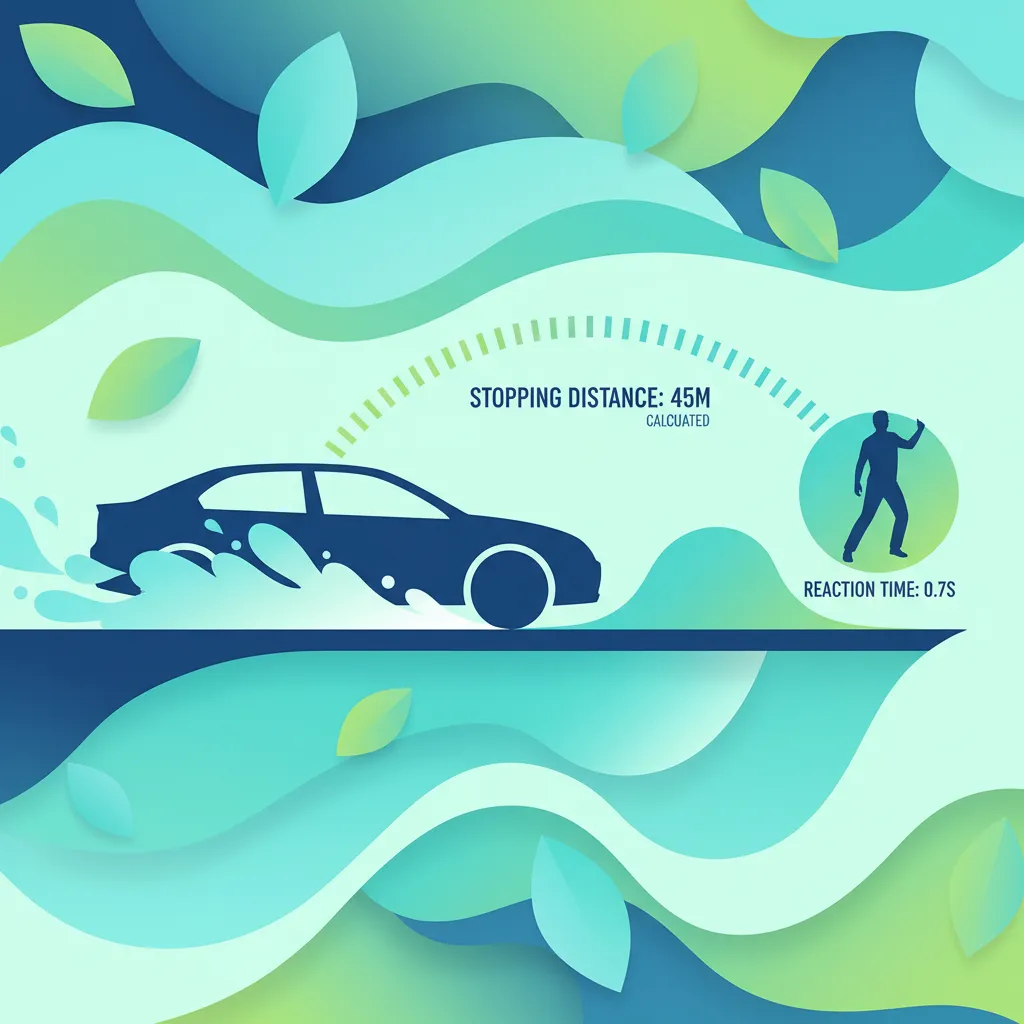
In this lesson, learners study the physics behind stopping distances, breaking it down into perception-reaction time and braking distance components. The content explains how speed, vehicle mass, and road surface friction influence the total stopping distance. Learners will practice calculating stopping distances under different conditions and understand the importance of maintaining a safety margin by improving hazard perception and rider response.
This lesson addresses environmental factors that impact rider visibility, such as low light, night conditions, fog, and glare from headlights. Learners will explore strategies for riding safely in reduced visibility, including the use of reflective gear, proper headlamp settings, and appropriate eye protection. The content also covers hazard detection techniques in adverse weather and how to adjust speed to maintain safety, enhancing rider safety across all conditions.

This lesson teaches the crucial concept that drivers must always adapt their speed to the current conditions. It explains how factors like rain, fog, ice, heavy traffic, and poor visibility reduce safety margins and require a lower speed than the posted limit. This principle of defensive driving is essential for preventing accidents in challenging situations.
In this lesson, learners explore riding on rural and countryside roads, where road markings may be sparse and surface conditions varied. The content covers safe overtaking in single-lane sections, interaction with agricultural vehicles and animals, and the handling of gravel or uneven surfaces. Learners will also study the importance of anticipating curves and adjusting speed to light conditions, equipping them with the skills needed for safe countryside travel.
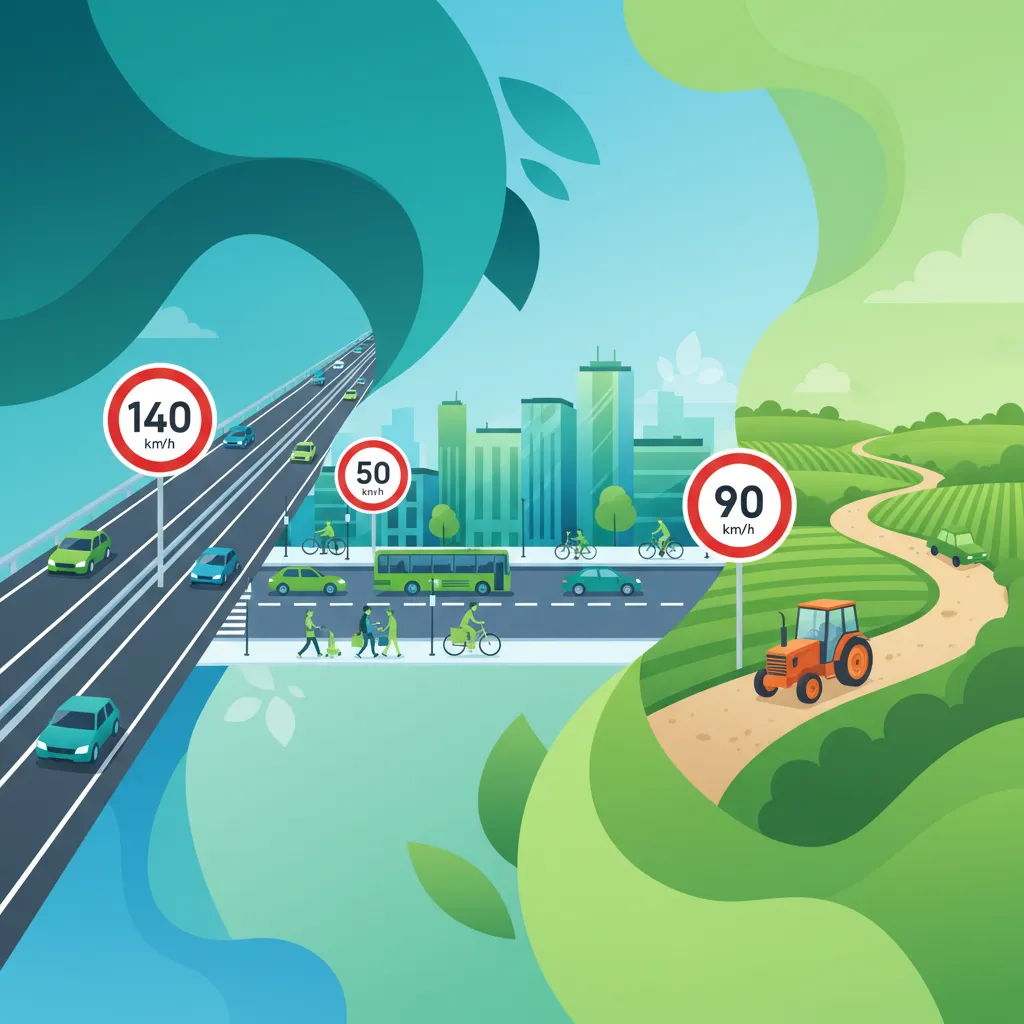
This lesson provides a comprehensive overview of the statutory speed limits applicable to different categories of Polish roads, including urban areas, residential zones, rural roads, highways, and motorways. Learners will examine the visual cues of speed limit signs and learn how speed limit transitions affect rider behavior. The content also covers how enforcement mechanisms impact compliance and the importance of real-time speed adaptation to remain within legal thresholds.
This lesson focuses on the specific challenges of driving in rainy conditions. It explains the phenomenon of hydroplaning, where tires lose contact with the road surface, and how to prevent it by reducing speed. The importance of good tire condition, effective windscreen wipers, and extending following distances is also covered in detail.
In this lesson, learners examine the core legal obligations that apply to motorcyclists operating on Polish roads, including the mandatory use of helmets, periodic vehicle inspections, and the necessity of valid insurance and registration. The content details the classification of traffic offences and explains the associated penalty system, including fines, demerit points, and potential licence suspension. Additionally, the lesson outlines procedural requirements for accident reporting and interaction with law enforcement, providing a comprehensive view of a rider’s legal responsibilities.
Find clear answers to common questions learners have about Risk Assessment and Decision-Making in Adverse Conditions. Learn how the lesson is structured, which driving theory objectives it supports, and how it fits into the overall learning path of units and curriculum progression in Poland. These explanations help you understand key concepts, lesson flow, and exam focused study goals.
Polish law requires all road users, including motorcyclists, to adapt their behaviour to prevailing conditions. While there isn't a specific law stating 'don't ride in snow', riders are legally responsible for maintaining control and avoiding accidents. Failing to adjust speed or position appropriately in adverse weather, leading to an incident, can be considered negligence. This lesson helps you understand how to meet that responsibility proactively.
Common mistakes tested in the theory exam include maintaining excessive speed in rain or fog, underestimating stopping distances on wet or icy surfaces, poor lane positioning in low visibility, and not recognizing the reduced grip from road debris or frost. This lesson focuses on the decision-making process behind avoiding these errors.
Visual cues are important: look for darkness of the tarmac (wetter = less grip), spray from other vehicles, or ice patches (often on shaded areas or bridges). Feel your tyres – if they feel like they're sliding slightly even at low speed, grip is compromised. Sound also plays a role; a 'slapping' noise from tyres on a wet road indicates significant water. This lesson helps integrate these observations into a risk assessment.
A 'no-go' decision is warranted if visibility is extremely poor (e.g., dense fog, heavy snowstorm), road surfaces are heavily compromised with ice or standing water, or if you feel unwell or fatigued, diminishing your ability to concentrate and react. If your assessment indicates a high probability of losing control or being unable to react to hazards, it is safer not to ride. Trust your instincts and prioritize safety over commitment.
Engine braking is a valuable tool for smooth deceleration without solely relying on the brakes, which can be less effective on slippery surfaces. In adverse conditions, using a combination of engine braking and gentle, controlled application of the brakes (especially if ABS is equipped) is crucial. This lesson emphasizes how to manage speed smoothly and safely, integrating engine braking into your overall strategy.
Build custom practice sessions tailored precisely to your needs. Focus on areas requiring improvement, review specific Polish road signs, or master complex traffic rules to ensure full preparation for your official driving license exam.