
This lesson focuses on crucial seasonal maintenance and pre-ride checks for your motorcycle, a key component of the Category A theory preparation. Understanding how to keep your bike in optimal condition throughout the year, especially in Poland's varied climate, is vital for both exam success and safe riding. We'll cover essential checks that ensure your motorcycle performs reliably in all seasons.
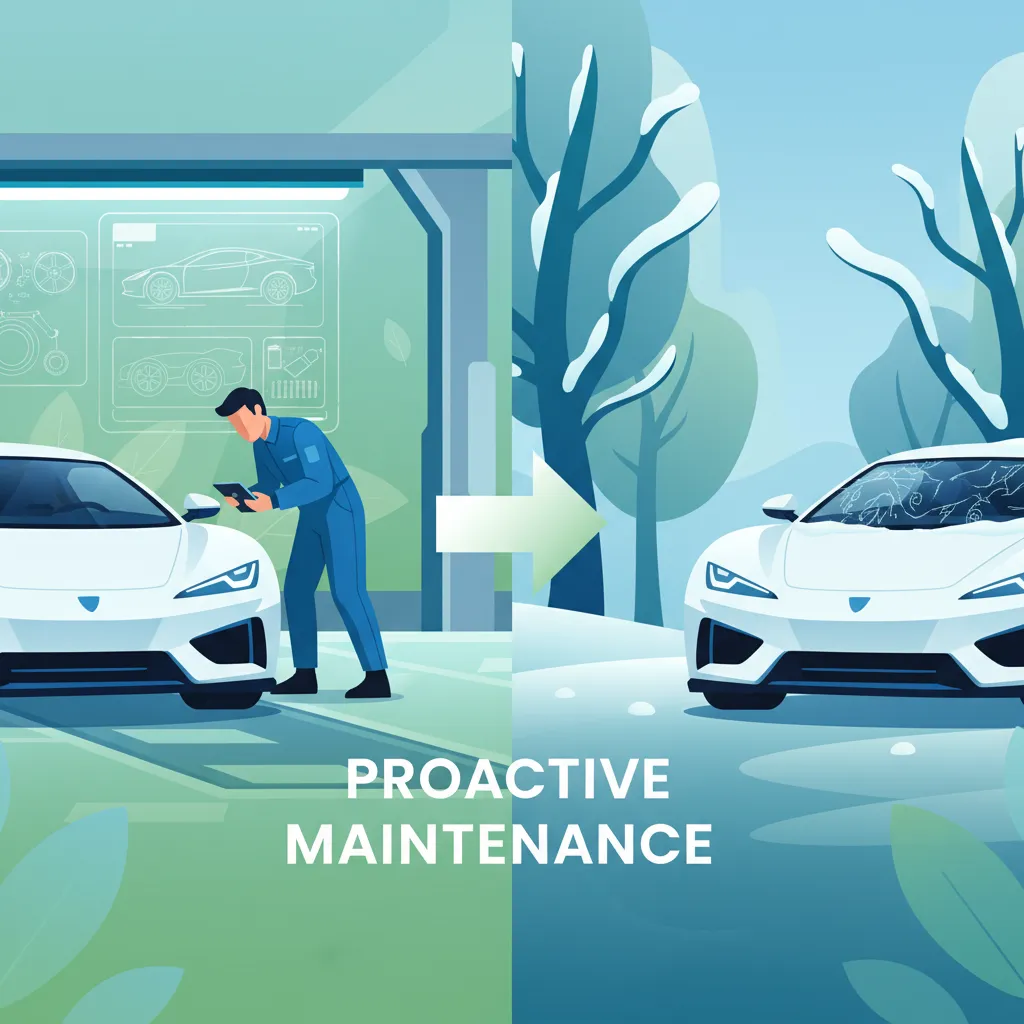
Lesson content overview
Motorcycling in Poland, much like anywhere else, presents diverse challenges across the changing seasons. From the scorching heat of summer to the freezing temperatures of winter, your motorcycle constantly battles the elements. Ensuring your machine is in optimal condition throughout the year is not just about performance; it is crucial for your safety and legal compliance under Polish traffic law, the Prawo o ruchu drogowym.
This comprehensive guide, part of your Polish Motorcycle Theory – Comprehensive Licence Preparation for Category A, delves into the essential maintenance tasks and checks required to keep your motorcycle safe and road-worthy. By understanding and implementing these seasonal adaptations, you can prevent mechanical failures, ensure optimal handling, and fulfill your legal obligations as a responsible rider.
Seasonal changes profoundly impact a motorcycle's components and overall performance. Fluctuations in temperature, humidity, and road surface conditions directly affect everything from tyre grip to engine efficiency. Regular inspection and adjustment are therefore not optional but a core responsibility of every motorcyclist.
Neglecting maintenance can lead to mechanical failures such as a tyre blow-out, brake fade, or battery loss, all of which severely compromise your ability to control the vehicle and dramatically increase the risk of a crash. Furthermore, Polish law mandates that vehicles must be kept in a condition that does not endanger other road users. Failure to maintain critical systems like tyres, brakes, or lighting can result in penalties during technical inspections (Przegląd Techniczny) or police checks.
Effective motorcycle maintenance is built upon several foundational principles that ensure safety and longevity across varying conditions.
Scheduled checks and servicing of vehicle components before a failure occurs. This approach reduces unexpected breakdowns, extends component lifespan, and helps ensure compliance with legal requirements.
Adjusting component specifications, such as tyre type and oil viscosity, to suit ambient temperatures and specific weather conditions. This strategy optimises grip, engine efficiency, and overall component durability.
A concise and repeatable list of critical safety items to verify before each journey. This routine guarantees that essential components are checked, reducing the risk of hidden faults manifesting during a ride.
Adherence to statutory requirements for vehicle fitness, including minimum tyre tread depth and valid technical inspection. Non-compliance can lead to fines, penalty points, or even vehicle impoundment.
Following the manufacturer's defined time or mileage intervals for replacing fluids, lubricants, and wear parts. This ensures performance and safety standards are maintained throughout the motorcycle’s life and helps to preserve any warranty.
Tyres are your motorcycle's only contact with the road, making their condition paramount for safety and handling. Seasonal changes heavily influence tyre performance, requiring careful attention to pressure, tread depth, and type.
Tyre pressure refers to the internal air pressure within your motorcycle tyres, typically measured in bar or psi. Maintaining the correct pressure, as recommended by the manufacturer, is crucial for optimal handling, stability, and tyre wear uniformity.
Always measure your tyre pressure when the tyres are "cold" – meaning before a ride or after the motorcycle has been stationary for at least 30 minutes. Riding even a short distance warms the tyres, causing the air inside to expand and giving an artificially high reading. Remember that front and rear tyres often require different pressures due to varying load-bearing requirements.
In colder weather, air contracts, causing tyre pressure to drop. A typical drop is about 0.1 bar per 10°C decrease in ambient temperature. Always re-check and adjust your tyre pressure after a significant temperature change, especially overnight in sub-zero conditions.
Under-inflated tyres can lead to unstable handling, increased rolling resistance, excessive heat build-up (which can cause tyre failure), and premature wear. Conversely, over-inflated tyres reduce the contact patch, leading to less grip, a harsher ride, and uneven wear. Polish road regulations require tyres to be inflated to safe levels, and under-inflated tyres can be deemed unsafe during inspections.
The tread depth of a tyre is the vertical measurement from the tyre's surface to the deepest part of its grooves. Adequate tread depth is vital for displacing water and maintaining grip on wet surfaces, preventing dangerous hydroplaning.
Polish regulations (Rozporządzenie Ministra Infrastruktury) mandate a minimum tread depth of 1 mm for motorcycles. Tyres with less than this must be replaced immediately. However, for optimal safety, especially in adverse conditions, many riders choose to replace tyres well before reaching this legal minimum.
Beyond tread depth, the selection of appropriate seasonal tyres significantly impacts safety.
Using summer tyres in cold conditions (below +5°C) can result in a significant loss of grip and increased crash risk, as their compound hardens. Conversely, using winter tyres in warm weather causes them to wear prematurely and can reduce handling precision due to their softer compound. Switching tyres seasonally ensures maximum traction and safety.
Do not use winter tyres in warm weather or summer tyres in icy conditions. This compromises both safety and tyre longevity.
A well-maintained brake system is non-negotiable for safe motorcycle operation. Regular inspection and timely replacement of brake fluid are critical.
Brake fluid is a hydraulic fluid that transmits the force from your brake lever to the calipers, engaging the brake pads. It's crucial to regularly check its level, colour, and condition. Brake fluid is hygroscopic, meaning it absorbs moisture over time. Water absorption significantly lowers the fluid's boiling point, which can lead to brake fade under heavy or prolonged braking, especially in wet or cold conditions.
Check the brake fluid level in the reservoir (usually located on the handlebars for the front brake and near the rear brake master cylinder for the rear brake). The fluid should be clear or a very light amber colour. If it appears dark amber, brown, or black, it indicates contamination and moisture absorption, necessitating immediate replacement.
Visually inspect the brake fluid reservoir. Ensure the fluid level is between the "MIN" and "MAX" marks.
Observe the colour of the fluid. It should be light amber or clear. Darker fluid suggests contamination.
Check for any leaks around the master cylinder, calipers, or brake lines.
If the fluid is dark or hasn't been changed in two years, arrange for professional replacement.
While Polish law does not specify a precise interval for brake fluid replacement, the vehicle's technical inspection (Przegląd Techniczny) may fail a motorcycle if the fluid level is low or the fluid appears visibly degraded. Manufacturers typically recommend replacing brake fluid every one to two years, regardless of mileage.
A strong and reliable battery is essential for dependable starts, especially as temperatures drop. Cold weather significantly impacts battery performance, reducing its cranking power.
Regular battery checks ensure reliable ignition and proper operation of all electrical systems.
Batteries lose approximately 5% of their capacity for every 10°C drop in temperature. In winter, even a healthy battery can struggle if not fully charged.
Before winter storage or extended periods of cold weather riding, fully charge your battery and consider using a trickle charger or battery maintainer to keep it topped up. A weak or leaking battery can cause a motorcycle to fail its technical inspection in Poland, as regulations require all electrical systems to operate correctly.
The drive chain is responsible for transmitting power from your engine to the rear wheel. Proper lubrication and tension are vital for efficient power delivery, reducing wear, and preventing sudden mechanical failure.
A properly lubricated chain moves smoothly, reducing friction and extending its lifespan. Lubricants also protect the chain from rust and corrosion, especially in wet conditions.
While not explicitly legislated, excessive chain wear or improper tension can be noted as a safety defect during your technical inspection.
After riding in heavy rain, always inspect your chain for water and re-apply a wet-compatible lubricant to prevent rust.
Engine oil is the lifeblood of your motorcycle's engine, lubricating moving parts, cooling, and cleaning. The oil's viscosity, or its resistance to flow, must be appropriate for the ambient temperature to ensure proper engine protection and performance.
Engine oils are rated with a "W" (Winter) number and a second number (e.g., 10W-40). The first number indicates the oil's viscosity at cold temperatures, while the second indicates its viscosity at operating temperature.
Using an oil with incorrect viscosity can lead to increased engine wear, higher fuel consumption, and difficulty starting in extreme temperatures. Always refer to your motorcycle's owner's manual for recommended oil grades and change intervals. The technical inspection may reject a motorcycle if the incorrect oil grade causes abnormal exhaust smoke or engine noise.
Consult your motorcycle's manual for recommended oil types and viscosity ranges for different ambient temperatures.
Consider changing to a lower "W" number oil (e.g., 5W-30 or 10W-40) before winter, especially if temperatures regularly drop below +5°C.
Ensure oil changes are done at the manufacturer's specified intervals (typically every 3,000-5,000 km or 12 months).
A diligent pre-ride checklist is your last line of defence against unforeseen mechanical issues. It's a structured, repeatable routine that helps you identify potential problems before they become dangerous on the road. This habit is particularly valuable in Poland, where varied road conditions and seasonal changes demand extra vigilance.
Before every ride, especially longer journeys or those in challenging conditions, perform a quick but thorough inspection. This demonstrates due diligence and can be critical during police checks or post-accident investigations.
Tyres: Check pressure (cold), tread depth, and overall condition for cuts or bulges. Confirm suitability for current seasonal conditions.
Brakes: Check front and rear brake lever/pedal feel and travel. Inspect brake fluid levels and colour in reservoirs.
Lights: Verify operation of headlight (high/low beam), tail light, brake light, indicators, and horn.
Oil: Check engine oil level. Ensure it's within the manufacturer's recommended range.
Chain: Inspect chain lubrication and tension. Check for any excessive slack or damage.
Battery: Ensure the battery is securely mounted and terminals are clean.
Mirrors: Adjust mirrors for optimal rearward visibility.
General Visual Inspection: Quickly look for any leaks (oil, coolant, fuel), loose fasteners, or damage to critical components.
Never skip items on your pre-ride checklist, especially before long trips or during seasonal transitions. Hidden faults can manifest at the worst possible moment.
In Poland, vehicle roadworthiness is strictly governed by law, primarily through the mandatory periodic technical inspection (Przegląd Techniczny) and on-the-spot police checks. Understanding these regulations is vital for every Category A motorcyclist.
| Regulation | Rule Statement | Applicability | Legal Status | Rationale | Correct Example | Incorrect Example |
|---|---|---|---|---|---|---|
Technical Inspection (Przegląd Techniczny) | Motorcycles must pass a periodic technical inspection covering tyre condition, brakes, lighting, and overall roadworthiness. | Annually for motorcycles over 125 cm³; every 2 years for motorcycles up to 125 cm³ for the first inspection, then annually. | Mandatory | Ensures vehicles meet safety standards for all road users. | A rider presents a motorcycle with tyre tread 1.2 mm, clear brake fluid, and functional lights, passing the inspection. | A rider attempts inspection with tyre tread 0.8 mm, resulting in failure. |
| Tyre Tread Depth Requirement | Minimum tread depth of 1 mm for motorcycles. | All road-worthy motorcycles. | Mandatory | Prevents hydroplaning and loss of grip, especially in wet conditions. | A rider replaces tyres before reaching 1 mm, ensuring compliance and safety. | A rider continues using tyres with 0.8 mm tread, risking a fine and suspension by police. |
| Brake Fluid Condition | Brake fluid must be free from contamination and at an appropriate level. Inspection stations may require replacement if fluid appears dark or contains bubbles. | During technical inspection and after any incident affecting brakes. | Mandatory (inspection-related) | Guarantees reliable braking performance and prevents brake fade. | A rider replaces brake fluid every 12 months, ensuring it remains clear and effective for inspection. | A rider neglects fluid change; fluid appears dark and cloudy, leading to an inspection failure. |
| Battery Condition | Battery must be securely mounted, free from leaks, and provide sufficient voltage for the operation of all lights and ignition. | All road-worthy motorcycles. | Mandatory | Prevents sudden loss of power during operation and ensures all electrical systems function. | A rider checks voltage at 12.6 V; the battery is securely mounted and free of leaks, passing inspection. | A battery leaks acid onto the motorcycle frame, causing an inspection failure. |
| Chain Maintenance | The drive chain must be correctly tensioned and lubricated; excessive wear (e.g., pitch elongation beyond manufacturer specifications) is prohibited. | During technical inspection. | Mandatory (inspection-related) | Prevents chain breakage, which can lead to loss of drive and dangerous situations. | A rider measures chain wear regularly, replacing it if elongation exceeds 0.5 mm, ensuring it passes inspection. | A chain worn to 0.8 mm elongation is presented, resulting in an inspection failure due to safety concerns. |
| Oil Viscosity | Engine oil must meet the manufacturer’s specification for viscosity and quality class (e.g., API SN). | During periodic inspection and before each ride. | Mandatory (if non-compliant can cause engine damage) | Ensures proper lubrication and cooling under various temperature ranges, protecting engine components. | A rider uses 5W-30 oil as specified for winter conditions, which is acceptable during inspection. | A rider uses 20W-50 oil in -5°C temperatures, causing engine struggle and potentially abnormal engine noise, leading to possible inspection issues. |
Understanding common errors helps you avoid them, ensuring your motorcycle remains safe and compliant.
Motorcycle maintenance isn't a one-size-fits-all approach; it changes based on environmental conditions and how you use your bike.
When riding near vulnerable road users such as pedestrians or cyclists, confidence in your motorcycle's condition is paramount. Ensure your brakes are responsive (fresh fluid) and your tyres have optimal grip (correct pressure and tread) to react effectively to unexpected situations.
Proactive seasonal maintenance is fundamental to safe and legal motorcycling in Poland. By understanding how environmental factors affect your bike and diligently performing regular checks, you ensure your motorcycle remains a reliable, safe, and compliant machine throughout the year.
Remember to:
Przegląd Techniczny requirements to avoid penalties.Integrating this maintenance knowledge with broader safety concepts—like safe braking distances, stable handling, and effective risk assessment—will empower you to ride safely and confidently, no matter the season or conditions on Polish roads.
This lesson covers essential seasonal motorcycle maintenance for safe and legal riding in Poland, focusing on tyres, brakes, battery, chain, and engine oil. Key requirements include maintaining minimum 1mm tread depth, checking cold tyre pressure and adjusting for temperature changes, and replacing brake fluid every 1-2 years to prevent moisture-related brake fade. The content details pre-ride inspection procedures and explains how seasonal tyre selection and oil viscosity adjustments optimise performance across Poland's varied climate. Compliance with mandatory Polish technical inspections (Przegląd Techniczny) and understanding weather-based maintenance variations prepare riders for real-world conditions while supporting Category A theory exam preparation.
A short set of high-value points that capture the most important learning from this lesson.
Tyres are your only road contact; check cold pressure regularly and adjust for temperature drops of approximately 0.1 bar per 10°C decrease.
Polish law mandates a minimum 1mm tread depth for motorcycles, but tyres should be replaced well before reaching this limit for optimal safety.
Brake fluid absorbs moisture over time, lowering its boiling point; replace it every 1-2 years regardless of mileage to prevent brake fade.
A fully charged 12V battery reads approximately 12.6V; batteries lose capacity in cold weather and may struggle even when healthy.
Seasonal tyres must be matched to conditions: summer tyres lose grip below +5°C, while winter tyres wear prematurely in warm weather.
Explore all units and lessons included in this driving theory course.
Always measure tyre pressure when tyres are cold (after at least 30 minutes stationary) for accurate readings.
Brake fluid colour darkens as it absorbs moisture; clear or light amber fluid indicates good condition.
Switch to lower-viscosity oil (lower W number) before winter to ensure proper cold-start lubrication.
Use wet lubricants for rainy conditions and dry lubricants for dusty or dry conditions to prevent chain fling onto the tyre.
The pre-ride checklist covers tyres, brakes, lights, oil, chain, battery, mirrors, and a general visual inspection before every ride.
Checking tyre pressure after riding when tyres are warm gives artificially high readings; always wait until cold.
Using summer tyres when temperatures regularly drop below +5°C severely reduces grip and increases crash risk.
Assuming brake lever feel is sufficient proof of brake health; fluid colour and age are equally important indicators.
Using a partially discharged battery in freezing temperatures makes starting difficult and can leave riders stranded.
Over-lubricating the chain with wet lubricant before heavy rain causes oil to fling onto the rear tyre, reducing grip.
Lesson content overview
A short set of high-value points that capture the most important learning from this lesson.
Tyres are your only road contact; check cold pressure regularly and adjust for temperature drops of approximately 0.1 bar per 10°C decrease.
Polish law mandates a minimum 1mm tread depth for motorcycles, but tyres should be replaced well before reaching this limit for optimal safety.
Brake fluid absorbs moisture over time, lowering its boiling point; replace it every 1-2 years regardless of mileage to prevent brake fade.
A fully charged 12V battery reads approximately 12.6V; batteries lose capacity in cold weather and may struggle even when healthy.
Seasonal tyres must be matched to conditions: summer tyres lose grip below +5°C, while winter tyres wear prematurely in warm weather.
Explore all units and lessons included in this driving theory course.
Always measure tyre pressure when tyres are cold (after at least 30 minutes stationary) for accurate readings.
Brake fluid colour darkens as it absorbs moisture; clear or light amber fluid indicates good condition.
Switch to lower-viscosity oil (lower W number) before winter to ensure proper cold-start lubrication.
Use wet lubricants for rainy conditions and dry lubricants for dusty or dry conditions to prevent chain fling onto the tyre.
The pre-ride checklist covers tyres, brakes, lights, oil, chain, battery, mirrors, and a general visual inspection before every ride.
Checking tyre pressure after riding when tyres are warm gives artificially high readings; always wait until cold.
Using summer tyres when temperatures regularly drop below +5°C severely reduces grip and increases crash risk.
Assuming brake lever feel is sufficient proof of brake health; fluid colour and age are equally important indicators.
Using a partially discharged battery in freezing temperatures makes starting difficult and can leave riders stranded.
Over-lubricating the chain with wet lubricant before heavy rain causes oil to fling onto the rear tyre, reducing grip.
Explore search topics learners often look for when studying Seasonal Vehicle Maintenance and Checks. These topics reflect common questions about road rules, driving situations, safety guidance, and lesson level theory preparation for learners in Poland.
Browse additional driving theory lessons that cover connected traffic rules, road signs, and common driving situations related to this topic. Improve your understanding of how different rules interact across everyday traffic scenarios.
Learn about essential pre-ride motorcycle maintenance specific to Polish seasons. This lesson covers detailed checks for tyres, brakes, battery, chain, and engine oil to ensure optimal performance and safety year-round.
This lesson introduces routine vehicle safety checks that every driver should perform. It covers how to check tire pressure and tread depth, verify essential fluid levels like oil and coolant, and ensure all lights are operational. Performing these simple inspections regularly helps prevent breakdowns and enhances overall road safety for everyone.
In this lesson, learners explore the complexities of winter riding, including snow-covered roads, ice patches, and the impact of low temperatures on both the rider and the motorcycle. The content addresses the use of ABS and traction control on slippery surfaces and the need for appropriate tyre pressure. Learners will also learn about appropriate clothing layers, frostbite prevention, and how to adjust riding technique for safe cornering and braking on ice.

This lesson focuses on the specific challenges of riding in rain, detailing how wet road surfaces reduce tyre grip and increase braking distances. Learners will learn about hydroplaning risk, the importance of deep tyre tread, and the need for smooth throttle and brake modulation to maintain stability. The content also covers visibility concerns, such as proper headlamp use and the selection of waterproof clothing, so riders can safely navigate wet conditions.
This lesson provides insight into the suspension system of a motorcycle, describing how front forks and rear swingarms absorb road irregularities and influence handling. It discusses the importance of correct tire pressure for grip and stability, and outlines procedures for monitoring and adjusting pressure according to load. Learners will learn how passenger weight and cargo distribution affect the motorcycle’s center of gravity and how to compensate through suspension preload adjustments.
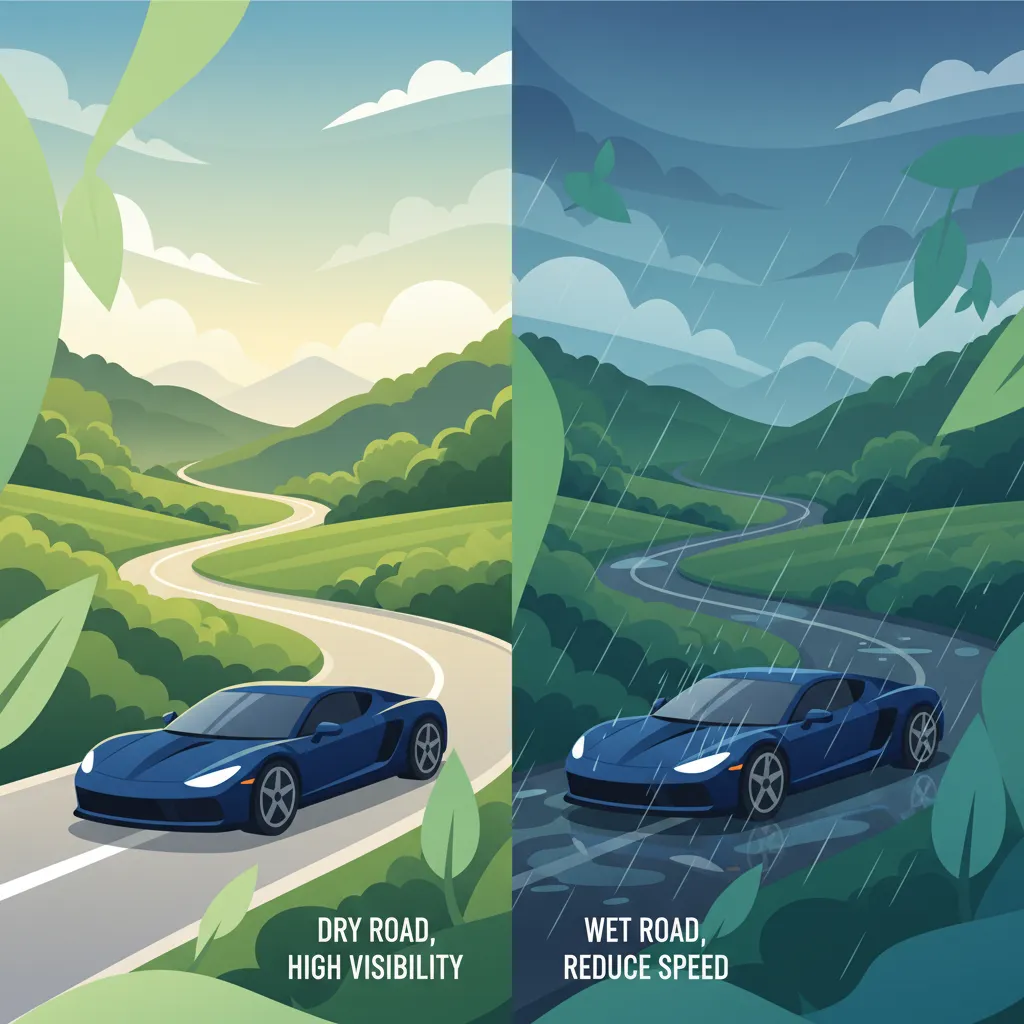
In this lesson, learners examine how environmental conditions such as rain, wind, ice, and reduced visibility necessitate adjustments in riding speed. The content provides guidelines for assessing road surfaces, judging appropriate cornering speeds, and reducing speed proactively in adverse weather. Learners will understand the impact of temperature on tyre performance and the need to increase safety margins, mastering adaptive speed management to maintain control.

This lesson equips learners with a structured approach to risk assessment and decision-making when facing adverse weather or seasonal conditions. The content introduces a hazard perception framework, guiding riders to assess weather forecasts, evaluate road surface conditions, and calculate safety margins. Learners will learn how to make go/no-go decisions, adjust speed dynamically, and plan contingencies for unexpected events to prioritize safety.

This lesson examines the variety of pavement markings that define lane structures, traffic flow, and special zones on Polish roads. Learners will study solid and broken lines, lane division markings, and the distinct symbols for bicycle lanes, bus lanes, and tram tracks, all of which affect motorcyclist positioning. The lesson also addresses surface texture indicators that signal changing road conditions, enabling riders to maintain correct lane discipline.

This lesson provides a detailed overview of the examination process required to obtain a motorcycle licence in Poland, describing the format of the theoretical test, pass criteria, and the structure of the practical riding assessment. It highlights the importance of familiarity with official question banks, registration steps, and the procedural rules governing test day conduct. Learners will also be guided on effective preparation strategies, including the use of mock exams and targeted review of knowledge gaps to ensure comprehensive readiness.
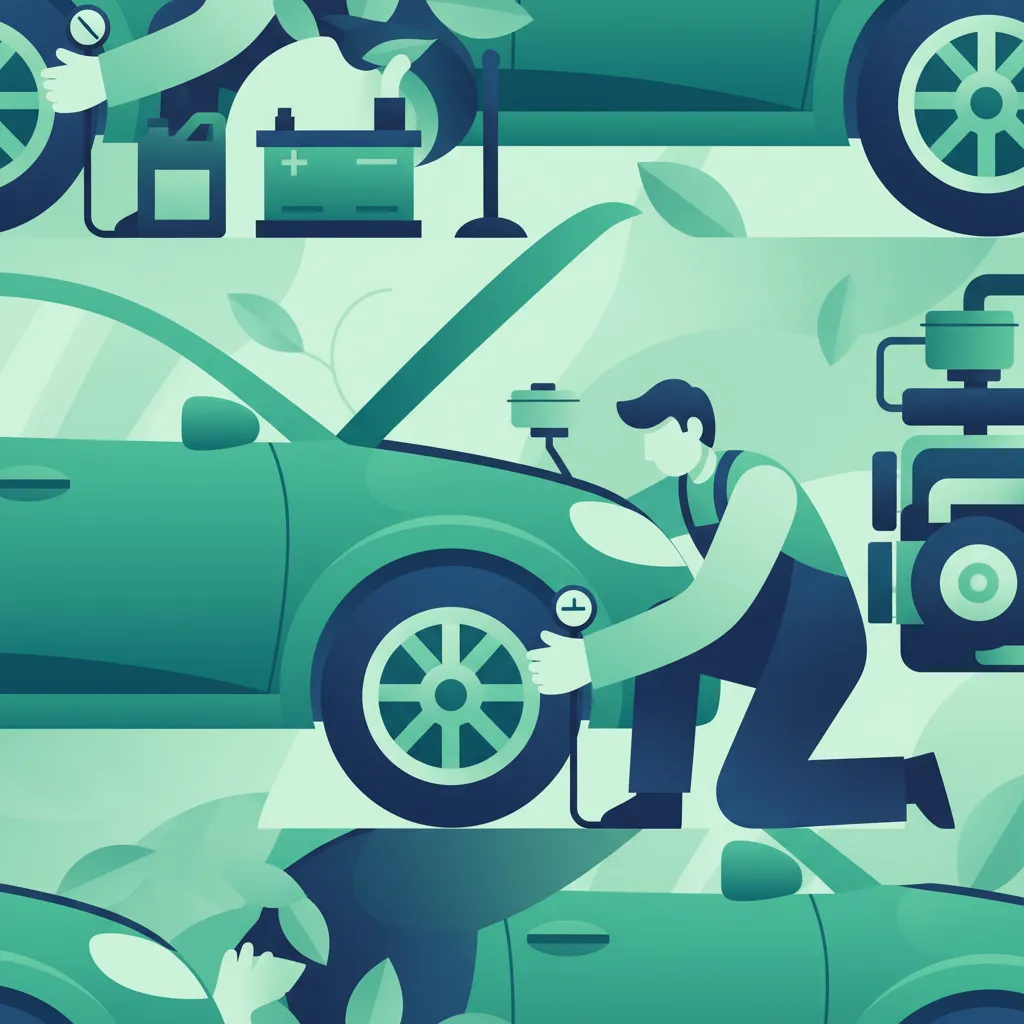
This lesson enumerates the mandatory safety equipment every vehicle must carry in Poland, such as a warning triangle and a fire extinguisher. It explains their proper use and storage, alongside routine pre-journey inspections that a driver should perform. These checks include verifying lights, tire pressure, and fluid levels to ensure the vehicle is roadworthy and compliant with safety regulations.

This lesson addresses environmental factors that impact rider visibility, such as low light, night conditions, fog, and glare from headlights. Learners will explore strategies for riding safely in reduced visibility, including the use of reflective gear, proper headlamp settings, and appropriate eye protection. The content also covers hazard detection techniques in adverse weather and how to adjust speed to maintain safety, enhancing rider safety across all conditions.
Understand how seasonal changes impact motorcycle safety and legal compliance in Poland. This lesson details mandatory checks, tyre choices, and oil viscosity adjustments to meet Polish roadworthiness standards.
In this lesson, learners explore the complexities of winter riding, including snow-covered roads, ice patches, and the impact of low temperatures on both the rider and the motorcycle. The content addresses the use of ABS and traction control on slippery surfaces and the need for appropriate tyre pressure. Learners will also learn about appropriate clothing layers, frostbite prevention, and how to adjust riding technique for safe cornering and braking on ice.
This lesson equips learners with a structured approach to risk assessment and decision-making when facing adverse weather or seasonal conditions. The content introduces a hazard perception framework, guiding riders to assess weather forecasts, evaluate road surface conditions, and calculate safety margins. Learners will learn how to make go/no-go decisions, adjust speed dynamically, and plan contingencies for unexpected events to prioritize safety.
This lesson focuses on the specific challenges of riding in rain, detailing how wet road surfaces reduce tyre grip and increase braking distances. Learners will learn about hydroplaning risk, the importance of deep tyre tread, and the need for smooth throttle and brake modulation to maintain stability. The content also covers visibility concerns, such as proper headlamp use and the selection of waterproof clothing, so riders can safely navigate wet conditions.
In this lesson, learners examine how environmental conditions such as rain, wind, ice, and reduced visibility necessitate adjustments in riding speed. The content provides guidelines for assessing road surfaces, judging appropriate cornering speeds, and reducing speed proactively in adverse weather. Learners will understand the impact of temperature on tyre performance and the need to increase safety margins, mastering adaptive speed management to maintain control.

In this lesson, learners examine the core legal obligations that apply to motorcyclists operating on Polish roads, including the mandatory use of helmets, periodic vehicle inspections, and the necessity of valid insurance and registration. The content details the classification of traffic offences and explains the associated penalty system, including fines, demerit points, and potential licence suspension. Additionally, the lesson outlines procedural requirements for accident reporting and interaction with law enforcement, providing a comprehensive view of a rider’s legal responsibilities.

In this lesson, learners explore riding on rural and countryside roads, where road markings may be sparse and surface conditions varied. The content covers safe overtaking in single-lane sections, interaction with agricultural vehicles and animals, and the handling of gravel or uneven surfaces. Learners will also study the importance of anticipating curves and adjusting speed to light conditions, equipping them with the skills needed for safe countryside travel.
This lesson addresses environmental factors that impact rider visibility, such as low light, night conditions, fog, and glare from headlights. Learners will explore strategies for riding safely in reduced visibility, including the use of reflective gear, proper headlamp settings, and appropriate eye protection. The content also covers hazard detection techniques in adverse weather and how to adjust speed to maintain safety, enhancing rider safety across all conditions.
This lesson examines the variety of pavement markings that define lane structures, traffic flow, and special zones on Polish roads. Learners will study solid and broken lines, lane division markings, and the distinct symbols for bicycle lanes, bus lanes, and tram tracks, all of which affect motorcyclist positioning. The lesson also addresses surface texture indicators that signal changing road conditions, enabling riders to maintain correct lane discipline.
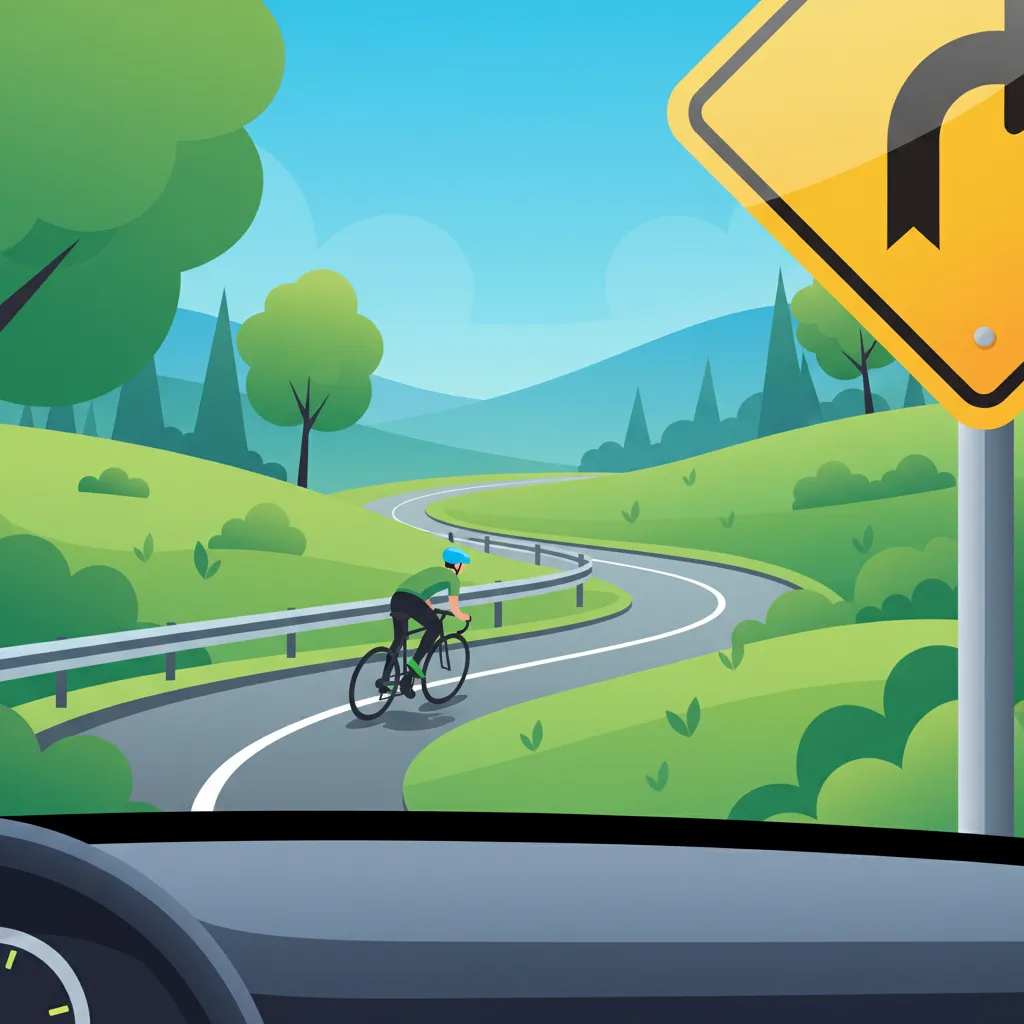
In this lesson, learners study warning signs that alert drivers to potential hazards, focusing on those that are particularly relevant to motorcyclists. The content includes signs indicating curves, slippery surfaces, animal crossings, tram tracks, and construction zones, each requiring specific riding adjustments. The lesson teaches riders how to interpret these signs to anticipate hazards, adjust speed appropriately, and maintain a safe distance from potential dangers.

This lesson delineates each motorcycle licence category defined in Polish law, explaining the technical specifications of vehicles allowed under AM, A1, A2, and A. It clarifies the age limits and competency criteria required for each category, highlighting how riders can progress from a light two-wheel vehicle to high-performance motorcycles. The content also outlines the mandatory training modules that must be completed to obtain each licence tier, ensuring learners understand the legal framework governing their riding privileges.
Find clear answers to common questions learners have about Seasonal Vehicle Maintenance and Checks. Learn how the lesson is structured, which driving theory objectives it supports, and how it fits into the overall learning path of units and curriculum progression in Poland. These explanations help you understand key concepts, lesson flow, and exam focused study goals.
For winter riding, pay extra attention to tyre condition and pressure, ensuring they offer sufficient grip on cold or potentially icy surfaces. Check the battery's charge and performance, as cold temperatures significantly reduce efficiency. Ensure all lights are functioning correctly for maximum visibility in poor conditions, and verify that your chain is clean and lubricated to prevent freezing and ensure smooth operation.
Polish traffic law mandates that vehicles must be operated safely in all conditions. While specific 'seasonal tyre' mandates are less common for motorcycles compared to cars, maintaining tyres in good condition with adequate tread depth is essential for compliance and safety. Using tyres appropriate for the season, with good grip for rain, cold, or dry conditions, is a practical requirement for safe riding and is expected in theory exam scenarios.
The recommended oil viscosity depends on the motorcycle manufacturer's specifications and the typical operating temperatures. In Poland's varied climate, a multi-grade oil is usually suitable, offering better flow at low temperatures (winter) and sufficient protection at higher engine operating temperatures (summer). Always consult your motorcycle's owner's manual for the precise viscosity grade recommended for your specific model and local conditions.
Chain tension should always be within the manufacturer's specified range, regardless of the season. However, factors like temperature changes can slightly affect tension. It's crucial to regularly check and adjust chain tension to the correct spec and ensure it is clean and lubricated, especially in adverse conditions where grit and moisture can accelerate wear and affect performance.
Common pitfalls include not understanding the link between specific checks and safety, or ignoring the impact of Polish weather conditions. For instance, questions might test your knowledge on why checking tyre pressure is crucial before a long winter ride, or the consequences of riding with a worn chain in wet weather. Focus on the 'why' behind each maintenance task for exam success.
Build custom practice sessions tailored precisely to your needs. Focus on areas requiring improvement, review specific Polish road signs, or master complex traffic rules to ensure full preparation for your official driving license exam.