
You've likely seen the 'Minimum Speed' sign (C-14) requiring you to drive at or above a specific speed. Now, the C-15 'End of Minimum Speed' sign, often found after bridges or tunnels, signals that this obligation has been lifted. While you can now reduce your speed, remember that general speed limits still apply, and you must avoid driving so slowly that you impede traffic flow. Always be aware of your surroundings and any new speed limit signs that may follow.
Properly interpreting the 'End of Minimum Speed' road sign is essential for adjusting your driving according to Polish traffic rules. This crucial traffic sign explanation helps you understand when previous speed mandates conclude, ensuring compliance and confidence for your driving theory test and practical road navigation.
This sign features the minimum speed limit crossed out with a red diagonal line. It signals that drivers are no longer legally bound to stay above the previously indicated speed. While drivers can now slow down, they must still follow general speed limits and avoid driving so slowly that they become a hazard to others.
Indicates that the requirement to maintain a minimum speed no longer applies.
Get clear, practical answers to the most common questions about the C-15 - End of Minimum Speed road sign. Learn how the sign works, what rules it represents, and how it affects real driving situations. This FAQ strengthens your understanding and supports accurate decision making for the Polish driving theory exam in Poland.
The C-15 sign, featuring a crossed-out minimum speed indicator, means that any previously mandated minimum speed no longer applies. You are free to drive below that speed, but you must still adhere to the general speed limits for the road and avoid obstructing other traffic.
This sign is typically placed at the end of road sections where a minimum speed was necessary for traffic flow or safety, such as certain tunnels, bridges, or specific road layouts. Its appearance indicates the end of that special condition.
While the minimum speed requirement ends, you should not brake suddenly or slow down dangerously. Adjust your speed gradually and safely, considering the current traffic conditions and the general speed limit. The goal is to transition smoothly, not to cause a hazard.
No, absolutely not. The C-15 sign only lifts the *minimum* speed requirement. All other general speed limits (e.g., for built-up areas, national speed limits, or motorway limits) remain in effect. Always observe and obey posted speed limits.
A common trap in the theory exam is thinking that 'End of Minimum Speed' means all speed restrictions are gone. Learners might incorrectly assume they can drive at any speed. It's crucial to remember that general speed limits still apply, and maintaining a safe speed that doesn't impede traffic is always required.
A clear reference image of the C-15 - End of Minimum Speed road sign used in Poland.
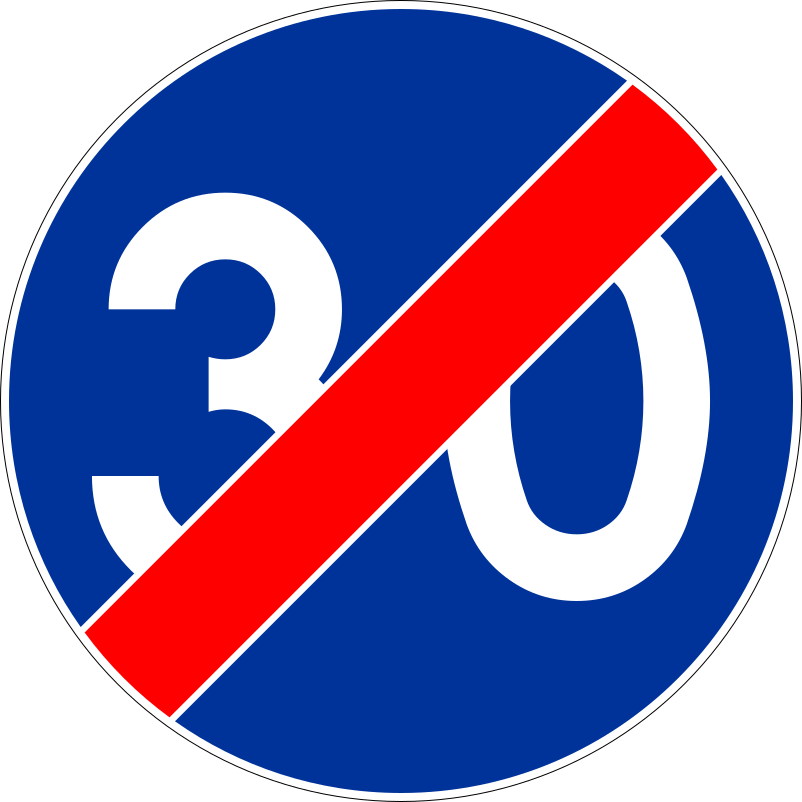
The C-15 - End of Minimum Speed road sign may also be known by these alternative names or terms.
The C-15 - End of Minimum Speed road sign is part of the Mandatory Signs (C) category, which groups together signs with similar rules and functions.
Reviewing related road signs side-by-side, like the 'End of Minimum Speed' with similar mandatory signs, aids in sign recognition and reduces confusion for your theory test revision. This traffic sign comparison sharpens your understanding of Poland's road rules for safer driving.
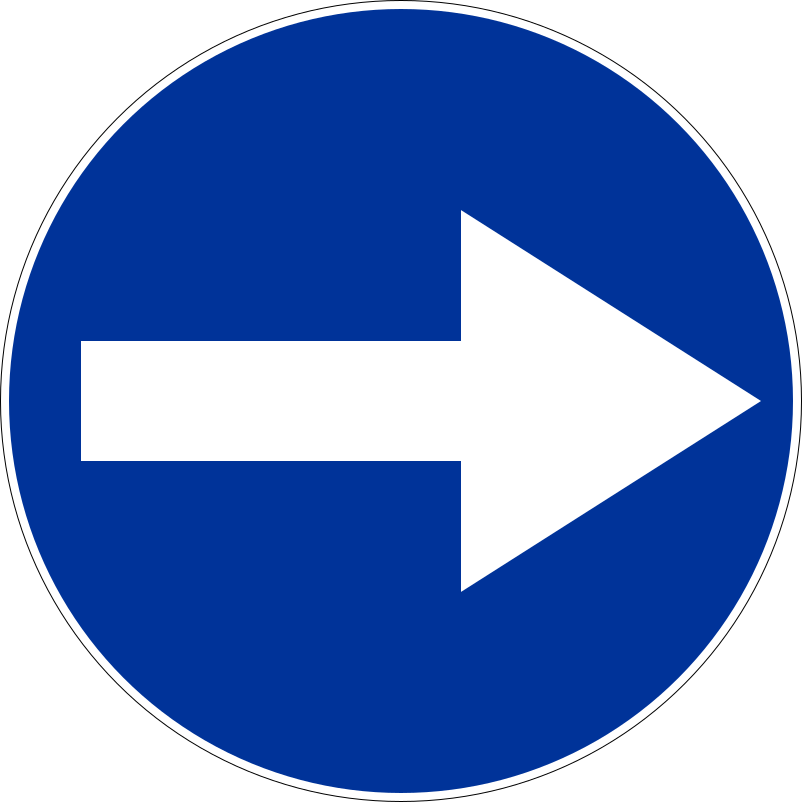
The C-1 sign means you MUST turn right before you reach it!
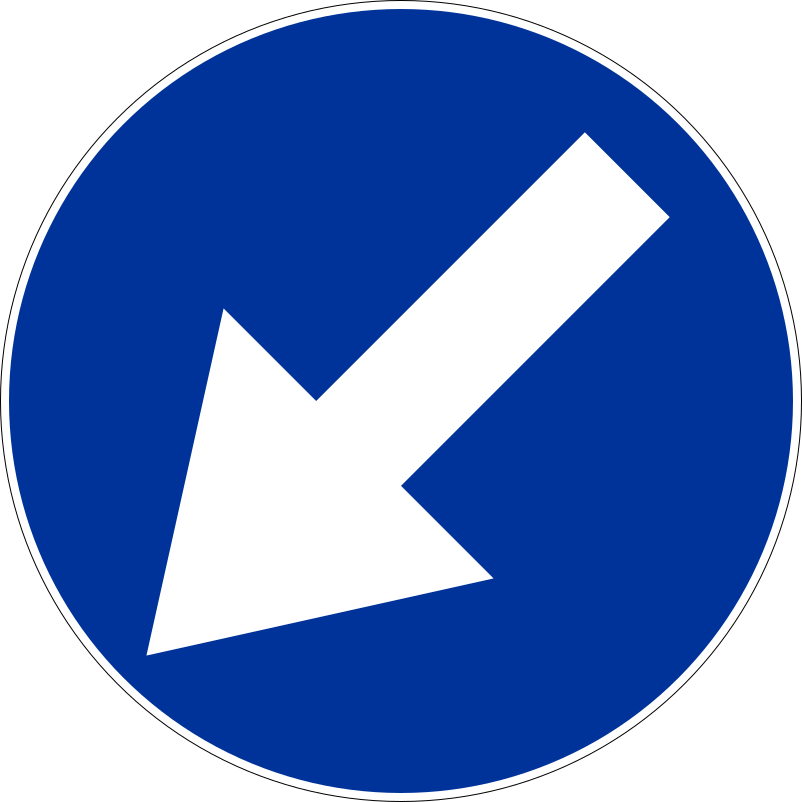
Understand the C-10 'Pass on the Left' Traffic Sign
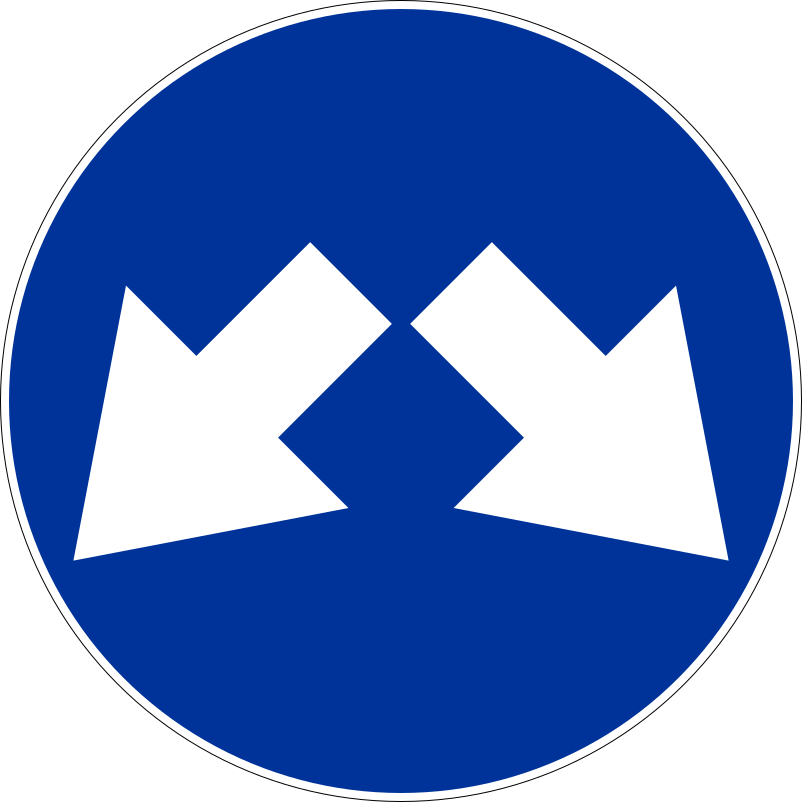
The C-11 'Pass on Either Side' sign means you can go around the obstacle to the left or right.
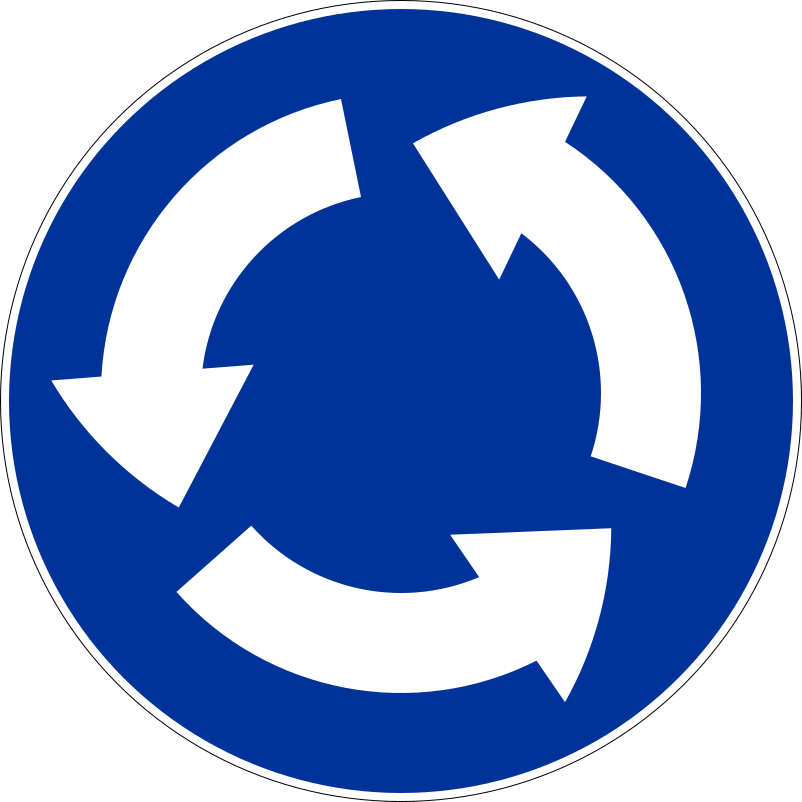
Master the Roundabout: Understanding the C-12 Traffic Sign
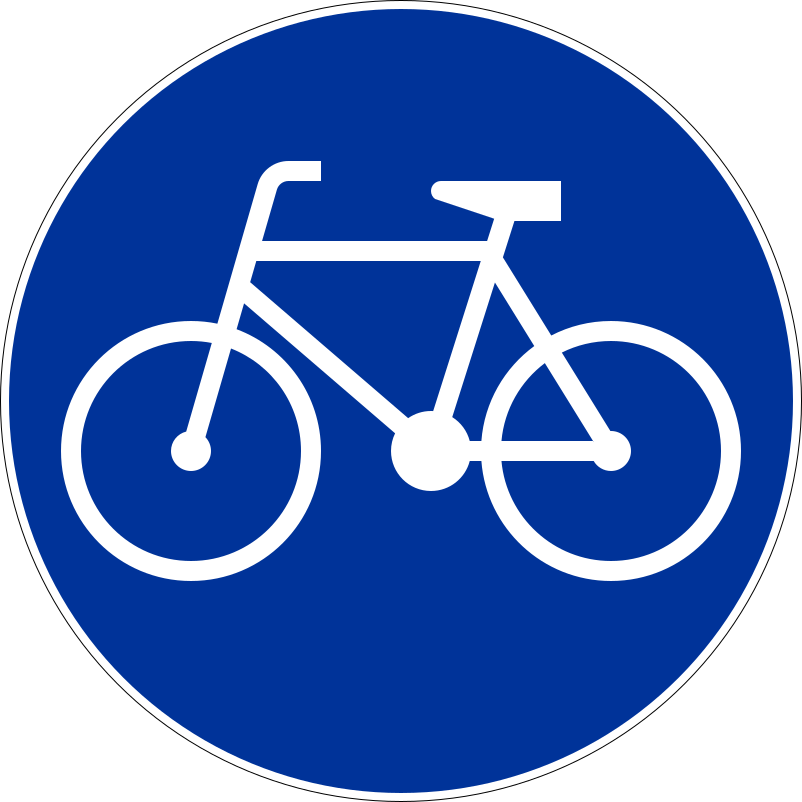
The C-13 Bicycle Path sign means you must use the dedicated cycle track.
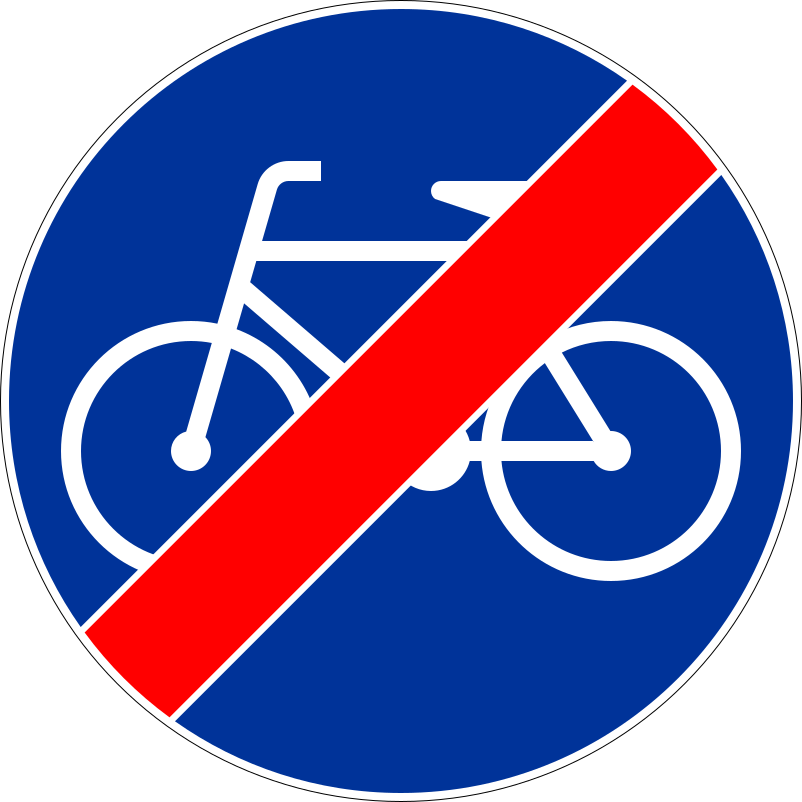
Understand the 'End of Bicycle Path' (C-13a) Sign and what it means for cyclists and drivers.
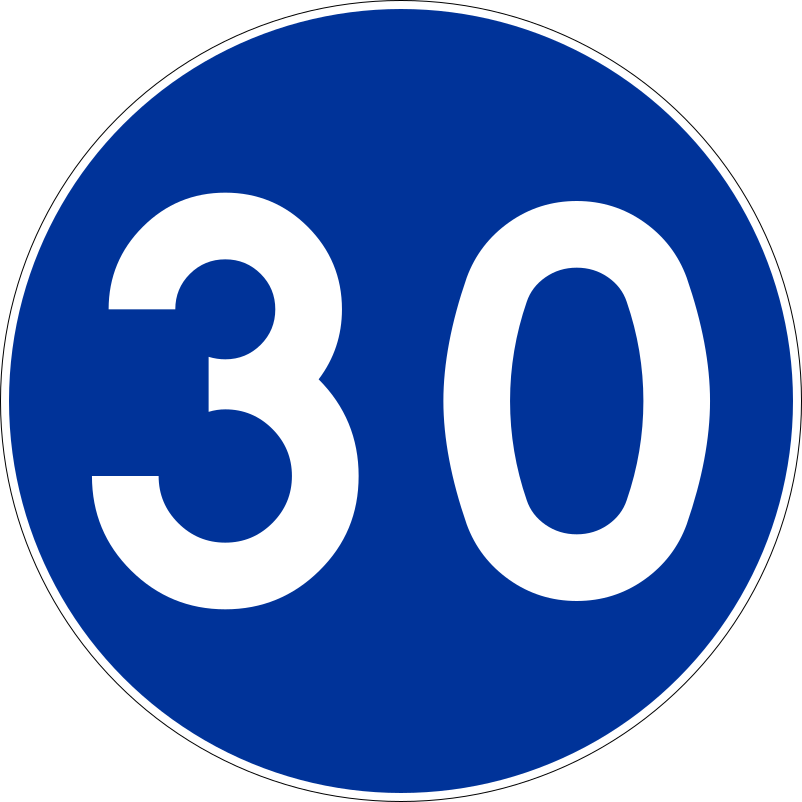
Obey the Minimum Speed Limit Indicated by the C-14 Sign
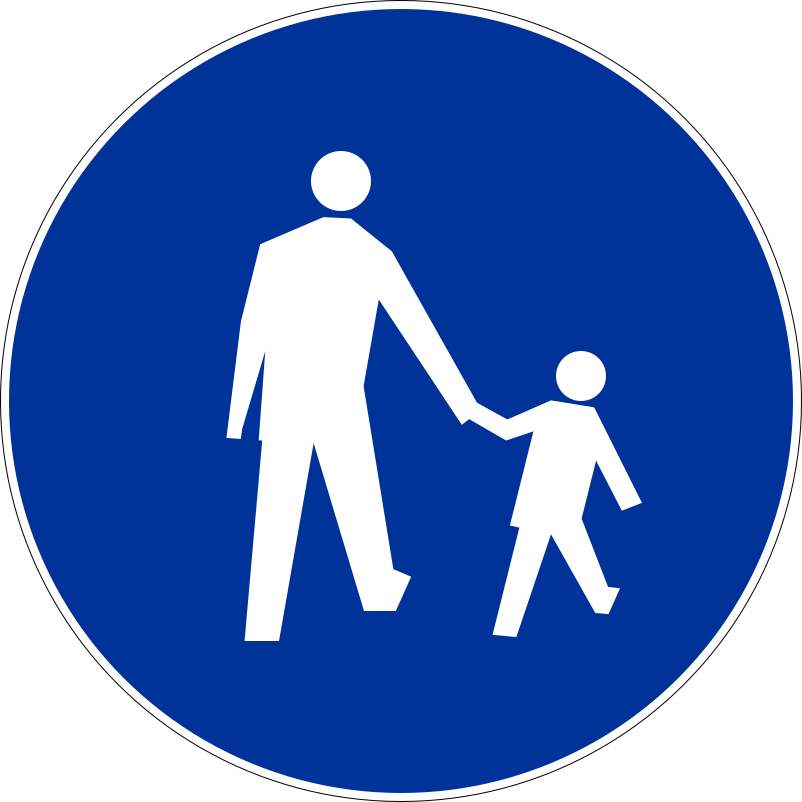
The C-16 'Pedestrian Path' sign means this area is exclusively for pedestrians.
Deepen your understanding of specific road signs by reviewing official Polish traffic rules and associated real-world driving scenarios. These expert-led resources help you bridge the gap between visual recognition and practical exam application.
Learn the critical distinctions between the Polish A-16 warning sign and the D-6 pedestrian crossing sign. This guide explains your legal responsibilities when approaching these areas, including the mandatory speed reduction and yielding requirements. Understand the significant penalties, such as hefty fines and accumulating penalty points, especially the 'recydywa' (repeat offender) system in Poland, which can lead to immediate license suspension.
Navigating Polish roads requires a precise understanding of rules for overtaking slow-moving vehicles, especially on continuous solid lines. This article will detail when such maneuvers are legal, the legal obligations of tractor drivers, and the consequences of violations according to Polish traffic law. Mastering this topic is essential for safe driving and succeeding in your theory exam.
Even a Second Can Be Fatal: Understand Microsleep to Drive Safely in Poland.
Don't Be a Road Block: Master Minimum Speeds and Smooth Traffic Flow for Your Polish Exam!
The P-17 marking is a zig-zag white line (or a long line with specific markings) that defines the length of a public transport stop. The prohibition on stopping for other vehicles applies to the entire length of this line. This ensures that buses and trams have enough space to pull in close to the curb and that passengers can board and alight safely without being obstructed by parked cars.
The D-28 sign features a black fork and spoon crossed silhouette. It indicates a full-service dining facility where travelers can sit down for a complete meal. Roadside restaurants in Poland often serve traditional cuisine (like pierogi or bigos) and are a staple of long-distance travel. They provide a much-needed environment to rest away from the vehicle.
After reviewing the full list of Polish road signs, explore specific sign categories for in-depth understanding. Challenge your knowledge with practice questions focused on sign recognition and interpretation to solidify your preparation for the driving theory exam.
Browse All Polish Road Signs