
The C-11 road sign, often called 'Pass on Either Side', is an information sign used in Poland to indicate that a traffic island or obstacle, typically at the 'nose' of a central reservation, can be safely passed on either the left or the right. Drivers should choose their side based on their intended path and use indicators if necessary, maintaining a smooth flow of traffic. This sign helps guide you through road divisions, like those before dedicated turn lanes or diverging routes.
This C-11 mandatory sign informs you that you have the choice to pass an obstacle, such as a traffic island, on either the left or the right. Crucial for Polish theory test revision, understanding this sign's road sign meaning is essential for safe navigation and compliance with traffic rules.
This sign features two arrows pointing downwards and outwards to both the left and right. It is placed at points where the roadway splits, and both directions are legally accessible for the driver. It is commonly found at the beginning of dedicated turn lanes or where a road divides into two separate lanes that eventually lead to different destinations or routes.
Drivers may pass the traffic island or obstacle on either the left or the right side.
Get clear, practical answers to the most common questions about the C-11 - Pass on Either Side road sign. Learn how the sign works, what rules it represents, and how it affects real driving situations. This FAQ strengthens your understanding and supports accurate decision making for the Polish driving theory exam in Poland.
The primary purpose of the C-11 sign is to inform drivers that an obstacle or traffic island ahead is designed to be navigated by passing on either its left or its right side. It's a directional information sign to help you choose your route smoothly.
You'll commonly encounter the C-11 sign at the beginning of a traffic island, often separating a main road from a slip road, or where the roadway naturally splits into two separate lanes leading to different destinations. It marks the point where a choice of path begins.
When you see the C-11 sign, you should prepare to pass the obstruction to your left or right. Check your mirrors and signals, then choose the side that corresponds to your intended direction or lane, and proceed safely. Avoid stopping or hesitating, as this could obstruct traffic flow.
Yes, you are prohibited from driving directly into the obstacle that the sign is marking. Also, you should not hesitate or stop at the point of the split, as this can cause a hazard. Abrupt lane changes at the very last moment at the split are also dangerous and discouraged.
You should use your indicators if the split indicated by the C-11 sign leads to a turn, a separate lane, or a different roadway. Signalling is crucial for communicating your intentions to other road users and ensuring a safe manoeuvre.
A common trap is assuming the sign implies a choice of priority. The C-11 sign is purely informational, indicating how to navigate an obstacle. Learners might also forget to signal when changing lanes or choosing a path, which is a frequent reason for failing practical driving tests and can be tested in theory exams.
A clear reference image of the C-11 - Pass on Either Side road sign used in Poland.
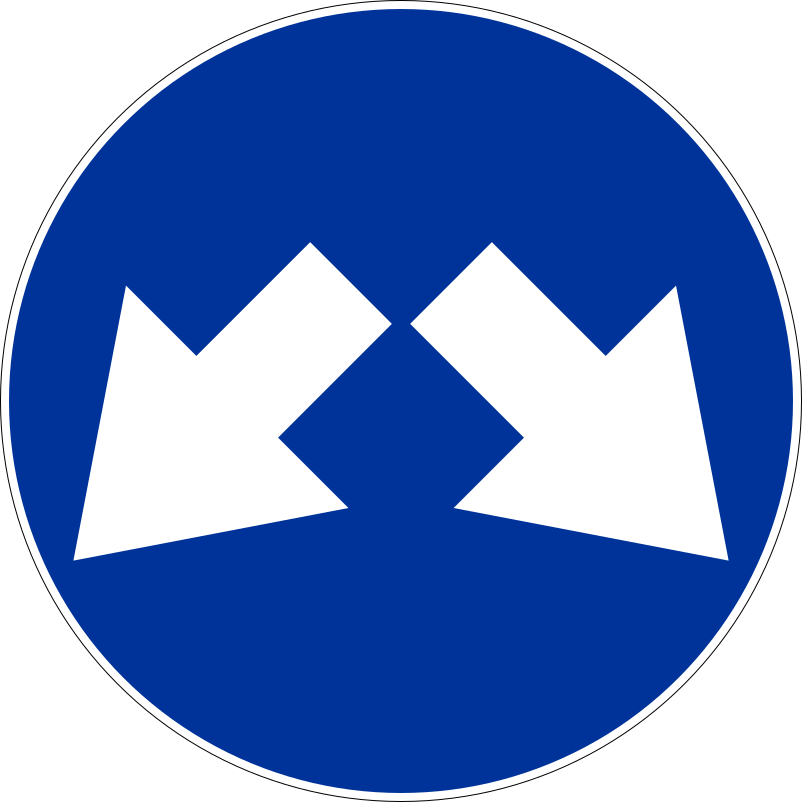
The C-11 - Pass on Either Side road sign may also be known by these alternative names or terms.
The C-11 - Pass on Either Side road sign is part of the Mandatory Signs (C) category, which groups together signs with similar rules and functions.
Reviewing similar traffic signs side-by-side is crucial for accurate theory test revision. Comparing signs like 'Pass on Either Side' with other mandatory signs helps cement recognition and avoid confusion, improving your exam preparation.
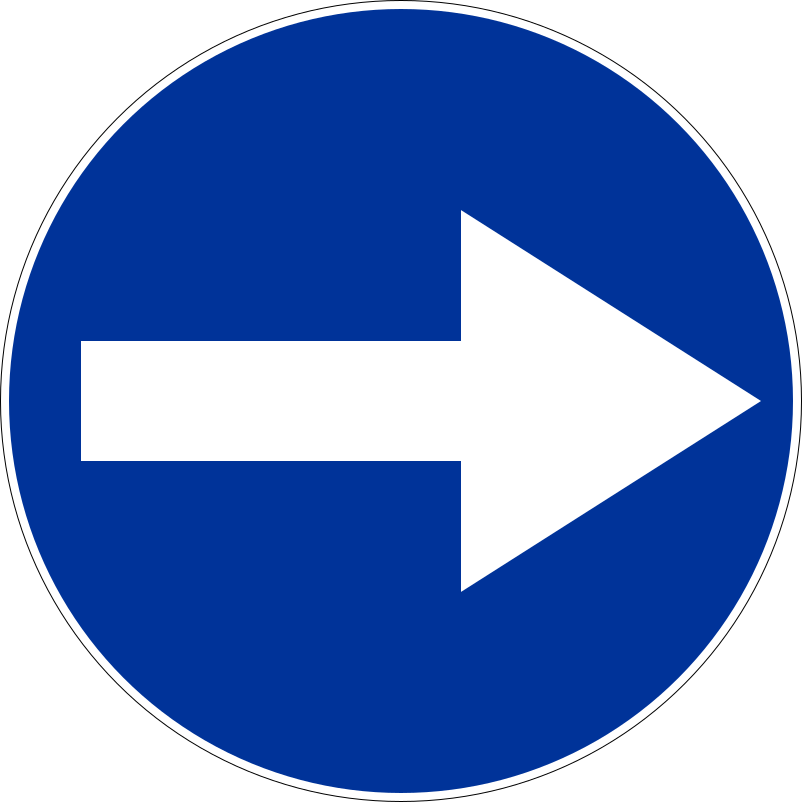
The C-1 sign means you MUST turn right before you reach it!
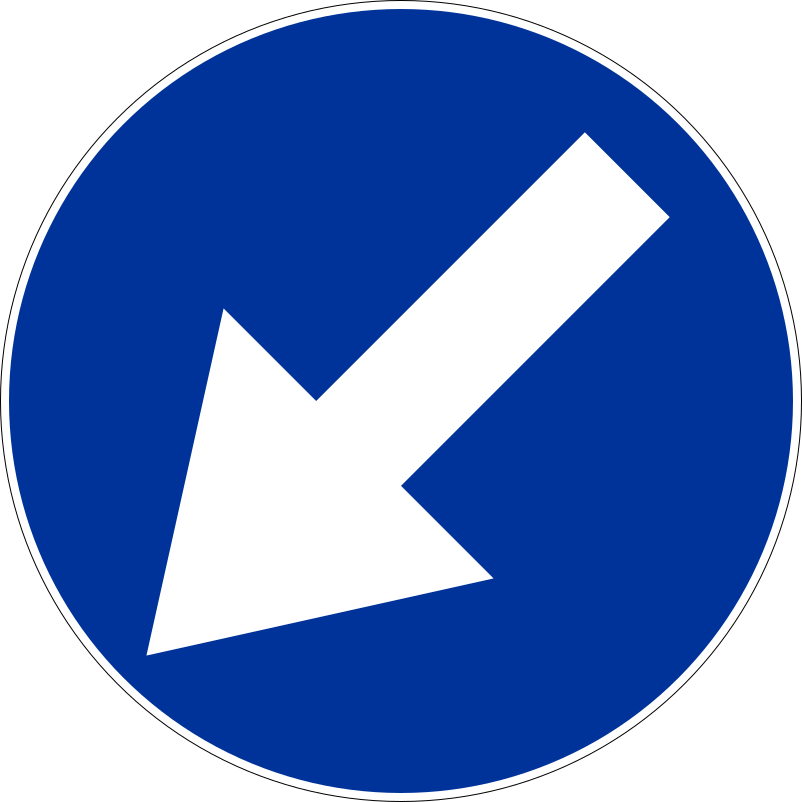
Understand the C-10 'Pass on the Left' Traffic Sign
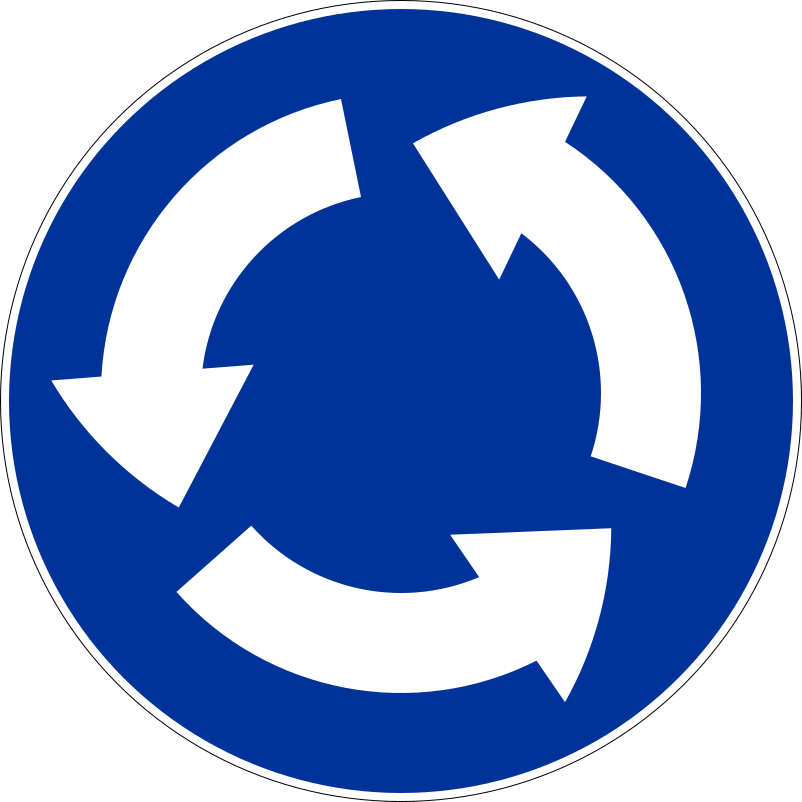
Master the Roundabout: Understanding the C-12 Traffic Sign
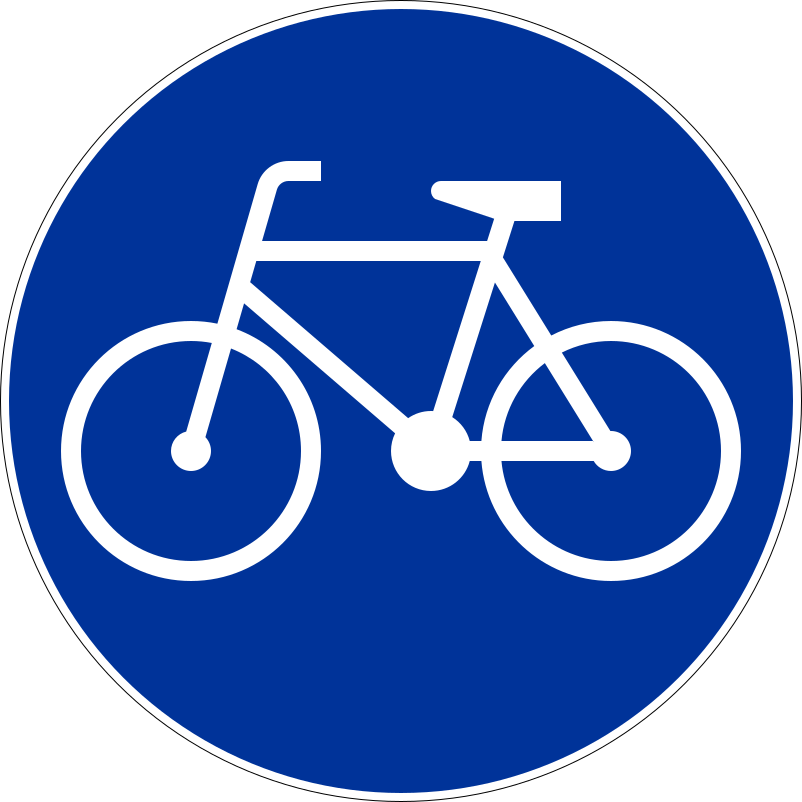
The C-13 Bicycle Path sign means you must use the dedicated cycle track.
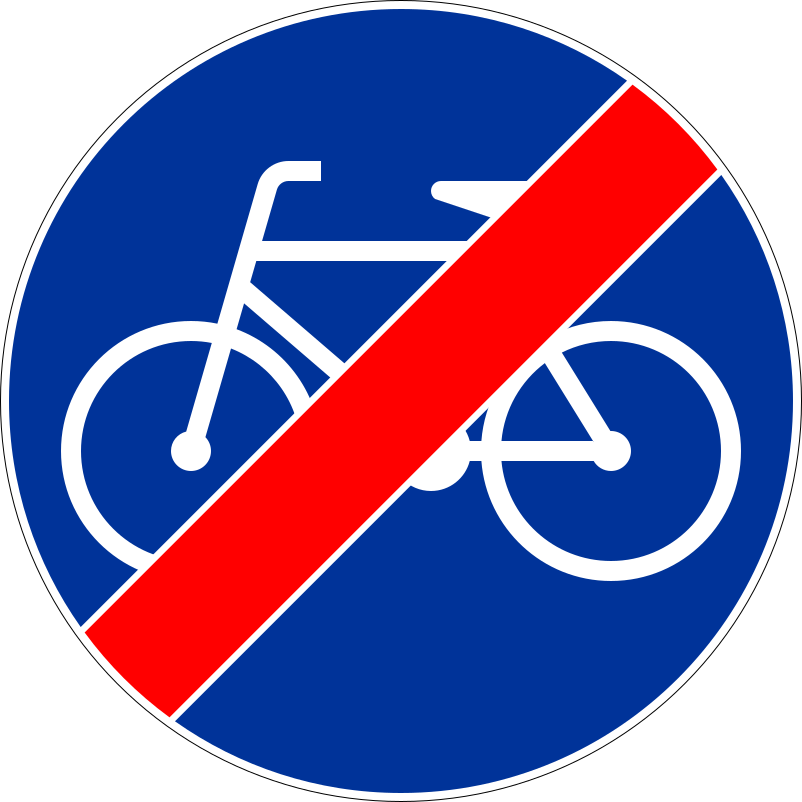
Understand the 'End of Bicycle Path' (C-13a) Sign and what it means for cyclists and drivers.
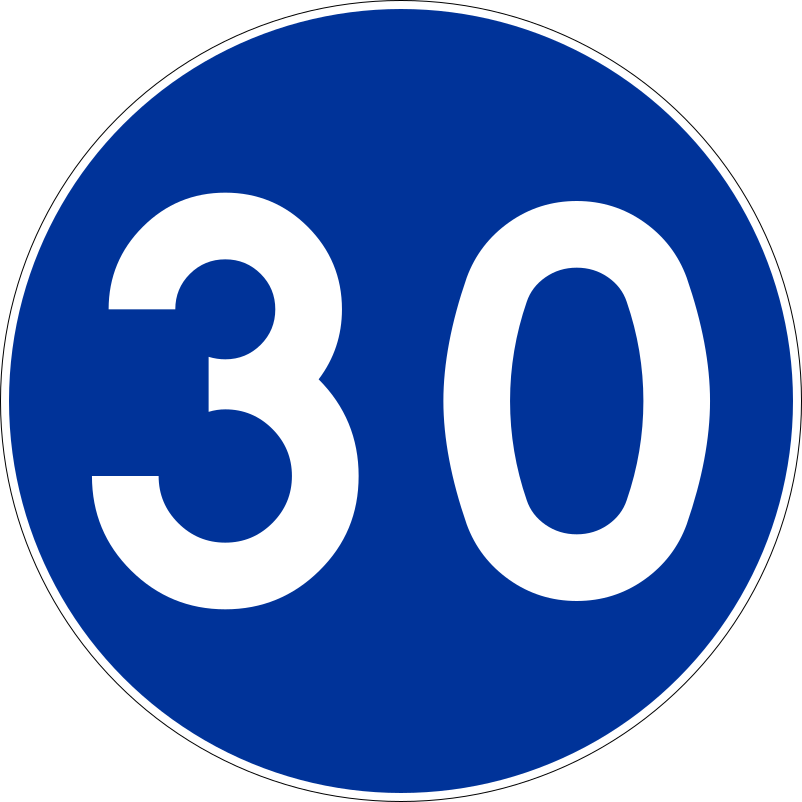
Obey the Minimum Speed Limit Indicated by the C-14 Sign
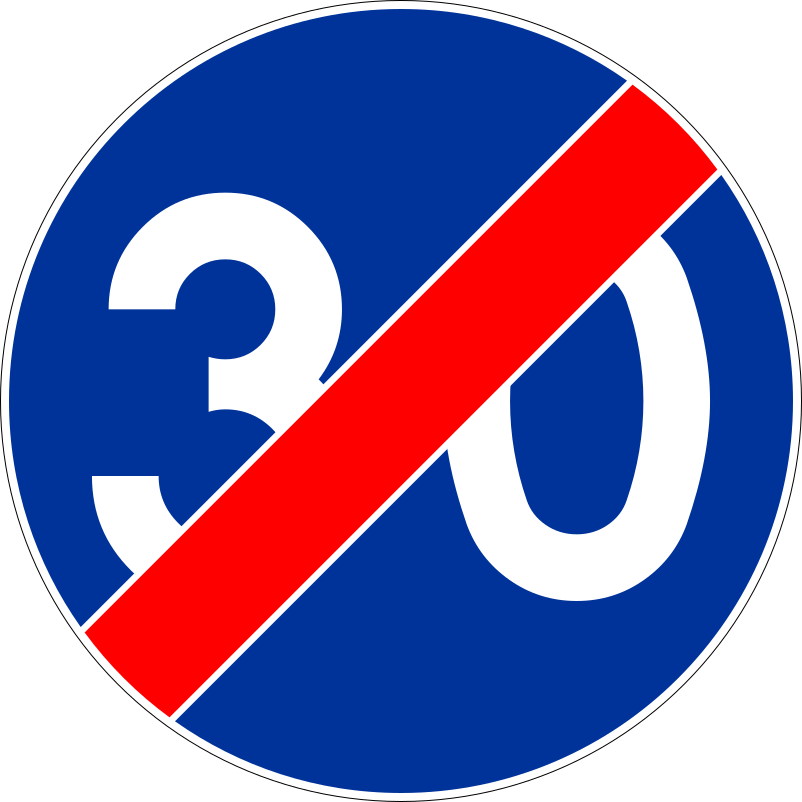
The 'End of Minimum Speed' sign means you're no longer required to drive above a certain speed.
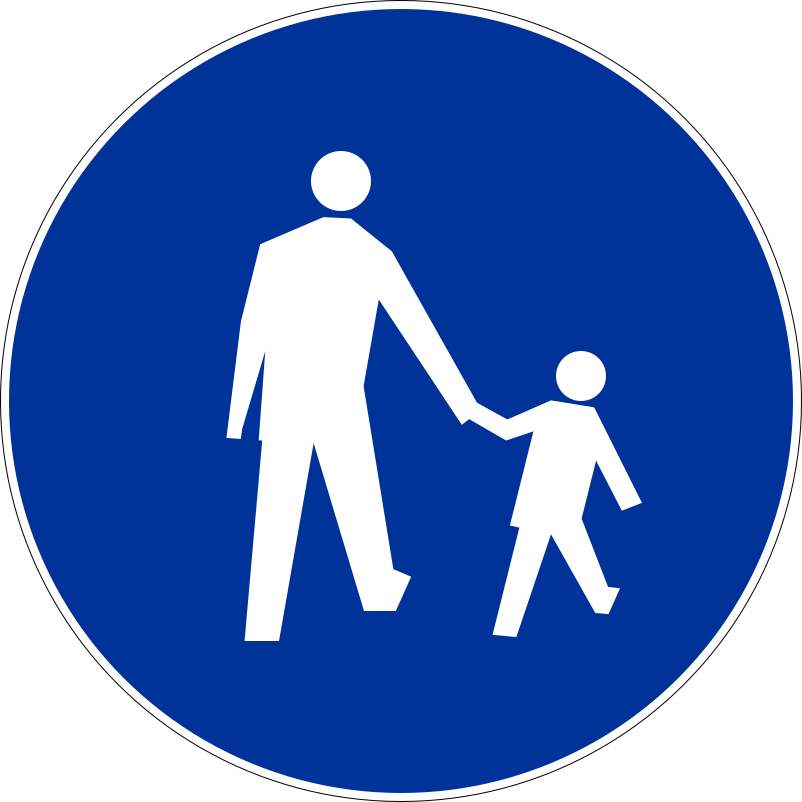
The C-16 'Pedestrian Path' sign means this area is exclusively for pedestrians.
Deepen your understanding of specific road signs by reviewing official Polish traffic rules and associated real-world driving scenarios. These expert-led resources help you bridge the gap between visual recognition and practical exam application.
Mastering Lane Discipline and Priority at Polish Intersections with Arrow Signals
Master Polish Crossing Markings for a Safer Drive and Exam Success.
Learning how to interact with law enforcement is a crucial part of your driver training in Poland, as it helps you understand the legal procedures governing roadside controls. This guide clarifies how officers identify themselves, what behaviors are expected of you as a driver, and how traffic enforcement impacts your penalty points and record. Mastery of these rules ensures you remain compliant with the law and prepared for any roadside situation you may encounter.
This article provides a detailed explanation of how Polish traffic signs A-7 ('Ustąp Pierwszeństwa' - Yield), B-20 ('STOP'), and D-1 ('Droga z Pierwszeństwem' - Priority Road) dictate right-of-way at intersections. Understanding the nuances of these signs is a fundamental aspect of the Polish driving theory exam, and mastering them will significantly improve your preparedness for real-world driving scenarios.
The P-8a arrow is painted on the lane surface to regulate movement at an intersection. If you are in a lane with this arrow, you are legally forbidden from turning left or right. It is used to streamline traffic and prevent collisions that occur when drivers try to turn from a middle lane. Often, these arrows are combined (e.g., straight and right), meaning both directions are allowed from that specific lane.
The D-6b sign combines the functions of the D-6 and D-6a signs. It is used in locations where a sidewalk and a bicycle path run parallel and cross the road at the same point. The sign displays both the pedestrian and the bicycle silhouettes within the white triangle on a blue background. Drivers are obligated to treat this crossing with extreme care, yielding to both people on foot and those on bikes. The same rules regarding overtaking and parking apply here as with standard crossings.
After reviewing the full list of Polish road signs, explore specific sign categories for in-depth understanding. Challenge your knowledge with practice questions focused on sign recognition and interpretation to solidify your preparation for the driving theory exam.
Browse All Polish Road Signs