
Understanding how to safely interact with vulnerable road users is a core component of the Swedish driving licence theory. This guide explains the societal transition toward active mobility, the importance of the car-norm shift, and the specific safety duties drivers have when sharing urban spaces with cyclists and pedestrians. You will learn how to apply these safety-conscious attitudes to your exam, helping you navigate complex traffic scenarios with greater awareness and foresight.
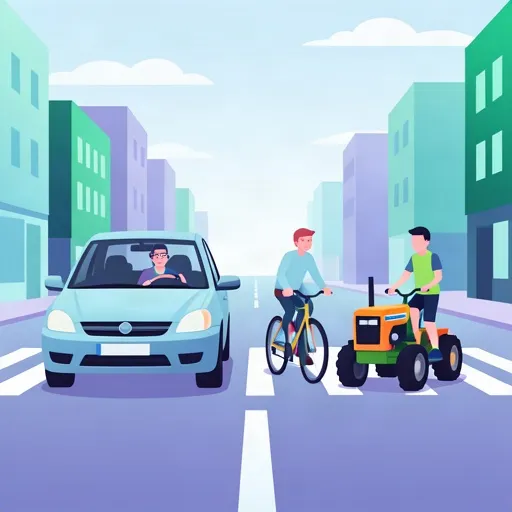
Article content overview
In the Swedish traffic environment, a fundamental shift is occurring in how we perceive road safety and mobility. As a learner driver, it is crucial to move beyond simply memorizing signs and rules to understanding your role as a responsible driver who shares the road with vulnerable road users. This concept is increasingly defined by "active mobility," which encompasses walking and cycling as essential, sustainable parts of our transport system. Understanding this shift is not only vital for everyday driving but is a frequent theme in the Swedish theory exam, where the focus is on safety, hazard awareness, and the "car-norm" shift.
The "car-norm" (bilnormen) is a societal construct where the motor vehicle has historically been the default priority in urban planning and driving behavior. However, Swedish authorities like Trafikverket and Transportstyrelsen are actively working to move toward a safer, more inclusive system. This transition is often explained through the "Avoid-Shift-Improve" (ASI) framework. For your theory exam, this means recognizing that your responsibility as a driver is to actively facilitate the safety of those who are not shielded by a vehicle frame.
Active mobility refers to forms of transport that rely on physical activity, such as walking and cycling. In the context of Swedish traffic safety, prioritizing these road users is a core component of reducing the number of serious injuries and fatalities on our roads.
When you are behind the wheel, your awareness must extend far beyond the path directly in front of you. You must anticipate the presence of pedestrians and cyclists, even in areas where their presence might seem less obvious. This requires a proactive mindset: if you see a cyclist near an intersection or a pedestrian approaching a crossing, your default reaction should be to adjust your speed and position to create a safer environment for them.
Swedish traffic laws are designed to protect the most vulnerable. While the law clearly states where drivers must yield, the theory exam often tests your ability to exercise caution beyond the bare legal minimum. When interacting with pedestrians, cyclists, and light vehicles like A-traktors, you are expected to demonstrate foresight and patience.
Interactions with cyclists require a high level of vigilance, especially during turning maneuvers. A common exam trap involves the "blind spot" during right-hand turns. You must check your mirrors and the area to your side repeatedly to ensure a cyclist is not attempting to pass you on the right side. Similarly, when approaching a pedestrian crossing, you must be prepared to stop if there is any indication that a pedestrian intends to cross.
In recent years, the prominence of A-traktors and moped cars on Swedish roads has changed how new drivers need to behave. Because these vehicles are restricted in speed, they can often lead to frustration among motorists. However, your responsibility remains the same: you must approach them with the same safety-conscious attitude as any other vulnerable road user. Patience and proper distance are key, particularly when deciding to overtake.
Remember that A-traktors and moped cars have different acceleration and speed limitations. Do not get caught in the "frustration trap" by tailgating; always ensure you have a clear, safe view before beginning an overtaking maneuver.
The ASI model—Avoid, Shift, Improve—is a lens through which you can analyze traffic situations. By avoiding unnecessary risks, shifting your focus toward the safety of others, and improving your defensive driving techniques, you align yourself with the requirements set by the Swedish transport authorities. This proactive approach is exactly what the theory exam expects of a competent driver.
| Road User Type | Typical Hazard | Driver Responsibility |
|---|---|---|
| Pedestrian | Crossing unexpectedly | Yield and maintain a low speed |
| Cyclist | Blind spot / Right turn | Check mirrors and blind spots |
| A-traktor | Low speed / Sudden stops | Maintain distance and plan overtake |
This article explains how active mobility is reshaping Swedish traffic culture and what that means for driver responsibility toward pedestrians, cyclists, and light vehicles like A-traktors. Key concepts include the car-norm shift, the ASI (Avoid-Shift-Improve) model for safety analysis, and specific hazards such as blind spots during right-hand turns where cyclists commonly pass. The content emphasizes that drivers must exercise foresight and patience beyond the legal minimum, particularly at crossings and when sharing roads with slower vehicles. A structured safety procedure for crossings and a comparison table of road user hazards reinforce practical application for both the theory exam and real-world driving.
A short set of high-value points that capture the most important ideas from this article.
Active mobility in Sweden prioritizes walking and cycling as essential, sustainable transport modes that drivers must actively protect
The car-norm shift means drivers are expected to facilitate safety for vulnerable road users beyond the bare legal minimum
The ASI (Avoid-Shift-Improve) model provides a practical framework for analyzing traffic situations with a safety-first mindset
Cyclists are particularly dangerous during right-hand turns because they can pass on your right in your blind spot
A-traktors and moped cars require the same safety-conscious attitude as cyclists and pedestrians despite causing driver frustration
Vulnerable road users include pedestrians, cyclists, A-traktors, and light vehicles without the protection of a car frame
Always check mirrors and blind spots repeatedly when turning right, as cyclists may be passing on the right side
The ASI model stands for Avoid unnecessary risks, Shift focus toward others' safety, and Improve defensive driving techniques
At crossings, slow down proactively if a pedestrian shows any indication of wanting to cross
Never tailgate or pressure A-traktors; maintain safe distance and plan overtakes carefully
Assuming cyclists have seen your turning vehicle and will yield to you instead of checking your blind spots
Relying only on mirrors when turning right and failing to check the blind spot where cyclists often travel
Getting frustrated with A-traktors and attempting risky overtakes instead of exercising patience
Treating the legal yield requirement as the maximum effort rather than the minimum safety standard
Failing to slow down at crossings when pedestrians are nearby, only reacting if they have already stepped onto the road
Article content overview
A short set of high-value points that capture the most important ideas from this article.
Active mobility in Sweden prioritizes walking and cycling as essential, sustainable transport modes that drivers must actively protect
The car-norm shift means drivers are expected to facilitate safety for vulnerable road users beyond the bare legal minimum
The ASI (Avoid-Shift-Improve) model provides a practical framework for analyzing traffic situations with a safety-first mindset
Cyclists are particularly dangerous during right-hand turns because they can pass on your right in your blind spot
A-traktors and moped cars require the same safety-conscious attitude as cyclists and pedestrians despite causing driver frustration
Vulnerable road users include pedestrians, cyclists, A-traktors, and light vehicles without the protection of a car frame
Always check mirrors and blind spots repeatedly when turning right, as cyclists may be passing on the right side
The ASI model stands for Avoid unnecessary risks, Shift focus toward others' safety, and Improve defensive driving techniques
At crossings, slow down proactively if a pedestrian shows any indication of wanting to cross
Never tailgate or pressure A-traktors; maintain safe distance and plan overtakes carefully
Assuming cyclists have seen your turning vehicle and will yield to you instead of checking your blind spots
Relying only on mirrors when turning right and failing to check the blind spot where cyclists often travel
Getting frustrated with A-traktors and attempting risky overtakes instead of exercising patience
Treating the legal yield requirement as the maximum effort rather than the minimum safety standard
Failing to slow down at crossings when pedestrians are nearby, only reacting if they have already stepped onto the road
Explore related topics, search based questions, and concepts that learners often look up when studying Safety and Vulnerable Road Users. These themes reflect real search intent and help you understand how this topic connects to wider driving theory knowledge in Sweden.
Find clear and practical answers to common questions learners often have about Safety and Vulnerable Road Users. This section helps explain difficult points, remove confusion, and reinforce the key driving theory concepts that matter for learners in Sweden.
Active mobility refers to travel modes like walking and cycling that are physically active. In the theory exam context, it highlights the importance of drivers recognizing these users as vital parts of the transport system, requiring increased attention and space.
The 'car-norm' refers to historical design prioritizing motor vehicles. Understanding this helps candidates recognize that modern safety standards require drivers to actively shift their perspective to anticipate and protect non-motorized users, rather than assuming priority in all urban scenarios.
A-traktors and moped cars are light, slower vehicles often driven by younger, less experienced road users. Drivers must demonstrate extra patience, maintain a safe following distance, and look for clear opportunities to overtake safely without creating hazardous situations.
Continue your learning journey by exploring more detailed articles and guides. Clarify specific traffic rules, understand complex road signs, or review safe driving practices. Our extensive content library supports your Swedish driving license theory preparation.