
As a driver in Sweden, you will frequently encounter road work managed by Trafikverket that prioritizes both infrastructure development and ecological preservation. This guide explains how environmental interventions like fauna depots are integrated into road projects and what this means for your responsibilities as a driver. Mastering these concepts ensures you are better prepared for hazard perception and compliance requirements in the Swedish driving theory exam.
Article content overview
As a driver in Sweden, you are part of a transport system where infrastructure projects managed by the Swedish Transport Administration (Trafikverket) must balance human mobility with environmental responsibility. When you encounter road work, you are witnessing a complex planning process where safety, logistics, and nature conservation intersect. Understanding why these work zones are configured the way they are is a key component of your development as a responsible driver and will help you better interpret the reality of the road, which often appears as a theme in the Swedish driving theory exam.
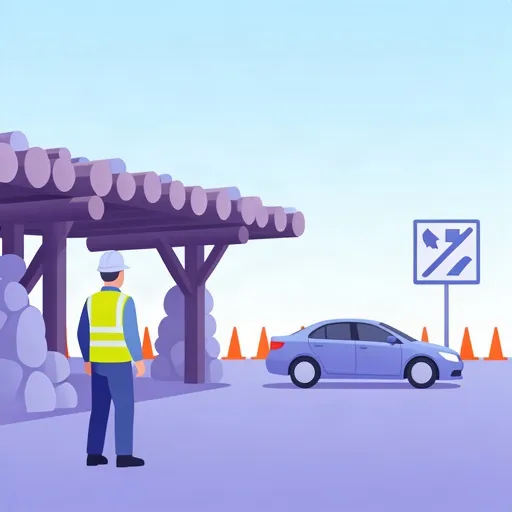
Infrastructure development in Sweden is subject to strict environmental regulations. Trafikverket does not simply build roads; they manage the surrounding landscape to minimize ecological disruption. A prime example of this is the relocation of trees and the creation of fauna depots, known in Swedish as faunadepåer. These are strategic piles of dead wood, stems, and branches placed in sunny forest edges or near clearings. They serve as essential habitats for various species, providing shelter, nesting sites, and overwintering areas for amphibians, birds, and insects.
When you pass a construction zone, especially on rural roads or stretches under redevelopment, you might notice that specific trees are marked with colored paint or protected by wooden boards. These are not merely site markers for workers; they are deliberate interventions to preserve biological diversity. For a learner driver, recognizing that these measures exist helps explain why construction boundaries may be wider or why certain areas are cordoned off even if there is no immediate heavy machinery present.
Environmental protection efforts inside a work zone often dictate the pace and flow of traffic. When road projects are active, the primary goal for every driver must be the safety of the personnel working on-site. Because these projects often involve multiple factors—such as maintaining habitat corridors while simultaneously laying asphalt—drivers should expect temporary changes in road geometry, reduced speed limits, and narrowed lanes.
Your ability to identify these hazards early is a critical skill for the theory exam. When you see signs indicating road work, your focus must shift from standard cruising to active observation. You must adjust your speed well in advance, maintain a safe following distance, and remain hyper-aware of your surroundings. Remember that even if a construction zone appears empty, there may be workers or wildlife movement in areas where habitat preservation is actively occurring.
In the context of the Swedish driving theory exam, you will be tested on your ability to interpret signage and adapt to changing conditions. When you encounter a project where biodiversity measures are in place, the signage is the absolute law. Lowered speed limits exist not just for traffic flow, but to prevent the environmental impact of noise and vibration, and to ensure you have enough time to react to unexpected obstructions.
Being a professional and safe driver means respecting these temporary traffic arrangements without hesitation. If you fail to slow down or ignore instructions near a construction zone, you jeopardize the safety of others and demonstrate a lack of maturity behind the wheel. The environmental measures mentioned, while beneficial to the forest, also force us to pay closer attention to the road environment, which is exactly what a safe driver should be doing at all times.
The Swedish transport system relies on all drivers being "on the same page" regarding safety and compliance. When Trafikverket invests in long-term infrastructure health, it includes measures that keep our roads robust against climate change, such as improved drainage and ditch management. These improvements are part of a broader commitment to sustainable development. For your exam, connecting the dots between official road maintenance, environmental policy, and your behavior on the road is what sets a high-performing driver apart.
Swedish road construction integrates biodiversity conservation, exemplified by fauna depots (faunadepåer), into infrastructure projects managed by Trafikverket. These environmental measures often dictate the physical layout and safety arrangements of work zones, requiring drivers to remain vigilant and compliant with temporary signage. When encountering road work signs like A21, drivers must reduce speed well in advance, observe modified lane markings, and maintain awareness that environmental protections may extend construction boundaries beyond visible activity. The combination of ecological stewardship and traffic safety in Swedish road planning creates a driving environment where heightened observation and strict adherence to temporary restrictions are mandatory expectations for all road users.
A short set of high-value points that capture the most important ideas from this article.
Swedish road construction projects managed by Trafikverket integrate environmental protection measures alongside infrastructure development
Fauna depots (faunadepåer) are deliberate ecological interventions using deadwood to preserve wildlife habitats near roads
Construction zones may have wider boundaries or cordoned areas to protect marked trees even without visible machinery
Environmental measures in work zones directly influence traffic arrangements including speed limits and lane configurations
Driver awareness of environmental contexts helps explain why construction zones are configured as they are
The A21 road sign indicates active road work requiring reduced speed and heightened caution
Speed limits in construction zones are mandatory and may be enforced by cameras or police presence
Even seemingly empty construction zones may contain workers or active wildlife movement in preserved habitat areas
Construction boundaries may extend beyond visible work activity due to biodiversity protection measures
Yellow warning signs and flashing lights signal the need to scan ahead and adjust driving behavior early
Assuming a construction zone is inactive simply because no workers are visible at the moment
Failing to reduce speed gradually before entering a restricted work area
Ignoring or hesitating to comply with temporary lane markings that deviate from the original road structure
Using mobile devices or complex infotainment when passing through road work zones
Not maintaining a safe following distance when approaching traffic controllers or temporary traffic lights
Article content overview
A short set of high-value points that capture the most important ideas from this article.
Swedish road construction projects managed by Trafikverket integrate environmental protection measures alongside infrastructure development
Fauna depots (faunadepåer) are deliberate ecological interventions using deadwood to preserve wildlife habitats near roads
Construction zones may have wider boundaries or cordoned areas to protect marked trees even without visible machinery
Environmental measures in work zones directly influence traffic arrangements including speed limits and lane configurations
Driver awareness of environmental contexts helps explain why construction zones are configured as they are
The A21 road sign indicates active road work requiring reduced speed and heightened caution
Speed limits in construction zones are mandatory and may be enforced by cameras or police presence
Even seemingly empty construction zones may contain workers or active wildlife movement in preserved habitat areas
Construction boundaries may extend beyond visible work activity due to biodiversity protection measures
Yellow warning signs and flashing lights signal the need to scan ahead and adjust driving behavior early
Assuming a construction zone is inactive simply because no workers are visible at the moment
Failing to reduce speed gradually before entering a restricted work area
Ignoring or hesitating to comply with temporary lane markings that deviate from the original road structure
Using mobile devices or complex infotainment when passing through road work zones
Not maintaining a safe following distance when approaching traffic controllers or temporary traffic lights
Explore related topics, search based questions, and concepts that learners often look up when studying Road Construction and Environment. These themes reflect real search intent and help you understand how this topic connects to wider driving theory knowledge in Sweden.
Find clear and practical answers to common questions learners often have about Road Construction and Environment. This section helps explain difficult points, remove confusion, and reinforce the key driving theory concepts that matter for learners in Sweden.
A faunadepå, or fauna depot, is a collection of dead wood and tree materials placed in nature to provide shelter, nesting sites, and food for various species, helping to maintain biodiversity during and after road construction.
These measures often necessitate temporary speed limits, narrowed lanes, or increased worker presence in the area. Drivers must remain highly observant, follow all signage, and exercise extra caution in these zones.
Relocating trees with high ecological value is part of the Swedish commitment to sustainable infrastructure, ensuring that habitats for insects, birds, and amphibians are preserved even when new roads are built.
Yes, understanding the broader context of road usage, including work zone safety, environmental awareness, and adherence to special regulations or signage, is essential for demonstrating the responsibility expected of a safe driver.
Continue your learning journey by exploring more detailed articles and guides. Clarify specific traffic rules, understand complex road signs, or review safe driving practices. Our extensive content library supports your Swedish driving license theory preparation.