
As Sweden works toward increasing the share of cycle trips through improved infrastructure, drivers must become proficient at sharing the road safely with cyclists. This guide clarifies your legal duties, highlights how to navigate shared environments, and explains why proactive awareness is a cornerstone of the Swedish theory test. You will learn the correct approach to bicycle crossings and how to adapt your driving to protect vulnerable road users in modern traffic.
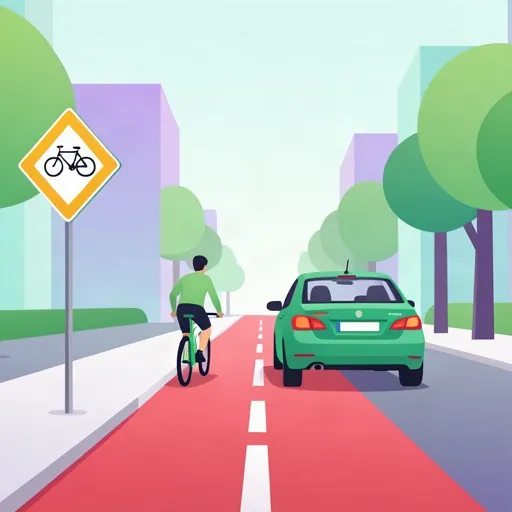
Article content overview
As Sweden moves toward a more sustainable transport future, the expansion of cycling infrastructure is a key priority for Trafikverket. With the regional goal of increasing bicycle travel to 20% of all trips by 2030, drivers will encounter cyclists more frequently than ever before. Understanding your legal responsibilities and the nuances of sharing the road with vulnerable road users is not only critical for daily safety but is also a recurring theme in the Swedish driving theory exam.
In Sweden, the traffic environment is designed to accommodate multiple modes of transport, including pedestrians, cyclists, and motorists. A common misconception among new drivers is that motor vehicles always have priority over cycles. In reality, the Swedish Traffic Ordinance requires that all road users adapt their behavior to ensure safety for everyone.
When driving in urban or rural areas, you must recognize that cyclists are vulnerable. Unlike motorists, they lack physical protection. Consequently, as a driver, you are expected to exercise extra caution, maintain lower speeds in areas with high cyclist activity, and provide ample space when passing.
One of the most frequently tested areas on the Swedish theory exam is the behavior required at bicycle passages. It is important to distinguish between a "cykelpassage" (bicycle passage) and a "cykelöverfart" (bicycle crossing). A bicycle passage is a marked area meant for cyclists to cross the road, while a bicycle crossing is further regulated and often involves more specific duties for drivers.
When you approach an uncontrolled bicycle passage, you must adapt your speed so that no danger arises. If you are turning, you must drive at a very low speed and allow cyclists who are already on or about to enter the passage the opportunity to cross. Note that while drivers have an obligation to be careful, cyclists also have a responsibility to cross in a manner that does not pose a danger to themselves or others.
The theory exam often tests your understanding of the phrase "give the cyclist the opportunity to pass." This does not automatically mean the cyclist has formal priority in every scenario, but it does mean you must not force them to stop or swerve due to your driving behavior.
Overtaking a cyclist requires patience and a clear assessment of the surroundings. Because cyclists are easily affected by wind gusts and road surface conditions, giving them sufficient lateral distance is essential. Transport authorities are currently emphasizing the need for more considerate overtaking behaviors, including potentially crossing a solid line if it can be done safely to provide enough space.
If you are on a road with a speed limit of 70 km/h or higher, the recommendation is to place your vehicle to the left of the center line or use a separate lane when passing a cyclist. Always reduce your speed if the situation, such as narrow lanes or heavy traffic, necessitates it.
Trafikverket is continuously upgrading the regional cycling network in Stockholm and beyond. This includes building new cycle paths and improving existing ones to ensure a consistent standard. As a driver, you will often see signs indicating new paths or crossings. Recognizing these changes early allows you to adjust your speed and alertness, which is exactly the type of proactive driving the Swedish driving license exam looks for.
Swedish cycling infrastructure is expanding as part of national sustainability goals, making safe driver-cyclist interactions increasingly important. Drivers must understand that cyclists are vulnerable road users requiring extra caution and appropriate lateral clearance when overtaken. The critical distinction between a cykelpassage (where speed adaptation is required) and a cykelöverfart (where cyclists have formal priority) is a frequent exam topic. At uncontrolled bicycle passages, drivers must adjust speed to allow cyclists already crossing or about to enter the passage to pass safely, while at regulated crossings, yielding to cyclists is mandatory.
A short set of high-value points that capture the most important ideas from this article.
Cyclists are considered vulnerable road users in Sweden and require extra caution due to their lack of physical protection
The difference between cykelpassage (marked crossing area) and cykelöverfart (regulated crossing) determines specific driver duties
Drivers must adapt speed at bicycle passages to avoid endangering cyclists who are crossing or about to cross
Sufficient lateral distance is essential when overtaking cyclists, especially given their susceptibility to wind and road conditions
Trafikverket's goal of increasing cycling to 20% of trips means drivers will encounter cyclists more frequently
A cykelpassage requires speed adaptation; a cykelöverfart requires drivers to yield to cyclists
Drivers must give cyclists the opportunity to pass without forcing them to stop or swerve
On roads with 70 km/h or higher limits, move left of center line or use a separate lane when passing cyclists
Both drivers and cyclists share responsibility for safe crossing behavior
The B8 road sign warns of bicycle crossings where drivers must be prepared to stop
Assuming cyclists never have priority, when in fact cykelöverfart requires yielding to them
Confusing cykelpassage (marked area) with cykelöverfart (regulated crossing) and applying the wrong rules
Failing to reduce speed sufficiently at uncontrolled bicycle passages before turning
Not providing adequate lateral distance when overtaking, particularly in adverse conditions
Neglecting to scan for cyclists when turning, assuming vehicle traffic has automatic priority
Article content overview
A short set of high-value points that capture the most important ideas from this article.
Cyclists are considered vulnerable road users in Sweden and require extra caution due to their lack of physical protection
The difference between cykelpassage (marked crossing area) and cykelöverfart (regulated crossing) determines specific driver duties
Drivers must adapt speed at bicycle passages to avoid endangering cyclists who are crossing or about to cross
Sufficient lateral distance is essential when overtaking cyclists, especially given their susceptibility to wind and road conditions
Trafikverket's goal of increasing cycling to 20% of trips means drivers will encounter cyclists more frequently
A cykelpassage requires speed adaptation; a cykelöverfart requires drivers to yield to cyclists
Drivers must give cyclists the opportunity to pass without forcing them to stop or swerve
On roads with 70 km/h or higher limits, move left of center line or use a separate lane when passing cyclists
Both drivers and cyclists share responsibility for safe crossing behavior
The B8 road sign warns of bicycle crossings where drivers must be prepared to stop
Assuming cyclists never have priority, when in fact cykelöverfart requires yielding to them
Confusing cykelpassage (marked area) with cykelöverfart (regulated crossing) and applying the wrong rules
Failing to reduce speed sufficiently at uncontrolled bicycle passages before turning
Not providing adequate lateral distance when overtaking, particularly in adverse conditions
Neglecting to scan for cyclists when turning, assuming vehicle traffic has automatic priority
Explore related topics, search based questions, and concepts that learners often look up when studying Driver Rules for Cyclists. These themes reflect real search intent and help you understand how this topic connects to wider driving theory knowledge in Sweden.
Find clear and practical answers to common questions learners often have about Driver Rules for Cyclists. This section helps explain difficult points, remove confusion, and reinforce the key driving theory concepts that matter for learners in Sweden.
While you do not always have an absolute legal duty to yield, you must always adapt your speed and show caution to ensure no danger arises for cyclists, especially when turning or exiting a roundabout.
Trafikverket aims to make cycling safer and more accessible to reach a national target of increasing the proportion of travel by bicycle, which requires drivers to be more aware of dedicated cycling routes.
A 'cykelpassage' typically implies that the cyclist must yield to the car, whereas a 'cykelöverfart' is specifically designed where drivers must yield, highlighting the importance of recognizing the sign and road marking.
You should maintain a safe lateral distance, reduce your speed if the situation requires it, and be prepared to move further to the left to ensure the cyclist's safety.
Continue your learning journey by exploring more detailed articles and guides. Clarify specific traffic rules, understand complex road signs, or review safe driving practices. Our extensive content library supports your Swedish driving license theory preparation.