
Learning how to effectively communicate with emergency services is a core component of responsible driving and a common topic in the Swedish theory exam. This article breaks down the essential steps to take after an accident, from securing the scene using the L-ABC method to providing precise, actionable information to the SOS operator. Mastering these procedures ensures you remain calm and helpful in high-pressure situations.
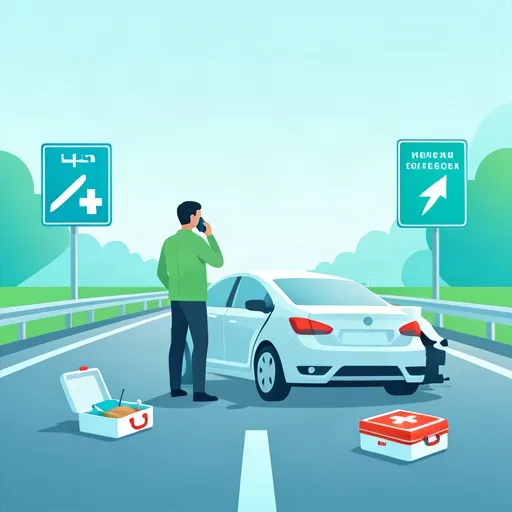
Article content overview
Being involved in or witnessing a traffic accident is one of the most stressful situations a driver can face. In Sweden, the ability to act calmly and communicate effectively with emergency services is not just a moral obligation; it is a fundamental requirement for your driving license. The Swedish Transport Agency (Transportstyrelsen) expects every driver to understand the correct sequence of actions required to secure a scene and request professional assistance. When you dial 112, you are the eyes and ears of the rescue services, and the information you provide determines how quickly and effectively help arrives.
Before you even reach for your phone, you must secure the scene to prevent further harm. The standard protocol taught in Swedish driving schools is the L-ABC method. This systematic approach ensures that you prioritize life-saving actions over administrative tasks.
Never give an injured person food or water, even if they complain of thirst. In the event of internal injuries or the need for emergency surgery, consuming anything can severely complicate their condition or cause aspiration.
When you call 112, you will be connected to an SOS Alarm operator. Because they cannot see the scene, your ability to describe the situation is the most critical factor in their response planning. The operator is trained to guide you, but you should be prepared to deliver specific, structured information immediately.
You should be ready to answer these primary questions clearly and without panic:
If you are in a remote area or unsure of your exact position, do not guess. Look for environmental clues such as road signs, electricity line pylons, nearby watercourses, churches, or distinct intersections. In the Swedish theory exam, you may be tested on your knowledge of how to use these landmarks to guide emergency services when GPS coordinates are unavailable.
Failure to assist or provide your details after an accident can be classified as smitning (leaving the scene of an accident), which is a serious criminal offense in Sweden. Always remain at the scene until you are certain that emergency services have arrived or your presence is no longer required. If you damage property—such as a road sign, fence, or parked car—you are legally obligated to contact the owner. If you cannot locate them, you must contact the police to ensure the incident is logged, protecting yourself from future accusations of hit-and-run.
Calling 112 during a Swedish traffic accident requires both securing the scene using the L-ABC method and providing structured information to SOS operators. The L-ABC protocol prioritizes removing life-threatening dangers, checking breathing, controlling bleeding, and managing shock. When calling emergency services, drivers must describe what happened, provide precise location details (including motorway direction), report injuries and entrapment, and flag hazardous goods. In areas without GPS, landmarks are essential for guiding responders. Critically, drivers must remain at the scene until emergency services arrive or are released — leaving constitutes the criminal offense of smitning. This procedure is a mandatory component of the Swedish driving theory exam.
A short set of high-value points that capture the most important ideas from this article.
Use the L-ABC method to secure an accident scene before calling 112, prioritizing life-threatening dangers first
When calling 112, clearly state what happened, your exact location (including motorway direction if applicable), number of injuries, and whether anyone is trapped
Report hazardous goods (farligt gods) immediately if any vehicle displays an orange plate, as this changes the entire emergency response protocol
If GPS coordinates are unavailable, use landmarks like road signs, pylons, churches, or watercourses to guide emergency services
Leaving the scene of an accident (smitning) without providing your details is a serious criminal offense in Sweden
L-ABC stands for Livsfarligt läge, Andning, Blödning, and Chock — the order for initial accident assessment
The emergency number 112 connects you to SOS Alarm, who cannot see your scene — your verbal description determines their response
In the L-ABC method, check breathing (Andning) before bleeding (Blödning), and never give food or water to injured persons
On motorways, specify direction of travel and exit number when reporting your location
If you damage property and cannot find the owner, you must contact the police to log the incident
Calling 112 before securing the scene, potentially endangering yourself and others
Providing vague location information such as just a street name without direction, landmarks, or exit numbers
Forgetting to mention whether someone is trapped or if hazardous goods are involved
Leaving the scene too early or not staying to provide details to authorities
Giving food or water to an injured person, which can cause complications if surgery is needed
Article content overview
A short set of high-value points that capture the most important ideas from this article.
Use the L-ABC method to secure an accident scene before calling 112, prioritizing life-threatening dangers first
When calling 112, clearly state what happened, your exact location (including motorway direction if applicable), number of injuries, and whether anyone is trapped
Report hazardous goods (farligt gods) immediately if any vehicle displays an orange plate, as this changes the entire emergency response protocol
If GPS coordinates are unavailable, use landmarks like road signs, pylons, churches, or watercourses to guide emergency services
Leaving the scene of an accident (smitning) without providing your details is a serious criminal offense in Sweden
L-ABC stands for Livsfarligt läge, Andning, Blödning, and Chock — the order for initial accident assessment
The emergency number 112 connects you to SOS Alarm, who cannot see your scene — your verbal description determines their response
In the L-ABC method, check breathing (Andning) before bleeding (Blödning), and never give food or water to injured persons
On motorways, specify direction of travel and exit number when reporting your location
If you damage property and cannot find the owner, you must contact the police to log the incident
Calling 112 before securing the scene, potentially endangering yourself and others
Providing vague location information such as just a street name without direction, landmarks, or exit numbers
Forgetting to mention whether someone is trapped or if hazardous goods are involved
Leaving the scene too early or not staying to provide details to authorities
Giving food or water to an injured person, which can cause complications if surgery is needed
Explore related topics, search based questions, and concepts that learners often look up when studying Calling 112 in Sweden. These themes reflect real search intent and help you understand how this topic connects to wider driving theory knowledge in Sweden.
Find clear and practical answers to common questions learners often have about Calling 112 in Sweden. This section helps explain difficult points, remove confusion, and reinforce the key driving theory concepts that matter for learners in Sweden.
You must stop, assess the situation, and determine if anyone is injured or if there is an immediate danger, such as leaking fuel, using the L-ABC method.
You should be ready to report what happened, the exact location of the accident, your phone number, the type and number of vehicles involved, and details regarding any injuries or if someone is trapped.
Use nearby landmarks such as road signs, exits, intersections, power lines, bodies of water, or churches to help the operator pinpoint your position.
It is a framework for assessing an accident scene: L (Livsfarligt läge - Life-threatening danger), A (Andning - Breathing), B (Blödning - Bleeding), and C (Chock - Shock).
Continue your learning journey by exploring more detailed articles and guides. Clarify specific traffic rules, understand complex road signs, or review safe driving practices. Our extensive content library supports your Swedish driving license theory preparation.