Being prepared for an accident is a critical component of safe driving and a core topic in the Swedish driving theory exam. You will learn the correct protocol for securing a scene, providing accurate information to SOS operators, and identifying specialized risks such as vehicles transporting hazardous substances. Mastery of these steps helps you fulfill your legal obligations and act with confidence during emergencies.
Article content overview
Being involved in or witnessing a traffic accident is a high-stress event that tests both your driving skills and your composure. In Sweden, the law places clear obligations on drivers to act promptly and correctly. Understanding these responsibilities is not only a requirement for passing your theory exam, but it is also a fundamental aspect of road safety. When an accident occurs, your ability to remain calm, secure the site, and communicate effectively with emergency services can genuinely save lives.
According to Swedish traffic regulations, if you are involved in or witness a traffic accident, you have a legal duty to stay at the scene and provide necessary assistance to the best of your ability. This means you must stop your vehicle, assess the situation, and help those in need. Leaving the scene of an accident—unless you are performing a specific safety action—is considered a serious offense often referred to as "smitning" (hit-and-run).
You are legally required to stop and provide assistance even if you were not the primary cause of the accident. Failure to do so can result in severe legal consequences, including fines or the loss of your driving license.
If you discover a minor accident involving property damage, such as a parking mishap, you must still make a reasonable effort to contact the owner. If you cannot locate the owner, you are required to leave your contact information on the vehicle and report the incident to the police to ensure you are not accused of fleeing the scene.
The L-ABC method is the standard protocol taught in Sweden for assessing and responding to accident victims. It helps you prioritize actions to prevent further harm.
Calling 112 is a critical step in the emergency chain. When you reach the SOS operator, it is vital that you provide precise information. The dispatcher will ask structured questions to determine the nature and scale of the response required. If you are disoriented, use nearby landmarks such as road signs, power lines, bodies of water, or church steeples to help the operator pinpoint your exact location.
When reporting, focus on the following:
In Sweden, trucks transporting hazardous materials are required to display specific orange-colored rectangular signs. If you are involved in an accident involving a vehicle with this signage, keep a safe distance and alert the emergency operator immediately. Leaking chemicals or explosive materials can turn a standard accident into a life-threatening situation for you and other responders.
The Swedish theory exam frequently uses scenario-based questions to test your knowledge of accident protocol. You may be asked how to sequence your actions or what information takes priority when calling 112. Always remember: personal safety comes first, followed by securing the scene and alerting professionals. Never move a victim unless there is an immediate risk, such as an impending explosion.
This article covers the legal and practical obligations of Swedish drivers when encountering a traffic accident, including the requirement to stop, assist, and report. The L-ABC emergency protocol teaches a systematic approach to assessing victims by prioritizing life-threatening situations, checking breathing, controlling bleeding, and preventing shock. Effective communication with 112 operators requires providing accurate location information using landmarks, describing injuries and vehicle involvement, and noting dangerous goods. Understanding the orange dangerous goods signage is essential for identifying additional risks at accident scenes. These procedures are commonly tested in the Swedish theory exam through scenario-based questions requiring correct action sequencing.
A short set of high-value points that capture the most important ideas from this article.
You have a legal duty to stop and provide assistance at any traffic accident, regardless of whether you caused it
The L-ABC method prioritizes life-threatening dangers first, then breathing, bleeding, and shock
When calling 112, provide your exact location using landmarks, the number and nature of injuries, and whether anyone is trapped
Orange rectangular signs on vehicles indicate dangerous goods transport requiring extra caution
Leaving the scene of an accident without proper justification (smitning) carries serious legal consequences including potential license loss
L-ABC stands for Livsfarligt läge (life-threatening danger), Andning (breathing), Blödning (bleeding), and Chock (shock)
112 is Sweden's unified emergency number for police, ambulance, and fire services
If you cannot find the owner of a vehicle you damaged, leave your contact information and report to the police
Place unconscious but breathing victims in the recovery position; never give food or drink
Only move a victim if there is immediate danger such as fire or explosion risk
Believing the duty to stop only applies if you are the driver who caused the accident
Moving an injured person from the scene unless there is an immediate life-threatening danger
Failing to provide specific location details when calling 112, which delays emergency response
Offering food or water to accident victims who may need medical treatment
Overlooking the orange dangerous goods signage that indicates additional hazards at the scene
Article content overview
A short set of high-value points that capture the most important ideas from this article.
You have a legal duty to stop and provide assistance at any traffic accident, regardless of whether you caused it
The L-ABC method prioritizes life-threatening dangers first, then breathing, bleeding, and shock
When calling 112, provide your exact location using landmarks, the number and nature of injuries, and whether anyone is trapped
Orange rectangular signs on vehicles indicate dangerous goods transport requiring extra caution
Leaving the scene of an accident without proper justification (smitning) carries serious legal consequences including potential license loss
L-ABC stands for Livsfarligt läge (life-threatening danger), Andning (breathing), Blödning (bleeding), and Chock (shock)
112 is Sweden's unified emergency number for police, ambulance, and fire services
If you cannot find the owner of a vehicle you damaged, leave your contact information and report to the police
Place unconscious but breathing victims in the recovery position; never give food or drink
Only move a victim if there is immediate danger such as fire or explosion risk
Believing the duty to stop only applies if you are the driver who caused the accident
Moving an injured person from the scene unless there is an immediate life-threatening danger
Failing to provide specific location details when calling 112, which delays emergency response
Offering food or water to accident victims who may need medical treatment
Overlooking the orange dangerous goods signage that indicates additional hazards at the scene
Explore related topics, search based questions, and concepts that learners often look up when studying Reporting Accidents and Emergency Protocol. These themes reflect real search intent and help you understand how this topic connects to wider driving theory knowledge in Sweden.
Find clear and practical answers to common questions learners often have about Reporting Accidents and Emergency Protocol. This section helps explain difficult points, remove confusion, and reinforce the key driving theory concepts that matter for learners in Sweden.
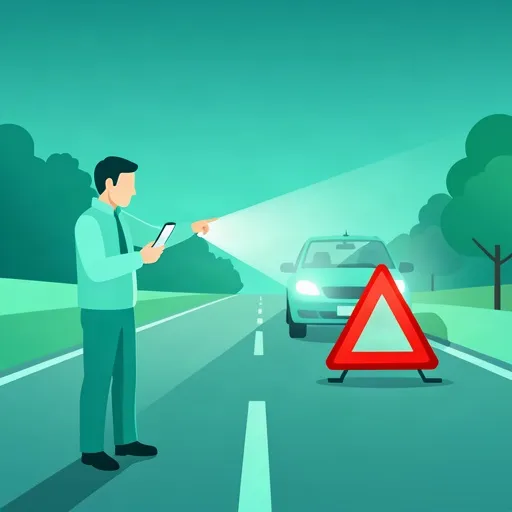
Stop, assess the situation to see if anyone is injured or trapped, check for dangerous leaks or hazards, and secure the scene with a warning triangle to alert other traffic.
You must report what happened, the exact location (use landmarks or road signs if lost), the number of injured persons, their condition, and if anyone is trapped or if hazardous vehicles are involved.
These trucks are identified by orange warning plates. You must keep a safe distance from these vehicles, especially if there is a leak, as there is a high risk of explosion or toxic exposure.
Yes, if you are involved in an accident, you must remain at the scene, provide your contact information to other involved parties, and assist those in need until help arrives.
Continue your learning journey by exploring more detailed articles and guides. Clarify specific traffic rules, understand complex road signs, or review safe driving practices. Our extensive content library supports your Swedish driving license theory preparation.