As vehicle technology advances, it is essential to understand the limits of systems like Tesla FSD (Supervised) and how they relate to Swedish traffic law. This guide clarifies that even when a vehicle controls steering or speed, the driver remains 100% legally responsible for the car's actions. Mastering these concepts is vital for passing your theory exam and ensuring safety on Swedish roads.
Article content overview
As vehicle technology evolves rapidly, the Swedish road network is increasingly populated by cars equipped with advanced driver-assistance systems (ADAS). While these technologies, such as lane-keeping assist, adaptive cruise control, and automated parking, can significantly enhance comfort and safety, they also introduce complex legal and ethical questions for new drivers. In the context of the Swedish driving theory exam, it is vital to distinguish between assistance systems that aid the driver and true autonomous driving systems that do not currently exist for general consumer use.
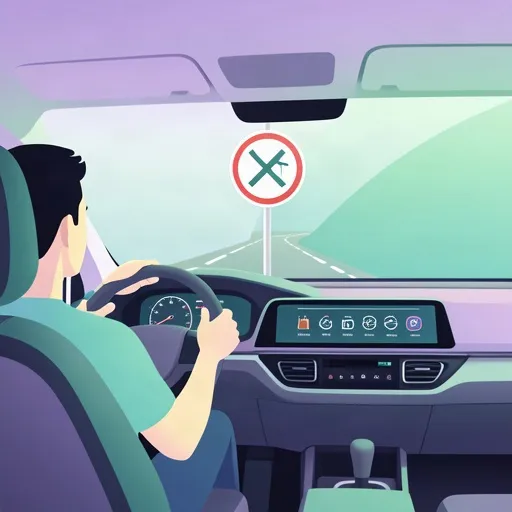
In Sweden, the fundamental legal principle remains unchanged: the human behind the wheel is 100% responsible for the vehicle’s actions at all times. Even if your car is equipped with sophisticated software capable of steering, accelerating, or braking, this does not shift the liability to the manufacturer or the computer system. Transportstyrelsen (the Swedish Transport Agency) emphasizes that modern driver-assistance systems are categorized as "supervised" technology. This means the driver must remain observant, alert, and ready to intervene instantly if the system fails or encounters a situation it cannot handle.
Over-reliance on technology is a major safety risk. Never assume that your vehicle's automation features are infallible. You are legally responsible for all traffic violations and accidents caused by your vehicle, even if the ADAS was active at the time.
There is often confusion regarding systems marketed as "full self-driving" or "autonomous." As of today, these systems are still under rigorous testing and regulatory evaluation. In Sweden, automated driving features are only permitted on public roads under specific, strictly controlled test conditions with trained drivers. For the average motorist, "FSD (Supervised)" or similar features do not grant you the right to stop paying attention to the road. The European Union and Swedish authorities are currently working on harmonizing regulations to ensure that any future automated functionality meets the high safety standards expected on Swedish roads.
The requirement for the driver to maintain continuous focus on the road and traffic environment, keeping their hands ready to take control of the vehicle at any moment, regardless of the level of automated assistance active.
When you sit for your theory exam, you may encounter questions regarding how to behave when driving a vehicle equipped with advanced technology. The Swedish Transport Administration (Trafikverket) expects you to demonstrate a clear understanding of the limitations of these systems. You should be prepared to identify situations where automated systems might be hindered, such as heavy snow covering road markings, poor visibility, or complex urban intersections where the car’s sensors may struggle to interpret human intent.
It is important to understand that using a vehicle's advanced features in a manner that contradicts its type-approval can have serious consequences. If you operate an automated function that has not been approved for general consumer use in Sweden, you risk not only legal fines but also the invalidation of your insurance coverage. Always wait for official updates and approvals from Transportstyrelsen before relying on new software updates for your vehicle's driving capabilities.
This article clarifies that in Sweden, drivers retain full legal responsibility for their vehicle at all times, even when advanced driver-assistance systems are active. Systems like lane-keeping assist and adaptive cruise control are classified as supervised technology, meaning the driver must stay alert and ready to intervene instantly. While features marketed as 'full self-driving' exist, they are not approved for general consumer use on Swedish roads, and using unapproved automation can void insurance and result in fines. For the theory exam, you should understand automation levels, recognize situations where ADAS may fail (such as obscured road markings or complex intersections), and know that Transportstyrelsen and Trafikverket set the standards governing these technologies.
A short set of high-value points that capture the most important ideas from this article.
In Sweden, the driver is always 100% legally responsible for vehicle actions, regardless of what ADAS features are active
ADAS systems like Tesla FSD (Supervised) require constant human oversight and are not substitutes for driver attention
Automated driving features are only permitted on public roads under specific test conditions, not for general consumer use
Understanding your vehicle's approved automation level helps you know what the system can and cannot do
Using unapproved automated functions can result in legal fines and insurance invalidation
Transportstyrelsen categorizes all current driver-assistance systems as 'supervised' technology requiring constant human readiness
Automation levels range from 0 (no automation) to 5 (full automation), and Sweden currently only permits supervised systems for general use
Type-approval is the official certification confirming a vehicle meets Swedish safety and environmental standards
ADAS limitations include heavy snow covering road markings, poor visibility, and complex intersections where sensors struggle
The European Union and Swedish authorities are still harmonizing regulations for future automated functionality
Assuming that a system marketed as 'full self-driving' means the driver can stop paying attention
Trusting lane-keeping assist or adaptive cruise control to handle adverse weather or heavy traffic without supervision
Using vehicle automation features that have not been officially approved for general consumer use in Sweden
Believing that if an accident occurs while ADAS is active, the manufacturer or software bears legal liability
Failing to read the vehicle manual to understand specific ADAS limitations before activating features
Article content overview
A short set of high-value points that capture the most important ideas from this article.
In Sweden, the driver is always 100% legally responsible for vehicle actions, regardless of what ADAS features are active
ADAS systems like Tesla FSD (Supervised) require constant human oversight and are not substitutes for driver attention
Automated driving features are only permitted on public roads under specific test conditions, not for general consumer use
Understanding your vehicle's approved automation level helps you know what the system can and cannot do
Using unapproved automated functions can result in legal fines and insurance invalidation
Transportstyrelsen categorizes all current driver-assistance systems as 'supervised' technology requiring constant human readiness
Automation levels range from 0 (no automation) to 5 (full automation), and Sweden currently only permits supervised systems for general use
Type-approval is the official certification confirming a vehicle meets Swedish safety and environmental standards
ADAS limitations include heavy snow covering road markings, poor visibility, and complex intersections where sensors struggle
The European Union and Swedish authorities are still harmonizing regulations for future automated functionality
Assuming that a system marketed as 'full self-driving' means the driver can stop paying attention
Trusting lane-keeping assist or adaptive cruise control to handle adverse weather or heavy traffic without supervision
Using vehicle automation features that have not been officially approved for general consumer use in Sweden
Believing that if an accident occurs while ADAS is active, the manufacturer or software bears legal liability
Failing to read the vehicle manual to understand specific ADAS limitations before activating features
Explore related topics, search based questions, and concepts that learners often look up when studying ADAS Legal Rules in Sweden. These themes reflect real search intent and help you understand how this topic connects to wider driving theory knowledge in Sweden.
Find clear and practical answers to common questions learners often have about ADAS Legal Rules in Sweden. This section helps explain difficult points, remove confusion, and reinforce the key driving theory concepts that matter for learners in Sweden.
No. In Sweden, you must remain fully attentive and ready to take control at all times, regardless of the vehicle's assistance features. You are always 100% legally responsible for the vehicle.
No. While Tesla FSD (Supervised) is undergoing testing and EU-level analysis, it is not currently permitted for general consumer activation in Sweden outside of specific authorized test conditions.
Vehicles with valid EU type-approval do not require a separate Swedish permit to operate, but they must be used within the limits defined by their approval and current Swedish traffic legislation.
Using functions not covered by the vehicle's type-approval may void your insurance coverage and place you in breach of traffic regulations, as you would be operating a vehicle in a way that deviates from its certified safety parameters.
Continue your learning journey by exploring more detailed articles and guides. Clarify specific traffic rules, understand complex road signs, or review safe driving practices. Our extensive content library supports your Swedish driving license theory preparation.