
Learn the critical safety measures necessary for navigating Swedish roads during winter, where rapid temperature changes frequently lead to dangerous, invisible ice. This article explains how to recognize potential hazards like bridge icing, the importance of smooth vehicle control, and the strict safety protocols for encountering snowplows. These insights are essential for developing the defensive driving habits tested in the Swedish theory examination.
Article content overview
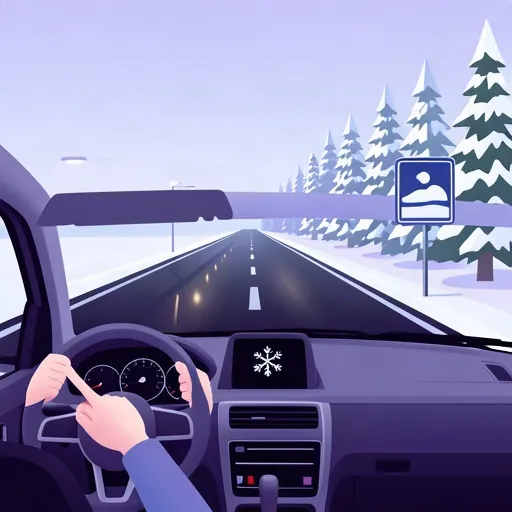
Winter in Sweden brings unique challenges for every driver, from the first frost in October to the unpredictable thaws of spring. Whether you are driving through the bustling streets of Stockholm or on rural roads in the north, the combination of sub-zero temperatures and shifting weather patterns creates hazardous road conditions. Mastering winter driving is not only a practical skill for your daily commute but a core component of your Swedish theory exam. Understanding how to manage your vehicle during these times is essential for your safety and for passing your license test.
Black ice, known in Swedish as svarthalka, is one of the most treacherous hazards you will face. Unlike a visible layer of snow, black ice is a thin, nearly transparent coating of ice that blends perfectly with the asphalt, making it invisible to the naked eye. It frequently forms on bridges, viaducts, and in shaded, forested areas where the road surface remains significantly colder than the surrounding environment.
When driving in temperatures hovering around zero degrees Celsius, you must assume the road is slippery even if it appears dry. Bridge decks and shaded patches are the first areas to freeze and the last to thaw, making them high-risk zones for sudden loss of traction. Defensive driving in these conditions requires you to scan the environment constantly, looking for signs of potential ice such as frost on your mirrors or the behavior of vehicles ahead of you.
A common misunderstanding among learner drivers is that road maintenance by Trafikverket guarantees safe driving conditions. While Trafikverket monitors road surface temperatures using hundreds of sensors across the country, it is your legal responsibility as a driver to adapt your speed and distance to the current conditions. If you are involved in a collision, claiming that the road was not salted or plowed is rarely a valid excuse; the law requires you to maintain a speed that allows you to stop or maneuver safely regardless of how well the road is maintained.
Always increase your following distance significantly on slippery roads. It takes much longer to stop on ice than on dry pavement, and your ABS system may react differently, increasing your stopping distance if you panic-brake.
To maintain control, you must avoid sudden movements. All steering, braking, and acceleration should be performed with a gentle, fluid motion. If you enter a curve too fast on a slippery surface, do not stomp on the brakes, as this will likely cause your wheels to lock or your vehicle to lose lateral grip. Instead, ease off the accelerator and steer smoothly in the direction you want to go.
During heavy snowfall, you will frequently encounter snowplows on Swedish roads. While they are there to make your journey safer, they also present significant risks. Never attempt to overtake a snowplow, especially when two of them are driving in parallel or offset positions—a formation known as a tandem plow (tandemplog).
Tandem plows are often equipped with side-mounted wings that extend far beyond the width of the vehicle, which may be difficult to spot through blowing snow. Attempting to pass between or around them can result in fatal accidents. Patience is your greatest tool; stay behind the plows, keep your distance, and accept that your travel time will be longer. The safety of you and the road maintenance crews depends on your restraint.
Preparation is the hallmark of a safe driver. Before setting out, ensure your vehicle is equipped with high-quality winter tires, which are mandatory in Sweden during winter road conditions. Beyond the tires, your car should carry basic emergency gear: a snow shovel, a tow rope, a flashlight, and jumper cables. Personal readiness is just as important; keep a warm set of clothes, a blanket, and a fully charged mobile phone in the vehicle in case you are forced to stop or wait for assistance.
The Swedish driving theory exam frequently uses winter-related scenarios to test your judgment. Questions often focus on whether you understand that your speed must be adjusted to the conditions rather than the posted speed limit. For example, you might be presented with a situation where a road has a speed limit of 90 km/h, but the surface is icy and visibility is poor; the correct answer will always be to significantly reduce your speed to match the safety level of the road.
When you encounter these questions, always place yourself in the seat of a cautious driver. Avoid "heroic" driving maneuvers and prioritize the safety of all road users. By demonstrating an understanding of braking distances, the dangers of black ice, and the necessity of patience near maintenance vehicles, you align yourself with the core values of the Swedish driving system.
Swedish winter driving requires constant awareness of invisible hazards like black ice (svarthalka), which forms on bridges and shaded areas when temperatures hover around zero. The law places full responsibility on you to adapt speed and following distance to actual conditions, not just posted limits. Never overtake tandem plows (tandemplog) driving in parallel formation, as their extended wings create danger zones beyond what is visible in snow. All vehicle control inputs must be smooth and gradual on slippery surfaces to maintain traction, and winter tires (vinterdäck) are mandatory when winter conditions exist. The theory exam tests whether you understand that cautious, defensive driving prioritizes safety over speed in winter conditions.
A short set of high-value points that capture the most important ideas from this article.
Black ice (svarthalka) is nearly invisible and forms most commonly on bridges, viaducts, and shaded areas where road surfaces stay colder than surroundings
You are legally responsible for adapting your speed to actual road conditions regardless of whether roads have been salted or plowed
Never attempt to overtake tandem plows (tandemplog) as their extended side wings are difficult to see through blowing snow and passing between them is extremely dangerous
Smooth, gentle inputs for steering, braking, and acceleration are essential on slippery surfaces; sudden movements cause loss of traction
Bridge decks freeze first and thaw last, making them high-risk zones requiring extra vigilance when temperatures hover around zero
When temperatures are near 0°C, assume all road surfaces are slippery even if they appear dry
Trafikverket monitors road surface temperature with sensors, but this does not remove your duty to adjust speed appropriately
Stopping distance increases dramatically on ice and your ABS may respond differently during panic braking
Winter tires (vinterdäck) are mandatory in Sweden when winter road conditions exist
Tandem plows driving in parallel formation pose dangers beyond their visible width due to extended side-mounted wings
Assuming that posted speed limits apply regardless of actual road surface conditions during winter
Braking hard or making sudden steering inputs when encountering unexpected slipperiness, which causes wheels to lock or loss of lateral grip
Attempting to overtake snowplows, particularly tandem plows, believing the gap between them is safe to pass through
Thinking road maintenance by Trafikverket guarantees safe driving conditions and eliminates personal responsibility for collisions
Failing to increase following distance significantly on icy roads, underestimating how much longer stopping takes
Article content overview
A short set of high-value points that capture the most important ideas from this article.
Black ice (svarthalka) is nearly invisible and forms most commonly on bridges, viaducts, and shaded areas where road surfaces stay colder than surroundings
You are legally responsible for adapting your speed to actual road conditions regardless of whether roads have been salted or plowed
Never attempt to overtake tandem plows (tandemplog) as their extended side wings are difficult to see through blowing snow and passing between them is extremely dangerous
Smooth, gentle inputs for steering, braking, and acceleration are essential on slippery surfaces; sudden movements cause loss of traction
Bridge decks freeze first and thaw last, making them high-risk zones requiring extra vigilance when temperatures hover around zero
When temperatures are near 0°C, assume all road surfaces are slippery even if they appear dry
Trafikverket monitors road surface temperature with sensors, but this does not remove your duty to adjust speed appropriately
Stopping distance increases dramatically on ice and your ABS may respond differently during panic braking
Winter tires (vinterdäck) are mandatory in Sweden when winter road conditions exist
Tandem plows driving in parallel formation pose dangers beyond their visible width due to extended side-mounted wings
Assuming that posted speed limits apply regardless of actual road surface conditions during winter
Braking hard or making sudden steering inputs when encountering unexpected slipperiness, which causes wheels to lock or loss of lateral grip
Attempting to overtake snowplows, particularly tandem plows, believing the gap between them is safe to pass through
Thinking road maintenance by Trafikverket guarantees safe driving conditions and eliminates personal responsibility for collisions
Failing to increase following distance significantly on icy roads, underestimating how much longer stopping takes
Explore related topics, search based questions, and concepts that learners often look up when studying Swedish Winter Driving Safety. These themes reflect real search intent and help you understand how this topic connects to wider driving theory knowledge in Sweden.
Find clear and practical answers to common questions learners often have about Swedish Winter Driving Safety. This section helps explain difficult points, remove confusion, and reinforce the key driving theory concepts that matter for learners in Sweden.
Black ice, or svarthalka in Swedish, is a thin, invisible layer of ice that forms on road surfaces. It is particularly dangerous on bridges, viaducts, and in shaded areas where temperatures can drop rapidly.
Yes, you are legally responsible for adapting your speed and following distance to the current road conditions at all times, regardless of the maintenance level provided by authorities like Trafikverket.
Overtaking snowplows, especially tandem plows, is extremely dangerous because they may have hidden side blades, limited visibility for the operator, or unstable road conditions in their path.
To prevent skidding, you must perform all maneuvers—steering, braking, and accelerating—very smoothly. Avoid sudden movements, maintain a larger following distance, and keep your speed low.
Continue your learning journey by exploring more detailed articles and guides. Clarify specific traffic rules, understand complex road signs, or review safe driving practices. Our extensive content library supports your Swedish driving license theory preparation.