
As a learner driver in Sweden, you must understand that road conditions are a critical factor in safe driving and hazard perception. This article explains how technology like lidar and laser profiling helps maintain our roads, and why you must be prepared to adjust your speed and driving style based on the physical state of the pavement regardless of technical monitoring.
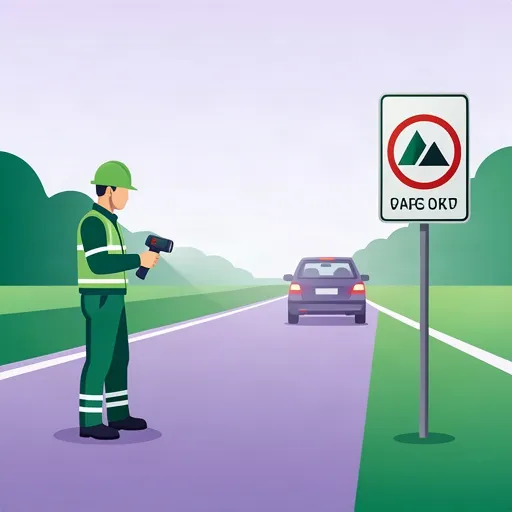
Article content overview
In Sweden, road safety is not merely a matter of individual driver behavior; it is a complex ecosystem supported by state-of-the-art infrastructure monitoring. As a learner driver preparing for your theory exam, it is essential to understand that the roads you travel on are constantly being evaluated by institutions like Trafikverket. By using advanced technologies such as lidar, laser profilometers, and mobile mapping, authorities gather precise data on road surface quality, lane widths, and infrastructure integrity.
Understanding how this data influences speed limits and maintenance schedules helps you grasp why specific traffic rules are in place. When you see a reduced speed limit or a temporary road sign, it is often a direct result of these technical assessments aimed at mitigating hazards before they lead to accidents.
Technology has transformed how we maintain Swedish roads. Research conducted by VTI—the Swedish National Road and Transport Research Institute—regularly evaluates global monitoring systems to ensure that road measurements are as accurate as possible. These systems do more than just check for potholes; they analyze longitudinal profiles, rutting, and surface friction, which are critical factors for vehicle control.
For a learner driver, this means recognizing that "legal speed" is not always "safe speed." When the infrastructure monitoring systems identify degradation in road surface quality, authorities will often lower the permitted speed limit to compensate for increased braking distances or reduced grip. Ignoring these environmental indicators is a common trap on the theory exam, where questions often ask you to prioritize road conditions over the maximum posted limit.
Your ability to adapt to varying road conditions is a core pillar of the Swedish driving theory. Poor road surface quality significantly impacts the friction coefficient between your tires and the asphalt. In Sweden, where winter conditions such as snow, ice, and slush are frequent, even minor road surface defects can be exacerbated, leading to a loss of traction.
If you encounter an uneven road sign, your responsibility as a driver is to assess the situation well in advance. You must adjust your speed to ensure that your vehicle remains stable and that you have sufficient reaction time if you encounter a sudden obstruction or a patch of ice. Understanding that these signs are grounded in technical data should heighten your awareness of why professional, defensive driving is non-negotiable.
In the official theory exam, you will likely encounter scenarios that test your ability to read the road. You might be asked how to react to a sudden change in surface quality or how road markings become less visible during poor weather. The authorities expect you to demonstrate a proactive mindset. If you are driving on a road where maintenance equipment is present or where the surface is clearly degraded, you are expected to increase your following distance and reduce your speed.
| Factor | Impact on Driving |
|---|---|
| Longitudinal Profile | Affects vehicle stability and risk of hydroplaning. |
| Surface Friction | Determines your minimum stopping distance. |
| Lane Width | Dictates your lateral position and clearance to others. |
| Road Markings | Essential for navigation, especially in low light or fog. |
Article content overview
Explore related topics, search based questions, and concepts that learners often look up when studying Road Surface Quality and Safety. These themes reflect real search intent and help you understand how this topic connects to wider driving theory knowledge in Sweden.
Find clear and practical answers to common questions learners often have about Road Surface Quality and Safety. This section helps explain difficult points, remove confusion, and reinforce the key driving theory concepts that matter for learners in Sweden.
Understanding that road quality affects vehicle control and braking distance is vital. You must recognize when to reduce speed to compensate for poor surface conditions, which is a fundamental requirement for safe driving in Sweden.
Yes, road authorities like Trafikverket evaluate road surface quality and other infrastructure factors when determining appropriate speed limits to ensure the safety of all road users.
You should always increase your following distance, reduce your speed, and stay alert for signs of unevenness or reduced grip, especially during winter months when ice and snow impact road surface friction.
Continue your learning journey by exploring more detailed articles and guides. Clarify specific traffic rules, understand complex road signs, or review safe driving practices. Our extensive content library supports your Swedish driving license theory preparation.