Mastering Dynamic Road Traffic: Navigating Work Zones and Reversible Lanes in Sweden
Driving in Sweden requires a high level of situational awareness, especially when encountering temporary traffic management systems. Whether you are navigating the intricate construction phases of the E4 Förbifart Stockholm project or encountering routine maintenance on national roads, understanding how to interpret variable signals and temporary signage is essential for passing your Swedish theory exam. As a learner, you must recognize that standard road rules are sometimes superseded by dynamic indicators designed to manage traffic flow during roadworks.
Understanding Reversible Lanes and Variable Signals
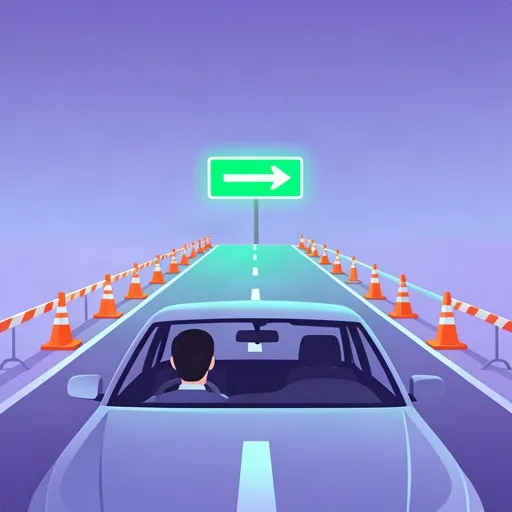
A reversible lane (reversibelt körfält) is a lane where the direction of travel can be changed to accommodate fluctuating traffic volumes or, more commonly, to manage traffic flow through a construction zone. When approaching a bridge or road segment equipped with these lanes, you will typically see overhead signals that dictate which lanes are currently open to you.
It is vital to understand that a reversible lane signal logic takes precedence over standard static road markings. If a signal indicates that a lane is closed or directed toward oncoming traffic, you must treat that lane as prohibited territory, regardless of what the road surface markings might suggest. Ignoring these lights, especially during night-time hours when visibility is lower and roadworks are more frequent, creates a severe risk of head-on collisions.
Navigating Through Roadwork Zones Safely
Trafikverket frequently schedules high-impact maintenance during off-peak hours, particularly between 21:00 and 05:00. This is common on major arteries like the E4 to minimize congestion, but it presents unique challenges for drivers. When you encounter a roadwork zone, you are legally required to reduce your speed and increase your following distance.
Temporary signs in these zones often impose strict speed limits that differ significantly from the standard limit for that road type. These limits are not suggestions; they are in place to protect road workers and manage the complexities of narrow lanes or uneven road surfaces. Always remain vigilant for "tandem plows" in winter or construction vehicles entering the flow of traffic, as their movements can be unpredictable.
Never attempt to overtake in a restricted construction zone, especially when passing stationary or slow-moving road maintenance vehicles. These vehicles may be equipped with blades or extensions that are not immediately visible, posing a lethal threat if you pass too closely.
As a driver in Sweden, you have a proactive responsibility to stay informed about road conditions. Services like Trafiken.nu provide real-time updates on traffic flow and planned maintenance. Before beginning a long journey, particularly at night, checking for road closures or active reversible lane shifts can prevent you from entering a situation you are unprepared for.
The theory exam often tests your ability to react to changing information. You should view temporary signs, variable message boards, and electronic lane indicators as the primary authority. If you find yourself confused by a temporary traffic setup, the safest course of action is to decelerate, maintain a safe distance from the vehicle in front, and follow the flow of traffic cautiously until the pattern becomes clear.
| Sign/Signal Type | Driver Responsibility |
|---|
| Yellow Temporary Signs | Give precedence over white permanent signs. |
| Red Cross (Overhead) | Lane is strictly prohibited; move to an adjacent lane immediately. |
| Variable Speed Limit | Must be obeyed even if the road appears empty. |
| Road Worker Signs | Indicate high risk; reduce speed and prepare to stop. |
Definition
Reversibelt körfält
A lane that changes the direction of permitted traffic flow based on electronic signals, often used in complex roadwork scenarios to optimize throughput.
How to Approach a Construction Zone
- Reduce your speed well in advance of the first warning sign.
- Observe the lane configuration and move into the correct lane early.
- Increase your following distance to at least three seconds.
- Obey all temporary lights and signals, even if they contradict your navigation system.
- Watch for workers on the road and stay within marked barriers.
Check out these practice sets
Learn more with these articles