Understanding the hierarchy of road signs is fundamental for passing the Swedish theory test and driving safely in real-world conditions. This guide clarifies the legal authority of temporary work zone signs and explains why you must adapt your driving behavior immediately upon encountering them. By mastering these rules, you will be prepared to handle construction zones on major roads like the E4 or E18 with confidence and caution.
Article content overview
Navigating Swedish roads requires a deep understanding of the hierarchy of traffic rules. When you encounter maintenance zones—often referred to as 'vägarbete'—the rules you follow in your day-to-day driving change significantly. A critical aspect of the Swedish driving theory exam is recognizing that temporary roadwork signs and instructions are not merely suggestions; they are legally binding directives that override permanent signage and standard traffic rules.
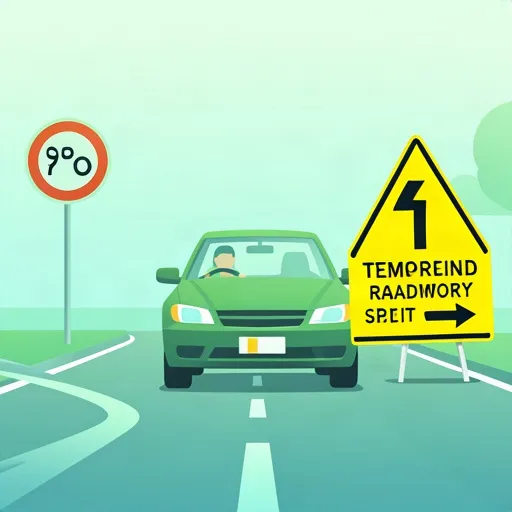
Under the regulations set by Transportstyrelsen, road users must always prioritize the most immediate traffic control measure. In a standard driving environment, you obey permanent signs, road markings, and general traffic rules. However, once you enter a construction zone, the environment becomes dynamic. If a permanent speed limit sign indicates 90 km/h but a temporary yellow-background sign indicates 50 km/h, the temporary sign takes full legal precedence.
Failing to adhere to temporary speed limits or lane instructions in a roadwork zone is a common cause of failure in the Swedish theory exam. Never assume a permanent sign remains valid if a conflicting temporary instruction is present.
This hierarchy exists to ensure the safety of road workers and other motorists. When you see temporary signs, they are specifically placed to manage hazards such as narrowed lanes, uneven road surfaces, or the presence of heavy machinery. Ignoring these instructions can lead to severe legal consequences and significantly increases the risk of accidents on major roads like the E4 or E18.
Temporary signs in Sweden are almost always characterized by a distinct yellow background, which immediately distinguishes them from permanent white or blue signage. These signs are used to communicate temporary conditions, such as lane shifts, detours, or prohibited overtaking.
When you encounter the A20 warning sign, you should anticipate further instructions, such as speed limit changes or lane closures. In many cases, these zones will include temporary markings on the road surface, often in yellow, which dictate the actual path of travel. Remember that if temporary yellow markings contradict permanent white markings, you must always follow the yellow ones.
One of the most frequent traps in the Swedish driving theory exam concerns overtaking in construction zones. Often, traffic authorities will deploy specific signage to prohibit overtaking to prevent collisions in areas with limited visibility or narrowed lanes.
When a road is reduced to one lane in each direction, or when traffic is diverted across the central median, overtaking is almost universally prohibited. Even if there are no physical barriers preventing you from changing lanes, the signage acts as the final legal authority. Attempting to overtake in these zones is not only a traffic violation but also a high-risk maneuver that disregards the safety of workers protected only by cones or light barriers.
The Swedish theory exam frequently tests your situational awareness regarding the "end" of a roadwork zone. A common point of confusion is when a temporary speed limit officially expires.
If you have passed a construction site but have not seen a sign indicating that the temporary speed limit has ended, you must exercise caution. However, if the work area is clearly finished and the road returns to its normal configuration, standard rules apply. The theory exam expects you to demonstrate "defensive driving"—if in doubt, prioritize safety by maintaining a lower speed until you are certain the restriction has been lifted.
Article content overview
Explore related topics, search based questions, and concepts that learners often look up when studying Temporary Roadwork Sign Priority. These themes reflect real search intent and help you understand how this topic connects to wider driving theory knowledge in Sweden.
Find clear and practical answers to common questions learners often have about Temporary Roadwork Sign Priority. This section helps explain difficult points, remove confusion, and reinforce the key driving theory concepts that matter for learners in Sweden.
Yes. According to Swedish traffic regulations, temporary signage used for roadwork (vägarbete) takes legal precedence over permanent road signs and markings. You must always follow the instructions provided by the temporary signage.
The temporary speed limit sign is the legally binding directive. You must adhere to the temporary limit until the roadwork zone officially ends or you encounter a sign indicating that the temporary restrictions no longer apply.
Usually, the end of a work zone is indicated by a specific sign. However, if the work zone is clearly cleared and no further hazards or instructions are present, standard road rules resume. If you are uncertain, maintain caution until you are confident you have passed the construction area.
The Swedish theory exam often uses construction zone scenarios to test your understanding of sign hierarchy and hazard perception. Failing to identify that temporary rules override permanent ones is a common reason for incorrect answers regarding priority and speed.
Continue your learning journey by exploring more detailed articles and guides. Clarify specific traffic rules, understand complex road signs, or review safe driving practices. Our extensive content library supports your Swedish driving license theory preparation.