
Understand and calculate safe stopping distances in challenging Swiss road conditions for your driving theory exam. This set covers how gradients, ice, snow, and vehicle characteristics influence braking. Learn essential strategies for adapting your speed and driving behaviour on alpine roads and during severe winter weather in Switzerland.
Sharpen your driving theory exam preparation with focused practice on stopping distances. This set covers uphill and downhill slopes, icy roads, and snow conditions specific to Switzerland, enhancing your hazard perception for safer driving decisions.
Prepare for the Swiss driving theory exam by mastering the complexities of stopping distance in adverse conditions. This set explores scenarios involving uphill and downhill gradients, icy patches, snowy surfaces, and the effect of vehicle load and speed, ensuring you can make informed decisions when it matters most.
Preview sample questions from the Slopes & Winter Braking practice set to see how they help you prepare for the driving theory exam in Switzerland.
Learners choose Slopes & Winter Braking to improve accuracy and understanding of key exam themes in Switzerland. It offers realistic driving theory questions and targeted revision for effective preparation.
Find answers to the most common queries learners have when practising Slopes & Winter Braking, including how questions match the official theory exam in Switzerland, how scoring works, and how this practice improves exam readiness.
Uphill gradients generally reduce stopping distance due to gravity assisting the braking effort, while downhill gradients significantly increase it as gravity works against the brakes, requiring more time and distance to stop.
On snow and ice, the friction between your tires and the road surface is drastically reduced. This severely diminishes grip, meaning your vehicle needs a much longer distance to come to a complete stop, even at lower speeds.
While a two-second rule applies in summer, it is highly recommended to increase your safety distance to at least three to four seconds on snowy or wet winter roads in Switzerland to account for increased stopping distances and reduced visibility.
If you are surprised by black ice or freezing rain, the safest course of action is to stop driving at the nearest safe location and wait for road services. Continuing to drive on such surfaces is extremely dangerous due to the near-total loss of grip.
While there is no general legal obligation for winter tires in Switzerland, it is highly recommended to equip your vehicle with appropriate winter tires for safety. On mountain roads, it is always advisable to carry snow chains, as specific passes may require them depending on weather conditions, even if the road is open.
By completing Slopes & Winter Braking, you will gain stronger rule knowledge, faster recognition of signs and situations, better decision making in traffic scenarios, and increased accuracy on exam style questions used in Switzerland. These outcomes directly support higher scoring exam performance.
Deepen your grasp of Swiss road rules by exploring similar practice sets. Comparing different scenarios helps solidify your knowledge for effective theory test preparation and exam success.
Master the Most Challenging Mountain Road Decisions for Your Swiss Driving Exam
Navigate Switzerland's Challenging Alpine Roads with Confidence.

Drive Smart, Drive Safe: Master Defensive Strategies for Swiss Roads
Master Winter Driving: Safely Navigate Swiss Mountain Passes
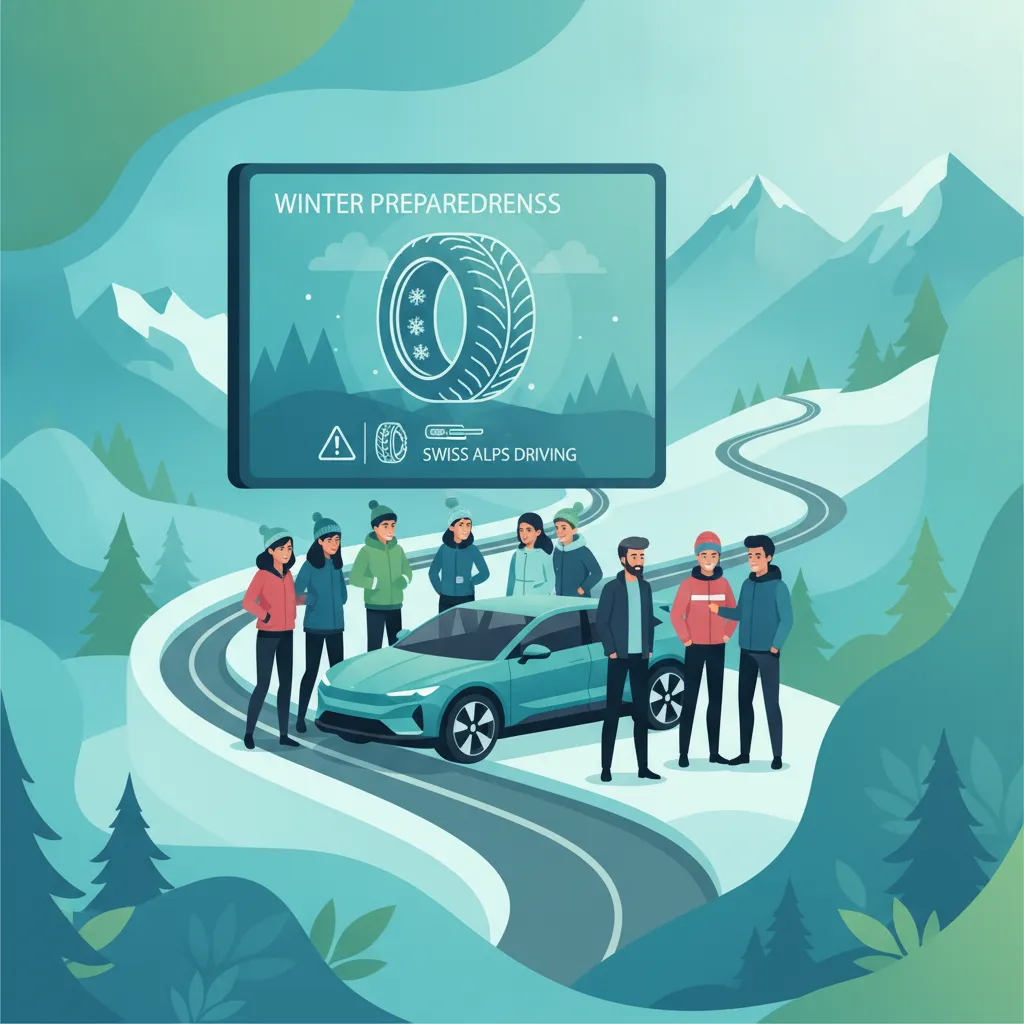
Master Alpine Roads: Your Responsibility in Challenging Swiss Winter Conditions
Master safe speed choices for any Swiss road condition.
Questions in Slopes & Winter Braking
Exam focused questionss
Slopes & Winter Braking offers quick, focused exam style practice to boost your Swiss knowledge for the driving theory exam in Switzerland.
Slopes & Winter Braking helps learners in Switzerland with clear explanations and targeted Swiss practice to improve essential driving theory topics.
This practice set is ideal for intermediate learners preparing for their Swiss driving theory exam, especially those who find it challenging to judge stopping distances in varying road and weather conditions. It helps address common misunderstandings about grip and inertia, particularly relevant for Switzerland's diverse terrain and climate.
Explore more topics for the Swiss driving theory exam in Switzerland.
Ready to enhance your knowledge of Swiss road rules and signs? Explore our categorized practice questions to focus your study on specific topics, reinforce weak areas, and build confidence for your official theory exam. Begin your journey to passing the Swiss driving test by selecting a category.
Explore Practice Categories