
Prepare for the official Swiss driving theory exam by mastering winter readiness. This set in Swiss Driving License Theory covers essential knowledge about winter tyres, adapting your speed and control on snow and ice, and understanding your legal responsibilities. Practice realistic scenarios from alpine roads to urban winter traffic, ensuring you can make safe decisions and avoid endangering others, which is vital for passing your test.
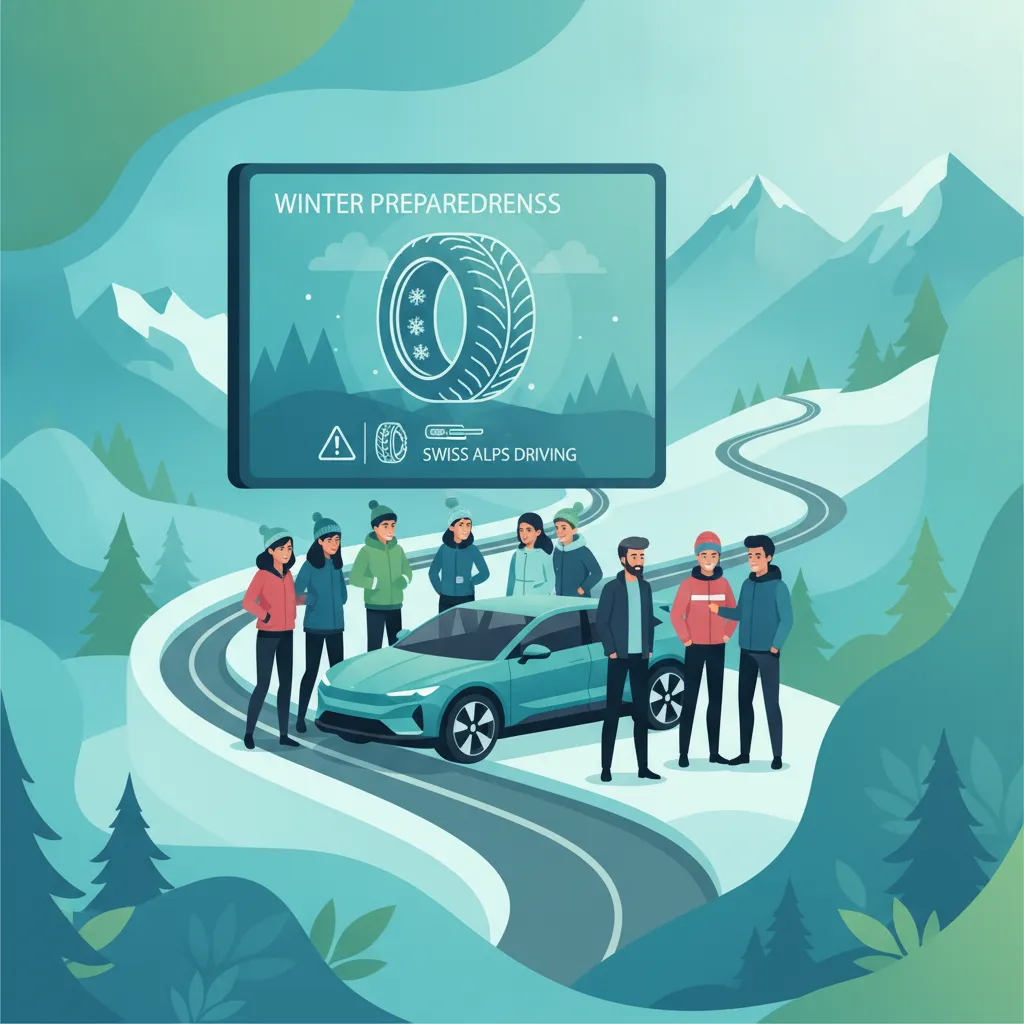
This practice set provides essential revision for navigating Swiss winter conditions, focusing on your driver responsibility and tyre requirements. Test your knowledge on challenging scenarios, including mountain passes and icy roads, to build confidence for your driving theory exam. Prepare thoroughly for adverse weather to ensure safe driving in Switzerland.
Navigate tricky Swiss winter scenarios with confidence. This set focuses on understanding tyre performance, adapting your driving technique to adverse weather, and the legal consequences of inadequate preparation. Prepare for situations on mountain passes, icy rural roads, and foggy urban routes.
Preview sample questions from the Swiss Winter Driving practice set to see how they help you prepare for the driving theory exam in Switzerland.
Learners choose Swiss Winter Driving to improve accuracy and understanding of key exam themes in Switzerland. It offers realistic driving theory questions and targeted revision for effective preparation.
Find answers to the most common queries learners have when practising Swiss Winter Driving, including how questions match the official theory exam in Switzerland, how scoring works, and how this practice improves exam readiness.
No, there is no general legal obligation to use winter tyres in Switzerland. However, drivers are legally required to maintain control of their vehicle in all conditions. If unsuitable tyres lead to an accident, the driver can face fines and insurance claims may be reduced or denied.
Winter tyres offer significantly better grip on cold, wet, snowy, or icy roads due to their special rubber compound and tread design. They remain flexible at low temperatures, providing optimal contact with the road surface, which reduces braking distances and improves vehicle stability.
While there's no general obligation, using summer tyres in cold or wet winter conditions can be risky. Summer tyres harden at low temperatures, losing grip. It is always the driver's responsibility to ensure their vehicle is safe and suitable for the prevailing road and weather conditions.
Snow chains should only be used when there is actual snow on the road and where explicitly required by the "Schneeketten obligatorisch" (snow chains compulsory) road sign. When using snow chains, the maximum speed allowed is 50 km/h.
If an accident occurs due to unsuitable tyres during winter conditions, the driver may face a fine. Additionally, insurance companies can reduce their payouts or claim damages back from the driver (regress), as the driver is responsible for ensuring the vehicle is roadworthy and controllable.
No, safety systems like ABS (Anti-lock Braking System) and ESP (Electronic Stability Program) are important, but they do not replace the need for appropriate winter tyres. Winter tyres provide the fundamental grip that these systems rely on to function effectively on slippery surfaces.
By completing Swiss Winter Driving, you will gain stronger rule knowledge, faster recognition of signs and situations, better decision making in traffic scenarios, and increased accuracy on exam style questions used in Switzerland. These outcomes directly support higher scoring exam performance.
Explore similar practice sets to solidify your grasp of essential driving theory, especially concerning Swiss winter conditions. Continue your exam preparation by reviewing related topics for comprehensive revision.

Master Winter Driving: Safely Navigate Swiss Mountain Passes
Ensure Your Vehicle's Tyres Are Road-Ready for Your Swiss Driving Test

Master the Most Challenging Mountain Road Decisions for Your Swiss Driving Exam

Master safe braking: Gradients and winter roads demand precision in Switzerland.
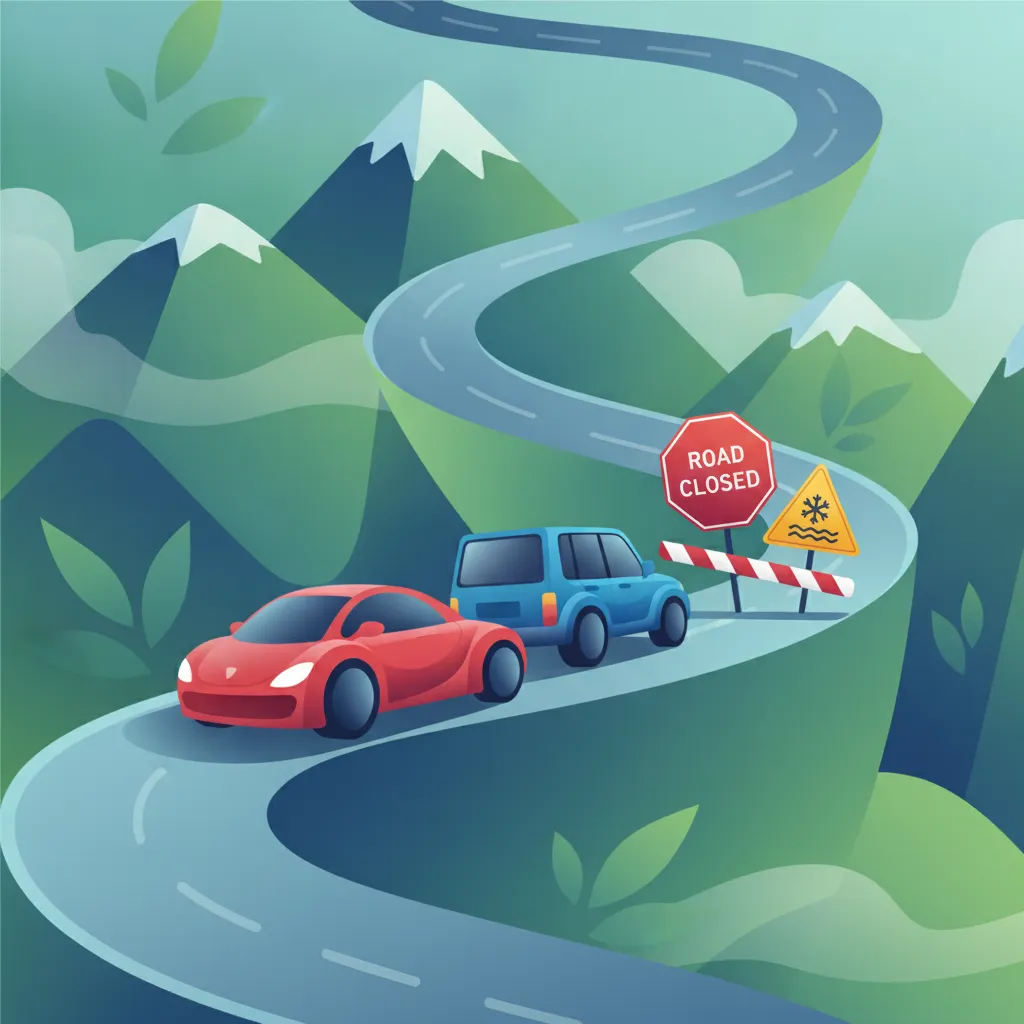
Navigate Switzerland's Challenging Alpine Roads with Confidence.

Don't get caught out by wet roads: Master aquaplaning and heavy rain safety for your Swiss driving license.
Questions in Swiss Winter Driving
Exam focused questionss
Swiss Winter Driving offers quick, focused exam style practice to boost your Swiss knowledge for the driving theory exam in Switzerland.
Swiss Winter Driving helps learners in Switzerland with clear explanations and targeted Swiss practice to improve essential driving theory topics.
This practice set is ideal for intermediate learners and anyone preparing for the Swiss driving theory exam who wants to deeply understand winter driving. If you struggle with knowing when to use winter tyres or how to react to sudden changes in weather, this set will clarify your responsibilities and enhance your decision-making skills for Swiss mountain and rural roads.
Explore more topics for the Swiss driving theory exam in Switzerland.
Ready to enhance your knowledge of Swiss road rules and signs? Explore our categorized practice questions to focus your study on specific topics, reinforce weak areas, and build confidence for your official theory exam. Begin your journey to passing the Swiss driving test by selecting a category.
Explore Practice Categories