
The 'Airport' sign (1.28) is an advance hazard warning sign used in Switzerland. It alerts you well before you reach a potential hazard related to an airport, such as increased air traffic noise, potential aircraft overflight, or associated traffic. This sign's purpose is to give you ample time to adjust your speed, widen your observation, and prepare for the situation, rather than reacting at the last moment. Always interpret this sign in conjunction with its placement and any supplementary information to ensure safe driving.
This advance warning sign for 'Airport' in Switzerland requires drivers to anticipate potential hazards and adjust their driving strategy, including speed and observation, before reaching the immediate danger zone. It's crucial for your theory test revision to connect this sign with proactive safety measures and maintaining control in complex traffic situations.
This warning sign is used as an early planning cue, not as a last-second prompt. On Swiss roads it appears before the relevant hazard so the driver can adjust speed, following distance, lane position, and observation before the situation becomes demanding. In theory training, the expected answer should connect the sign with a concrete behaviour change: anticipate the hazard, keep control, and avoid overtaking or sudden manoeuvres where the warning reduces the safety margin. Official catalogue code: 1.28.
The "Airport" sign is an advance hazard warning. It gives the driver time to lower speed if needed, widen observation, and prepare for the signed hazard before reaching the danger point. Catalogue code 1.28.
Get clear, practical answers to the most common questions about the 1.28 - Airport road sign. Learn how the sign works, what rules it represents, and how it affects real driving situations. This FAQ strengthens your understanding and supports accurate decision making for the Swiss driving theory exam in Switzerland.
The 'Airport' sign (1.28) is a warning sign indicating an upcoming hazard associated with an airport. It prompts drivers to be aware and prepare for potential situations like increased air traffic, noise, or related traffic movements.
When you see the 'Airport' sign (1.28), you should proactively reduce your speed if necessary, widen your observation field, and increase your following distance. This preparation helps you maintain control and react smoothly to the upcoming hazard without sudden manoeuvres.
A common exam trap is treating the 'Airport' sign (1.28) as merely decorative or waiting until the hazard is directly ahead. The sign's purpose is early planning, so examiners expect you to demonstrate preparedness by adjusting your driving behaviour in advance.
You should avoid overtaking or making abrupt lane changes when the 'Airport' sign (1.28) is displayed, especially if the sign indicates a reduced safety margin or a situation where such actions could be dangerous. Prioritise safe observation and control over overtaking.
No, the 'Airport' sign (1.28) is an advance warning sign, not a stop sign. It doesn't require you to stop unless other traffic conditions or signals necessitate it. Its primary function is to alert you to prepare for a hazard ahead.
The placement of the 'Airport' sign (1.28) is crucial; it's positioned in advance of the hazard. Always consider its location relative to junctions, bends, or specific areas to understand exactly how and when the warning applies to your driving.
A clear reference image of the 1.28 - Airport road sign used in Switzerland.
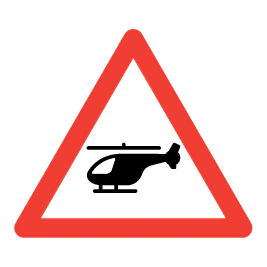
The 1.28 - Airport road sign may also be known by these alternative names or terms.
The 1.28 - Airport road sign is part of the Swiss Warning Signs category, which groups together signs with similar rules and functions.
Understanding the subtle differences between similar road signs is key to avoiding errors on your theory test. Comparing signs like this 'Airport' warning helps improve recognition and reinforces correct responses for Swiss traffic rules.

Understand the "Bend to Right" warning sign (1.01) and how to react safely.

Prepare for the upcoming bend to the left with this advance warning sign.

Prepare for a double bend starting to the right with this advance warning sign.

Prepare for a Double Bend, Starting with a Left Turn
Prepare for reduced grip with the Slippery Road warning sign (1.05).
Prepare for an Uneven Road Surface Ahead with the 1.06 Warning Sign
Prepare for a road that narrows from both sides with this advance warning sign.
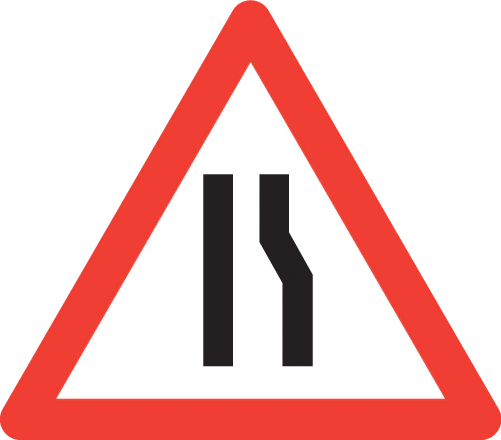
Prepare for a narrowing road ahead with the "Road Narrows on Right" warning sign (1.08).
Mastering the meaning of specific road signs is essential for navigating Switzerland's complex infrastructure safely. These resources link visual markers to the official traffic rules and priority procedures required for your driving theory test.
Understanding Switzerland's strict parking regulations is critical for both the theoretical exam and everyday driving. This article breaks down how to navigate blue and white zones, explains when and how to display a parking disc, and clarifies the legal significance of yellow road markings. Following these rules will help you avoid common pitfalls, such as improper disc settings or unauthorized parking in restricted areas.
Unravel the Toughest Swiss Traffic Scenarios and Avoid Common Exam Mistakes.
On Swiss motorways, the hard shoulder is strictly reserved for emergencies and breakdown situations and is never permitted as a general driving lane. This guide outlines the legal requirements for keeping the Pannenstreifen clear during congestion, how it functions alongside the emergency corridor (Rettungsgasse), and the potential penalties for unauthorized use. Mastering these rules is essential for both your safety on the road and success in the Swiss driving theory exam.
Recognise Key Swiss Road Signs at a Glance and Drive Confidently
This warning sign is used as an early planning cue, not as a last-second prompt. On Swiss roads it appears before the relevant hazard so the driver can adjust speed, following distance, lane position, and observation before the situation becomes demanding. In theory training, the expected answer should connect the sign with a concrete behaviour change: anticipate the hazard, keep control, and avoid overtaking or sudden manoeuvres where the warning reduces the safety margin. Official catalogue code: 1.15.
This warning sign is used as an early planning cue, not as a last-second prompt. On Swiss roads it appears before the relevant hazard so the driver can adjust speed, following distance, lane position, and observation before the situation becomes demanding. In theory training, the expected answer should connect the sign with a concrete behaviour change: anticipate the hazard, keep control, and avoid overtaking or sudden manoeuvres where the warning reduces the safety margin. Official catalogue code: 1.16.
After reviewing the full list of Swiss road signs, delve deeper into specific categories, practice recognition with quizzes, or explore detailed explanations for each sign. Continue your comprehensive preparation for the official theory driving test.
View All Swiss Road Signs