Navigating congested urban streets requires more than just vehicle control; it demands a proactive mindset to identify and mitigate hazards. This article teaches you how to anticipate the movements of pedestrians, cyclists, and other drivers, ensuring you remain vigilant against common risks on the road. By understanding these defensive principles, you will improve your situational awareness and better prepare for the hazard awareness sections of your official driving theory test.
Article content overview
Navigating the bustling streets of major Turkish cities like Istanbul, Ankara, or Izmir requires far more than basic vehicle control. It demands a proactive mindset, specifically the application of defensive driving techniques. Defensive driving is not merely about obeying traffic rules; it is about anticipating the errors of others, managing your own blind spots, and protecting vulnerable road users who share the asphalt with heavy vehicles and passenger cars.
For those preparing for the MTSK e-sınav, understanding these concepts is essential. The exam authorities prioritize hazard awareness because, in the real-world Turkish driving environment, unpredictable behavior from other motorists or pedestrians is a daily reality. By adopting a safety-first approach, you not only increase your chances of passing the theory test but also ensure you are prepared for the realities of driving in high-density traffic.
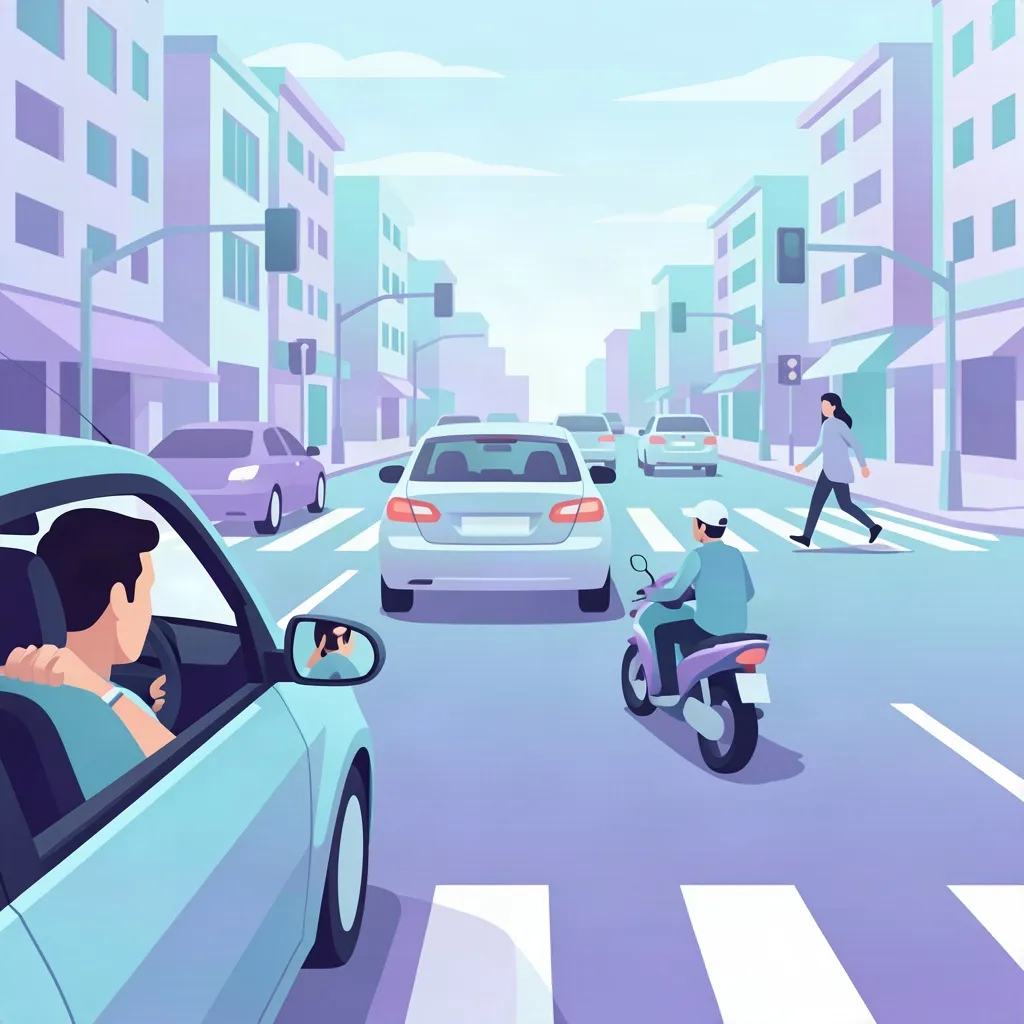
One of the most frequent causes of accidents in urban environments involves large vehicles failing to see smaller, more agile road users. Whether you are driving a heavy vehicle or a standard passenger car, your blind spots are zones of high danger. Cyclists, motorcyclists, and pedestrians often move quickly through gaps that you might not be monitoring closely enough.
When maneuvering in heavy congestion, you must cultivate the habit of constant observation. Relying solely on mirrors is often insufficient; you must physically check your shoulder areas before changing lanes, turning, or pulling away from a stop. In the context of your theory exam, remember that failing to account for vulnerable road users in your blind spots is considered a critical error in judgment.
Defensive driving on Turkish roads revolves around the concept of situational awareness. This means maintaining a safe distance—not just in terms of meters, but in terms of reaction time. In stop-and-go traffic, it is tempting to drive bumper-to-bumper to prevent others from cutting in. However, this aggressive behavior significantly reduces your ability to respond if the vehicle in front of you brakes suddenly.
Common Exam Trap: Many students fail to realize that being a "professional" driver is not about speed, but about managing risk. If a test question asks what you should focus on in heavy traffic, the answer will always prioritize the safety of vulnerable road users over speed or convenience.
The safety of pedestrians and cyclists is a core pillar of the Turkish traffic legislation. When you are navigating through crowded areas, you must recognize that these road users are at the highest risk of injury. In your MTSK exam, you will encounter scenarios where you must determine the correct behavior when approaching a pedestrian crossing or a high-traffic cycle path.
Always anticipate that pedestrians might step into the road unexpectedly. In heavy congestion, especially near bus stops or narrow city streets, your speed should be low enough to allow for an immediate stop if someone enters your path.
How you position your vehicle can often prevent a hazardous situation from developing. By staying in the appropriate lane early and avoiding last-minute maneuvers, you contribute to the overall flow and safety of the traffic.
| Scenario | Recommended Defensive Action |
|---|---|
| Stopped in heavy traffic | Leave enough space to see the rear tires of the vehicle ahead. |
| Approaching a turn | Check mirrors and blind spots three times: before, during, and after signaling. |
| Pedestrians at crossing | Always yield even if the traffic light is yellow or blinking. |
| Narrow streets | Reduce speed significantly to handle potential hazards emerging from parked cars. |
A set of driving skills that allows you to defend yourself against possible collisions caused by the errors of other drivers or adverse road conditions.
The hazard awareness portion of your theory exam tests your ability to spot dangers before they materialize. You are expected to interpret road signs, markings, and the movement of other vehicles as part of a cohesive system. If you see a warning sign, do not just memorize its name; consider how it dictates your speed and positioning.
This guide covers essential defensive driving skills for navigating heavy Turkish urban traffic, emphasizing that safe driving requires anticipating the mistakes of others rather than simply following rules. Key focus areas include blind spot awareness (where cyclists and motorcyclists are most vulnerable), maintaining adequate buffer zones for reaction time, and consistently yielding to pedestrians and cyclists even when pressured by congestion. The content specifically prepares learners for the MTSK hazard awareness section, where exam answers will always prioritize the safety of vulnerable road users over speed or convenience. Strategic early positioning and constant situational observation are presented as core habits that distinguish competent defensive drivers in high-density Turkish traffic.
A short set of high-value points that capture the most important ideas from this article.
Defensive driving is about actively anticipating and mitigating hazards caused by others, not just obeying traffic rules
Blind spots require physical shoulder checks, not just mirror observation, especially when near cyclists and motorcyclists
Maintaining a buffer zone in stop-and-go traffic preserves your reaction time against sudden braking
In the MTSK exam, protecting vulnerable road users always takes priority over speed or convenience
Strategic lane positioning early prevents last-minute maneuvers that create danger in heavy congestion
Never rely solely on mirrors; physically check shoulder areas before changing lanes or turning
Buffer zone means reaction time, not just following distance in meters
Pedestrians and cyclists are the highest-risk users in urban Turkish traffic and must be yielded to
When a test question contrasts safety with speed or convenience, safety of vulnerable road users is always the correct answer
Check mirrors and blind spots three times: before, during, and after signaling before any maneuver
Assuming mirrors alone provide sufficient awareness of adjacent vehicles and vulnerable road users
Following too closely in heavy traffic to prevent others from cutting in, which reduces emergency reaction space
Forgetting to physically check blind spots when driving large vehicles or in dense urban areas
Prioritizing traffic flow and speed over yielding to pedestrians at crossings, especially when lights are yellow or blinking
Making sudden lane changes at intersections or near crossings instead of positioning in the correct lane early
Article content overview
A short set of high-value points that capture the most important ideas from this article.
Defensive driving is about actively anticipating and mitigating hazards caused by others, not just obeying traffic rules
Blind spots require physical shoulder checks, not just mirror observation, especially when near cyclists and motorcyclists
Maintaining a buffer zone in stop-and-go traffic preserves your reaction time against sudden braking
In the MTSK exam, protecting vulnerable road users always takes priority over speed or convenience
Strategic lane positioning early prevents last-minute maneuvers that create danger in heavy congestion
Never rely solely on mirrors; physically check shoulder areas before changing lanes or turning
Buffer zone means reaction time, not just following distance in meters
Pedestrians and cyclists are the highest-risk users in urban Turkish traffic and must be yielded to
When a test question contrasts safety with speed or convenience, safety of vulnerable road users is always the correct answer
Check mirrors and blind spots three times: before, during, and after signaling before any maneuver
Assuming mirrors alone provide sufficient awareness of adjacent vehicles and vulnerable road users
Following too closely in heavy traffic to prevent others from cutting in, which reduces emergency reaction space
Forgetting to physically check blind spots when driving large vehicles or in dense urban areas
Prioritizing traffic flow and speed over yielding to pedestrians at crossings, especially when lights are yellow or blinking
Making sudden lane changes at intersections or near crossings instead of positioning in the correct lane early
Explore related topics, search based questions, and concepts that learners often look up when studying Defensive Driving in Turkish Traffic. These themes reflect real search intent and help you understand how this topic connects to wider driving theory knowledge in Turkey.
Find clear and practical answers to common questions learners often have about Defensive Driving in Turkish Traffic. This section helps explain difficult points, remove confusion, and reinforce the key driving theory concepts that matter for learners in Turkey.
The most important rule is to maintain a safe following distance and remain constantly aware of your surroundings, especially watching for vulnerable road users like pedestrians and motorcyclists in your blind spots.
Blind spot awareness is tested because failing to check these areas before maneuvering is a leading cause of accidents in urban environments, making it a critical skill for any licensed driver.
By focusing on your own lane discipline and maintaining a calm, defensive posture, you can avoid succumbing to the pressure of surrounding aggressive drivers while ensuring you follow official traffic regulations.
After finding the specific Turkish driving theory articles you need, dive deeper into related topics or challenge your knowledge with practice questions. Enhance your understanding of trafik işaretleri, road rules, and vehicle safety to ensure you are fully prepared for the official ehliyet sınavı.