
Understanding the legal mandates for safety equipment is a fundamental part of the Turkish driving theory curriculum. This guide covers the specific requirements for different license categories, ensuring you can identify necessary safety gear for cars and motorcycles alike. By mastering these rules, you will be well-prepared to handle exam questions regarding passenger protection and vehicle compliance.
Article content overview
The Turkish driving theory curriculum, particularly the MTSK e-sınav requirements, places significant emphasis on the legal mandates regarding vehicle safety equipment. Understanding these regulations is not only essential for ensuring passenger safety but is also a core competency tested in the theory exam. Whether you are preparing for a Category B license or specialized categories like M or A, knowledge of when and how to use seat belts, helmets, and child restraints remains a foundational pillar of Turkish traffic law.
Seat belts are the primary line of defense in the event of a collision, and their usage is strictly regulated under Turkish traffic legislation. According to current standards, every driver and passenger must utilize a functioning seat belt if the vehicle is equipped with one. Failure to comply with these regulations leads to direct penalties, which are frequently tested as scenario-based questions in the e-sınav.
For the purpose of the MTSK e-sınav, remember that the driver is legally responsible for ensuring that all passengers, especially minors, are properly secured before the vehicle moves. Neglecting this duty can result in immediate loss of points or legal liability in the event of an inspection.
When answering exam questions, keep in mind that the law differentiates between urban and intercity road safety requirements. While the physical requirement for a seat belt exists regardless of the road type, the risk profile significantly increases at higher speeds on motorways, making the correct use of safety restraints a critical indicator of a candidate's readiness for the road.
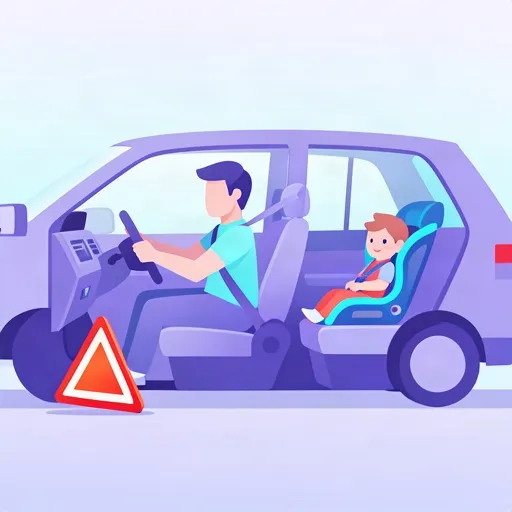
Child safety in vehicles is a non-negotiable aspect of Turkish traffic law. Children must be secured in child restraint systems—commonly referred to as child seats—that are appropriate for their age, height, and weight. The theory exam often presents questions regarding the positioning of these seats, specifically highlighting that they should ideally be placed in the rear seats to minimize the risk of injury from airbag deployment in the front passenger area.
For those seeking Category M or A licenses, the equipment focus shifts toward protective gear, with the helmet being the most critical item. The law mandates that the driver and any passenger must wear a protective helmet that meets standardized safety certifications. These helmets are designed to absorb impact energy, significantly reducing the risk of fatal head injuries during falls or collisions.
Any legally required item within a vehicle designed to protect occupants from injury during a traffic accident, including, but not limited to, seat belts, child safety seats, and protective helmets for motorcyclists.
Maintaining safety is a shared responsibility between the driver and the road infrastructure. The following table provides a quick reference for the equipment requirements often featured in the MTSK theory test.
| Equipment Type | Primary Responsibility | Legal Status |
|---|---|---|
| Seat Belts | All passengers / Driver | Mandatory |
| Child Seats | Driver / Legal Guardian | Mandatory |
| Helmets | M and A Category Drivers | Mandatory |
| Airbags | Vehicle Manufacturer | Supplementary |
Candidates often fail to distinguish between "recommended" safety habits and "legally mandated" requirements. In the context of the MTSK e-sınav, you must strictly follow the official legislation. For instance, while it is highly recommended to inspect your vehicle's safety belts regularly, the law focuses on their presence and use during operation. Always read the question carefully to identify whether it is asking about a legal obligation or a general safety practice.
This article covers the mandatory safety equipment requirements under Turkish traffic law, including seat belts for all vehicle occupants, child restraint systems appropriate for the child's size placed in rear seats, and protective helmets for motorcycle operators in Categories M and A. The driver holds legal responsibility for ensuring all passengers comply with these safety regulations. For the MTSK e-sınav, candidates must distinguish between legally mandated requirements and general safety recommendations, as the exam specifically tests official legislative mandates rather than advisory practices.
A short set of high-value points that capture the most important ideas from this article.
The driver bears legal responsibility for ensuring all passengers, including minors, are properly secured before the vehicle moves
Child restraint systems must be appropriate for the child's age, height, and weight, and should ideally be placed in rear seats to avoid airbag deployment risks
Protective helmets are mandatory for all motorcycle operators and passengers holding Category M or A licenses
Seat belt usage is legally required for every driver and passenger whenever the vehicle is equipped with them, regardless of road type
The e-sınav distinguishes between legally mandated requirements and recommended safety practices; only legal obligations are tested
Seat belts are mandatory for all occupants in all equipped vehicles under Turkish traffic legislation
Helmets for motorcycles (Category M and A) must meet standardized safety certifications and be properly fastened
Child seats should be positioned in rear seats to minimize injury risk from front airbags
The driver is always the accountable party for passenger compliance with safety equipment rules
Regulations differentiate by license category: seat belts for B, child seats for all vehicles carrying minors, helmets specifically for M and A
Confusing recommended safety habits with legally mandatory requirements, leading to incorrect e-sınav answers
Assuming child seats can be placed in any position without considering airbag risks in the front passenger area
Forgetting that the driver is legally responsible for ensuring all passengers, not just themselves, are properly secured
Overlooking that helmets are only mandatory for M and A license categories, not for all vehicle types
Believing seat belt requirements vary by road type when the legal mandate exists regardless of urban or intercity driving
Article content overview
A short set of high-value points that capture the most important ideas from this article.
The driver bears legal responsibility for ensuring all passengers, including minors, are properly secured before the vehicle moves
Child restraint systems must be appropriate for the child's age, height, and weight, and should ideally be placed in rear seats to avoid airbag deployment risks
Protective helmets are mandatory for all motorcycle operators and passengers holding Category M or A licenses
Seat belt usage is legally required for every driver and passenger whenever the vehicle is equipped with them, regardless of road type
The e-sınav distinguishes between legally mandated requirements and recommended safety practices; only legal obligations are tested
Seat belts are mandatory for all occupants in all equipped vehicles under Turkish traffic legislation
Helmets for motorcycles (Category M and A) must meet standardized safety certifications and be properly fastened
Child seats should be positioned in rear seats to minimize injury risk from front airbags
The driver is always the accountable party for passenger compliance with safety equipment rules
Regulations differentiate by license category: seat belts for B, child seats for all vehicles carrying minors, helmets specifically for M and A
Confusing recommended safety habits with legally mandatory requirements, leading to incorrect e-sınav answers
Assuming child seats can be placed in any position without considering airbag risks in the front passenger area
Forgetting that the driver is legally responsible for ensuring all passengers, not just themselves, are properly secured
Overlooking that helmets are only mandatory for M and A license categories, not for all vehicle types
Believing seat belt requirements vary by road type when the legal mandate exists regardless of urban or intercity driving
Explore related topics, search based questions, and concepts that learners often look up when studying Turkish Vehicle Safety Requirements. These themes reflect real search intent and help you understand how this topic connects to wider driving theory knowledge in Turkey.
Find clear and practical answers to common questions learners often have about Turkish Vehicle Safety Requirements. This section helps explain difficult points, remove confusion, and reinforce the key driving theory concepts that matter for learners in Turkey.
Yes, under current traffic legislation, children under a certain height and age must be secured in appropriate child restraint systems in vehicles equipped with seat belts.
The primary purpose of a helmet is to significantly reduce the risk of head injuries during a fall or traffic collision.
Yes, current traffic laws require both the driver and all passengers in seats equipped with seat belts to wear them while the vehicle is in motion.
Failure to use mandatory safety equipment like seat belts or helmets results in administrative fines and may lead to penalty points on the driver's record.
After finding the specific Turkish driving theory articles you need, dive deeper into related topics or challenge your knowledge with practice questions. Enhance your understanding of trafik işaretleri, road rules, and vehicle safety to ensure you are fully prepared for the official ehliyet sınavı.