
Navigating busy city centers requires more than just vehicle control; it demands patience and strict adherence to defensive driving principles. This guide explores how to anticipate risks from vulnerable road users and avoid the common traps of aggressive maneuvers, ensuring you are prepared for both real-world driving conditions and the requirements of the Turkish driving theory exam.
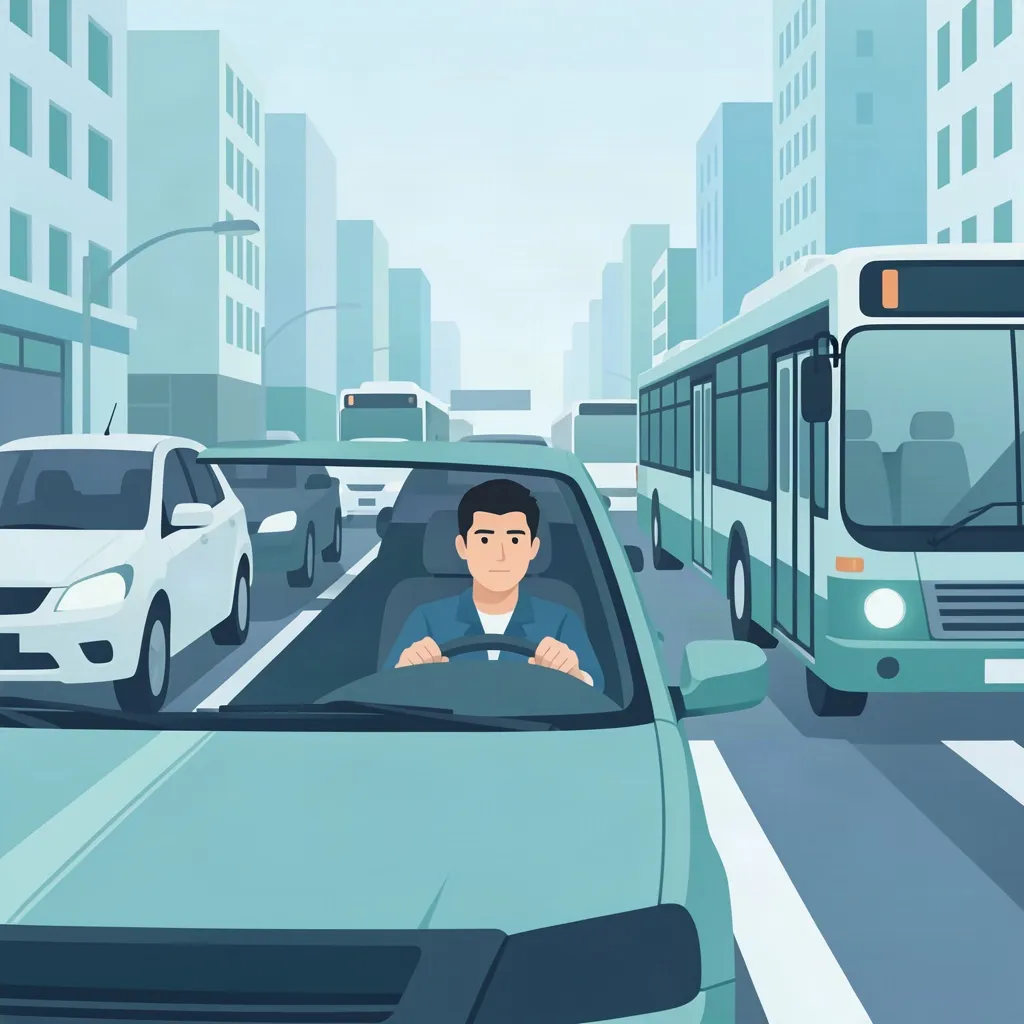
Article content overview
This article teaches the defensive driving mindset essential for both passing the MTSK e-sınav and safe urban driving in Turkish cities. It emphasizes remaining predictable, protecting vulnerable road users, and scanning actively for hazards rather than reacting impulsively. Key procedures include blind spot checks before turns, early speed reduction at junctions, and maintaining consistent following distance. For exam preparation, the critical rule is to always choose yielding or waiting answers when uncertain, as aggressive responses are consistently penalized by examiners.
A short set of high-value points that capture the most important ideas from this article.
Defensive driving prioritizes anticipation and risk management over aggressive maneuvers, making you the predictable element on the road
Aggressive driving significantly impairs reaction time and hazard scanning ability, increasing collision risk
Blind spots must be checked thoroughly before every turn or lane change, especially for motorcycles and cyclists
Maintaining consistent speed and safe following distance reduces road rage incidents and improves traffic flow
When uncertain during the MTSK exam, always select the answer that prioritizes yielding or waiting
Vulnerable road users include pedestrians, cyclists, and motorcyclists who lack vehicle chassis protection
Impulsive lane switching rarely provides meaningful time savings but greatly increases side-swipe accident risk
Hard braking should be avoided by observing brake lights and traffic patterns early
The official Turkish traffic legislation views the road as a shared space requiring mutual respect
The driver's goal is to avoid accidents despite the errors of others on the road
Assuming aggressive or assertive driving responses are correct in the MTSK exam—they are almost never the right answer
Failing to check blind spots specifically for smaller vehicles that may be invisible from mirrors alone
Not reducing speed when approaching junctions even when having right of way
Underestimating the importance of maintaining safe following distance for sudden braking
Confusing impatience with effective driving—aggressive maneuvers compromise safety and legal standing
Article content overview
A short set of high-value points that capture the most important ideas from this article.
Defensive driving prioritizes anticipation and risk management over aggressive maneuvers, making you the predictable element on the road
Aggressive driving significantly impairs reaction time and hazard scanning ability, increasing collision risk
Blind spots must be checked thoroughly before every turn or lane change, especially for motorcycles and cyclists
Maintaining consistent speed and safe following distance reduces road rage incidents and improves traffic flow
When uncertain during the MTSK exam, always select the answer that prioritizes yielding or waiting
Vulnerable road users include pedestrians, cyclists, and motorcyclists who lack vehicle chassis protection
Impulsive lane switching rarely provides meaningful time savings but greatly increases side-swipe accident risk
Hard braking should be avoided by observing brake lights and traffic patterns early
The official Turkish traffic legislation views the road as a shared space requiring mutual respect
The driver's goal is to avoid accidents despite the errors of others on the road
Assuming aggressive or assertive driving responses are correct in the MTSK exam—they are almost never the right answer
Failing to check blind spots specifically for smaller vehicles that may be invisible from mirrors alone
Not reducing speed when approaching junctions even when having right of way
Underestimating the importance of maintaining safe following distance for sudden braking
Confusing impatience with effective driving—aggressive maneuvers compromise safety and legal standing
Explore related topics, search based questions, and concepts that learners often look up when studying Safe Driving in Urban Traffic. These themes reflect real search intent and help you understand how this topic connects to wider driving theory knowledge in Turkey.
Find clear and practical answers to common questions learners often have about Safe Driving in Urban Traffic. This section helps explain difficult points, remove confusion, and reinforce the key driving theory concepts that matter for learners in Turkey.
Defensive driving is essential in congested environments like Istanbul to anticipate sudden moves from other drivers, cyclists, and pedestrians, which reduces the risk of accidents and helps maintain a calm, professional driving manner.
The MTSK exam tests your ability to identify hazards, particularly those involving vulnerable road users like pedestrians and cyclists, and expects you to choose safe, legal actions rather than aggressive ones.
Focus on maintaining a safe following distance, constantly scanning your environment for potential risks, and accepting that traffic delays are a normal part of city driving, rather than reacting with impulsive maneuvers.
After finding the specific Turkish driving theory articles you need, dive deeper into related topics or challenge your knowledge with practice questions. Enhance your understanding of trafik işaretleri, road rules, and vehicle safety to ensure you are fully prepared for the official ehliyet sınavı.