
Navigating a traffic stop requires both composure and a solid understanding of your legal obligations as a driver in Turkey. This guide details the essential documents you must keep in your vehicle and the proper behavior expected by law enforcement to ensure a safe and lawful interaction. Mastering these concepts is vital for passing your theory exam and maintaining a responsible driving record.
Article content overview
Mastering the rules of the road in Türkiye involves more than just understanding speed limits and priority at intersections. A core component of your driving theory education is understanding the administrative side of traffic enforcement, specifically how to conduct yourself during police traffic checks. Whether you are preparing for your MTSK e-sınav or looking to become a safer, more informed driver, knowing your legal obligations regarding document presentation and roadside cooperation is essential for avoiding unnecessary penalties.
When you are signaled to pull over by traffic authorities in Türkiye, your primary goal should be safety and compliance. Traffic police in Türkiye operate under the authority of the General Directorate of Security, and their role is to ensure the safety of all road users. If an officer uses a signaling device or a hand signal to pull you over, you must immediately signal your intention to park, reduce your speed gradually, and move to a safe, designated stopping area on the right side of the road.
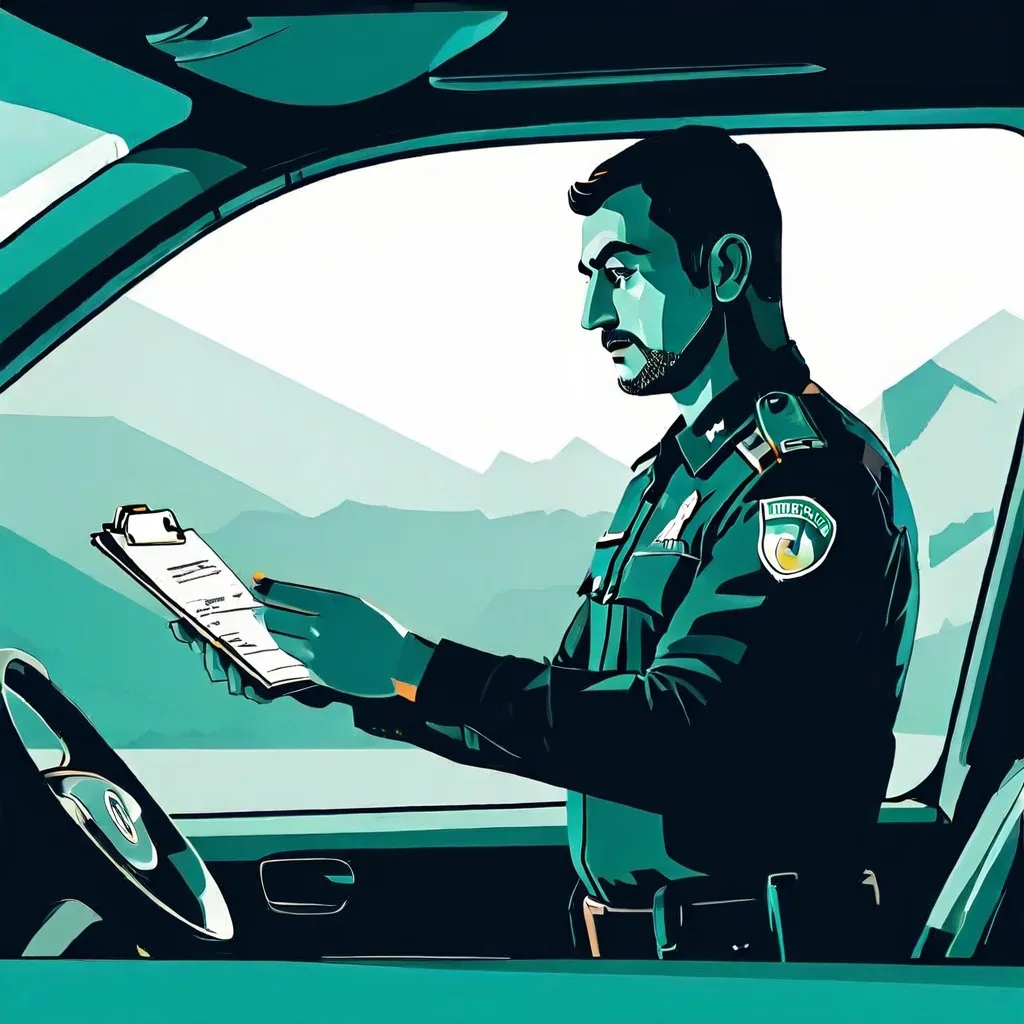
Once you have safely parked, turn off the engine and wait for the officer to approach. The officer will typically state the reason for the stop and may ask for your documents. Maintaining a calm and polite demeanor is vital, as traffic stops are standard administrative procedures designed to verify compliance with national traffic laws.
In the Turkish driving system, failing to present required documentation is a common cause for administrative fines. As a driver, you are legally obligated to carry specific original documents at all times while operating a motor vehicle. These documents are verified by officers during routine checks to ensure you are licensed and your vehicle is legally registered.
The Turkish traffic penalty system is points-based. Beyond immediate fines, accumulating penalty points (ceza puanı) can lead to the temporary suspension of your driving license. It is crucial to understand that these penalties serve to correct dangerous driving behavior rather than simply punish the driver. Common violations that lead to administrative penalties include exceeding speed limits, using a mobile phone while driving, failing to wear a seatbelt, or driving under the influence of alcohol.
If you are issued a fine during a traffic stop, remember that you have legal channels to object to the penalty if you believe it was issued incorrectly. However, most theoretical exam questions focus on the proactive steps you can take to avoid these situations, such as maintaining proper following distance and adhering to the speed limits assigned to your specific vehicle category.
During your theory exam, you may be tested on the signs that indicate an upcoming traffic control point or mandatory stops. Recognizing these signs early allows you to react safely and legally.
To navigate your exam successfully, familiarize yourself with these key terms that appear frequently in questions regarding traffic enforcement and legal obligations.
The theoretical aspect of traffic enforcement is designed to make you a more responsible road user. Exam questions often present scenarios where a driver must decide how to react to police signaling or which documents are required for specific vehicle classes. By focusing on these administrative requirements, you ensure that you are fully prepared for the realities of driving on Turkish roads.
Navigating police traffic checks in Turkey requires knowing both procedural conduct and mandatory document requirements. Drivers must carry four specific documents (Ehliyet, Ruhsat, Trafik Sigortası, and Muayene) and present them upon request during any traffic stop. The F2 road sign signals a mandatory police inspection point, while F1 indicates general traffic control ahead. The Turkish penalty system is points-based under Highway Traffic Law No. 2918, where accumulating ceza puanı can lead to temporary driving license suspension beyond monetary fines. Understanding these administrative obligations is essential for both exam success and maintaining a clean driving record on Turkish roads.
A short set of high-value points that capture the most important ideas from this article.
When signaled to stop, immediately signal, reduce speed gradually, and move to a safe stopping area on the right side of the road
Four mandatory documents must always be carried: valid Ehliyet, Ruhsat, Trafik Sigortası, and Muayene inspection report
The F2 road sign indicates a mandatory police inspection stop where you must follow officer instructions exactly
Penalty points (ceza puanı) accumulate on your record and can lead to temporary driving license suspension, not just fines
Keep hands visible on the steering wheel and remain in the vehicle unless the officer instructs otherwise during a stop
Traffic police in Turkey operate under the General Directorate of Security (Emniyet Genel Müdürlüğü) authority
Your driving license must match the appropriate vehicle class: M, A, B, C, D, F, or G for the vehicle you operate
Trafik Sigortası is compulsory third-party liability insurance required for every motor vehicle on Turkish roads
The F1 sign warns of general traffic control ahead where you should slow down and follow lane guidance
If issued a fine you believe is incorrect, you have legal channels to object under Highway Traffic Law No. 2918
Thinking an expired or incorrect class driving license is acceptable - the class must match the vehicle type
Failing to stop at F2 signs or not recognizing the difference between F1 and F2 road signs during driving
Leaving the vehicle without being instructed to do so by the officer, which can escalate the situation unnecessarily
Not realizing that penalty points accumulate and can result in license suspension after repeated violations
Assuming the Muayene (periodic technical inspection) sticker alone is sufficient without carrying the full vehicle inspection report
Article content overview
A short set of high-value points that capture the most important ideas from this article.
When signaled to stop, immediately signal, reduce speed gradually, and move to a safe stopping area on the right side of the road
Four mandatory documents must always be carried: valid Ehliyet, Ruhsat, Trafik Sigortası, and Muayene inspection report
The F2 road sign indicates a mandatory police inspection stop where you must follow officer instructions exactly
Penalty points (ceza puanı) accumulate on your record and can lead to temporary driving license suspension, not just fines
Keep hands visible on the steering wheel and remain in the vehicle unless the officer instructs otherwise during a stop
Traffic police in Turkey operate under the General Directorate of Security (Emniyet Genel Müdürlüğü) authority
Your driving license must match the appropriate vehicle class: M, A, B, C, D, F, or G for the vehicle you operate
Trafik Sigortası is compulsory third-party liability insurance required for every motor vehicle on Turkish roads
The F1 sign warns of general traffic control ahead where you should slow down and follow lane guidance
If issued a fine you believe is incorrect, you have legal channels to object under Highway Traffic Law No. 2918
Thinking an expired or incorrect class driving license is acceptable - the class must match the vehicle type
Failing to stop at F2 signs or not recognizing the difference between F1 and F2 road signs during driving
Leaving the vehicle without being instructed to do so by the officer, which can escalate the situation unnecessarily
Not realizing that penalty points accumulate and can result in license suspension after repeated violations
Assuming the Muayene (periodic technical inspection) sticker alone is sufficient without carrying the full vehicle inspection report
Explore related topics, search based questions, and concepts that learners often look up when studying Police Traffic Stops and Obligations. These themes reflect real search intent and help you understand how this topic connects to wider driving theory knowledge in Turkey.
Find clear and practical answers to common questions learners often have about Police Traffic Stops and Obligations. This section helps explain difficult points, remove confusion, and reinforce the key driving theory concepts that matter for learners in Turkey.
You must always carry your valid driving license, the vehicle registration certificate (ruhsat), and proof of valid traffic insurance.
Slow down safely, pull over to the right side of the road, turn off your engine, keep your hands visible, and wait for the officer to approach you.
Failure to present required documents can result in administrative fines and potential points on your record, as proof of authorization is a legal requirement.
Yes, officers may check for mandatory safety items such as a fire extinguisher, warning triangles, and a first-aid kit as part of a standard inspection.
After finding the specific Turkish driving theory articles you need, dive deeper into related topics or challenge your knowledge with practice questions. Enhance your understanding of trafik işaretleri, road rules, and vehicle safety to ensure you are fully prepared for the official ehliyet sınavı.