In the Turkish traffic system, recognizing which signal carries the most legal authority is a fundamental requirement for every driver. This guide clarifies the strict hierarchy defined by law, where police and authorized personnel signals override both traffic lights and road signs. You will learn how to identify these priorities, ensuring you are fully prepared for the theoretical requirements of the Turkish driving license exam.
Article content overview
Understanding the hierarchy of traffic control is one of the most critical requirements for any aspiring driver in Türkiye. Whether you are preparing for your initial MTSK e-sınav or refreshing your knowledge for a license upgrade, knowing which signal takes precedence is a matter of both legal compliance and road safety. In the Turkish traffic system, signals do not hold equal weight; they function according to a strictly defined order of authority that every driver must memorize to navigate intersections effectively.
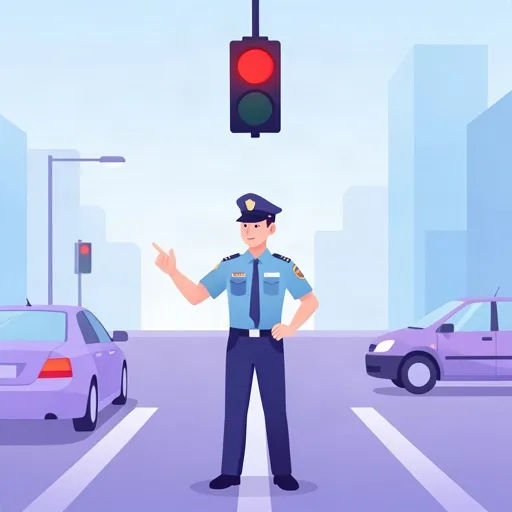
The fundamental rule in Turkish traffic law is that human intervention always overrides automated systems and static signage. When you approach an intersection, you must prioritize the instructions of an authorized official over any other signal present. This hierarchy is designed to ensure that in unpredictable situations—such as traffic accidents, power outages, or special events—the authority of a law enforcement officer remains the absolute final word on the road.
The legal priority order for traffic control in Türkiye is as follows:
Failing to adhere to this hierarchy is a common cause of failure in the MTSK e-sınav. Many exam questions present scenarios where a traffic light is green, but a police officer is signaling to stop. A driver who follows the green light instead of the officer’s gesture is committing a serious traffic violation and would be marked incorrect on the exam.
In the eyes of the law, a police officer or a gendarme directing traffic acts as the primary regulator of the flow of vehicles. Their physical presence allows for dynamic responses to real-time traffic conditions that automated systems, such as traffic lights or static signs, cannot account for. If an officer’s hand signal contradicts the status of the traffic lights, the officer’s command is the only one you are legally obligated to obey.
Always pay close attention to the body position of the officer. In Turkish traffic theory, an officer standing with their arms extended to the sides means that traffic parallel to their arms may pass, while traffic facing their front or back must wait. Ignoring these gestures, even if you see a green light, is an automatic fail scenario in many test cases.
While police instructions occupy the highest tier, traffic signs are the backbone of everyday driving. When no authorized personnel are present, drivers must revert to the standard priority rules governed by signs. It is essential to recognize the signs that dictate priority at intersections, as these are frequently tested in the Turkish theory curriculum.
Beyond mere compliance, understanding the hierarchy is a component of "Trafik Adabı" (Traffic Etiquette). Recognizing the authority of an officer demonstrates a mature understanding of road safety and a commitment to orderly traffic flow. In the MTSK e-sınav, questions regarding this hierarchy often test your situational awareness and your ability to filter out "distraction" information—such as ignoring a traffic light when an officer is present.
When you encounter a question in your exam that displays multiple signals simultaneously, take a deep breath and apply the hierarchical rule immediately. Ask yourself: "Is an officer present?" If the answer is yes, discard everything else and focus on the officer’s gesture. If no officer is present, then move down the list to traffic lights, then signs, and finally, road markings.
This article establishes Turkey's strict four-tier traffic control hierarchy, where authorized personnel override all other signals, followed by traffic lights, then signs, and finally road markings. The most critical rule for learners is that police officer hand signals always take precedence over traffic lights—a common exam trap involves a green light combined with an officer's stop gesture. Specific attention should be given to recognizing officer body language, particularly the meaning of extended arms at an intersection. Understanding this hierarchy is tested directly in the MTSK e-sınav and forms the foundation of safe, legal driving in Turkey.
A short set of high-value points that capture the most important ideas from this article.
In Turkey, human authority (authorized officers) always overrides automated systems and static signage when directing traffic
The legal priority order is: Authorized Traffic Personnel → Traffic Light Signals → Traffic Signs → Road Markings
A green traffic light combined with a police officer's stop signal means you must stop and obey the officer
An officer standing with arms extended to the sides allows traffic parallel to the arms to pass while traffic facing the front or back must wait
Mastering this hierarchy is essential for both legal compliance and passing the MTSK e-sınav
Police, Gendarmerie, or any authorized officer directing traffic holds the highest legal priority
Even with a green light, if a police officer signals you to stop, you must stop
Traffic signs hold priority over road markings but rank below lights and officers
Officer hand position matters: arms extended sideways means parallel traffic has right of way
When multiple signals appear in exam questions, always check for officer presence first
Assuming a green traffic light always permits passage without checking for officer signals
Overlooking the presence of a police officer directing traffic at an intersection
Confusing the priority order and following signs instead of traffic lights when lights are present
Misinterpreting an officer's arm position, particularly confusing parallel versus perpendicular traffic rights
Failing to recognize that officers can override any automated signal during special events, accidents, or power outages
Article content overview
A short set of high-value points that capture the most important ideas from this article.
In Turkey, human authority (authorized officers) always overrides automated systems and static signage when directing traffic
The legal priority order is: Authorized Traffic Personnel → Traffic Light Signals → Traffic Signs → Road Markings
A green traffic light combined with a police officer's stop signal means you must stop and obey the officer
An officer standing with arms extended to the sides allows traffic parallel to the arms to pass while traffic facing the front or back must wait
Mastering this hierarchy is essential for both legal compliance and passing the MTSK e-sınav
Police, Gendarmerie, or any authorized officer directing traffic holds the highest legal priority
Even with a green light, if a police officer signals you to stop, you must stop
Traffic signs hold priority over road markings but rank below lights and officers
Officer hand position matters: arms extended sideways means parallel traffic has right of way
When multiple signals appear in exam questions, always check for officer presence first
Assuming a green traffic light always permits passage without checking for officer signals
Overlooking the presence of a police officer directing traffic at an intersection
Confusing the priority order and following signs instead of traffic lights when lights are present
Misinterpreting an officer's arm position, particularly confusing parallel versus perpendicular traffic rights
Failing to recognize that officers can override any automated signal during special events, accidents, or power outages
Explore related topics, search based questions, and concepts that learners often look up when studying Traffic Signal Priority Hierarchy. These themes reflect real search intent and help you understand how this topic connects to wider driving theory knowledge in Turkey.
Find clear and practical answers to common questions learners often have about Traffic Signal Priority Hierarchy. This section helps explain difficult points, remove confusion, and reinforce the key driving theory concepts that matter for learners in Turkey.
The hierarchy is as follows: first, authorized personnel signals (police/gendarmerie), second, traffic lights, third, traffic signs, and finally, road markings or general traffic rules.
Yes. According to Turkish traffic legislation, instructions from a police officer or authorized personnel always take precedence over traffic lights and signs, regardless of the light's color.
Exam questions often present scenarios where multiple signals conflict. Knowing the strict legal hierarchy is the only way to correctly identify the required action and avoid failing the question.
After finding the specific Turkish driving theory articles you need, dive deeper into related topics or challenge your knowledge with practice questions. Enhance your understanding of trafik işaretleri, road rules, and vehicle safety to ensure you are fully prepared for the official ehliyet sınavı.