
Fatigue is a leading cause of traffic accidents, especially during long-distance travel on Turkish highways. By understanding the signs of drowsiness and the legal necessity of taking breaks, you will become a more responsible driver and better prepared for questions on driver behavior and safety in your MTSK theory exam.
Article content overview
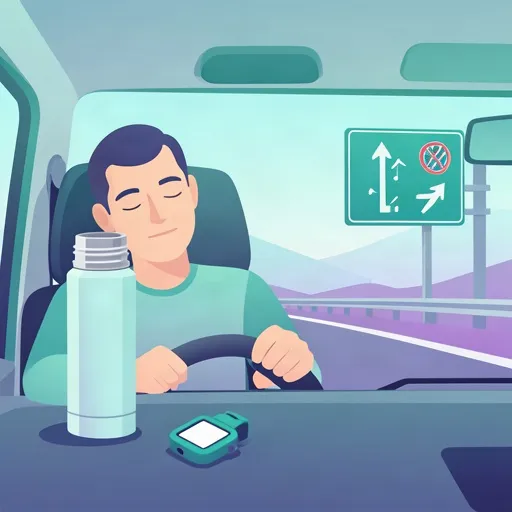
Driver fatigue is a silent hazard that significantly increases the risk of road accidents, especially during long-distance intercity travel across Türkiye. When you are behind the wheel for extended periods, your reaction time slows down, your situational awareness diminishes, and your ability to make split-second decisions—such as reacting to a sudden obstacle or interpreting traffic signs—is severely compromised. Understanding the physiological signs of tiredness and the legal responsibility to take mandatory breaks is not only essential for your safety but is also a core requirement of the MTSK theory exam.
In the context of Turkish traffic legislation, the responsibility for safe driving rests entirely with the operator. Driving while fatigued is equivalent to driving under the influence of substances that impair your motor functions. The law requires drivers to maintain full control of their vehicle at all times, which is impossible if you are struggling to stay awake. Frequent rest stops are not merely a suggestion; they are a vital safety strategy designed to reset your focus and prevent the "hypnosis" that can occur during monotonous highway driving.
Never attempt to push through severe drowsiness by increasing the volume of your music or opening windows for fresh air. These are temporary measures that do not address the physiological need for sleep. If you feel your eyelids drooping, you must pull over at a safe, designated parking area immediately.
Effective journey planning involves more than just selecting the fastest route; it requires scheduling intervals for rest. For long-distance trips, the general recommendation for safe driving is to take a break of at least 15 to 20 minutes every two to three hours of driving. During these stops, step out of your vehicle, stretch your muscles, and hydrate. This process helps restore your alertness and provides a mental reset, making you more observant of road conditions when you resume your journey.
The Turkish MTSK e-sınav often includes questions that test your judgment regarding road safety and driver behavior. You may encounter scenarios asking for the best course of action when experiencing symptoms of fatigue or questions about professional driver responsibilities on long-haul routes. It is crucial to remember that official Turkish theory focuses on the "human factor" in traffic accidents; therefore, recognizing that a tired driver is a dangerous driver is a fundamental concept that frequently appears in exam question banks.
Professional drivers, especially those operating heavy vehicles, have an even higher duty of care. When you are tired, your ability to monitor blind spots for vulnerable road users—such as cyclists, motorcyclists, and pedestrians—decreases dramatically. In urban and peri-urban areas, fatigue makes it difficult to track multiple moving objects simultaneously, significantly increasing the likelihood of an accident during maneuvers.
Driver fatigue is a silent hazard that legally and physically compromises safe driving on Turkish highways. The law requires drivers to maintain full control of their vehicles at all times, making scheduled rest breaks a legal necessity rather than a convenience. For long-distance intercity travel, the standard safety recommendation is to take a 15-20 minute break every two to three hours at designated rest areas, stepping out of the vehicle, stretching, and hydrating. The MTSK theory exam frequently tests your ability to recognize fatigue symptoms and understand that temporary countermeasures do not replace actual rest. Professional drivers and those operating heavy vehicles carry an even higher duty of care, as fatigue significantly impairs blind spot monitoring for vulnerable road users in urban areas.
A short set of high-value points that capture the most important ideas from this article.
Driver fatigue severely compromises reaction time, situational awareness, and decision-making ability during long-distance travel
Turkish traffic law holds drivers fully responsible for maintaining vehicle control, which is impossible when drowsy
Scheduled rest breaks of 15-20 minutes every 2-3 hours are essential safety requirements, not optional suggestions
Temporary countermeasures like loud music or fresh air do not address the physiological need for sleep
Fatigue-related accidents on intercity roads are statistically higher due to monotonous highway driving patterns
The 15-20 minute break rule: stop every 2-3 hours of continuous driving at designated rest areas
Driver hypnosis is a documented state of reduced alertness caused by prolonged monotonous driving
Heavy meals induce post-prandial drowsiness; opt for light snacks and hydration during rest stops
Fatigue dramatically reduces your ability to monitor blind spots for cyclists, pedestrians, and motorcyclists
Recognizing that a tired driver is a dangerous driver is a fundamental concept tested in the MTSK e-sınav
Believing that stimulants, loud music, or fresh air can replace actual rest when feeling drowsy
Failing to plan rest stops in advance and only pulling over after exhaustion sets in
Consuming heavy meals before or during long drives, which accelerates fatigue onset
Overestimating your ability to accurately judge your own alertness levels while driving
Stopping in unauthorized areas or blocking emergency access instead of using designated rest facilities
Article content overview
A short set of high-value points that capture the most important ideas from this article.
Driver fatigue severely compromises reaction time, situational awareness, and decision-making ability during long-distance travel
Turkish traffic law holds drivers fully responsible for maintaining vehicle control, which is impossible when drowsy
Scheduled rest breaks of 15-20 minutes every 2-3 hours are essential safety requirements, not optional suggestions
Temporary countermeasures like loud music or fresh air do not address the physiological need for sleep
Fatigue-related accidents on intercity roads are statistically higher due to monotonous highway driving patterns
The 15-20 minute break rule: stop every 2-3 hours of continuous driving at designated rest areas
Driver hypnosis is a documented state of reduced alertness caused by prolonged monotonous driving
Heavy meals induce post-prandial drowsiness; opt for light snacks and hydration during rest stops
Fatigue dramatically reduces your ability to monitor blind spots for cyclists, pedestrians, and motorcyclists
Recognizing that a tired driver is a dangerous driver is a fundamental concept tested in the MTSK e-sınav
Believing that stimulants, loud music, or fresh air can replace actual rest when feeling drowsy
Failing to plan rest stops in advance and only pulling over after exhaustion sets in
Consuming heavy meals before or during long drives, which accelerates fatigue onset
Overestimating your ability to accurately judge your own alertness levels while driving
Stopping in unauthorized areas or blocking emergency access instead of using designated rest facilities
Explore related topics, search based questions, and concepts that learners often look up when studying Preventing Driver Fatigue in Turkey. These themes reflect real search intent and help you understand how this topic connects to wider driving theory knowledge in Turkey.
Find clear and practical answers to common questions learners often have about Preventing Driver Fatigue in Turkey. This section helps explain difficult points, remove confusion, and reinforce the key driving theory concepts that matter for learners in Turkey.
Driver fatigue significantly slows reaction times, impairs judgment, and can lead to microsleeps, all of which drastically increase the risk of serious traffic accidents.
General safety recommendations suggest taking a break every 2 hours or every 150-200 kilometers to stretch, hydrate, and maintain focus, though you should stop immediately if you feel signs of drowsiness.
While general traffic rules emphasize maintaining alertness, professional drivers are subject to strict regulations regarding driving and rest hours under the Road Traffic Law and related regulations.
After finding the specific Turkish driving theory articles you need, dive deeper into related topics or challenge your knowledge with practice questions. Enhance your understanding of trafik işaretleri, road rules, and vehicle safety to ensure you are fully prepared for the official ehliyet sınavı.