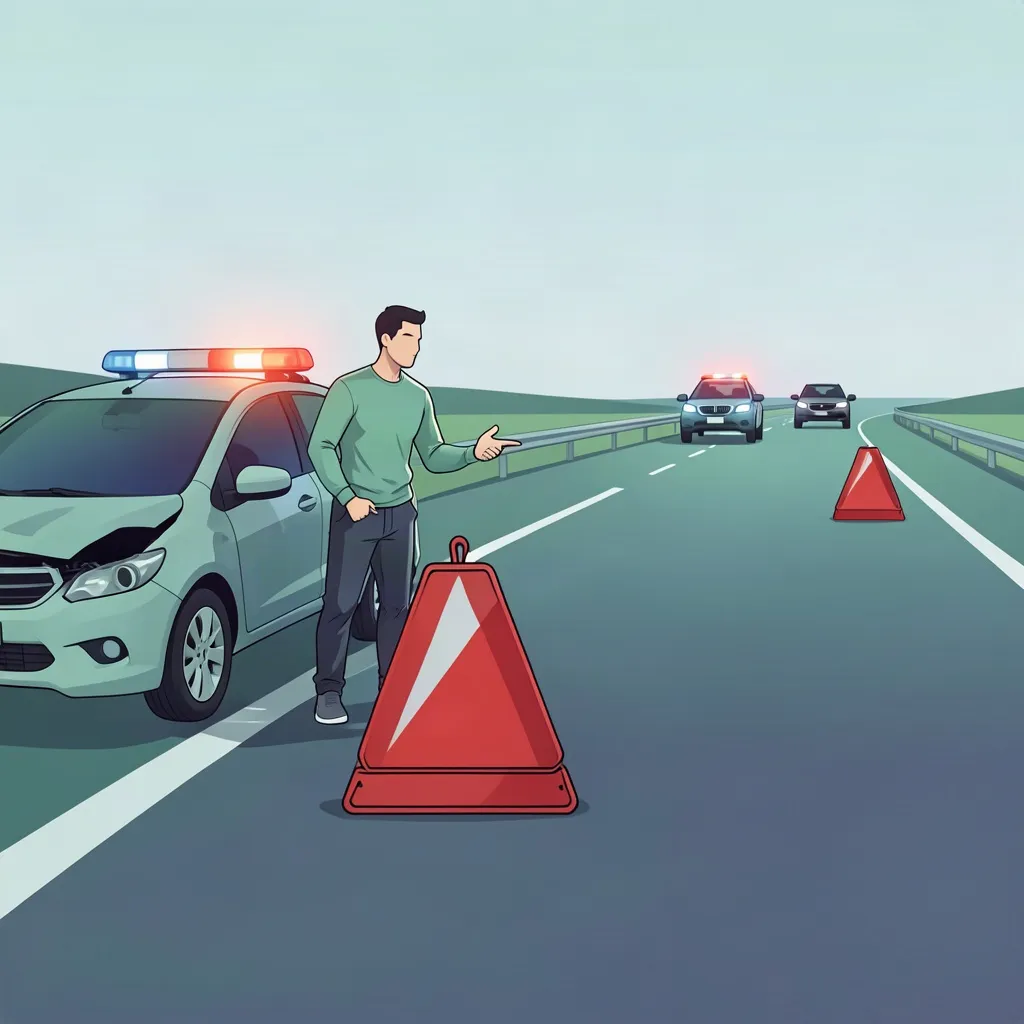
Understanding how to properly secure an accident site is a mandatory skill for all drivers in Turkey and a frequent topic in the MTSK theory exam. This guide explains the correct sequence of actions, from activating hazard lights to deploying warning triangles, helping you minimize the risk of secondary collisions. By following these legal procedures, you ensure the safety of yourself, other road users, and emergency responders.
Article content overview
In the unfortunate event of a traffic accident in Türkiye, your primary responsibility as a driver is not merely to assess damages or check on victims, but to ensure that the site does not become a catalyst for further tragedy. Securing an accident scene is a mandatory procedure under Turkish traffic legislation and is a recurring topic in the MTSK (Motorlu Taşıt Sürücüleri Kursu) e-sınav. Preventing secondary collisions—accidents that occur because oncoming drivers are unaware of the obstruction ahead—is the most critical first step in traffic incident management.
The immediate reaction for many drivers is to rush toward the damaged vehicles or the individuals involved. However, official Turkish traffic rules emphasize that personal safety and the safety of the surrounding traffic environment must come first. Before approaching any person, you must establish a protective zone to warn other road users of the hazard. Failing to do this can lead to pile-ups, especially on high-speed roads or highways where visibility might be compromised by weather conditions or road geometry.
Common exam trap: Many candidates incorrectly prioritize "transporting the injured" as the first action. In the MTSK theory exam, always remember that you cannot help the injured if you or the responders become victims of a secondary collision. Securing the scene and alerting others is the legally and practically correct first step.
When you are involved in or encounter an accident, you must follow a structured approach. This hierarchy is designed to minimize risk and ensure that emergency services can operate safely once they arrive.
In Türkiye, the use of warning triangles is strictly regulated to ensure they are visible to drivers traveling at speed. On a motorway, placing a triangle too close to the accident site provides insufficient warning time for high-speed vehicles to brake safely. Drivers should also be aware of the specific road environment; for instance, if the accident occurs near a curve or a crest, the warning distance must be extended to ensure it is visible to approaching traffic well before they reach the hazard.
According to the Turkish Highway Traffic Law, every driver is obliged to stop, secure the site, and, if necessary, call 112 Emergency Services. Leaving an accident scene without fulfilling these basic security requirements can lead to severe administrative penalties and legal complications. The theory test frequently assesses your knowledge of these obligations, focusing on the correct sequence of safety measures.
After securing the site, you must evaluate the traffic flow and the need for further assistance. If the accident occurs in a tunnel or at a blind intersection, extra caution is required. In such scenarios, your role in signaling to other drivers becomes even more important. Always maintain a professional and calm demeanor, as panic often leads to poor decision-making that can exacerbate the danger.
When involved in a traffic accident in Turkey, your first duty is to secure the scene to prevent secondary collisions—not to help the injured. The correct sequence is to activate hazard lights, ensure your own safety before exiting, then place reflective warning triangles at the legally mandated distances (150m on highways, 30m in urban areas). After securing the site, switch off engines to prevent fire hazards, call 112 Emergency Services, and keep the area clear for responders. These procedures are tested in the MTSK theory exam and are mandatory under Turkish Highway Traffic Law, with penalties for non-compliance.
A short set of high-value points that capture the most important ideas from this article.
Scene security must always come before attending to injured parties—protecting against secondary collisions is the first priority.
Activate hazard warning lights immediately to alert other road users of the obstruction.
Warning triangles must be placed 150 meters behind on highways and 30 meters behind on urban roads.
Always switch off the vehicle engine to prevent fire hazards after an accident.
Calling 112 Emergency Services is a legal obligation under Turkish traffic law when involved in an accident.
Triangle distance requirement: 150m on motorways/highways, 30m on urban roads—too close gives insufficient reaction time.
Personal safety (checking for oncoming traffic before exiting) comes before placing warning devices.
Secondary collisions occur when oncoming drivers are unaware of the hazard ahead due to inadequate warning.
Near curves, crests, or in tunnels, extend the warning distance beyond the standard minimum to ensure visibility.
Leaving an accident scene without fulfilling security requirements can result in administrative penalties under Turkish law.
Incorrectly prioritizing transporting the injured as the first action instead of securing the scene first.
Placing warning triangles at an incorrect distance, reducing reaction time for approaching drivers.
Failing to activate hazard lights before exiting the vehicle.
Not accounting for reduced visibility near curves, hills, or in tunnels when positioning warning triangles.
Neglecting to prevent bystanders from gathering, which can obstruct emergency vehicle access.
Article content overview
A short set of high-value points that capture the most important ideas from this article.
Scene security must always come before attending to injured parties—protecting against secondary collisions is the first priority.
Activate hazard warning lights immediately to alert other road users of the obstruction.
Warning triangles must be placed 150 meters behind on highways and 30 meters behind on urban roads.
Always switch off the vehicle engine to prevent fire hazards after an accident.
Calling 112 Emergency Services is a legal obligation under Turkish traffic law when involved in an accident.
Triangle distance requirement: 150m on motorways/highways, 30m on urban roads—too close gives insufficient reaction time.
Personal safety (checking for oncoming traffic before exiting) comes before placing warning devices.
Secondary collisions occur when oncoming drivers are unaware of the hazard ahead due to inadequate warning.
Near curves, crests, or in tunnels, extend the warning distance beyond the standard minimum to ensure visibility.
Leaving an accident scene without fulfilling security requirements can result in administrative penalties under Turkish law.
Incorrectly prioritizing transporting the injured as the first action instead of securing the scene first.
Placing warning triangles at an incorrect distance, reducing reaction time for approaching drivers.
Failing to activate hazard lights before exiting the vehicle.
Not accounting for reduced visibility near curves, hills, or in tunnels when positioning warning triangles.
Neglecting to prevent bystanders from gathering, which can obstruct emergency vehicle access.
Explore related topics, search based questions, and concepts that learners often look up when studying Securing Accident Scenes in Turkey. These themes reflect real search intent and help you understand how this topic connects to wider driving theory knowledge in Turkey.
Find clear and practical answers to common questions learners often have about Securing Accident Scenes in Turkey. This section helps explain difficult points, remove confusion, and reinforce the key driving theory concepts that matter for learners in Turkey.
The first step is to ensure your own safety and the safety of the accident scene by taking appropriate warning measures, such as turning on your hazard lights.
Moving victims prematurely can worsen potential injuries, especially those involving the neck or spine. Unless there is an immediate threat like fire or explosion, victims should generally remain in place until professional medical help arrives.
You must use your hazard lights and place reflective warning triangles at an appropriate distance from the accident site to give other drivers enough time to react and slow down.
Yes, proper management of an accident scene, including warning measures and safety prioritization, is a core component of the traffic and environment rules section of the MTSK e-exam.
After finding the specific Turkish driving theory articles you need, dive deeper into related topics or challenge your knowledge with practice questions. Enhance your understanding of trafik işaretleri, road rules, and vehicle safety to ensure you are fully prepared for the official ehliyet sınavı.