Improving your ability to anticipate traffic conditions is a cornerstone of safe driving in Turkey and a vital component of the MTSK theoretical and practical exam requirements. This guide teaches you how to maintain optimal lane positioning and speed, helping you avoid sudden lane changes that waste fuel and compromise road safety. Learn how to scan the road ahead to make timely, informed decisions that demonstrate competence to examiners.
Article content overview
Driving in Türkiye requires more than just mechanical control of your vehicle; it demands a high level of situational awareness. Many learners focus heavily on vehicle handling, but true competence—and the ability to pass your MTSK e-sınav—depends on your capacity for proactive traffic observation. By planning your route well in advance and reading the flow of traffic, you eliminate the need for sudden, last-minute lane changes that not only waste fuel but often lead to dangerous road situations.
In the MTSK e-sınav, examiners look for "defensive driving" indicators. Making smooth, predictable maneuvers is one of the most effective ways to demonstrate you have moved beyond beginner-level driving.
Lane discipline is a fundamental pillar of traffic safety. When you delay changing lanes, you are often forced to brake suddenly, accelerate aggressively, or cut off other motorists to reach your turn. These behaviors disrupt the flow of traffic, increase fuel consumption due to unnecessary stop-and-go patterns, and—most importantly—create hazards for yourself and others.
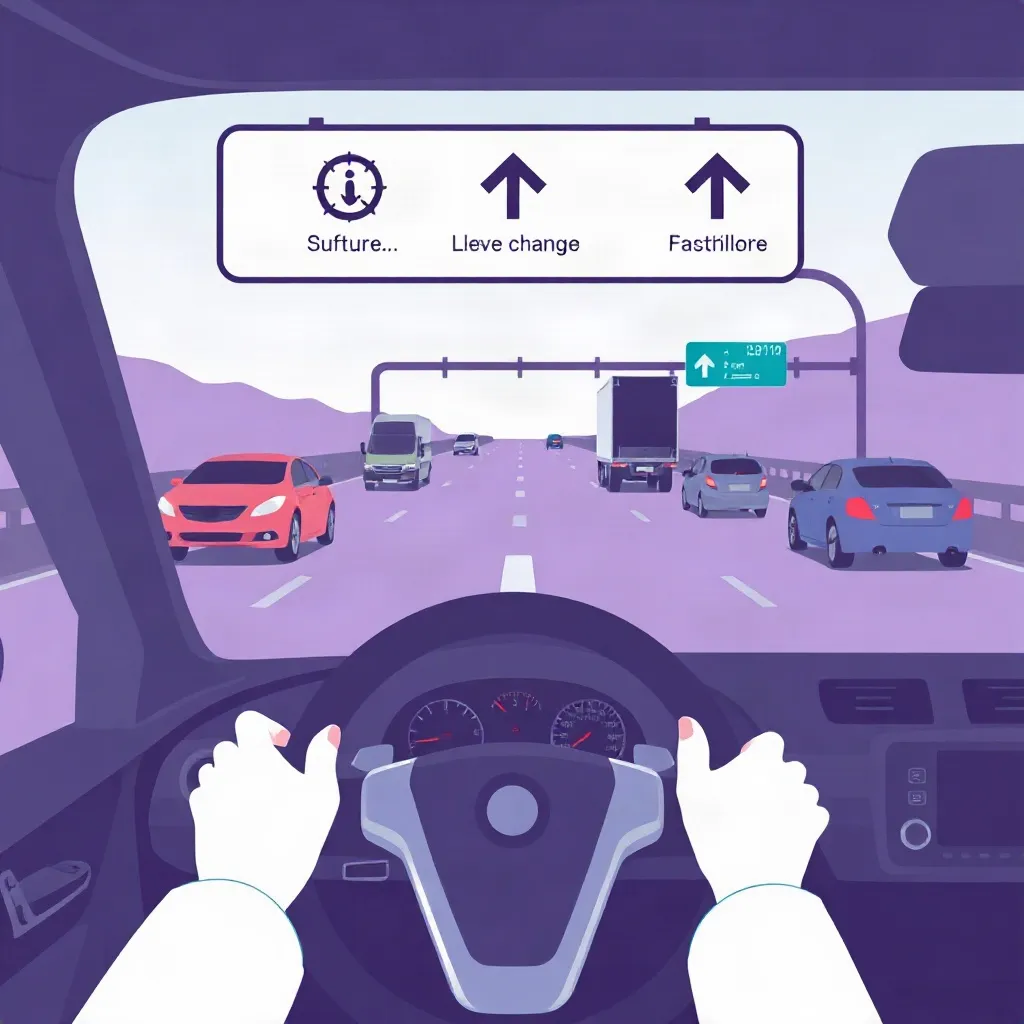
Effective route planning starts with recognizing road signage and markings long before you reach a junction. If you see signs indicating that your current lane is for a turn-only direction, you should begin monitoring your mirrors and blind spots immediately to position yourself safely in the correct flow of traffic.
Anticipation is the art of seeing a situation before it becomes a problem. As you scan the road, your eyes should be focused far ahead—ideally 10 to 15 seconds down the road—rather than just on the bumper of the car in front of you. By observing the brake lights of vehicles in the distance or noticing a slow-moving truck merging ahead, you can adjust your speed gradually rather than slamming on your brakes.
When you maintain a steady speed and keep a safe following distance, you create "buffers" that allow you to adapt to lane changes without needing to rush. This is not just a fuel-saving technique; it is a legal requirement under the philosophy of defensive driving, which emphasizes that a driver must always be prepared for the unpredictable actions of other road users.
Frequent lane changing and heavy braking are major contributors to poor fuel economy. Every time you accelerate after a forced, late-stage lane change, your engine consumes significantly more fuel than it would while maintaining a constant speed. In Turkey’s dense urban traffic, the ability to "glide" with the flow of traffic is the hallmark of an experienced driver.
| Driving Habit | Impact on Fuel | Impact on Safety |
|---|---|---|
| Early Lane Planning | Optimized | High |
| Sudden Braking | High Waste | Low |
| Constant Speed | Efficient | High |
| Frequent Weaving | High Waste | Dangerous |
Your theoretical training emphasizes that all lane changes must be signaled, checked, and performed only when the path is clear. Ignoring these steps leads to severe penalties in both the e-sınav and real-world traffic. Never assume that a driver in the adjacent lane will automatically yield just because you have turned on your signal.
This article teaches that proactive traffic observation and strategic lane positioning are essential for both road safety and passing the MTSK e-sınav. Effective lane discipline requires scanning 10-15 seconds ahead to anticipate brake lights and merging vehicles, maintaining constant speed with safe following distances to create adaptation buffers. The systematic five-step lane change procedure—observe signs, check mirrors, check blind spot, signal, and move smoothly—must be followed consistently. By planning lane changes early and avoiding sudden maneuvers, drivers reduce unnecessary fuel consumption while demonstrating the smooth, predictable driving behavior that examiners evaluate.
A short set of high-value points that capture the most important ideas from this article.
Proactive lane planning eliminates the need for sudden, fuel-wasting maneuvers that compromise safety
Scan the road 10-15 seconds ahead, not just the vehicle directly in front, to anticipate brake lights and merging traffic
Maintain constant speed and safe following distance to create buffers for smooth adaptation
A systematic mirror-signal-blind spot check must precede every lane change
Smooth, predictable driving is a key evaluation criterion that demonstrates defensive driving competence on the MTSK e-sınav
Late lane changes force aggressive braking and acceleration, significantly increasing fuel consumption
Lane discipline begins by recognizing turn-only signs and lane markings long before reaching the junction
Activating your signal does not grant right-of-way; always verify the adjacent lane is actually yielding
Defensive driving requires always being prepared for the unpredictable actions of other road users
Every lane change must be signaled, mirrors checked, blind spot verified, and path confirmed as clear before moving
Fixating on the bumper of the car directly ahead instead of scanning the full traffic environment
Waiting until reaching a junction to realize the current lane requires a turn, forcing a dangerous late merge
Assuming another driver will yield simply because the turn signal has been activated
Skipping the blind spot check and relying solely on mirrors before changing lanes
Frequent weaving between lanes due to inadequate route planning increases both fuel waste and collision risk
Article content overview
A short set of high-value points that capture the most important ideas from this article.
Proactive lane planning eliminates the need for sudden, fuel-wasting maneuvers that compromise safety
Scan the road 10-15 seconds ahead, not just the vehicle directly in front, to anticipate brake lights and merging traffic
Maintain constant speed and safe following distance to create buffers for smooth adaptation
A systematic mirror-signal-blind spot check must precede every lane change
Smooth, predictable driving is a key evaluation criterion that demonstrates defensive driving competence on the MTSK e-sınav
Late lane changes force aggressive braking and acceleration, significantly increasing fuel consumption
Lane discipline begins by recognizing turn-only signs and lane markings long before reaching the junction
Activating your signal does not grant right-of-way; always verify the adjacent lane is actually yielding
Defensive driving requires always being prepared for the unpredictable actions of other road users
Every lane change must be signaled, mirrors checked, blind spot verified, and path confirmed as clear before moving
Fixating on the bumper of the car directly ahead instead of scanning the full traffic environment
Waiting until reaching a junction to realize the current lane requires a turn, forcing a dangerous late merge
Assuming another driver will yield simply because the turn signal has been activated
Skipping the blind spot check and relying solely on mirrors before changing lanes
Frequent weaving between lanes due to inadequate route planning increases both fuel waste and collision risk
Explore related topics, search based questions, and concepts that learners often look up when studying Smart Driving and Route Planning. These themes reflect real search intent and help you understand how this topic connects to wider driving theory knowledge in Turkey.
Find clear and practical answers to common questions learners often have about Smart Driving and Route Planning. This section helps explain difficult points, remove confusion, and reinforce the key driving theory concepts that matter for learners in Turkey.
Sudden lane changes indicate a lack of traffic anticipation and create hazards for other road users, which contradicts the defensive driving principles required by the MTSK exam.
By planning your lane position early, you avoid unnecessary braking and acceleration, maintaining a steady, constant speed which significantly reduces fuel consumption.
Regularly scan far ahead, monitor your mirrors, and pay close attention to traffic signs and road markings that indicate upcoming turns or lane ends well in advance.
After finding the specific Turkish driving theory articles you need, dive deeper into related topics or challenge your knowledge with practice questions. Enhance your understanding of trafik işaretleri, road rules, and vehicle safety to ensure you are fully prepared for the official ehliyet sınavı.