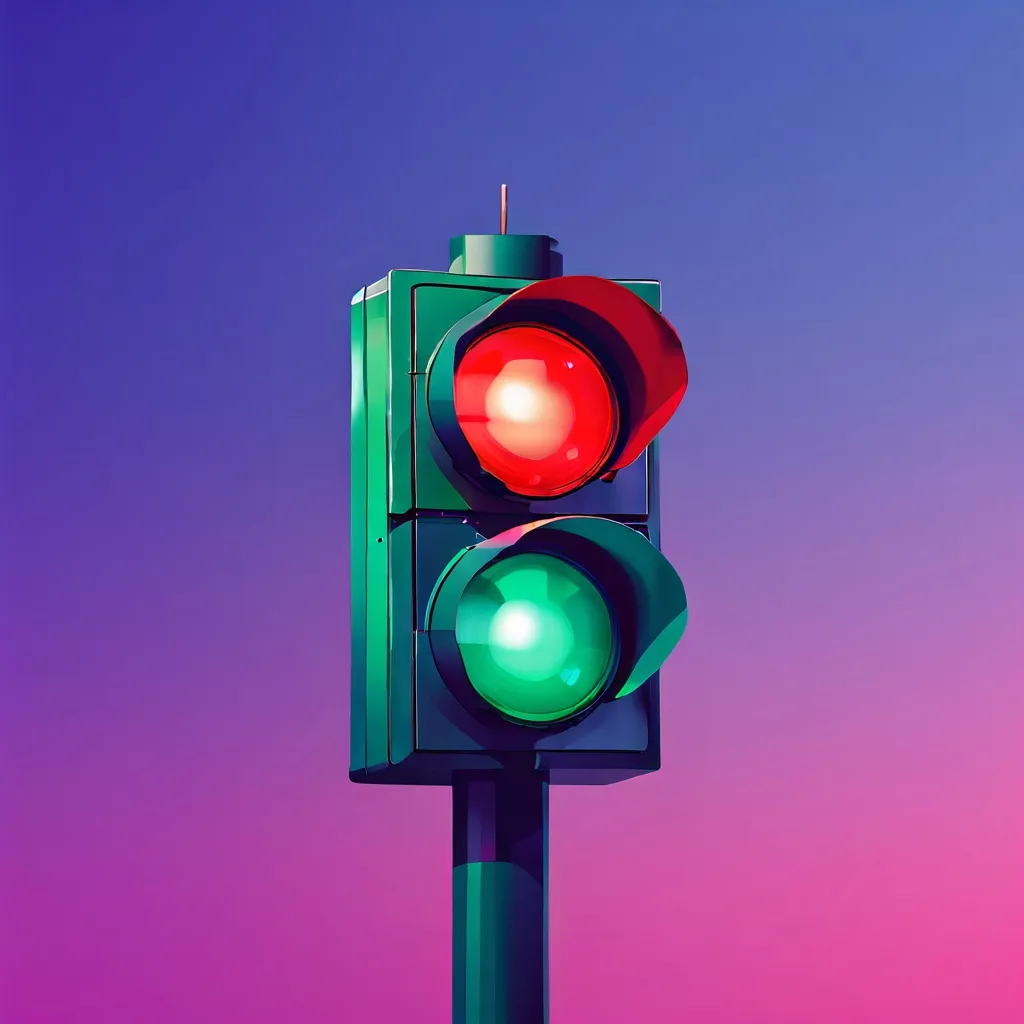
Learn the essential rules for navigating Turkish traffic lights, covering the distinct meanings of red, yellow, and green signals. This guide focuses on the mandatory stop line rule for red lights, a vital element for success in the MTSK e-sınav and for ensuring safety on Turkish roads.
Article content overview
Understanding the meaning and proper response to traffic lights is a cornerstone of safe driving and a fundamental requirement for passing the Turkish driving theory test, the MTSK e-sınav. These signals are not merely suggestions but critical directives that regulate the flow of traffic, prevent accidents, and ensure the orderly movement of vehicles and pedestrians across Türkiye. This article delves into the specifics of red, yellow, and green traffic light signals as stipulated by Turkish traffic legislation, providing clear explanations and highlighting key points essential for your success in the ehliyet sınavı. Mastering these basic concepts is crucial for anyone preparing to obtain their ehliyet and drive responsibly on Turkish roads.
The red traffic light is the universal signal for an immediate stop. In Turkey, adhering to a red light is a non-negotiable rule of the road. When you encounter a red signal, your primary obligation is to bring your vehicle to a complete halt before the designated stop line, also known as the "dur çizgisi." This rule is rigorously tested in the MTSK e-sınav, and understanding it is paramount for demonstrating your comprehension of Turkish traffic law. Failing to stop before the line when the light is red, even if you eventually proceed, constitutes a violation and can lead to penalties.
Remember, the dur çizgisi is your absolute limit when a red light is active. This applies whether you are in urban traffic, on main roads, or approaching intersections where pedestrian crossings might be present. The purpose is to create a safe buffer zone and allow for controlled traffic flow.
It is crucial to distinguish between simply stopping and stopping correctly. Stopping alongside or beyond the dur çizgisi when facing a red light is a common mistake that examiners look for. Always position your vehicle so that the front of your car is behind this line. This ensures that you are not obstructing any potential pedestrian traffic and are in the correct position should the light change to green. The red light signifies a complete prohibition on entering the intersection or proceeding through the regulated area.
The yellow traffic light serves as a transitional signal, indicating that the red light is about to appear. Its interpretation requires careful judgment and adherence to specific regulations to ensure safety. In Turkey, when a yellow light illuminates, drivers have two primary responsibilities: either to stop before the stop line if it is safe to do so, or to proceed through the intersection with caution if stopping would pose a danger. This second scenario typically applies when a vehicle is already very close to the intersection and applying the brakes abruptly could cause a rear-end collision or loss of control.
Never intentionally accelerate when you see a yellow light. This is a dangerous and illegal manoeuvre, often referred to as "running the yellow." The purpose of the yellow light is to prepare for a stop, not to rush through an intersection. This is a critical point often tested in practice questions for the ehliyet sınavı.
The decision to stop or proceed at a yellow light is a judgment call based on your current speed, distance to the intersection, and the surrounding traffic conditions. If you are far enough from the intersection that you can brake safely and come to a stop before the dur çizgisi, you must do so. However, if you are already within the intersection or so close that braking hard would be unsafe, you should proceed through the intersection cautiously, always being aware of other vehicles and pedestrians.
A green traffic light signifies that you may proceed through the intersection, provided it is safe to do so. However, it is not an unconditional pass to speed through or ignore other traffic participants. In Turkey, as in most countries, a green light means you have the right of way if the intersection is clear. This is a vital distinction that often trips up learners. You must still check for any vehicles or pedestrians who may have entered the intersection illegally or are caught in a traffic jam on the other side.
The concept of "safe to do so" is paramount. This means you must ensure that the path ahead is clear and that proceeding will not endanger yourself or others. This includes yielding to emergency vehicles that may be approaching, even if they are not yet visible but their sirens can be heard. Furthermore, if you are in heavy urban traffic and see that stopping on the other side of the intersection is likely due to congestion, you should not enter the intersection on a green light, as you may end up blocking traffic for others.
The "dur çizgisi" or stop line is a fundamental element of traffic control at signalized intersections in Turkey. Its presence clearly delineates the point before which vehicles must stop when a red light is displayed. The enforcement of this rule is strict, and understanding its importance is key to both safe driving and success in the MTSK e-sınav. This line is not merely a painted marking; it represents a mandatory stopping point designed to maintain order and safety.
The stop line is often accompanied by traffic signs indicating the controlled intersection, and its position is meticulously planned to ensure adequate clearance for other traffic flows and pedestrian movements.
When you are approaching an intersection with a red light, your entire vehicle must be behind the stop line. This includes the front bumper, wheels, and any part of the car. Crossing this line while the light is red is a traffic violation. This rule is consistently reinforced through practice questions in the Turkish driving theory test, highlighting its significance in practical driving scenarios.
The Turkish driving theory test, particularly the MTSK e-sınav, frequently tests candidates on their understanding of traffic light rules. Common pitfalls include misinterpreting the yellow light, failing to stop behind the stop line on red, and not exercising due caution on a green light. Many questions will present scenarios where a learner must decide the correct action based on the light signal and the surrounding traffic conditions.
The MTSK e-sınav (Motorlu Taşıt Sürücü Kursları Elektronik Sınav) is the official electronic theory examination required for obtaining a driving license in Turkey. It covers various aspects of traffic law, road signs, vehicle mechanics, first aid, and driving etiquette.
It's important to remember that the ehliyet sınavı aims to assess not just rote memorization but also the practical application of rules. Therefore, understanding the why behind each rule – the safety implications – is as important as knowing the rule itself. For instance, questions about red lights often involve scenarios where a driver might be tempted to inch forward, but the correct answer emphasizes stopping completely behind the line to prioritize pedestrian safety or avoid conflicts with cross-traffic.
To solidify your knowledge of Turkish traffic light signals and prepare effectively for your ehliyet sınavı, it is essential to engage with practice questions. These questions often mirror the format and difficulty of the actual MTSK e-sınav, covering a wide range of traffic light scenarios. By repeatedly practicing, you will become more adept at recognizing the correct response in different situations.
Mastering traffic light signals is a fundamental step towards becoming a safe and responsible driver in Turkey. By understanding the distinct meanings of red, yellow, and green lights, and crucially, by always respecting the stop line, you will not only improve your driving but also significantly increase your chances of success in the MTSK e-sınav. Keep practicing and stay vigilant on the roads!
Turkish traffic lights follow universal signal meanings but require precise execution, particularly the mandatory stop line rule on red. The red light demands complete cessation behind the dur çizgisi, while the yellow light requires situational judgment - stop if safe, proceed if sudden braking would be hazardous. The green light is often misunderstood as unconditional permission to go, but it only grants the right to proceed when the path is clear and safety is assured. These distinctions are consistently tested in the MTSK e-sınav and form the foundation of safe intersection conduct in Turkey.
A short set of high-value points that capture the most important ideas from this article.
Red light means complete stop before the dur çizgisi (stop line) - your entire vehicle must be behind it
Yellow light requires judgment: stop if safe to do so, but proceed cautiously if braking would cause danger
Green light grants conditional right-of-way - proceed only when the intersection is actually clear
The dur çizgisi is a mandatory stopping point, not a suggestion or guideline
Never accelerate when approaching a yellow light - doing so constitutes running the yellow and is illegal
Dur çizgisi is your absolute limit on red - no part of the vehicle may cross it
Yellow light purpose is to prepare for stopping, not to speed through an intersection
Green means you may proceed only if safe to do so - it's not an unconditional pass
If stopping on green would block the far side of the intersection, do not enter
Emergency vehicles take priority even when you have a green light
Stopping with the vehicle's front bumper crossing or level with the dur çizgisi instead of being fully behind it
Accelerating to beat a yellow light rather than preparing to stop
Proceeding on green without checking for vehicles blocking the intersection or illegal entries
Entering an intersection on green when congestion will trap the vehicle on the other side
Assuming green light automatically means right of way regardless of other traffic conditions
Article content overview
A short set of high-value points that capture the most important ideas from this article.
Red light means complete stop before the dur çizgisi (stop line) - your entire vehicle must be behind it
Yellow light requires judgment: stop if safe to do so, but proceed cautiously if braking would cause danger
Green light grants conditional right-of-way - proceed only when the intersection is actually clear
The dur çizgisi is a mandatory stopping point, not a suggestion or guideline
Never accelerate when approaching a yellow light - doing so constitutes running the yellow and is illegal
Dur çizgisi is your absolute limit on red - no part of the vehicle may cross it
Yellow light purpose is to prepare for stopping, not to speed through an intersection
Green means you may proceed only if safe to do so - it's not an unconditional pass
If stopping on green would block the far side of the intersection, do not enter
Emergency vehicles take priority even when you have a green light
Stopping with the vehicle's front bumper crossing or level with the dur çizgisi instead of being fully behind it
Accelerating to beat a yellow light rather than preparing to stop
Proceeding on green without checking for vehicles blocking the intersection or illegal entries
Entering an intersection on green when congestion will trap the vehicle on the other side
Assuming green light automatically means right of way regardless of other traffic conditions
Explore related topics, search based questions, and concepts that learners often look up when studying Turkish Traffic Light Rules. These themes reflect real search intent and help you understand how this topic connects to wider driving theory knowledge in Turkey.
Find clear and practical answers to common questions learners often have about Turkish Traffic Light Rules. This section helps explain difficult points, remove confusion, and reinforce the key driving theory concepts that matter for learners in Turkey.
In Turkey, a red traffic light requires drivers to stop completely before the designated stop line.
A yellow traffic light indicates that the signal is about to turn red. Drivers should prepare to stop if it is safe to do so, or proceed with caution if already in the intersection or very close to it.
A green traffic light means you may proceed through the intersection, but only if it is safe and clear to do so. Always check for pedestrians or other vehicles.
No, it is strictly prohibited to cross the stop line when the traffic light is red in Turkey. Doing so is a traffic violation.
Understanding traffic light signals, especially the red light and stop line rule, is a fundamental part of the MTSK e-sınav, frequently appearing in questions about basic traffic conduct.
After finding the specific Turkish driving theory articles you need, dive deeper into related topics or challenge your knowledge with practice questions. Enhance your understanding of trafik işaretleri, road rules, and vehicle safety to ensure you are fully prepared for the official ehliyet sınavı.