
When faced with a vehicle breakdown on a high-speed Turkish motorway, knowing how to protect yourself and other drivers is a fundamental requirement of the theory test. This guide clarifies the correct usage of the banket, the placement of warning triangles, and the necessary precautions for passenger safety while waiting for assistance.
Article content overview
Facing a vehicle breakdown on a high-speed motorway or highway is a stressful experience, but in the context of the MTSK e-sınav, it is a critical topic that tests your understanding of traffic safety. Turkish traffic legislation establishes strict protocols to protect drivers, passengers, and other road users during an emergency. When your vehicle becomes immobilized on a highway, your primary objective must be to signal your presence clearly and evacuate to a safe location away from the flow of traffic.
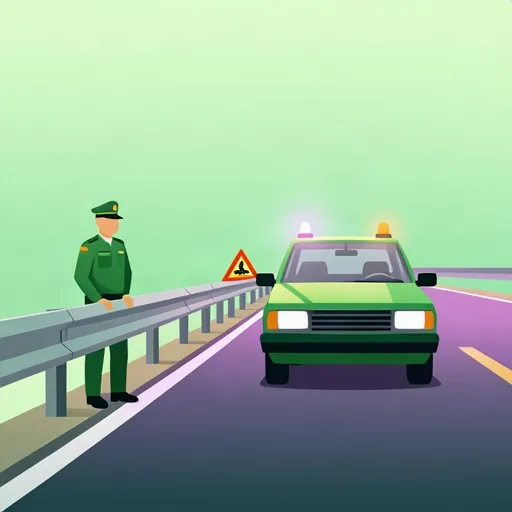
According to the Turkish traffic rules, you should never attempt to stop on the main carriageway of a motorway unless it is a dire emergency. If your vehicle experiences a technical failure, you must maneuver it to the emergency stopping lane—often referred to as the "banket" or "emniyet şeridi"—whenever possible. Once you have brought the vehicle to a halt in a safe area, you must immediately activate your hazard warning lights to alert oncoming traffic.
A common question in the theory exam concerns the correct placement of the warning triangle. Under Turkish regulation, if your vehicle breaks down, you must place reflective warning triangles at a distance that provides sufficient warning to approaching drivers. On highways, this distance is generally set further back than on urban roads due to higher speeds. You should place the triangle at least 150 meters behind the vehicle to ensure that high-speed traffic has adequate time to react and change lanes.
The safety of passengers is paramount during a breakdown. Never allow passengers to remain inside the vehicle while it is parked on the shoulder of a busy highway. The risk of a secondary collision is high, particularly if heavy goods vehicles are passing by. All occupants should exit the vehicle carefully, moving away from the road surface and staying behind the barrier or guardrail. In the event of a breakdown at night, ensuring that your hazard lights are visible is essential, but you must also keep your own safety in mind by staying off the road entirely.
The MTSK e-sınav often features situational questions where you must choose the safest course of action among several options. Examiners look for candidates who understand that the priority is always safety over vehicle maintenance. If you are asked about the order of operations, remember that signaling your hazard, clearing the travel lane, and protecting passengers always precede attempting to fix a mechanical issue. Never attempt to perform complex repairs on the roadside of an active motorway; this is a dangerous practice that can lead to severe accidents.
This article covers the essential safety protocols for handling vehicle breakdowns on Turkish motorways, which is a tested topic in the MTSK e-sınav. The key procedures include activating hazard lights immediately, maneuvering to the emergency shoulder (banket or emniyet şeridi), and placing reflective warning triangles at least 150 meters behind the vehicle. Passenger evacuation is critical—all occupants must exit away from traffic flow and stay behind guardrails. The exam tests your understanding that safety always takes priority over vehicle repair, and that stopping on the main carriageway constitutes a serious traffic violation.
A short set of high-value points that capture the most important ideas from this article.
On Turkish motorways, you must immediately activate hazard warning lights and steer to the emergency stopping lane (banket or emniyet şeridi) whenever possible
Warning triangles must be placed at least 150 meters behind the vehicle on high-speed highways to give approaching traffic adequate reaction time
All passengers must exit the vehicle through doors furthest from traffic flow and move to a safe area behind guardrails
Safety always takes priority over vehicle maintenance; never attempt complex roadside repairs on an active motorway
Stopping, parking, or making U-turns on the main carriageway of a motorway is a major traffic violation
Banket (shoulder) and emniyet şeridi are the emergency stopping areas on Turkish highways
The triangle placement distance on highways (150m) is greater than on urban roads due to higher speeds
Dörtlüler (hazard warning lights) must be activated immediately upon realizing vehicle failure
Passengers should never remain inside the vehicle while it is stopped on a busy highway shoulder
Otoyol refers specifically to a divided motorway with restricted access, different from ordinary highways
Placing the warning triangle too close to the vehicle instead of the required 150 meters back
Attempting to stop or park on the main carriageway instead of reaching the emergency lane first
Leaving passengers inside the vehicle while dealing with the breakdown on a busy highway
Trying to perform mechanical repairs on the roadside rather than calling for professional assistance
Forgetting to activate hazard warning lights immediately when the vehicle starts losing power
Article content overview
A short set of high-value points that capture the most important ideas from this article.
On Turkish motorways, you must immediately activate hazard warning lights and steer to the emergency stopping lane (banket or emniyet şeridi) whenever possible
Warning triangles must be placed at least 150 meters behind the vehicle on high-speed highways to give approaching traffic adequate reaction time
All passengers must exit the vehicle through doors furthest from traffic flow and move to a safe area behind guardrails
Safety always takes priority over vehicle maintenance; never attempt complex roadside repairs on an active motorway
Stopping, parking, or making U-turns on the main carriageway of a motorway is a major traffic violation
Banket (shoulder) and emniyet şeridi are the emergency stopping areas on Turkish highways
The triangle placement distance on highways (150m) is greater than on urban roads due to higher speeds
Dörtlüler (hazard warning lights) must be activated immediately upon realizing vehicle failure
Passengers should never remain inside the vehicle while it is stopped on a busy highway shoulder
Otoyol refers specifically to a divided motorway with restricted access, different from ordinary highways
Placing the warning triangle too close to the vehicle instead of the required 150 meters back
Attempting to stop or park on the main carriageway instead of reaching the emergency lane first
Leaving passengers inside the vehicle while dealing with the breakdown on a busy highway
Trying to perform mechanical repairs on the roadside rather than calling for professional assistance
Forgetting to activate hazard warning lights immediately when the vehicle starts losing power
Explore related topics, search based questions, and concepts that learners often look up when studying Turkish Highway Breakdown Procedures. These themes reflect real search intent and help you understand how this topic connects to wider driving theory knowledge in Turkey.
Find clear and practical answers to common questions learners often have about Turkish Highway Breakdown Procedures. This section helps explain difficult points, remove confusion, and reinforce the key driving theory concepts that matter for learners in Turkey.
You must immediately activate your hazard warning lights to alert other drivers of the emergency situation.
According to Turkish traffic regulations, warning triangles must be placed at a sufficient distance ahead of and behind the vehicle to ensure they are visible to approaching traffic, typically at least 150 meters away on highways.
The emergency lane or shoulder (banket) is strictly reserved for emergency stops, such as mechanical breakdowns or medical emergencies, and must not be used for routine stopping or parking.
After finding the specific Turkish driving theory articles you need, dive deeper into related topics or challenge your knowledge with practice questions. Enhance your understanding of trafik işaretleri, road rules, and vehicle safety to ensure you are fully prepared for the official ehliyet sınavı.