
This lesson guides you through the physics of motorcycle cornering, focusing on body positioning, throttle control, and maintaining tire grip. Understanding these dynamics is crucial for passing the Turkish motorcycle theory exam and becoming a confident, safe rider on diverse road surfaces. It builds upon previous lessons regarding motorcycle stability and prepares you for handling various environmental challenges.

Lesson content overview
Navigating curves safely is one of the most rewarding yet challenging aspects of riding a motorcycle. Unlike four-wheeled vehicles, which remain relatively flat during a turn, a motorcycle must lean to counter the centrifugal forces generated while cornering. This physical reality makes cornering a dynamic process where a rider must constantly manage speed, body position, and tire grip.
For riders preparing for their Turkish motorcycle driving licence exam (e-Sınav) for A1, A2, or A category vehicles, mastering the theory of cornering is not just about passing a test. It is a critical survival skill for handling the diverse road topographies, mountain passes, and urban environments across Turkey.
To understand how a motorcycle turns, you must first understand the physical forces at play. When a motorcycle enters a bend, centripetal force is required to pull the vehicle into the curved path. This force is generated entirely by the friction between the motorcycle’s tire tread and the road surface—a concept known as grip or traction.
If the forces pushing the motorcycle outward exceed the available traction, the tires will slide, leading to a dangerous lowside or highside crash. Therefore, safe cornering is the art of maintaining a balance between these competing physical forces while staying well within the limits of your tires' traction envelope.
Traction management is the process of monitoring and controlling the frictional grip between your tires and the road surface. Your tires have a finite amount of grip, which must be shared between three main tasks: accelerating, braking, and cornering.
The frictional force exerted between a vehicle's tires and the road surface, allowing the vehicle to accelerate, decelerate, or change direction without slipping.
Traction can be categorized into two distinct states:
Imagine your tires have a "grip budget" represented as a pie chart. If you are riding in a straight line and not accelerating or braking, 100% of your grip budget is available for lateral stability.
Attempting to accelerate abruptly or brake heavily while the motorcycle is at a high lean angle is a leading cause of single-vehicle motorcycle accidents on bends.
Proper speed management is the foundation of safe cornering. The golden rule for negotiating any bend is "Slow In, Fast Out." This means you must reduce your speed to an appropriate level before you initiate the turn, maintain a steady speed through the apex, and gradually accelerate as you straighten the motorcycle on exit.
Phase 1: Setup (Braking and Gear Selection) — As you approach the bend, assess the radius of the turn. Reduce your speed using both brakes while the motorcycle is still upright. Shift down to the correct gear to keep the engine in its optimal power band for smooth control.
Phase 2: Entry (Look and Lean) — Look through the turn toward your exit point. Ease off the brakes completely and initiate the lean using countersteering.
Phase 3: Apex (Steady Throttle) — Hold a steady, neutral throttle to keep the motorcycle stable and balanced as you pass the innermost point of the turn (the apex).
Phase 4: Exit (Roll On and Straighten) — As you see the road straighten out, gradually roll on the throttle. This acceleration naturally helps stand the motorcycle back up into an upright position, maximizing tire grip.
Entering a corner too fast (overshooting entry speed) is a critical error. When a rider enters a bend at an excessive speed, they often panic and chop the throttle or grab the brakes mid-turn. This abrupt action transfers weight forward, overloads the front tire, and can cause a sudden loss of traction.
How you position your body on the motorcycle directly influences its stability, lean angle, and turn radius. Proper body alignment helps keep the motorcycle more upright, preserving a larger margin of safety on the tire tread.
To initiate a turn at speeds above approximately 15 km/h, a rider must use countersteering.
The technique of momentarily steering the handlebars in the opposite direction of the intended turn to initiate a lean. To turn left, you gently push forward on the left handlebar; to turn right, you gently push forward on the right handlebar.
Remember this simple mental cue: Push Left, Lean Left, Go Left. Push Right, Lean Right, Go Right.
Depending on the speed and sharpness of the turn, riders use different body postures:
The lean angle is the degree of tilt of the motorcycle relative to the vertical plane. While modern sport and touring tires can achieve significant lean angles on clean, dry asphalt, public roads are not controlled racetracks.
Exceeding the safe lean angle of your motorcycle can result in several dangerous conditions:
For safe street riding, you should aim to minimize your lean angle by choosing a proper line through the corner and using active body positioning. Always keep a safety margin of unused tire tread (often referred to as a "buffer zone") to handle unexpected road hazards mid-turn.
Smooth throttle control is essential for stabilizing the motorcycle's suspension once it is leaned over in a turn. When you close the throttle abruptly, the weight of the motorcycle transfers heavily to the front tire. Conversely, when you accelerate aggressively, the weight transfers to the rear.
During a corner, your goal is to achieve a balanced weight distribution—ideally 40% on the front tire and 60% on the rear tire. To maintain this balance:
Asphalt conditions in Turkey can vary wildly. From the high-grip municipal asphalt in major cities like Istanbul and Ankara to the rural, gravel-strewn mountain roads in the Taurus or Black Sea regions, a rider must develop "road reading" skills.
Different road surfaces require immediate modifications to your cornering technique:
Rain significantly reduces the coefficient of friction between rubber and asphalt.
On Turkish rural roads, loose gravel (known locally as mıcır) is a common and highly dangerous hazard, often left behind by road construction or washed onto the road from heavy rains.
During the peak of Turkish summers, especially in the Aegean and Mediterranean regions, extremely high temperatures can cause asphalt to melt and release liquid bitumen to the surface.
Under the Turkish Highway Traffic Law (Karayolları Trafik Kanunu), riders must adhere to specific regulations regarding speed adaptation and safe vehicle control.
According to Article 52 of Law No. 2918, drivers and riders are legally obligated to adjust their speed to:
Failure to reduce speed when approaching a bend (viraj) is considered a direct violation of safe driving requirements and can result in administrative fines and penalty points on your driver’s licence.
Overtaking another vehicle on or approaching a curve with limited visibility is strictly prohibited under Turkish traffic regulations.
Attempting high-speed overtaking maneuvers in a bend is a high-risk violation. For novice riders (holding a probationary or candidate licence in Turkey), severe traffic violations can lead to the cancellation of the licence, requiring the candidate to retake the entire training and examination process.
Understanding what not to do is just as important as mastering the correct technique. Watch out for these five dangerous mistakes:
To lock in your understanding of grip management and cornering safety, review this final summary of key interrelated concepts:
This lesson covers the physics of motorcycle cornering, emphasizing that traction is a shared budget between acceleration, braking, and turning. The 'Slow In, Fast Out' principle requires entering bends at controlled speeds and using smooth, progressive throttle through the apex. Three body positioning techniques (neutral, counter-leaning, and active leaning) help reduce required lean angle and preserve tire contact. Riders must adapt to Turkish-specific hazards including wet roads, loose gravel (mıcır), and asphalt bleeding, which all demand significant speed reduction. Countersteering initiates turns at normal speeds, while target fixation and mid-corner braking are the most dangerous mistakes to avoid.
A short set of high-value points that capture the most important learning from this lesson.
Motorcycle traction is a finite resource shared between accelerating, braking, and cornering - exceeding this grip budget causes loss of control
The 'Slow In, Fast Out' rule requires completing all braking BEFORE initiating the turn; braking mid-corner overloads the front tire
Countersteering (pushing the handlebar in the direction of the intended turn) initiates lean at speeds above approximately 15 km/h
Active body positioning (leaning your torso inside the turn) reduces the bike's required lean angle, maximizing tire contact patch
Turkish road hazards like wet pavement, mıcır (loose gravel), and asphalt bleeding require 30-50% speed reduction and smoother inputs
Explore all units and lessons included in this driving theory course.
Weight distribution target in corners is roughly 40% front, 60% rear - achieved through steady 'maintenance' throttle
First 10-15 minutes of rainfall creates the most dangerous road conditions due to mixed oil, grease, and water
Ground clearance is finite - scraping footpegs or exhaust lifts tires off the road and causes crashes
Overtaking on or approaching a curve with limited visibility is strictly prohibited under Turkish traffic law
Double your speed requires four times the centripetal force to make the same turn, quickly depleting grip budget
Overshooting entry speed and then panicking mid-corner by chopping throttle or grabbing brakes
Target fixation - staring at a hazard instead of looking through the curve toward the safe exit path
Braking hard while leaned over - this stands the bike upright and pushes it straight out of the lane
Chopping the throttle abruptly mid-turn, which transfers weight forward and unsettles rear-wheel traction
Riding too close to the outer edge on right-hand bends where gravel and debris accumulate
Lesson content overview
A short set of high-value points that capture the most important learning from this lesson.
Motorcycle traction is a finite resource shared between accelerating, braking, and cornering - exceeding this grip budget causes loss of control
The 'Slow In, Fast Out' rule requires completing all braking BEFORE initiating the turn; braking mid-corner overloads the front tire
Countersteering (pushing the handlebar in the direction of the intended turn) initiates lean at speeds above approximately 15 km/h
Active body positioning (leaning your torso inside the turn) reduces the bike's required lean angle, maximizing tire contact patch
Turkish road hazards like wet pavement, mıcır (loose gravel), and asphalt bleeding require 30-50% speed reduction and smoother inputs
Explore all units and lessons included in this driving theory course.
Weight distribution target in corners is roughly 40% front, 60% rear - achieved through steady 'maintenance' throttle
First 10-15 minutes of rainfall creates the most dangerous road conditions due to mixed oil, grease, and water
Ground clearance is finite - scraping footpegs or exhaust lifts tires off the road and causes crashes
Overtaking on or approaching a curve with limited visibility is strictly prohibited under Turkish traffic law
Double your speed requires four times the centripetal force to make the same turn, quickly depleting grip budget
Overshooting entry speed and then panicking mid-corner by chopping throttle or grabbing brakes
Target fixation - staring at a hazard instead of looking through the curve toward the safe exit path
Braking hard while leaned over - this stands the bike upright and pushes it straight out of the lane
Chopping the throttle abruptly mid-turn, which transfers weight forward and unsettles rear-wheel traction
Riding too close to the outer edge on right-hand bends where gravel and debris accumulate
Explore search topics learners often look for when studying Cornering Techniques and Grip Management. These topics reflect common questions about road rules, driving situations, safety guidance, and lesson level theory preparation for learners in Turkey.
Browse additional driving theory lessons that cover connected traffic rules, road signs, and common driving situations related to this topic. Improve your understanding of how different rules interact across everyday traffic scenarios.
Learn how to apply defensive riding techniques to anticipate hazards and navigate complex traffic environments in Türkiye. This lesson explains how to monitor road conditions, manage space, and apply proactive riding principles to maintain safety while following Turkish highway traffic laws and regulations.

In this lesson, learners will discover the principles of defensive riding, focusing on hazard anticipation, maintaining safe distances, and practicing proactive avoidance techniques. It emphasizes developing a vigilant riding posture, constantly scanning the environment, and preparing to react to potential dangers from other road users, road conditions, or unexpected traffic events.

Defensive riding is the practice of anticipating potential road conflicts and acting early to prevent accidents before they occur. This lesson teaches you how to systematically scan the road ahead for changing conditions, keep an adequate safety cushion around your moped, and pre-plan exit routes in tight spots. You will learn to assume you are invisible to other drivers and adapt your speed and road position proactively to protect yourself against sudden maneuvers.

In this lesson, learners will gain comprehensive knowledge of safe overtaking maneuvers during riding, emphasizing the importance of assessing traffic flow, checking blind spots, and signaling intentions. The content covers overtaking strategies on both straight roads and curves, considering visibility and speed differentials. By mastering these techniques, motorcyclists can execute overtaking safely.
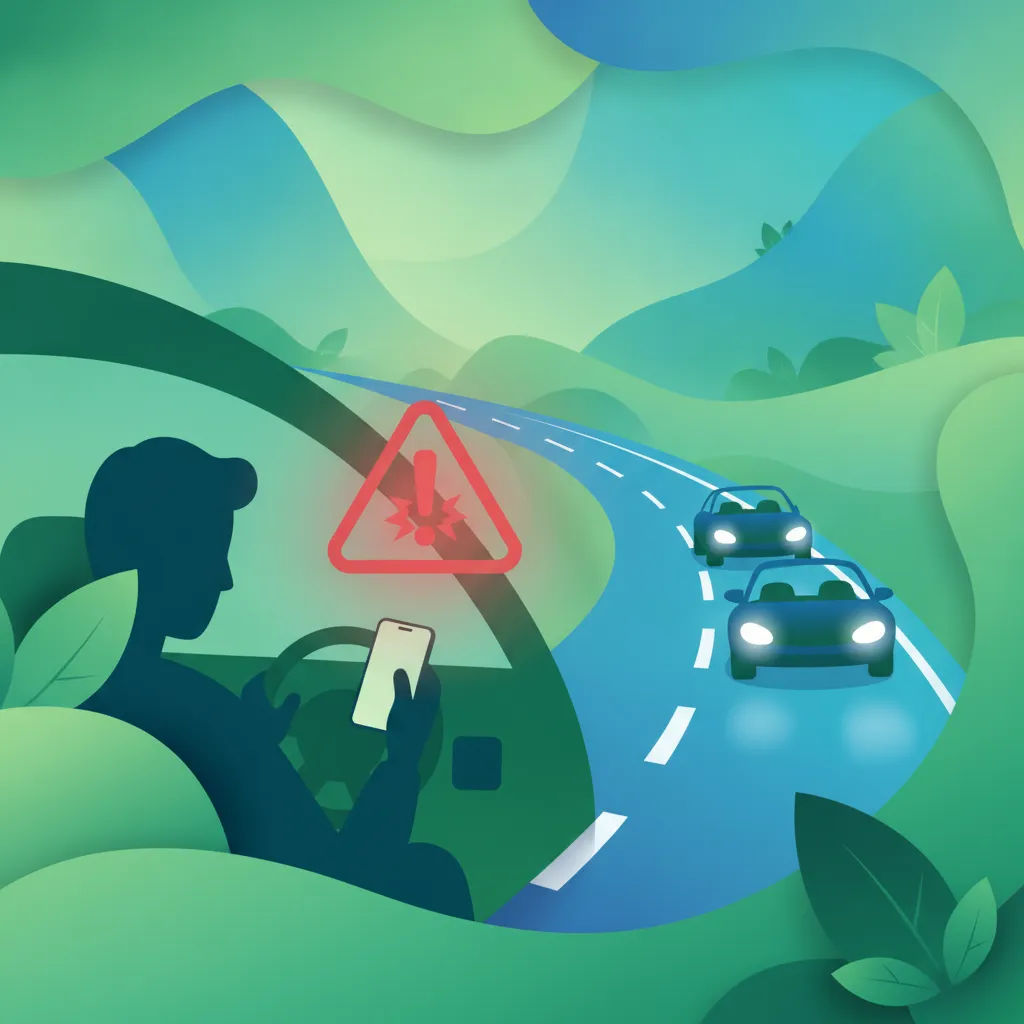
Human error and deliberate risk-taking represent the leading causes of traffic collisions among novice moped riders. This lesson analyzes the high dangers of using mobile phones while riding, weaving unsafely between lanes, and tailgating other motorists. It also covers the severe legal limits on alcohol and drug consumption under Turkish law, explaining how even minor impairments can drastically slower your hazard response times and lead to catastrophic accidents.

This lesson explores the critical skill of hazard identification and anticipation while driving. Topics include recognizing potential risks in traffic, road conditions, and environmental factors. Learners will develop skills in anticipatory driving to proactively address hazards before they become dangerous. Real-world examples illustrate how to maintain vigilance.
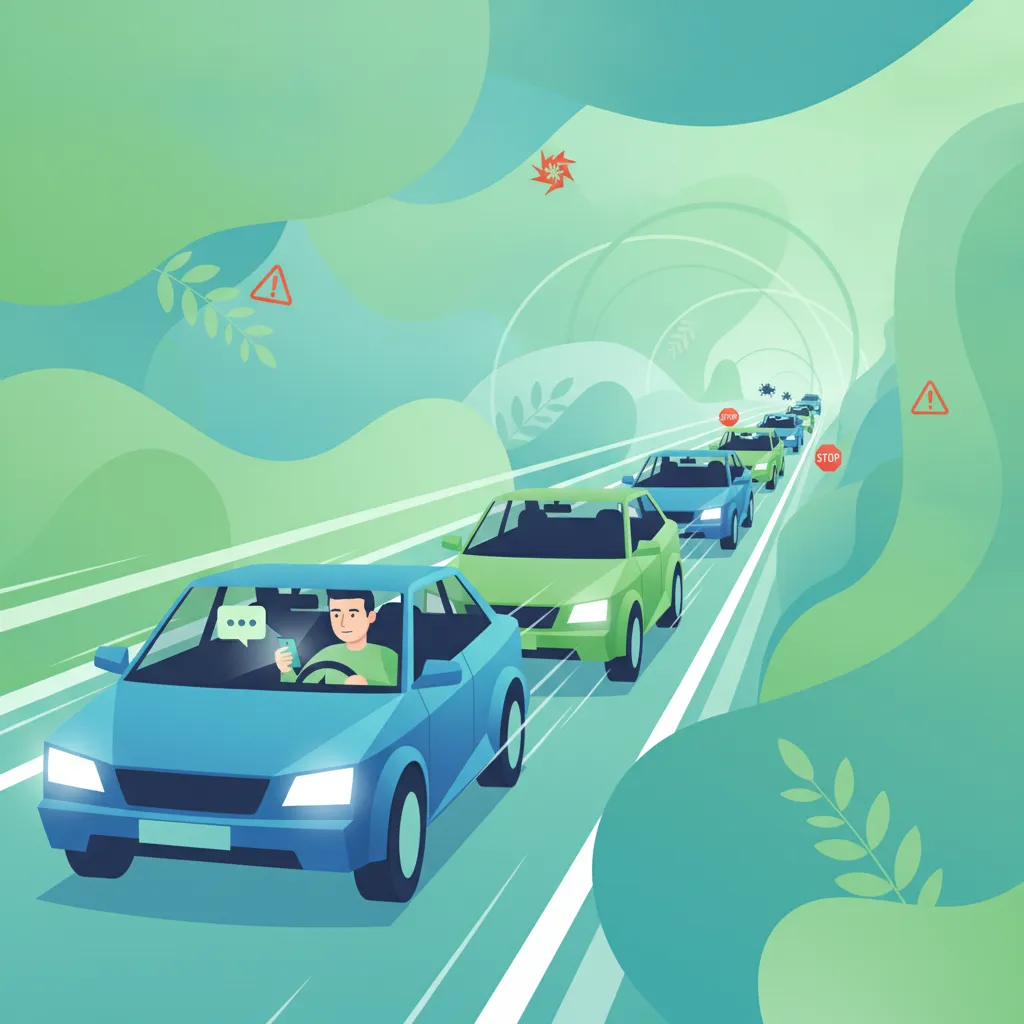
In this lesson, learners will explore the various forms of risk behaviour that can lead to accidents, such as aggressive riding, speeding, riding under the influence of alcohol or drugs, driving while fatigued, and being distracted. The lesson emphasizes the importance of self-awareness, recognizing personal limits, and adopting a safety-first mindset to mitigate these risks and make safe decisions.
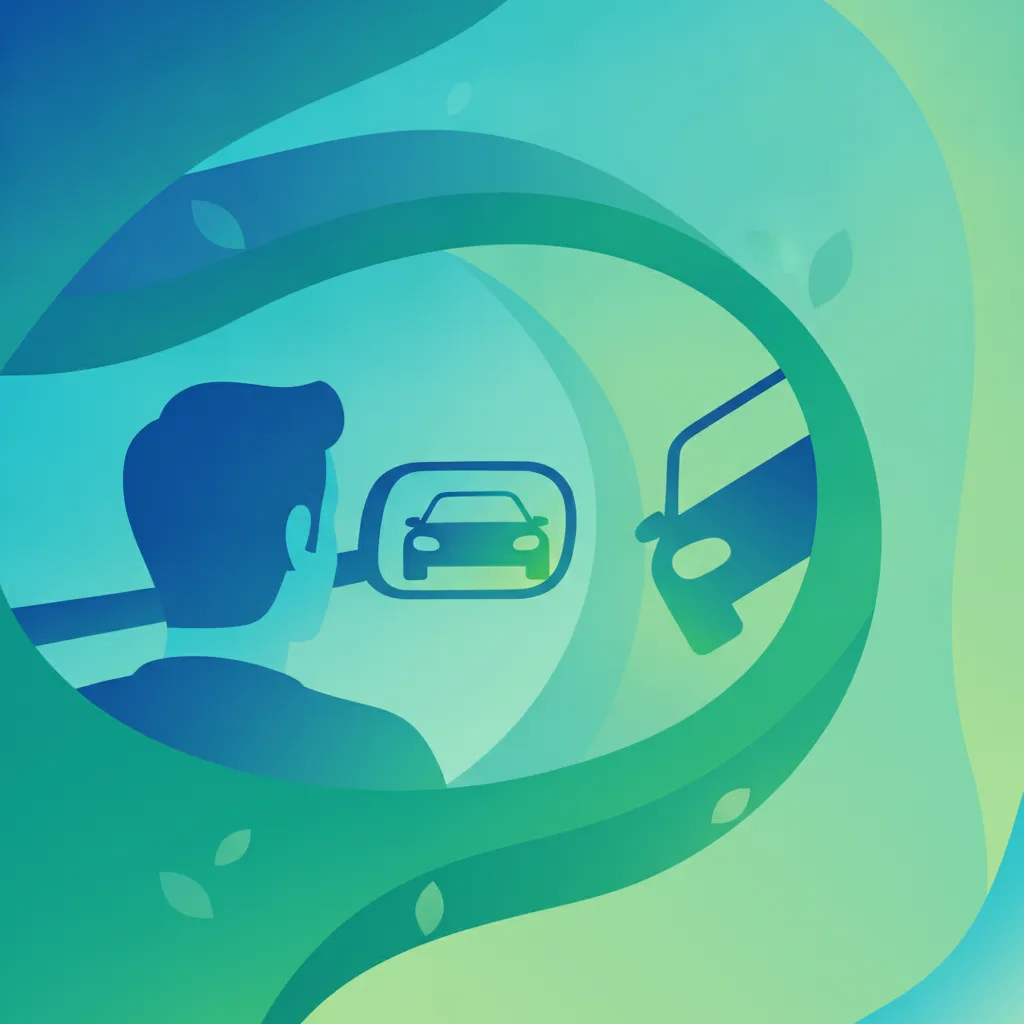
This lesson highlights the critical nature of blind spots for motorcyclists, teaching strategies to recognize and mitigate these hidden areas. Learners will practice techniques for checking blind spots before lane changes and overtaking, ensuring they are fully aware of surrounding traffic. The lesson emphasizes how proper mirroring and head checks can significantly reduce the risk of collisions.

In this lesson, learners will explore the functioning of traffic lights and their impact on motorcycle riding. It delves into the meanings of red, amber, and green lights, as well as dedicated turn arrows and pedestrian signals. The lesson highlights specific considerations for motorcyclists at intersections, such as the appropriate response to amber lights, the use of turn arrows for safe lane changes, and legal crossing obligations.

Learners will examine the complexities of operating in environments where various road users, including pedestrians, cyclists, and motorcyclists, coexist. The lesson emphasizes the need for heightened situational awareness, defensive driving techniques, and proactive hazard anticipation. Strategies for navigating mixed traffic safely, especially in congested urban areas, are highlighted.

In this lesson, learners explore the unique challenges and safety considerations related to motorcyclists and scooter riders. Topics include the importance of visibility, the use of protective gear, and the need for drivers to be aware of blind spots. The lesson also covers lane discipline for two-wheeled vehicles and safe overtaking practices.
Understand the principles of optimal lane positioning and blind spot management for safe motorcycle operation. This theory guide covers how to choose your path on Turkish roads to maximize visibility and maintain vehicle stability when navigating through urban traffic or high-speed motorway sections.

In this lesson, learners will discover the principles of optimal lane positioning that enhance both rider visibility and predictability to other road users. The content focuses on selecting the correct lane within various traffic scenarios, such as approaching intersections, navigating curves, and during overtaking. By maintaining appropriate lane placement, riders can minimize blind spots and improve reaction times.
This lesson highlights the critical nature of blind spots for motorcyclists, teaching strategies to recognize and mitigate these hidden areas. Learners will practice techniques for checking blind spots before lane changes and overtaking, ensuring they are fully aware of surrounding traffic. The lesson emphasizes how proper mirroring and head checks can significantly reduce the risk of collisions.

Proper road positioning is your primary shield against being squeezed, sideswiped, or overlooked by larger motor vehicles in daily traffic. This lesson explains how to ride in the center or slightly off-center of your lane to prevent unsafe overtaking within the same lane. You will study how to identify the massive blind spots of buses and trucks, maintain appropriate following distances, and execute overtaking maneuvers with maximum safety margin and clear signal warning.
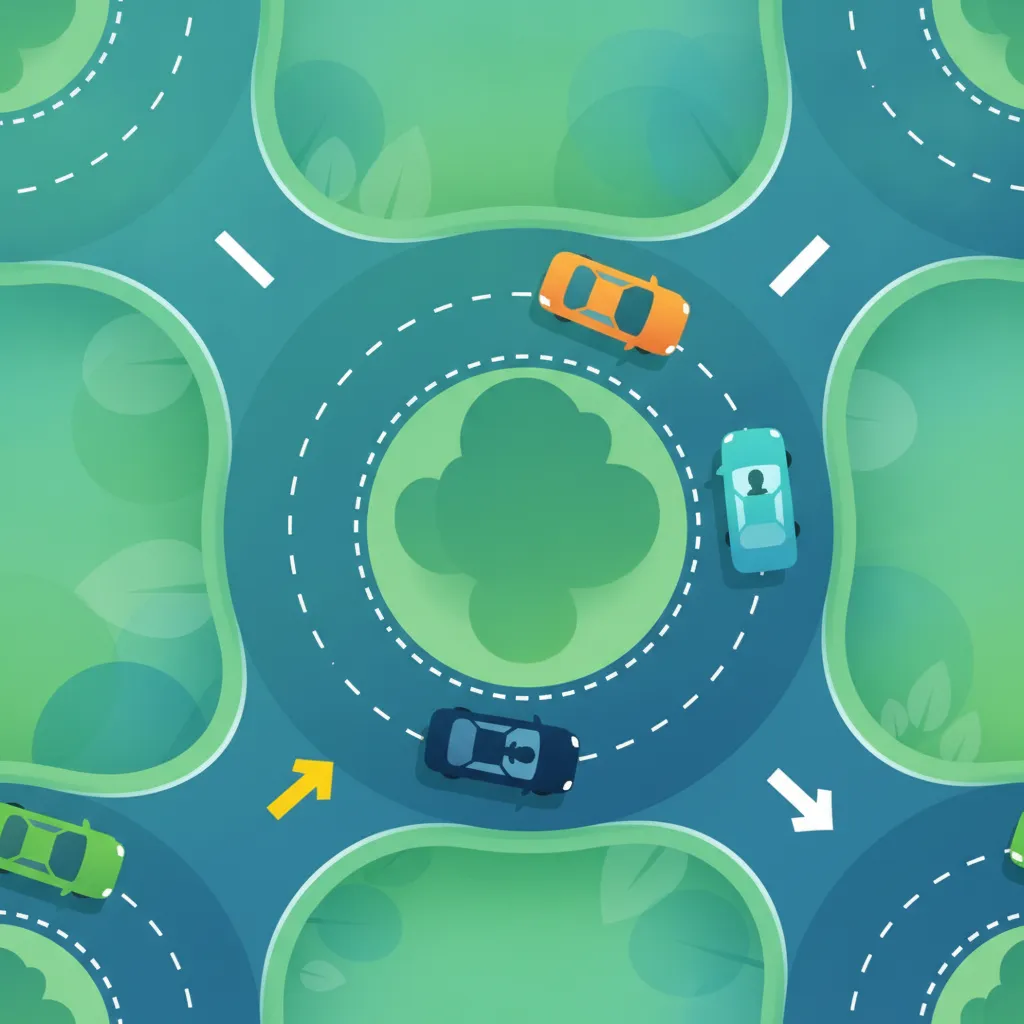
This lesson delves into the specific challenges and procedures associated with navigating roundabouts on a motorcycle. It outlines the importance of approaching at a safe speed, selecting the correct lane, and yielding to vehicles already within the roundabout. The content also covers the proper use of signals when exiting and emphasizes the need for heightened awareness of blind spots, especially when larger vehicles are present.

In this lesson, learners will master the skills required to safely navigate various types of intersections encountered in Turkish urban settings. The content covers interpreting traffic signals, understanding right-of-way rules, and executing proper lane positioning. Practical strategies for managing blind spots and ensuring visibility to other road users are emphasized. By the end of this session, participants will be equipped with safe crossing techniques.
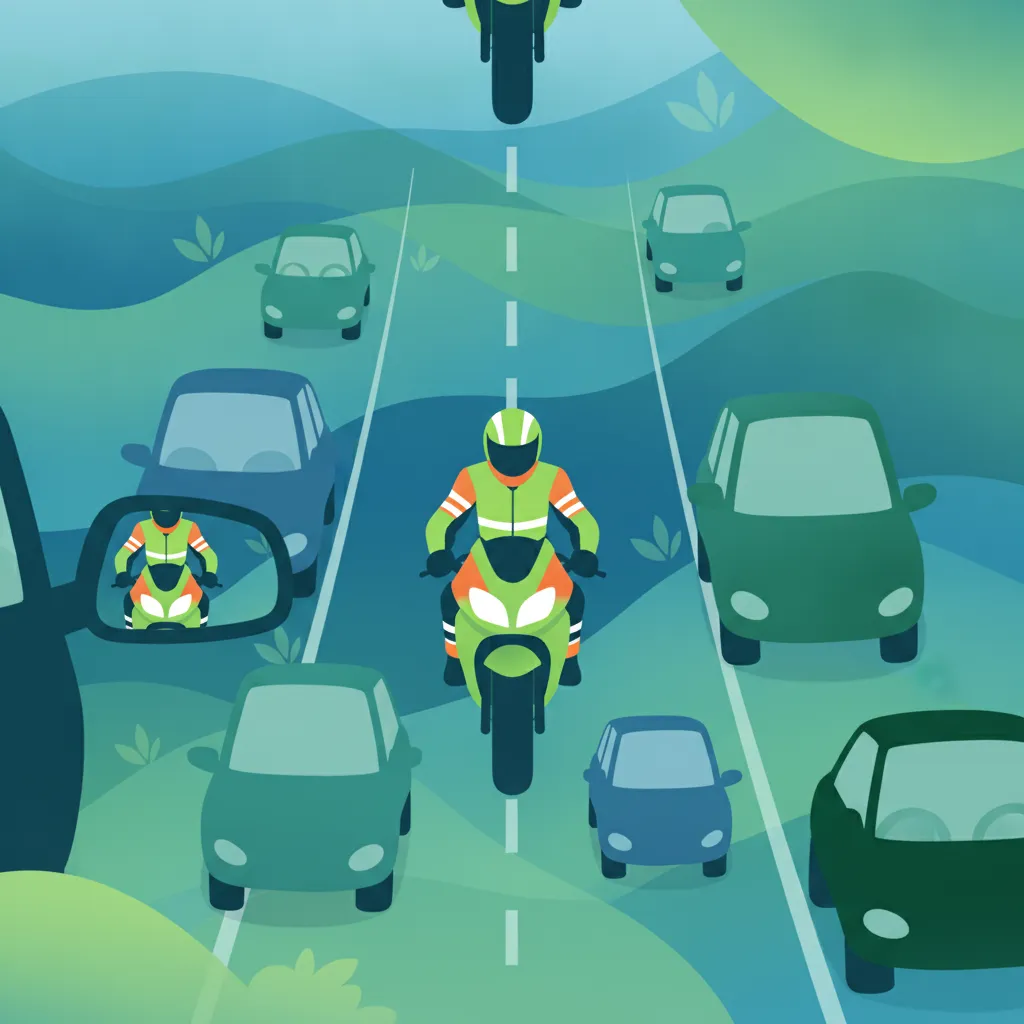
This lesson emphasizes the importance of rider visibility, illustrating how high-visibility clothing and reflective accessories can significantly reduce the risk of collisions. Learners will discover effective strategies for being noticed by other road users, such as using bright colors, reflective strips, and appropriate lighting, especially during adverse weather or nighttime riding. The content also outlines best practices for maintenance.
Find clear answers to common questions learners have about Cornering Techniques and Grip Management. Learn how the lesson is structured, which driving theory objectives it supports, and how it fits into the overall learning path of units and curriculum progression in Turkey. These explanations help you understand key concepts, lesson flow, and exam focused study goals.
Applying smooth, steady throttle upon exiting a corner helps stabilize the motorcycle and shift weight to the rear, which enhances traction. Abruptly opening the throttle can cause the rear wheel to lose grip, leading to instability.
Road surfaces in Turkey can vary from smooth asphalt to loose gravel or polished concrete. Riders must reduce speed and lean angles on surfaces with lower friction, such as those that are wet, oily, or contain loose debris, to prevent skidding.
Proper body positioning helps lower the combined center of gravity of the rider and bike. This allows the motorcycle to take a turn with less lean angle, providing a wider margin for safety and better control over the trajectory.
Yes, the theory exam often tests your understanding of situational awareness and the physics behind safe turns. You may be asked to identify the safest path through a bend or how to react to unexpected obstacles in a curve.
Use our comprehensive practice search to find exactly the Turkish driving theory questions you need to master. Whether reviewing specific road signs, traffic rules, or first aid scenarios, select your perfect practice set and boost your confidence for the official ehliyet sınavı.