This lesson covers the vital legal and practical steps to take during road emergencies and accidents. It is a critical part of your Category B licence training, ensuring you know how to protect yourself, other drivers, and victims while adhering to Turkish traffic legislation.
Lesson content overview
Every driver on Turkish roads must be prepared to handle emergencies. Whether you are directly involved in a collision or are the first to arrive at the scene of an accident, your actions within the first few minutes can mean the difference between life and death. Turkish Highway Traffic Law (Karayolları Trafik Kanunu) mandates specific legal responsibilities for drivers during these critical moments.
This lesson covers the essential protocols for securing an accident scene, communicating with emergency services, administering basic life-saving first aid, and understanding your legal obligations under Turkish traffic regulations. Mastering these procedures is not only required to pass the official MTSK (Motorlu Taşıt Sürücü Kursları) theory e-exam for a Category B license but is also a fundamental duty of a responsible driver.
When an accident occurs, the immediate area becomes a high-risk zone. Secondary collisions—where oncoming vehicles crash into the stationary, damaged vehicles or hit pedestrians at the scene—are often more severe than the initial accident. Securing the scene immediately is your absolute first priority before attempting any first aid or vehicle assessment.
To protect yourself, the victims, and oncoming traffic, you must systematically secure the environment. Follow this sequence of safety measures immediately:
Activate Hazard Lights: Instantly turn on your vehicle's hazard warning lights (commonly known as dörtlüler or dörtlü ikaz lambaları) to alert drivers behind you.
Park Safely: If your vehicle is still mobile, pull over to the hard shoulder (emniyet şeridi) or the far right side of the road. Switch off the ignition, engage the handbrake, and put on a high-visibility reflective vest before exiting.
Position Warning Reflectors: Place warning triangle reflectors (reflektör) on the road to give oncoming traffic sufficient distance to react and slow down.
Eliminate Ignition Sources: Turn off the ignitions of all crashed vehicles to prevent electrical sparks. Ensure no one is smoking near the scene, as spilled fuel (petrol or diesel) and highly flammable LPG (Liquefied Petroleum Gas) present a high risk of explosion.
Manage Bystanders: Keep onlookers away from the roadway and direct them to safe areas behind guardrails or off the shoulder.
Turkish traffic regulations specify strict rules for placing warning triangle reflectors. Simply placing a reflector a few meters behind a vehicle is illegal and highly dangerous, especially on fast-moving roads.
Never assume oncoming traffic can see you. At night, in heavy rain, thick fog, or snow, visibility is severely compromised. In these conditions, use additional portable warning lights or flares if available, and ensure you remain behind safety barriers whenever possible.
Once the scene is physically secured from immediate secondary hazards, your next step is to summon professional medical and rescue teams. In Turkey, all emergency services are consolidated under a single, toll-free national emergency number.
The National Emergency Number in Turkey is 112. Dialing 112 connects you to the Emergency Call Center (112 Acil Çağrı Merkezi), which dispatches ambulances (ambulans), police (trafik polisi / jandarma), and fire rescue (itfaiye) services.
When you call 112, you must remain calm, speak clearly, and deliver precise details. The dispatcher will use this information to determine the level of response required. Prepare to provide the following details:
First aid is the immediate, non-professional medical assistance provided to an injured person before professional emergency responders arrive. Under Turkish law, drivers are expected to provide basic first aid if they are capable and have received training.
The primary rule of first aid is "Do No Harm" (Önce Zarar Verme). Improperly moving an injured person or applying unapproved medical techniques can cause permanent paralysis or death.
Before performing any physical intervention, quickly assess the consciousness and vital signs of the victims using the standard A-B-C methodology:
A victim can bleed to death in minutes if a major artery is severed. Controlling severe external bleeding is one of the most critical life-saving skills a driver must master.
Shock occurs when the circulatory system fails to provide enough oxygen-rich blood to vital organs. It is a life-threatening condition that often follows severe bleeding, major trauma, or extreme pain.
One of the most common causes of permanent disability (such as paraplegia or quadriplegia) in road accidents is the improper extraction of victims from damaged vehicles. The spinal cord is highly vulnerable to secondary injury during movement.
A specialized first aid extraction technique used to safely remove an unconscious victim from a vehicle without twisting or bending their spine, neck, or head. This is only performed when there is an immediate, life-threatening danger at the scene.
You must never move or extract a victim from a vehicle unless one of the following extreme conditions is met:
Ensure the vehicle's ignition is turned off and the handbrake is engaged. Clear any debris trapping the victim's legs.
Approach the victim from the side. Slip one arm under the victim's armpit from behind and support their chin firmly with your hand to immobilize their neck.
Pass your other arm under the victim's other armpit and grip their wrist or forearm.
Press your cheek against the victim's cheek, holding their head tightly against your shoulder to ensure the head, neck, and torso remain perfectly aligned.
Gently slide the victim out of the seat and onto your thigh, keeping their spine straight, and move them to a safe distance from the vehicle.
The Turkish Highway Traffic Law (Karayolları Trafik Kanunu) establishes strict legal obligations for all drivers involved in or witnessing a traffic accident. Violating these duties is a criminal offense and carries severe penalties, including heavy fines, driver's license suspension, and imprisonment.
If you are involved in a traffic accident, you are legally required to stop immediately. Failing to do so is classified as leaving the scene of an accident (commonly referred to as a "hit-and-run").
If the accident results only in material damage (no injuries, deaths, or public property damage), drivers do not need to wait for the traffic police to arrive. In Turkey, this is managed via the Material Damage Traffic Accident Report (Maddi Hasarlı Trafik Kazası Tespit Tutanağı).
Emergency responses must be adapted dynamically depending on the environment, the weather, and the types of vehicles involved.
High-speed environments leave zero margin for error.
Rain, fog, and snow increase braking distances significantly. Oncoming drivers will need much more time to stop.
If you are involved in or witness an accident with a truck displaying orange hazard placards, exercise extreme caution.
This lesson covers the critical legal and practical steps for handling road emergencies in Turkey, starting with scene safety through hazard lights and correctly positioned warning triangles. Learners must master calling 112 with complete information and the A-B-C first aid assessment, including controlling severe bleeding, managing shock with the legs-elevated position, and knowing the precise Rentek maneuver for extracting victims only under life-threatening conditions. Turkish traffic law mandates that drivers stop and assist, with material damage-only accidents handled via the Kaza Tespit Tutanağı when specific conditions are met, while police must be called for any injuries, alcohol involvement, or uninsured vehicles.
A short set of high-value points that capture the most important learning from this lesson.
Activate hazard lights immediately and place warning triangles at least 30 metres on urban roads or 150 metres on intercity highways before attempting any first aid.
When calling 112, provide precise location, accident type, number and condition of victims, any hazards present, and your contact information—never hang up until instructed.
Use the A-B-C method (Airway, Breathing, Circulation) to assess victims, starting by checking and clearing the airway using Head Tilt-Chin Lift if no spinal injury is suspected.
Control severe bleeding with direct pressure, elevation above heart level, and arterial pressure points as needed, while preventing shock by placing victims in the shock position with legs elevated 30 centimetres.
The Rentek maneuver is the only acceptable way to extract an unconscious victim from a vehicle, and it must only be performed when there is imminent fire, water submersion, or the victim cannot receive CPR inside the vehicle.
Explore all units and lessons included in this driving theory course.
Reflector placement must be 30–150m in front AND behind on two-way roads without a central barrier, and additional reflectors are needed before bends or curves on high-speed roads.
The recovery position (Koma Pozisyonu) keeps an unconscious but breathing victim's airway clear, while the shock position (Şok Pozisyonu) with legs elevated 30cm is for victims with suspected circulatory failure from bleeding or trauma.
Never move a victim unless there is immediate danger to their life—improper extraction can cause permanent paralysis by severing the spinal cord.
The Kaza Tespit Tutanağı can only be used when all parties agree, no injuries or deaths occurred, all drivers have valid licenses and insurance, and no public property was damaged.
Leaving the scene of an accident causing injury or death is a criminal offense under Turkish law, and even uninvolved witnesses are legally obligated to stop and assist when no emergency responders are present.
Placing warning reflectors too close to the vehicle (a few metres) instead of at the legally required distances, which gives oncoming drivers insufficient time to react.
Assuming a stationary victim without visible external injuries is uninjured and moving them without checking for spinal damage, potentially causing permanent paralysis.
Failing to provide specific information when calling 112 (such as exact location, accident type, or number of casualties), which delays appropriate emergency response.
Using a tourniquet for any bleeding other than catastrophic limb amputation, or failing to note and communicate the exact time of application to medical personnel.
Attempting to move vehicles before documenting the accident scene with photographs, which complicates insurance claims and may violate proper accident reporting procedures.
Lesson content overview
A short set of high-value points that capture the most important learning from this lesson.
Activate hazard lights immediately and place warning triangles at least 30 metres on urban roads or 150 metres on intercity highways before attempting any first aid.
When calling 112, provide precise location, accident type, number and condition of victims, any hazards present, and your contact information—never hang up until instructed.
Use the A-B-C method (Airway, Breathing, Circulation) to assess victims, starting by checking and clearing the airway using Head Tilt-Chin Lift if no spinal injury is suspected.
Control severe bleeding with direct pressure, elevation above heart level, and arterial pressure points as needed, while preventing shock by placing victims in the shock position with legs elevated 30 centimetres.
The Rentek maneuver is the only acceptable way to extract an unconscious victim from a vehicle, and it must only be performed when there is imminent fire, water submersion, or the victim cannot receive CPR inside the vehicle.
Explore all units and lessons included in this driving theory course.
Reflector placement must be 30–150m in front AND behind on two-way roads without a central barrier, and additional reflectors are needed before bends or curves on high-speed roads.
The recovery position (Koma Pozisyonu) keeps an unconscious but breathing victim's airway clear, while the shock position (Şok Pozisyonu) with legs elevated 30cm is for victims with suspected circulatory failure from bleeding or trauma.
Never move a victim unless there is immediate danger to their life—improper extraction can cause permanent paralysis by severing the spinal cord.
The Kaza Tespit Tutanağı can only be used when all parties agree, no injuries or deaths occurred, all drivers have valid licenses and insurance, and no public property was damaged.
Leaving the scene of an accident causing injury or death is a criminal offense under Turkish law, and even uninvolved witnesses are legally obligated to stop and assist when no emergency responders are present.
Placing warning reflectors too close to the vehicle (a few metres) instead of at the legally required distances, which gives oncoming drivers insufficient time to react.
Assuming a stationary victim without visible external injuries is uninjured and moving them without checking for spinal damage, potentially causing permanent paralysis.
Failing to provide specific information when calling 112 (such as exact location, accident type, or number of casualties), which delays appropriate emergency response.
Using a tourniquet for any bleeding other than catastrophic limb amputation, or failing to note and communicate the exact time of application to medical personnel.
Attempting to move vehicles before documenting the accident scene with photographs, which complicates insurance claims and may violate proper accident reporting procedures.
Explore search topics learners often look for when studying Emergency Situations and First Aid. These topics reflect common questions about road rules, driving situations, safety guidance, and lesson level theory preparation for learners in Turkey.
Browse additional driving theory lessons that cover connected traffic rules, road signs, and common driving situations related to this topic. Improve your understanding of how different rules interact across everyday traffic scenarios.
Learn the legal requirements for reporting traffic accidents and the penalties for leaving the scene in Turkish traffic law. This guide clarifies when to call emergency services and how to correctly document material damage collisions according to official Turkish road traffic regulations.
This lesson details the statutory duties imposed on motor vehicle drivers by Turkish traffic legislation to maintain order on public roads. It emphasizes mandatory seat belt usage, mobile phone bans, vehicle inspection rules, and general compliance with police directions. Understanding these duties ensures drivers avoid heavy penalties and maintain road safety.
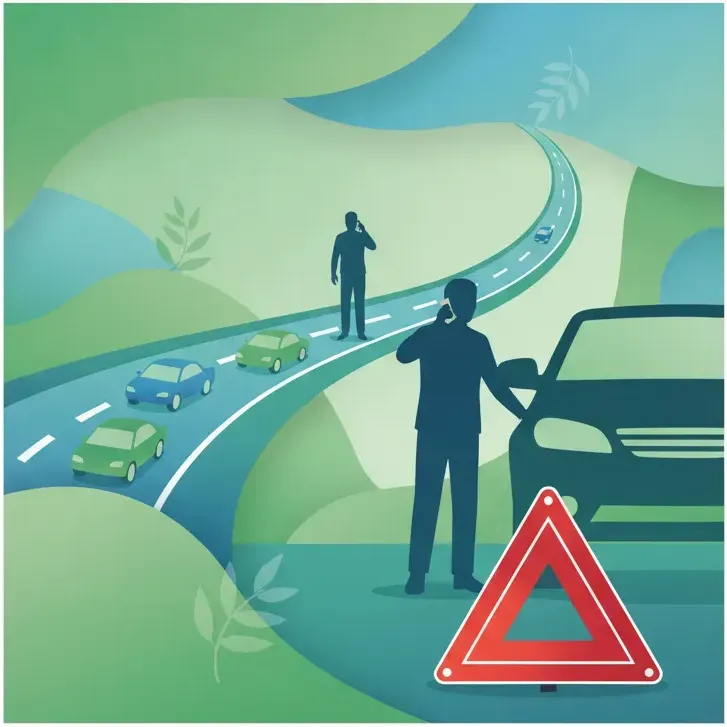
This lesson provides guidance on appropriate actions to take in the event of an accident or emergency while operating a goods vehicle. Learners will understand how to secure the scene, call Turkish emergency services (112), provide basic first aid, and complete necessary documentation. Emphasis is placed on ensuring personal safety, preventing further incidents, and facilitating rescue teams.
This lesson examines the integral role of the goods vehicle driver in contributing to overall traffic safety and a positive safety culture. It focuses on proactive driving behaviors, hazard identification, and effective risk management strategies. Communication techniques with other road users, compliance with traffic flow regulations, and competent emergency responses are highlighted as essential skills.
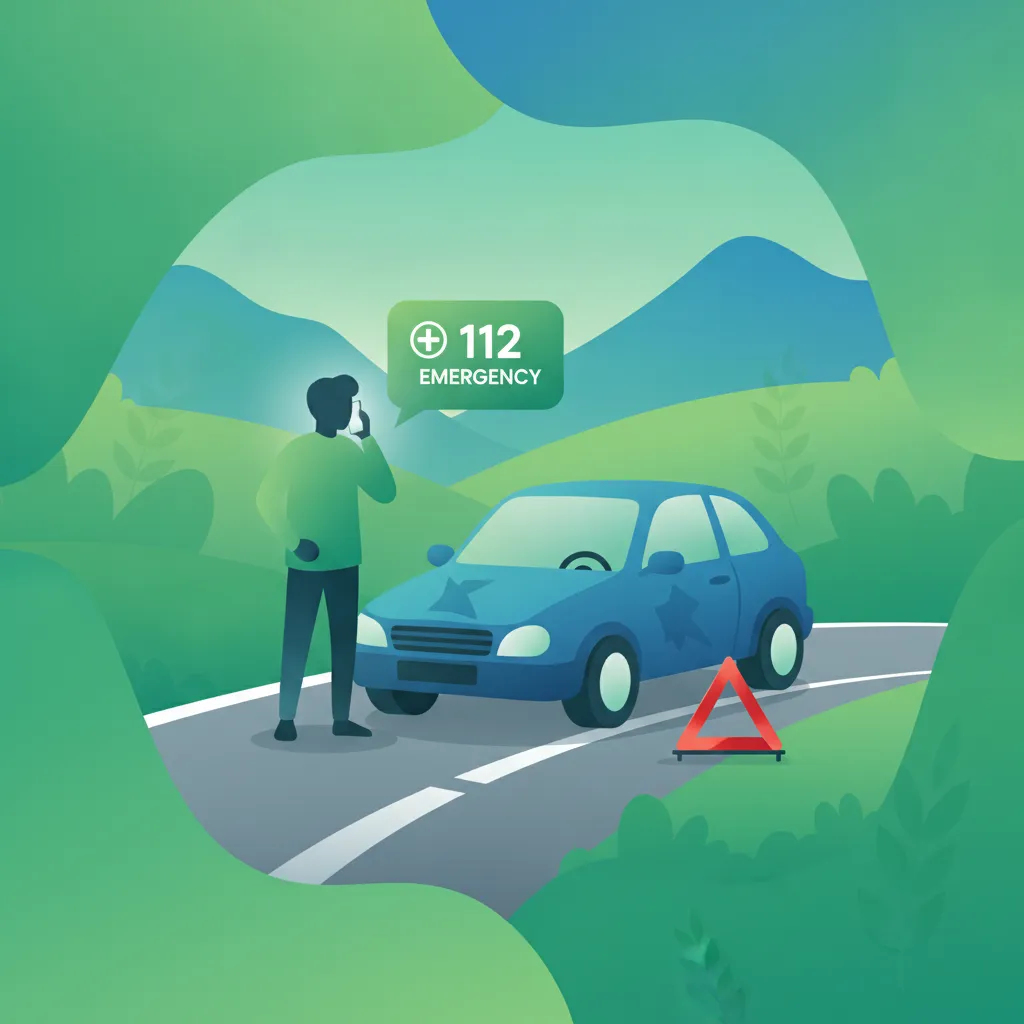
Knowing how to act immediately following a traffic accident or mechanical breakdown is crucial for saving lives and preventing secondary collisions. This lesson provides clear instructions on securing the scene using warning markers, assessing injuries, and immediately dialing the national 112 emergency number. You will learn what critical information to report, how to administer basic life-saving first aid within your capacity, and how to position a disabled moped safely out of active traffic lanes.
This lesson emphasizes the ethical dimension of driving, encouraging a responsible and considerate attitude towards all road users. Learners will explore the principles of defensive driving, risk awareness, and the moral obligations that come with operating a vehicle. The importance of respecting pedestrians, cyclists, and vulnerable road users is highlighted, along with the broader societal benefits of ethical driving.
This lesson delves into the ethical responsibilities and professional standards expected of goods vehicle drivers, emphasizing their pivotal role in ensuring traffic safety. It explores the duty of care owed to other road users and the broader societal expectations placed upon professional drivers. Learners will examine how their conduct directly influences public trust and overall traffic flow in urban environments.
This lesson outlines the spectrum of penalties and legal consequences that goods vehicle drivers may face for violating traffic regulations. It details the types of infractions, ranging from minor violations to serious offenses, and explains the corresponding fines, points, and license suspensions. Learners will gain an understanding of the enforcement mechanisms and how repeat offenses can exacerbate penalties.
This lesson covers the severe administrative, financial, and criminal penalties associated with serious traffic violations in Turkey. It outlines the legal processes for driving licence suspension, vehicle impoundment, and mandatory driver retraining programs. Motorists will understand the long-term impact of a criminal driving record.

In this lesson, learners will explore the core obligations of a motorcyclist, emphasizing the necessity of adhering to traffic laws and maintaining respectful conduct toward all road participants. The discussion will focus on the principles of defensive riding, where anticipation of hazards and courteous behavior are paramount. Ethical decision-making will be highlighted as a key factor in preventing accidents and fostering a positive traffic environment.
This lesson covers the primary legal requirements that every moped rider must follow when navigating public traffic systems within Turkey. It focuses on the mandatory application of traffic signals, correct lane selection, appropriate overtaking procedures, and the specific speed limitations set for light motorized vehicles. By understanding these regulatory bounds, you will avoid high traffic fines and licence point deductions while ensuring that your riding practices strictly align with national highway laws.
Understand the critical steps for assessing injured victims using the ABC method during road traffic accidents. This lesson covers life-saving techniques including severe bleeding control, the recovery position, and safe extraction methods that prevent secondary spinal injuries for crash victims.
This lesson provides guidance on appropriate actions to take in the event of an accident or emergency while operating a goods vehicle. Learners will understand how to secure the scene, call Turkish emergency services (112), provide basic first aid, and complete necessary documentation. Emphasis is placed on ensuring personal safety, preventing further incidents, and facilitating rescue teams.
Knowing how to act immediately following a traffic accident or mechanical breakdown is crucial for saving lives and preventing secondary collisions. This lesson provides clear instructions on securing the scene using warning markers, assessing injuries, and immediately dialing the national 112 emergency number. You will learn what critical information to report, how to administer basic life-saving first aid within your capacity, and how to position a disabled moped safely out of active traffic lanes.
This lesson focuses on protecting vulnerable road users, such as pedestrians, cyclists, and motorcyclists, in mixed traffic environments. Learners will examine specific strategies for increased vigilance, anticipatory driving, and properly yielding to these users. The lesson also covers high-risk zones, such as school areas and public transport stops, emphasizing the need for heightened safety.
Learners will identify the different categories of vulnerable road users and understand the heightened risks they face. The lesson emphasizes the importance of recognizing these users, anticipating their actions, and taking proactive measures to ensure their safety while operating passenger vehicles. Strategies for mitigating danger and fostering a protective driving environment are explored.

Defensive riding is the practice of anticipating potential road conflicts and acting early to prevent accidents before they occur. This lesson teaches you how to systematically scan the road ahead for changing conditions, keep an adequate safety cushion around your moped, and pre-plan exit routes in tight spots. You will learn to assume you are invisible to other drivers and adapt your speed and road position proactively to protect yourself against sudden maneuvers.

Learners will explore techniques for adjusting driving styles based on different road surface conditions, such as gravel, potholes, and wet pavement. The lesson emphasizes the importance of adapting speed, braking, and steering inputs to maintain vehicle control and passenger comfort. Strategies for detecting and responding to road hazards are discussed to ensure safety across diverse driving environments.

Proper road positioning is your primary shield against being squeezed, sideswiped, or overlooked by larger motor vehicles in daily traffic. This lesson explains how to ride in the center or slightly off-center of your lane to prevent unsafe overtaking within the same lane. You will study how to identify the massive blind spots of buses and trucks, maintain appropriate following distances, and execute overtaking maneuvers with maximum safety margin and clear signal warning.

In this lesson, learners will discover the principles of defensive riding, focusing on hazard anticipation, maintaining safe distances, and practicing proactive avoidance techniques. It emphasizes developing a vigilant riding posture, constantly scanning the environment, and preparing to react to potential dangers from other road users, road conditions, or unexpected traffic events.
Learners will examine common vehicle emergencies that may occur while transporting passengers, such as fires, tire blowouts, or brake failures. The lesson emphasizes quick recognition of warning signs and outlines step-by-step emergency protocols to ensure the safety of passengers and other road users. Strategies for effective incident response and communication are also covered.
This lesson explores the critical skill of hazard identification and anticipation while driving. Topics include recognizing potential risks in traffic, road conditions, and environmental factors. Learners will develop skills in anticipatory driving to proactively address hazards before they become dangerous. Real-world examples illustrate how to maintain vigilance.
Find clear answers to common questions learners have about Emergency Situations and First Aid. Learn how the lesson is structured, which driving theory objectives it supports, and how it fits into the overall learning path of units and curriculum progression in Turkey. These explanations help you understand key concepts, lesson flow, and exam focused study goals.
First, ensure your own safety and the safety of the accident scene. Move your vehicle to the side if it is not a major injury case, activate hazard lights, and set up reflective triangles at sufficient distances to warn oncoming traffic before checking for injuries.
Yes, under Turkish traffic law, you have a duty to assist in an accident if it is safe to do so. This includes calling 112 for emergency services and providing basic assistance without putting yourself or others in further danger.
You should only move an injured person if there is an immediate threat to their life, such as the vehicle catching fire or being in a location where a secondary collision is imminent. Otherwise, keep them still to prevent spinal or internal injuries until professional help arrives.
The triangle must be placed at a distance that gives sufficient warning to approaching drivers. On highways, this distance must be greater than on urban roads to account for higher speeds, typically at least 150 meters behind the vehicle.
Use our comprehensive practice search to find exactly the Turkish driving theory questions you need to master. Whether reviewing specific road signs, traffic rules, or first aid scenarios, select your perfect practice set and boost your confidence for the official ehliyet sınavı.