
This lesson guides you through critical emergency actions, including scene safety, the use of hazard markers, and how to communicate effectively with 112 services. As part of your final preparation for the Category AM theory exam in Türkiye, you will learn how to handle post-accident scenarios, minimize secondary risks, and provide essential life-saving information to emergency responders.
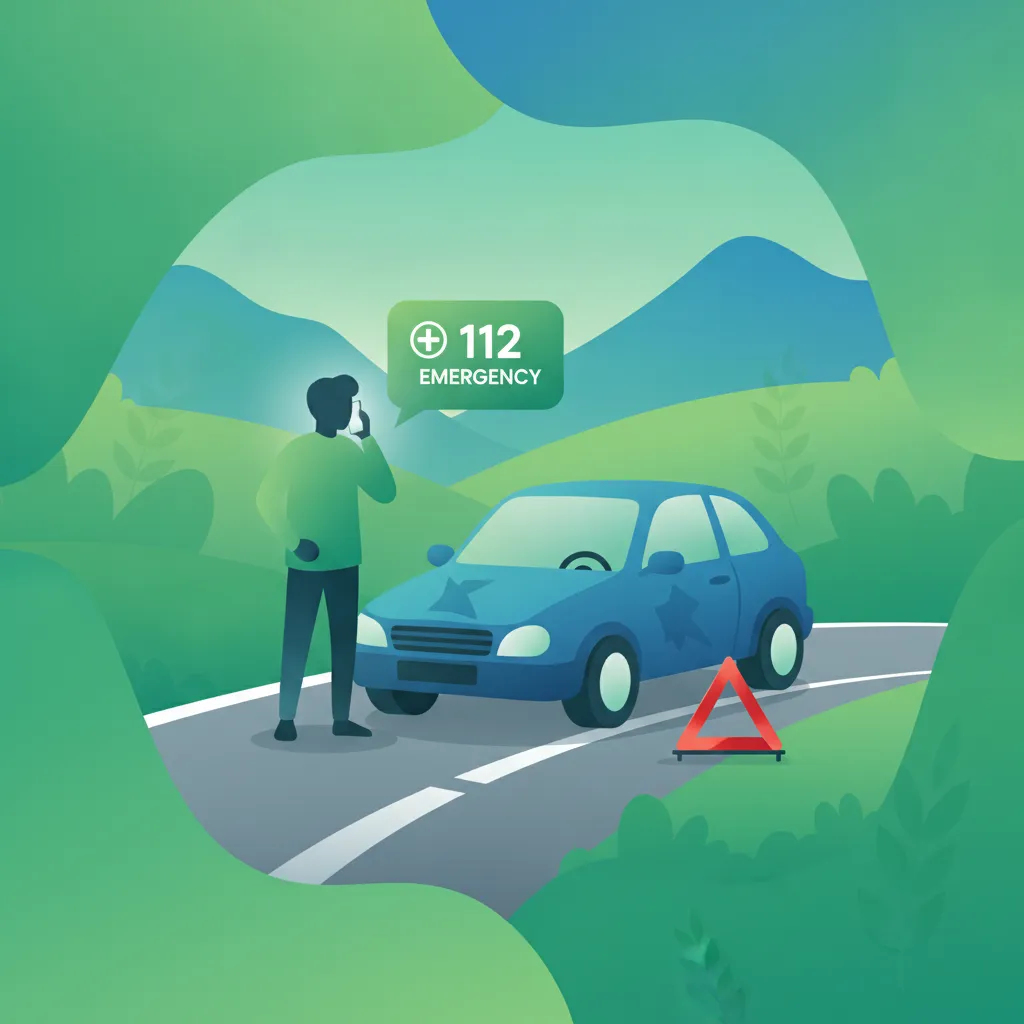
Lesson content overview
Experiencing a traffic accident or a sudden mechanical breakdown can be a highly stressful event, especially when riding a vulnerable vehicle like a moped or light motorized bicycle (Category AM). Under Turkish road law (Karayolları Trafik Kanunu), knowing exactly how to react immediately following an incident is not just a matter of safety—it is a strict legal obligation.
This lesson covers the essential, life-saving steps required to secure an accident or breakdown scene, assess casualties, summon emergency medical and law enforcement personnel via the unified 112 Emergency Call Centre (112 Acil Çağrı Merkezi), and administer basic first aid within your legal and physical capacity.
The moments immediately following a collision or mechanical failure are the most dangerous. On busy Turkish roads, a stopped vehicle—particularly a small moped—presents a major hazard to oncoming traffic. Your primary objective must always be to prevent a secondary collision (a subsequent accident caused by the initial incident).
Never panic. Your priority is to protect yourself first, then your passengers, the victims of the accident, and finally other road users. An injured or dead rescuer cannot help anyone.
If you are involved in or arrive at an accident scene, follow this strict sequence of actions to control the environment:
Stop and Assess: Immediately stop your vehicle in a safe position. If your moped is functional, move it to the hard shoulder (emniyet şeridi) or off the active driving lane. Switch off the ignition to prevent fuel from leaking onto hot engine parts and igniting.
Activate Hazard Warning Lights: Turn on your vehicle's hazard warning lights (dörtlü flaşörler) immediately to alert vehicles approaching from both directions.
Wear High-Visibility Gear: Before walking onto or near the roadway, put on a high-visibility reflective vest (reflektörlü yelek). Under Turkish traffic safety standards, carrying and using reflective wear is a key protective behavior, especially in low-light conditions.
Deploy Warning Devices: Place your warning triangle (yansıtıcı reflektör) at the legally mandated distance to alert oncoming traffic.
Under the Turkish Highway Traffic Regulation (Karayolları Trafik Yönetmeliği), drivers must place warning triangles behind a disabled or crashed vehicle to ensure other drivers have sufficient time to react and slow down. Because mopeds are small and easily obscured by larger vehicles, proper triangle placement is critical.
The legal requirements for placing warning devices vary based on the type of road and the visibility conditions:
Static legal distances are minimum standards. You must dynamically adjust your behavior based on environmental risks:
In Turkey, all emergency services have been consolidated into a single, unified telephone number: 112. Dialing 112 connects you to the Acil Çağrı Merkezi, which dispatches the appropriate response units, including:
The single emergency helpline in Turkey that coordinates police, medical, fire, and rescue services simultaneously, eliminating the need to memorize separate numbers like 155 or 110.
When you call 112, you must remain calm and deliver clear, structured information. The dispatcher will use your description to prioritize resources. Prepare to provide the following details:
Never hang up first. The 112 dispatcher may need to guide you through life-saving instructions or ask for real-time updates as emergency vehicles approach.
As a Category AM license holder, you are required to understand the basics of first aid (ilk yardım). While you are not expected to perform advanced medical procedures, you have a legal and moral duty to preserve life and prevent a victim's condition from worsening before professional paramedics arrive.
Before touching a victim, perform a rapid assessment of their life-support indicators. This is often referred to as checking the ABCs:
The Turkish Highway Traffic Law (Karayolları Trafik Kanunu) treats involvement in a traffic accident with strict gravity. Failing to adhere to post-accident protocols carries heavy legal consequences, ranging from administrative fines to criminal prosecution.
According to Article 81 of the Turkish Highway Traffic Law, all drivers involved in a traffic accident must:
Failure to comply with these rules results in severe legal liabilities:
An emergency situation looks very different depending on when, where, and in what weather it occurs. Use the following guidelines to adapt your response:
| Factor | Urban Streets / Intersections | Highways and Expressways (Otoban) |
|---|---|---|
| Speed of Oncoming Traffic | Moderate (typically 30–50 km/h) | High (up to 120 km/h or more) |
| Triangle Distance | Minimum 20 metres | Minimum 30 metres (visible from 150m) |
| Primary Danger | Pedestrians, crossing vehicles, lateral collisions | Rear-end pileups, high-velocity impacts |
| Action Priority | Move vehicle to the curb; clear the intersection path if safe. | Move immediately to the hard shoulder. Do not stand on the asphalt. Move behind the crash barrier (bariyer) after securing the scene. |
Under compromised visibility conditions, a moped's small profile is almost invisible to oncoming drivers.
Riding a Category AM moped introduces specific vulnerabilities during a breakdown or minor mechanical failure. Mopeds do not have protective cabins, and their small tires and lightweight frames make them unstable when parked on unpaved shoulders.
If your moped experiences a mechanical failure (such as a flat tire, broken drive belt, or engine seizure):
This lesson covers the critical emergency response procedures that Category AM riders must follow under Turkish traffic law, including scene safety protocols to prevent secondary collisions, proper deployment of warning triangles at legally mandated distances (20m urban, 30m highway), and how to communicate effectively with the 112 emergency services by providing precise location, accident details, and casualty information. The ABC first aid framework teaches riders how to assess victims' airway, breathing, and circulation before taking action, with the golden rule being never to move seriously injured persons unless they face immediate danger. Legal obligations under Article 81 of the Turkish Highway Traffic Law are emphasized, including strict penalties for leaving an accident scene or failing to provide assistance. The lesson includes practical scenarios and a comparison table to help riders adapt their response to different road environments and visibility conditions.
A short set of high-value points that capture the most important learning from this lesson.
Secure the accident scene first by activating hazard lights, deploying warning triangles, and wearing reflective gear to prevent secondary collisions
When calling 112, provide exact location with road name and kilometer marker, nature of accident, casualty count and status, and any additional hazards present
Use the ABC protocol (Airway, Breathing, Circulation) to assess victims before administering any first aid
Never move seriously injured victims unless they face immediate catastrophic danger, as this can cause permanent spinal damage
Under Turkish Traffic Law Article 81, drivers must stop, secure the scene, report to authorities, and assist the injured—failure carries severe legal penalties
Explore all units and lessons included in this driving theory course.
Place warning triangles 20 metres on urban roads and 30 metres on highways, ensuring visibility from at least 150 metres
The unified emergency number in Turkey is 112, which connects to police, ambulance, and fire services simultaneously
On highways, move to the hard shoulder and stand behind crash barriers—never stand on the asphalt
If a victim is unconscious but breathing normally without suspected spinal injury, place them in the recovery position to keep the airway clear
For moped breakdowns, turn off the fuel tap if equipped, park on stable ground, and retreat well behind the guardrail while waiting for assistance
Placing the warning triangle at the wrong distance—too close reduces reaction time for oncoming drivers
Hanging up the 112 call before the dispatcher confirms it is safe to do so, losing critical real-time guidance
Attempting to move seriously injured victims, which can exacerbate spinal or neck fractures
Failing to activate hazard lights immediately after a breakdown, leaving the moped invisible to oncoming traffic
Not wearing reflective gear when securing a scene, especially at night or in reduced visibility conditions
Lesson content overview
A short set of high-value points that capture the most important learning from this lesson.
Secure the accident scene first by activating hazard lights, deploying warning triangles, and wearing reflective gear to prevent secondary collisions
When calling 112, provide exact location with road name and kilometer marker, nature of accident, casualty count and status, and any additional hazards present
Use the ABC protocol (Airway, Breathing, Circulation) to assess victims before administering any first aid
Never move seriously injured victims unless they face immediate catastrophic danger, as this can cause permanent spinal damage
Under Turkish Traffic Law Article 81, drivers must stop, secure the scene, report to authorities, and assist the injured—failure carries severe legal penalties
Explore all units and lessons included in this driving theory course.
Place warning triangles 20 metres on urban roads and 30 metres on highways, ensuring visibility from at least 150 metres
The unified emergency number in Turkey is 112, which connects to police, ambulance, and fire services simultaneously
On highways, move to the hard shoulder and stand behind crash barriers—never stand on the asphalt
If a victim is unconscious but breathing normally without suspected spinal injury, place them in the recovery position to keep the airway clear
For moped breakdowns, turn off the fuel tap if equipped, park on stable ground, and retreat well behind the guardrail while waiting for assistance
Placing the warning triangle at the wrong distance—too close reduces reaction time for oncoming drivers
Hanging up the 112 call before the dispatcher confirms it is safe to do so, losing critical real-time guidance
Attempting to move seriously injured victims, which can exacerbate spinal or neck fractures
Failing to activate hazard lights immediately after a breakdown, leaving the moped invisible to oncoming traffic
Not wearing reflective gear when securing a scene, especially at night or in reduced visibility conditions
Explore search topics learners often look for when studying Emergency Procedures and 112 Contact. These topics reflect common questions about road rules, driving situations, safety guidance, and lesson level theory preparation for learners in Turkey.
Browse additional driving theory lessons that cover connected traffic rules, road signs, and common driving situations related to this topic. Improve your understanding of how different rules interact across everyday traffic scenarios.
Learn proactive driving strategies for category AM license holders to identify road hazards early and minimize risks. This guide explains how to maintain situational awareness, position your moped safely among larger vehicles, and anticipate the actions of other road users to prevent accidents in diverse traffic conditions.

Defensive riding is the practice of anticipating potential road conflicts and acting early to prevent accidents before they occur. This lesson teaches you how to systematically scan the road ahead for changing conditions, keep an adequate safety cushion around your moped, and pre-plan exit routes in tight spots. You will learn to assume you are invisible to other drivers and adapt your speed and road position proactively to protect yourself against sudden maneuvers.

In this lesson, learners will discover the principles of defensive riding, focusing on hazard anticipation, maintaining safe distances, and practicing proactive avoidance techniques. It emphasizes developing a vigilant riding posture, constantly scanning the environment, and preparing to react to potential dangers from other road users, road conditions, or unexpected traffic events.

Proper road positioning is your primary shield against being squeezed, sideswiped, or overlooked by larger motor vehicles in daily traffic. This lesson explains how to ride in the center or slightly off-center of your lane to prevent unsafe overtaking within the same lane. You will study how to identify the massive blind spots of buses and trucks, maintain appropriate following distances, and execute overtaking maneuvers with maximum safety margin and clear signal warning.
This lesson explores the critical skill of hazard identification and anticipation while driving. Topics include recognizing potential risks in traffic, road conditions, and environmental factors. Learners will develop skills in anticipatory driving to proactively address hazards before they become dangerous. Real-world examples illustrate how to maintain vigilance.
Learners will examine the complexities of operating in environments where various road users, including pedestrians, cyclists, and motorcyclists, coexist. The lesson emphasizes the need for heightened situational awareness, defensive driving techniques, and proactive hazard anticipation. Strategies for navigating mixed traffic safely, especially in congested urban areas, are highlighted.
Low-speed riding maneuvers require precise coordination of throttle control, body balance, and subtle steering inputs to maintain vehicle stability. This lesson guides you through techniques for performing tight U-turns, navigating dense traffic queues, and parking your moped safely in designated urban areas. Additionally, you will learn to scan for immediate hazards, allowing you to execute steering corrections smoothly without risking tip-overs or collisions with low obstacles.
Warning signs alert road users to impending physical conditions, dangers, or layout alterations that require immediate driver attention and speed adjustment. This lesson focuses on indicators of sharp bends, narrowing paths, slippery road surfaces, upcoming pedestrian crosswalks, and school warning zones. You will study how to interpret these yellow-and-red triangular signs to safely modify your approach speed and gear your attention toward potential hazards unique to lightweight mopeds.
This lesson focuses on protecting vulnerable road users, such as pedestrians, cyclists, and motorcyclists, in mixed traffic environments. Learners will examine specific strategies for increased vigilance, anticipatory driving, and properly yielding to these users. The lesson also covers high-risk zones, such as school areas and public transport stops, emphasizing the need for heightened safety.
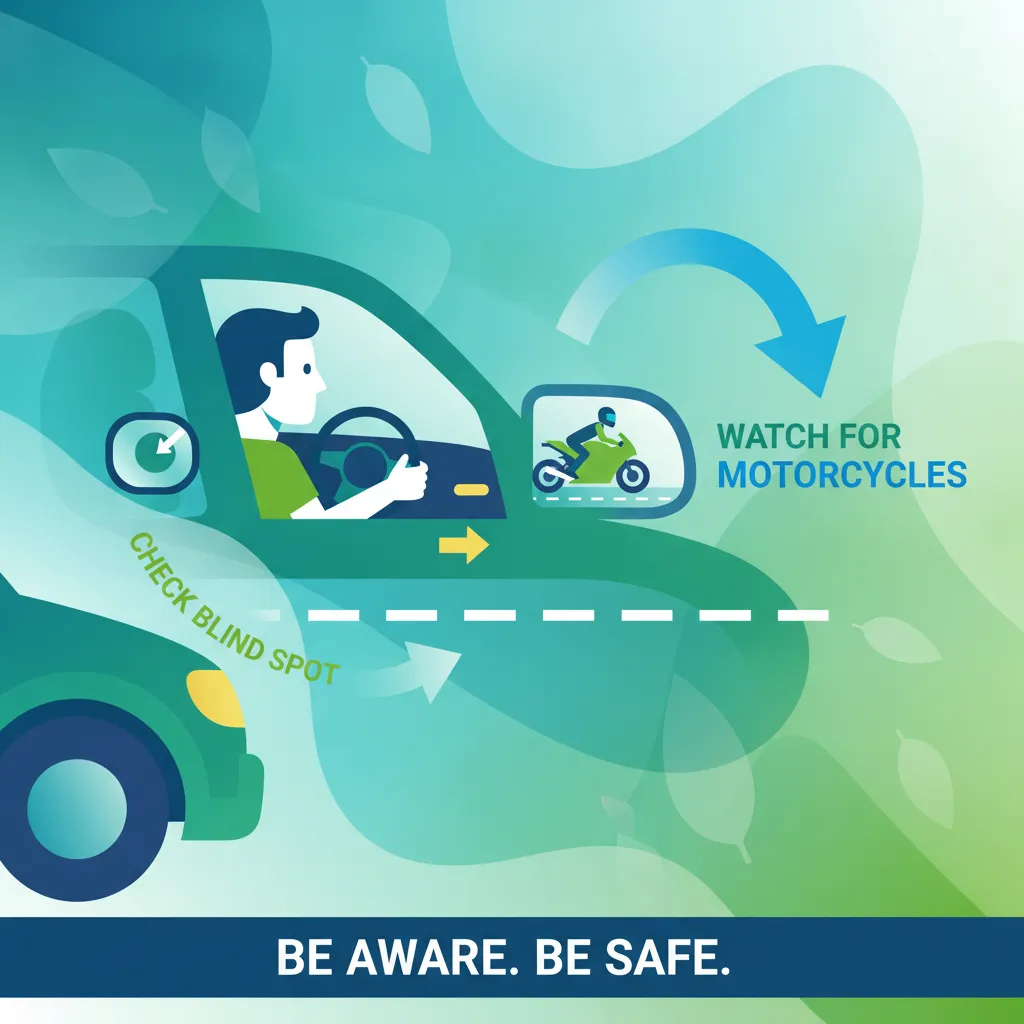
Learners will gain insight into the unique challenges posed by motorcycles and scooters sharing the road with passenger vehicles. The lesson highlights the importance of checking blind spots, maintaining safe following distances, and being aware of the faster acceleration and maneuverability of two-wheeled vehicles. Strategies for anticipating their movements and preventing collisions are discussed.
Human error and deliberate risk-taking represent the leading causes of traffic collisions among novice moped riders. This lesson analyzes the high dangers of using mobile phones while riding, weaving unsafely between lanes, and tailgating other motorists. It also covers the severe legal limits on alcohol and drug consumption under Turkish law, explaining how even minor impairments can drastically slower your hazard response times and lead to catastrophic accidents.
Understand the meaning and legal implications of regulatory traffic signs and road markings essential for Turkish driving theory. This overview covers how signs dictate priority, lane positioning, and speed limits, providing the foundational knowledge required to interpret environmental instructions correctly while riding in urban and highway settings.
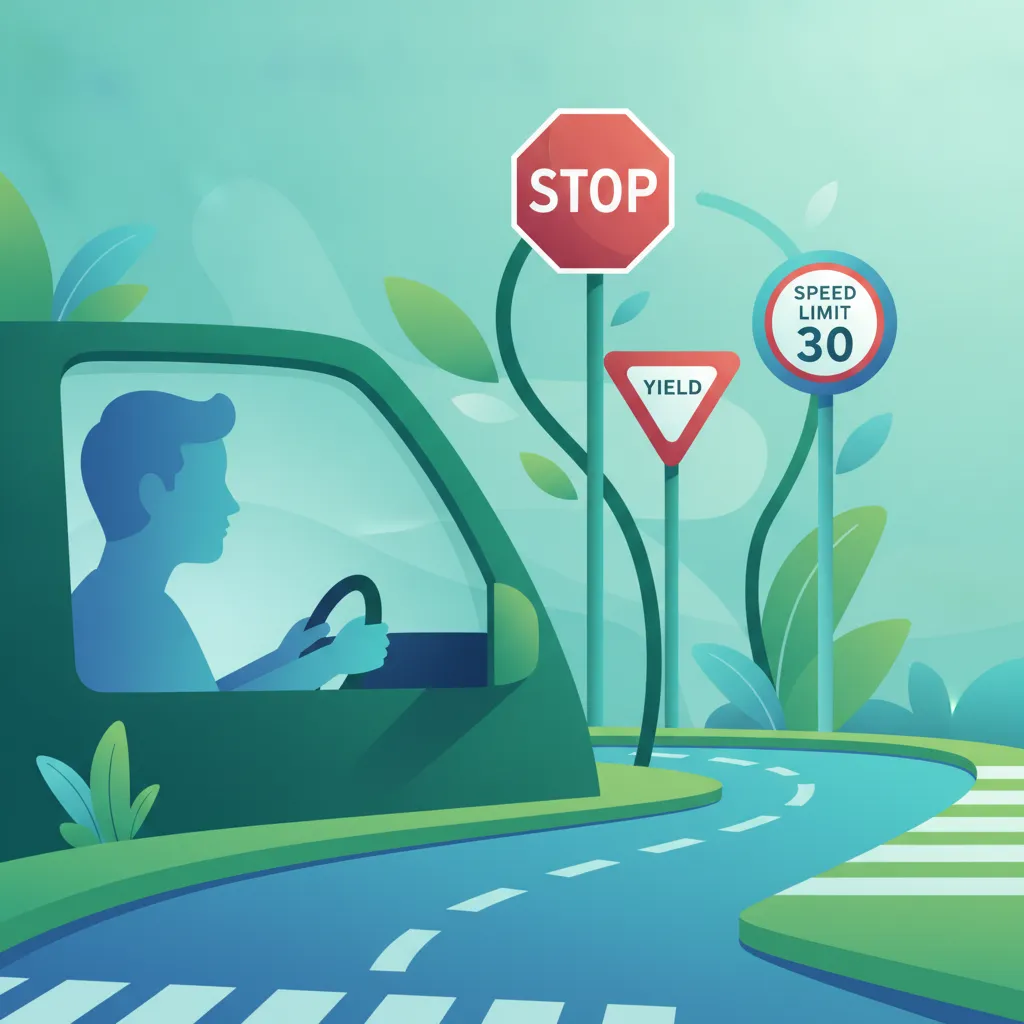
This lesson delves into the regulatory traffic signs that dictate mandatory and prohibited actions for drivers. Learners will study signs indicating speed limits, stop and yield requirements, no-entry zones, and lane usage directives. The lesson also covers temporary regulatory signs used in construction or special events, emphasizing the importance of adhering to these signs to avoid penalties.
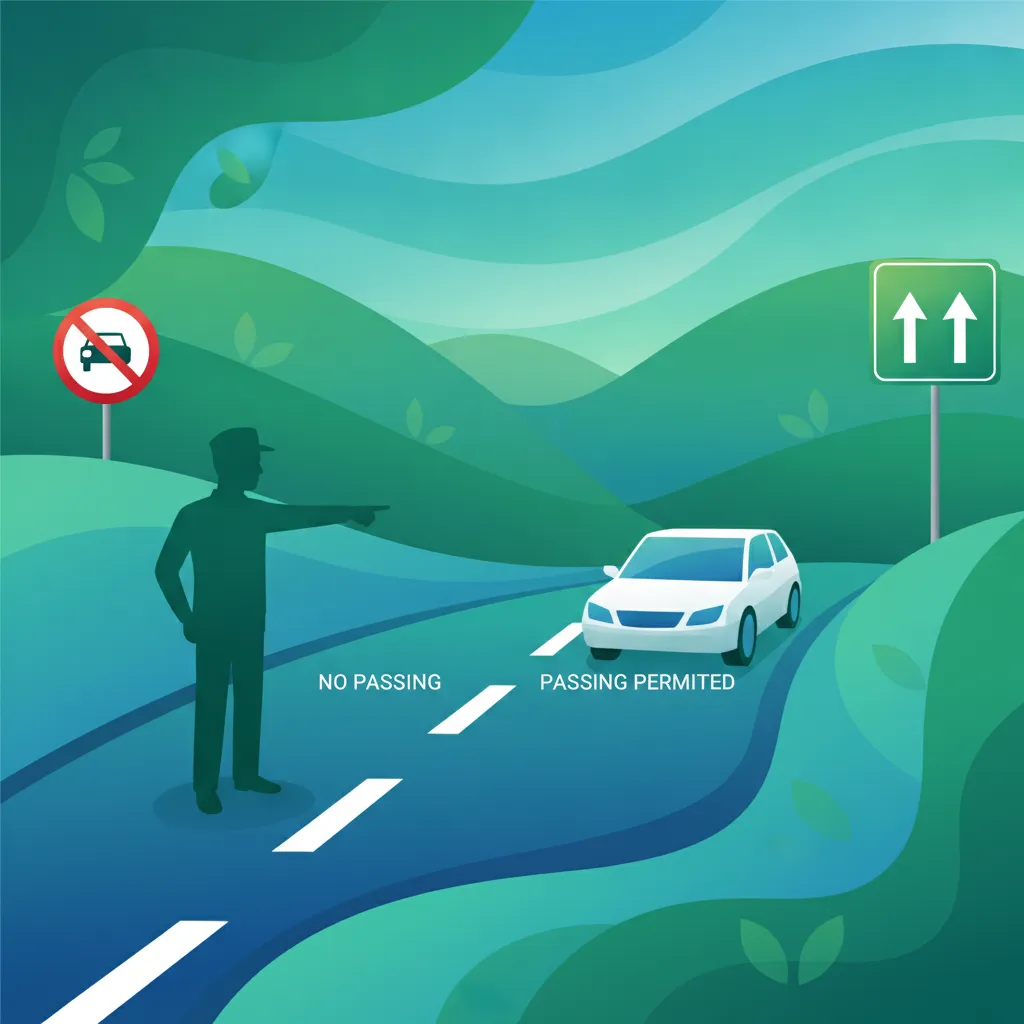
This lesson covers the various road surface markings that motorcyclists must be aware of, such as lane lines, turn arrows, and dedicated bike lanes. It explains how to interpret solid and broken lines, the meaning of specific arrows for turning or lane changes, and the significance of pedestrian crossing markings. Understanding these visual cues is essential for maintaining lane discipline and performing safe road maneuvers.
In this lesson, learners will master the meanings of various traffic signs as defined by Turkish traffic legislation. The focus will be on understanding regulatory, warning, and informational signs, with particular attention to those that directly affect motorcyclists, such as speed limits and lane usage. By the end of this session, participants will be able to quickly recognize sign categories and apply the required actions safely.
In this lesson, learners explore vertical road markings, primarily focusing on signs mounted on poles or overhead structures. Topics include direction indicators, speed limit signs, warning signs, and regulatory signs. The lesson emphasizes the importance of sign placement, illumination, and visibility in ensuring driver compliance. Real-world scenarios demonstrate how drivers should interpret and react to vertical markings.
Regulatory traffic signs convey absolute legal commands that riders must obey to avoid heavy fines and ensure safe, orderly movement. This lesson walks through prohibitory indicators, mandatory speed limits, turn restrictions, and specific moped bans on motorways or designated high-speed corridors. You will learn to recognize the distinctive shapes and colors of these signs, enabling rapid, accurate decision-making while operating your lightweight vehicle under Turkish highway laws.

Road markings painted directly onto the asphalt provide continuous guidance and carry the same legal weight as vertical traffic signs. This lesson explains the differences between solid and broken longitudinal lines, channelizing arrows, and restricted zones like dedicated bus or bicycle paths. You will discover how to properly align your moped within your lane, execute lawful line changes, and respect painted buffer zones to prevent dangerous side-swipe accidents in dense traffic.
This lesson focuses on traffic signs and road markings that are specifically relevant to goods vehicles in Turkey. Learners will become familiar with signs indicating prohibited routes, weight limits, height restrictions, hazardous material transport, and lane usage regulations. The lesson emphasizes the importance of accurately interpreting these signs to ensure compliance with traffic laws.
This lesson focuses on informational traffic signs that provide guidance and essential information to drivers. Learners will examine signs indicating directions, distances to cities, service areas, fuel stations, hospitals, police stations, and tourist attractions. The lesson highlights the role of these signs in facilitating navigation and ensuring drivers can locate essential services safely.
This lesson focuses on the identification and interpretation of traffic signs and road markings that are particularly relevant to passenger vehicle drivers, such as bus lane indications, priority road signs, and specific speed limits. Learners will explore how these signs affect route planning, compliance, and the overall flow of traffic. Mastery of sign interpretation ensures safe and lawful operation in various traffic conditions.
This lesson delves into horizontal road markings, focusing on solid, broken, and double lines that define lane boundaries and overtaking rules. Learners will explore the significance of each type of line in indicating permissible lane changes, passing zones, and stopping points at intersections. The lesson also covers crosswalk markings and their role in pedestrian safety.
Find clear answers to common questions learners have about Emergency Procedures and 112 Contact. Learn how the lesson is structured, which driving theory objectives it supports, and how it fits into the overall learning path of units and curriculum progression in Turkey. These explanations help you understand key concepts, lesson flow, and exam focused study goals.
The immediate priority is to ensure the safety of yourself and others by preventing secondary accidents. Move to a safe area, wear your reflective gear if available, and use warning markers to alert approaching traffic before attempting to assess injuries or calling 112.
If your vehicle is blocking active traffic lanes and it is safe to do so, move it to the shoulder or a safe spot to prevent further collisions. However, do not move the vehicle if you suspect it may interfere with accident scene evidence or if there is a risk of fuel leakage or fire.
You must clearly state your exact location or nearby landmarks, the type of accident (e.g., moped vs. car), the number of people injured, and the severity of those injuries. Remain on the line until the operator confirms they have all necessary information.
Yes, under Turkish traffic law, all drivers and riders have a duty to assist within their capabilities. This includes calling 112 and providing basic support, provided that doing so does not put your own life at immediate risk.
Use our comprehensive practice search to find exactly the Turkish driving theory questions you need to master. Whether reviewing specific road signs, traffic rules, or first aid scenarios, select your perfect practice set and boost your confidence for the official ehliyet sınavı.