
This lesson explores the critical balance between route adherence, schedule management, and real-world traffic conditions for professional passenger transport. You will learn how to optimize your driving paths and predict potential delays to maintain service reliability. This knowledge is a core component of your preparation for the Turkish Class D driving license examination.

Lesson content overview
Operating a passenger vehicle under a Turkish Class D Passenger Vehicle Driving Licence (D Sınıfı Ehliyet) carries immense professional and safety responsibilities. Beyond the physical handling of a large vehicle, a professional driver’s success is anchored in meticulous route planning and precise time management. In public transport networks, safety, passenger satisfaction, and operational efficiency are deeply intertwined.
This lesson details the theoretical frameworks and practical strategies required to optimize routes, manage travel timetables, anticipate traffic patterns, and maintain strict schedules without compromising safety or violating Turkish highway regulations (Karayolları Trafik Yönetmeliği).
In passenger transport, route optimization is the systematic process of selecting the most efficient path between scheduled stops. Efficiency is not merely a measurement of the shortest physical distance. Instead, it balances distance, travel time, passenger accessibility, fuel economy, and safety.
The analytical process of selecting and modifying transport paths to minimize overall travel time, fuel consumption, and operational wear while ensuring timely passenger transfers.
A common misconception among novice commercial drivers is that the shortest geographical route is always the most efficient. In urban environments, the shortest path often routes vehicles through highly congested residential areas, school zones, or intersections with long signal phases.
Professional route planning prioritizes paths that offer:
Modern Turkish municipal transport planning heavily utilizes dedicated lanes and priority signals. Maximizing the use of these transit-only corridors is a cornerstone of route optimization.
Using designated bus lanes (Otobüs Şeridi) allows drivers to bypass gridlock, particularly during peak commuting hours. This priority usage is not just a privilege; it is an operational tool designed to make public transport a competitive and reliable alternative to private vehicle travel.
To plan routes legally and effectively, Class D drivers must understand the strict rules governing priority lanes under the Turkish Highway Traffic Regulation.
Legal Restriction: Unauthorized use of non-bus lanes when a dedicated bus lane is active, or entering a bus lane during restricted hours in a non-authorized vehicle, constitutes a traffic violation and is subject to administrative fines.
Punctuality is the benchmark by which public transport quality is measured. Unreliable scheduling leads to crowded stops, passenger dissatisfaction, missed transfers, and potential contractual penalties for the operating transport authority.
Because real-world driving conditions are highly variable, schedules are built with integrated time buffers. A time buffer is a short, calculated margin of extra time distributed across the route timetable to absorb minor, unexpected delays.
Dwell time—the time a vehicle remains stationary at a stop to allow passengers to board and alight—is a critical variable in time management.
Anticipate the Stop: Position the bus smoothly and precisely at the designated curb marker, aligning the doors with the waiting passenger queue.
Controlled Door Operation: Open the doors only after the vehicle has come to a complete stop and the parking brake is engaged.
Efficient Fare and Boarding Oversight: Monitor the electronic boarding card validation (e.g., Istanbulkart, Kentkart) while guiding passengers to move toward the rear of the vehicle to clear the entryway.
Clear Visual Sweep: Utilize interior and exterior wide-angle mirrors to ensure all passengers have fully cleared the door clearance zones.
Safe Departure Sequence: Close doors completely, deactivate the hazard lights, signal left, check blind spots, and merge smoothly back into the traffic stream.
Speed management is the deliberate control of a vehicle's velocity to balance schedule demands with maximum safety and fuel efficiency. It is a fundamental error to use speed as a primary mechanism to recover lost time.
When behind schedule, drivers often experience psychological pressure to speed, accelerate aggressively, and tailgate. This behavior must be strictly avoided.
Professional Class D drivers use eco-driving techniques to maintain progress while conserving resources. This involves:
Predictive traffic management is the ability to forecast and react to traffic patterns using a combination of historical route knowledge and real-time data.
Drivers must actively monitor authorized municipal traffic channels, radio bulletins, and approved navigation platforms before departing and during scheduled rest layovers.
Route planning and time management cannot be rigid; they must dynamically adapt to external environmental variables.
Rain, snow, ice, and fog require an immediate reduction in operating speeds.
A fully loaded Class D vehicle behaves vastly differently than an empty one.
Driving at night alters both perception and route conditions.
To pass the Class D theory exam and avoid severe penalties, candidates must recognize and avoid critical operational mistakes.
Professional Class D drivers must master route optimization that prioritizes shortest time over shortest distance, using dedicated bus lanes legally and strategically. Effective time management relies on strategically placed time buffers before congestion points, not on speeding or aggressive driving. Dwell time procedures require complete stops with parking brakes engaged, passenger monitoring through mirrors, and safe departure sequences. Environmental factors like weather and vehicle load directly affect braking distances and acceleration, requiring adaptive speed management. Understanding and avoiding the five critical violations—speeding to recover lateness, early departures, skipping stops, improper lane use, and unsafe passenger handling—is essential for both safe operation and passing the Turkish Class D theory exam.
A short set of high-value points that capture the most important learning from this lesson.
Route optimization balances distance, travel time, passenger accessibility, fuel economy, and safety—not just the shortest physical path
Class D drivers are legally required to use dedicated bus lanes (Otobüs Şeridi) when active, and must understand their temporal restrictions
Time buffers must be strategically placed before known congestion points to prevent delays from cascading across the entire route
Eco-driving techniques like predictive deceleration and steady speed maintenance are more fuel-efficient than aggressive acceleration and last-second braking
Dwell time management requires complete vehicle stop, parking brake engagement, and full passenger clearance before departure
Explore all units and lessons included in this driving theory course.
Under the Karayolları Trafik Yönetmeliği, unauthorized use of bus lanes during restricted hours constitutes a traffic violation with administrative fines
The shortest geographical route is often slower due to congestion, residential areas, and school zones; shortest time is the true optimization goal
Bus lane operating hours (typically 07:00-10:00 and 17:00-20:00) vary by municipality and are indicated on local signage
A fully loaded Class D vehicle requires significantly longer braking distance and slower acceleration than an empty bus
Adverse weather conditions (rain, snow, ice, fog) mandate immediate speed reductions and expanded time buffers regardless of schedule pressure
Speeding to recover lost time: doubling speed quadruples braking distance and increases rollover and collision risk exponentially
Early departure from scheduled stops strands passengers who arrived on time and undermines public transport reliability
Skipping stops with no visible passengers: passengers may be approaching out of sight or have failed to press the stop request button
Using bus lanes during unauthorized hours or avoiding them during peak transit windows disrupts overall traffic flow and violates protocols
Closing doors and pulling away while passengers are still standing or finding seats causes falls and injuries, especially among elderly and disabled riders
Lesson content overview
A short set of high-value points that capture the most important learning from this lesson.
Route optimization balances distance, travel time, passenger accessibility, fuel economy, and safety—not just the shortest physical path
Class D drivers are legally required to use dedicated bus lanes (Otobüs Şeridi) when active, and must understand their temporal restrictions
Time buffers must be strategically placed before known congestion points to prevent delays from cascading across the entire route
Eco-driving techniques like predictive deceleration and steady speed maintenance are more fuel-efficient than aggressive acceleration and last-second braking
Dwell time management requires complete vehicle stop, parking brake engagement, and full passenger clearance before departure
Explore all units and lessons included in this driving theory course.
Under the Karayolları Trafik Yönetmeliği, unauthorized use of bus lanes during restricted hours constitutes a traffic violation with administrative fines
The shortest geographical route is often slower due to congestion, residential areas, and school zones; shortest time is the true optimization goal
Bus lane operating hours (typically 07:00-10:00 and 17:00-20:00) vary by municipality and are indicated on local signage
A fully loaded Class D vehicle requires significantly longer braking distance and slower acceleration than an empty bus
Adverse weather conditions (rain, snow, ice, fog) mandate immediate speed reductions and expanded time buffers regardless of schedule pressure
Speeding to recover lost time: doubling speed quadruples braking distance and increases rollover and collision risk exponentially
Early departure from scheduled stops strands passengers who arrived on time and undermines public transport reliability
Skipping stops with no visible passengers: passengers may be approaching out of sight or have failed to press the stop request button
Using bus lanes during unauthorized hours or avoiding them during peak transit windows disrupts overall traffic flow and violates protocols
Closing doors and pulling away while passengers are still standing or finding seats causes falls and injuries, especially among elderly and disabled riders
Explore search topics learners often look for when studying Route Planning and Time Management for Public Transport. These topics reflect common questions about road rules, driving situations, safety guidance, and lesson level theory preparation for learners in Turkey.
Browse additional driving theory lessons that cover connected traffic rules, road signs, and common driving situations related to this topic. Improve your understanding of how different rules interact across everyday traffic scenarios.
Learn the essential strategies for navigating complex city environments as a Class D driver. This guide covers techniques for handling heavy traffic, interacting with pedestrians at intersections, and managing vehicle maneuvers in densely populated Turkish urban centers to ensure passenger safety and operational efficiency.
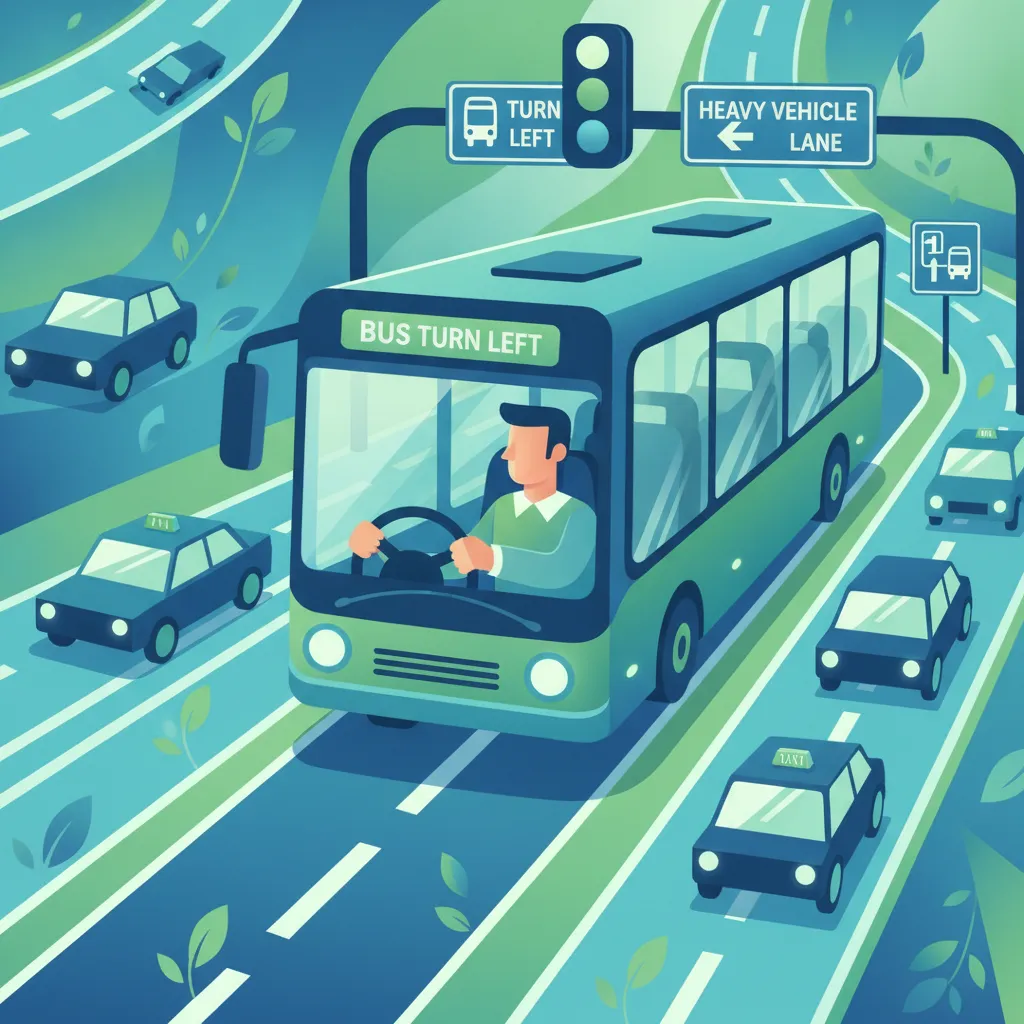
Learners will explore strategies for navigating congested urban traffic environments while operating large passenger vehicles. The lesson covers lane selection, adherence to traffic signals, and the use of bus lanes where applicable. Understanding how to maintain smooth traffic flow while ensuring passenger safety is crucial for efficient urban transportation.

This lesson delves into specific manoeuvring strategies required when navigating both tight urban environments and open rural roads with large passenger vehicles. Learners will explore techniques for handling narrow streets, tight turns, and intersections, while maintaining safety and efficiency. The content emphasizes planning and execution of manoeuvres based on road conditions and vehicle dimensions.

This lesson focuses on the unique requirements and best practices for operating passenger vehicles on highways and expressways. Topics include maintaining appropriate speed, adhering to lane discipline, executing safe overtaking maneuvers, and managing merges and exits. Emphasis is placed on ensuring a smooth ride for passengers while integrating safely with faster-moving traffic.

Learners will learn how to calculate and maintain safe following distances, accounting for the longer braking distances and reaction times inherent to larger passenger vehicles. The lesson emphasizes the importance of a sufficient time gap to allow for safe stopping and to prevent rear-end collisions, particularly in varying traffic conditions.

Learners will examine the complexities of operating in environments where various road users, including pedestrians, cyclists, and motorcyclists, coexist. The lesson emphasizes the need for heightened situational awareness, defensive driving techniques, and proactive hazard anticipation. Strategies for navigating mixed traffic safely, especially in congested urban areas, are highlighted.

Learners will explore the fundamentals of maintaining correct lane discipline, focusing on appropriate lane positioning, understanding lane markings, and executing lane changes safely. Emphasis is placed on the unique considerations for large passenger vehicles within the lane, such as width and maneuverability. The lesson also addresses the impact of proper lane discipline on overall traffic flow and safety.

This lesson focuses on the critical importance of lane discipline and proper lane usage for large goods vehicles. Learners will understand the challenges posed by wider vehicle dimensions, the necessity of maintaining adequate lane occupancy, and the need for precise lane keeping. Emphasis is placed on selecting appropriate lanes, adhering to traffic flow, and ensuring general highway safety.

This lesson examines the specific road space requirements necessary for large goods vehicles to operate safely and efficiently. Topics include the need for adequate lane width, lateral clearance, and turning lanes to accommodate wider and longer vehicles. Learners will explore the proper use of shoulders, overtaking procedures, and the impact of large vehicles on overall road capacity in traffic.
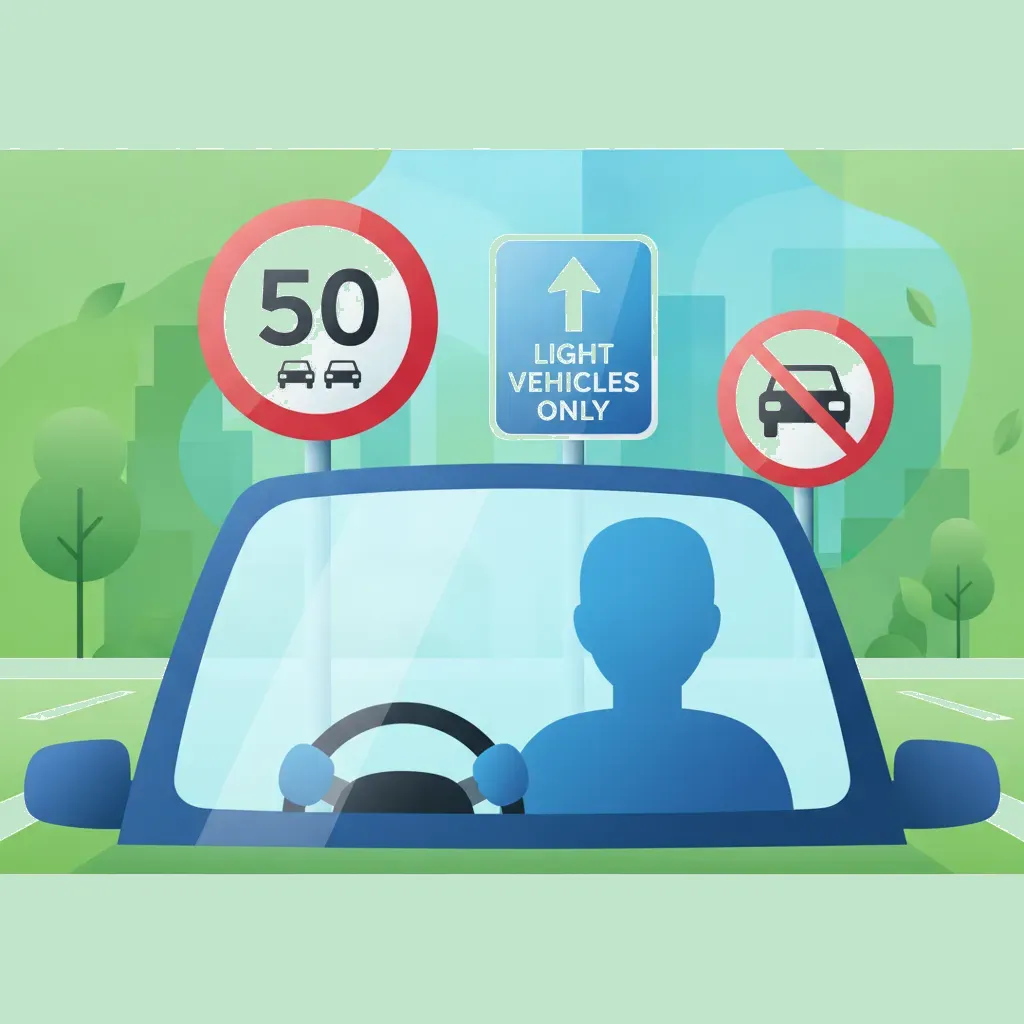
This lesson focuses on the identification and interpretation of traffic signs and road markings that are particularly relevant to passenger vehicle drivers, such as bus lane indications, priority road signs, and specific speed limits. Learners will explore how these signs affect route planning, compliance, and the overall flow of traffic. Mastery of sign interpretation ensures safe and lawful operation in various traffic conditions.

This lesson focuses on managing vehicle speed according to different road environments—urban, rural, and highways—while complying with legal speed limits and traffic flow. Learners will understand how to adjust speed for varying road conditions, traffic density, and safety considerations, ensuring a balance between efficiency and risk mitigation.
Understand the advanced techniques required for safe turning, reversing, and monitoring blind spots in large passenger vehicles. This lesson provides clear explanations on using mirrors, sensors, and cameras to maintain complete situational awareness while navigating confined spaces and busy road environments in line with Turkish traffic regulations.

This lesson addresses the challenges of safely reversing a goods vehicle, including the identification of blind spots and rear visibility limitations. It covers proper mirror and rearview camera usage, as well as strategies for maintaining awareness of obstacles and the trailer's path. The lesson also emphasizes the importance of reversing alarms and slow, controlled vehicle movements.
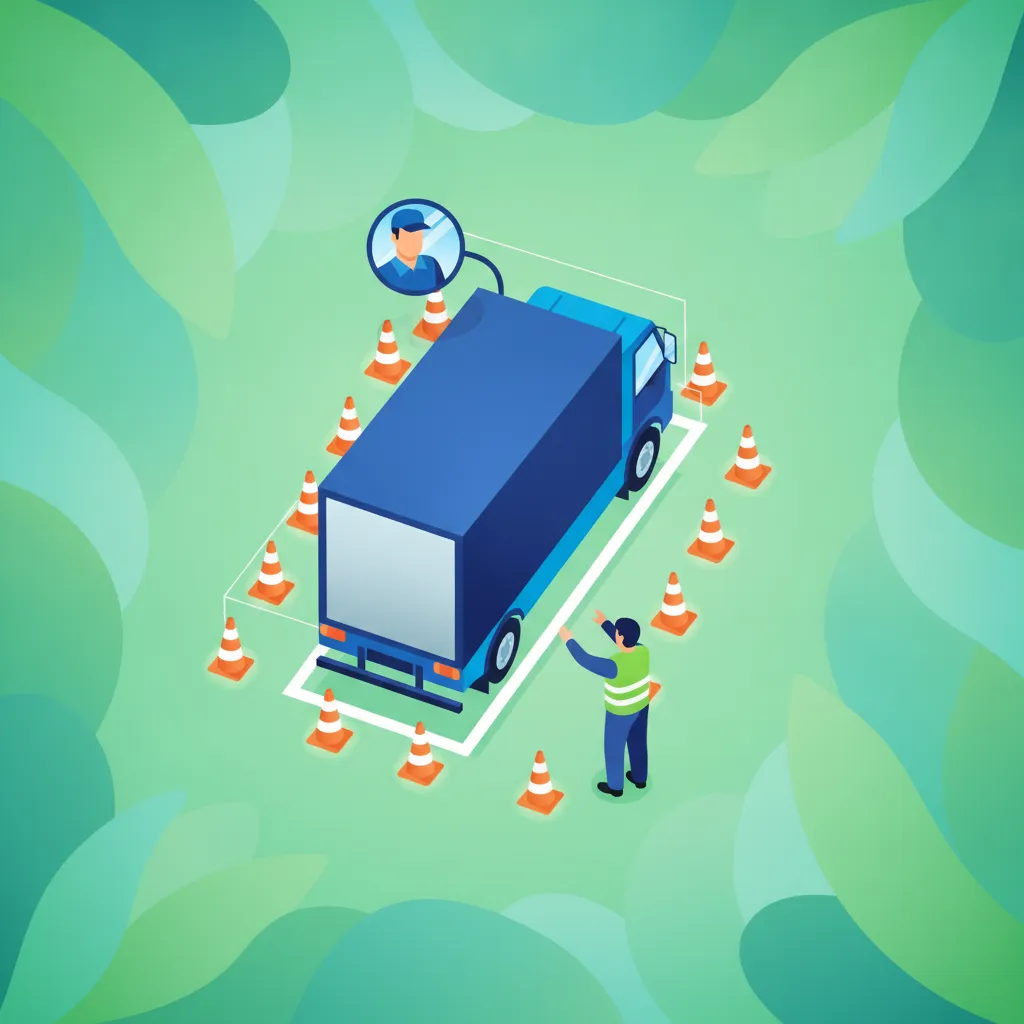
Learners will acquire skills for safely reversing large passenger vehicles in limited spaces, such as bus bays and loading docks. The lesson covers the effective use of mirrors, rear-view cameras, and precise steering inputs to navigate obstacles. Emphasis is placed on slow, controlled movements and constant observation to avoid collisions.

This lesson focuses on the execution of safe right and left turns with large passenger vehicles, emphasizing the identification and management of blind spots. Learners will understand the correct use of turn signals, proper positioning within the turn, and the importance of thorough observation before and during turning. Strategies for minimizing blind spot exposure are also covered.

This lesson focuses on identifying and managing blind spots specific to goods vehicles, which are larger and have more extensive blind zones compared to standard cars. Learners will explore techniques for blind spot detection using mirrors, rearview cameras, and sensor systems, ensuring safe lane changes and maneuvering. The lesson emphasizes the importance of continuous observation and modern safety technology.

In this lesson, learners explore the essential techniques for safe reversing. Topics include using mirrors, rearview cameras, and checking blind spots. The lesson emphasizes the importance of maintaining low speeds, checking the rear area, and being aware of obstacles. Real-world examples illustrate common reversing mistakes and how to avoid them.

This lesson introduces the proper utilization of mirrors, rearview cameras, and additional sensor systems to enhance situational awareness for goods vehicle drivers. Learners will understand the importance of correctly adjusting mirrors for optimal coverage, interpreting camera feeds, and relying on sensor alerts. The lesson emphasizes integrating modern safety technology into daily driving practices.
This lesson delves into specific manoeuvring strategies required when navigating both tight urban environments and open rural roads with large passenger vehicles. Learners will explore techniques for handling narrow streets, tight turns, and intersections, while maintaining safety and efficiency. The content emphasizes planning and execution of manoeuvres based on road conditions and vehicle dimensions.
Learners will learn how to calculate and maintain safe following distances, accounting for the longer braking distances and reaction times inherent to larger passenger vehicles. The lesson emphasizes the importance of a sufficient time gap to allow for safe stopping and to prevent rear-end collisions, particularly in varying traffic conditions.

Learners will explore the proper adjustment and utilization of mirrors, rear-view cameras, and blind spot sensors to maximize visibility while operating a passenger vehicle. The lesson covers the optimal positioning of mirrors for comprehensive coverage, interpreting camera and sensor alerts, and integrating these tools into safe driving practices. Proper use of these technologies reduces blind spots and enhances overall situational awareness.

This lesson focuses on the challenges and techniques required when maneuvering goods vehicles in confined spaces such as loading docks, narrow streets, and urban environments. It addresses the importance of spatial awareness, precision driving, and understanding vehicle dimensions to avoid collisions. Learners will explore strategies for effective parking, reversing, and handling blind spots safely.
Find clear answers to common questions learners have about Route Planning and Time Management for Public Transport. Learn how the lesson is structured, which driving theory objectives it supports, and how it fits into the overall learning path of units and curriculum progression in Turkey. These explanations help you understand key concepts, lesson flow, and exam focused study goals.
Proper route planning reduces the need for erratic driving or sudden maneuvers. The exam tests your ability to plan ahead so that you can maintain a steady pace, which is directly linked to passenger comfort and hazard prevention.
Yes, bus lanes are reserved for authorized public transport. Violating these lanes or failing to follow designated routes can result in traffic penalties and is a common topic in theory test scenarios regarding illegal road use.
Professional drivers must prioritize safety over speed. You should always communicate delays according to company protocols and never attempt to make up lost time by speeding or performing dangerous overtaking maneuvers, as this is a critical safety failure.
The test focuses on the principles of safe driving in both settings. You must understand that urban routes require constant vigilance for stops, while long-distance routes require planning for mandatory rest periods and changing road environments.
Use our comprehensive practice search to find exactly the Turkish driving theory questions you need to master. Whether reviewing specific road signs, traffic rules, or first aid scenarios, select your perfect practice set and boost your confidence for the official ehliyet sınavı.