This lesson explores the essential regulatory road signs that every rider must recognize to safely operate a motorcycle in France. By mastering these symbols, you will gain the knowledge required to navigate restrictive zones, respect specific speed limits, and identify bans crucial for your category A1, A2, or A theory test.

Lesson content overview
Navigating the roads safely on a motorcycle requires more than just physical balance and throttle control; it demands a precise understanding of the legal framework established by the French highway code (Code de la route). Motorized two-wheelers possess unique physical dynamics, acceleration profiles, and vulnerability levels. Because of these distinct traits, French traffic law employs specific regulatory signs designed either exclusively for motorcyclists or with direct, unique implications for them.
For candidates preparing for the French Motorcycle Theory Examination (Épreuve Théorique Moto - ETM) for Category A, A1, and A2 licenses, mastering these regulatory symbols is essential. Failing to identify or obey these signs not only compromises your safety but also leads to heavy fines and immediate license penalty points (retrait de points).
Regulatory signs in France are legally binding. They command, restrict, or mandate specific behaviors on the road. They are broadly divided into two visual categories:
For motorcyclists, these signs often appear with an associated sub-panel (panonceau) located directly beneath the primary sign. This sub-panel features a motorcycle silhouette (known as category M4f in the French classification), indicating that the restriction or mandate applies specifically to motorized two-wheelers or medium-to-large capacity motorcycles.
Overtaking is one of the most high-risk maneuvers a motorcyclist can perform. Because of this, the Code de la route utilizes specific signs to restrict overtaking in areas with limited visibility, narrow lanes, or high traffic density.
The standard no-overtaking sign features two cars side-by-side: a black car on the right and a red car on the left inside a red-bordered circle.
By default, the standard no-overtaking sign (Sign B3) allows motor vehicles to overtake two-wheeled vehicles without a sidecar (such as solo motorcycles or mopeds), provided the maneuver can be done safely and without crossing a solid white line. However, a motorcycle is not permitted to overtake a car or any other four-wheeled motor vehicle in this zone.
In high-risk areas, authorities may deploy a specific sign displaying a motorcycle silhouette in red next to a black car, or utilize the standard overtaking prohibition sign accompanied by the M4f motorcycle sub-panel.
When this configuration is present, motorcyclists are strictly prohibited from overtaking any motorized vehicle, including other motorcycles. This rule is often enforced on narrow winding roads, mountain passes, or near dangerous intersections where the rapid acceleration of a motorcycle could lead to a head-on collision with oncoming traffic.
To manage traffic flow and separate vulnerable road users from heavy commercial vehicles, French road planners establish clear lane restrictions. Motorcyclists must know where they are legally permitted to ride and which lanes are strictly prohibited.
Certain urban corridors or historic districts feature lanes that do not meet the minimum safety width standards for mixed traffic. These narrow lanes (bandes d'arrêt ou tracé lisse) are marked with regulatory signs prohibiting entry to specific vehicle classes.
If a circular red-bordered sign features a motorcycle silhouette, motorized two-wheelers are prohibited from entering that lane. This is because the physical space is insufficient to guarantee a safe lateral safety distance (which is legally 1 meter in urban areas and 1.5 meters on open, rural roads). Riding in these restricted zones can result in a severe fine and the loss of up to 4 penalty points.
An incredibly common violation in major French cities like Paris, Lyon, and Marseille is the unauthorized use of bus lanes (voies de bus).
Bus lanes are designated by thick, broken white longitudinal lines and the word "BUS" painted on the asphalt. They are regulated by circular prohibition signs indicating that the lane is closed to all traffic except public transport vehicles and, in some municipalities, registered taxis.
Unless a specific additional sign or local municipal decree explicitly permits motorized two-wheelers to use the bus lane, motorcycles are strictly prohibited from riding in them. Motorcyclists often mistakenly assume that lane-filtering (inter-files) permits them to enter bus lanes during heavy traffic. This is a serious legal error that carries a heavy fine.
Commonly referred to as carpooling lanes (voies réservées au covoiturage), these lanes are marked by a white diamond symbol (losange) displayed on an overhead electronic portal or a roadside sign.
These lanes are reserved for vehicles carrying at least two occupants, public transit, clean-energy vehicles displaying a Crit'Air 0 sticker, and taxicabs. For motorcyclists:
In certain highly congested urban centers or fast-flowing expressways, traffic authorities install dedicated lanes specifically for motorcycles to isolate them from heavy freight and passenger car blind spots.
When a circular blue obligation sign displaying a white motorcycle silhouette is posted, motorcyclists are legally required to use that designated lane. You must not merge back into the main traffic lanes unless you are preparing to change direction at an upcoming intersection, or if an obstacle or road closure renders the dedicated lane unusable.
Speed adaptation is a fundamental pillar of motorcycle safety. While general speed limits apply to all motor vehicles, there are scenarios in France where speed limits are tailored specifically to motorcycles or sub-categories of two-wheelers.
When approaching hazardous zones, steep descents, or bridge crossings prone to high crosswinds, you may encounter a standard speed limit sign (such as 80 km/h) accompanied by a motorcycle sub-panel (M4f).
This means that while cars and trucks may continue at the default speed limit of the road, motorcyclists must decelerate to the speed specified on the sign. This precautionary measure accounts for the reduced traction and increased vulnerability of two-wheelers to environmental hazards like crosswinds and surface irregularities.
With the rapid growth of electric mobility, French road regulations have evolved to address the performance characteristics of electric powertrains. Electric motorcycles deliver instantaneous torque, which can alter acceleration dynamics and stability profiles, especially on wet or slippery roads.
Under the framework of Décret n° 2012-1566, specific speed limits can be designated for electric vehicles. These are indicated by a standard speed limit sign accompanied by a sub-panel showing an electric vehicle charging plug icon.
When this combination is visible, the displayed limit applies strictly to electric vehicles (including electric motorcycles), requiring them to moderate their speed to match the safety profile of the local urban environment.
Motorcycles, particularly those with modified or aftermarket exhaust systems, are a significant source of urban noise pollution. To protect public health and maintain peace in sensitive areas, French traffic authorities strictly regulate acoustic signaling.
When entering zones marked with Sign B15 (such as near hospitals, schools, nature reserves, or dense residential areas), the use of the motorcycle horn (avertisseur sonore) is strictly prohibited.
The Emergency Exception: The only legal exception to the horn prohibition rule is a situation of immediate and unavoidable danger (danger immédiat). Using the horn to express frustration, signal to friends, or clear traffic is illegal and punishable by a fine.
Violating regulatory signs in France carries strict legal consequences. The license point system is highly sensitive, and multiple violations can quickly lead to an administrative suspension of your license.
| Violation Type | Physical Hazard / Safety Rationale | Points Deducted | Legal Penalty / Consequence |
|---|---|---|---|
| Ignoring a Narrow Lane Access Ban | High risk of lateral collision with larger vehicles or squeezing into blind spots. | 4 Points | Class 4 Fine, potential vehicle impoundment. |
| Illegal Overtaking | Head-on collision risk; loss of control due to poor visibility on curves. | 3 Points | Class 4 Fine, potential license suspension. |
| Exceeding Motorcycle-Specific Speed Limits | Reduced reaction time, increased braking distance, high risk of high-side or low-side crashes. | 1 to 6 Points | Variable fine based on excess speed; possible immediate license seizure. |
| Unauthorized Use of Bus Lanes | Collisions with buses pulling into stops or turning taxis; striking pedestrians crossing hidden by buses. | 0 Points | Class 4 Fixed Fine (€135). |
| Ignoring Mandatory Motorcycle Lanes | Increased exposure to mixed traffic, heavy vehicles, and high-speed highway merging hazards. | 0 Points | Class 2 Fine. |
| Illegal Use of Horn (Acoustic Violation) | Unnecessary noise pollution; startling other drivers, pedestrians, or animals. | 0 Points | Class 2 Fine. |
A professional motorcyclist does not simply react to signs; they anticipate why the sign was placed there and adapt their riding strategy accordingly.
Wet surfaces, fallen leaves, and gravel significantly degrade a motorcycle’s tire grip. When you see a prohibition or speed restriction sign under wet conditions, your margin of safety is halved.
Regulatory signs are often placed at the threshold of transition zones—such as moving from a fast rural road into a dense urban environment.
Scan Ahead for Transition Signage: Look for circular red-bordered signs indicating speed reductions or lane restrictions.
Adjust Lane Position: Move away from the curb to maximize your visibility to pedestrians stepping off the sidewalk or cyclists riding in adjacent lanes.
Prepare to Yield: In areas where overtaking is prohibited or lanes are restricted, expect sudden maneuvers from delivery drivers, cyclists, or pedestrians who may not have seen or heard your motorcycle.
Manage Acoustic Profile: Keep your engine RPMs low in noise-sensitive zones to prevent startling pedestrians and to comply with acoustic guidelines.
Regulatory signs are your roadmap to legal and physical survival on French roads. By understanding the distinction between circular red prohibition signs and circular blue obligation signs, you can make split-second decisions that protect your license points and, more importantly, your life.
Always look for auxiliary sub-panels featuring the motorcycle silhouette (M4f) to determine if a speed limit, overtaking ban, or lane restriction applies specifically to your vehicle class. Ensure you remain out of restricted areas like bus lanes, and proactively use dedicated motorcycle lanes whenever they are signposted. Doing so demonstrates the defensive riding mindset necessary to pass your ETM exam and enjoy a lifetime of safe riding on the open road.
Explore all units and lessons included in this driving theory course.
Lesson content overview
Explore all units and lessons included in this driving theory course.
Explore search topics learners often look for when studying Regulatory Signs Specific to Motorcyclists. These topics reflect common questions about road rules, driving situations, safety guidance, and lesson level theory preparation for learners in France.
Browse additional driving theory lessons that cover connected traffic rules, road signs, and common driving situations related to this topic. Improve your understanding of how different rules interact across everyday traffic scenarios.
Understand the French priority system including right-of-way rules at junctions and the specific application of yield signs for motorcyclists. This guide explains how to navigate intersections safely by interpreting priority indicators to maintain traffic flow and comply with the official Code de la route requirements for category A licenses.

This lesson provides a comprehensive breakdown of priority rules under French law, with special focus on the default rule of priorité à droite. You will learn to recognize when this rule applies, even in the absence of explicit signage, and how to verify that entering vehicles see you. It also explains how to read priority road indicators, stop signs, and yield signs, helping you manage right-of-way safely and confidently.

Learners will study the fundamental priority rules that dictate right-of-way at intersections, focusing on the 'priorité à droite' principle prevalent in French road design. The lesson explains how to identify priority roads, interpret yield signs, and apply these rules safely when operating an AM vehicle. Understanding priority ensures orderly movement and reduces conflict points in mixed traffic scenarios.

This lesson covers the operational logic of traffic light signals in France, emphasizing the legal implications of the red, amber, and green cycles. You will study how to safely manage the amber phase to avoid rear-end collisions from vehicles behind while maintaining control. Additionally, you will discover the unique challenge of electromagnetic induction loops, which sometimes fail to detect lightweight motorcycles at quiet intersections.
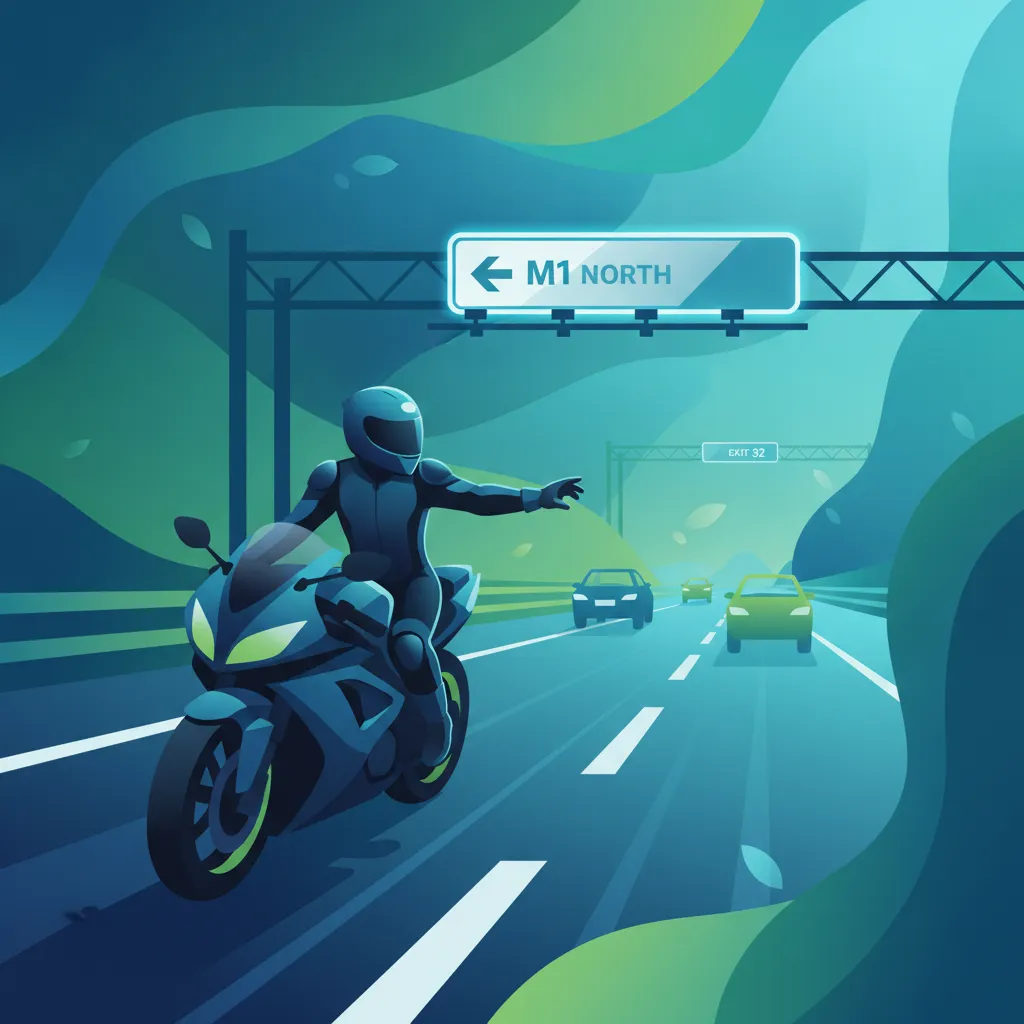
This lesson details how to safely enter, cruise on, and exit French motorways, known as autoroutes, which feature high-speed traffic flows. You will master the process of matching highway speeds in the acceleration lane and performing blind spot checks before merging. The lesson also explains correct lane positioning to avoid aerodynamic turbulences from large semi-trucks, and how to safely prepare for decelerating at exit ramps.

In France, the default rule at any intersection without clear priority signage is priority-to-the-right (priorite a droite). This lesson explains how to identify unsignaled junctions in urban and rural environments and when you must yield to incoming vehicles. You will learn to spot the standard yellow diamond priority signs and triangular warning signs that indicate whether you hold the priority.

This lesson explains the correct procedures for entering, circulating, and exiting roundabouts, which are highly prevalent throughout France. You will learn the exact lane choice strategies based on your intended exit, and how to use your turn indicators at each stage of the maneuver. The content also addresses the critical task of performing over-the-shoulder blind spot checks to avoid conflicts with overtaking vehicles when exiting.
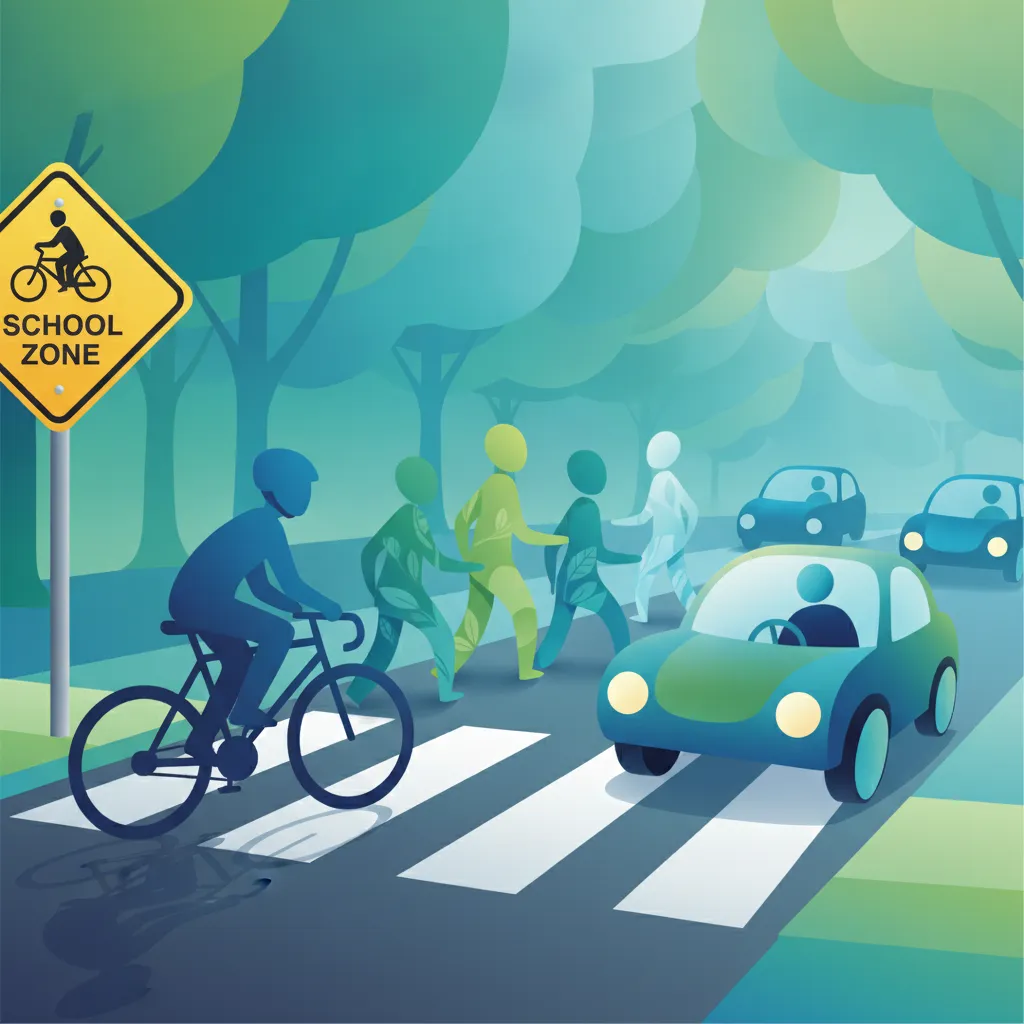
This lesson focuses on the legal requirement to yield to pedestrians on or about to step onto zebra crossings, a major focus of French road safety. You will learn how to approach school zones and pedestrian islands with heightened vigilance and reduced speed. Additionally, the lesson explores shared urban spaces, explaining how to maintain safe lateral distances when overtaking cyclists or personal electric scooters.

This lesson covers the strict legal conditions under which you may overtake other vehicles on French roads, including necessary visibility criteria. You will master the step-by-step process of checking rearview mirrors, performing head checks, signaling, and maintaining a safe speed differential during the pass. It also details when overtaking is strictly forbidden, such as before intersections, near pedestrian crossings, or across solid lines.

Learners will explore the rules related to pedestrian crossings, focusing on the obligation to yield to pedestrians at zebra crossings and flashing pedestrian signals. The lesson highlights the importance of stopping before the stop line, reducing speed, and maintaining vigilance for pedestrian movement. Mastery of these practices ensures the safety of both pedestrians and AM riders at crossing points.

Negotiating crossroads that lack active traffic light signals requires a clear reading of signs and painted stop or yield lines. This lesson details the obligations of stopping completely at stop signs and slowing down to yield at 'cedez le passage' markings. You will learn to assess cross-traffic speeds, determine priorities when multiple vehicles arrive, and execute turns safely.
Learn the principles of optimal lane positioning to increase visibility and maintain protective space when riding in urban traffic. This explanation covers how to manage blind spots near larger vehicles and safely adapt your path to comply with French road regulations while avoiding common risks associated with lane sharing and congestion.

This lesson teaches riders how to approach and cross both controlled and uncontrolled intersections in urban settings. You will practice the 'scanning cycle' technique to identify cross-traffic hazards and manage your defensive line of sight around physical obstructions. The lesson also highlights the critical importance of early signaling and positioning to ensure that turning passenger cars do not violate your safety zone.

This lesson provides practical strategies for managing the physical demands of slow, heavily congested city traffic. You will learn how to maintain excellent low-speed balance through correct body posture, rear brake modulation, and smooth clutch control. It also emphasizes the importance of preserving an adequate safety buffer when stopping behind other vehicles, allowing an immediate escape route if you face a rear-end threat.

This lesson explores how dividing your travel lane into three distinct vertical zones allows you to adjust your positioning for optimal safety. You will learn to shift your line to avoid oil slicks in the lane center, road debris at the edges, and wind blasts from passing trucks. Crucially, the lesson covers how to adapt your lane position on blind bends to widen your field of vision and stay clear of oncoming traffic.

This lesson teaches you how to establish and preserve a dynamic cushion of safety on all sides of your motorcycle. You will study how to apply the 'two-second rule' to keep a safe following distance, extending it to three or more seconds in adverse weather. Additionally, you will discover how to manage tailgating motorists safely without resorting to dangerous speed increases, ensuring you always maintain a clear escape route.

This lesson teaches riders how to negotiate loose surfaces such as gravel, sand, and poorly maintained urban asphalt without dropping the motorcycle. You will study correct body positioning, focusing on keeping your weight centered and your grip relaxed on the handlebars. The lesson also highlights why smooth, constant throttle delivery and avoiding abrupt front braking are essential to prevent the front wheel from washing out.

This final lesson integrates all course concepts into a single, cohesive approach to defensive riding and continuous risk assessment. You will study how to maintain a high-mileage visual lead, continuously scanning the road ahead for warning signs of conflict. By learning to assume that other motorists may not see you, you will build the proactive slowing habits and situational awareness needed to remain safe throughout your riding life.

This lesson teaches critical emergency response maneuvers to help you avoid sudden, unexpected obstacles on the roadway. You will learn the exact step-by-step process of executing a rapid, controlled swerve, keeping braking forces separate from steering inputs to prevent a slide. Additionally, the lesson addresses the psychological challenge of 'target fixation' and provides techniques to keep your eyes focused on your clear escape route.

In this lesson, drivers will learn how to safely share the road with motorcycles and scooters, focusing on the specific blind spots and speed differentials that create risk. The content highlights proper lane positioning, caution when overtaking, and strategies for predicting motorcycle trajectories. Learners will also be introduced to the importance of being aware of scooter movements, especially in narrow streets.

Learners will develop the ability to anticipate potential hazards on the road, enhancing reaction times and defensive riding strategies. The lesson emphasizes constant scanning, early identification of threats such as sudden stops, pedestrian crossings, or unexpected lane changes, and appropriate response measures. By cultivating proactive risk assessment, AM riders can significantly reduce accident likelihood.

This lesson addresses the challenges of positioning near larger vehicles such as cars, vans, buses, and lorries on French roads. Learners will learn to identify blind spots (angles morts), maintain a safe distance, and position themselves to maximize visibility and predictability. Understanding these dynamics is crucial for AM riders to avoid dangerous situations and ensure safe overtaking and lane sharing.
Find clear answers to common questions learners have about Regulatory Signs Specific to Motorcyclists. Learn how the lesson is structured, which driving theory objectives it supports, and how it fits into the overall learning path of units and curriculum progression in France. These explanations help you understand key concepts, lesson flow, and exam focused study goals.
In France, prohibition signs are circular with a white background and a red border, while mandatory signs are circular with a blue background and white symbols. Prohibitions tell you what you cannot do, whereas blue signs specify what you must do.
Yes, a circular sign with a red border and a white center usually indicates a total ban on all motorized vehicles, including motorcycles. If a sign shows a specific vehicle type, the prohibition applies only to that category.
Yes, disregarding regulatory signs in France can lead to fines and the loss of points on your license. It is critical to recognize these signs immediately, as they directly dictate your legal path and behavior.
The regulatory signs themselves remain the same for all license categories, but your awareness must be high. Always look for signs that mention specific vehicle classes, as they will apply uniformly to your motorcycle category.
Ready to focus your study? Use the practice search to find exactly the French driving theory questions you need for the Code de la route and permis de conduire ETG. Refine your knowledge on specific topics or challenging rules to boost your confidence and exam readiness.