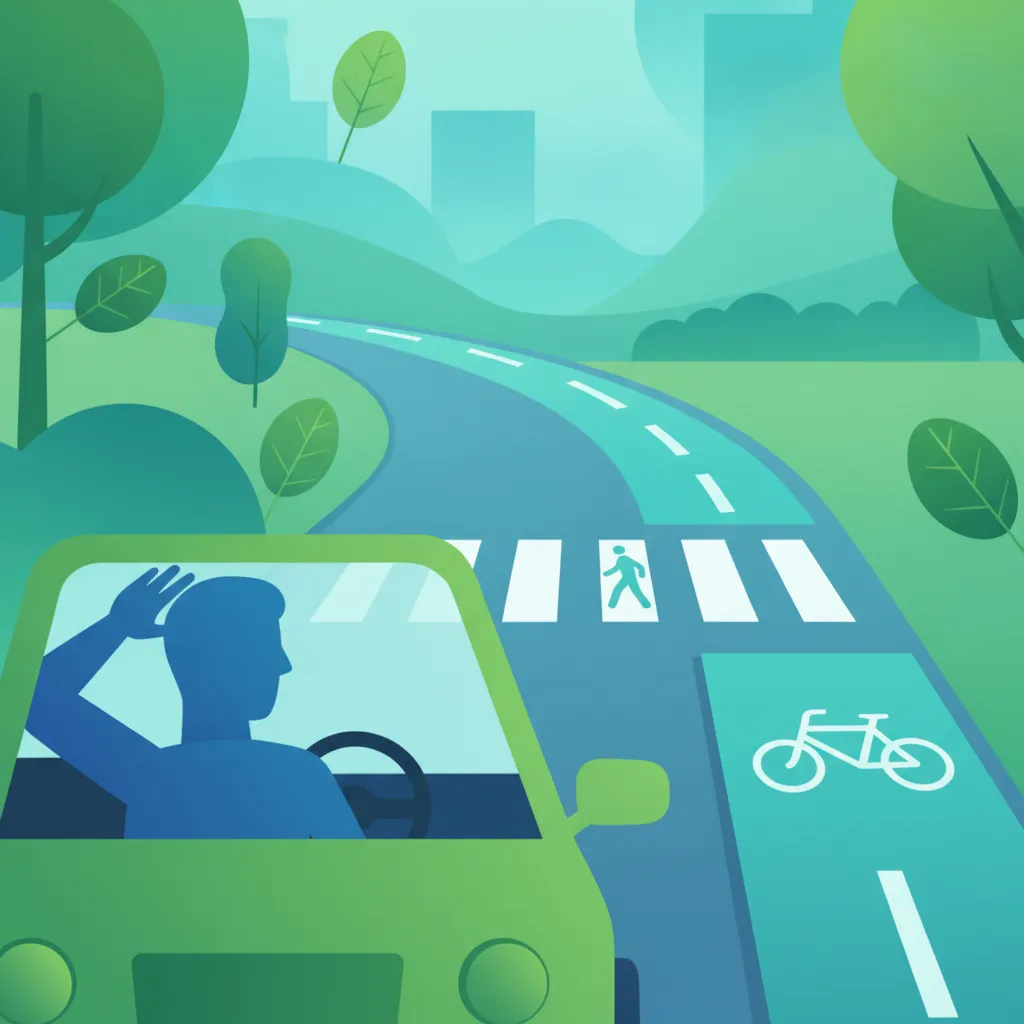
This lesson guides you through the complex dynamics of maneuvering large passenger vehicles through intersections and roundabouts. It builds on your foundational knowledge of vehicle dimensions to ensure you can safely navigate urban environments while protecting passengers and other road users. Successfully completing this lesson is a critical step in mastering the operational requirements for your D-category driving license.
Lesson content overview
Navigating intersections in a passenger carrying vehicle (categories D1, D, D1E, and DE) requires a deep understanding of vehicle dynamics, spatial awareness, and the French traffic regulations (Code de la route). Because of their extended wheelbase and significant rear overhang, large passenger vehicles cannot simply follow the trajectory of standard passenger cars.
Every turn demands precise planning, meticulous speed control, and continuous observation of vulnerable road users. This lesson covers the geometry of turning paths, tail swing management, priority rules, and the vital safety checks required to prevent collisions during turns.
When a large vehicle negotiates a turn, the front and rear wheels do not travel along the same path. This physical phenomenon is known as off-tracking or rear-wheel tracking (referred to in French as différence de passage).
The lateral distance between the path traced by the front steering axle and the path traced by the rear axle during a turn. The rear wheels always follow a shorter, tighter path than the front wheels.
Every long wheelbase vehicle has two distinct paths to consider during a turn:
Because of off-tracking, if a bus driver steers directly into a turn without compensating, the rear wheels will cut across the sidewalk, striking curbs, traffic signs, or pedestrians waiting to cross. To prevent this, drivers must execute a "wide turn" technique.
To safely manage this geometry, drivers must:
While off-tracking affects the inside of the turn, the rear overhang (porte-à-faux arrière) creates a secondary hazard on the outside of the turn known as tail swing or balayage.
The distance between the center of the rear axle (or rear bogie) and the extreme rear end of the vehicle body.
When you steer a bus or coach to the right, the front wheels guide the front of the vehicle to the right. Because the rear axle acts as a pivot point, the portion of the vehicle behind this pivot point swings in the opposite direction—to the left.
This lateral sweep can extend anywhere from 0.5 metres to over 1.5 metres depending on:
The Tail Swing Hazard: Tail swing is exceptionally dangerous in urban environments. A driver focused solely on clearing a curb with the front and rear wheels may completely fail to realize that the rear-left corner of the bus is swinging over a sidewalk or into an adjacent traffic lane, striking parked cars, signs, or pedestrians.
A fully loaded bus or coach alters the compression of the suspension, which can slightly affect the vehicle's body roll and how the tail swing behaves over uneven road surfaces. Additionally, any luggage compartment doors or trailers (under category DE or D1E) must be fully secured; any loose latch can lead to a cargo door swinging open during a turn, drastically increasing the lateral hazard area.
Under the French Code de la route, large passenger vehicles enjoy no special privileges regarding priority. Size does not grant right-of-way. Drivers must fully adhere to standard priority rules while managing their large dimensions.
At intersections without signs or signals, the rule of priority to the right (priorité à droite) applies. Because a bus requires more time and space to clear an intersection, pulling out in front of a vehicle coming from the right is extremely hazardous. Drivers must slow down, scan the intersecting street, and be fully prepared to yield.
Drivers must recognize and obey all intersection control signs:
When stopping a heavy passenger vehicle at a stop line, ensure the front bumper does not overhang the stop line itself, as this can obstruct cross-traffic or pedestrians.
Roundabouts are common on the French road network. Negotiating them in a bus or coach requires extreme care due to tight curves and continuous turning angles:
Vulnerable road users (VRUs)—pedestrians, cyclists, users of personal mobility devices (scooters), and motorcyclists—are the most at-risk groups at intersections. Under French traffic law, drivers face severe penalties for failing to yield to VRUs.
Under Article R415-11 of the Code de la route, drivers must yield to any pedestrian who has entered, or clearly intends to enter, a pedestrian crossing (passage piéton).
During a turn, your attention is divided between steering, checking mirrors, and monitoring the vehicle's path. However, you must scan the target street’s crosswalk before initiating the turn.
When turning right across a bike lane (bande cyclable or piste cyclable), you must yield to any cyclists traveling straight.
Due to the physical design of buses and coaches, blind spots (angles morts) are exceptionally large. In France, heavy vehicles over 3.5 tonnes must display authorized "Angles Morts" warning stickers to alert other road users, but the ultimate responsibility for safety remains with the professional driver.
Before and during any turning manoeuvre, you must perform a systematic visual sweep:
Executing a safe turn is a deliberate, multi-phase process. Follow this procedure for every intersection turn:
Preparation and Speed Reduction: Begin decelerating early. Shift to an appropriate gear (or allow the automatic transmission to adjust) so you have engine power readily available to pull through the turn smoothly. Your speed should be low enough (typically 10–15 km/h) to allow complete control over the turning geometry.
Signalling and Positioning: Activate your turn signal well in advance to inform trailing traffic of your intentions. Position your vehicle within your lane. For a right turn, keep close to the right lane edge initially to prevent smaller vehicles from slipping into your blind spot, but allow enough space to avoid scraping the rear wheels on the curb.
Observation and Mirror Sweep: Perform a complete mirror sweep. Check for pedestrians waiting at the corner and cyclists approaching from behind. Assess the oncoming traffic lanes to ensure they are clear of vehicles that might restrict your turn radius.
Execution and Off-Tracking Management: Drive straight into the intersection. Do not steer immediately. Once the front axle has cleared the curb line of the intersecting street, turn the steering wheel smoothly. Monitor your right-hand side mirror (for a right turn) to track the path of the rear wheels, and check your left-hand mirror to monitor the tail swing.
Completion and Acceleration: Straighten the steering wheel as the vehicle aligns with the target lane. Check your mirrors one final time to confirm the entire vehicle has safely cleared the intersection, then accelerate smoothly to merge with the traffic flow, maintaining passenger comfort.
Professional drivers must adapt their turning techniques to changing environmental conditions and load variations.
| Violation / Error | Consequence under Code de la route | Correct Safe Action |
|---|---|---|
| Striking the curb during a turn | Damage to tyres/suspension; high risk of injuring pedestrians on the sidewalk. | Delay steering input; monitor inner rear wheel via side mirrors. |
| Failure to yield to a cyclist | High-severity collision; heavy fines, driver's license suspension. | Perform a right-side mirror check and head check; wait for the cyclist to pass. |
| Turning from the wrong lane | Blocked traffic; side-swipe collisions with vehicles in adjacent lanes. | Always plan your lane positioning early and follow lane markings. |
| Excessive entry speed | Unstable vehicle dynamics; severe passenger discomfort; expanded tail swing. | Brake before the turn, not during it; enter the turn at a walking pace if tight. |
To pass your French passenger vehicle theory exam and drive safely on the road, memorize these three golden rules of intersection management:
Explore all units and lessons included in this driving theory course.
Lesson content overview
Explore all units and lessons included in this driving theory course.
Explore search topics learners often look for when studying Safe Turning Practices at Intersections. These topics reflect common questions about road rules, driving situations, safety guidance, and lesson level theory preparation for learners in France.
Browse additional driving theory lessons that cover connected traffic rules, road signs, and common driving situations related to this topic. Improve your understanding of how different rules interact across everyday traffic scenarios.
Learn the official French driving theory regarding priority at roundabouts. This lesson explains how to correctly yield to circulating traffic, choose the appropriate lane based on your intended exit, and navigate circular intersections safely while operating a large passenger vehicle within the requirements of the Code de la route.

France features a vast network of roundabouts (carrefours a sens giratoire) governed by specific entry and lane-use regulations. This lesson explains that vehicles entering a roundabout must yield to traffic already circulating inside. You will learn how to select the correct lane depending on your exit, use direction indicators properly, and yield to pedestrians and cyclists near roundabout exits.

This lesson explains the correct procedures for entering, circulating, and exiting roundabouts, which are highly prevalent throughout France. You will learn the exact lane choice strategies based on your intended exit, and how to use your turn indicators at each stage of the maneuver. The content also addresses the critical task of performing over-the-shoulder blind spot checks to avoid conflicts with overtaking vehicles when exiting.
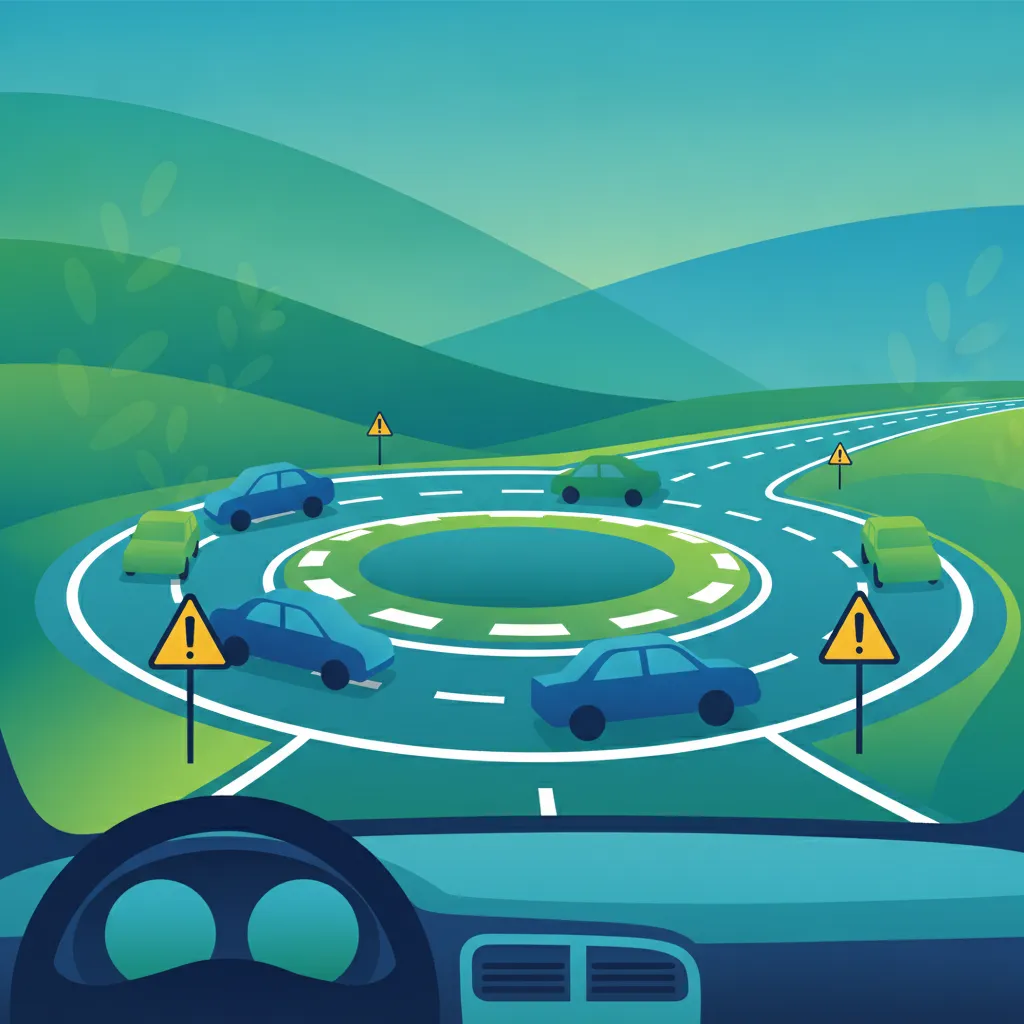
This lesson focuses on the skills required to safely enter, navigate, and exit roundabouts, a common feature in French urban environments. Learners will understand the need to yield to circulating traffic, select the appropriate lane upon entry, and signal intentions when exiting. By mastering these techniques, AM riders can safely integrate into roundabout traffic flow and reduce conflicts with other road users.
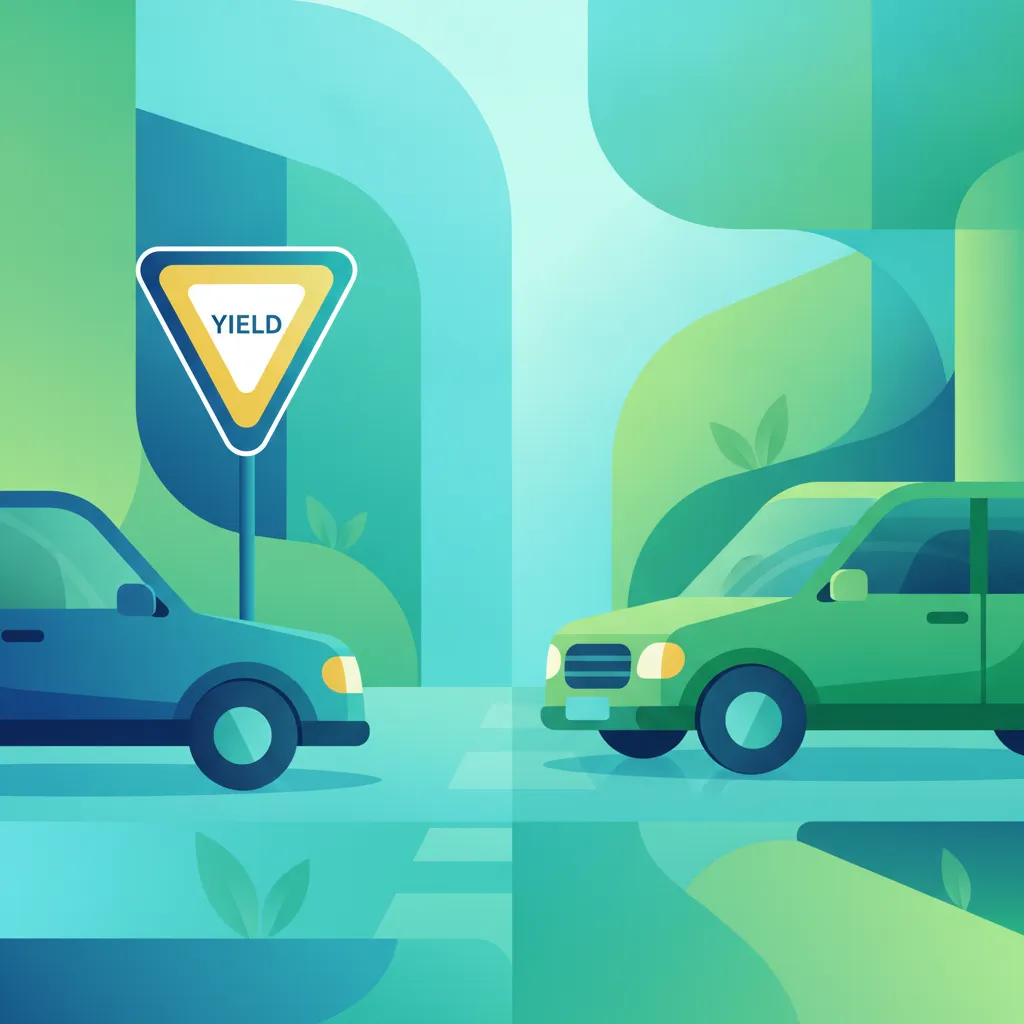
This lesson provides a comprehensive breakdown of priority rules under French law, with special focus on the default rule of priorité à droite. You will learn to recognize when this rule applies, even in the absence of explicit signage, and how to verify that entering vehicles see you. It also explains how to read priority road indicators, stop signs, and yield signs, helping you manage right-of-way safely and confidently.

Negotiating crossroads that lack active traffic light signals requires a clear reading of signs and painted stop or yield lines. This lesson details the obligations of stopping completely at stop signs and slowing down to yield at 'cedez le passage' markings. You will learn to assess cross-traffic speeds, determine priorities when multiple vehicles arrive, and execute turns safely.
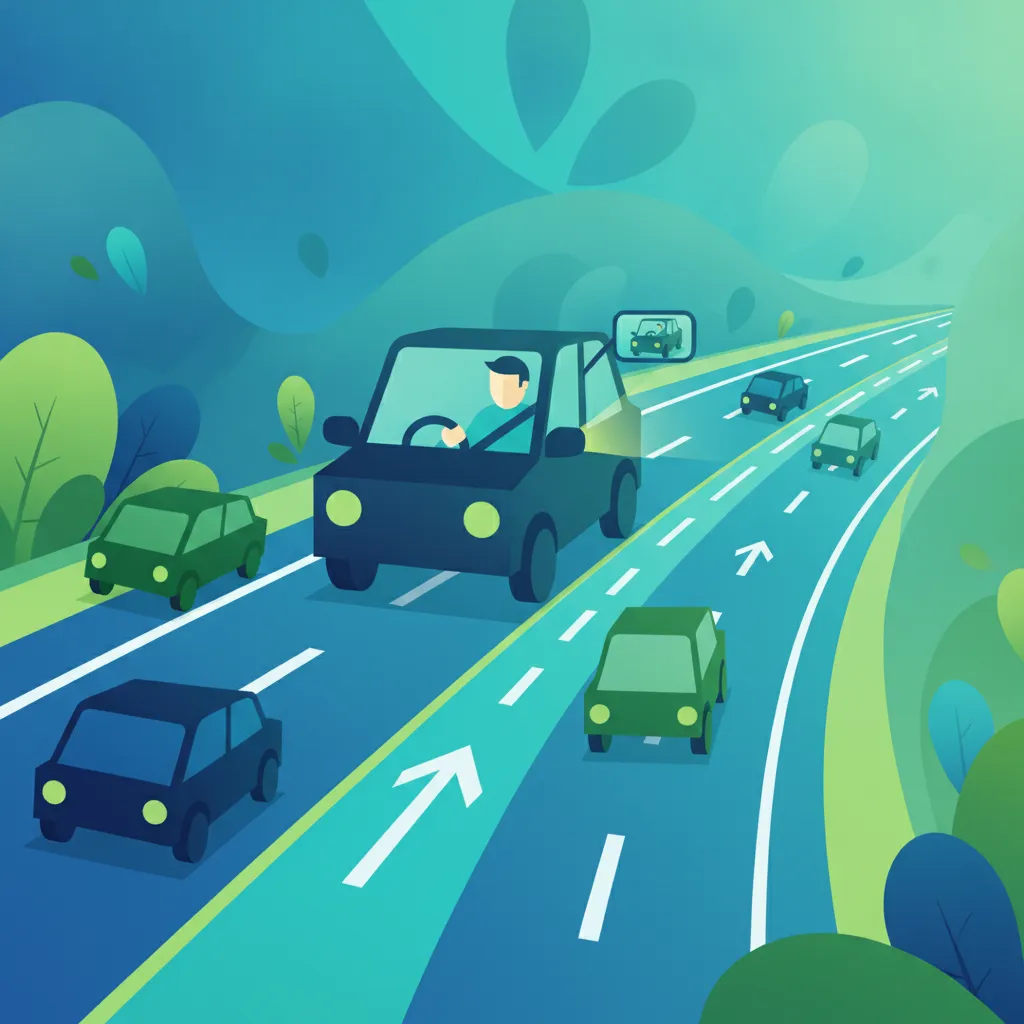
Changing lanes or executing turns requires a structured visual and physical procedure to prevent interrupting surrounding traffic. This lesson explains the key steps: checking the center mirror, exterior mirrors, turning on direction indicators, and performing blind-spot checks. You will learn correct vehicle positioning for both left and right turns, and how to execute safe turning circles without cutting corners.
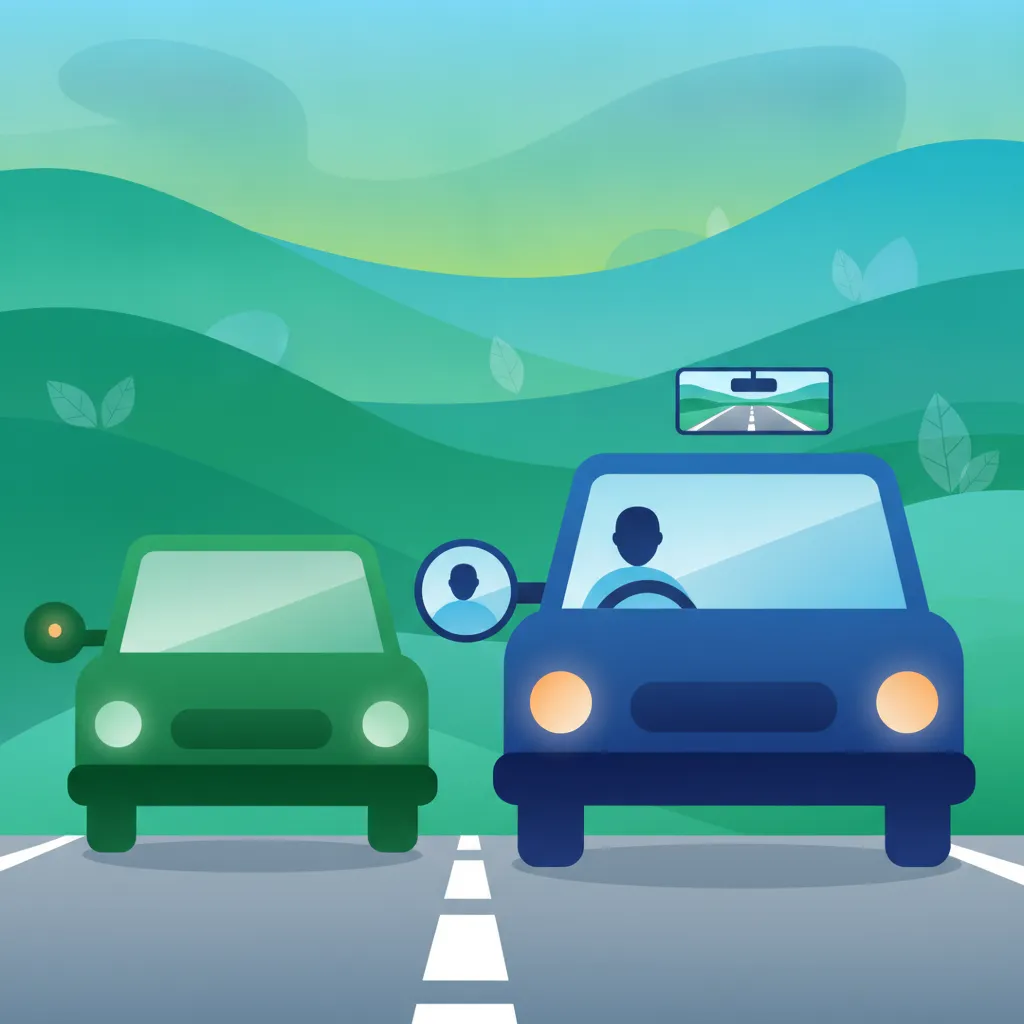
This lesson covers the strict legal conditions under which you may overtake other vehicles on French roads, including necessary visibility criteria. You will master the step-by-step process of checking rearview mirrors, performing head checks, signaling, and maintaining a safe speed differential during the pass. It also details when overtaking is strictly forbidden, such as before intersections, near pedestrian crossings, or across solid lines.

Controlled intersections use traffic lights and accompanying signs to manage busy crossings systematically. This lesson covers how to safely proceed on a green light, negotiate left turns when yielding to oncoming traffic, and obey flashing amber lights. You will also learn the hierarchy of traffic control, where police officer gestures overrule both traffic lights and priority signs.
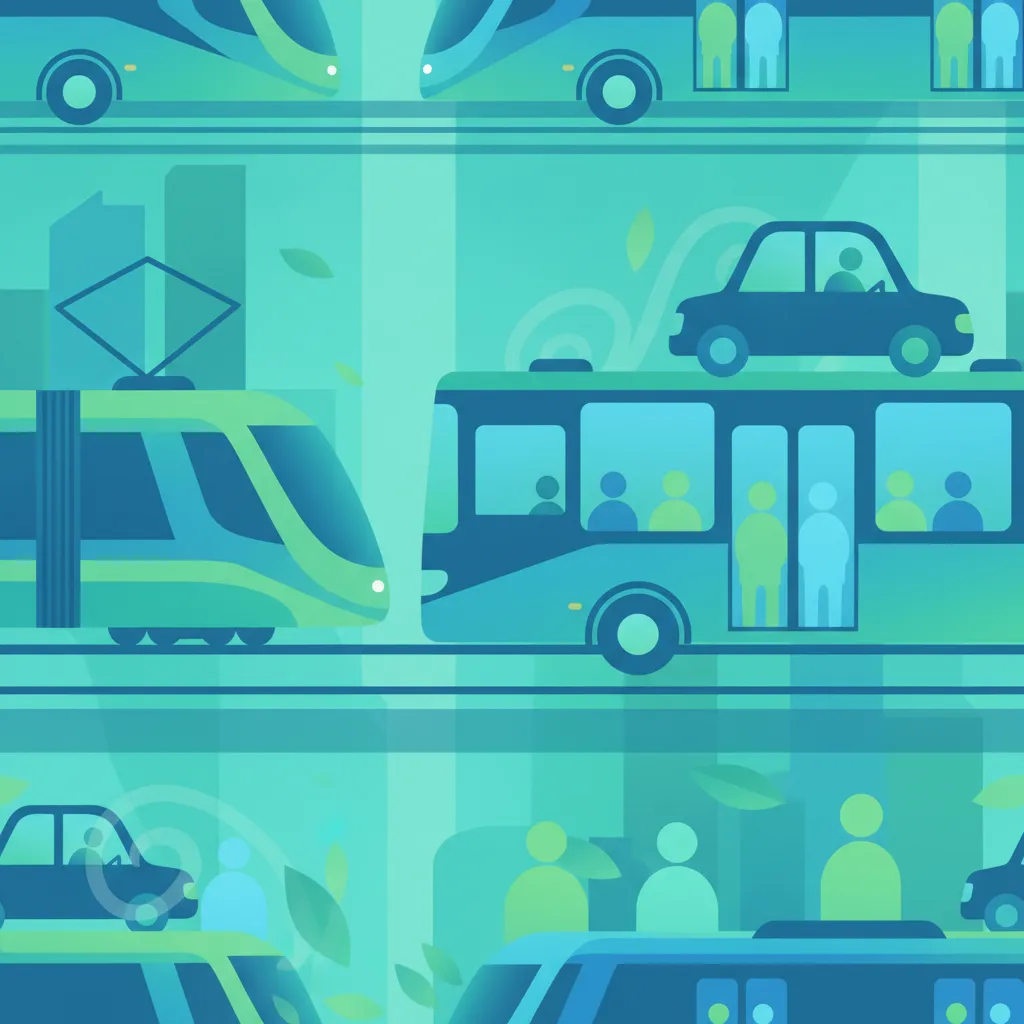
Public transit vehicles like city buses and streetcars (trams) have clear legal priorities and dedicated infrastructure in urban areas. This lesson teaches you to recognize reserved transit lanes and your legal obligation to yield to buses exiting their designated stops. You will also learn safe driving strategies near tram tracks, ensuring you never block public transit lines or risk passenger boarding areas.
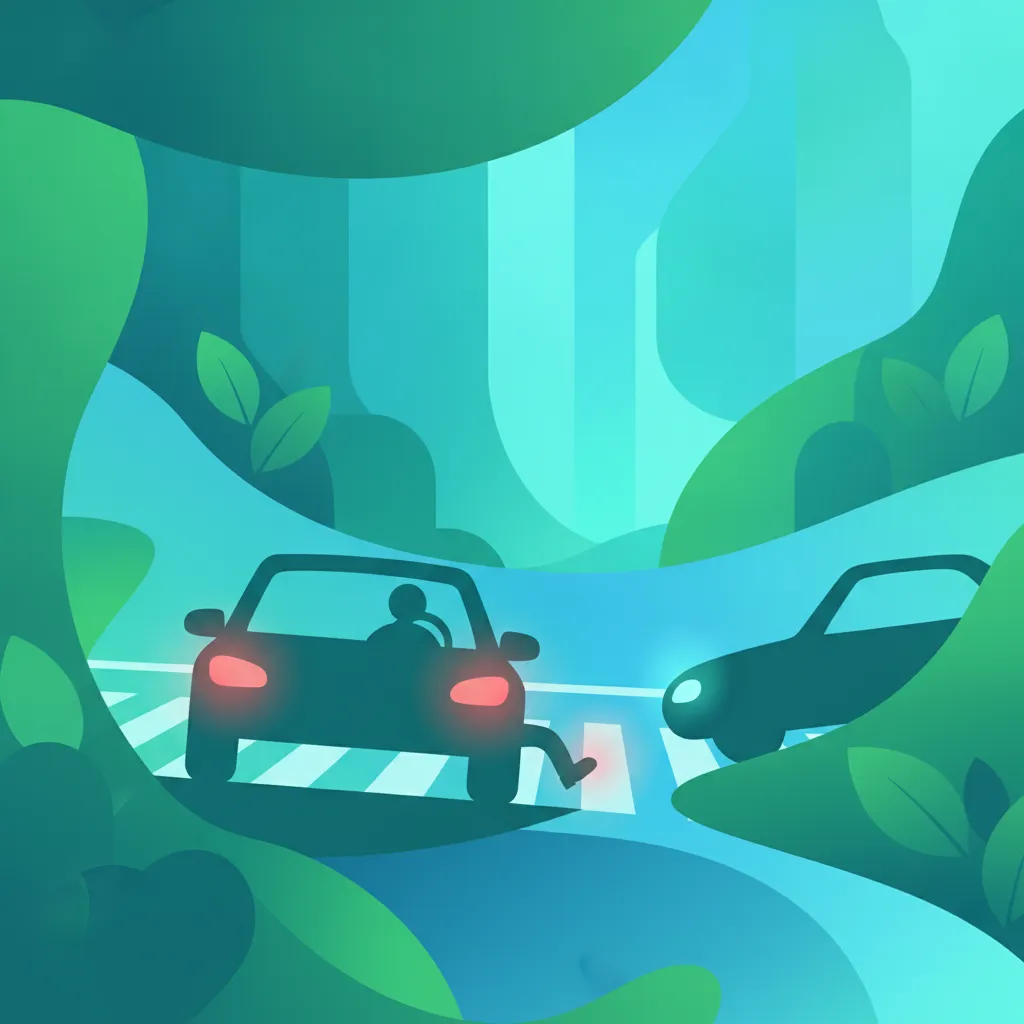
In France, the default rule at any intersection without clear priority signage is priority-to-the-right (priorite a droite). This lesson explains how to identify unsignaled junctions in urban and rural environments and when you must yield to incoming vehicles. You will learn to spot the standard yellow diamond priority signs and triangular warning signs that indicate whether you hold the priority.
Understand the legal and safety responsibilities for drivers regarding cyclists and pedestrians in French urban environments. This guide covers how to anticipate the movements of vulnerable road users at intersections, manage blind spots during maneuvers, and follow priority regulations to prevent accidents involving pedestrians and two-wheeled road users.
Certain groups of road users require heightened defensive attention from drivers due to physical limitations or unpredictable behaviors. This lesson covers how to recognize signs of visual impairment (white canes), mobility challenges, and the unpredictability of young children. You will learn to reduce your speed, extend yielding patience, and proactively secure extra space to protect these vulnerable users.
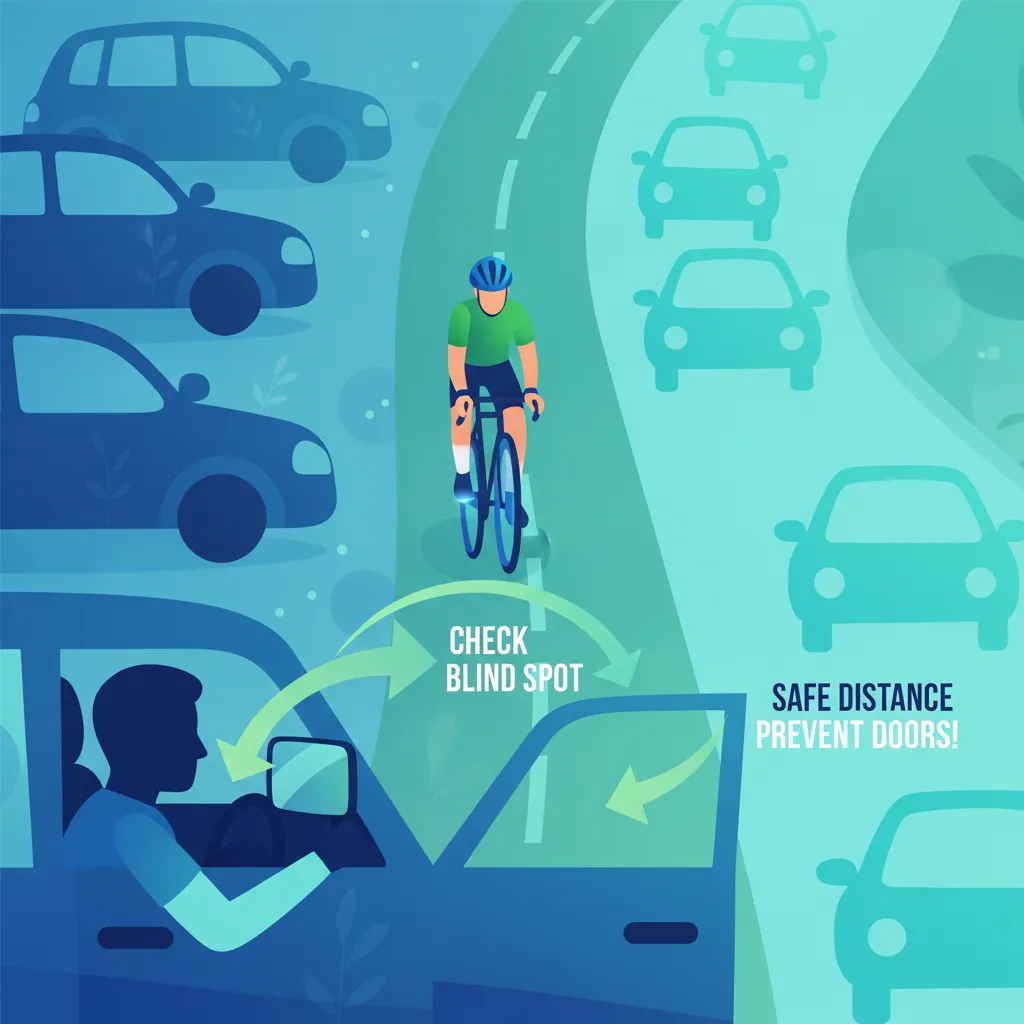
This lesson explains how to share the road safely with cyclists in both urban and rural environments. Drivers will study the legal minimum passing distances when overtaking cyclists, which is one meter in cities and one and a half meters outside urban areas. It also covers recognizing specialized cycling infrastructure, bike boxes at intersections, and preventing blind-spot collisions during right turns.

This lesson provides global defensive driving strategies to minimize collision risks for all non-motorized and vulnerable road users. Drivers will learn to systematically lower vehicle speed in dense pedestrian zones, even when no active hazards are visible. By cultivating an anticipatory mindset and maintaining generous safety margins, professional drivers establish a protective safety envelope around their vehicle.
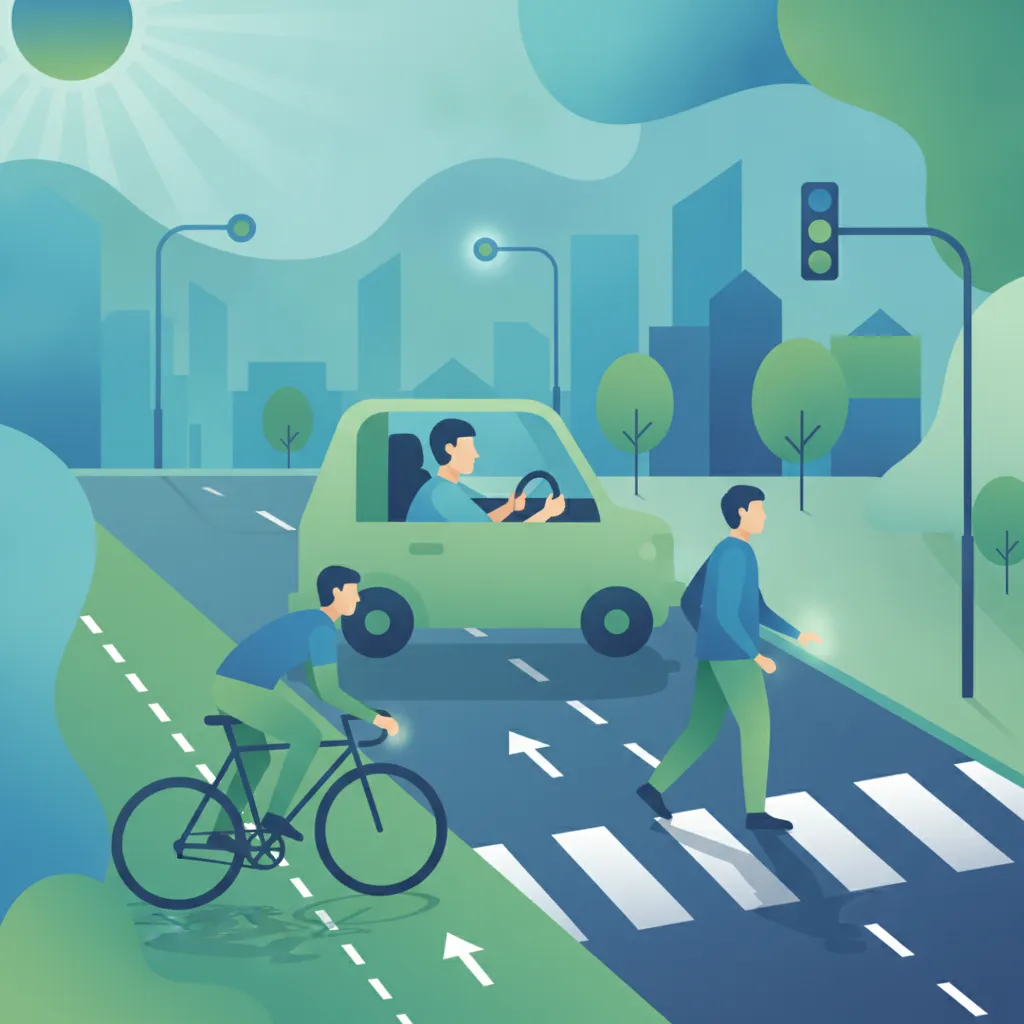
This lesson examines the specific challenges and responsibilities goods vehicle drivers face when interacting with pedestrians and cyclists in urban environments. Learners will understand right-of-way rules, the importance of yielding at pedestrian crossings, and safe turning practices that protect cyclists. The content emphasizes heightened driver vigilance, especially when navigating bike lanes and crowded sidewalks.
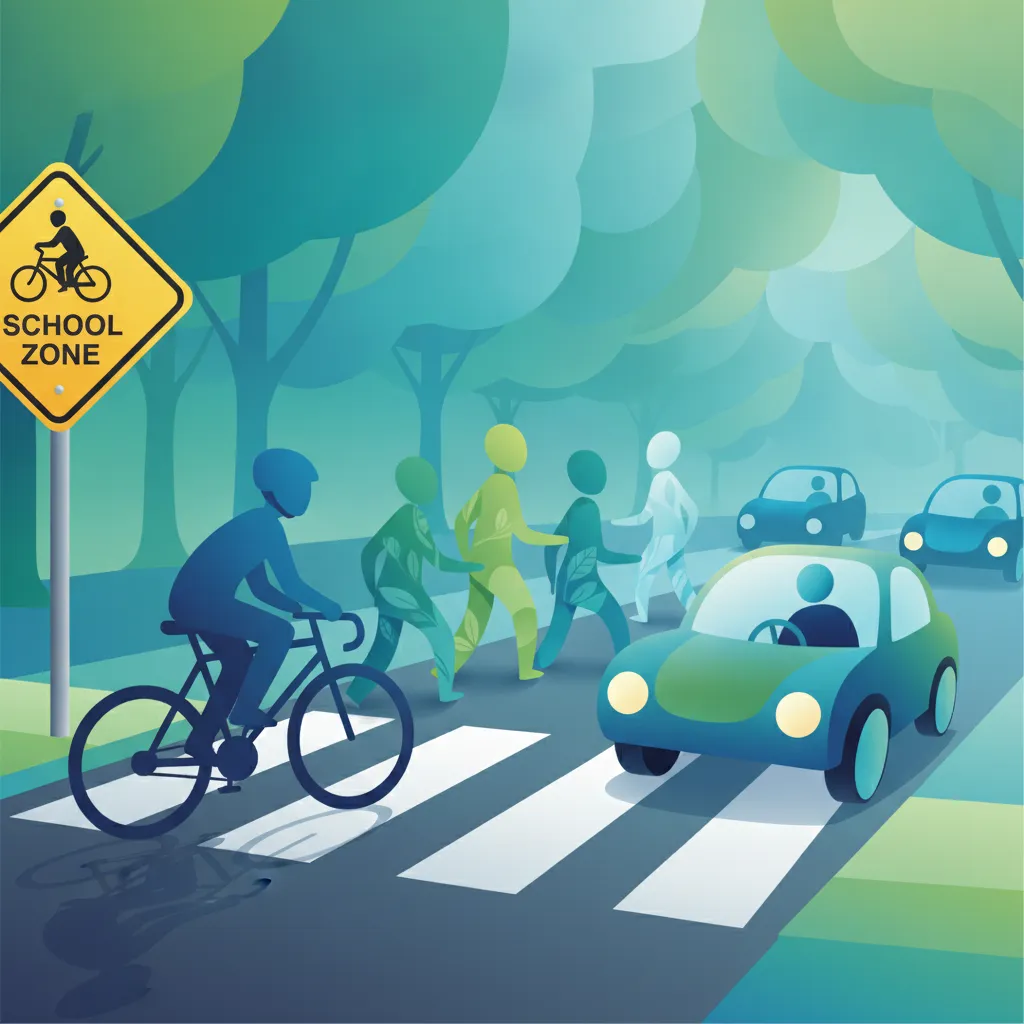
This lesson focuses on the legal requirement to yield to pedestrians on or about to step onto zebra crossings, a major focus of French road safety. You will learn how to approach school zones and pedestrian islands with heightened vigilance and reduced speed. Additionally, the lesson explores shared urban spaces, explaining how to maintain safe lateral distances when overtaking cyclists or personal electric scooters.
Find clear answers to common questions learners have about Safe Turning Practices at Intersections. Learn how the lesson is structured, which driving theory objectives it supports, and how it fits into the overall learning path of units and curriculum progression in France. These explanations help you understand key concepts, lesson flow, and exam focused study goals.
Because of the long wheelbase and rear overhang, the rear wheels of a passenger vehicle track inside the path of the front wheels. Swinging wide allows you to safely clear the curb and roadside obstacles that you would otherwise hit.
Always scan your mirrors and blind spot thoroughly before initiating a turn. If a cyclist is present, you must yield to them, as they are vulnerable road users. Never turn across their path if it creates a collision risk.
Tail swing occurs when the rear of the vehicle sweeps outwards during a turn. Sudden or excessive movement can cause discomfort or falls for standing passengers, so all turns must be executed at a slow, controlled speed with smooth steering inputs.
Yes, you must manage your position early, ensuring you occupy enough space to clear the roundabout without tracking over the center island. Always communicate your intentions early with signals and monitor the area for smaller vehicles attempting to squeeze alongside you.
Ready to focus your study? Use the practice search to find exactly the French driving theory questions you need for the Code de la route and permis de conduire ETG. Refine your knowledge on specific topics or challenging rules to boost your confidence and exam readiness.