This lesson explores the essential weight and dimension restrictions for driving heavy goods vehicles in France. By mastering these physical constraints, you will learn how to navigate infrastructure safely, avoid illegal routes, and successfully answer theory test questions on vehicle clearance and cargo limits.
Lesson content overview
Operating a goods vehicle in France requires strict compliance with the physical and legal limits imposed by the French Highway Code (Code de la route). Heavy goods vehicles (HGVs) alter the traffic dynamic, exert extreme stress on physical road infrastructure, and demand precise handling.
For professional drivers of Category C, C1, C1E, or CE vehicles, knowing your vehicle's exact weight, axle load, and dimensions is not just a regulatory obligation—it is a critical safety practice. This guide provides a comprehensive breakdown of weight limits, dimensional standards, infrastructure restrictions, and loading requirements for commercial transport in France.
In France, heavy vehicle weight is categorized under two main legal thresholds, both of which are listed on the vehicle's official registration certificate, the carte grise. Exceeding these limits is a serious offense that compromises braking efficiency, damages the suspension, and accelerates tyre wear.
The Maximum Authorized Mass (MAM)—historically and commonly referred to in France as the PTAC (Poids Total Autorisé en Charge)—defines the absolute maximum weight of a single vehicle when fully loaded.
The total weight of the vehicle, including its chassis, engine, bodywork, fuel, onboard equipment, driver, passengers, and the cargo itself, as certified by the manufacturer and the licensing authorities.
When a vehicle is towing a trailer or semi-trailer, the combined weight is regulated by the Maximum Authorized Mass of the Combination (MAMC), known in France as the PTRA (Poids Total Roulant Autorisé).
The maximum permissible total weight of the combined tractor unit, trailer(s), and all cargo, passengers, and fluids when coupled together.
Exceeding the MAM or MAMC severely degrades the vehicle's stopping distance and increases the risk of brake fade, especially on long downhill descents. It also constitutes an illegal infraction that can lead to heavy fines, immediate immobilization of the vehicle, and points deducted from your professional license.
An HGV can be perfectly compliant with its total MAM, yet still be operating illegally and unsafely due to incorrect load distribution. French law strictly regulates how much weight can rest on individual axles to protect road surfaces, bridges, and ensure proper steering control.
The road network is engineered to withstand specific axle-pressure thresholds. In France, the legal limits vary depending on whether an axle is a driving axle or a carrying axle:
Proper weight distribution ensures that both the front steering axle and the rear drive axles maintain optimal contact with the road.
To navigate roundabouts, narrow urban streets, and highway toll lanes safely, goods vehicles must comply with the standard dimensional envelopes established by the French Code de la route.
Length limits prevent vehicles from sweeping excessively into adjacent lanes when turning (off-tracking) and ensure they fit within standard overtaking zones.
Width limits are designed to prevent head-on or sideswipe collisions on narrow regional roads (routes départementales).
+-------------------------------------------------------------+
| Standard Width: 2.55 m                                      |
| [=================== Truck Body ===================]        |
+-------------------------------------------------------------+
| Refrigerated Width: 2.60 m                                  |
| [================= Thick Insulation =================]      |
+-------------------------------------------------------------+
Always measure the absolute physical height of your vehicle including the load, air deflectors, exhaust stacks, and any cooling units before starting your journey. A refrigerator unit or a loose tarp can easily add 20 to 30 centimeters to your total height.
Navigating a heavy vehicle requires continuous observation of regulatory road signs. Ignoring infrastructure signs can result in catastrophic structural failure of a bridge or high-speed collisions with tunnel portals.
Bridges are engineered with specific structural load limits. These restrictions are communicated using prohibition signs.
In some situations, a bridge is strong enough to support heavy vehicles but cannot tolerate high concentrated loads. In these cases, the restriction is applied specifically to axle weight.
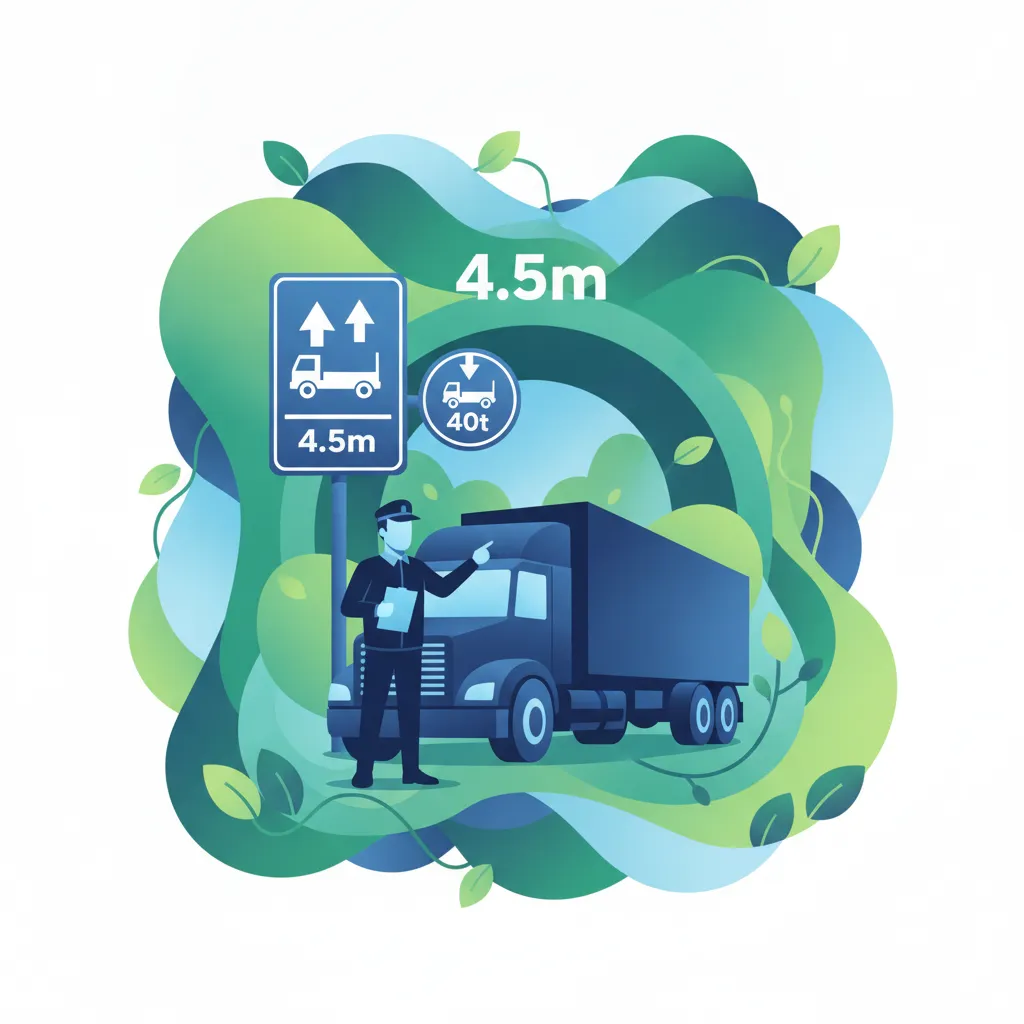
Before entering underpasses, old city arches, or tunnels, you must check clearance restrictions.
When a load cannot be divided and its dimensions or weight naturally exceed standard legal limits, it must be operated under the Special Transport (Transport Exceptionnel) framework.
The transport of cargo that exceeds standard regulatory limits for weight (44 tonnes) or dimensions (width of 2.55/2.60 m, length of 16.50/18.75 m) due to its indivisible nature (e.g., industrial machinery, wind turbine blades, construction elements).
In France, Special Transports are classified into three distinct categories based on their impact on the road network:
Operating a Category 2 or 3 Special Transport vehicle requires a special administrative permit (dérogation). Drivers must strictly follow the authorized itinerary detailed in their permit and adhere to restricted travel times (such as avoiding peak rush hours or weekend travel bans on French motorways).
Failing to comply with weight and dimension regulations in France carries heavy penalties. The French police and the DREAL (Regional Directorate for Environment, Planning, and Housing) carry out frequent roadside checks.
To guarantee compliance and safety before every journey, professional drivers must execute a systematic check.
Check the Vehicle Documents: Consult fields F.2 (MAM) and F.3 (MAMC) on the carte grise of both the tractor and the trailer.
Verify the Actual Weight: Cross-reference the weight of the loaded vehicle against the weighbridge ticket or on-board weighing systems to ensure you are below the MAM and MAMC.
Inspect Load Distribution: Ensure the cargo is loaded evenly across the floorbed. Heavier cargo must be placed low and centered over the main axle groups.
Measure Physical Dimensions: Verify that the width does not exceed 2.55 m (or 2.60 m for reefers) and note the exact height of the loaded vehicle.
Secure the Cargo: Ensure the load cannot shift during transit, which would drastically alter the axle loading and vehicle balance.
Plan Your Route: Input your exact height, weight, and width into a specialized truck GPS to avoid low bridges, narrow historical town centers, and weight-restricted roads.
In addition to traditional structural limits, French cities increasingly deploy Low Emission Zones (Zones à Faibles Émissions - ZFE). Access to these zones is often restricted based on the vehicle's Crit'Air vignette, which is determined by engine emissions. However, localized weight restrictions often apply in conjunction with environmental restrictions to keep heavy through-traffic out of residential city centers.
When planning deliveries to major urban areas like Paris, Lyon, or Marseille, always cross-reference weight limitations with environmental access timings. Local municipal decrees (arrêtés municipaux) often ban vehicles over 3.5 or 7.5 tonnes from entering certain municipal zones during daytime hours.
| Metric / Vehicle Type | Standard Limit | Key French Term | Legal Reference |
|---|---|---|---|
| MAM (Rigid Truck) | Varies by axles (e.g., 19t for 2 axles, 26t for 3 axles) | PTAC (Field F.2) | Code de la route R312-4 |
| MAMC (Standard Combo) | 44 Tonnes (5+ axles) | PTRA (Field F.3) | Code de la route R312-4 |
| Single Drive Axle | 13 Tonnes | Charge à l'essieu | Code de la route R312-5 |
| Maximum Rigid Length | 12.00 Metres | Longueur maximale | Code de la route R312-11 |
| Maximum Articulated Length | 16.50 Metres | Longueur maximale | Code de la route R312-11 |
| Maximum Width | 2.55 Metres (2.60 m for refrigerated) | Largeur maximale | Code de la route R312-10 |
By mastering these weight and dimension parameters, planning your route carefully, and inspecting your vehicle before departure, you protect road infrastructure, avoid costly fines, and ensure your safety and the safety of all other road users.
Explore all units and lessons included in this driving theory course.
Lesson content overview
Explore all units and lessons included in this driving theory course.
Explore search topics learners often look for when studying Weight and Dimension Restrictions. These topics reflect common questions about road rules, driving situations, safety guidance, and lesson level theory preparation for learners in France.
Browse additional driving theory lessons that cover connected traffic rules, road signs, and common driving situations related to this topic. Improve your understanding of how different rules interact across everyday traffic scenarios.
Learn the essential factors for planning routes with large commercial vehicles, including navigating weight-restricted roads, avoiding low clearance tunnels, and managing urban delivery access. Understand how to use vehicle dimensions and height data to identify safe transit corridors and avoid infrastructure risks on French roads.
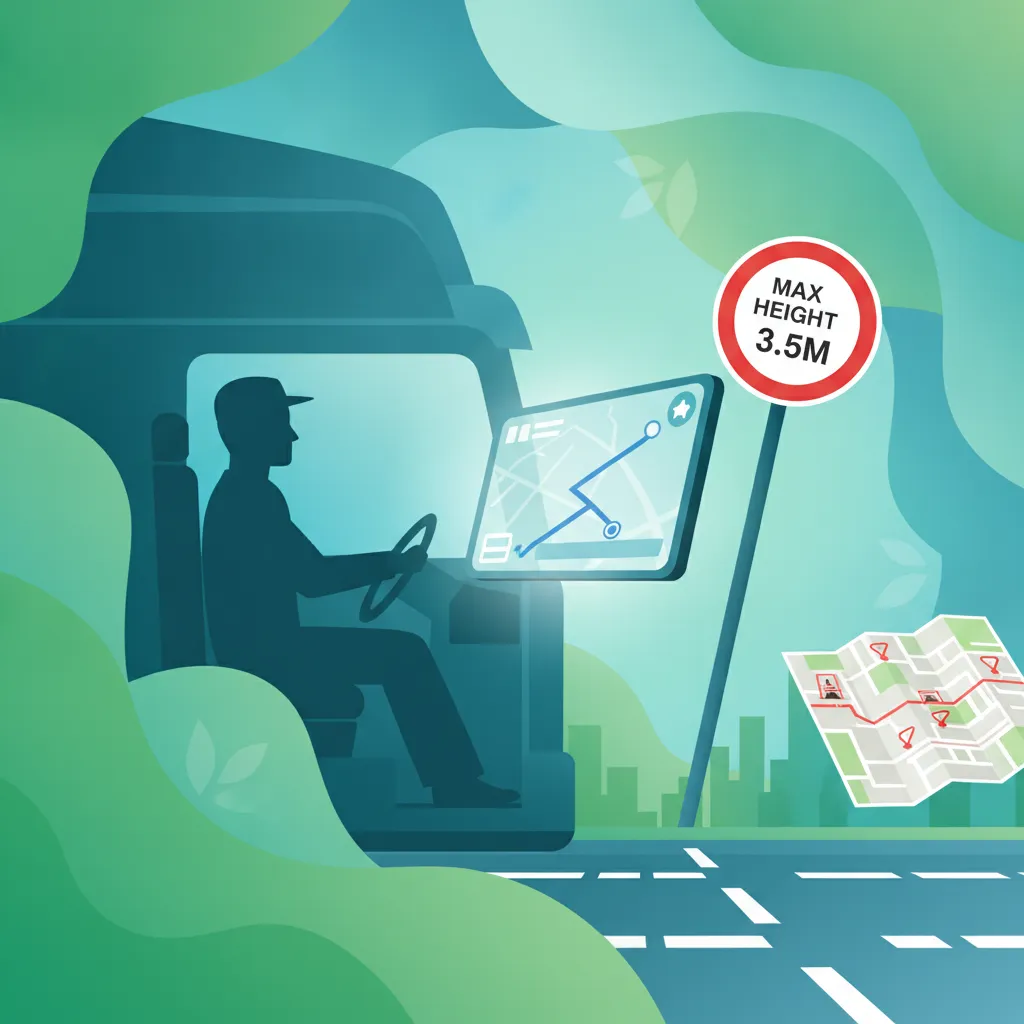
This lesson provides guidance on selecting preferred routes for heavy vehicles, taking into account freight corridors, toll roads, and restricted zones. Learners will be introduced to practical tools for route optimization, including GPS systems tailored for goods vehicles, and strategies for minimizing travel time while adhering to legal constraints. Emphasis is placed on balancing delivery efficiency with compliance to French transport policies.
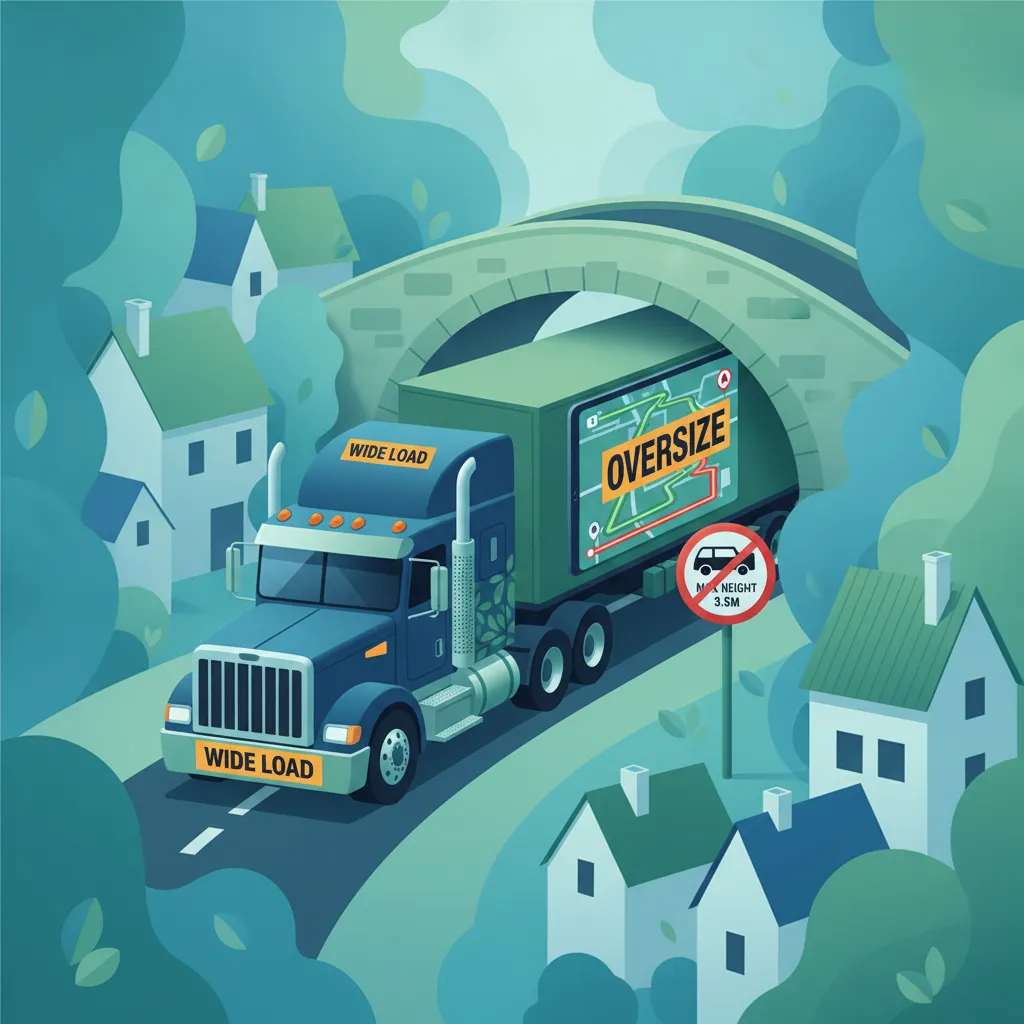
This lesson provides strategies for planning routes that accommodate oversized goods vehicles while complying with French road restrictions. Learners will learn how to identify prohibited routes, evaluate bridge and tunnel limitations, and obtain necessary access permits. The content also addresses the use of specialised GPS systems for heavy vehicle routing and the importance of contingency planning for detours, ensuring safe and efficient transport operations.

This lesson focuses on the unique challenges of performing deliveries in dense urban areas. Learners will explore best practices for loading and unloading safely, navigating traffic congestion, and minimizing risks to pedestrians and cyclists. The content also covers compliance with city regulations for delivery zones, scheduling considerations, and the importance of careful maneuvering to avoid accidents.
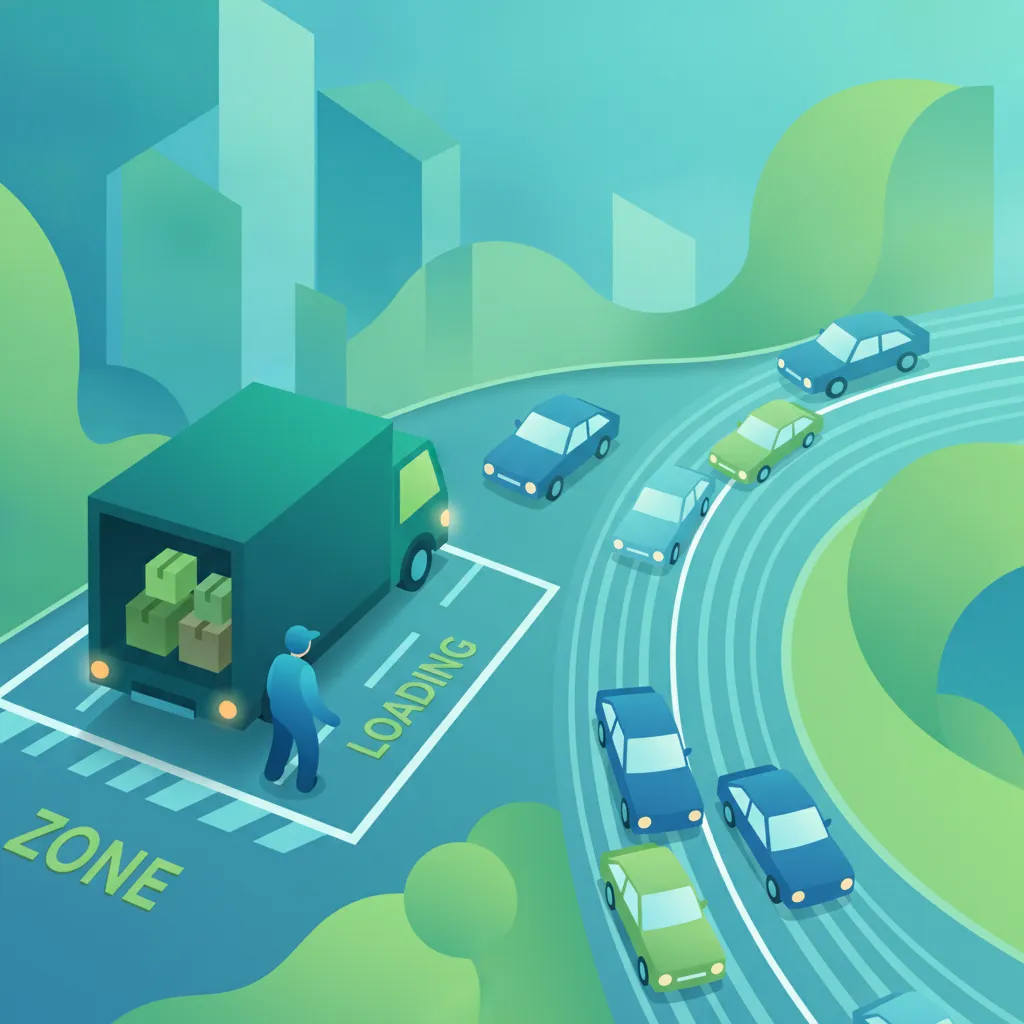
In this lesson, drivers will learn how to navigate urban delivery zones, understanding the rules surrounding loading bays, time windows, and restricted access areas. The content includes the process for obtaining delivery permits, strategies for safe maneuvering in congested city streets, and best practices for minimizing impact on pedestrian traffic. Learners will also be introduced to French city-specific regulations that govern goods vehicle deliveries.

In this lesson, drivers will learn how to calculate safe following distances based on vehicle speed, load, road conditions, and traffic density. The content explains the components of total stopping distance, including reaction time and braking distance, and how these are affected by factors such as wet road surfaces and heavy loads. Learners will also be introduced to French road safety guidelines for maintaining appropriate gaps to ensure sufficient time to react.

This lesson examines how goods vehicle drivers should approach and navigate roadworks zones and temporary traffic restrictions. Learners will be taught to recognize temporary speed limit signs, follow detour routes safely, and respect lane closures. The content also highlights the importance of maintaining safe distances from workers, adjusting for reduced lane width, and ensuring compliance with temporary regulations to avoid penalties.
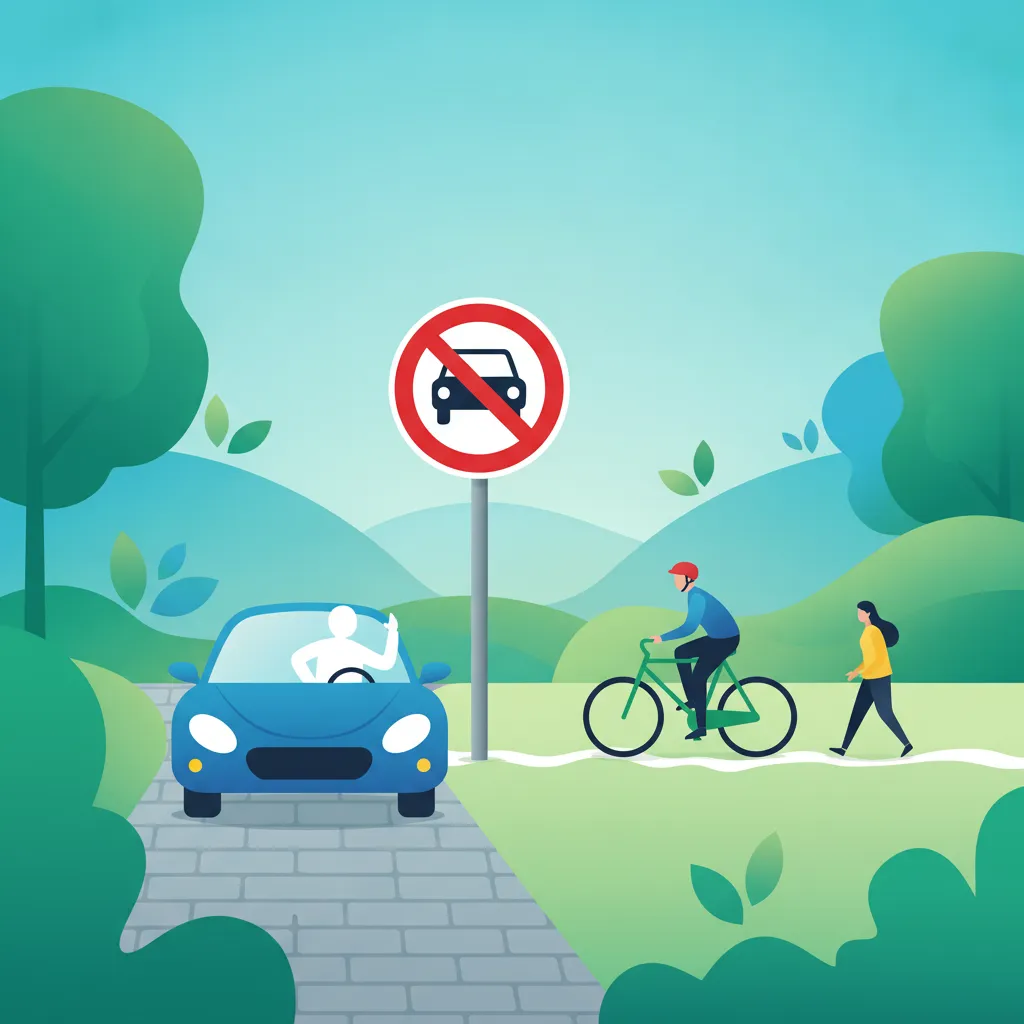
In this lesson, learners will explore the various access restrictions that apply to goods vehicles in France, such as low emission zones and weight-restricted areas. The focus is on understanding the process to obtain necessary access permits and authorisations, and how these restrictions influence route planning and operational decisions. Learners will also be introduced to specific regulations governing vehicle entry into city centres and environmentally sensitive zones.

In this lesson, drivers will explore the specific challenges presented by rural road environments, including narrower lanes, shared space with agricultural vehicles, and frequent wildlife crossings. The content emphasizes adapting speed to road curvature, surface conditions, and visibility while navigating hills and bends. Learners will also learn to interpret rural road signage and understand the importance of maintaining vigilance.
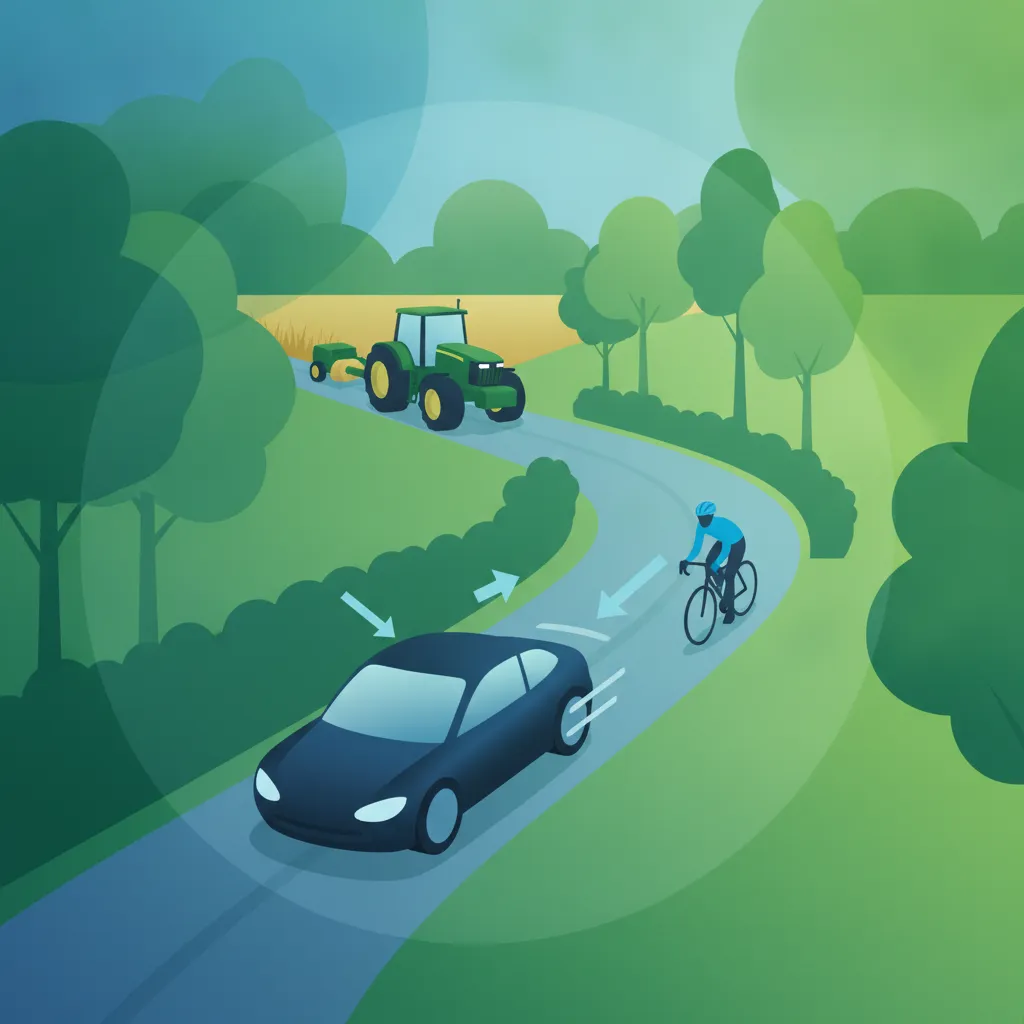
This lesson analyzes the complex driving conditions found on French secondary and rural road networks (routes départementales). Drivers will learn steering and braking techniques to descend steep gradients safely using engine retarding systems without overheating the service brakes. Anticipating agricultural machinery, domestic livestock, unlit intersections, and narrow bridges is also taught in depth.

In this lesson, drivers will learn the essential steps to take following an accident involving a goods vehicle. The content covers contacting emergency services via 112, providing first aid, and safely positioning the vehicle to protect other road users. Learners will be instructed on documenting the incident, notifying insurance providers, and fulfilling legal obligations for accident reporting, including gathering witness statements.
Explore the mechanics of load distribution for heavy vehicles, including the impact of weight on steering stability and braking performance. This guide covers legal axle load limits in France, the importance of center of gravity, and how to safely secure cargo to prevent shifts during professional transport operations.

In this lesson, the focus is on understanding weight limits for goods vehicles, including total gross vehicle weight and individual axle load restrictions. Learners will explore how French weight regulations define permissible loads and the consequences of exceeding these limits, such as increased wear on road surfaces and safety hazards. The lesson also discusses load balancing techniques to ensure optimal axle distribution, enhancing vehicle stability and compliance with legal standards.

In this lesson, learners explore the fundamental principles governing load distribution in goods vehicles, focusing on how cargo placement affects the centre of gravity and overall vehicle stability. The content emphasizes the importance of achieving longitudinal and lateral balance to prevent adverse vehicle dynamics such as excessive sway or unintended pivoting. By understanding weight transfer phenomena and the impact of cargo positioning on the vehicle’s pivot point, drivers can make informed decisions to ensure safe loading.
Find clear answers to common questions learners have about Weight and Dimension Restrictions. Learn how the lesson is structured, which driving theory objectives it supports, and how it fits into the overall learning path of units and curriculum progression in France. These explanations help you understand key concepts, lesson flow, and exam focused study goals.
These signs indicate the maximum authorized weight (PTAC) allowed for a vehicle on a specific section of road. If your vehicle's actual weight or authorized limit exceeds the value displayed, you must choose an alternative route.
Always compare the height indicated on the signage with your vehicle's height including the load. In France, always allow a safety margin; if you are unsure about your vehicle's clearance, never attempt to pass.
Yes, category CE vehicles have longer lengths and different turning radii compared to C1 or C vehicles. You must account for the total length of the combination when planning routes and observing access restriction signs.
Axle load affects both vehicle stability and road wear. Questions often focus on ensuring the weight is correctly distributed to maintain braking performance and comply with legal road wear regulations in France.
Ready to focus your study? Use the practice search to find exactly the French driving theory questions you need for the Code de la route and permis de conduire ETG. Refine your knowledge on specific topics or challenging rules to boost your confidence and exam readiness.