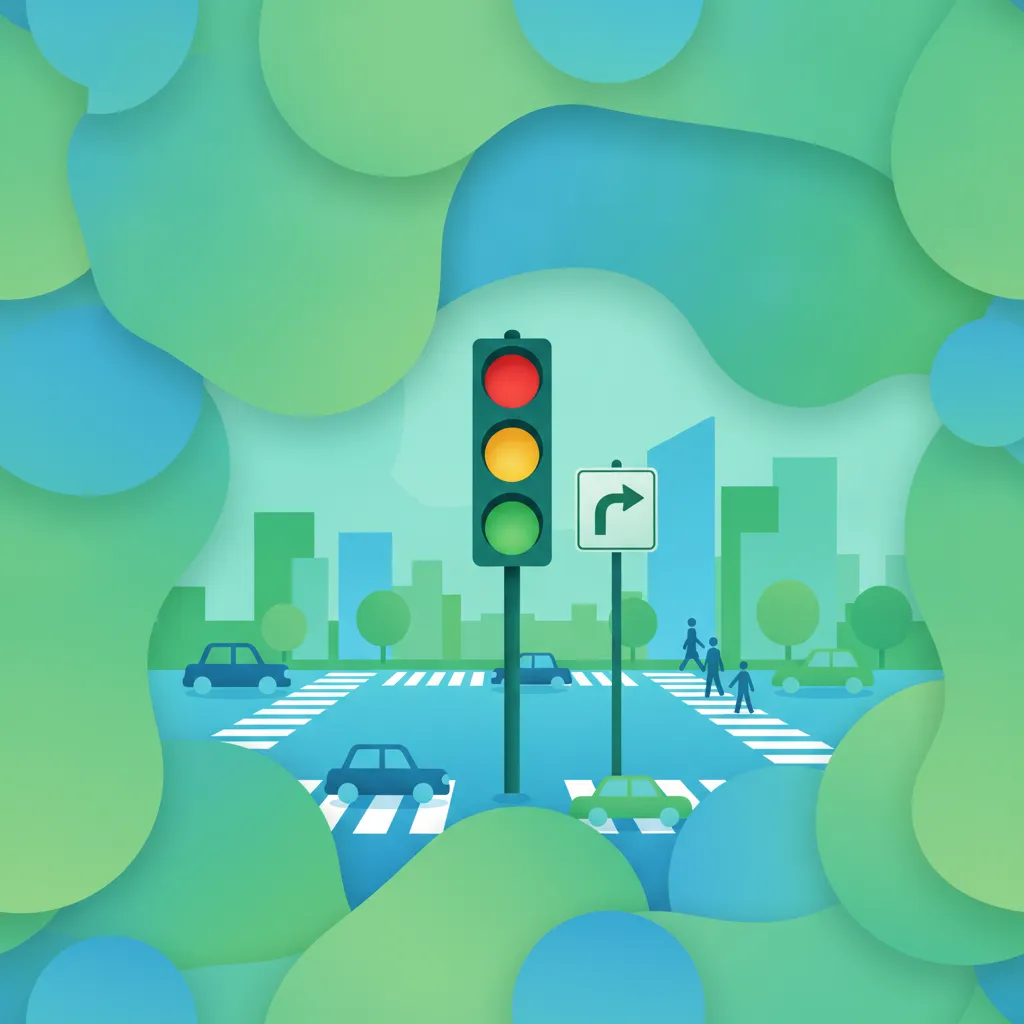
Traffic lights are essential for organizing vehicle and pedestrian flow, ensuring safety and efficiency at German intersections. This guide details the specific meanings of red, yellow, and green lights, along with the unique 'Grünpfeil' (green arrow) rule, to help you understand your obligations as a driver under the Straßenverkehrs-Ordnung (StVO). Pay close attention to the sequence and special signals to avoid common mistakes.
Theory topic content overview
Read the full theory topic guide for German Traffic Lights with structured, easy-to-scan content built for learners in Germany. This detailed section explains the exact rule, meaning, traffic context, comparison points, and exam logic behind this German driving theory topic so you can study faster, understand the concept more clearly, and avoid common interpretation mistakes on the theory test.
Traffic lights, known as Lichtzeichen or Wechsellichtzeichen in Germany, are fundamental tools for regulating traffic flow and ensuring safety at intersections and other busy road points. Governed by § 37 of the Straßenverkehrs-Ordnung (StVO), these signals override all other priority rules, including "Rechts vor Links" (right before left) and "Give Way" signs. Understanding each signal's precise meaning and your required response is crucial for passing your German driving theory test and for safe driving on German roads.
In Germany, traffic lights establish the primary order of movement. When a traffic light is present and operational, it takes precedence over all other priority regulations or road signs. This means that if a "Give Way" sign is present at an intersection with a functioning traffic light, the light dictates your actions, not the sign.
The standard sequence of Wechsellichtzeichen (changing lights) follows a specific pattern: Green → Yellow → Red → Red & Yellow (simultaneous) → Green.
Each phase demands a distinct action from drivers, and misinterpretation can lead to dangerous situations and significant penalties.
The green light signifies that "Der Verkehr ist freigegeben" – traffic is permitted to proceed.
Even with a green light, your general Sorgfaltspflicht (duty of care) remains. Always ensure the intersection is clear and it is safe to proceed.
The yellow light means "Vor der Kreuzung auf das nächste Zeichen warten" – prepare to stop before the intersection for the next signal.
The red light means "Stop". You must stop your vehicle before the stop line. If there is no stop line, stop before the intersection, or before a pedestrian crossing.
This signal combination indicates that the light is about to change to green. It means "Prepare to go".
A distinctive feature of German traffic control is the Grünpfeil – a small, plate-like green arrow mounted next to a red traffic light, usually pointing right. This is one of the most important elements to understand for the German driving test.
German intersections often feature separate traffic lights for pedestrians (Fußgängerampeln) and cyclists (Fahrradampeln).
Always approach traffic lights with anticipation and be prepared for changes. Your driving theory exam will test your precise knowledge of the StVO rules concerning Lichtzeichen, especially the nuances of the yellow light and the Grünpfeil. Developing a habit of safe, anticipatory driving at controlled intersections will not only help you pass your exam but also keep you and others safe on German roads.
Start with a short, direct summary of German Traffic Lights before reading the full explanation below.
In Germany, traffic lights (Lichtzeichen) direct traffic flow at intersections, overriding other priority rules. A green light means 'go' (unless turning left and obstructing trams or oncoming traffic); yellow means 'prepare to stop' if safe; and red means 'stop'. The unique 'Grünpfeil' allows a careful right turn on red after stopping. Always observe the signals diligently as they are crucial for safety and exam success.
Review the most important terms, rule signals, and traffic concepts linked to German Traffic Lights.
Explore related theory topic pages connected to German Traffic Lights and continue with the next useful rule explanation.
See the common search queries learners use when trying to understand German Traffic Lights in Germany.

Solidify your understanding of German road rules. Explore specific theory topics in detail, from priority rules to complex Autobahn situations. Review key concepts and prepare thoroughly for every aspect of your official driving license theory examination.
German Driving Theory TopicsTheory topic content overview
Start with a short, direct summary of German Traffic Lights before reading the full explanation below.
In Germany, traffic lights (Lichtzeichen) direct traffic flow at intersections, overriding other priority rules. A green light means 'go' (unless turning left and obstructing trams or oncoming traffic); yellow means 'prepare to stop' if safe; and red means 'stop'. The unique 'Grünpfeil' allows a careful right turn on red after stopping. Always observe the signals diligently as they are crucial for safety and exam success.
Review the most important terms, rule signals, and traffic concepts linked to German Traffic Lights.
Explore related theory topic pages connected to German Traffic Lights and continue with the next useful rule explanation.
See the common search queries learners use when trying to understand German Traffic Lights in Germany.
Solidify your understanding of German road rules. Explore specific theory topics in detail, from priority rules to complex Autobahn situations. Review key concepts and prepare thoroughly for every aspect of your official driving license theory examination.
German Driving Theory TopicsUse this exam-focused revision tip to understand how German Traffic Lights is likely to appear in theory questions for learners in Germany. This section helps you identify the most testable part of the rule, avoid common traps, and remember the concept more effectively during German driving theory exam preparation.
Many exam questions test your understanding of the yellow light and the 'Grünpfeil'. Remember, yellow means 'prepare to stop', not 'speed up'. For the 'Grünpfeil', always stop completely first, even if the way seems clear, to avoid a critical error point in the exam and real traffic.
Read direct answers to the most common learner questions about German Traffic Lights in Germany. This FAQ focuses on rule confusion, practical meaning, comparison with similar concepts, and the exact uncertainties that appear most often in German driving theory revision and exam preparation.
The standard sequence for changing light signals (Wechsellichtzeichen) is Green – Yellow – Red – Red and Yellow simultaneously – Green. This regulates the flow of traffic at most intersections.
A yellow light indicates that the signal is about to change to red. You must prepare to stop before the intersection if it is safe to do so. You should not accelerate to try and clear the intersection.
Yes, but only if there is a 'Grünpfeil' (green arrow plate) next to the red light. You must first stop completely at the stop line, ensure no cross-traffic or pedestrians are endangered, and then proceed with extreme caution.
Yes, according to StVO § 37, traffic lights (Lichtzeichen) take precedence over other priority rules and priority-regulating road signs.
This simultaneous signal indicates that the light is about to turn green. Drivers should prepare to drive off, but must only proceed when the light fully changes to green.
At a green light, you can turn left following the general rules of § 9 StVO. This means you must typically yield to oncoming traffic and pedestrians unless a specific green arrow signal grants you unrestricted passage.
Begin your targeted revision now. Use our practice search to quickly find specific German driving theory questions. Filter by StVO rules, road signs, or hazard perception to create your focused study plan. Master challenging areas and prepare confidently for your theoretical driving test.