This lesson explores the critical safety procedures and legal requirements for overtaking other vehicles on Irish roads. You will learn to identify where passing is permitted, how to communicate your intentions, and how to execute manoeuvres without endangering other road users. This knowledge is essential for both your Category B theory exam and your practical driving success.

Lesson content overview
Overtaking is one of the most high-risk maneuvers a driver can perform. It requires rapid spatial judgment, a precise assessment of vehicle acceleration capabilities, absolute clarity of visibility, and a strict adherence to traffic laws.
On Irish roads—which frequently transition from high-speed dual carriageways to narrow, winding national and regional routes—making a wrong decision when passing another vehicle can lead to catastrophic, head-on collisions.
This lesson provides a comprehensive guide to safe overtaking procedures under the guidelines of the Road Safety Authority (RSA) and Irish road traffic legislation. By mastering these principles, you will ensure both your safety and that of other road users, while successfully preparing for your Category B Driver Theory Test.
To understand why overtaking requires such high levels of concentration, you must first understand the physical forces and human limitations involved.
When you attempt to overtake a vehicle traveling at 80 km/h on a two-lane national road, and there is an oncoming vehicle traveling at 100 km/h, the closing speed between you and the oncoming vehicle is 180 km/h. At this combined speed, a distance of 500 metres can be closed in just 10 seconds.
Drivers frequently suffer from "size-arrival illusion," where larger oncoming vehicles (like trucks) appear to be traveling slower than they actually are, leading to dangerous misjudgments.
Before committing to an overtake, you must ensure you have a completely "Clear Way"—an unobstructed view of the road ahead that is long enough to allow you to pull out, pass the vehicle, and return to your lane safely without causing any oncoming vehicle, or the vehicle you are passing, to brake or swerve.
The road surface itself provides the most immediate legal framework for whether you may attempt to pass another vehicle. You must be able to read and interpret these markings instantly.
A single solid white line along the centre of the road indicates that overtaking is strictly prohibited. You must not cross this line, nor should any part of your vehicle straddle it, except in very specific, legally defined emergencies (such as passing a stationary obstacle or obeying a direction given by a member of An Garda Síochána).
Crossing a solid white line to pass a moving vehicle, regardless of how slowly it is traveling, is a serious motoring offence.
A broken white line indicates that overtaking is legally permitted, but only if it is safe to do so.
A broken line is not a guarantee of safety; it is merely an indication that there are no permanent physical hazards (such as hidden dips or sharp curves) that make overtaking permanently illegal. You must still perform your own visual and safety assessments.
Double white lines consist of two lines running parallel down the centre of the road.
When a broken white line transitions into a pattern of longer paint strokes and shorter gaps, it acts as a warning line. This indicates that a hazard—such as a sharp bend, a junction, or a solid white line system—is immediately ahead. You must not start an overtaking maneuver if you see these warning lines, and if you are already overtaking, you must complete it and return to your lane immediately.
In Ireland, a dotted yellow line indicates the edge of the roadway or the boundary of the hard shoulder.
Crucial Rule: Overtaking on the left (undertaking) using the hard shoulder is highly illegal and dangerous. The hard shoulder is reserved for emergencies, slow-moving agricultural vehicles yielding passage, and broken-down vehicles.
To perform an overtake safely, you must follow a highly structured sequence of observations and actions. In Ireland, this is taught through the Mirror-Signal-Mirror-Manœuvre (MSMM) routine.
Maintain a Safe Following Distance: Do not tail-gate the vehicle ahead. Dropping back increases your field of vision around the vehicle and gives you space to accelerate before pulling out.
Assess the Road Ahead: Ensure there are no upcoming junctions, pedestrian crossings, side roads, or narrow bridges. Look for oncoming traffic, cyclists, or roadside hazards.
Check Your Mirrors: Look in your interior rearview mirror and your right-hand wing mirror to check the traffic situation behind you. Ensure no other driver is already attempting to overtake you.
Perform the Blind Spot Check: Turn your head quickly to check over your right shoulder (the "lifesaver" look) to confirm that no vehicle is hidden in your blind spot.
Signal Your Intention: Activate your right indicator early to warn vehicles behind and ahead of your intention to move out.
Move Out and Accelerate: Pull out smoothly into the overtaking lane. Accelerate decisively past the vehicle, ensuring you maintain a safe lateral clearance (at least 1 to 1.5 metres).
Check Mirrors Before Returning: Look in your interior rearview mirror. Do not pull back in until you can see the entire front of the vehicle you have just passed in your mirror. This ensures you do not "cut up" the other driver.
Signal Left and Re-enter: Signal left, perform a quick check of your left-hand side mirror, and guide your vehicle smoothly back into the left-hand lane. Cancel your indicator.
Managing your vehicle's speed and gear selection during an overtake is vital. Many drivers incorrectly assume that they are allowed to temporarily exceed the posted speed limit to complete an overtake quickly.
The speed limit is a legal maximum, not a target. Under Irish road traffic law, you are never permitted to exceed the speed limit, even when overtaking another vehicle. If you cannot complete the overtake without exceeding the limit, then the vehicle ahead is traveling fast enough and you should not attempt to pass.
Before pulling out to overtake on a single carriageway, you should select an appropriate gear that provides sufficient acceleration (torque).
There are specific scenarios where overtaking is strictly prohibited by law due to the extreme danger of a collision. Attempting to pass in these zones constitutes dangerous or careless driving.
You must never attempt to overtake in the following situations:
Different road types and environmental conditions require you to alter your overtaking methodology.
On multi-lane roads, overtaking is generally performed on the right-hand lanes.
Rain, fog, snow, and ice dramatically alter the safety margins required for overtaking.
When overtaking vulnerable road users, you must show extreme caution and afford them extra physical clearance.
Cyclists may need to sudden swerve to avoid potholes, drains, or debris. Always allow a minimum lateral clearance of 1.5 metres when passing them at speeds over 50 km/h, and 1 metre at speeds under 50 km/h. When passing horse riders, drop your speed, keep your engine revs low to avoid scaring the animal, and pass with wide clearance.
Understanding the typical errors made by learner drivers can help you avoid making the same critical mistakes during your driving test and everyday driving.
Explore all units and lessons included in this driving theory course.
Lesson content overview
Explore all units and lessons included in this driving theory course.
Explore search topics learners often look for when studying Overtaking Procedures and Legal Overtaking Zones. These topics reflect common questions about road rules, driving situations, safety guidance, and lesson level theory preparation for learners in Ireland.
Browse additional driving theory lessons that cover connected traffic rules, road signs, and common driving situations related to this topic. Improve your understanding of how different rules interact across everyday traffic scenarios.
Understand the specific lane discipline rules and merging procedures for Irish motorways and dual carriageways. This lesson explains how to safely enter high-speed traffic, maintain correct lane position, and follow the keep-left rule according to the Road Safety Authority guidelines for driver theory.
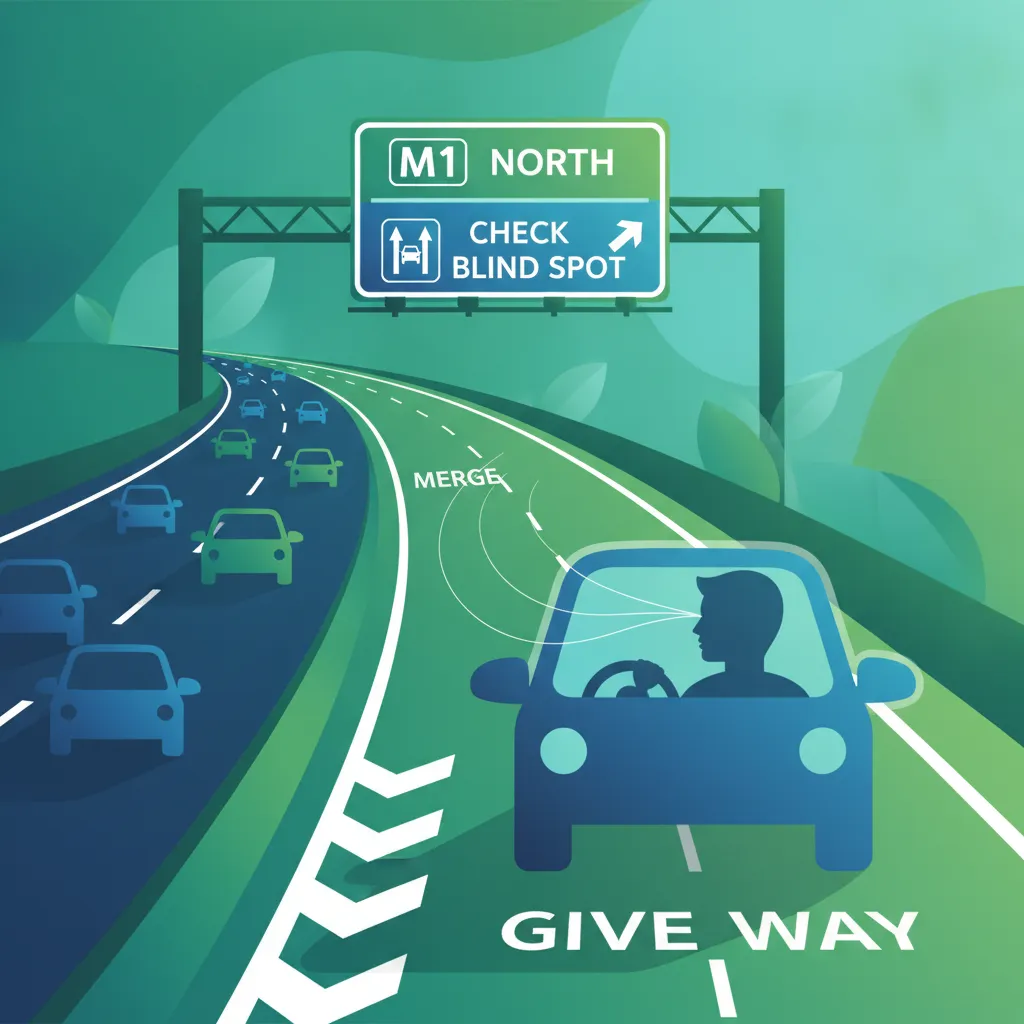
Merging onto dual carriageways or motorways requires matching your speed to the main traffic flow while on the acceleration slip road. This lesson teaches you how to select a suitable gap, signal your merge early, and check your right-side blind spot before joining the main carriageway. You will understand your legal duty to yield to existing traffic, and how to avoid stopping on the slip road unless absolutely necessary.
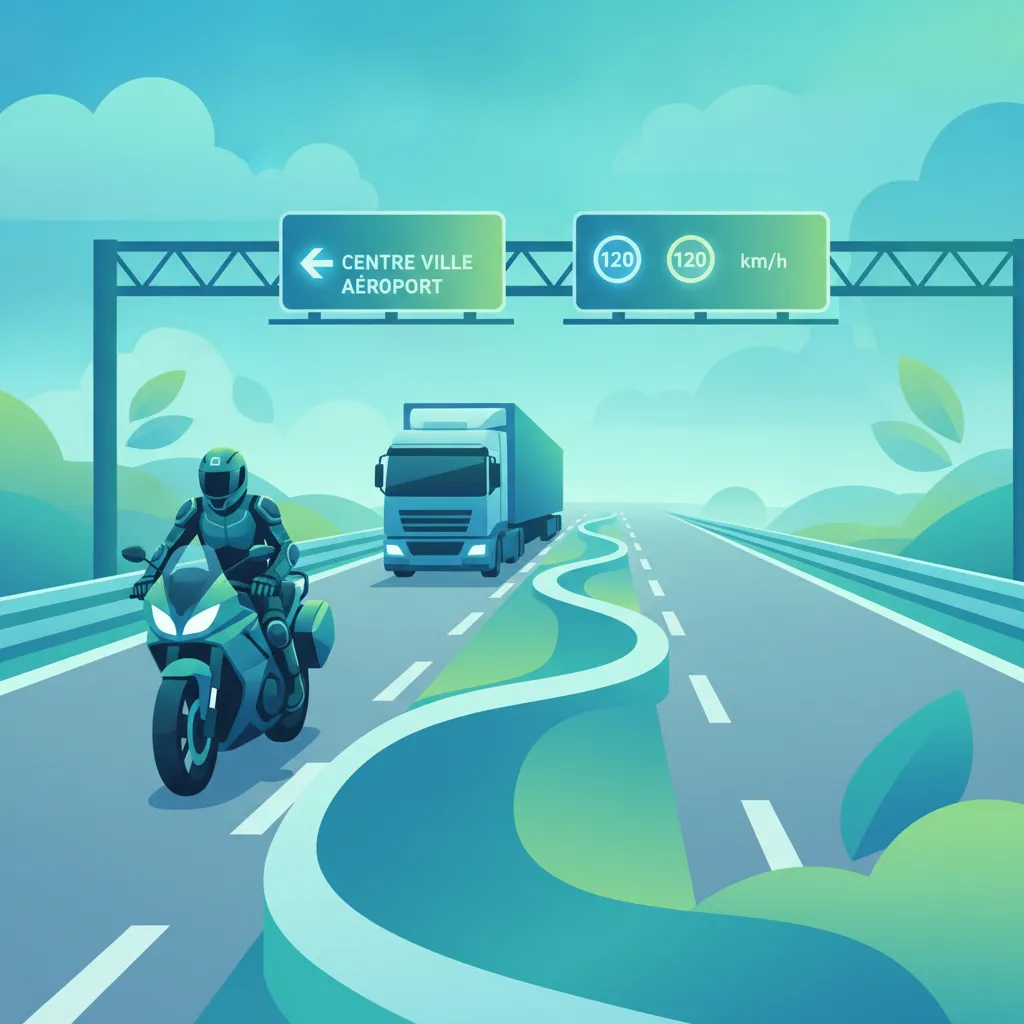
This lesson outlines the rules and procedures for riding safely on dual carriageways and motorways in Ireland. It covers merging from slip roads, maintaining lane discipline, and executing high-speed overtaking manoeuvres in accordance with RSA standards. Motorcyclists will learn to anticipate turbulence from large commercial trucks and recognize the safety signs used on high-speed routes.
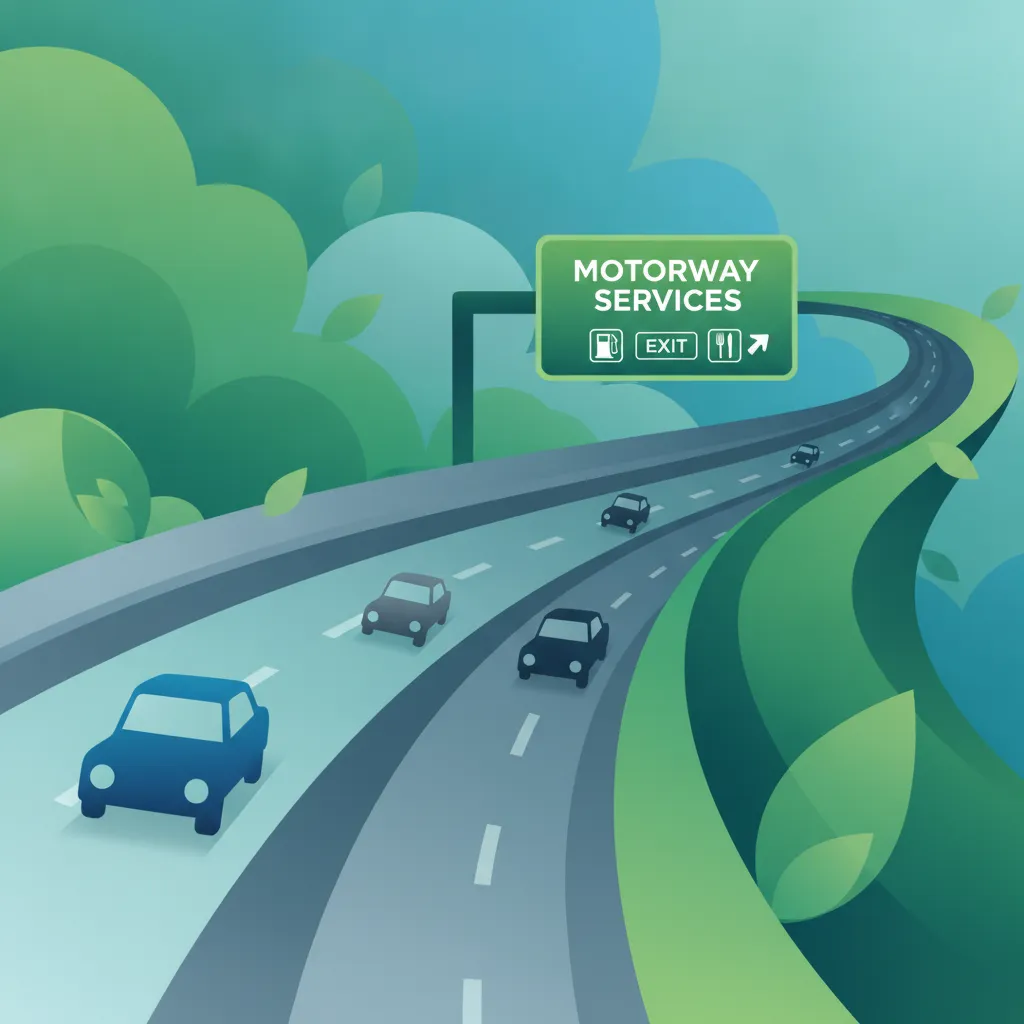
Motorways are designed for safe, high-speed travel, but require strict adherence to lane discipline and specific regulations. This lesson explains that the left lane is for normal driving, while middle and right lanes are strictly for overtaking slower traffic. You will learn how to identify motorway exits, use the hard shoulder during absolute emergencies, and understand the legal restrictions placed on learner permit holders.
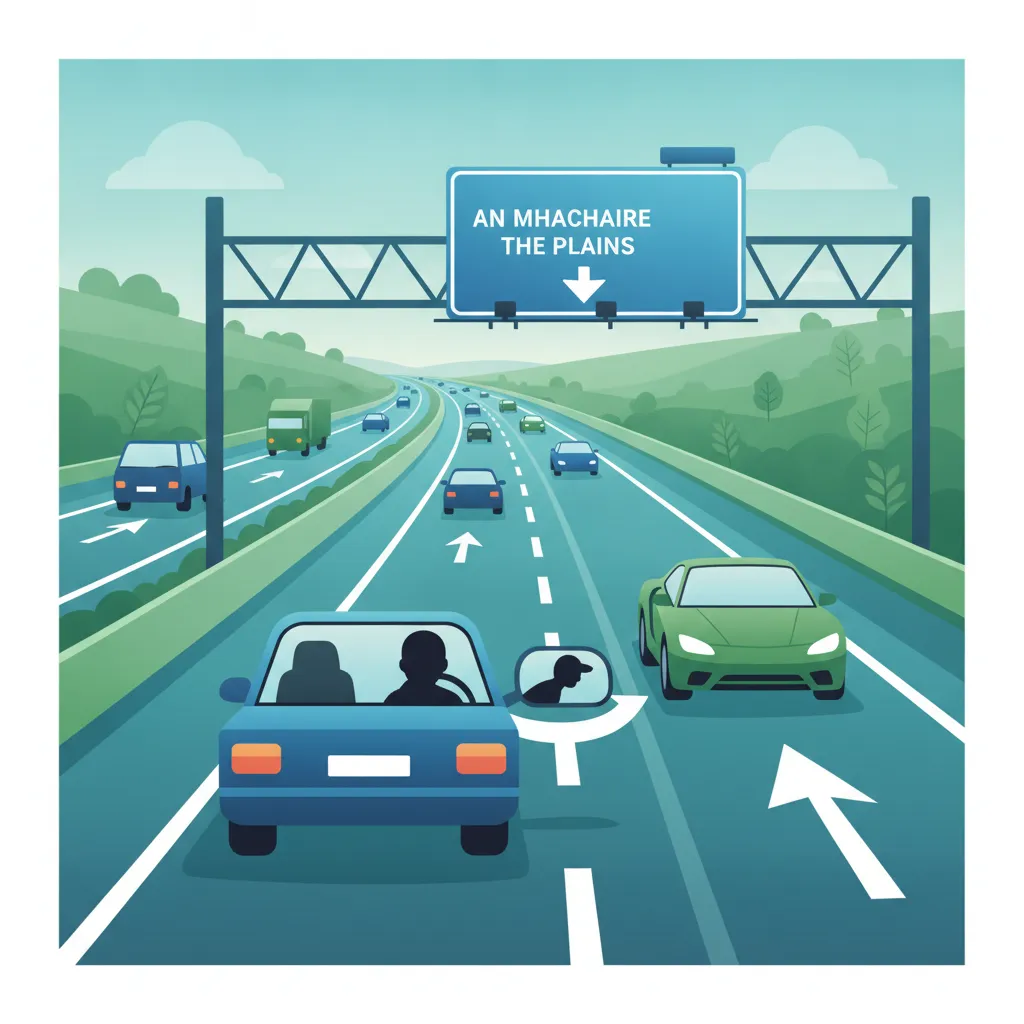
Merging a long, heavy passenger vehicle onto high-speed motorways requires matching the traffic speed within the limited length of slip lanes. This lesson covers signal timing, safe lane-merging gaps, and maintaining control during overtaking maneuvers on national routes. Drivers will learn to prioritize passenger comfort and vehicle stability, preventing sudden weight shifts during lane entries.

Irish driving theory demands that drivers keep to the left-hand side of the road unless overtaking or turning right. This lesson explains how to maintain consistent lane discipline on multi-lane roads, how to perform safe lane changes, and the dangers of drifting. You will learn the safety sequence of checking mirrors, checking blind spots, signalling, and smoothly executing a lane change without disrupting trailing traffic.
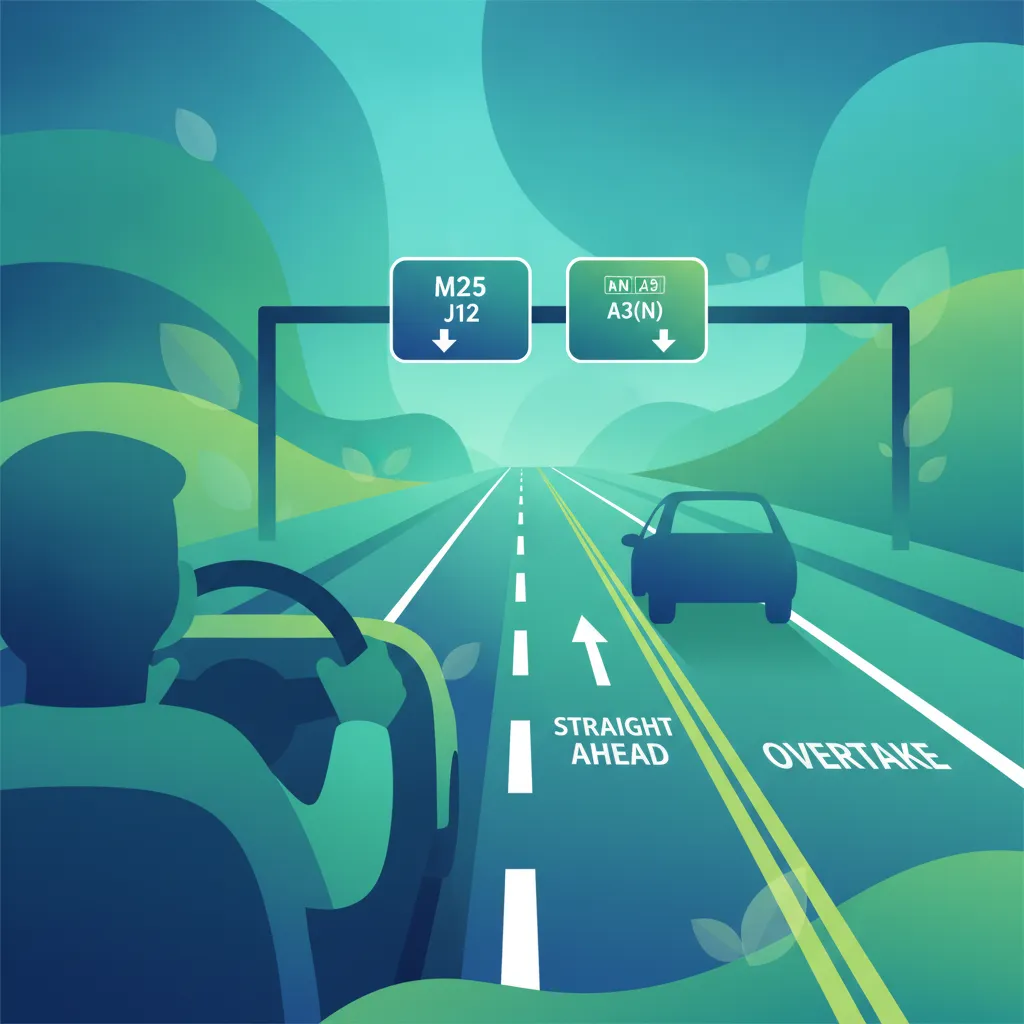
This lesson describes the legal regulations and driving conventions for operating heavy commercial vehicles on motorways and high-speed dual carriageways. It explains specific Irish motorway rules, including bans on heavy goods vehicles occupying the outer overtaking lanes. Drivers will learn to manage high-speed slip-road merging, maintain safe spacing buffers, and anticipate long-range changes in overall traffic flow.
Large passenger vehicles must maintain consistent lane positioning to prevent side-swipe incidents and sustain smooth urban traffic patterns. This lesson covers standard lane selection rules, safe overtaking procedures, and how to use designated public transit corridors correctly. Drivers will learn the importance of checking mirrors continuously and planning lane changes well in advance.

Motorway transport requires consistent forward planning, strict speed restriction compliance, and clear mirror checks before exiting lanes. This lesson details the rules of joining and leaving motorways, navigating toll plazas safely, and managing breakdowns on the hard shoulder. Drivers will learn to balance high-speed travel with passenger stability, ensuring a comfortable, secure ride.
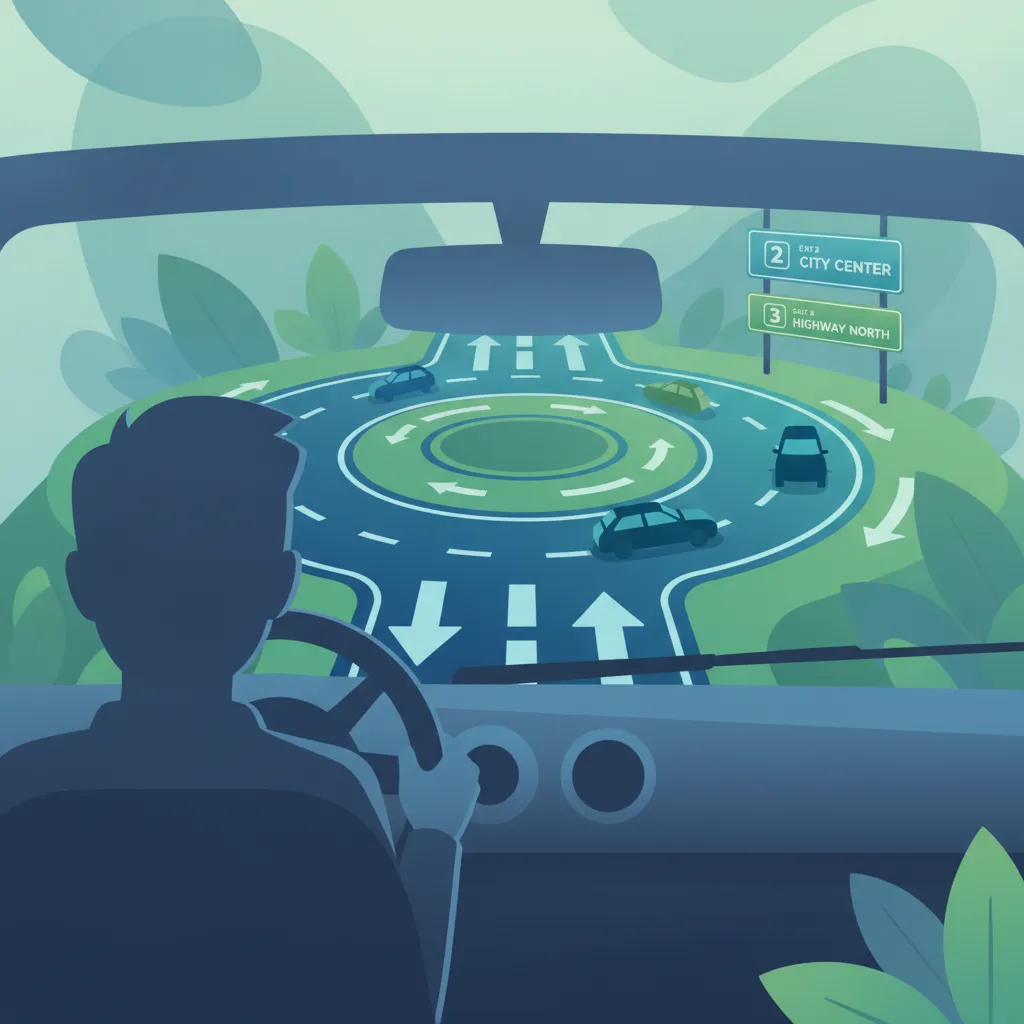
Navigating multi-lane roundabouts requires precise lane selection, continuous scanning, and timely signaling. This lesson teaches you the 'clock rule' for determining which lane to enter, how to yield to traffic already on the roundabout from your right, and when to activate your left indicator to exit. Mastering these procedures minimizes lane-drift accidents and ensures a seamless flow of traffic on busy roundabouts.

This lesson explains the sequential steps for executing safe overtaking manoeuvres on single and dual-carriageway roads in Ireland. It focuses on assessing speed differentials, establishing clear lines of sight, and evaluating oncoming traffic before committing. Riders will learn the correct signaling routine, safe abort procedures, and how to return smoothly to their lane without cutting in.
Learn the essential distance requirements and safety protocols for passing cyclists, pedestrians, and horse riders on Irish roads. This lesson details the legal lateral clearance distances and defensive driving techniques needed to protect vulnerable road users in various traffic conditions.

This lesson covers the rules governing zebra, pelican, and toucan pedestrian crossings, focusing on driver obligations and rider safety. It details how to interact safely with cyclists, personal mobility devices, and pedestrians in busy urban sectors. Motorcyclists will learn to scan pavement edges, yield right-of-way, and maintain safe overtaking distances when passing slower road users.
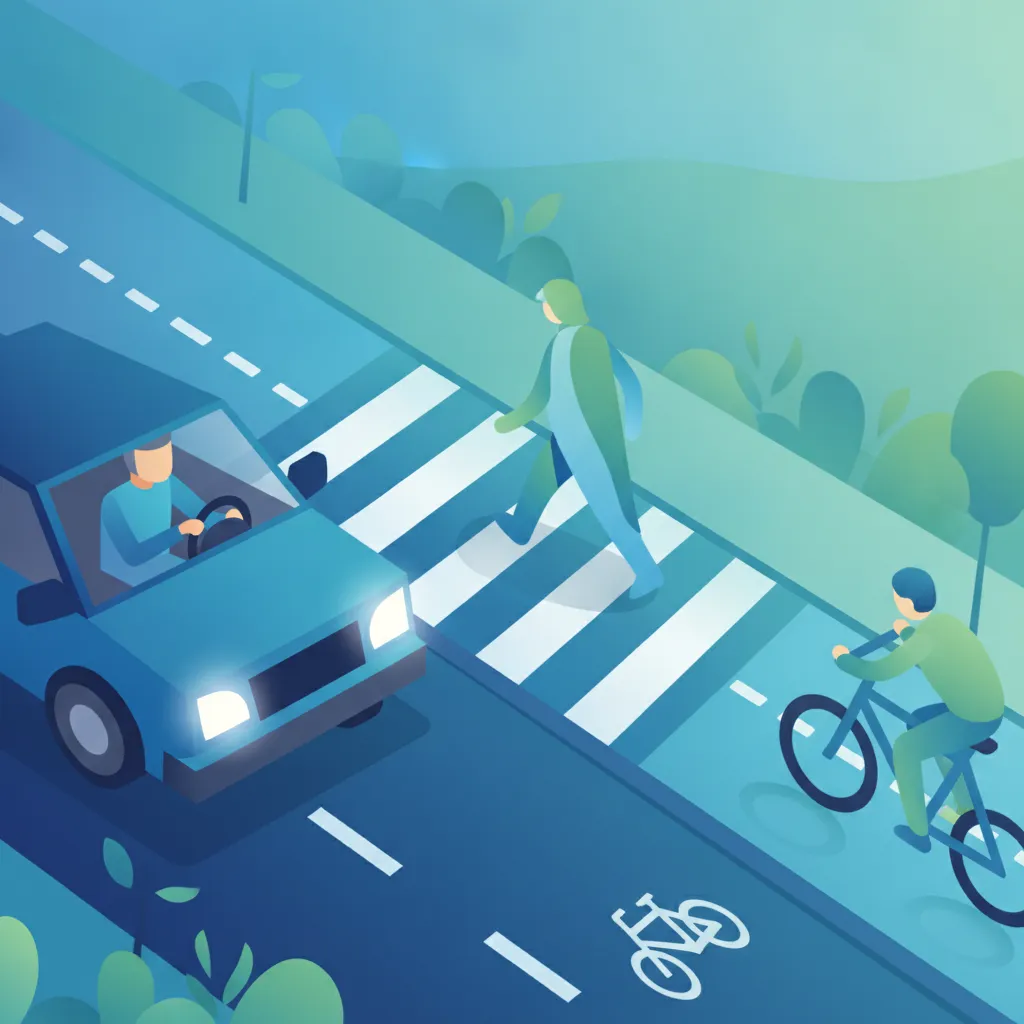
This lesson details how to approach zebra, pelican, and other pedestrian crossings safely, ensuring complete priority is given to walkers. It also covers the safe guidelines for overtaking cyclists and sharing lanes in busy urban centers without causing danger. Respecting these interactions is critical for maintaining overall safety and compliance with Irish road law.
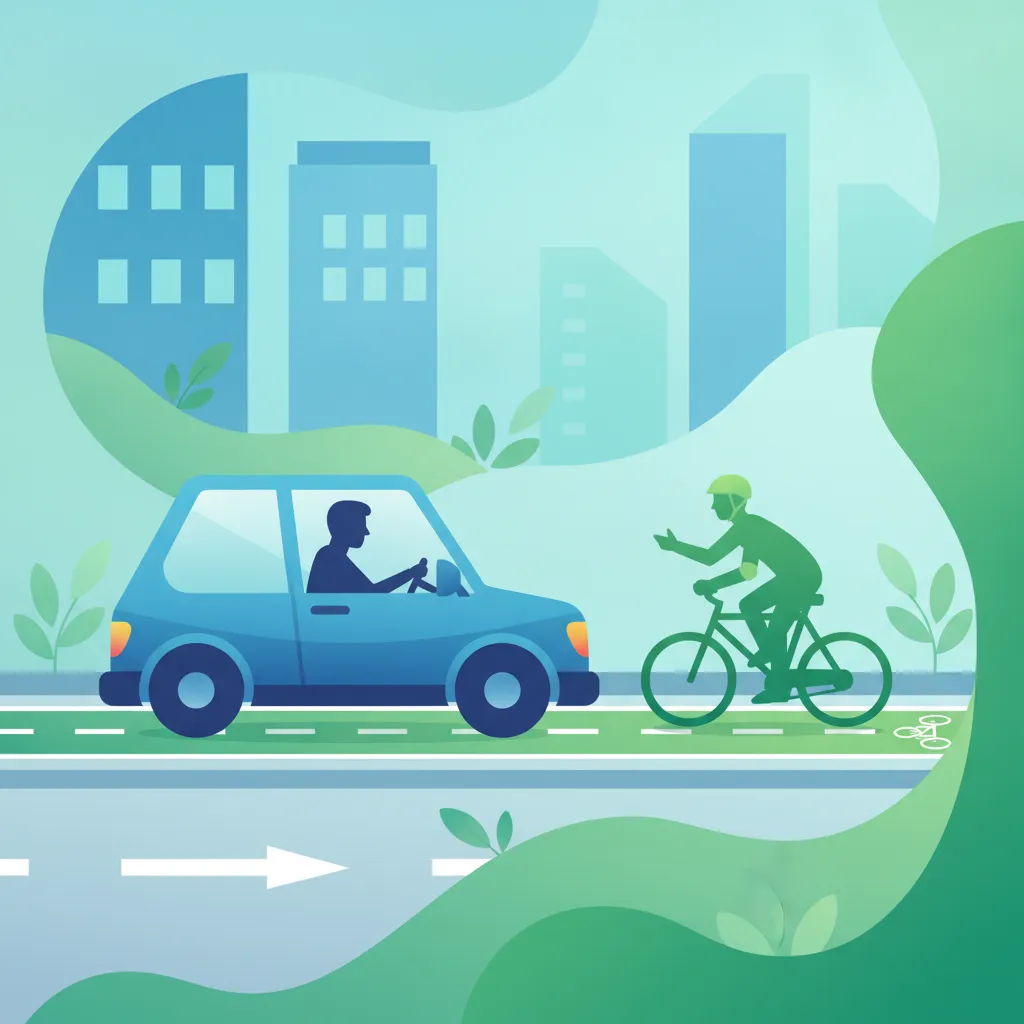
Cyclists share public roads under unique safety constraints, requiring drivers to keep wide clearances and anticipate sudden steering changes. This lesson covers the minimum safe passing distance of 1 to 1.5 metres, rules for driving near cycle tracks, and the danger of the 'dooring' hazard when parking. You will also learn to check your left-side blind spot before turning, preventing dangerous side-swipe collisions.

This lesson focuses on managing the interactions between commercial goods vehicles and non-motorized or lightweight commuters. It outlines defensive driving techniques to utilize when overtaking cyclists, navigating pedestrian crossings, or negotiating shared junctions in Irish cities. Drivers will examine common cyclist behaviors at roundabouts and understand how to maintain massive safety margins to protect lives.

Motorcycles and bicycles are often hidden from view in the large blind spots of passenger buses and coaches during turns. This lesson covers safe lateral clearances when overtaking cyclists, recognizing advanced stop lines, and sharing narrow lanes. Drivers will understand how to signal clearly, giving riders enough room to navigate safely near busy public transit corridors.

Children, the elderly, and disabled individuals often require extra time and understanding when navigating road networks. This lesson outlines special safety hazards, such as children unexpectedly running into school zones, or senior citizens needing longer times to cross wide junctions. You will learn how to recognise visually impaired pedestrians by their white canes or guide dogs, and the absolute requirement to drive slowly and patiently.
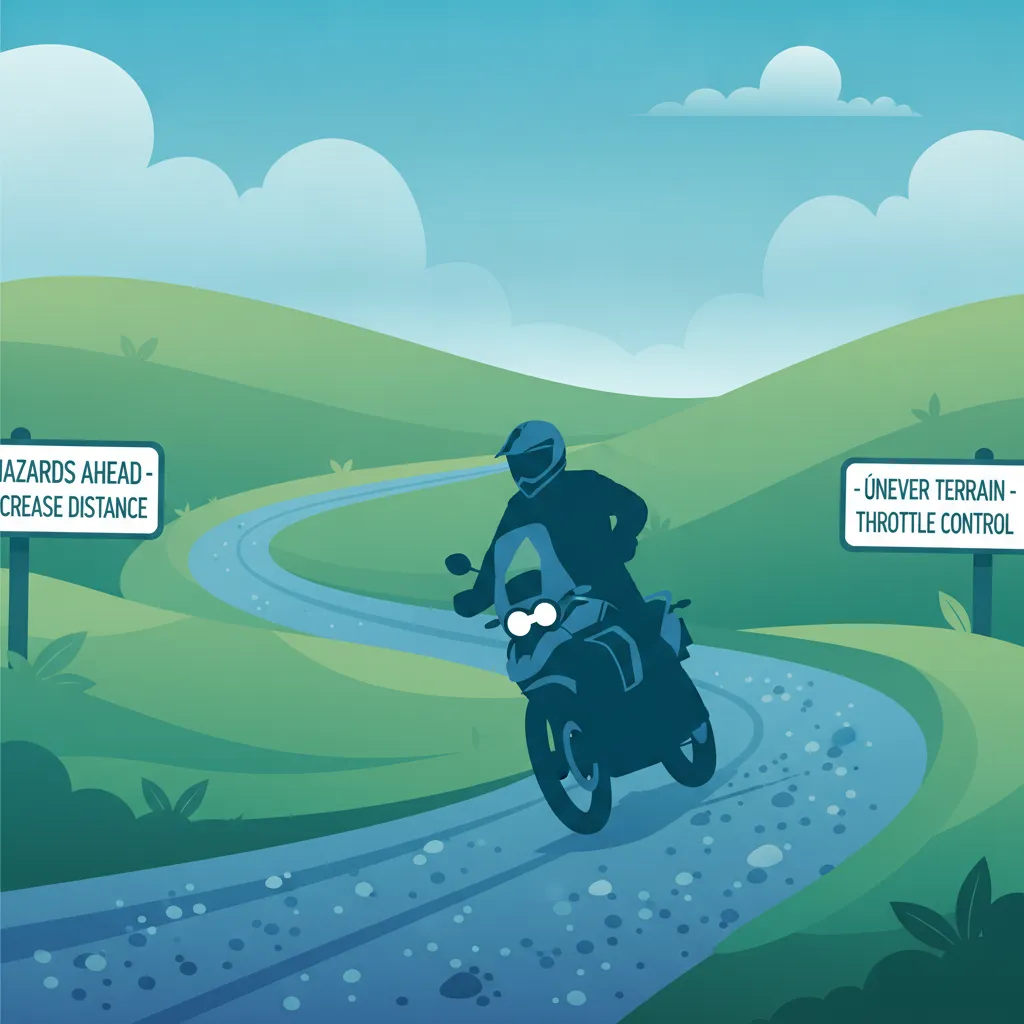
This lesson focuses on riding techniques suited for gravel, loose surfaces, and rural roads. Learners will understand how to maintain stability, adjust braking and cornering approaches, and anticipate hazards such as potholes and farm vehicles, following RSA guidance for safe riding in the Irish countryside.

Bus stops often intersect with designated bicycle lanes and busy walking pathways, creating high-risk conflict areas for drivers. This lesson trains drivers to check blind spots for oncoming cyclists before pulling into or exiting public stop bays. It emphasizes yielding right-of-way to passengers crossing the road, preventing collision risks in active urban transport hubs.

This lesson analyzes traffic flow characteristics in dense municipal areas and teaches safe riding methods for congested gridlock situations. It covers the maintenance of adequate safety cushions, scanning for opening car doors, and monitoring pedestrians stepping from between parked cars. Riders will learn to manage frequent stopping, constant clutch wear, and the stress of urban commuting.
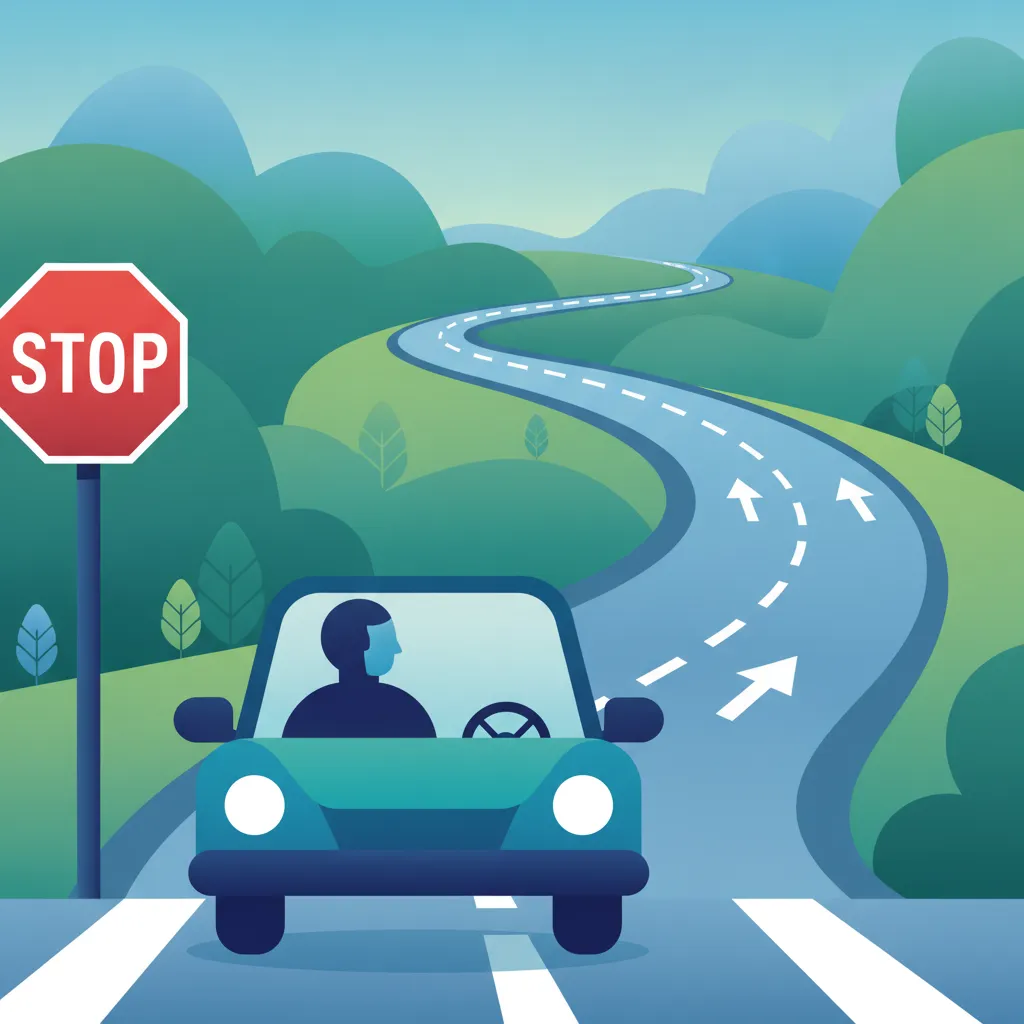
This lesson details the sequential steps required to approach and exit junctions safely under the Irish driving rules. It teaches riders how to select the correct lane, utilize mirrors, apply early signals, and reduce speed appropriately. Effective observation strategies are highlighted to help riders identify crossing pedestrians or approaching side traffic.
Find clear answers to common questions learners have about Overtaking Procedures and Legal Overtaking Zones. Learn how the lesson is structured, which driving theory objectives it supports, and how it fits into the overall learning path of units and curriculum progression in Ireland. These explanations help you understand key concepts, lesson flow, and exam focused study goals.
No, you must never cross or straddle a continuous white line to overtake unless you need to pass a pedal cyclist, horse rider, or a stationary vehicle, provided it is safe to do so.
The most common error is failing to check blind spots or misjudging the speed and distance of oncoming traffic, which can lead to dangerous head-on collisions.
Yes, always signal your intention to overtake well in advance. This communicates your plans to both the vehicle you are passing and any other road users who might be approaching from behind.
No, you should never increase your speed when someone is attempting to overtake you. Maintain a steady speed or slow down slightly to allow the other driver to pass safely and return to the lane.
Use the practice question search tool to pinpoint specific topics, road signs, or rules you need to master for your official Driver Theory Test. Refine your study strategy and ensure comprehensive preparation for all aspects of the Irish driving exam. Start your focused revision now and build confidence for your learner permit test.