
This lesson breaks down the legal consequences of traffic violations for motorcycle riders in Turkey, covering everything from administrative fines to license revocation. Understanding these regulations is essential for your safety and success in the MTSK e-sınav theory test. It builds on your knowledge of rider obligations to help you maintain a responsible, law-abiding riding style.

Lesson content overview
To operate a motorcycle safely and legally under the Turkish Motorcycle Driving Licence framework, riders must thoroughly understand the legal consequences of traffic violations. The roads of Turkey are governed by a structured legal system designed to enforce safety, deter reckless riding, and hold violators accountable. For aspiring riders of A1, A2, and A category vehicles, knowledge of these laws is just as critical as physical riding skills.
This lesson provides an exhaustive examination of the legal repercussions faced by motorcyclists when they violate traffic regulations. It covers the full spectrum of sanctions, from monetary fines and penalty points to licence suspension and permanent revocation, as well as the administrative and judicial processes that govern them.
The legal framework governing traffic violations on Turkish roads is primarily established under the Turkish Highway Traffic Act (Karayolları Trafik Kanunu, Law No. 2918). This comprehensive legislation defines the rules of the road, the duties of drivers, and the penalties for non-compliance. The primary objective of this legal framework is to protect public safety and reduce road traffic casualties by deterring unsafe behaviours.
When a motorcyclist violates a traffic rule, the legal system categorises the transgression into one of two main types:
The primary piece of legislation governing all road traffic, vehicle registration, driver licensing, and traffic violations within the Republic of Turkey.
The Turkish traffic enforcement system employs a Graduated Penalty System. This is a tiered regulatory approach where the severity and frequency of the offence dictate the level of punishment.
The primary purpose of this system is proportionality: minor mistakes are met with corrective financial warnings, while persistent non-compliance or highly dangerous actions trigger escalating sanctions.
For example, a rider who commits a single minor infraction will face a small administrative fine. However, if that same rider continues to violate traffic rules, the cumulative nature of the graduated system will trigger harsher penalties, such as mandatory rider safety training, multi-month licence suspensions, or complete revocation of the licence.
Administrative fines are the most common tool used by law enforcement to penalise traffic violations. These monetary penalties are strictly regulated by the Traffic Act, which defines the minimum and maximum fine amounts for each specific infraction.
When an officer of the Traffic Police (Trafik Polisi) or Gendarmerie (Jandarma Trafik) issues an administrative fine, the rider is subject to specific payment rules:
A common misunderstanding among new riders is believing that paying a fine immediately erases the violation from their official record. While the financial debt is cleared, the violation remains on your driver record and is accompanied by penalty points.
In addition to monetary fines, the Turkish traffic law system utilizes a cumulative numerical tracking system known as Penalty Points (Ceza Puanı). Each type of traffic violation carries a specific point value based on its severity:
The Point Accumulation Rule: Under the legal framework established for this curriculum, accumulating a total of 12 penalty points within a rolling two-year period will trigger an automatic administrative suspension of your driving licence.
These points are not cleared when you pay the corresponding monetary fine. They remain active on your driving record, serving as a quantifiable metric of your riding behaviour over time.
Licence suspension is the temporary withdrawal of your legal right to operate a motor vehicle on public roads. It is an administrative mechanism designed to immediately remove high-risk or non-compliant operators from traffic.
Surrender of the Physical Licence: The rider must physically hand over their driving licence to the issuing authority or the traffic police upon receiving the suspension order.
The Non-Riding Period: For the designated duration (typically 30 to 90 days for point accumulation, and up to 2 years for serious offences like first-time DUI), the individual is strictly prohibited from operating any class of motor vehicle.
Re-Qualifying and Reclaimed Rights: Once the suspension period expires, the rider does not automatically get their licence back in the mail. They must officially apply to reclaim it, which may require paying outstanding fees, passing a psychological evaluation (psychotechnical test), or completing a safe driving seminar.
Riding a motorcycle while your licence is actively suspended is a severe criminal offense that leads directly to vehicle impoundment, massive court fines, and potential jail time.
Licence revocation is the most severe administrative action possible, representing the permanent cancellation of your driving privileges. Unlike a suspension, which has a pre-determined end date, a revoked licence is completely destroyed and invalidated.
Revocation occurs under extreme circumstances, such as:
If your licence is revoked, you are legally classified as an unlicensed driver. To ride a motorcycle on public roads again, you must wait out a legally mandated ban period (which can last several years), re-apply for a learner's permit, complete the entire motorcycle driving school curriculum, and pass both the theoretical and practical Turkish driving licence examinations once more.
While administrative violations are settled through fines and points, certain actions are classified as Criminal Offences under the Turkish Penal Code (Türk Ceza Kanunu). These violations represent a direct threat to human life and are prosecuted in criminal courts.
Operating a motorcycle with a Blood Alcohol Concentration (BAC) above the legal limit is a major criminal offence.
If a motorcyclist operates their vehicle with gross negligence—such as extreme speeding, weaving dangerously through traffic (filtering at high speed), or ignoring red lights—and causes an accident resulting in injury or death, they face immediate criminal prosecution.
The public prosecutor (Savcılık) will initiate a criminal case. If found guilty of involuntary manslaughter or negligent injury, the rider faces substantial prison terms, and their driving licence will be permanently revoked.
To contextualise these legal frameworks, let us look at the most common traffic violations committed by motorcyclists and their exact legal ramifications.
The severity of a legal penalty is not always fixed; it can escalate based on the environmental context and the specific conditions under which the violation occurred.
The Turkish legal system provides a robust framework for due process, ensuring that riders can challenge administrative traffic penalties if they believe the ticket was issued in error or unjustly.
Observe the Statutory Timeframe: An appeal must be officially filed within 15 days of receiving the traffic penalty notification (either handed to you by an officer or delivered to your registered address).
Submit to the Correct Court: The appeal must be submitted to the local Peace Judgeship of Criminal Matters (Sulh Ceza Hakimliği) in the district where the violation allegedly took place.
Compile Physical Evidence: The rider must present concrete proof to support their claim. This can include dashboard camera footage, GPS speed logs, witness statements, or photographs of obscured or missing traffic signs.
Await the Judicial Review: The judge will review the petition and the evidence submitted by both the rider and the traffic enforcement agency. If the judge rules in favor of the rider, the administrative fine and any associated penalty points are legally canceled.
It is important to note that paying a traffic fine within the 15-day discount window does not waive your right to appeal. If your appeal is ultimately successful, the paid amount will be fully refunded by the tax office.
Traffic law is maintained through a clear division of labor between field enforcement officers and judicial authorities:
The strict legal consequences of traffic violations are not arbitrary; they are deeply rooted in behavioral science and risk management:
To further build your understanding of the Turkish traffic legal system and prepare for your licensing exam, explore the following resources and practice materials:
Explore all units and lessons included in this driving theory course.
Lesson content overview
Explore all units and lessons included in this driving theory course.
Explore search topics learners often look for when studying Legal Consequences of Traffic Violations. These topics reflect common questions about road rules, driving situations, safety guidance, and lesson level theory preparation for learners in Turkey.
Browse additional driving theory lessons that cover connected traffic rules, road signs, and common driving situations related to this topic. Improve your understanding of how different rules interact across everyday traffic scenarios.
Learn how to proactively manage risks on Turkish roads through defensive riding techniques. This guide explains how to identify potential hazards, maintain safe following distances, and respond to unpredictable driver behavior to prevent traffic incidents and avoid legal complications.

In this lesson, learners will discover the principles of defensive riding, focusing on hazard anticipation, maintaining safe distances, and practicing proactive avoidance techniques. It emphasizes developing a vigilant riding posture, constantly scanning the environment, and preparing to react to potential dangers from other road users, road conditions, or unexpected traffic events.

Defensive riding is the practice of anticipating potential road conflicts and acting early to prevent accidents before they occur. This lesson teaches you how to systematically scan the road ahead for changing conditions, keep an adequate safety cushion around your moped, and pre-plan exit routes in tight spots. You will learn to assume you are invisible to other drivers and adapt your speed and road position proactively to protect yourself against sudden maneuvers.

In this lesson, learners will explore the various forms of risk behaviour that can lead to accidents, such as aggressive riding, speeding, riding under the influence of alcohol or drugs, driving while fatigued, and being distracted. The lesson emphasizes the importance of self-awareness, recognizing personal limits, and adopting a safety-first mindset to mitigate these risks and make safe decisions.

In this lesson, learners will gain comprehensive knowledge of safe overtaking maneuvers during riding, emphasizing the importance of assessing traffic flow, checking blind spots, and signaling intentions. The content covers overtaking strategies on both straight roads and curves, considering visibility and speed differentials. By mastering these techniques, motorcyclists can execute overtaking safely.

Proper road positioning is your primary shield against being squeezed, sideswiped, or overlooked by larger motor vehicles in daily traffic. This lesson explains how to ride in the center or slightly off-center of your lane to prevent unsafe overtaking within the same lane. You will study how to identify the massive blind spots of buses and trucks, maintain appropriate following distances, and execute overtaking maneuvers with maximum safety margin and clear signal warning.
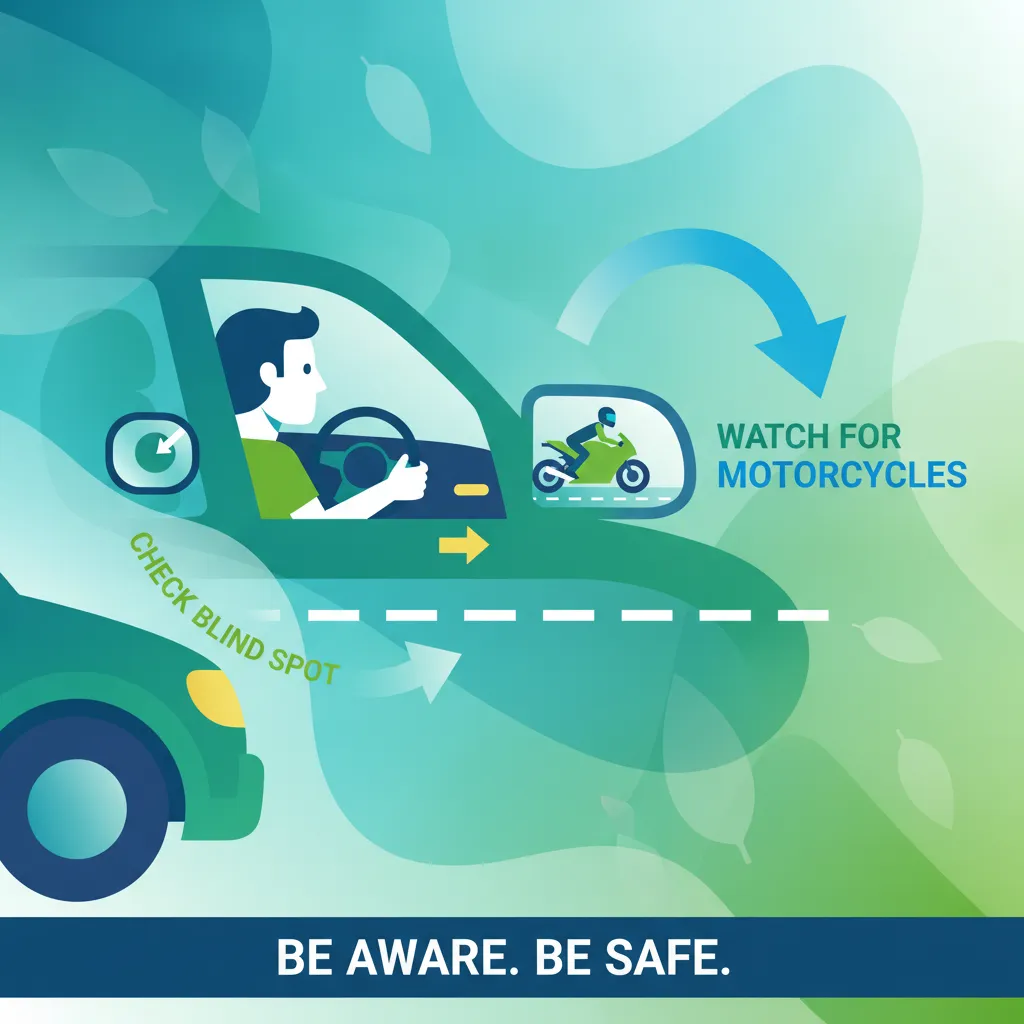
Learners will gain insight into the unique challenges posed by motorcycles and scooters sharing the road with passenger vehicles. The lesson highlights the importance of checking blind spots, maintaining safe following distances, and being aware of the faster acceleration and maneuverability of two-wheeled vehicles. Strategies for anticipating their movements and preventing collisions are discussed.

In this lesson, learners will explore the core obligations of a motorcyclist, emphasizing the necessity of adhering to traffic laws and maintaining respectful conduct toward all road participants. The discussion will focus on the principles of defensive riding, where anticipation of hazards and courteous behavior are paramount. Ethical decision-making will be highlighted as a key factor in preventing accidents and fostering a positive traffic environment.

This lesson highlights the critical nature of blind spots for motorcyclists, teaching strategies to recognize and mitigate these hidden areas. Learners will practice techniques for checking blind spots before lane changes and overtaking, ensuring they are fully aware of surrounding traffic. The lesson emphasizes how proper mirroring and head checks can significantly reduce the risk of collisions.

Riding an exposed lightweight vehicle in busy Turkish cities requires exceptional personal conduct, patience, and absolute control over your emotional reactions. This lesson discusses the psychological aspects of riding, teaching you how to avoid aggressive behaviors and stay calm under stressful traffic situations. It covers proper non-verbal communication, polite road sharing practices, and maintaining safe buffers from other motorists to establish a safe, predictable presence on any public street.

This lesson delves into the specific challenges and procedures associated with navigating roundabouts on a motorcycle. It outlines the importance of approaching at a safe speed, selecting the correct lane, and yielding to vehicles already within the roundabout. The content also covers the proper use of signals when exiting and emphasizes the need for heightened awareness of blind spots, especially when larger vehicles are present.
Understand the legal framework governing traffic offenses in Turkey, including the distinction between administrative fines and criminal prosecution. This explanation details the graduated penalty system, how demerit points impact license status, and the legal requirements for operating motor vehicles under the Highway Traffic Act.

This lesson outlines the spectrum of penalties and legal consequences that goods vehicle drivers may face for violating traffic regulations. It details the types of infractions, ranging from minor violations to serious offenses, and explains the corresponding fines, points, and license suspensions. Learners will gain an understanding of the enforcement mechanisms and how repeat offenses can exacerbate penalties.

This lesson covers the severe administrative, financial, and criminal penalties associated with serious traffic violations in Turkey. It outlines the legal processes for driving licence suspension, vehicle impoundment, and mandatory driver retraining programs. Motorists will understand the long-term impact of a criminal driving record.
In this lesson, learners will be introduced to the legal framework governing traffic penalties in Turkey, including the various fines, licence suspensions, and criminal charges that may result from traffic violations. It will cover the points system, the severity of penalties for specific offences such as speeding and reckless driving, and the legal processes involved in enforcement.
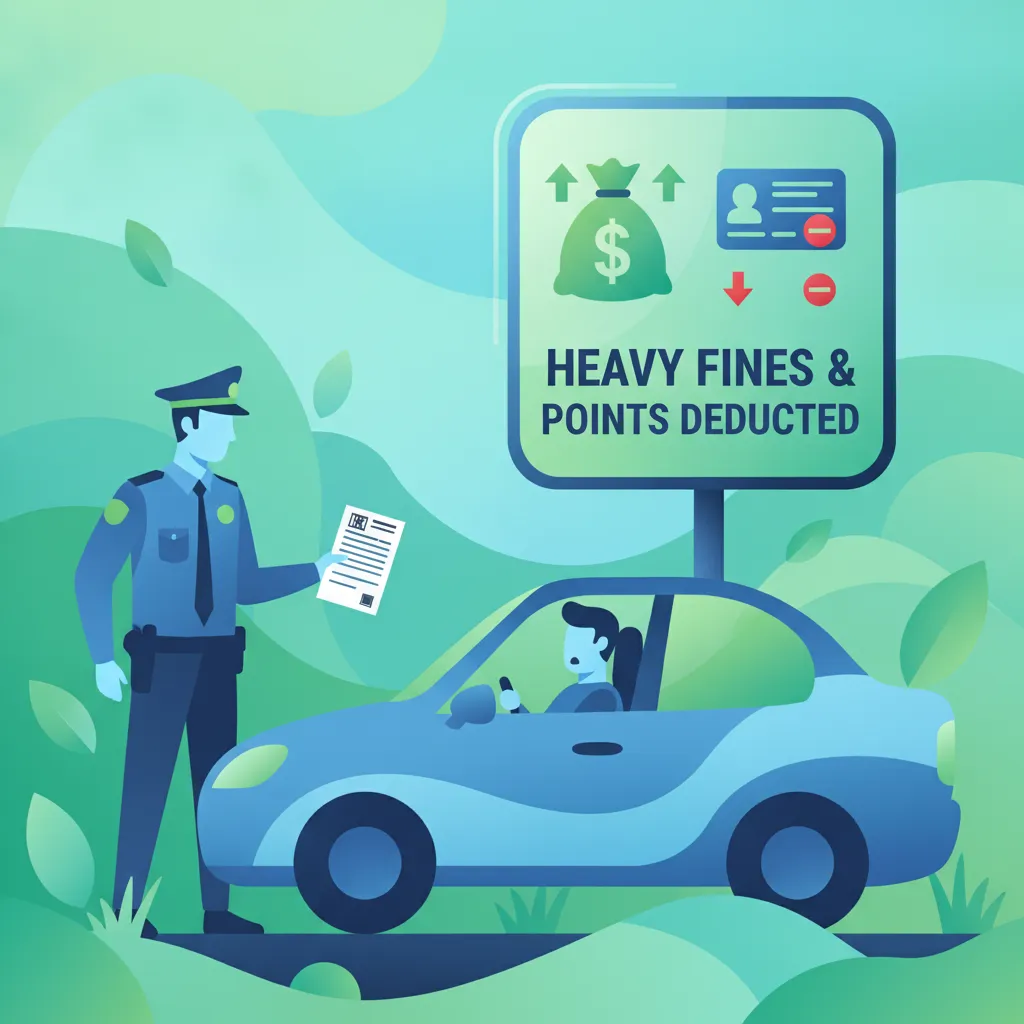
Violating Turkish traffic regulations results in serious legal and financial consequences designed to hold drivers accountable and ensure public safety. This lesson outlines the specific penalty points assigned to common infractions, the fine structure for speeding and illegal parking, and the conditions under which your moped or driving licence can be seized. Understanding these administrative penalties reinforces the importance of maintaining strict, daily compliance with national traffic laws.
This lesson provides an overview of the penalties and legal consequences associated with traffic violations and non-compliance in goods vehicle operation. Learners will learn about the fines, demerit points, and potential license suspensions that can result from various infractions. The lesson emphasizes the importance of adhering to regulations and the impact of repeated offenses on drivers.

This lesson explains the mechanics of the Turkish traffic demerit points system and the corresponding fine structures for legal violations. It details how specific offenses accumulate points and the exact thresholds that trigger licence suspension or permanent revocation. Drivers will learn the administrative processes involved in appealing penalties.
This lesson outlines the legal framework governing passenger vehicle operation, highlighting the penalties for various offences, such as speeding, failure to adhere to stop procedures, or neglecting passenger safety protocols. Learners will understand the importance of compliance to avoid fines, licence suspension, or other legal actions, and the role of regulatory bodies in enforcement.
In this lesson, participants will learn about the specific offences and penalties that apply to passenger vehicle drivers, focusing on violations that directly jeopardize passenger safety and public security. The content outlines the legal repercussions of non-compliance, including fines, licence suspensions, and other enforcement actions. Understanding these penalties reinforces the critical nature of adhering to traffic laws and safety protocols in professional passenger transport.
This lesson details the statutory duties imposed on motor vehicle drivers by Turkish traffic legislation to maintain order on public roads. It emphasizes mandatory seat belt usage, mobile phone bans, vehicle inspection rules, and general compliance with police directions. Understanding these duties ensures drivers avoid heavy penalties and maintain road safety.

This lesson provides an in-depth overview of the Turkish legal framework that governs professional goods vehicle operation. It explains the specific licence categories detailing the eligibility requirements, vehicle classifications, and procedural steps for obtaining each licence. Learners will become familiar with the fundamental statutes, including the Karayollari Trafik Kanunu, that form the basis of all regulatory activities.
Find clear answers to common questions learners have about Legal Consequences of Traffic Violations. Learn how the lesson is structured, which driving theory objectives it supports, and how it fits into the overall learning path of units and curriculum progression in Turkey. These explanations help you understand key concepts, lesson flow, and exam focused study goals.
In the Turkish system, traffic violations can lead to the accumulation of penalty points. If you exceed a certain limit within a specified timeframe, your license may be suspended, and you may be required to undergo further training or psychological evaluations.
While many traffic laws apply to all road users, certain violations specific to motorcycle operation, such as failing to wear a helmet or improper lane filtering, carry specific fines and penalties defined by the Turkish Highway Traffic Law.
Yes, serious traffic violations, such as driving under the influence or repeated dangerous driving, can lead to the permanent revocation of your driving license, preventing you from legally operating a vehicle in Turkey.
Traffic fines are recorded by law enforcement and often sent to the address registered in the system or managed through the e-Devlet portal. It is the rider's responsibility to keep their contact information updated to receive these notifications.
Use our comprehensive practice search to find exactly the Turkish driving theory questions you need to master. Whether reviewing specific road signs, traffic rules, or first aid scenarios, select your perfect practice set and boost your confidence for the official ehliyet sınavı.