
This lesson explores the specific safety challenges and legal requirements for riding motorcycles on high-speed roads and motorways in Turkey. Building on your knowledge of traffic signs and urban riding, you will learn how to maintain stability at speed and manage risk effectively. This is a critical module for any rider aiming to pass their A1, A2, or A category motorcycle theory exam.
Lesson content overview
High-speed roads and motorways (otoyollar) represent the fastest and most efficient corridors of the Turkish transport network. However, for motorcyclists preparing for their A1, A2, or A category Turkish riding license, these environments introduce unique physical, legal, and safety challenges. Driving at sustained high speeds significantly reduces your reaction margins, amplifies environmental hazards like crosswinds, and demands absolute precision in vehicle control.
This lesson covers the critical mechanics and rules of the road for navigating fast highways and motorways safely, aligning with the official regulations set by the Turkish Highway Code (Karayolları Trafik Kanunu).
In Turkey, fast-moving traffic is primarily routed through two types of high-speed roads:
Speed limits on high-speed roads are strictly enforced in Turkey. They differ depending on the category of motorcycle license you hold (A1, A2, or A) and the classification of the road.
Under normal, dry road conditions, the standard limits for A2 and A category motorcycles on motorways are generally capped between 100 km/h and 120 km/h, depending on the specific highway design and administrative updates.
Transitioning from a slower state road or urban street onto a high-speed motorway requires careful coordination. This transition is managed via dedicated acceleration and deceleration lanes.
The acceleration lane allows you to build speed to match the flow of traffic already on the motorway before merging. Entering a motorway at an insufficient speed is a severe hazard, forcing faster-moving vehicles to brake abruptly or swerve.
Accelerate Proactively: As you round the entry slip road and straighten up in the acceleration lane, open the throttle smoothly to build speed. Aim to match the speed of the vehicles in the right-hand lane of the motorway.
Check Your Mirrors and Blind Spots: Observe the flow of motorway traffic in your mirrors. Perform a quick, decisive shoulder check over your left shoulder to inspect your blind spot.
Signal Early: Activate your left turn signal to communicate your intention to merge to the drivers already on the main highway.
Locate a Safe Gap: Identify a clear gap in the right-hand lane. Adjust your speed slightly (either accelerating or easing off) to align perfectly with that gap.
Merge and Cancel: Move smoothly into the right lane without sharp steering inputs. Once established, cancel your turn signal immediately.
Exiting a high-speed road requires early planning. Late, abrupt braking before an exit lane increases your risk of being rear-ended.
Position Early: Ensure you are riding in the right-hand lane well before your desired exit appears (at least 1 kilometre in advance).
Signal Early: Activate your right turn signal as you approach the 300-metre exit marker to alert following vehicles.
Maintain Speed on the Main Highway: Do not brake or slow down while still on the main motorway lane. Maintain your speed until your motorcycle has fully crossed into the deceleration lane (ayrılma şeridi).
Brake Progressively: Once entirely inside the deceleration lane, close the throttle and apply both brakes smoothly to reduce speed to match the exit ramp's posted advisory speed limit.
Lane discipline is governed by Article 45 of the Turkish Highway Code, which dictates that all drivers must use the rightmost available lane for normal travel, leaving left lanes exclusively for overtaking.
[ Left Lane (Overtaking Only) ]  <-- Avoid staying here. Use only to pass.
[ Middle Lane (Normal Travel) ] <-- For cruising when right lane has slow trucks.
[ Right Lane (Slow/Normal) ]    <-- Default lane for standard travel.
[ Hard Shoulder / Emniyet Şeridi ] <-- STRICTLY EMERGENCY ONLY (No Riding!)
As a motorcyclist, you do not occupy an entire lane widthwise, but you must assert your presence in it.
At highway speeds, the air ceases to feel like an invisible gas and starts behaving like a dense fluid. The aerodynamic forces acting on you and your motorcycle increase exponentially with speed.
The resistance force exerted by air against the forward motion of the motorcycle and rider. Drag increases with the square of your speed. At 120 km/h, your motorcycle experiences four times the drag force it does at 60 km/h, requiring significantly more physical effort and machine stability to manage.
Crosswinds are winds blowing perpendicular to your direction of travel. They pose a significant threat to motorcycle stability, particularly when passing through open geography, such as viaducts (viyadükler), high bridges, or open coastal stretches.
How to handle crosswinds: Reduce your speed slightly to lower the aerodynamic forces. Keep your body relaxed; tensing up on the handlebars will transfer wind buffet from your torso directly into the motorcycle’s steering mechanism, causing the bike to weave. Grip the fuel tank firmly with your knees, lower your upper body closer to the tank to reduce your wind profile, and maintain a central lane position to give yourself a safety buffer on both sides.
Overtaking at speeds of 100 km/h or higher requires meticulous execution. At high speeds, the closing distances between vehicles shrink rapidly.
Assess the Road Ahead: Ensure there are no upcoming junctions, lane drops, or debris. Check that the vehicle ahead is traveling at a constant speed and has not signaled to change lanes.
Mirror and Blind Spot Check: Look far behind in your mirrors to ensure a faster vehicle is not already overtaking you. Perform a rapid head check (shoulder check) to clear your left-side blind spot.
Signal and Move: Activate your left turn signal. Initiate a smooth, gradual diagonal lane change into the overtaking lane. Do not jerk the handlebars.
Pass with Safe Lateral Clearance: Accelerate cleanly past the vehicle. Maintain at least 1.5 metres of lateral space between your motorcycle and the vehicle you are passing.
Check Right and Re-enter: Do not cut back into the right lane too quickly. Wait until you can see the entire front of the overtaken vehicle in your rearview mirrors. Signal right, perform a quick right shoulder check, and return to the right lane smoothly.
Riding fast changes your sensory perception. As your speed increases, your peripheral vision narrows (tunnel vision), and the distance you travel during your reaction time increases dramatically.
Stopping distance is composed of two phases: Reaction Distance (the distance traveled while you perceive a hazard and apply the brakes) and Braking Distance (the distance traveled after the brakes are applied until the vehicle stops).
Under Article 48 of the Turkish Highway Code, riders must maintain a safe following distance. While Turkish rule-of-thumb law often measures this distance as "half the speed value in metres" (e.g., 50 metres at 100 km/h), the safest and most practical way for a motorcyclist to measure this on the road is using the Time Gap Rule.
[Front Vehicle passes a landmark] ---> Start counting: "One thousand and one, one thousand and two..."
At 80 km/h: Maintain a minimum 2-second gap.
At 120 km/h+: Maintain a minimum 3 to 4-second gap.
In Wet/Poor conditions: Double the gap (4 to 8 seconds).
Explore all units and lessons included in this driving theory course.
Lesson content overview
Explore all units and lessons included in this driving theory course.
Explore search topics learners often look for when studying Riding on High-Speed Roads and Motorways. These topics reflect common questions about road rules, driving situations, safety guidance, and lesson level theory preparation for learners in Turkey.
Browse additional driving theory lessons that cover connected traffic rules, road signs, and common driving situations related to this topic. Improve your understanding of how different rules interact across everyday traffic scenarios.
Learn the principles of defensive motorcycle riding, including anticipating hazards and managing space in complex traffic environments. This lesson covers risk behaviour and proactive strategies required to maintain safety across urban and highway conditions in accordance with Turkish traffic legislation.

In this lesson, learners will discover the principles of defensive riding, focusing on hazard anticipation, maintaining safe distances, and practicing proactive avoidance techniques. It emphasizes developing a vigilant riding posture, constantly scanning the environment, and preparing to react to potential dangers from other road users, road conditions, or unexpected traffic events.

Defensive riding is the practice of anticipating potential road conflicts and acting early to prevent accidents before they occur. This lesson teaches you how to systematically scan the road ahead for changing conditions, keep an adequate safety cushion around your moped, and pre-plan exit routes in tight spots. You will learn to assume you are invisible to other drivers and adapt your speed and road position proactively to protect yourself against sudden maneuvers.

In this lesson, learners will gain comprehensive knowledge of safe overtaking maneuvers during riding, emphasizing the importance of assessing traffic flow, checking blind spots, and signaling intentions. The content covers overtaking strategies on both straight roads and curves, considering visibility and speed differentials. By mastering these techniques, motorcyclists can execute overtaking safely.
Human error and deliberate risk-taking represent the leading causes of traffic collisions among novice moped riders. This lesson analyzes the high dangers of using mobile phones while riding, weaving unsafely between lanes, and tailgating other motorists. It also covers the severe legal limits on alcohol and drug consumption under Turkish law, explaining how even minor impairments can drastically slower your hazard response times and lead to catastrophic accidents.
In this lesson, learners will explore the various forms of risk behaviour that can lead to accidents, such as aggressive riding, speeding, riding under the influence of alcohol or drugs, driving while fatigued, and being distracted. The lesson emphasizes the importance of self-awareness, recognizing personal limits, and adopting a safety-first mindset to mitigate these risks and make safe decisions.

This lesson explores the critical skill of hazard identification and anticipation while driving. Topics include recognizing potential risks in traffic, road conditions, and environmental factors. Learners will develop skills in anticipatory driving to proactively address hazards before they become dangerous. Real-world examples illustrate how to maintain vigilance.
Warning signs alert road users to impending physical conditions, dangers, or layout alterations that require immediate driver attention and speed adjustment. This lesson focuses on indicators of sharp bends, narrowing paths, slippery road surfaces, upcoming pedestrian crosswalks, and school warning zones. You will study how to interpret these yellow-and-red triangular signs to safely modify your approach speed and gear your attention toward potential hazards unique to lightweight mopeds.

In this lesson, learners explore the unique challenges and safety considerations related to motorcyclists and scooter riders. Topics include the importance of visibility, the use of protective gear, and the need for drivers to be aware of blind spots. The lesson also covers lane discipline for two-wheeled vehicles and safe overtaking practices.

Proper road positioning is your primary shield against being squeezed, sideswiped, or overlooked by larger motor vehicles in daily traffic. This lesson explains how to ride in the center or slightly off-center of your lane to prevent unsafe overtaking within the same lane. You will study how to identify the massive blind spots of buses and trucks, maintain appropriate following distances, and execute overtaking maneuvers with maximum safety margin and clear signal warning.

In this lesson, learners will master the skills required to safely navigate various types of intersections encountered in Turkish urban settings. The content covers interpreting traffic signals, understanding right-of-way rules, and executing proper lane positioning. Practical strategies for managing blind spots and ensuring visibility to other road users are emphasized. By the end of this session, participants will be equipped with safe crossing techniques.
Understand the essential rules for navigating intersections, roundabouts, and pedestrian crossings as a motorcycle rider. This guide focuses on lane positioning, priority rules, and signal management required to ride safely through the busy urban environments typical of the Turkish transport network.
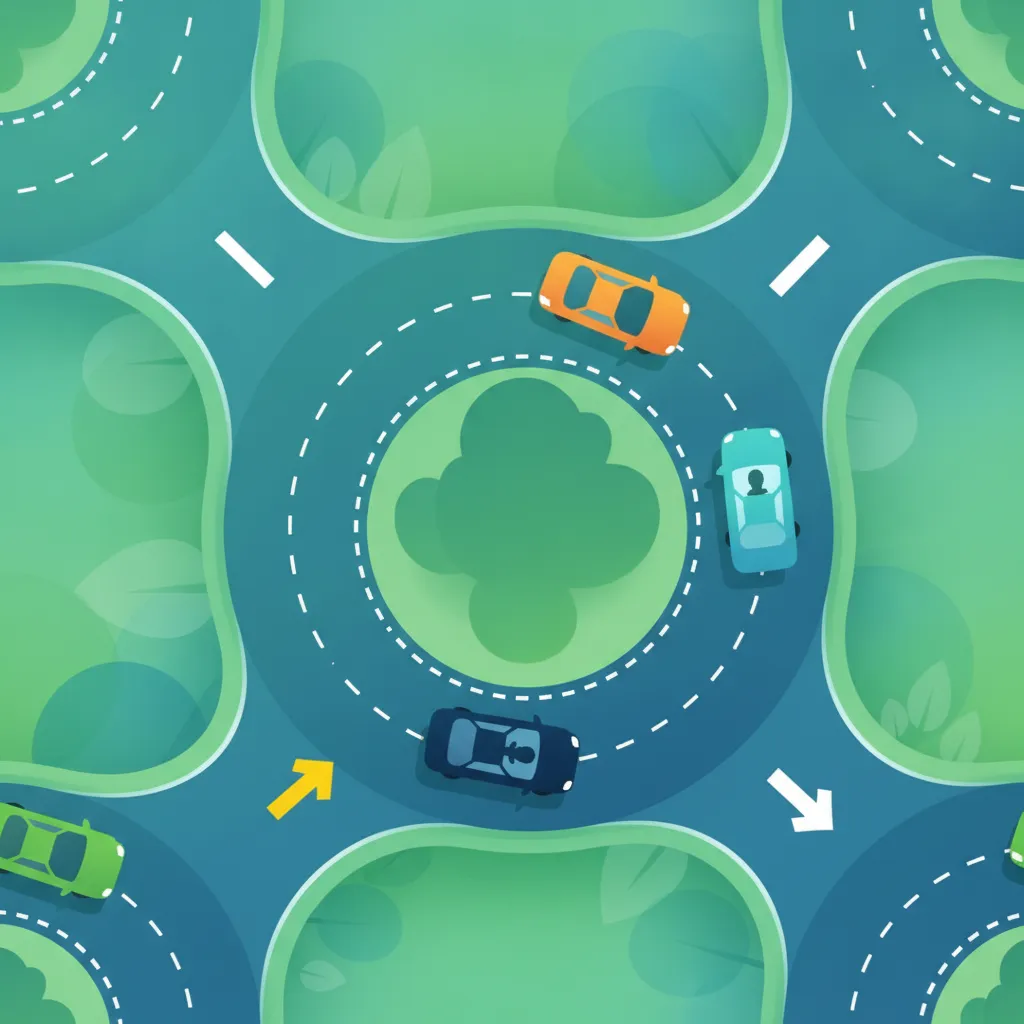
This lesson delves into the specific challenges and procedures associated with navigating roundabouts on a motorcycle. It outlines the importance of approaching at a safe speed, selecting the correct lane, and yielding to vehicles already within the roundabout. The content also covers the proper use of signals when exiting and emphasizes the need for heightened awareness of blind spots, especially when larger vehicles are present.
In this lesson, learners will master the skills required to safely navigate various types of intersections encountered in Turkish urban settings. The content covers interpreting traffic signals, understanding right-of-way rules, and executing proper lane positioning. Practical strategies for managing blind spots and ensuring visibility to other road users are emphasized. By the end of this session, participants will be equipped with safe crossing techniques.
Roundabouts require a clear understanding of yield regulations and precise signaling to avoid conflicts with larger vehicles. This lesson details the legal requirements under Turkish road rules, which demand that entering vehicles yield to traffic already circulating inside the roundabout. You will learn how to select the appropriate lane upon entry, maintain a steady speed, signal your exit intentions clearly with your indicators, and remain alert to drivers who cut across lanes.

In this lesson, learners will explore the functioning of traffic lights and their impact on motorcycle riding. It delves into the meanings of red, amber, and green lights, as well as dedicated turn arrows and pedestrian signals. The lesson highlights specific considerations for motorcyclists at intersections, such as the appropriate response to amber lights, the use of turn arrows for safe lane changes, and legal crossing obligations.
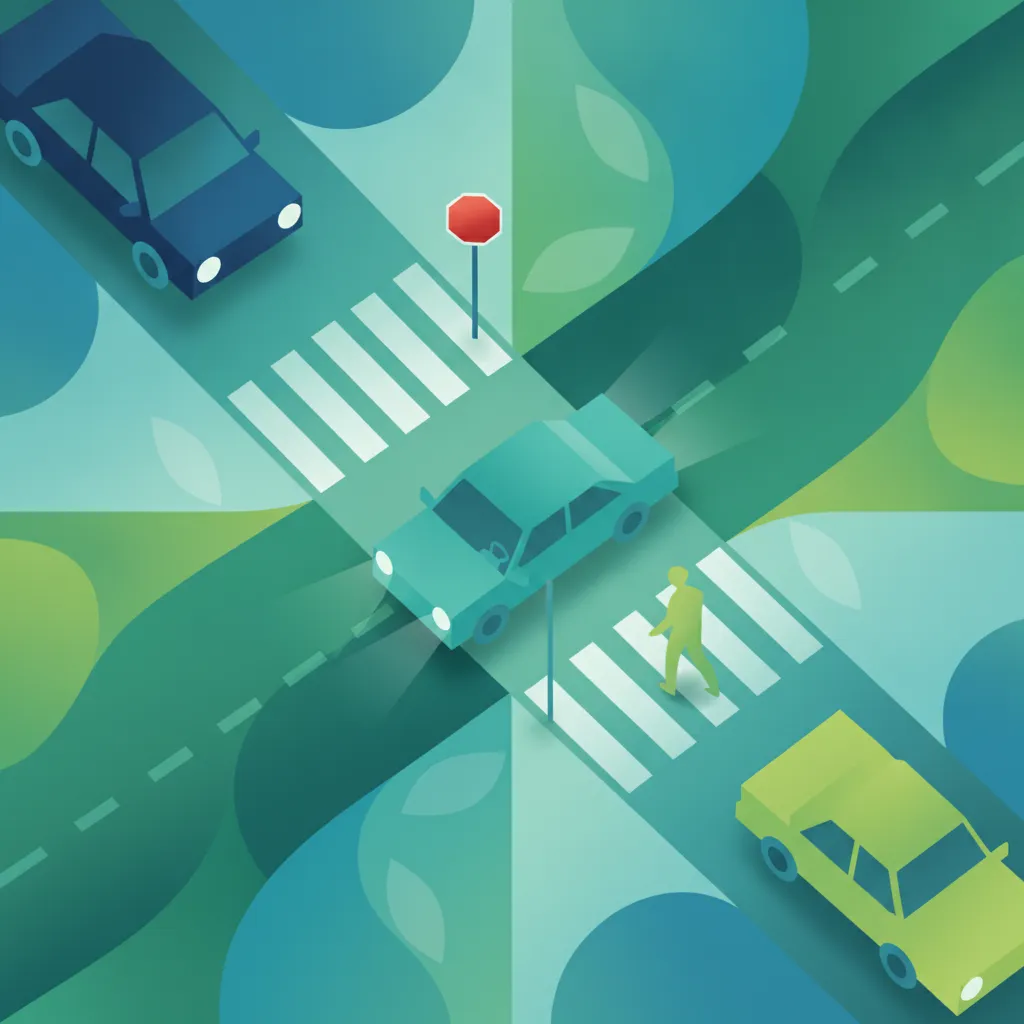
Intersections represent the highest-risk zones for moped riders due to crossing traffic paths and poor visibility. This lesson teaches you the structured approach method: slowing down, selecting the correct lane early, scanning in all directions, and yielding according to priority laws. You will learn safe techniques for executing left and right turns, maintaining stability, and continuously looking out for oncoming vehicles that might fail to yield or turn unexpectedly across your path.
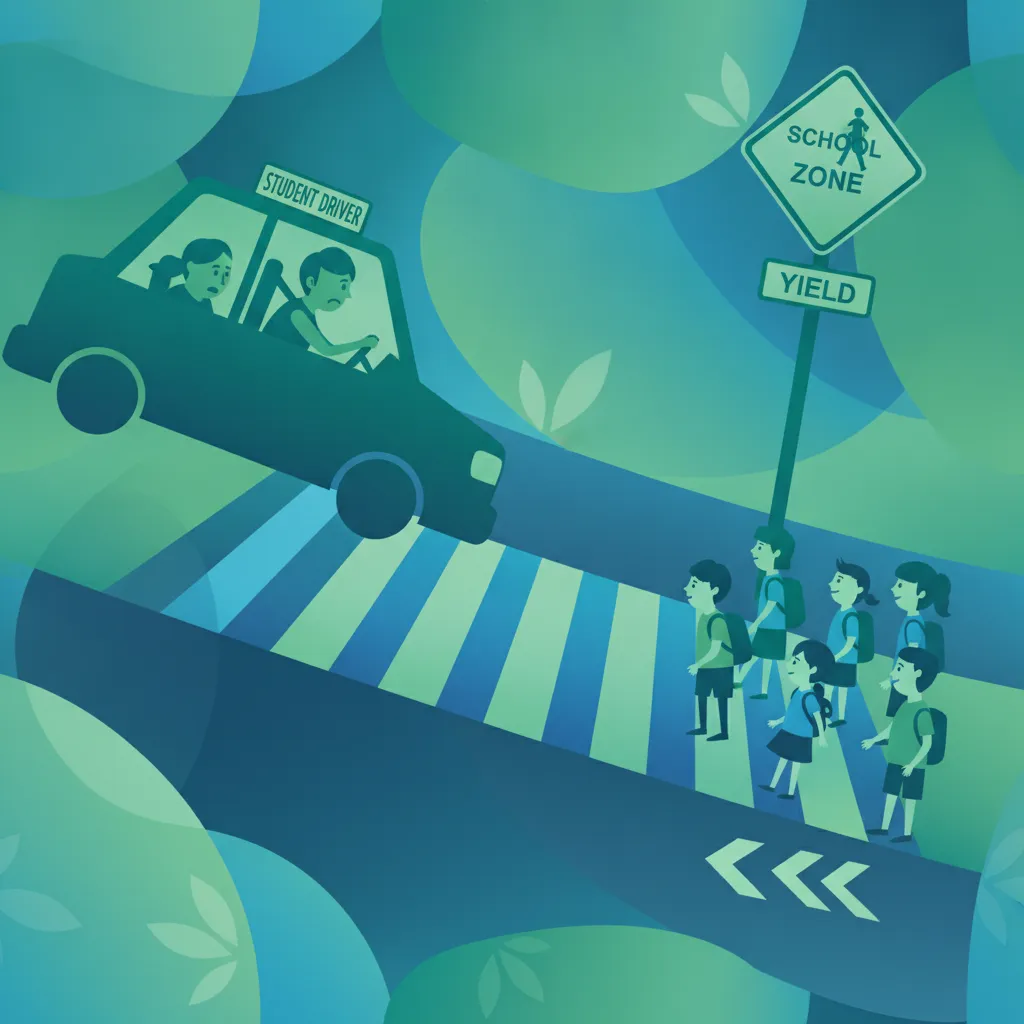
Focusing on pedestrian safety, this lesson addresses the unique considerations motorcyclists must take when approaching zebra crossings, traffic signal-controlled pedestrian crossings, and designated school zones. Learners will understand the legal obligations to yield to pedestrians, especially children, and the importance of reducing speed in these high-risk areas. The lesson also provides practical tips for ensuring visibility.
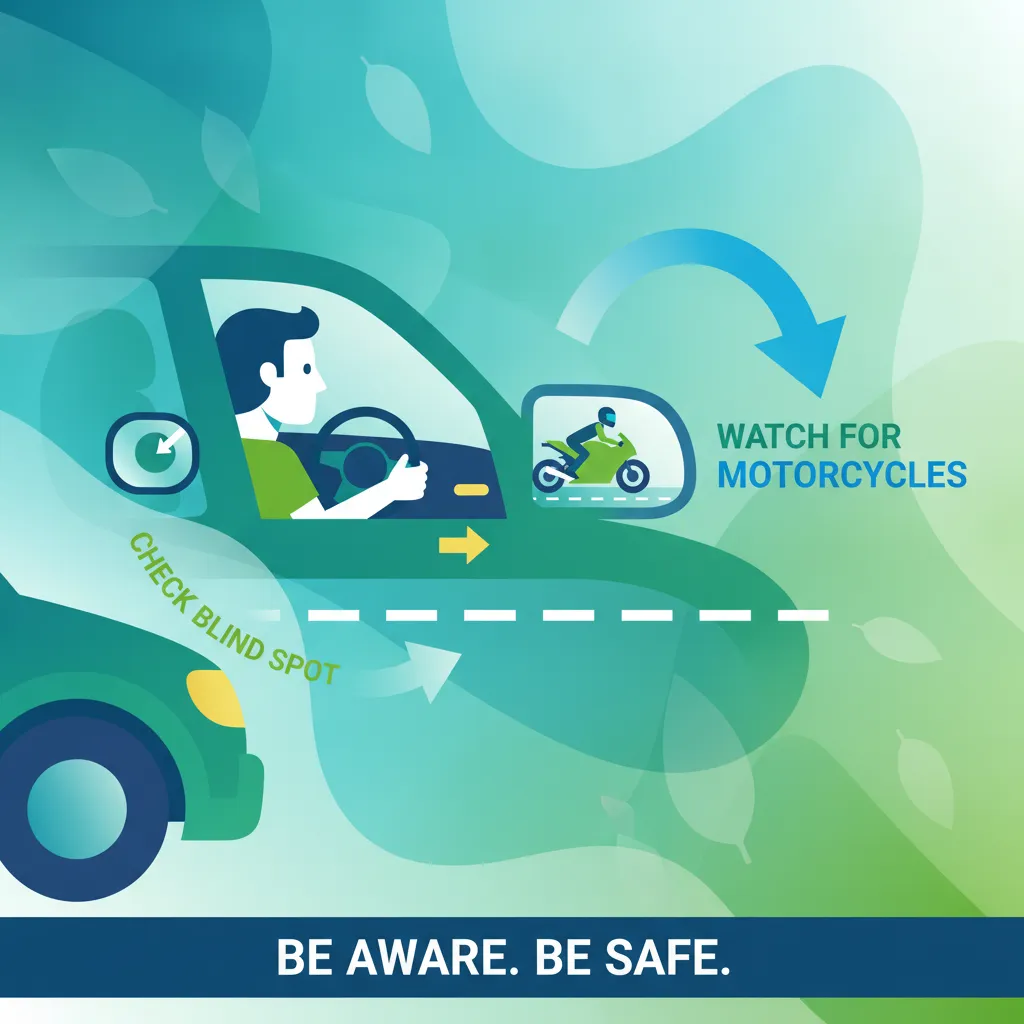
Learners will gain insight into the unique challenges posed by motorcycles and scooters sharing the road with passenger vehicles. The lesson highlights the importance of checking blind spots, maintaining safe following distances, and being aware of the faster acceleration and maneuverability of two-wheeled vehicles. Strategies for anticipating their movements and preventing collisions are discussed.

In this lesson, learners will discover the principles of optimal lane positioning that enhance both rider visibility and predictability to other road users. The content focuses on selecting the correct lane within various traffic scenarios, such as approaching intersections, navigating curves, and during overtaking. By maintaining appropriate lane placement, riders can minimize blind spots and improve reaction times.
This lesson highlights the critical nature of blind spots for motorcyclists, teaching strategies to recognize and mitigate these hidden areas. Learners will practice techniques for checking blind spots before lane changes and overtaking, ensuring they are fully aware of surrounding traffic. The lesson emphasizes how proper mirroring and head checks can significantly reduce the risk of collisions.
Proper road positioning is your primary shield against being squeezed, sideswiped, or overlooked by larger motor vehicles in daily traffic. This lesson explains how to ride in the center or slightly off-center of your lane to prevent unsafe overtaking within the same lane. You will study how to identify the massive blind spots of buses and trucks, maintain appropriate following distances, and execute overtaking maneuvers with maximum safety margin and clear signal warning.
Find clear answers to common questions learners have about Riding on High-Speed Roads and Motorways. Learn how the lesson is structured, which driving theory objectives it supports, and how it fits into the overall learning path of units and curriculum progression in Turkey. These explanations help you understand key concepts, lesson flow, and exam focused study goals.
Not necessarily. Riders must check the specific signage on the road entrance. Some high-speed roads prohibit lower-powered motorcycles, and riders must ensure their license category matches the road usage requirements specified in the Turkish Highway Traffic Regulation.
When approaching a large vehicle, expect a push of air as you enter their wake and a pull as you exit. Maintain a firm grip on the handlebars, keep your body relaxed, and aim for a clear line of sight, ensuring you have enough space to compensate for the bike being pushed slightly by the wind.
At high speeds, lane position affects your visibility to other drivers and your ability to react to debris or sudden braking. You should maintain a position that gives you the best view ahead while staying visible in the mirrors of the vehicles in front of you.
Many candidates underestimate the necessary following distance. At higher speeds, the distance required to stop increases significantly. The theory exam often tests your ability to maintain the 'two-second rule' or even longer distances depending on weather conditions.
Use our comprehensive practice search to find exactly the Turkish driving theory questions you need to master. Whether reviewing specific road signs, traffic rules, or first aid scenarios, select your perfect practice set and boost your confidence for the official ehliyet sınavı.