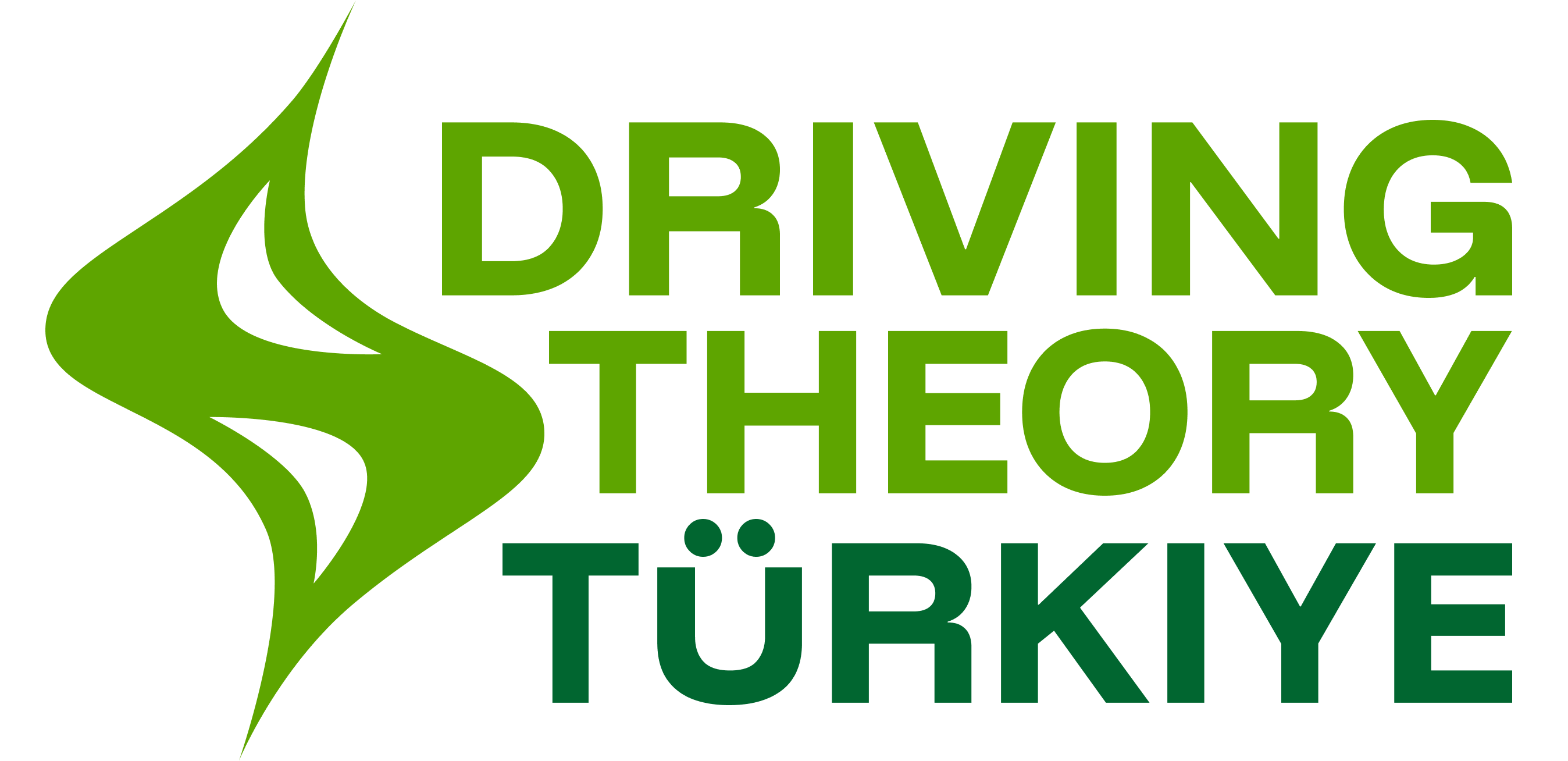
This lesson guides you through the critical procedures for merging onto expressways and changing lanes safely in busy traffic. By mastering these maneuvers, you will ensure better vehicle control and prepare for common practical scenarios tested in the Turkish MTSK e-sınav.
Lesson content overview
Executing safe merges and lane changes is a hallmark of defensive driving. In Turkey, dense urban traffic in metropolitan areas like Istanbul, Ankara, and Izmir, combined with high-speed travel on modern expressways (otoyollar), demands absolute precision during these manoeuvres.
Improper lane discipline and sudden lane changes are among the leading causes of traffic accidents. This lesson covers the physical, psychological, and legal frameworks governing merging and lane changes. It prepares you to pass the Turkish Ministry of National Education (MTSK) e-sınav and build safe habits for your practical driving exam.
While both manoeuvres involve lateral movement across road markings, they serve different purposes and occur in different driving environments:
Both manoeuvres require a highly coordinated sequence of visual observation, precise speed adjustments, early communication, and decisive vehicle control.
Entering an expressway from an on-ramp is one of the most high-stakes situations a driver faces. Turkish highways often have speed limits ranging from 110 km/h up to 140 km/h on newer toll motorways. To enter this fast-moving stream of traffic safely, you must utilize the acceleration lane effectively.
The acceleration lane is a dedicated stretch of road designed specifically for you to increase your vehicle's speed to match the flow of highway traffic before you merge.
Crucial Safety Rule: Never stop in an acceleration lane unless traffic on the main highway is completely stationary. Stopping at the end of an acceleration lane leaves you with zero space to gain speed, making a safe merge almost impossible and dramatically increasing the risk of a severe rear-end collision.
To merge onto an expressway smoothly, follow this systematic procedure:
Accelerate Decisively: As you enter the acceleration lane, press the accelerator firmly. Your goal is to match the speed of the vehicles in the right-hand lane of the expressway. If traffic is moving at 120 km/h, you should aim to reach approximately 120 km/h by the end of the lane.
Observe and Assess: Use your side and rearview mirrors to monitor the traffic flow on the highway. Locate a suitable gap between vehicles in the lane you wish to enter.
Signal Early: Activate your left turn signal as soon as you are halfway through the acceleration lane. This signals your intent to the drivers already on the highway, giving them time to adjust their positions or speeds.
Check the Blind Spot: Perform a rapid head check over your left shoulder (the shoulder check) to ensure no vehicle is hidden in your blind spot.
Merge Smoothly: Once you have identified a safe gap and verified that your blind spot is clear, steer smoothly into the main travel lane. Do not make sudden, jerky steering inputs at high speeds.
Adjust Following Distance: Once in the lane, adjust your speed to maintain a safe following distance (using the 2-second or 3-second rule) behind the vehicle ahead.
Urban lane changes in Turkey require constant vigilance due to heavy traffic density, sudden stops, and the frequent presence of vulnerable road users like motorcyclists and delivery scooters.
To perform any lane change, you must commit the Mirror-Signal-Manoeuvre (MSM) routine to memory. This is a foundational concept tested thoroughly in the MTSK exam.
[Mirrors: Interior & Side] ➔ [Signal: 5 Seconds Before] ➔ [Shoulder Check: Blind Spot] ➔ [Manoeuvre: Smooth Transition]
One of the most dangerous driving mistakes is relying solely on your vehicle’s mirrors. Mirrors have physical limits, leaving areas on both sides of your vehicle completely hidden from view.
The areas to the left and right rear of your vehicle that cannot be seen in either the interior rearview mirror or the exterior side mirrors.
Standard mirrors only show a narrow cone of vision behind you. Even wide-angle or convex side mirrors cannot fully eliminate the blind spots located just behind your driver and passenger doors.
To eliminate these blind spots, you must perform a shoulder check (also known as a head check). This involves turning your head about 90 degrees in the direction of the intended lane change.
Exam Tip: During your practical driving test, the examiner will watch your head movements. If you change lanes without visibly turning your head to check your blind spots, you will lose points or fail the exam immediately.
To change lanes or merge without forcing other drivers to react defensively, you must understand gap selection and speed matching.
If you attempt to merge or change lanes at a speed significantly lower than the surrounding traffic, you force the vehicle behind you to brake abruptly. This deceleration ripple effect can cause multi-car pileups behind you.
Conversely, tailgating the vehicle in your target lane while trying to merge creates a high-risk scenario if that vehicle brakes suddenly. Always match the ambient speed of the target lane before crossing the lane line.
A safe gap is an opening in traffic that allows you to enter a lane without:
On urban roads (speeds up to 50 km/h), a safe gap should be at least 3 to 4 vehicle lengths. On high-speed expressways (speeds above 90 km/h), you need a much larger gap—equivalent to at least a 3-second time gap between the vehicle ahead of you and the vehicle behind you in the target lane.
Effective communication reduces traffic friction. Turn signals are not a request for permission; they are a clear statement of intent. Under the Turkish Highway Traffic Law (Karayolları Trafik Kanunu), improper or missing signal usage is strictly penalized.
Understanding where drivers frequently make mistakes can help you maintain safe habits and avoid dangerous scenarios on Turkish roads.
"Weaving"—the act of making rapid, consecutive, and abrupt lane changes without signaling to bypass traffic—is known locally in Turkey as makas atmak.
Legal Consequence: Under the Turkish Highway Traffic Law, makas atmak is classified as a highly dangerous traffic violation. It carries heavy administrative fines, immediate driver's license points deduction, and can lead to the temporary suspension of your driving license.
Activating your indicator at the exact moment you begin to steer is useless. It does not give trailing drivers time to react. Always signal first, verify your path is clear, and then steer.
In adverse conditions such as heavy rain, fog (sis), or snow (common in Central and Eastern Anatolia), traction is reduced and visibility is compromised.
When changing lanes in urban centres, always look out for motorcycles and delivery scooters. Because of their narrow profiles, they easily disappear into blind spots. A rapid shoulder check is often the only way to detect them before you steer.
Understanding the direct physical consequences of your actions on the road is key to passing your theory exam and driving defensively.
| Driver Action | Immediate Consequence | Traffic Safety Outcome |
|---|---|---|
| Matching speed in the acceleration lane | Seamlessly integrating into the highway flow | Maintains smooth traffic flow; prevents rear-end collisions |
| Merging too slowly onto an expressway | Forces highway traffic to brake abruptly | Creates high-risk deceleration zones and potential pileups |
| Skipping the shoulder check (blind spot check) | Fails to detect vehicles driving parallel to your rear doors | High probability of a side-swipe or lane-change collision |
| Signaling 5 seconds before moving | Gives surrounding drivers time to adjust their speed | Lowers stress levels and reduces sudden defensive actions |
| Weaving between lanes (makas atmak) | Leaves zero safety margins for error or sudden braking | Extreme risk of catastrophic multi-vehicle accidents; heavy fines |
To fully master merging and lane changes, you should review these related driving lessons:
Explore all units and lessons included in this driving theory course.
Lesson content overview
Explore all units and lessons included in this driving theory course.
Explore search topics learners often look for when studying Merging and Lane Changes. These topics reflect common questions about road rules, driving situations, safety guidance, and lesson level theory preparation for learners in Turkey.
Browse additional driving theory lessons that cover connected traffic rules, road signs, and common driving situations related to this topic. Improve your understanding of how different rules interact across everyday traffic scenarios.
Learn the legal requirements and safety protocols for overtaking other vehicles on Turkish highways and urban roads. This guide explains correct signaling, lane positioning, and speed management to ensure safe passing without disrupting the flow of traffic or violating traffic laws.
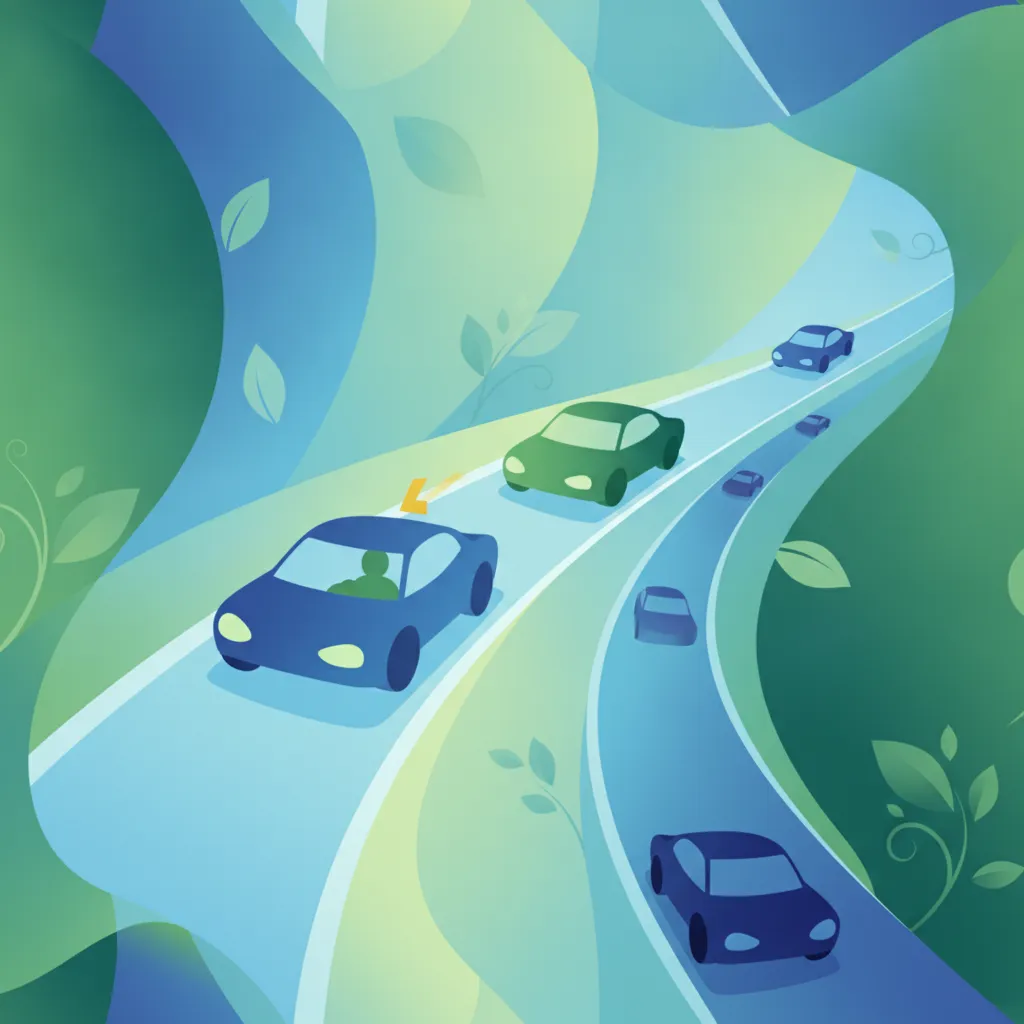
This lesson outlines the precise legal and safety procedures for overtaking slower vehicles on two-lane and multi-lane roads. It details when overtaking is strictly prohibited by signs or solid road lines, and how to calculate passing distances. Drivers will learn how to communicate their intentions using indicators and pass other vehicles safely.

In this lesson, learners will gain comprehensive knowledge of safe overtaking maneuvers during riding, emphasizing the importance of assessing traffic flow, checking blind spots, and signaling intentions. The content covers overtaking strategies on both straight roads and curves, considering visibility and speed differentials. By mastering these techniques, motorcyclists can execute overtaking safely.
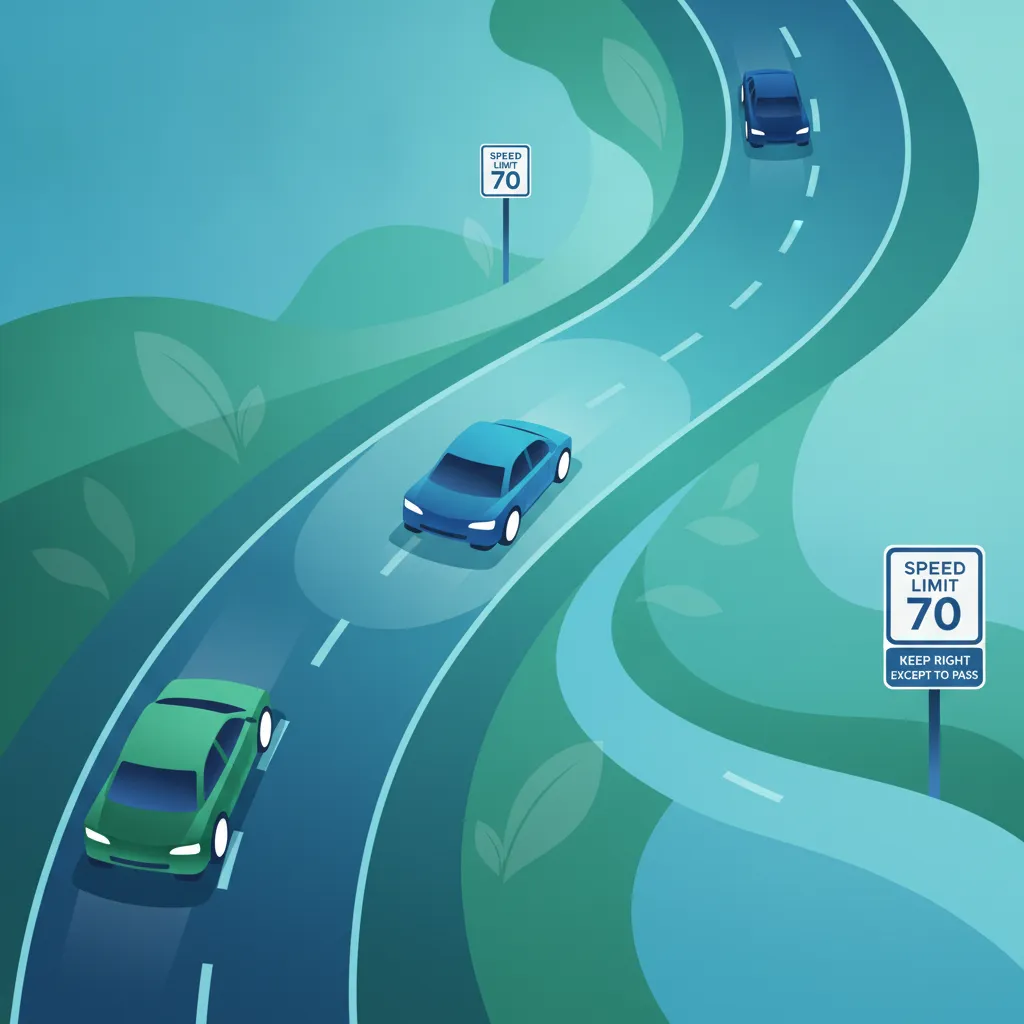
This lesson explains the specific rules, driving etiquette, and safety protocols for operating a vehicle on high-speed Turkish motorways. It covers correct lane usage, overtaking procedures, emergency lane restrictions, and how to maintain consistent high speeds safely. Drivers will learn to avoid dangerous tailgating and sudden lane changes.

This lesson focuses on the unique requirements and best practices for operating passenger vehicles on highways and expressways. Topics include maintaining appropriate speed, adhering to lane discipline, executing safe overtaking maneuvers, and managing merges and exits. Emphasis is placed on ensuring a smooth ride for passengers while integrating safely with faster-moving traffic.

This lesson focuses on the principles governing safe following distances between vehicles. Topics include understanding time and distance gaps, reaction times, and braking distances. Learners will explore guidelines for maintaining proper following distances based on speed and road conditions. Real-world examples demonstrate the importance of safe following practices in preventing rear-end collisions.

In this lesson, learners explore the essential techniques for safe reversing. Topics include using mirrors, rearview cameras, and checking blind spots. The lesson emphasizes the importance of maintaining low speeds, checking the rear area, and being aware of obstacles. Real-world examples illustrate common reversing mistakes and how to avoid them.

This lesson examines lane division and proper lane usage on multi-lane roads and highways. Learners will understand the purpose of lane markings in guiding drivers to maintain appropriate lane discipline. Topics include correct lane selection for different vehicle types, overtaking procedures, and lane-changing techniques. Real-world examples illustrate the importance of respecting lane usage rules.
In this lesson, learners will focus on the specific considerations and safety practices required when riding motorcycles on high-speed roads and motorways. Topics covered include maintaining appropriate lane discipline, safe overtaking at high speeds, dealing with increased wind resistance, and the importance of accurate speed control and appropriate following distances on faster roadways.
This lesson delves into specific manoeuvring strategies required when navigating both tight urban environments and open rural roads with large passenger vehicles. Learners will explore techniques for handling narrow streets, tight turns, and intersections, while maintaining safety and efficiency. The content emphasizes planning and execution of manoeuvres based on road conditions and vehicle dimensions.

This lesson focuses on protecting vulnerable road users, such as pedestrians, cyclists, and motorcyclists, in mixed traffic environments. Learners will examine specific strategies for increased vigilance, anticipatory driving, and properly yielding to these users. The lesson also covers high-risk zones, such as school areas and public transport stops, emphasizing the need for heightened safety.
Understand the meaning of various horizontal and vertical road markings that dictate lane discipline on Turkish roads. Learn how to interpret lane divisions, special zones, and directional arrows to maintain correct lane positioning and navigate safely through urban and high-speed traffic environments.
This lesson examines lane division and proper lane usage on multi-lane roads and highways. Learners will understand the purpose of lane markings in guiding drivers to maintain appropriate lane discipline. Topics include correct lane selection for different vehicle types, overtaking procedures, and lane-changing techniques. Real-world examples illustrate the importance of respecting lane usage rules.
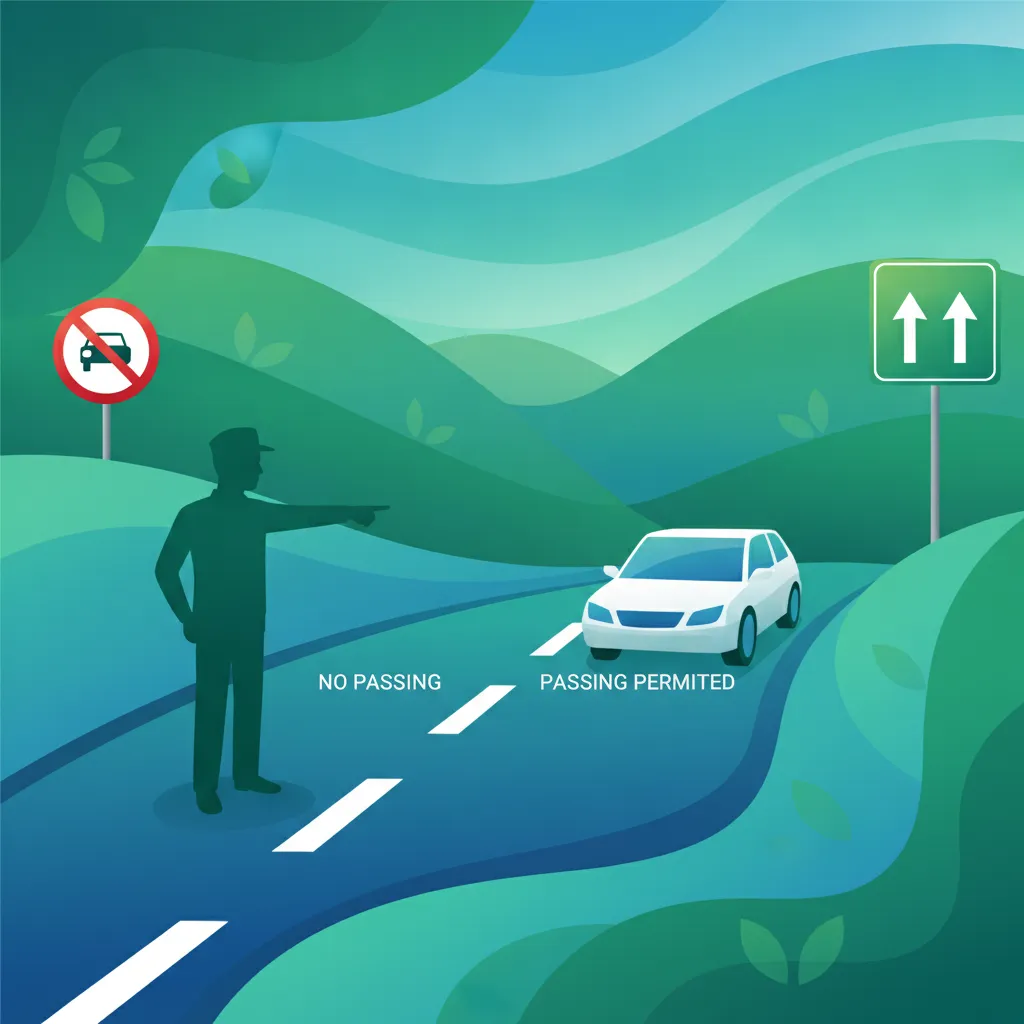
This lesson covers the various road surface markings that motorcyclists must be aware of, such as lane lines, turn arrows, and dedicated bike lanes. It explains how to interpret solid and broken lines, the meaning of specific arrows for turning or lane changes, and the significance of pedestrian crossing markings. Understanding these visual cues is essential for maintaining lane discipline and performing safe road maneuvers.
This lesson delves into horizontal road markings, focusing on solid, broken, and double lines that define lane boundaries and overtaking rules. Learners will explore the significance of each type of line in indicating permissible lane changes, passing zones, and stopping points at intersections. The lesson also covers crosswalk markings and their role in pedestrian safety.
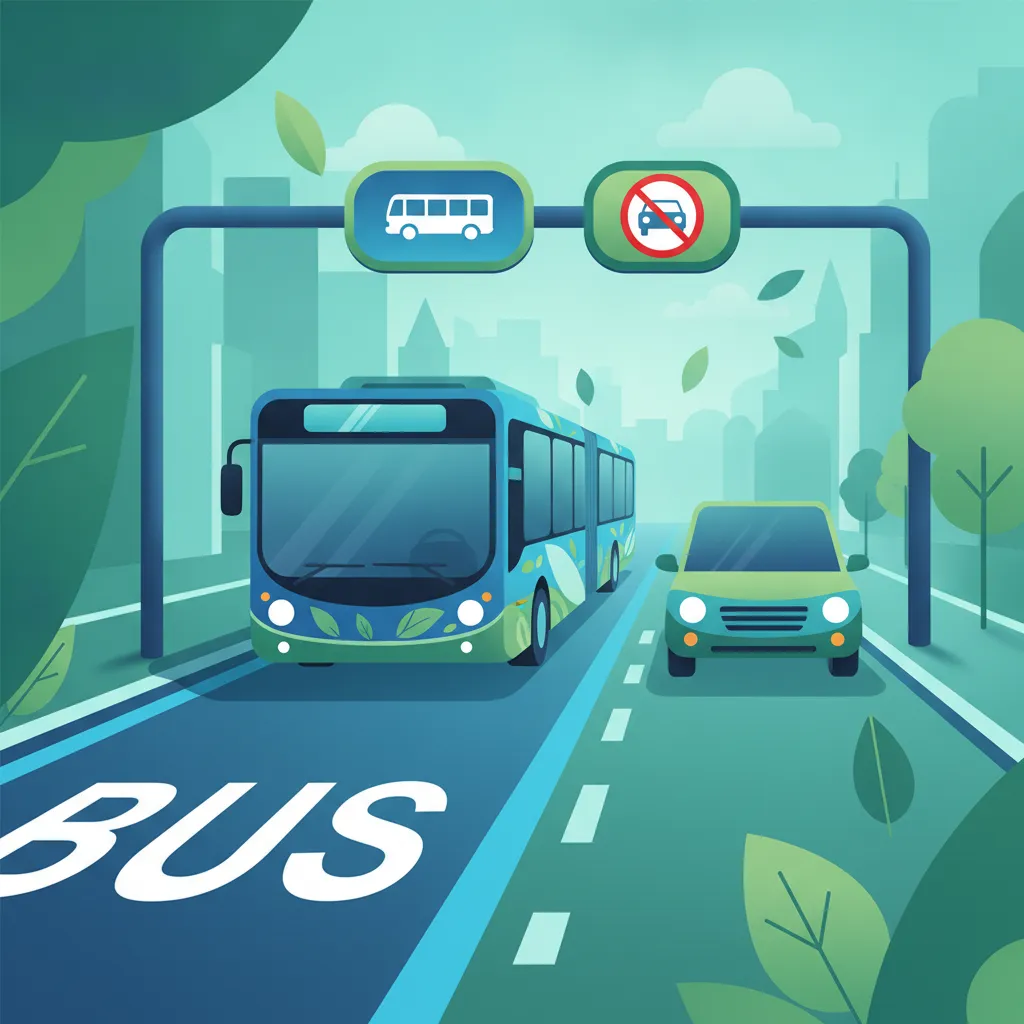
This lesson explores the concept of reserved lanes and special zones designated for specific vehicle types or purposes. Learners will study bus lanes, bicycle lanes, high-occupancy vehicle (HOV) lanes, and emergency vehicle lanes, understanding the rules governing their usage. Real-world examples illustrate how these lanes improve traffic efficiency, promote sustainable transport, and prioritize emergency response.
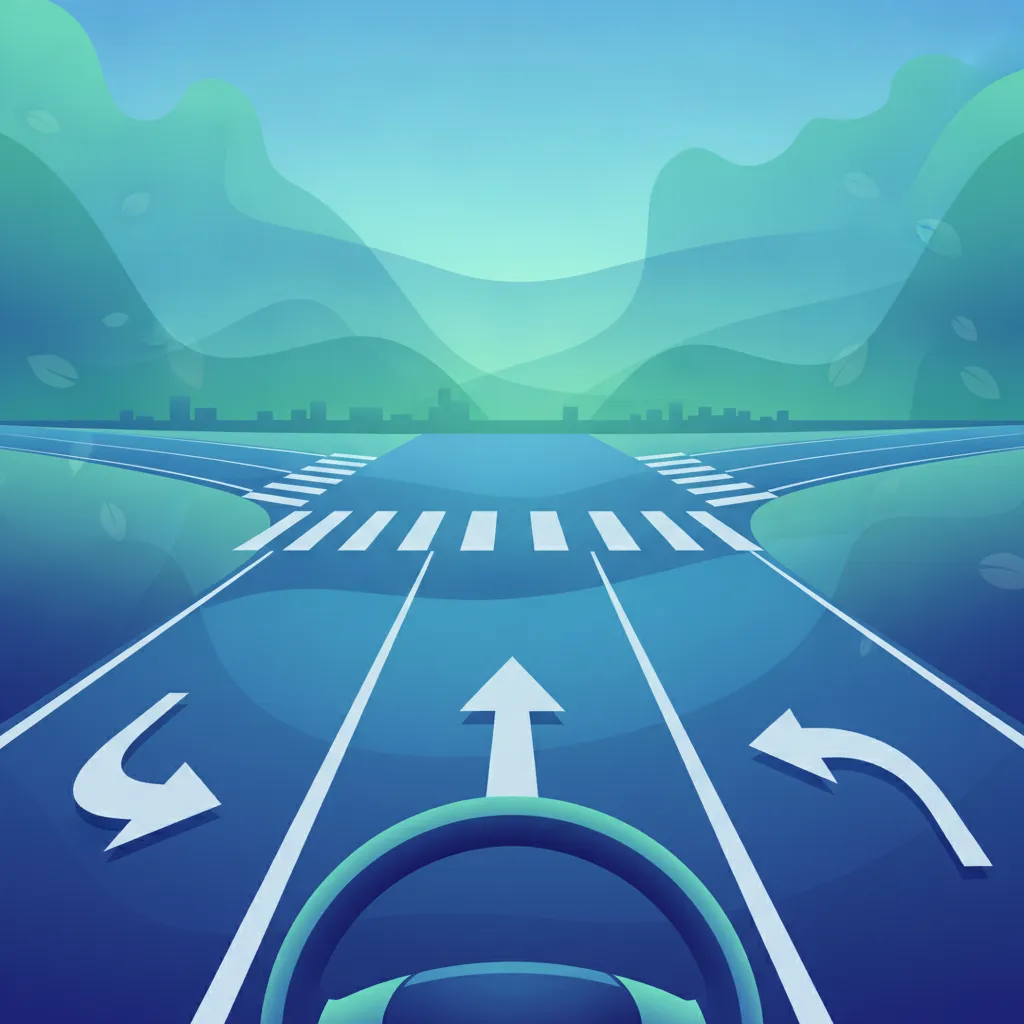
This lesson focuses on the role of directional arrows and guidance markings in indicating lane assignments and intended vehicle movements. Learners will learn to interpret turn arrows, lane-specific directions, and lane assignment at intersections and roadways. Real-world examples demonstrate how these markings aid drivers in navigating complex road networks, especially at junctions and roundabouts.

Road markings painted directly onto the asphalt provide continuous guidance and carry the same legal weight as vertical traffic signs. This lesson explains the differences between solid and broken longitudinal lines, channelizing arrows, and restricted zones like dedicated bus or bicycle paths. You will discover how to properly align your moped within your lane, execute lawful line changes, and respect painted buffer zones to prevent dangerous side-swipe accidents in dense traffic.
This introductory lesson defines the exact parameters, restrictions, and vehicle types allowed under the Turkish Category B driving privilege. It outlines the age requirements, training processes, and the standardized exam layout to guide candidates from start to finish. Candidates will learn how to navigate the official licensing structure successfully.
This lesson focuses on the critical importance of lane discipline and proper lane usage for large goods vehicles. Learners will understand the challenges posed by wider vehicle dimensions, the necessity of maintaining adequate lane occupancy, and the need for precise lane keeping. Emphasis is placed on selecting appropriate lanes, adhering to traffic flow, and ensuring general highway safety.
This lesson delves into the regulatory traffic signs that dictate mandatory and prohibited actions for drivers. Learners will study signs indicating speed limits, stop and yield requirements, no-entry zones, and lane usage directives. The lesson also covers temporary regulatory signs used in construction or special events, emphasizing the importance of adhering to these signs to avoid penalties.

This lesson explores the hazards characteristic of rural roads, including narrow paths, lack of lighting, slow agricultural vehicles, and sharp curves. It teaches drivers how to anticipate blind corners, adjust speed, and pass slow-moving tractors safely. Motorists will learn to remain highly alert for unexpected roadway obstructions.
Find clear answers to common questions learners have about Merging and Lane Changes. Learn how the lesson is structured, which driving theory objectives it supports, and how it fits into the overall learning path of units and curriculum progression in Turkey. These explanations help you understand key concepts, lesson flow, and exam focused study goals.
An acceleration lane is designed to allow drivers to match the speed of the traffic already on the highway before merging. You should never force your way into traffic; instead, use this lane to build up to a safe speed that allows you to join the flow without causing others to brake.
While your mirrors provide a wide view, they cannot cover everything. You must develop the habit of performing a shoulder check—a quick look over your shoulder toward the direction you intend to move—to ensure no vehicle is positioned in your blind spot.
Yes, you must signal your intention well in advance to give other drivers time to react. The signal should be active long enough to convey your plan clearly, but you must also ensure your movement is safe to perform even after you have signaled.
If traffic is too heavy and there is no safe gap, you should continue to match the flow of traffic in the acceleration lane while looking for an opening. Avoid stopping at the end of the merge lane unless absolutely necessary, as this creates a dangerous hazard for following vehicles.
Use our comprehensive practice search to find exactly the Turkish driving theory questions you need to master. Whether reviewing specific road signs, traffic rules, or first aid scenarios, select your perfect practice set and boost your confidence for the official ehliyet sınavı.