
Driving Theory
Turkish Driving Theory Courses

Lesson 1 of the Weather, Highways, Rural Routes, Terminals and Long-Distance Service unit

Turkish D Licence Theory: Driving in Adverse Weather Conditions (rain, fog, night)

This lesson explores the critical techniques for operating a large passenger vehicle safely in challenging weather conditions such as heavy rain, fog, and nighttime. Building on your knowledge of vehicle dimensions and control, you will learn how to adapt your speed and lighting to maintain stability and passenger safety. This preparation is essential for both your Class D theory exam and your professional driving career in Turkey.
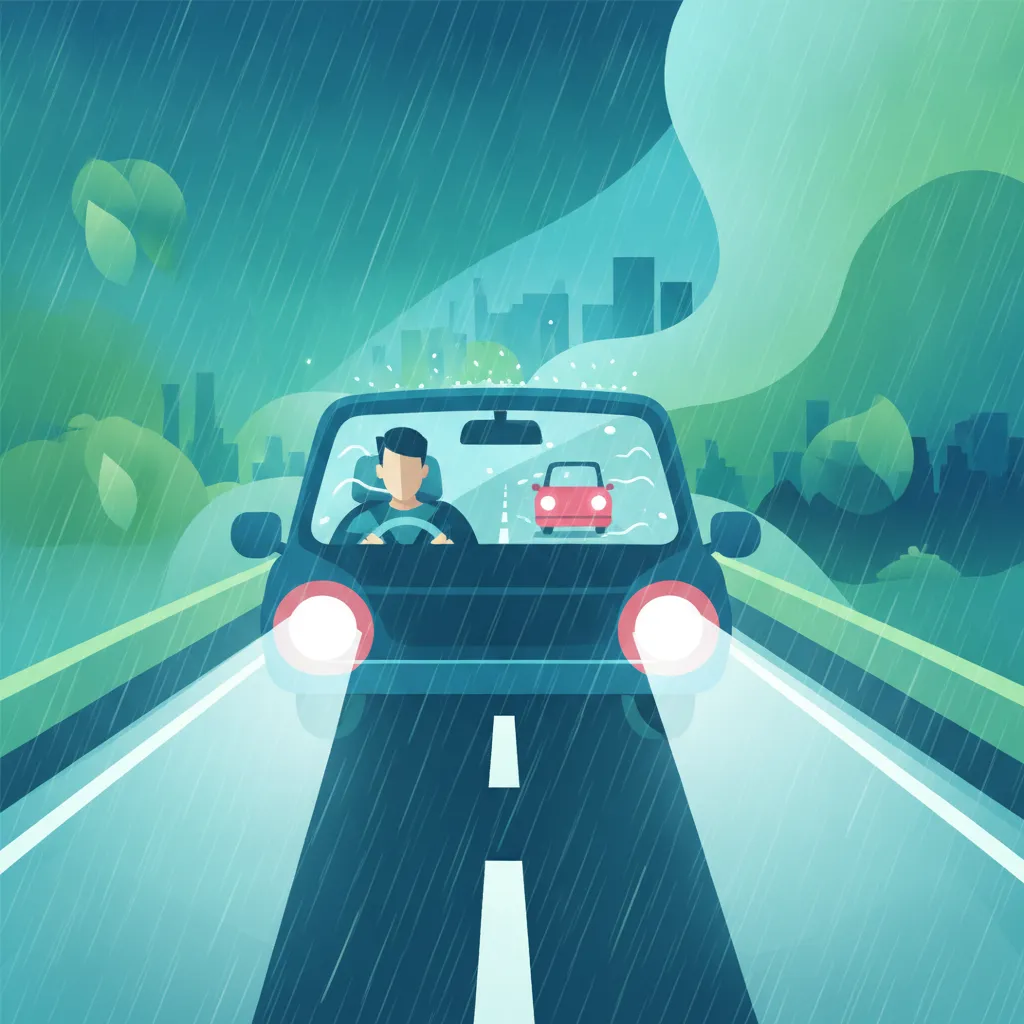
adverse weatherClass D licencedefensive drivingtheory testroad safety
Turkish D Licence Theory: Driving in Adverse Weather Conditions (rain, fog, night)

Lesson content overview

Turkish D Licence Theory

Mastering Adverse Weather Conditions: Rain, Fog, and Night Driving for Class D Passenger Vehicles

Operating a passenger-carrying vehicle under the Turkish Class D driving licence requires a superior level of skill, patience, and theoretical knowledge. When weather conditions deteriorate, the safety of dozens of passengers rests entirely on your ability to adapt your driving style. Rain, fog, and nighttime driving introduce severe physical and environmental hazards, including reduced road surface friction, restricted visibility, and altered driver perception.

According to the Turkish Highway Traffic Regulation (Karayolları Trafik Yönetmeliği), drivers must adjust their speed and driving behavior to match the prevailing weather, road, and traffic conditions. This lesson details the core principles, legal requirements, and practical strategies necessary to safely navigate adverse weather conditions in a heavy passenger vehicle.


The Physics of Adverse Weather: Reduced Traction and Visibility

Driving in adverse weather is fundamentally a battle against the laws of physics. Understanding how rain, fog, and darkness alter the physical relationship between your vehicle, the road, and your surroundings is key to preventing accidents.

Reduced Traction and the Risk of Hydroplaning (Su Kızağı)

Traction is the grip between your vehicle’s tires and the road surface. This grip allows you to accelerate, steer, and brake effectively. When water accumulates on the road, it acts as a lubricant, dramatically reducing the coefficient of friction.

  • The Hazard of Light Rain: The first 10 to 15 minutes of rainfall are often the most dangerous. Rainwater mixes with oil, dust, and rubber residues deposited on the road surface, creating a highly slippery, soap-like film.
  • Hydroplaning (Su Kızağı / Akvaplaning): In heavy rain or standing water, a wedge of water can build up in front of the tires. If your speed is too high, the tires can lose contact with the road entirely and ride on a thin cushion of water. When this occurs, you lose all steering and braking control.
  • Weight Misconceptions: Drivers of heavy Class D passenger vehicles often mistakenly believe that the sheer weight of a bus prevents hydroplaning. While weight does help displace water, a bus’s large tire contact patches and high speeds can still cause hydroplaning, particularly if the tire tread depth is worn below the legal limit.
Definition

Hydroplaning (Su Kızağı)

The physical phenomenon where a layer of water builds up between a moving vehicle's tires and the road surface, causing a complete loss of traction and rendering steering and braking ineffective.

Reduced Visibility and Atmospheric Scattering

Visibility is your primary source of sensory information when driving. Adverse weather degrades visibility through various atmospheric phenomena:

  • Rain Spray: Heavy rain not only falls from above but is also kicked up as a fine, dense spray by other vehicles—especially large trucks. This spray can completely envelope a passenger vehicle, reducing forward and side visibility to near zero.
  • Fog Density and Light Scattering: Fog consists of millions of microscopic water droplets suspended in the air. These droplets act as tiny mirrors, scattering light in all directions. When you use high-beam headlights in fog, the light reflects directly back into your eyes, creating a blinding white wall of glare.
  • Nighttime Darkness: At night, your field of vision is restricted to the area illuminated by your headlights. Peripheral vision is severely degraded, making it much harder to spot pedestrians, cyclists, or obstacles on the roadside.

Core Principles of Safe Driving in Adverse Weather

To mitigate these physical hazards, you must consistently apply five core safety principles.

PrincipleDefinitionPurpose / RationaleImplications for Class D Drivers
Reduced VisibilityDiminished ability to see road markings, signs, and other road users.To minimize collision risks caused by limited sightlines.Mandatory use of low beams; speed must match the visible stopping distance.
Reduced TractionDecreased friction between the tires and the road surface.To prevent skidding, sliding, and hydroplaning.Smoother steering, progressive braking, and avoiding sudden maneuvers.
Light AdaptationAdjusting vehicle lights to suit ambient conditions without blinding others.To maximize forward sight while preventing glare for oncoming traffic.Strict adherence to low beam and fog light regulations.
Speed AdjustmentModifying driving speed downward from the posted limit.To provide sufficient reaction and stopping time for unexpected hazards.Reducing speed by 20% to 30% or more depending on severity.
Increased Following DistanceExpanding the physical gap to the vehicle ahead.To compensate for longer braking distances on wet or slippery roads.Doubling the following distance (minimum of 3 to 4 seconds).

Vehicle Lighting Regulations in Turkey (Aydınlatma Kuralları)

Proper lighting is essential not only for you to see the road but, equally importantly, for other road users to see your passenger vehicle. Turkish traffic law strictly regulates which lights must be active under specific environmental conditions.

1. Dipped Beams vs. High Beams (Yakını ve Uzağı Gösteren Işıklar)

Dipped beams (low beams) must be used at night and during any daytime adverse weather condition that reduces visibility (such as rain, fog, or snow).

  • High Beam Prohibitions: Under Turkish traffic regulations, you must not use high-beam headlights in fog or heavy rain, as the light reflects back off the moisture particles and blinds you. Furthermore, high beams must be switched to dipped beams when following another vehicle within 200 meters or when encountering oncoming traffic, to prevent blinding other drivers.

2. Correct Use of Fog Lights (Sis Farları)

Fog lights are designed to emit a wide, flat beam of light positioned low on the vehicle to illuminate the road surface beneath the fog.

  • The 100-Meter Rule: Front fog lights should only be activated when visibility is reduced to less than 100 meters due to fog, heavy rain, or falling snow.
  • Rear Fog Lights: Rear fog lights emit a high-intensity red light to warn drivers behind you. Because they are exceptionally bright, they must only be used in severely degraded visibility. Using them in clear weather or light rain is illegal and can easily blind trailing drivers, increasing the risk of a rear-end collision.

3. The Hazard Light Misconception (Dörtlü İkaz Lambaları)

A very common and dangerous violation on Turkish roads is the activation of hazard warning lights (emergency flashers) while driving slowly through heavy rain or fog.

Warning

Legal Warning: Under Turkish traffic law, hazard warning lights must never be used while a vehicle is in motion. They are strictly reserved for stationary hazards, such as an emergency breakdown, a medical crisis, or when your vehicle is parked on the shoulder posing a hazard to traffic. Using them while driving prevents you from using your turn signals, confusing other road users and significantly increasing accident risks.


Adjusting Speed and Following Distance

Because traction is reduced and stopping distances are extended in adverse weather, your normal speed and following distance habits must change immediately when conditions deteriorate.

Speed Reductions under Turkish Traffic Law

When driving in rain or fog, you are legally required to reduce your speed to a level that allows you to stop safely within your clear distance of vision. As a rule of thumb for heavy passenger vehicles:

  • In moderate rain: Reduce your speed by at least 20% below the posted speed limit.
  • In heavy rain or fog: Reduce your speed by 30% to 50% or more, depending on visibility. If visibility falls below 30 meters, you should safely exit the highway and wait at a designated rest area or terminal.

Calculating Safe Following Distance (Takip Mesafesi)

Under normal, dry conditions, Turkish traffic law recommends a safe following distance equivalent to the distance covered in two seconds, or half the value of your current speed in meters (e.g., at 90 km/h, a minimum gap of 45 meters).

In wet or foggy conditions, this must be adjusted:

  • Double the Distance: You must increase your following distance to at least double the normal distance (a minimum of 4 seconds).
  • Heavy Vehicle Considerations: Because Class D passenger vehicles are much heavier than passenger cars, their kinetic energy is vastly superior, meaning their stopping distance on wet asphalt is significantly longer. A heavy bus can take up to twice as much distance to stop on a wet road compared to a dry one.

How to Measure and Maintain Safe Following Distance in the Rain

  1. Identify a fixed object on the roadside ahead, such as a traffic sign, gantry, or marker post.

  2. As soon as the rear bumper of the vehicle ahead of you passes that object, begin counting: "One thousand and one, one thousand and two, one thousand and three, one thousand and four..."

  3. If your bus passes the same fixed object before you reach "one thousand and four," you are trailing too closely. Ease off the accelerator to increase the gap.

  4. Continuously monitor and adjust this gap, especially when other passenger vehicles merge into your lane.


Equipment Management: Wipers, Defrosters, and Tires

Safely navigating adverse weather requires your passenger vehicle's primary safety systems to be in peak operational condition.

Windshield Wipers and Washers

  • Speed Selection: Adjust your wiper speed to match the intensity of the rain. Intermittent settings are suitable for light drizzle, while continuous high-speed wiping is necessary during heavy downpours to prevent a film of water from obscuring your view.
  • Maintenance: Worn wiper blades leave streaks, which scatter headlight glare from oncoming vehicles at night. Inspect and replace wiper blades regularly before the winter season begins.

Climate Control and Defrosters (Buğu Gidericiler)

When it rains, the humidity inside a passenger bus rises rapidly due to the breath of the passengers. This moisture quickly condenses on the cold glass windows, causing severe interior fogging (buğulanma).

  • Active Defrosting: Use the vehicle’s air conditioning (AC) system combined with the heater to dry the incoming air. Direct the airflow toward the windshield and front side windows.
  • Rear and Side Demisters: Engage heated mirrors and side window blowers to ensure you maintain a clear view of your blind spots and rear-view mirrors.

Tire Tread Depth and Pressure

  • Legal Limits in Turkey: While the legal minimum tread depth for commercial passenger vehicles is 1.6 mm, driving on tires with this little tread in heavy rain is highly dangerous. For winter conditions, Turkish law mandates the use of winter tires (kış lastiği) on commercial passenger and cargo vehicles between December 1st and April 1st, requiring a minimum tread depth of 4 mm for safety.
  • Tread Function: The grooves in a tire are designed to channel water away from the contact patch. If the tread is worn down, the tire cannot evacuate the water, leading directly to hydroplaning at much lower speeds.

Conditional Logic and Contextual Variations

Safe driving principles must adapt dynamically to the type of road, the state of your vehicle, and the presence of other, more vulnerable road users.

1. Variations by Road Type

  • Urban Roads: Urban areas feature pedestrian crossings, intersections, and frequent stop-and-go traffic. In rain or darkness, pedestrians wearing dark clothing are highly difficult to spot. Streetlights can also reflect off wet asphalt, creating confusing glares and masking lane markings.
  • Motorways and Expressways: Due to the high speeds allowed on motorways, the risk of hydroplaning is at its highest. Water can pool in depressed ruts created by heavy truck traffic in the right-hand lanes. Drivers of Class D vehicles must remain alert to these pools and avoid sudden lane changes.
  • Rural and Mountain Routes: These roads often lack adequate drainage, leading to mud, standing water, or wet leaves accumulating on the asphalt. They also lack street lighting, meaning you must rely entirely on your vehicle's headlights and drive at highly conservative speeds.

2. Vehicle Load and Passenger Considerations

  • Passenger Comfort and Safety: Abrupt braking or swerving on wet roads can cause passengers to slide or fall, potentially causing injuries inside the bus. All inputs to the steering, accelerator, and brakes must be exceptionally smooth.
  • Braking Distance and Load: A fully loaded passenger bus has high momentum. On wet, downhill mountain passes, use engine braking (retarder or exhaust brake) to manage your speed without overheating the service brakes, which would further degrade your braking efficiency.

3. Vulnerable Road Users

  • Pedestrians: Rain and wind often cause pedestrians to shield themselves with umbrellas or hoods, severely restricting their own peripheral vision. They may step onto the road unexpectedly.
  • Cyclists and Motorcyclists: Two-wheeled vehicles are highly unstable on wet, slippery surfaces. Give them extra space, as they may slide or swerve suddenly to avoid puddles, manhole covers, or painted road markings, which become extremely slick when wet.

Applied Scenarios: Safety in Action

To understand how to apply these rules in real-world scenarios, review the following practical situations typical of Turkish highways.

Scenario 1: Heavy Rain on the Istanbul-Ankara Highway (TEM)

  • The Situation: You are driving a Class D passenger coach at 100 km/h (the normal limit) on a three-lane motorway. Suddenly, a heavy downpour begins, reducing visibility to approximately 80 meters. Standing water begins to accumulate in the right-hand lane.
  • Correct Protocol:
    1. Gradually ease off the accelerator to reduce your speed to approximately 70 km/h. Avoid sudden braking.
    2. Switch your headlights to dipped beams. If visibility drops below 100 meters, activate your front fog lights. Do not turn on your hazard lights while driving.
    3. Increase your following distance behind the vehicle in front to at least 4 seconds.
    4. Move out of any lane sections where deep standing water is visible to prevent hydroplaning.
  • Incorrect Behavior: Maintaining 100 km/h, flashing high beams at slower vehicles, or turning on hazard lights while driving fast in the left lane. This behavior invites hydroplaning and rear-end collisions.

Scenario 2: Dense Morning Fog on a Mountain Pass

  • The Situation: You are operating an intercity bus on a winding rural road in the Bolu Mountain region. A dense fog bank rolls in, reducing visibility to around 40 meters.
  • Correct Protocol:
    1. Immediately reduce your speed to 30–40 km/h.
    2. Ensure dipped beams are on. Turn on both front and rear fog lights so vehicles ahead and behind can see your large vehicle.
    3. Keep your high beams off, as they will blind you.
    4. Use the white fog lines painted on the right edge of the road as a physical guide to keep your lane positioning, rather than looking at the oncoming lane.
    5. If visibility drops to an extreme level where safe stopping distance is impossible, find a safe service station or parking area and wait for the fog to clear.
  • Incorrect Behavior: Using high beams, driving in the center of the road, or tailgating the vehicle ahead to "follow" its taillights, which significantly increases the risk of a multi-vehicle pileup.

Common Violations and Deficit Areas

To pass your official driving theory exam and maintain a clean professional record, you must recognize and avoid these common hazardous mistakes:

  1. Improper Fog Light Usage: Keeping rear fog lights on during clear nights or light rain. This is illegal in Turkey and subject to traffic fines, as it blinds other drivers.
  2. Over-reliance on ABS and Electronic Systems: Believing that modern safety features like ABS (Anti-lock Braking System) or ESP (Electronic Stability Program) will prevent all skids. These systems cannot override the physical limitations of bald tires on wet asphalt.
  3. Failing to Clear Condensation: Driving with foggy windows and relying on a small wiped-away patch on the windshield. A professional driver must ensure all windows and mirrors are completely clear before moving.
  4. Improper Speed Choice for Wet Conditions: Driving at the maximum legal dry speed limit during a storm. Speed limits are designed for ideal conditions; adverse weather legally requires you to drive slower.

Summary of Essential Concepts

  • Traction Loss: Wet roads reduce grip, doubling stopping distances. Light rain creates a highly slick film of grease and water, while heavy rain can lead to hydroplaning (su kızağı).
  • Speed Reduction: Legally and physically, you must reduce your speed by 20% to 30% or more under wet or foggy conditions to match your stopping distance with your visibility.
  • Following Distance: Double your normal gap to at least 4 seconds when driving a heavy Class D vehicle in adverse weather.
  • Correct Lighting: Use dipped beams in rain, fog, and night. Use fog lights only when visibility is below 100 meters. Never use high beams in fog, and never drive with hazard warning lights activated.
  • Equipment Readiness: Ensure windshield wipers are effective, defrosters are fully operational, and tires have a safe tread depth (at least 4 mm in winter conditions).


Learn more with these articles

Check out these practice sets


Search topics related to Driving in Adverse Weather Conditions (rain, fog, night)

Explore search topics learners often look for when studying Driving in Adverse Weather Conditions (rain, fog, night). These topics reflect common questions about road rules, driving situations, safety guidance, and lesson level theory preparation for learners in Turkey.

driving in heavy rain Turkey theory testusing fog lights Turkish traffic rulesnight driving safety Class D licencehow to prevent hydroplaning for large vehiclesTurkish Class D theory exam weather questionssafe following distance in rain and snow Turkeyprofessional driving in adverse weather conditions

Related driving theory lessons for Driving in Adverse Weather Conditions (rain, fog, night)

Browse additional driving theory lessons that cover connected traffic rules, road signs, and common driving situations related to this topic. Improve your understanding of how different rules interact across everyday traffic scenarios.

Highway and Expressway Driving Rules for Class D Vehicles

Understand the specific legal requirements and safety protocols for operating large passenger vehicles on Turkish motorways. This lesson covers lane discipline, motorway speed limits for buses, and safe handling of high-speed traffic flows to ensure passenger safety on intercity routes.
highwaymotorwayClass D licencesafetyTurkey traffic laws
Highway and Expressway Conduct for Passenger Vehicles lesson image

Highway and Expressway Conduct for Passenger Vehicles

This lesson focuses on the unique requirements and best practices for operating passenger vehicles on highways and expressways. Topics include maintaining appropriate speed, adhering to lane discipline, executing safe overtaking maneuvers, and managing merges and exits. Emphasis is placed on ensuring a smooth ride for passengers while integrating safely with faster-moving traffic.
Turkish D Licence TheoryWeather, Highways, Rural Routes, Terminals and Long-Distance Service
View lesson
Highway Etiquette and Safety lesson image

Highway Etiquette and Safety

This lesson explains the specific rules, driving etiquette, and safety protocols for operating a vehicle on high-speed Turkish motorways. It covers correct lane usage, overtaking procedures, emergency lane restrictions, and how to maintain consistent high speeds safely. Drivers will learn to avoid dangerous tailgating and sudden lane changes.
Turkish B Licence TheoryWeather, Night Driving, Highways, Rural Roads and Roadworks
View lesson
Safe Boarding and Alighting Procedures for Passengers lesson image

Safe Boarding and Alighting Procedures for Passengers

Learners will explore best practices for ensuring passenger safety during the boarding and alighting process, focusing on proper vehicle positioning, door operation, and passenger assistance. The lesson covers the use of handrails, steps, and ramps, as well as strategies for managing standing passengers and luggage. Emphasis is placed on clear communication and maintaining situational awareness to prevent accidents.

Turkish D Licence TheoryBoarding, Alighting, Bus Stops, Terminals and Urban Traffic
View lesson
Passenger Safety Priorities and Best Practices lesson image

Passenger Safety Priorities and Best Practices

Learners will explore the core safety priorities for passenger transport, including the correct use of seat belts, securing luggage, and maintaining passenger stability during vehicle motion. The lesson highlights the importance of clear safety briefings, the location and operation of emergency exits, and conducting risk assessments before departure. By mastering these practices, drivers can significantly reduce the likelihood of accidents and injuries.
Turkish D Licence TheoryPassenger Safety, Comfort, Accessibility and Driver Conduct
View lesson
Interpretation of Traffic Signs Specific to Passenger Vehicles lesson image

Interpretation of Traffic Signs Specific to Passenger Vehicles

This lesson focuses on the identification and interpretation of traffic signs and road markings that are particularly relevant to passenger vehicle drivers, such as bus lane indications, priority road signs, and specific speed limits. Learners will explore how these signs affect route planning, compliance, and the overall flow of traffic. Mastery of sign interpretation ensures safe and lawful operation in various traffic conditions.
Turkish D Licence TheorySigns, Bus Rules, Restrictions, Stops and Route Awareness
View lesson
Highway and Expressway Driving for Goods Vehicles lesson image

Highway and Expressway Driving for Goods Vehicles

This lesson addresses the specific considerations for goods vehicle operation on highways and expressways, covering speed limits, lane discipline, safe merging, and overtaking. Learners will learn how to adapt to traffic flow, manage heavy vehicle dynamics at higher speeds, and ensure safe operation. The lesson emphasizes the importance of vigilance and proper lane usage to prevent accidents.
Goods Vehicle TheoryWeather, Highways, Rural Roads, Roadworks and Emergency Situations
View lesson
Penalties and Offences Specific to Passenger Transport lesson image

Penalties and Offences Specific to Passenger Transport

In this lesson, participants will learn about the specific offences and penalties that apply to passenger vehicle drivers, focusing on violations that directly jeopardize passenger safety and public security. The content outlines the legal repercussions of non-compliance, including fines, licence suspensions, and other enforcement actions. Understanding these penalties reinforces the critical nature of adhering to traffic laws and safety protocols in professional passenger transport.
Turkish D Licence TheoryPassenger Vehicle Licence Scope and Professional Responsibility
View lesson
Role of the Driver in Traffic Safety lesson image

Role of the Driver in Traffic Safety

This lesson examines the integral role of the goods vehicle driver in contributing to overall traffic safety and a positive safety culture. It focuses on proactive driving behaviors, hazard identification, and effective risk management strategies. Communication techniques with other road users, compliance with traffic flow regulations, and competent emergency responses are highlighted as essential skills.
Goods Vehicle TheoryProfessional Licence Scope and Responsibility
View lesson
Speed Management in Urban, Rural, and Highway Settings lesson image

Speed Management in Urban, Rural, and Highway Settings

This lesson focuses on managing vehicle speed according to different road environments—urban, rural, and highways—while complying with legal speed limits and traffic flow. Learners will understand how to adjust speed for varying road conditions, traffic density, and safety considerations, ensuring a balance between efficiency and risk mitigation.
Turkish D Licence TheoryVehicle Size, Smooth Control, Speed, Braking and Following Distance
View lesson
Handling Special Needs Passengers lesson image

Handling Special Needs Passengers

This lesson focuses on the specific considerations required when transporting children, elderly individuals, and passengers with reduced mobility. Topics include the proper installation of child safety seats, techniques for assisting elderly passengers, and procedures for safely boarding and securing wheelchair users. Drivers will learn how to use accessibility features and special equipment to ensure a safe and dignified travel experience for these vulnerable groups.

Turkish D Licence TheoryPassenger Safety, Comfort, Accessibility and Driver Conduct
View lesson

Defensive Driving Strategies for Professional Passenger Transport

Learn advanced defensive driving techniques to identify and mitigate risks in complex traffic environments. Explore how to safely interact with vulnerable road users, navigate urban hazards, and maintain professional standards of safety and comfort for passengers in high-traffic settings.
defensive drivinghazard awarenessurban trafficpassenger safetyprofessional driving
Mitigating Risks in Mixed Traffic Environments lesson image

Mitigating Risks in Mixed Traffic Environments

Learners will examine the complexities of operating in environments where various road users, including pedestrians, cyclists, and motorcyclists, coexist. The lesson emphasizes the need for heightened situational awareness, defensive driving techniques, and proactive hazard anticipation. Strategies for navigating mixed traffic safely, especially in congested urban areas, are highlighted.
Turkish D Licence TheoryVulnerable Road Users, Pedestrians, Motorcycles and School Areas
View lesson
Protecting Vulnerable Road Users in Mixed Traffic lesson image

Protecting Vulnerable Road Users in Mixed Traffic

This lesson focuses on protecting vulnerable road users, such as pedestrians, cyclists, and motorcyclists, in mixed traffic environments. Learners will examine specific strategies for increased vigilance, anticipatory driving, and properly yielding to these users. The lesson also covers high-risk zones, such as school areas and public transport stops, emphasizing the need for heightened safety.
Goods Vehicle TheoryBlind Spots, Vulnerable Road Users and Urban Delivery Risks
View lesson
Manoeuvring Strategies in Urban and Rural Settings lesson image

Manoeuvring Strategies in Urban and Rural Settings

This lesson delves into specific manoeuvring strategies required when navigating both tight urban environments and open rural roads with large passenger vehicles. Learners will explore techniques for handling narrow streets, tight turns, and intersections, while maintaining safety and efficiency. The content emphasizes planning and execution of manoeuvres based on road conditions and vehicle dimensions.

Turkish D Licence TheoryLane Use, Turning, Blind Spots, Reversing and Manoeuvring
View lesson
Defensive Riding Techniques for Small Vehicles lesson image

Defensive Riding Techniques for Small Vehicles

Defensive riding is the practice of anticipating potential road conflicts and acting early to prevent accidents before they occur. This lesson teaches you how to systematically scan the road ahead for changing conditions, keep an adequate safety cushion around your moped, and pre-plan exit routes in tight spots. You will learn to assume you are invisible to other drivers and adapt your speed and road position proactively to protect yourself against sudden maneuvers.
AM Moped TheoryHelmet, Visibility and Protective Behaviour
View lesson
Hazard Identification and Anticipation lesson image

Hazard Identification and Anticipation

This lesson explores the critical skill of hazard identification and anticipation while driving. Topics include recognizing potential risks in traffic, road conditions, and environmental factors. Learners will develop skills in anticipatory driving to proactively address hazards before they become dangerous. Real-world examples illustrate how to maintain vigilance.

Turkish B Licence TheorySpeed, Following Distance, Stopping Distance and Hazard Awareness
View lesson
Recognizing and Protecting Vulnerable Road Users lesson image

Recognizing and Protecting Vulnerable Road Users

Learners will identify the different categories of vulnerable road users and understand the heightened risks they face. The lesson emphasizes the importance of recognizing these users, anticipating their actions, and taking proactive measures to ensure their safety while operating passenger vehicles. Strategies for mitigating danger and fostering a protective driving environment are explored.
Turkish D Licence TheoryVulnerable Road Users, Pedestrians, Motorcycles and School Areas
View lesson
Urban Traffic Management for Large Passenger Vehicles lesson image

Urban Traffic Management for Large Passenger Vehicles

Learners will explore strategies for navigating congested urban traffic environments while operating large passenger vehicles. The lesson covers lane selection, adherence to traffic signals, and the use of bus lanes where applicable. Understanding how to maintain smooth traffic flow while ensuring passenger safety is crucial for efficient urban transportation.
Turkish D Licence TheoryBoarding, Alighting, Bus Stops, Terminals and Urban Traffic
View lesson
Speed Management in Urban and Mixed Traffic lesson image

Speed Management in Urban and Mixed Traffic

Managing your speed effectively is not just about obeying posted legal limits; it is about adjusting your pace to the immediate traffic context. This lesson teaches you how to evaluate traffic density, pedestrian presence, and blind corners to select an appropriate speed that guarantees safe stopping distances. You will learn to anticipate flow fluctuations, allowing you to avoid sudden, unstable speed changes that can compromise your balance and traction in mixed traffic.
AM Moped TheorySpeed, Braking, Grip and Small Vehicle Control
View lesson
Adjusting Driving Styles for Varying Road Surfaces lesson image

Adjusting Driving Styles for Varying Road Surfaces

Learners will explore techniques for adjusting driving styles based on different road surface conditions, such as gravel, potholes, and wet pavement. The lesson emphasizes the importance of adapting speed, braking, and steering inputs to maintain vehicle control and passenger comfort. Strategies for detecting and responding to road hazards are discussed to ensure safety across diverse driving environments.

Turkish D Licence TheoryWeather, Highways, Rural Routes, Terminals and Long-Distance Service
View lesson
Highway and Expressway Conduct for Passenger Vehicles lesson image

Highway and Expressway Conduct for Passenger Vehicles

This lesson focuses on the unique requirements and best practices for operating passenger vehicles on highways and expressways. Topics include maintaining appropriate speed, adhering to lane discipline, executing safe overtaking maneuvers, and managing merges and exits. Emphasis is placed on ensuring a smooth ride for passengers while integrating safely with faster-moving traffic.

Turkish D Licence TheoryWeather, Highways, Rural Routes, Terminals and Long-Distance Service
View lesson

Frequently asked questions about Driving in Adverse Weather Conditions (rain, fog, night)

Find clear answers to common questions learners have about Driving in Adverse Weather Conditions (rain, fog, night). Learn how the lesson is structured, which driving theory objectives it supports, and how it fits into the overall learning path of units and curriculum progression in Turkey. These explanations help you understand key concepts, lesson flow, and exam focused study goals.

When must I use fog lights in Turkey?

You should use front and rear fog lights only when visibility is significantly reduced by fog, heavy rain, or snow. They must be turned off immediately when visibility improves to avoid dazzling other drivers.

How should I adjust my following distance in the rain?

Because heavy passenger vehicles have longer stopping distances, you must at least double your following distance in the rain to compensate for reduced tyre grip on wet surfaces.

Is it required to drive slower than the limit in bad weather?

Yes, traffic law mandates that you adjust your speed to match road and weather conditions. Even if you are under the posted limit, you must slow down if conditions prevent safe control of your vehicle.

What is the biggest risk when driving at night with a bus?

Reduced visibility is the primary risk. You must ensure all lights are clean and functional, reduce speed to react to hazards, and use your interior lighting sparingly to avoid reflections on the windshield.

Start Your Targeted Turkish Theory Practice Now

Use our comprehensive practice search to find exactly the Turkish driving theory questions you need to master. Whether reviewing specific road signs, traffic rules, or first aid scenarios, select your perfect practice set and boost your confidence for the official ehliyet sınavı.

Search Practice Questions by Topic

Continue your Turkish driving theory learning journey

Turkish road signsAM Moped Theory courseTurkish article topicsMotorcycle Theory courseSearch Turkish road signsGoods Vehicle Theory courseTurkish driving theory homeTurkish road sign categoriesTurkish driving theory topicsSearch Turkish theory articlesTurkish driving theory coursesTurkish B Licence Theory courseTurkish D Licence Theory courseTurkish driving theory articlesTurkish driving theory practiceTurkish practice set categoriesTurkish driving licence proceduresSearch Turkish driving theory practiceTurkish driving theory terminology A–ZTurkish driving theory terms and glossaryHelmet, Visibility and Protective Behaviour unit in AM Moped TheoryLicence Basics and Small Vehicle Responsibility unit in AM Moped TheoryProfessional Licence Scope and Responsibility unit in Goods Vehicle TheoryTurkish Traffic Signs and Traffic Signals unit in Turkish B Licence TheoryMotorcycle Licence Basics and Rider Responsibility unit in Motorcycle TheoryVehicle Size, Weight, Dimensions and Road Space unit in Goods Vehicle TheoryProtective Equipment, Visibility and Rider Condition unit in Motorcycle TheoryCategory B Licence Basics and Driver Responsibility unit in Turkish B Licence TheoryPassenger Safety, Comfort, Accessibility and Driver Conduct unit in Turkish D Licence TheoryPassenger Vehicle Licence Scope and Professional Responsibility unit in Turkish D Licence TheoryTerminal Operations and Rest Stop Planning lesson in Weather, Highways, Rural Routes, Terminals and Long-Distance ServiceManaging Long-Distance Routes and Intercity Travel lesson in Weather, Highways, Rural Routes, Terminals and Long-Distance ServiceAdjusting Driving Styles for Varying Road Surfaces lesson in Weather, Highways, Rural Routes, Terminals and Long-Distance ServiceHighway and Expressway Conduct for Passenger Vehicles lesson in Weather, Highways, Rural Routes, Terminals and Long-Distance ServiceDriving in Adverse Weather Conditions (rain, fog, night) lesson in Weather, Highways, Rural Routes, Terminals and Long-Distance Service