
This lesson provides essential training on recognizing and responding to critical vehicle emergencies while operating a Class D passenger vehicle. You will learn the correct procedures to ensure the safety of your passengers and other road users during unexpected events like mechanical failures or fires. Mastering these protocols is a vital requirement for both your official theory exam and your professional conduct on Turkish roads.
Lesson content overview
Operating a large passenger transport vehicle, such as a bus or coach, requires a level of skill and responsibility that goes far beyond driving a standard passenger car. Under the Turkish Highway Traffic Law (Karayolları Trafik Kanunu), Class D commercial drivers are legally and ethically responsible for the safety of dozens of passengers, as well as other road users. When a sudden mechanical failure or hazard occurs, a driver's reaction must be immediate, calculated, and grounded in professional emergency protocols.
This lesson focuses on identifying critical vehicle emergencies—including engine fires, sudden tire blowouts, complete brake failures, overheating, and electrical system failures—and covers the exact steps required to minimize risks, safely bring the vehicle to a stop, and coordinate passenger safety.
Fires in passenger-carrying vehicles are highly dangerous events that require rapid detection and decisive action. Because passenger buses carry large volumes of fuel, extensive electrical wiring, and highly flammable interior materials, a small ignition can develop into a catastrophic blaze within minutes.
If you detect smoke, flames, or a strong smell of burning or fuel while driving a passenger vehicle, you must execute the following steps immediately:
Assess and Pull Over Safely: Immediately signal and steer the vehicle to the right shoulder or a safe emergency parking area. Avoid stopping on bridges, in tunnels, or near highly flammable sites like petrol stations.
Secure the Vehicle: Bring the vehicle to a complete stop, engage the parking brake, and shut down the engine immediately to stop the flow of fuel and electrical current. Switch off the main battery isolation switch (cut-off switch) if the vehicle is equipped with one.
Open Passenger Doors and Initiate Evacuation: Open all passenger doors. If the electrical system has failed, use the emergency door release valves (usually located near the doors, both inside and outside, protected by a plastic cover). Instruct passengers to leave all luggage behind and evacuate in an orderly manner.
Guide Passengers to Safety: Direct passengers to move to a safe location at least 50 to 100 metres away from the vehicle, ideally upwind to avoid toxic smoke inhalation, and clear of the roadway.
Deploy the Fire Extinguisher (If Safe): Retrieve the vehicle's onboard fire extinguisher. Only attempt to fight the fire if it is in its initial stage and you can do so without placing yourself in danger. If the fire is in the engine compartment, do not open the engine hatch fully; opening the hatch introduces fresh oxygen, which can cause a sudden, violent backdraft. Instead, crack the hatch open slightly and spray the extinguishing agent through the gap.
Alert Emergency Services: Call the emergency services immediately (dial 112 in Turkey) to report the fire, providing your exact location, the vehicle type, and whether there are any injuries.
A tire blowout is a rapid, explosive loss of air pressure that immediately destabilizes a heavy passenger vehicle. The physical dynamics of a blowout change depending on whether it occurs on the steering (front) axle or the drive/trailing (rear) axles.
The natural, instinctive reaction of an untrained driver during a blowout is to slam on the brakes. For a professional driver, this is a critical error. Abrupt braking transfers the vehicle’s massive weight forward and onto the damaged tire, which can cause the wheel rim to dig into the asphalt, causing a complete loss of control, a severe slide, or a vehicle rollover.
Critical Safety Action: During a tire blowout, keep your foot off the brake pedal. Sudden application of the brakes will cause the vehicle to pull violently to one side, leading to an immediate loss of directional control.
Instead, follow this precise procedure:
Brake failure in a heavy passenger vehicle is one of the most terrifying emergencies a driver can encounter, particularly when descending long, steep grades. Brake systems on modern Class D vehicles are robust, but failures can still occur due to air pressure leaks, mechanical component breakage, or "brake fade" (loss of friction due to extreme overheating of the brake linings).
If the brake pedal feels soft, sinks to the floor, or fails to slow the vehicle, you must immediately employ alternative stopping methods.
Pump the Brake Pedal: If the vehicle uses a hydraulic-assisted backup system, pumping the pedal rapidly may build up enough residual pressure to provide partial stopping power. (Note: This is less effective on pure air-brake systems, but always monitor your dual-air pressure gauges).
Downshift and Use Engine Braking: Shift the transmission into a lower gear immediately. For manual transmissions, downshift gear-by-gear while matching engine revs. For automatic transmissions, manual override modes should be used to force lower gear selection. The engine’s compression resistance (engine braking) will work to slow the vehicle's drive wheels down.
Employ Auxiliary Braking Systems: Activate the exhaust brake, engine retarder, or electromagnetic retarder (often called the Susturucu or Retarder in Turkish transport vehicles) to its maximum setting. These auxiliary systems slow the vehicle's drivetrain without using the mechanical service brakes.
Apply the Parking Brake/Handbrake Gradually: The parking brake (el freni) on heavy vehicles is spring-loaded and acts on the rear wheels. Do not pull the lever up lock-to-lock instantly, as this will lock the rear wheels and cause a spin. Pull the parking brake control lever gradually and carefully to assist in slowing the vehicle.
Utilize the Roadway Infrastructure: Look for a safe exit. On mountainous routes in Turkey, look for a dedicated Brake Failure Escape Ramp (Kaçış Rampası). These ramps are filled with deep gravel or sand designed to safely stop runaway heavy vehicles.
Engine overheating occurs when the vehicle's cooling system can no longer dissipate the heat generated by the engine. In passenger transport, a fully loaded bus climbing a mountain pass on a hot summer day is at high risk of overheating if the system is poorly maintained.
Continuing to drive an overheating vehicle can result in catastrophic engine failure, such as a warped cylinder head, blown head gasket, or engine seizure, which endangers everyone on board by leaving the bus stranded in traffic.
Pull Over Safely: Find a safe parking spot off the main road, activate your hazard warning lights, and apply the parking brake.
Let the Engine Idle (If Coolant is Present): If there is no visible steam or massive coolant leak under the bus, let the engine idle for a few minutes. Shutting off a boiling engine immediately can cause a sudden heat spike because the water pump stops circulating coolant. Idling allows the cooling fan to lower the temperature gradually.
Turn On the Cabin Heaters: Switch the vehicle's interior heating system to its maximum setting and turn the blower fans on high. This acts as an auxiliary radiator, drawing heat away from the engine block into the cabin (ensure passenger safety if doing so on hot days).
Shut Down If Necessary: If you see a major coolant leak or if the temperature does not drop within a minute of idling, shut the engine off immediately.
Never Open the Radiator Cap on a Hot Engine: This is a common and highly dangerous mistake. The cooling system is highly pressurized. Opening the cap on a hot radiator will cause scalding coolant and steam to spray out violently, leading to severe burns. Wait at least 30 to 45 minutes for the engine to cool completely before checking fluid levels.
Modern Class D passenger vehicles rely heavily on complex electrical architectures to power engine control units (ECUs), power steering pumps, braking assistance systems, and safety lighting. An electrical system failure—such as a failing alternator, a dead battery bank, or a blown main fuse—can compromise the vehicle's drivability instantly.
A professional driver must utilize all senses to identify potential mechanical issues before they turn into full-scale emergencies. Visual scanning, auditory cues, and tactile feedback (vibrations) provide early warning signs of trouble.
| Sensory Input | Potential Hazard Warning | Required Action |
|---|---|---|
| Tactile (Vibration in Steering Wheel) | Front wheel imbalance, loose wheel nuts, or an impending tire blowout. | Pull over at the next safe opportunity and conduct a physical inspection. |
| Auditory (Squealing Brakes) | Worn brake pads or friction linings, or a stone lodged in the caliper. | Schedule immediate maintenance; monitor braking efficiency closely. |
| Auditory (Hissing/Air Leaks) | Air brake system leak or compressor malfunction. | Stop immediately if air pressure drops below the safe operating limit (usually 6 bar). |
| Olfactory (Acrid, Sweet, or Burning Smells) | Electrical short circuit, boiling coolant, or dragging brake caliper. | Pull over, evacuate if smoke is detected, and investigate the source. |
| Visual (Flickering Dashboard Indicators) | Failing alternator or loose battery connections. | Seek professional repair; avoid driving at night or in remote areas. |
Drivers of Class D passenger vehicles are subject to strict regulatory frameworks during roadside breakdowns and emergency incidents. Compliance with these laws is mandatory to prevent secondary collisions.
In the event of an emergency stop on any road, the driver must immediately activate the vehicle's hazard warning lights (dörtlü ikaz lambaları). The vehicle must be positioned as far to the right side of the road as possible, preferably on the shoulder (banket).
According to the Turkish Highway Traffic Regulation (Karayolları Trafik Yönetmeliği), in the event of a breakdown or emergency stop:
Under Turkish transport regulations, Class D passenger transport vehicles must carry fully serviced, functional dry-powder fire extinguishers. The driver must ensure these are inspected and pressure-tested regularly.
During high-stress vehicle emergencies, making the wrong choice can lead to severe legal penalties, driver license suspension, and catastrophic accidents.
Explore all units and lessons included in this driving theory course.
Lesson content overview
Explore all units and lessons included in this driving theory course.
Explore search topics learners often look for when studying Recognizing and Responding to Vehicle Emergencies. These topics reflect common questions about road rules, driving situations, safety guidance, and lesson level theory preparation for learners in Turkey.
Browse additional driving theory lessons that cover connected traffic rules, road signs, and common driving situations related to this topic. Improve your understanding of how different rules interact across everyday traffic scenarios.
Understand the legal requirements and safety standards for operating large passenger vehicles on Turkish highways. This guide details essential practices for intercity travel, including lane discipline, speed management, and handling long-distance routes in accordance with the Turkish Highway Traffic Regulation.

This lesson focuses on the unique requirements and best practices for operating passenger vehicles on highways and expressways. Topics include maintaining appropriate speed, adhering to lane discipline, executing safe overtaking maneuvers, and managing merges and exits. Emphasis is placed on ensuring a smooth ride for passengers while integrating safely with faster-moving traffic.
This lesson addresses the specific considerations for goods vehicle operation on highways and expressways, covering speed limits, lane discipline, safe merging, and overtaking. Learners will learn how to adapt to traffic flow, manage heavy vehicle dynamics at higher speeds, and ensure safe operation. The lesson emphasizes the importance of vigilance and proper lane usage to prevent accidents.
This lesson explains the specific rules, driving etiquette, and safety protocols for operating a vehicle on high-speed Turkish motorways. It covers correct lane usage, overtaking procedures, emergency lane restrictions, and how to maintain consistent high speeds safely. Drivers will learn to avoid dangerous tailgating and sudden lane changes.

This lesson focuses on the importance of maintaining safe following distances for goods vehicles, taking into account longer braking distances and increased load. Learners will learn how to calculate appropriate gaps based on speed, road conditions, and vehicle dynamics. The lesson emphasizes safe following practices to prevent rear-end collisions and improve overall traffic safety in Turkey.
This lesson focuses on protecting vulnerable road users, such as pedestrians, cyclists, and motorcyclists, in mixed traffic environments. Learners will examine specific strategies for increased vigilance, anticipatory driving, and properly yielding to these users. The lesson also covers high-risk zones, such as school areas and public transport stops, emphasizing the need for heightened safety.
This lesson focuses on traffic signs and road markings that are specifically relevant to goods vehicles in Turkey. Learners will become familiar with signs indicating prohibited routes, weight limits, height restrictions, hazardous material transport, and lane usage regulations. The lesson emphasizes the importance of accurately interpreting these signs to ensure compliance with traffic laws.
This lesson explores the unique challenges encountered when driving goods vehicles on rural roads, including narrow widths, sharp curves, animal crossings, and varying road surface conditions. Learners will understand the importance of adjusting speed, maintaining vigilance, and respecting road markings. Emphasis is placed on safe navigation practices to mitigate risks associated with rural areas.
Learners will explore best practices for ensuring passenger safety during the boarding and alighting process, focusing on proper vehicle positioning, door operation, and passenger assistance. The lesson covers the use of handrails, steps, and ramps, as well as strategies for managing standing passengers and luggage. Emphasis is placed on clear communication and maintaining situational awareness to prevent accidents.
This lesson examines the integral role of the goods vehicle driver in contributing to overall traffic safety and a positive safety culture. It focuses on proactive driving behaviors, hazard identification, and effective risk management strategies. Communication techniques with other road users, compliance with traffic flow regulations, and competent emergency responses are highlighted as essential skills.
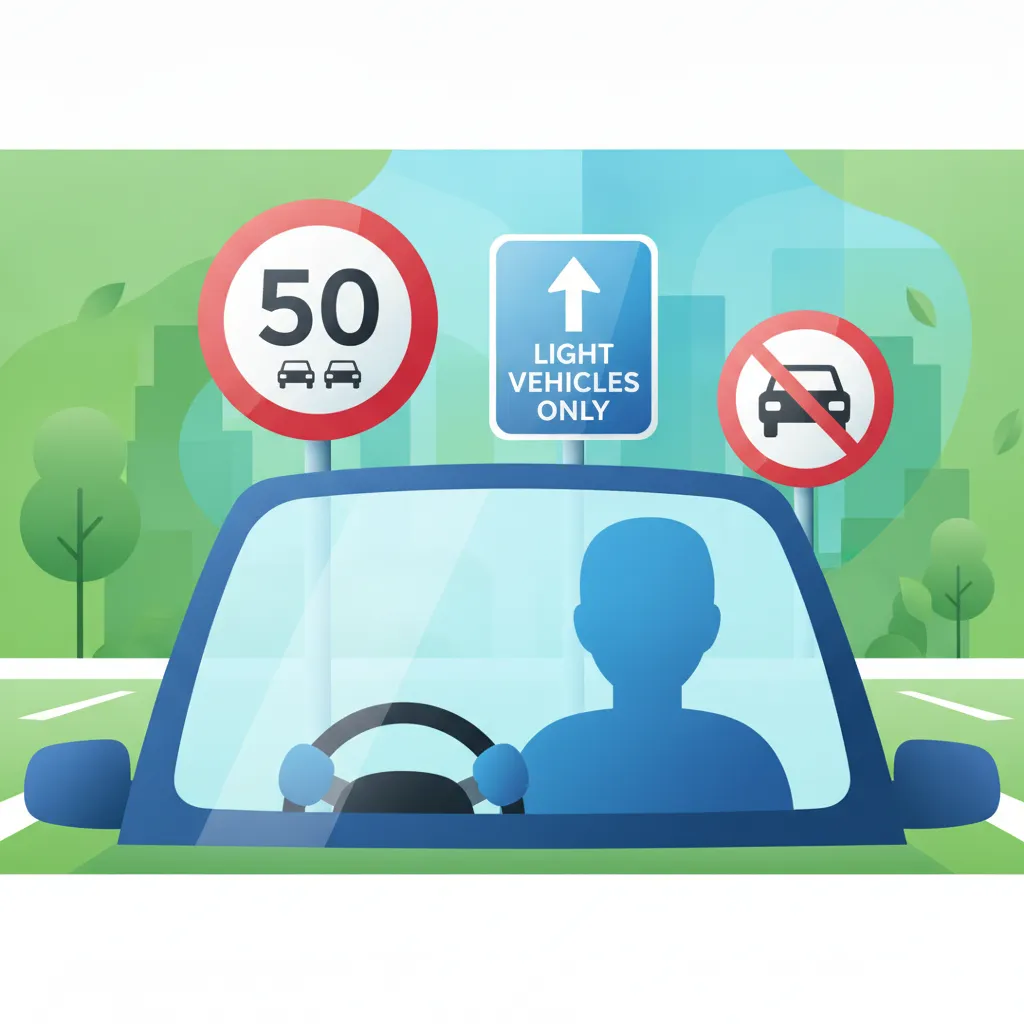
This lesson focuses on the identification and interpretation of traffic signs and road markings that are particularly relevant to passenger vehicle drivers, such as bus lane indications, priority road signs, and specific speed limits. Learners will explore how these signs affect route planning, compliance, and the overall flow of traffic. Mastery of sign interpretation ensures safe and lawful operation in various traffic conditions.
Learn professional techniques for identifying and protecting pedestrians, motorcyclists, and cyclists near passenger vehicles. This lesson provides an overview of situational awareness strategies and defensive driving measures necessary for navigating urban environments and school areas safely according to Turkish traffic conventions.

This lesson examines the critical interactions between goods vehicles and vulnerable road users such as pedestrians, cyclists, and motorcyclists, particularly in urban environments. Learners will explore right-of-way rules, maintaining safe distances, and strategies for anticipating the actions of these road users. The lesson emphasizes the importance of clear communication and protective driving.
This lesson focuses on protecting vulnerable road users, such as pedestrians, cyclists, and motorcyclists, in mixed traffic environments. Learners will examine specific strategies for increased vigilance, anticipatory driving, and properly yielding to these users. The lesson also covers high-risk zones, such as school areas and public transport stops, emphasizing the need for heightened safety.

Learners will identify the different categories of vulnerable road users and understand the heightened risks they face. The lesson emphasizes the importance of recognizing these users, anticipating their actions, and taking proactive measures to ensure their safety while operating passenger vehicles. Strategies for mitigating danger and fostering a protective driving environment are explored.
Learners will examine the complexities of operating in environments where various road users, including pedestrians, cyclists, and motorcyclists, coexist. The lesson emphasizes the need for heightened situational awareness, defensive driving techniques, and proactive hazard anticipation. Strategies for navigating mixed traffic safely, especially in congested urban areas, are highlighted.
This lesson emphasizes the importance of yielding to pedestrians and cyclists at intersections, crosswalks, and designated lanes. Learners will understand the legal obligations to provide safe passage to vulnerable road users and the correct procedures for stopping and allowing them to cross. Real-world examples illustrate scenarios where failing to yield can lead to accidents.
This lesson focuses on the specific needs and challenges faced by children, elderly, and disabled pedestrians. Topics include recognizing vulnerable road users, understanding their behavior, and providing additional safety measures. The lesson also discusses school zones, pedestrian crossing assistance, and strategies to mitigate risks. Real-world examples demonstrate how drivers can anticipate dangers.
This lesson examines the interaction between drivers and cyclists, focusing on the safe sharing of road space. Topics include the proper use of bicycle lanes, yielding to cyclists at intersections, and safe passing distances. The lesson also addresses cyclist vulnerabilities and ways to minimize risks. Real-world examples illustrate common hazards when sharing the road.
Find clear answers to common questions learners have about Recognizing and Responding to Vehicle Emergencies. Learn how the lesson is structured, which driving theory objectives it supports, and how it fits into the overall learning path of units and curriculum progression in Turkey. These explanations help you understand key concepts, lesson flow, and exam focused study goals.
Do not slam on the brakes. Keep a firm grip on the steering wheel, allow the vehicle to slow down gradually by lifting off the accelerator, and steer carefully toward the side of the road once you have full control.
Your priority is passenger safety. Safely pull over and stop the vehicle, immediately open the doors, evacuate the passengers to a safe area away from traffic, and then use the onboard fire extinguisher if it is safe to do so.
Look for a spongy brake pedal, a loss of pressure, unusual grinding noises, or a warning light on your dashboard. If these occur, reduce speed by downshifting and using the parking brake gradually if necessary.
Use our comprehensive practice search to find exactly the Turkish driving theory questions you need to master. Whether reviewing specific road signs, traffic rules, or first aid scenarios, select your perfect practice set and boost your confidence for the official ehliyet sınavı.