
This lesson explores the essential rules for navigating Austria's high-speed road network, including Autobahnen and Schnellstraßen. You will learn the critical procedures for safe merging, lane discipline, and choosing appropriate speeds to pass your Category B theory exam with confidence.

Lesson content overview
Welcome to this comprehensive lesson, an essential part of your Austrian Driving License B Theory Course. Here, we delve into the specific rules and safe practices for navigating Austria's high-speed road networks: Autobahnen (motorways) and Schnellstraßen (expressways). These roads are designed for efficient, long-distance travel, but their higher speeds demand precise driving skills and strict adherence to traffic regulations.
This chapter will equip you with the knowledge to merge onto these roads confidently, maintain proper lane discipline, select an appropriate and safe speed, execute exits smoothly, and understand the critical function of the hard shoulder (Pannenstreifen). Mastering these concepts is not just about passing your driving test; it's about ensuring your safety and the safety of others on Austria's busiest roads.
Autobahnen and Schnellstraßen form the backbone of Austria's road infrastructure, facilitating rapid travel across the country. While both are high-speed, multi-lane roads, there are subtle differences in their design and signage. Autobahnen are generally larger, with distinct blue signage, while Schnellstraßen often have green signage and may sometimes have less strict construction standards, although they still operate under similar high-speed rules.
The fundamental principles for driving on both road types revolve around high levels of attention, anticipating traffic flow, and precise vehicle control. Given the increased speeds, reaction times are significantly reduced, making flawless execution of maneuvers paramount. Every decision, from merging to exiting, must be made with foresight and adherence to specific traffic laws (StVO – Straßenverkehrsordnung).
The acceleration lane (or Einbeschleunigungsstreifen) is a crucial component of entering any Autobahn or Schnellstraße. Its purpose is to allow vehicles to gain sufficient speed to match the flow of traffic on the main carriageway before merging. Incorrect use of this lane is a common cause of accidents, particularly rear-end collisions.
Using the acceleration lane correctly is a multi-step process that requires observation, judgment, and decisive action:
Observe Early: As you enter the acceleration lane, immediately check your left exterior mirror and glance over your left shoulder (blind spot check) to assess the speed and density of traffic on the main carriageway. Look for gaps you can merge into.
Accelerate Decisively: Use the full length of the acceleration lane to build up speed. Your goal is to reach a speed that is as close as possible to that of the vehicles already on the Autobahn or Schnellstraße.
Signal Your Intention: Activate your left turn signal well in advance to indicate your intention to merge. This warns drivers on the main road and allows them to adjust their speed or lane if necessary.
Find a Safe Gap: Do not force your way into traffic. Wait for a sufficiently large and safe gap. A good rule of thumb is to look for a gap that allows you to merge without causing the vehicles behind you to brake or swerve.
Merge Smoothly: Once a safe gap is identified and your speed matches that of the main traffic, steer smoothly into the desired lane. Maintain your speed and turn off your signal.
A common mistake is merging too early at too low a speed or merging too late, causing abrupt braking for traffic already on the main road. Remember, the minimum speed for vehicles entering an Autobahn should generally be at least 80 km/h, especially if the main lane is flowing faster.
Drivers on the main carriageway are generally expected to facilitate merging traffic by moving to a left lane if it's safe to do so. However, the primary responsibility for safe merging lies with the driver entering the main road. Never assume others will make way for you.
Lane discipline is fundamental to ensuring smooth traffic flow and minimizing collision risks on high-speed roads. In Austria, the principle of "keep right unless overtaking" (Rechtsfahrgebot) is strictly enforced.
Staying in the left lane unnecessarily, also known as "lane hogging," impedes faster traffic and is a violation that can lead to fines. It disrupts the natural flow of traffic and can provoke impatient drivers into unsafe overtaking maneuvers.
When you intend to exit an Autobahn or Schnellstraße, your lane discipline becomes even more critical. You must plan your lane changes well in advance, using the information provided by exit signage (Ausfahrtzeichen). These signs typically appear several kilometers before the actual exit, indicating the distance to the next exit (e.g., 2000m, 1000m, 500m).
Choosing the correct speed on an Autobahn or Schnellstraße goes beyond simply adhering to the speed limit (Geschwindigkeitsbegrenzung). While the general maximum speed limit on Austrian Autobahnen is 130 km/h and often 100 km/h on Schnellstraßen (unless otherwise indicated), drivers must constantly assess various factors to determine a safe and appropriate speed.
While there might be a recommended speed (Richtgeschwindigkeit) for optimal traffic flow, it's not legally binding. However, it's a good indicator of a safe and efficient speed under normal conditions. Always prioritize safety over speed.
Exiting an Autobahn or Schnellstraße requires careful planning and execution to ensure a smooth transition from high-speed to lower-speed roads. The exit lane (Ausfahrstreifen) is a dedicated lane that peels off from the main carriageway.
A major violation and cause of accidents is a late lane change into the exit ramp. This often involves cutting across lanes suddenly, forcing other drivers to brake or swerve, and significantly increasing the risk of collision.
The hard shoulder (Pannenstreifen) is the emergency lane located immediately to the right of the main carriageway on Autobahnen and Schnellstraßen. Its purpose is critical for road safety and efficiency.
Ignoring the rules on Autobahnen and Schnellstraßen carries significant risks and legal consequences. Understanding these common violations can help you avoid them.
| Violation | Why it’s Wrong | Correct Behavior | Consequence |
|---|---|---|---|
| Late lane change into exit ramp | Causes sudden braking for following traffic; disrupts flow, increases collision risk. | Change to exit lane well before the indicated sign (usually at half-distance or earlier). | Fine, penalty points, increased accident risk. |
| Driving on the hard shoulder as a shortcut | Obstructs emergency vehicles, creates hazard for stopped vehicles, illegal. | Remain on the main carriageway; use hard shoulder only in emergencies. | Fine, penalty points, possible license suspension. |
| Merging at too low speed from acceleration lane | Leads to abrupt deceleration of main traffic, increasing rear-end collision risk. | Accelerate to match main lane speed (generally at least 80 km/h) before merging. | Fine, penalty points. |
| Overtaking on the right | Violates lane discipline, causes confusion, dangerous due to blind spots. | Overtake only on the left side of the overtaken vehicle. | Fine, penalty points. |
| Exceeding posted speed limit | Reduces reaction time, increases stopping distance, higher crash severity. | Adhere to posted limits; adjust speed for weather/traffic conditions. | Fine, penalty points, increased accident risk, potential license suspension for severe offenses. |
| Driving too close to the vehicle ahead (tailgating) | Reduces safe stopping distance, increases crash risk, intimidating. | Maintain at least a 2-second gap under normal conditions, larger in adverse weather. | Warning, possible fine, penalty points. |
| Unnecessary left lane usage (lane hogging) | Blocks faster traffic, disrupts flow, can provoke dangerous overtaking. | Keep to the rightmost available lane unless actively overtaking or preparing for a left-side maneuver/exit (rare). | Fine, increased potential for road rage incidents. |
Driving conditions are rarely constant. On Autobahnen and Schnellstraßen, it's imperative to adapt your driving style and speed to various factors.
The rules governing Autobahn and Schnellstraße driving are not arbitrary; they are meticulously designed to ensure maximum safety and efficiency at high speeds.
By internalizing these principles and understanding the reasoning behind them, you will develop a safer, more responsible, and more confident driving style on Austria's high-speed road network.
This lesson covers the essential procedures for driving on Austria's high-speed road network, including proper use of acceleration lanes to merge at matching traffic speed, strict adherence to lane discipline (keep right unless overtaking), and planning exit maneuvers well in advance to avoid dangerous late changes. The hard shoulder is strictly reserved for emergencies, and drivers must know the stopping procedure with hazard lights, visibility vest, and warning triangle placement. Speed selection must account for posted limits, traffic density, weather conditions, and following distance, with the 2-second rule serving as a minimum guideline under ideal conditions.
A short set of high-value points that capture the most important learning from this lesson.
Use the full acceleration lane to reach at least 80 km/h and match main traffic speed before merging
Overtake only on the left; keep right unless actively passing (Rechtsfahrgebot)
Enter the exit lane before the continuous white line begins to avoid dangerous late maneuvers
The hard shoulder (Pannenstreifen) is reserved exclusively for breakdowns and emergency services
Maintain a minimum 2-second following distance, increasing it substantially in adverse weather or traffic
Explore all units and lessons included in this driving theory course.
Merging procedure: observe mirrors and blind spot, accelerate to match traffic speed, signal left, find a safe gap, merge smoothly
Exiting procedure: watch for early exit signs, plan lane changes in advance, enter exit lane before the solid white line, decelerate gradually on the ramp
Autobahnen use blue signage and allow up to 130 km/h; Schnellstraßen use green signage and typically allow 100 km/h
If stopping on the hard shoulder: activate hazard lights, wear a high-visibility vest, place warning triangle 100m behind, wait behind crash barrier
Form an emergency corridor (Rettungsgasse) in traffic jams by moving right to allow emergency vehicles through
Merging at too low a speed from the acceleration lane, forcing main carriageway traffic to brake abruptly
Making a late lane change into the exit ramp, cutting across multiple lanes and disrupting traffic flow
Lane hogging in the left lane, blocking faster traffic and creating frustration and dangerous passing attempts
Driving on the hard shoulder to bypass congestion or as a shortcut, which is illegal and blocks emergency access
Overtaking on the right side, which is prohibited because other drivers do not expect to be passed on that side
Lesson content overview
A short set of high-value points that capture the most important learning from this lesson.
Use the full acceleration lane to reach at least 80 km/h and match main traffic speed before merging
Overtake only on the left; keep right unless actively passing (Rechtsfahrgebot)
Enter the exit lane before the continuous white line begins to avoid dangerous late maneuvers
The hard shoulder (Pannenstreifen) is reserved exclusively for breakdowns and emergency services
Maintain a minimum 2-second following distance, increasing it substantially in adverse weather or traffic
Explore all units and lessons included in this driving theory course.
Merging procedure: observe mirrors and blind spot, accelerate to match traffic speed, signal left, find a safe gap, merge smoothly
Exiting procedure: watch for early exit signs, plan lane changes in advance, enter exit lane before the solid white line, decelerate gradually on the ramp
Autobahnen use blue signage and allow up to 130 km/h; Schnellstraßen use green signage and typically allow 100 km/h
If stopping on the hard shoulder: activate hazard lights, wear a high-visibility vest, place warning triangle 100m behind, wait behind crash barrier
Form an emergency corridor (Rettungsgasse) in traffic jams by moving right to allow emergency vehicles through
Merging at too low a speed from the acceleration lane, forcing main carriageway traffic to brake abruptly
Making a late lane change into the exit ramp, cutting across multiple lanes and disrupting traffic flow
Lane hogging in the left lane, blocking faster traffic and creating frustration and dangerous passing attempts
Driving on the hard shoulder to bypass congestion or as a shortcut, which is illegal and blocks emergency access
Overtaking on the right side, which is prohibited because other drivers do not expect to be passed on that side
Explore search topics learners often look for when studying Autobahn and Schnellstraße: Merging, Exits, and Speed Choice. These topics reflect common questions about road rules, driving situations, safety guidance, and lesson level theory preparation for learners in Austria.
Browse additional driving theory lessons that cover connected traffic rules, road signs, and common driving situations related to this topic. Improve your understanding of how different rules interact across everyday traffic scenarios.
Learn the precise rules and techniques for safely navigating exit ramps on Austrian motorways and expressways. This lesson covers strategies for choosing the right exit and executing the manoeuvre smoothly according to traffic law.

This lesson provides essential knowledge for using Austria's high-speed road network. It covers the correct procedure for entering via acceleration lanes, maintaining strict lane discipline (keeping right, passing left), and understanding the digital or physical Vignette (toll sticker) requirement. The formation of the 'Rettungsgasse' (emergency corridor) during traffic jams is also a key topic.

This lesson addresses advanced manoeuvres that require precise timing and judgment, such as merging onto a motorway from an acceleration lane. It explains the importance of matching the speed of the traffic flow and finding a safe gap before moving over. The content also covers procedures for navigating lane drops and the 'zipper merge' (Reißverschlusssystem) principle in congested situations, promoting efficient and cooperative driving.

This lesson provides clear instructions on how to safely navigate roundabouts. It explains the critical rule of yielding to traffic already circulating and how to choose the correct lane based on the intended exit. The content also covers proper signaling procedures for entering and exiting the roundabout to communicate intentions clearly.

This lesson provides clear instructions for maneuvering through single and multi-lane roundabouts. It covers the critical rule of giving way to traffic already in the circle, proper lane selection based on the intended exit, and the correct use of indicators when entering and exiting. Mastering roundabouts is key to efficient and safe travel in modern Austrian traffic systems.
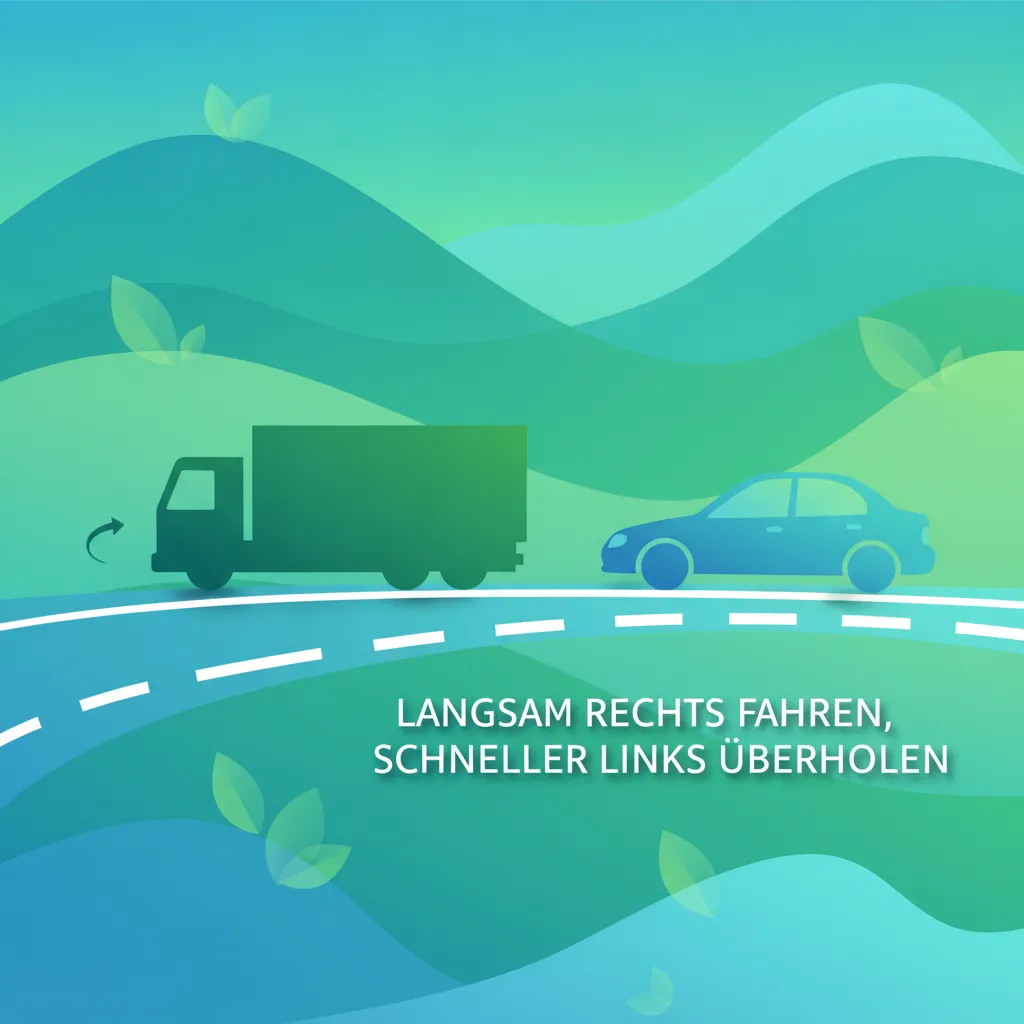
High-speed driving in a large vehicle requires excellent lane discipline and forward planning. This lesson covers Austrian speed limits for buses, rules for joining and leaving the motorway, safe overtaking procedures, and maintaining appropriate following distances. The critical importance of forming an emergency corridor ('Rettungsgasse') in traffic jams is also a key topic.

This lesson provides a comprehensive explanation of Austria's right-of-way laws, which are fundamental to intersection safety. It covers the meaning of different priority signs and clarifies the 'Rechts vor Links' (priority to the right) rule that applies at unmarked junctions. A clear understanding of these rules is essential to prevent conflicts and collisions in urban and rural settings.
This lesson addresses the unique environment of road tunnels, common in Austria's alpine regions. Key safety practices include removing sunglasses before entry, adhering to specific tunnel speed limits, and maintaining a safe following distance. It also covers emergency procedures, such as locating emergency exits and using designated call boxes in case of a breakdown or accident.

This lesson details the regulations for heavy goods vehicles on Austria's high-speed road network. It covers the specific speed limits, rules on lane usage (e.g., when overtaking is permitted), and procedures for entering and exiting the motorway. Adherence to these rules is crucial for safety in a fast-paced environment.

This lesson covers the specific regulations associated with special Austrian road signs and areas. It details the rules for 'Schutzweg' (protected pedestrian crossings), 'Kreisverkehr' (roundabouts), and the distinction between 'Fahrbahn' (road) and 'Fahrstreifen' (lane). Understanding these specific contexts is essential for safe navigation in urban and suburban environments.

This lesson guides learners through the essential documentation required for legally operating a vehicle in Austria, including the registration certificate, proof of insurance, and the driver's license (Führerschein). It explains the Austrian Vignette system for using motorways (Autobahnen) and expressways (Schnellstraßen), covering how to purchase, affix, and comply with the regulations. The content also provides awareness of specific toll roads and their payment systems to ensure full legal conformity.
Understand the critical factors involved in risk assessment on high-speed roads. This lesson focuses on how to choose appropriate speeds, maintain safe distances, and anticipate hazards on Austrian Autobahnen and Schnellstraßen.

This lesson introduces the proactive mindset of defensive driving, which focuses on anticipating potential hazards rather than just reacting to them. It teaches techniques for systematic risk assessment, including scanning the road ahead, checking mirrors frequently, and being aware of the potential actions of other road users. By adopting these safe habits, drivers can create a buffer of safety around their vehicle and significantly reduce the likelihood of being involved in an accident.
This lesson provides essential knowledge for using Austria's high-speed road network. It covers the correct procedure for entering via acceleration lanes, maintaining strict lane discipline (keeping right, passing left), and understanding the digital or physical Vignette (toll sticker) requirement. The formation of the 'Rettungsgasse' (emergency corridor) during traffic jams is also a key topic.

This lesson provides advice for navigating popular scenic routes, which often feature heavy traffic, cyclists, and distracted drivers. It emphasizes maintaining focus on the road despite beautiful scenery and anticipating unpredictable actions from other tourists who may stop suddenly. Adopting a patient and defensive mindset is key to safely enjoying these remarkable roads.

This lesson explores the specific characteristics and hazards of rural roads (Landstraßen). It emphasizes the need for careful speed adjustment due to factors like narrow lanes, poor road surfaces, and hidden entrances. Learners will understand how to safely navigate blind curves, use passing places, and anticipate the presence of slow-moving agricultural vehicles or livestock on the road.
High-speed driving in a large vehicle requires excellent lane discipline and forward planning. This lesson covers Austrian speed limits for buses, rules for joining and leaving the motorway, safe overtaking procedures, and maintaining appropriate following distances. The critical importance of forming an emergency corridor ('Rettungsgasse') in traffic jams is also a key topic.
This lesson addresses advanced manoeuvres that require precise timing and judgment, such as merging onto a motorway from an acceleration lane. It explains the importance of matching the speed of the traffic flow and finding a safe gap before moving over. The content also covers procedures for navigating lane drops and the 'zipper merge' (Reißverschlusssystem) principle in congested situations, promoting efficient and cooperative driving.

This lesson details the legally prescribed speed limits across Austria's road network, including the specific limits for urban areas (Ortsgebiet), rural roads (Landstraßen), motorways (Autobahnen), and expressways (Schnellstraßen). Learners will understand how to interpret speed limit signs, including those with supplementary conditions. Adherence to these legal requirements is a fundamental aspect of road safety and compliance with the Austrian road traffic act (StVO).

This lesson addresses the heightened vulnerability of motorcyclists and outlines essential strategies for personal safety and risk mitigation. It covers the importance of wearing certified protective gear, maintaining situational awareness, and adopting a defensive riding posture. By understanding and anticipating potential hazards in the Austrian traffic environment, riders can actively reduce their risk of accidents.

This lesson prepares riders for the specific conditions of Austria's mountain passes. It highlights hazards such as tight hairpin turns, potential for sudden weather changes, rockfall, and variable road surfaces. Awareness of these unique challenges allows riders to anticipate risks and adapt their technique for safe and enjoyable alpine touring.

This lesson highlights the specific hazards of riding on countryside roads in Austria. It teaches riders to be vigilant for wildlife crossing signs, especially at dawn and dusk, and how to safely approach and overtake slow-moving agricultural machinery. Awareness of potential surface hazards like mud, gravel, or manure from farm access points is also crucial for maintaining traction.
Find clear answers to common questions learners have about Autobahn and Schnellstraße: Merging, Exits, and Speed Choice. Learn how the lesson is structured, which driving theory objectives it supports, and how it fits into the overall learning path of units and curriculum progression in Austria. These explanations help you understand key concepts, lesson flow, and exam focused study goals.
No, it is strictly forbidden to use the hard shoulder for driving or reaching an exit. It is exclusively for emergency stops in case of a breakdown or medical necessity.
The general speed limit is 130 km/h, unless otherwise indicated by signs or electronic displays. Always watch for lower limits during adverse weather or high traffic volumes.
Traffic already on the motorway generally has the right of way. You must adjust your speed on the acceleration lane to merge safely without forcing others to brake sharply.
Yes, a Schnellstraße often has a lower standard speed limit (usually 100 km/h) compared to the 130 km/h on an Autobahn, though always follow the posted traffic signs.
Refine your study plan by searching for specific Austrian driving theory practice sets. Pinpoint questions related to particular road rules, signs, or challenge levels, and begin practicing immediately to reinforce your knowledge and excel in your official exam with confidence. Get started with focused revision today.