
This lesson provides a comprehensive overview of the specific regulations for operating heavy goods vehicles on Austria's high-speed road network. You will master the complex rules surrounding Autobahn and Schnellstraße usage, ensuring you are prepared for both the theory exam and safe operation as a professional driver.

Lesson content overview
Navigating Austria's high-speed road network, which includes Autobahnen (motorways) and Schnellstraßen (expressways), with a heavy goods vehicle demands specialized knowledge and strict adherence to regulations. Due to their significant mass, longer braking distances, and different acceleration characteristics, heavy vehicles require specific operational adjustments compared to passenger cars. This lesson provides a comprehensive guide to safe, legal, and efficient driving for categories C, C1, C1E, and CE on these crucial routes.
Understanding and applying these regulations is not just about legal compliance; it is fundamental to ensuring road safety for all users, optimizing traffic flow, and preventing accidents that can have severe consequences. Drivers must integrate these specific rules with their general traffic knowledge, always prioritizing safety and responsible operation.
Austria's high-speed road network consists primarily of Autobahnen and Schnellstraßen. While similar in design and often featuring multiple lanes, central reservations, and grade-separated junctions, there are important distinctions, particularly regarding speed limits and regulations for heavy vehicles. Both types of roads are crucial for national and international heavy vehicle transport.
Autobahnen are designed for maximum efficiency and speed, providing direct routes between major centers. Schnellstraßen serve a similar purpose but often connect smaller regions or act as feeder roads to the Autobahn network, sometimes with slightly lower design speeds or more frequent junctions. For heavy vehicle drivers, recognizing these differences is key to adhering to the correct speed limits and regulations.
Adhering to the correct speed limits is paramount for heavy vehicles, as their increased mass translates to significantly higher kinetic energy and longer stopping distances. Austrian law mandates specific maximum speeds for different heavy goods vehicle categories on Autobahnen and Schnellstraßen. These limits are generally lower than those for passenger cars to enhance safety and manage vehicle dynamics.
To understand the speed limits, it is important to first distinguish between the heavy vehicle categories relevant to these regulations:
These categorizations directly influence the maximum legal speed on Austria's high-speed roads.
On Autobahnen, the general maximum speed limit for passenger cars is 130 km/h. However, heavy goods vehicles must observe significantly stricter limits:
It is a common error for heavy vehicle drivers to assume they can match passenger car speeds. Always remember to check your vehicle category and adhere to the corresponding limit.
Schnellstraßen generally have a default speed limit of 100 km/h for passenger cars. For heavy vehicles, the regulations are as follows:
Autobahnen, the stricter limit applies.Schnellstraßen is lower than on Autobahnen.Drivers must be particularly vigilant when transitioning between Autobahnen and Schnellstraßen, as the applicable speed limit for C1 and C1E vehicles changes.
Both Autobahnen and Schnellstraßen frequently utilize variable speed limit signs. These electronic signs can display temporary speed reductions due to traffic congestion, adverse weather conditions (e.g., fog, heavy rain, snow), or roadworks. Heavy vehicle drivers must strictly obey these variable limits, even if they are higher than their standard maximum speed (which is highly unlikely for heavy vehicles) or lower than what conditions might initially suggest.
Ignoring variable speed limits, especially during poor visibility, significantly increases accident risk. These signs are often accompanied by other warnings, such as fog advisory symbols.
Proper lane discipline is crucial for maintaining smooth traffic flow and preventing dangerous situations on high-speed roads. Heavy goods vehicles are subject to specific rules designed to minimize their impact on overall traffic and reduce collision risks.
On Autobahnen and Schnellstraßen with two or more lanes in the same direction, heavy goods vehicles are mandated to keep to the right-hand lane. This means the rightmost available lane should be used for normal cruising. The only exceptions are when preparing to exit to the left (which is rare on Austrian motorways for heavy vehicles) or when actively overtaking slower traffic.
Remaining in the right lane ensures that faster-moving vehicles, particularly passenger cars, can proceed without unnecessary obstruction, thereby reducing congestion and the need for frequent, potentially hazardous lane changes by other drivers.
Heavy vehicles are permitted to overtake on the left-hand lane only. This maneuver must be executed efficiently and safely:
Overtaking on the right-hand side is generally prohibited unless explicitly permitted by specific road markings or signs, such as in heavy, slow-moving, or stationary traffic where lanes are clearly designated for specific directions. In such scenarios, overtaking on the right might be implicitly permitted where lanes are clearly designated and moving at different speeds, but this is an exception, not a rule for heavy vehicles.
There are specific situations where overtaking is strictly prohibited for heavy vehicles, often indicated by traffic signs:
This sign indicates that heavy goods vehicles exceeding the specified weight (often 3.5 t or 7.5 t) are not allowed to overtake. These restrictions are frequently found in areas with narrow lanes, steep gradients, high traffic density, or known accident blackspots. Drivers must obey these signs rigorously.
Additionally, heavy vehicles are usually prohibited from overtaking on sections of Autobahn or Schnellstraße where visibility is severely restricted (e.g., sharp curves, crests, dense fog) or where temporary lane reductions are in place for roadworks.
The maneuvers of merging onto and exiting high-speed roads are critical phases of driving a heavy vehicle. They require precise timing, speed management, and clear communication with other road users to prevent accidents.
When entering an Autobahn or Schnellstraße, heavy vehicle drivers must utilize the acceleration lane effectively to match the speed of the prevailing traffic.
Assess traffic: Observe the flow of traffic on the main carriageway, paying attention to speed and gaps.
Accelerate smoothly: Use the entire length of the acceleration lane to build up speed. Heavy vehicles require more time and distance to accelerate, so plan accordingly. Aim to reach a speed as close as possible to the prevailing traffic speed.
Signal intention: Activate your left-turn indicator early, clearly signaling your intention to merge into traffic.
Yield and merge: You must yield to traffic already on the main carriageway. Look for a safe gap, adjust your speed if necessary, and merge smoothly without causing other drivers to brake or swerve. Do not stop at the end of the acceleration lane unless absolutely necessary due to traffic conditions.
Merging at too low a speed is a common and dangerous mistake, as it creates a significant speed differential with oncoming traffic, greatly increasing the risk of a rear-end collision.
Exiting an Autobahn or Schnellstraße requires equally careful planning and execution.
Early lane positioning: Well in advance of your desired exit, move into the rightmost lane.
Signal intention: Activate your right-turn indicator at least 5 seconds before you intend to begin entering the deceleration lane. This provides ample warning to following traffic.
Enter deceleration lane: Move into the deceleration lane while maintaining your speed from the main carriageway.
Brake within deceleration lane: Begin to reduce your speed using a combination of retarders and service brakes only after you have fully entered the deceleration lane. Avoid braking suddenly on the main carriageway.
Adjust to exit speed: Reduce your speed gradually to the appropriate limit for the exit ramp and subsequent road.
Abrupt braking on the main carriageway before entering the deceleration lane is hazardous, especially for heavy vehicles, as it can surprise following traffic and increase the risk of rear-end collisions.
One of the most critical aspects of heavy vehicle operation on high-speed roads is managing stopping distances. Due to their much greater mass, heavy vehicles require significantly longer distances to come to a complete stop compared to passenger cars, even with advanced braking systems.
Several factors contribute to the extended stopping distance of heavy vehicles:
kinetic energy, which requires more work from the brakes over a longer distance to dissipate.Stopping distance increases exponentially with speed. Even a small increase in speed results in a disproportionately longer stopping requirement.stopping distances.Heavy vehicles are typically equipped with auxiliary braking systems, such as retarders (e.g., exhaust brakes, engine brakes, hydraulic/electromagnetic retarders). These systems are vital for speed control, especially on long descents, and for assisting the service brakes during deceleration.
Retarders reduce the reliance on friction brakes, preventing them from overheating and suffering brake fade. When approaching exits or slowing down, engaging the retarder early allows for gradual speed reduction, preserving the service brakes for the final stop. This practice is essential for maintaining consistent braking performance and extending the lifespan of brake components.
Given the extended stopping distances of heavy vehicles, maintaining a sufficiently large following distance is not merely a recommendation but a critical safety requirement. As a minimum, heavy vehicle drivers should maintain at least a 2-second gap under normal, dry conditions.
This minimum gap must be extended proportionally for:
Failure to maintain an adequate following distance is a leading cause of rear-end collisions involving heavy vehicles.
Driving heavy vehicles in adverse weather conditions on high-speed roads demands significant adjustments to speed, following distance, and driving technique. Ignoring these necessary changes dramatically increases the risk of accidents.
Wet roads significantly reduce tire grip, increasing stopping distances and the risk of hydroplaning. In rainy conditions:
following distance to at least 3-4 seconds.retarders for gradual deceleration and apply service brakes smoothly.Fog is one of the most dangerous conditions for heavy vehicles on Autobahnen and Schnellstraßen.
fog advisory signs and reduce your speed to the indicated limit (e.g., 50 km/h), or even lower if visibility is severely restricted.following distance, as the reaction time in fog is severely limited.overtaking in dense fog.Winter conditions present the greatest challenge for heavy vehicles. Snow and ice drastically reduce traction, making braking, accelerating, and steering extremely difficult.
following distance.The nature of the cargo, its weight, and its distribution significantly influence how a heavy vehicle handles, brakes, and responds to steering inputs. Understanding load impact is fundamental to safe operation on high-speed roads.
center of gravity (CoG) is the theoretical point where the entire mass of the vehicle is concentrated. A higher CoG (e.g., due to tall or top-heavy cargo) increases the risk of rollover, especially during cornering or sudden evasive maneuvers on Autobahnen.axle load limits can compromise vehicle stability, reduce braking efficiency, and lead to tire failure. It can also damage road infrastructure and incur substantial fines. Proper distribution ensures that no single axle or set of axles is overloaded.Load securing is the process of fastening cargo to prevent movement during transport. On high-speed roads, inadequate load securing can have catastrophic consequences:
center of gravity and potentially leading to loss of control or a rollover.Drivers must adjust their driving style based on the vehicle's load:
following distances, and reduced speeds, especially on curves or when wind might be a factor. Acceleration will also be slower.Trailers introduce additional dynamics, such as articulation, snaking, and increased overall length and weight. Drivers must be particularly mindful of their increased turning radius, longer stopping distances, and the potential for trailer sway at high speeds.Many traffic signs on Austrian Autobahnen and Schnellstraßen are specifically designed for or have particular implications for heavy goods vehicles. Proper interpretation is vital for legal compliance and safety.
Beyond general speed limit signs, specific signs may indicate speed limits that apply only to heavy vehicles, often differentiated by weight.
When you see a standard speed limit sign (e.g., 100 km/h), remember that your vehicle's category-specific limit (e.g., 80 km/h for Category C/CE on Schnellstraßen) still takes precedence if it's lower. These specialized signs impose an additional restriction.
Signs can designate specific lanes for different types of vehicles or prohibit certain maneuvers for heavy vehicles.
These signs are particularly important on multi-lane sections where, for example, the leftmost lane might be reserved for passenger cars, or trucks might be required to use only the rightmost two lanes.
You will also encounter signs that restrict vehicles based on their weight or dimensions, crucial for route planning, especially when diverting off Autobahnen or Schnellstraßen due to roadworks or other issues.
These signs are vital to prevent heavy vehicles from entering roads or bridges that cannot support their weight.
Understanding common pitfalls and adhering to best practices can significantly reduce the risk of violations and enhance safety on Autobahnen and Schnellstraßen.
Schnellstraße where the limit for C1 is 80 km/h.Autobahnen and Schnellstraßen. Use your vehicle's speed limiter where appropriate.kinetic energy.overtaking or when there's no need to overtake.overtaking and return to the rightmost available lane promptly and safely.Autobahn at a significantly lower speed than the main traffic, or failing to signal an exit early enough.acceleration lane to match traffic speed before merging. Signal exits at least 5 seconds in advance and use the deceleration lane for braking.axle load exceeding legal limits or with unsecured cargo.axle loads and total vehicle weight are within legal limits and that all cargo is properly secured.following distance, and use appropriate lighting (low beams, fog lights) in poor visibility.Operating heavy goods vehicles on Austrian Autobahnen and Schnellstraßen is a complex task that demands a high level of responsibility and precision. The specific rules regarding speed limits, lane discipline, merging and exiting procedures, stopping distances, and load management are designed to mitigate the inherent risks associated with driving large, heavy vehicles in a high-speed environment.
By diligently adhering to these regulations, drivers contribute significantly to their own safety, the safety of other road users, and the efficient flow of traffic. Continuous awareness of vehicle dynamics, prevailing road and weather conditions, and precise interpretation of traffic signage are the cornerstones of responsible heavy vehicle operation in Austria.
This lesson covers the specific Austrian regulations for heavy goods vehicles on Autobahnen and Schnellstraßen, including distinct speed limits by vehicle category (C/CE limited to 80 km/h, C1/C1E at 100 km/h on Autobahn but 80 km/h on Schnellstraße), mandatory right-lane discipline with left lane use strictly for overtaking, and proper protocols for merging and exiting that include signaling at least 5 seconds before exits and using deceleration lanes for braking. Heavy vehicle drivers must maintain extended stopping distances and following gaps of at least 2 seconds, extending these for heavier loads or poor conditions. The lesson also addresses weather adaptations, load impact on vehicle dynamics, and common violations that learners should avoid to ensure both exam success and safe professional driving.
A short set of high-value points that capture the most important learning from this lesson.
Heavy vehicle speed limits on Austrian Autobahnen and Schnellstraßen differ by category: C and CE vehicles are limited to 80 km/h on both road types, while C1 and C1E vehicles can travel at 100 km/h on Autobahnen but only 80 km/h on Schnellstraßen.
Heavy vehicles must keep to the right-hand lane at all times except when actively overtaking; the left lane is strictly for passing slower vehicles and drivers must return to the right lane immediately after completing the maneuver.
When exiting, signal your intention at least 5 seconds before entering the deceleration lane, and only begin braking after fully transitioning into the deceleration lane—not on the main carriageway.
Variable speed limits and weather conditions require additional speed reductions beyond the standard limits; heavy vehicles must obey fog advisory signs and reduce speed drastically in poor visibility.
Retarders and engine braking should be used proactively for speed control to prevent brake fade and maintain consistent stopping performance, especially on long descents.
Explore all units and lessons included in this driving theory course.
80 km/h maximum for C/CE on both Autobahn and Schnellstraße; C1/C1E maximum is 100 km/h on Autobahn but only 80 km/h on Schnellstraße.
Right-hand lane is mandatory for normal cruising; left lane only for overtaking and return to right lane immediately after passing.
Use full acceleration lane to match traffic speed before merging; use full deceleration lane for braking before exiting.
Maintain minimum 2-second following distance under normal conditions, extending to 3-4 seconds for heavy loads or adverse weather.
Load securing must be checked before departure and periodically during journeys to prevent cargo shift or loss.
Assuming heavy vehicles can match passenger car speeds (130 km/h) on Autobahn, leading to speeding violations and dangerous speed differentials.
Remaining in the left lane after overtaking or cruising in the left lane unnecessarily, obstructing faster traffic and violating lane discipline rules.
Merging onto high-speed roads at too low a speed, creating dangerous speed gaps with main carriageway traffic and increasing rear-end collision risk.
Using high beam headlights in fog, which reflects off moisture droplets and severely reduces visibility instead of improving it.
Failing to adjust driving for vehicle load state; fully loaded vehicles require earlier and more gradual braking while empty vehicles may be less stable in crosswinds.
Lesson content overview
A short set of high-value points that capture the most important learning from this lesson.
Heavy vehicle speed limits on Austrian Autobahnen and Schnellstraßen differ by category: C and CE vehicles are limited to 80 km/h on both road types, while C1 and C1E vehicles can travel at 100 km/h on Autobahnen but only 80 km/h on Schnellstraßen.
Heavy vehicles must keep to the right-hand lane at all times except when actively overtaking; the left lane is strictly for passing slower vehicles and drivers must return to the right lane immediately after completing the maneuver.
When exiting, signal your intention at least 5 seconds before entering the deceleration lane, and only begin braking after fully transitioning into the deceleration lane—not on the main carriageway.
Variable speed limits and weather conditions require additional speed reductions beyond the standard limits; heavy vehicles must obey fog advisory signs and reduce speed drastically in poor visibility.
Retarders and engine braking should be used proactively for speed control to prevent brake fade and maintain consistent stopping performance, especially on long descents.
Explore all units and lessons included in this driving theory course.
80 km/h maximum for C/CE on both Autobahn and Schnellstraße; C1/C1E maximum is 100 km/h on Autobahn but only 80 km/h on Schnellstraße.
Right-hand lane is mandatory for normal cruising; left lane only for overtaking and return to right lane immediately after passing.
Use full acceleration lane to match traffic speed before merging; use full deceleration lane for braking before exiting.
Maintain minimum 2-second following distance under normal conditions, extending to 3-4 seconds for heavy loads or adverse weather.
Load securing must be checked before departure and periodically during journeys to prevent cargo shift or loss.
Assuming heavy vehicles can match passenger car speeds (130 km/h) on Autobahn, leading to speeding violations and dangerous speed differentials.
Remaining in the left lane after overtaking or cruising in the left lane unnecessarily, obstructing faster traffic and violating lane discipline rules.
Merging onto high-speed roads at too low a speed, creating dangerous speed gaps with main carriageway traffic and increasing rear-end collision risk.
Using high beam headlights in fog, which reflects off moisture droplets and severely reduces visibility instead of improving it.
Failing to adjust driving for vehicle load state; fully loaded vehicles require earlier and more gradual braking while empty vehicles may be less stable in crosswinds.
Explore search topics learners often look for when studying Autobahn and Schnellstraße Usage for Heavy Vehicles. These topics reflect common questions about road rules, driving situations, safety guidance, and lesson level theory preparation for learners in Austria.
Browse additional driving theory lessons that cover connected traffic rules, road signs, and common driving situations related to this topic. Improve your understanding of how different rules interact across everyday traffic scenarios.
Understand the specific regulations for driving heavy goods vehicles on Austria's high-speed road network. This lesson covers speed limits, lane usage, and entry/exit procedures crucial for safety and compliance.

This lesson details the general traffic rules applicable to heavy goods vehicles on Austrian roads, highlighting differences from passenger car regulations. It covers key topics such as right-of-way at intersections, specific rules for overtaking, maintaining proper lane discipline, and adhering to designated speed limits. Understanding these rules is critical for safe integration into mixed traffic.

This lesson provides essential knowledge for using Austria's high-speed road network. It covers the correct procedure for entering via acceleration lanes, maintaining strict lane discipline (keeping right, passing left), and understanding the digital or physical Vignette (toll sticker) requirement. The formation of the 'Rettungsgasse' (emergency corridor) during traffic jams is also a key topic.
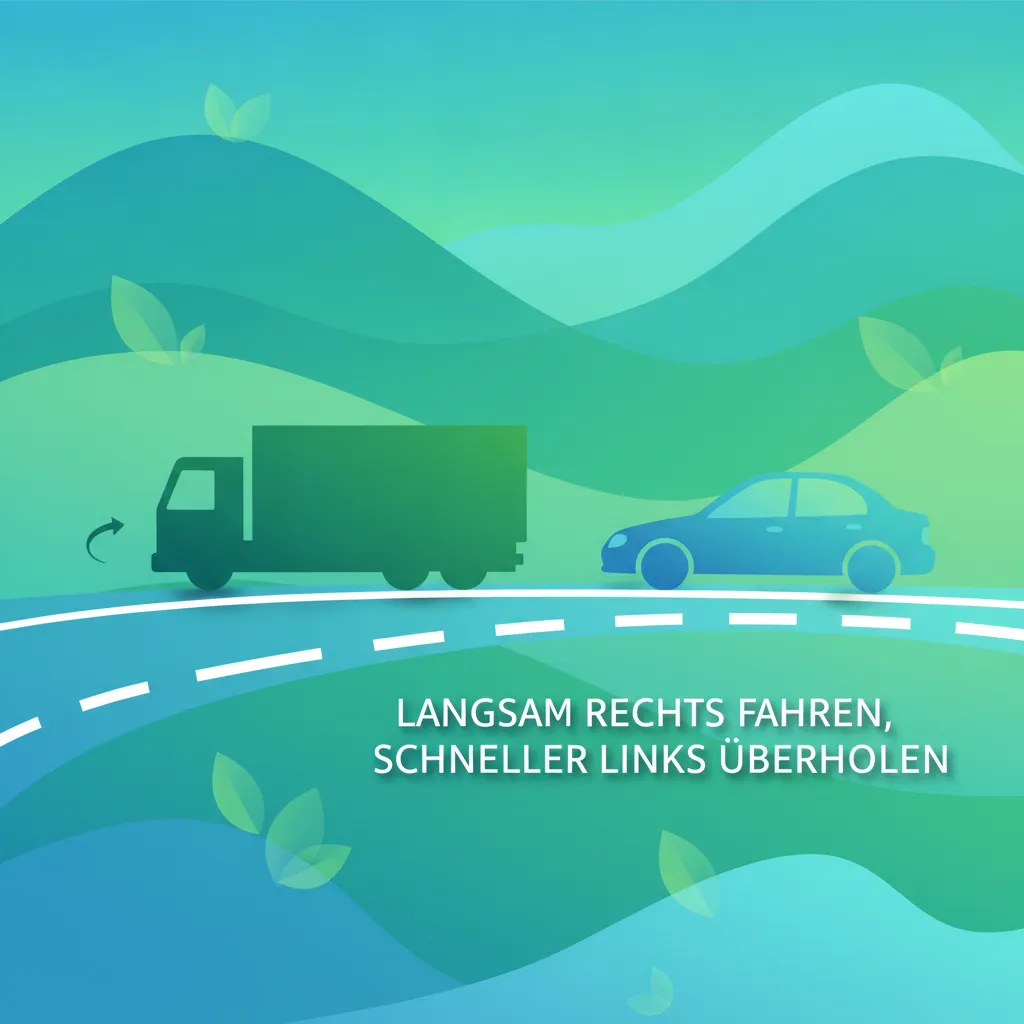
High-speed driving in a large vehicle requires excellent lane discipline and forward planning. This lesson covers Austrian speed limits for buses, rules for joining and leaving the motorway, safe overtaking procedures, and maintaining appropriate following distances. The critical importance of forming an emergency corridor ('Rettungsgasse') in traffic jams is also a key topic.

This lesson provides a comprehensive guide to driving on high-speed motorways (Autobahnen) and expressways (Schnellstraßen). It details the correct procedure for using the acceleration lane to merge safely, the principles of strict lane discipline, and strategies for choosing a safe speed relative to traffic flow and conditions. The lesson also explains the rules for using exit ramps and the purpose of the hard shoulder (Pannenstreifen).

This lesson focuses on the legal restrictions concerning a heavy vehicle's dimensions, including maximum height, width, and length. It teaches drivers how to interpret road signs and supplemental plates that indicate these limits. This knowledge is crucial for route planning, especially when navigating under bridges, through tunnels, and on restricted roads.
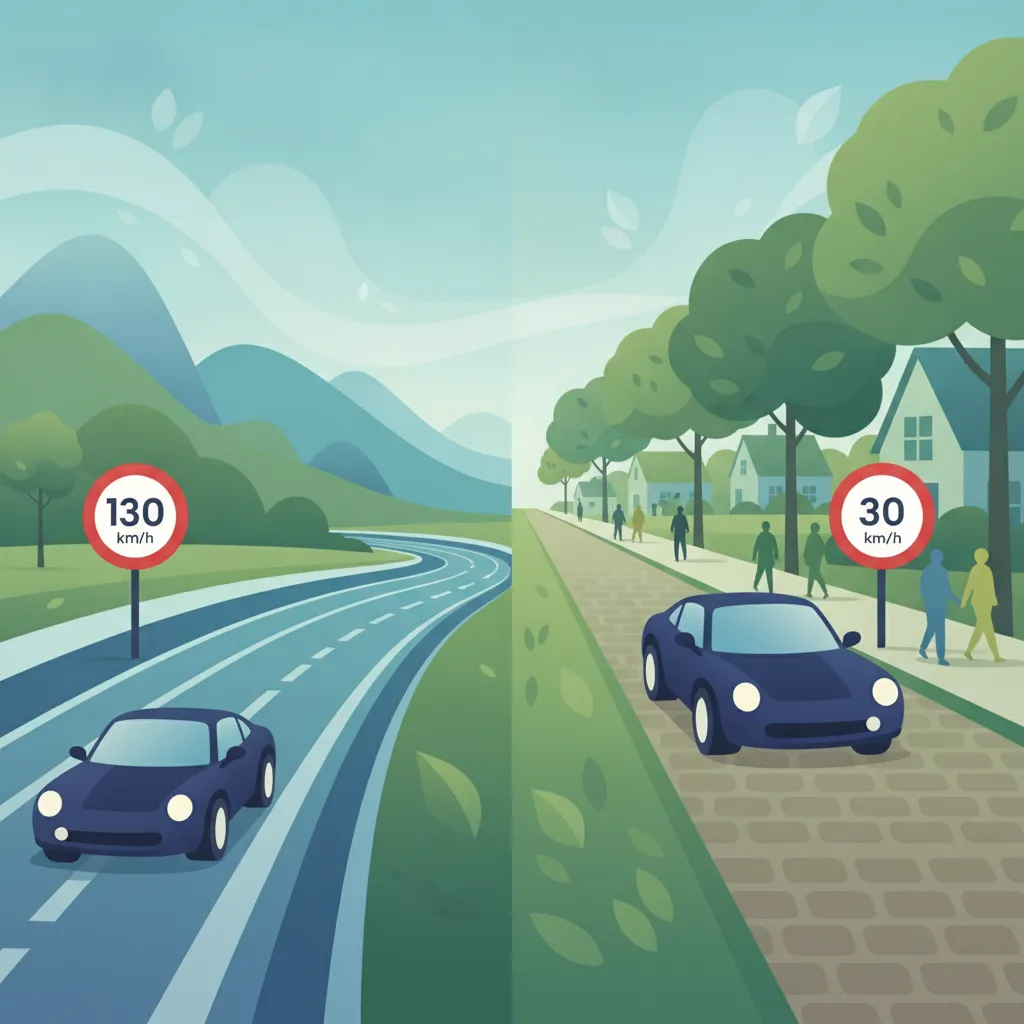
This lesson details the legally prescribed speed limits across Austria's road network, including the specific limits for urban areas (Ortsgebiet), rural roads (Landstraßen), motorways (Autobahnen), and expressways (Schnellstraßen). Learners will understand how to interpret speed limit signs, including those with supplementary conditions. Adherence to these legal requirements is a fundamental aspect of road safety and compliance with the Austrian road traffic act (StVO).
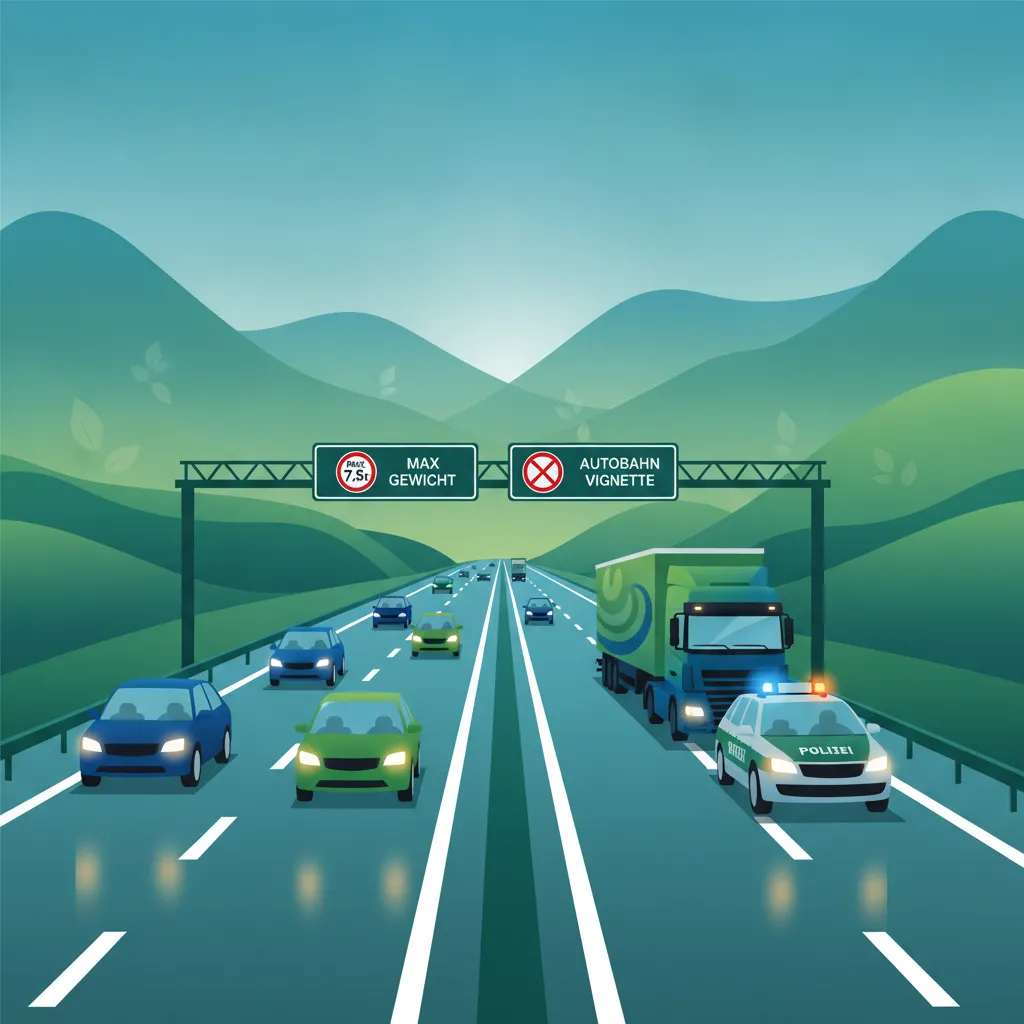
This lesson explains the system of penalties and enforcement for heavy vehicle operations in Austria. It covers the fines and penalty points associated with common traffic violations, such as overloading or insecure loads. Learners will understand the role of authorities in conducting roadside checks and inspections to ensure regulatory compliance.
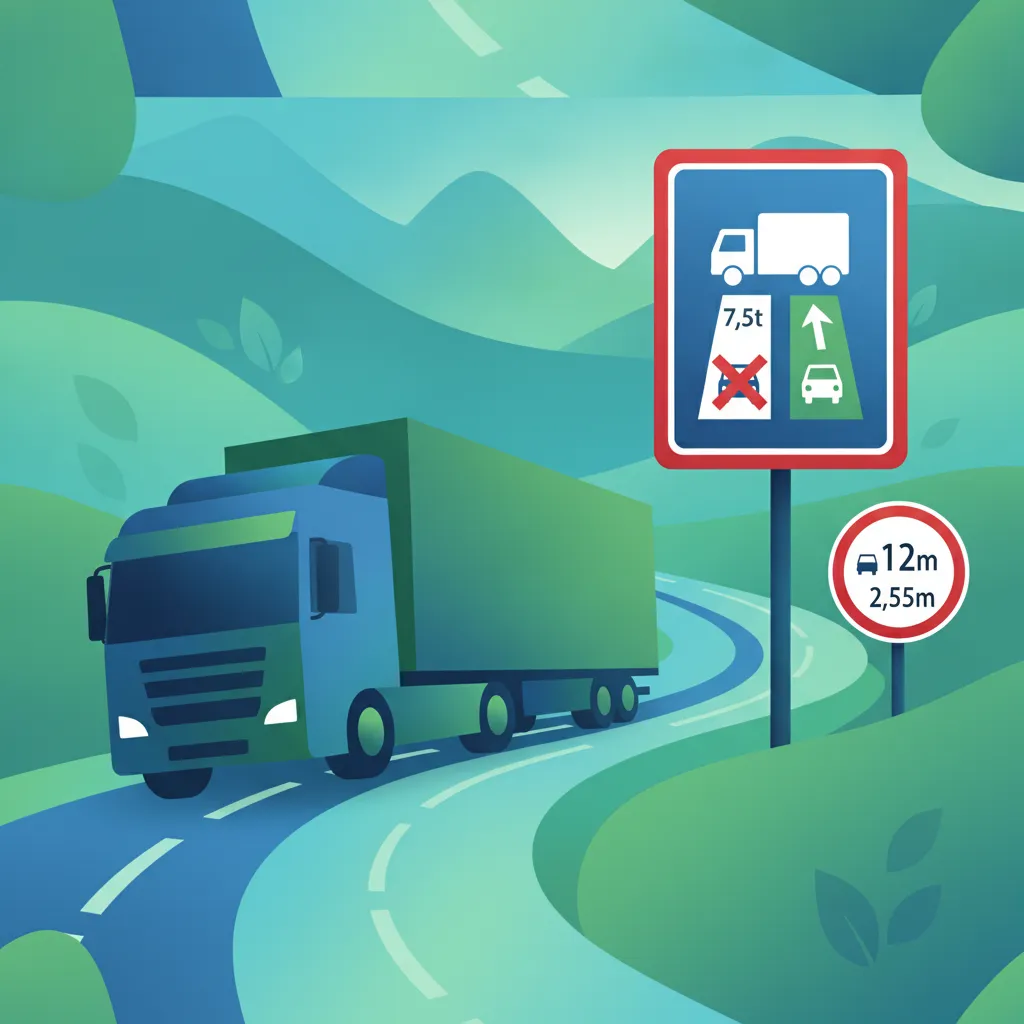
This lesson focuses on the specific Austrian road signs and supplemental plates that apply to heavy goods vehicles. It explains how to interpret signage indicating weight limits, height and width restrictions, lane usage rules, and other critical regulatory information. Correctly understanding these signs is essential for legal compliance and safe navigation on Austria's roads.

This lesson covers the specific weight restrictions that apply to sensitive infrastructure like Alpine passes and bridges throughout Austria. It explains how to identify these limits through road signage and incorporate them into route planning. Adhering to these restrictions is vital for preventing structural damage and ensuring safety in challenging terrain.
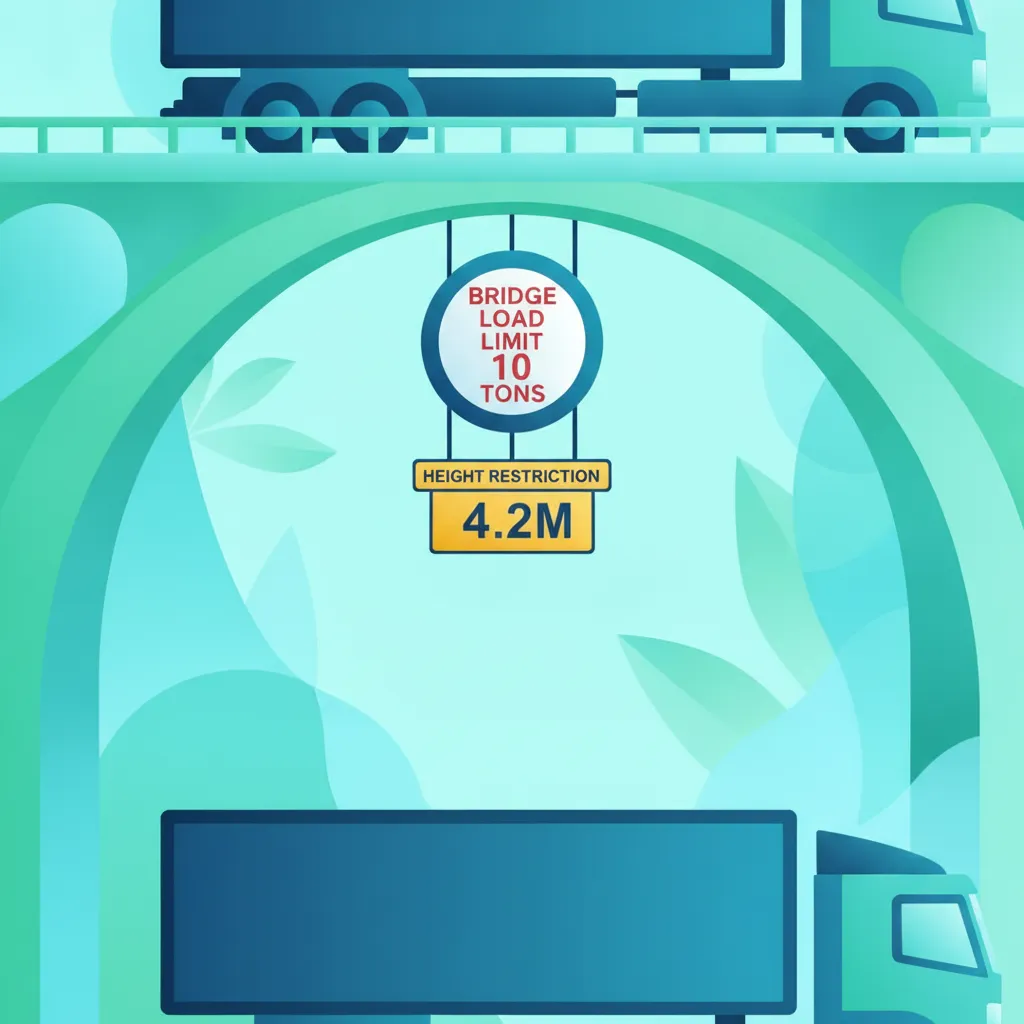
This lesson focuses on the critical importance of observing posted weight and height limits for bridges and other structures. It explains how to read the relevant signage and stresses the driver's responsibility to know their vehicle's exact height and weight. Ignoring these limits can lead to catastrophic structural failure and severe legal consequences.
Learn essential safety considerations for heavy vehicles on Austrian motorways and alpine routes, covering speed management, weather adaptation, and route planning to avoid restrictions and hazards.
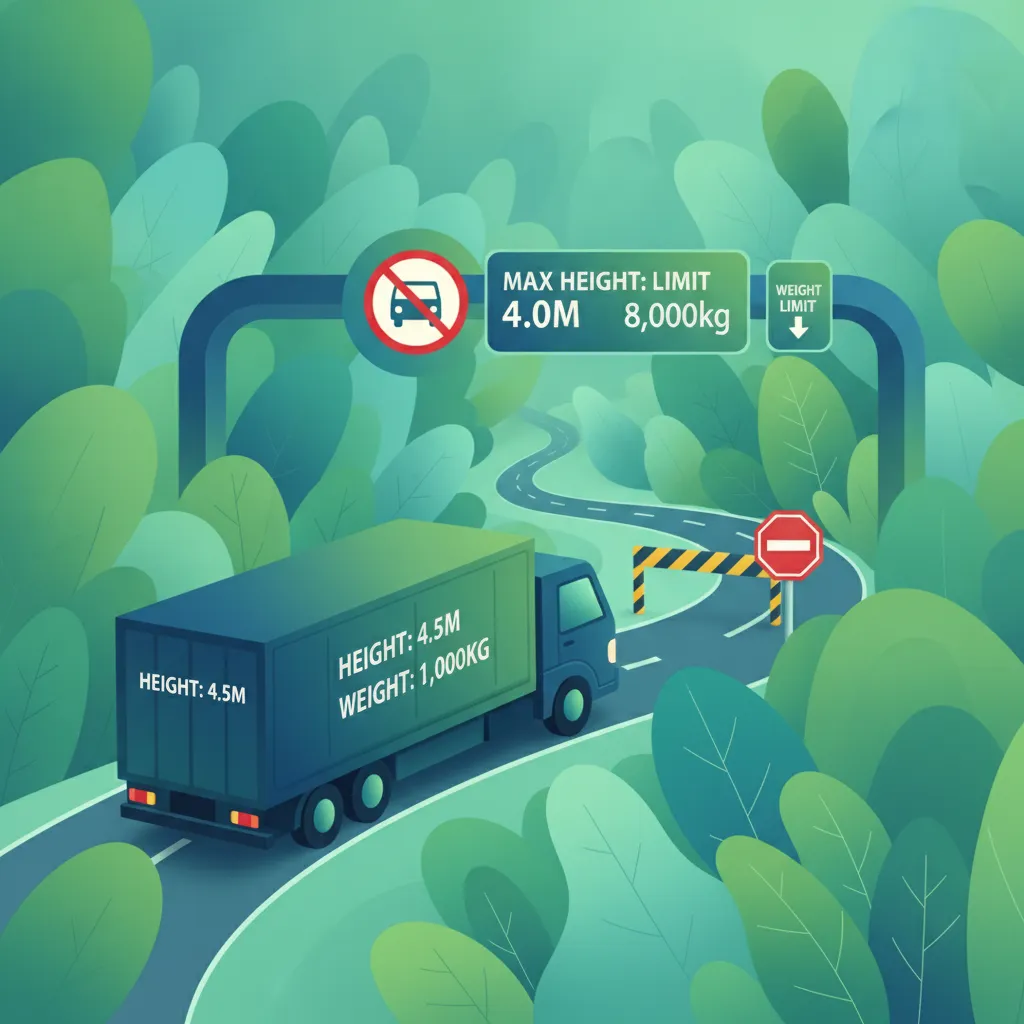
This lesson covers the practical aspects of planning a route for a heavy goods vehicle. It explains how to use maps and specialized GPS systems to identify and avoid roads with height, weight, or other restrictions. Proactive route planning is essential for ensuring an efficient, legal, and safe journey.
This lesson covers the specific weight restrictions that apply to sensitive infrastructure like Alpine passes and bridges throughout Austria. It explains how to identify these limits through road signage and incorporate them into route planning. Adhering to these restrictions is vital for preventing structural damage and ensuring safety in challenging terrain.
This lesson details the general traffic rules applicable to heavy goods vehicles on Austrian roads, highlighting differences from passenger car regulations. It covers key topics such as right-of-way at intersections, specific rules for overtaking, maintaining proper lane discipline, and adhering to designated speed limits. Understanding these rules is critical for safe integration into mixed traffic.
This lesson provides essential knowledge for using Austria's high-speed road network. It covers the correct procedure for entering via acceleration lanes, maintaining strict lane discipline (keeping right, passing left), and understanding the digital or physical Vignette (toll sticker) requirement. The formation of the 'Rettungsgasse' (emergency corridor) during traffic jams is also a key topic.

This lesson prepares drivers for the demanding conditions of Alpine driving. It covers techniques for managing speed on steep up-hill and down-hill sections, being prepared for sudden weather changes, and following safety protocols inside mountain tunnels. This specialized knowledge is essential for operating safely in mountainous terrain.

This lesson provides advice for navigating popular scenic routes, which often feature heavy traffic, cyclists, and distracted drivers. It emphasizes maintaining focus on the road despite beautiful scenery and anticipating unpredictable actions from other tourists who may stop suddenly. Adopting a patient and defensive mindset is key to safely enjoying these remarkable roads.
This lesson focuses on the legal restrictions concerning a heavy vehicle's dimensions, including maximum height, width, and length. It teaches drivers how to interpret road signs and supplemental plates that indicate these limits. This knowledge is crucial for route planning, especially when navigating under bridges, through tunnels, and on restricted roads.
This lesson focuses on the specific Austrian road signs and supplemental plates that apply to heavy goods vehicles. It explains how to interpret signage indicating weight limits, height and width restrictions, lane usage rules, and other critical regulatory information. Correctly understanding these signs is essential for legal compliance and safe navigation on Austria's roads.
High-speed driving in a large vehicle requires excellent lane discipline and forward planning. This lesson covers Austrian speed limits for buses, rules for joining and leaving the motorway, safe overtaking procedures, and maintaining appropriate following distances. The critical importance of forming an emergency corridor ('Rettungsgasse') in traffic jams is also a key topic.

This lesson addresses the challenge of manoeuvring a large vehicle through streets not designed for its size. It covers how to assess vertical and horizontal clearances, plan the vehicle's path through tight turns, and heed all restrictive signage. Careful planning and slow, precise control are essential for success.
Find clear answers to common questions learners have about Autobahn and Schnellstraße Usage for Heavy Vehicles. Learn how the lesson is structured, which driving theory objectives it supports, and how it fits into the overall learning path of units and curriculum progression in Austria. These explanations help you understand key concepts, lesson flow, and exam focused study goals.
No. Heavy goods vehicles are subject to stricter speed limits than passenger cars on Austrian motorways and expressways. You must always adhere to the specific limits for your vehicle class and weight category to ensure compliance.
Not necessarily. Heavy vehicles are often restricted from using the leftmost lane on motorways. Always check for specific local signage and traffic conditions, as overtaking prohibitions for trucks are common and strictly enforced.
While both are high-speed roads, they can have different construction standards and local speed limit variations. However, for heavy vehicle operation, the most important factor is following the specific road signs that apply to your vehicle's permissible total mass.
If you experience a breakdown, move to the emergency shoulder immediately if possible, turn on your hazard lights, and wear your high-visibility vest. Place the warning triangle at a sufficient distance behind the vehicle and evacuate passengers to a safe area away from the road.
Refine your study plan by searching for specific Austrian driving theory practice sets. Pinpoint questions related to particular road rules, signs, or challenge levels, and begin practicing immediately to reinforce your knowledge and excel in your official exam with confidence. Get started with focused revision today.