
This lesson details the critical safety procedures for passenger alighting, a vital component of your duty of care. You will learn to manage doors, perform necessary mirror checks, and monitor passenger movement until they are safely clear of the bus.

Lesson content overview
For professional bus and coach drivers in Austria, safely transporting passengers involves more than just navigating the roads. It encompasses a profound duty of care that extends to every aspect of the journey, including the critical moments when passengers are leaving the vehicle. This lesson, part of the Austrian Driving Theory Course for Bus & Coach Licence (Category D), details the essential procedures, legal requirements, and best practices for ensuring every passenger disembarks safely and without incident.
The act of alighting, though seemingly simple, presents numerous potential hazards. From uneven surfaces and distracted pedestrians to the bus itself, which can pose a risk if not handled correctly, a driver's vigilance is paramount. Understanding and implementing rigorous safety protocols during alighting is not only a legal obligation under the Straßenverkehrsordnung (StVO) and Personenbeförderungsgesetz (PBG) but also a cornerstone of professionalism and public trust in public transportation.
The driver's duty of care is a fundamental principle in passenger transport. It legally and ethically obligates the driver to safeguard passengers from harm. When it comes to alighting, this duty means monitoring and protecting passengers until they are no longer in the immediate vicinity or potential path of the bus or coach. This responsibility does not end when the doors close; it extends until passengers have safely moved away from the vehicle.
This enhanced duty of care requires active engagement from the driver, involving visual monitoring, careful vehicle control, and, at times, direct communication or assistance. Neglecting this duty can lead to serious injuries for passengers, significant legal consequences for the driver and operator, and a detrimental impact on public perception of safety in bus and coach services.
The legal and moral responsibility of a driver to ensure passenger safety, extending until they have safely alighted and are clear of the vehicle’s immediate vicinity and potential path.
Austrian traffic law, particularly the StVO, outlines general obligations for drivers to ensure safety. Specific to passenger transport, the PBG and related regulations reinforce the imperative to prevent harm to passengers. These laws mandate that drivers must not initiate vehicle movement until they have confirmed that all passengers have safely disembarked and the area around the doors is clear. This includes, but is not limited to, ensuring no passenger is caught by closing doors or is in a position to be struck by the vehicle as it departs.
A successful and safe alighting procedure hinges on the driver's ability to maintain an unobstructed visual contact, or clear line of sight, with the alighting area. This means the driver must have a comprehensive view of passengers as they step off the bus, as well as the immediate surroundings for any external hazards like cyclists or pedestrians.
Effective visual monitoring requires more than just a quick glance. It involves a systematic approach that integrates direct observation through windows with the intelligent use of mirrors and, if equipped, auxiliary camera systems.
Before starting any journey, and especially before each departure from a stop, drivers must ensure their mirrors are correctly adjusted. For buses and coaches, this includes dedicated side mirrors designed to provide a clear view along the side of the vehicle, particularly focusing on the door areas and the space immediately adjacent to the bus where passengers alight.
Take the time to adjust all mirrors (side, rear-view, and specialized bus mirrors) before you begin your route. Re-check them periodically, especially after vehicle adjustments or if visibility conditions change.
Common pitfalls include relying solely on the rear-view mirror, which often misses the critical blind spots along the sides of the vehicle where passengers are disembarking or where cyclists might approach. Drivers must actively scan all mirrors, making a conscious effort to identify any potential conflicts or hazards.
Buses and coaches, by their very nature, have significant blind spots. These are areas around the vehicle that are not visible directly through windows or even through standard mirrors. When passengers are alighting, these blind spots become particularly hazardous. A small child, a person with a low profile, or a fast-moving cyclist can easily be hidden from view.
To mitigate this, drivers must perform a thorough visual scan that extends beyond just the mirrors. This involves actively turning one's head, especially before closing doors and moving, to sweep areas that mirrors might not fully cover. This proactive approach helps to catch anything or anyone that might otherwise go unnoticed.
Areas around the vehicle that are not visible directly through windows or through standard mirrors, posing a significant hazard, especially during passenger alighting and departure.
Before any bus or coach moves away from a stop, a final door and mirror check is a non-negotiable safety procedure. This systematic verification process ensures that the alighting zone is entirely clear, the doors are safely closed, and no external hazards are present. This crucial step is explicitly mandated by Austrian law and operational guidelines to prevent accidents.
Never begin to move the vehicle while the doors are still open, or before you have completed a thorough mirror and visual check. Automated door sensors are safety aids but do not replace the driver's direct verification.
One of the most critical aspects of safe alighting is stationary safety. This principle dictates that the bus or coach must remain absolutely stationary, without any forward or backward movement, while passengers are disembarking. Even a slow creep can cause a disembarking passenger to lose balance, trip, or be struck by the vehicle.
The mandatory requirement that the vehicle remains completely stopped and without any movement while passengers are alighting, to prevent falls or collisions.
To ensure stationary safety, the driver must maintain constant brake pressure until all passengers have safely cleared the doors and the final checks are complete. Releasing the brake prematurely, even slightly, can lead to uncontrolled vehicle movement, especially if the bus is on an incline or if the engine is engaged in an "idle slip" (where the vehicle slowly moves forward at idle RPM).
Austrian traffic regulations (StVO) explicitly require drivers to ensure the safety of passengers during boarding and alighting. This implies that any movement of the vehicle during these processes that could endanger passengers is a violation.
A professional bus driver's duty of care is significantly heightened when dealing with vulnerable passengers. This group includes children, elderly individuals, persons with disabilities, and anyone struggling with heavy luggage or prams. These passengers may have reduced balance, slower reaction times, impaired vision, or limited mobility, making them more susceptible to accidents during alighting.
When vulnerable passengers are alighting, the driver must consciously allocate extra time for their disembarkation. This means holding the doors open longer and delaying departure until they are well clear of the bus. In some cases, direct assistance may be required or requested, such as offering a steadying hand or deploying a ramp for wheelchair users.
Regulations under the Austrian Equality Act (Gleichstellungsgesetz) and passenger transport laws require specific provisions and assistance for passengers with reduced mobility. Be familiar with these requirements.
It is crucial not to rush vulnerable passengers. A polite and calm demeanor, coupled with clear verbal communication, can significantly enhance their safety and comfort. Patience is a key attribute of a professional bus driver.
The precise positioning of the vehicle at a bus stop is fundamental to ensuring passengers can alight safely without stepping into traffic or encountering other hazards. The goal is to align the bus parallel to the curb or bus stop pavement, providing ample space for passengers to exit onto a designated pedestrian area.
Drivers should aim to stop the bus as close to the curb as safely possible, without scraping the tires or damaging the vehicle, and without blocking pedestrian access or ramps. The doors should open directly onto the pavement or a clear, safe alighting zone.
Incorrect positioning, such as stopping too far from the curb, forces passengers to step down into the road where they are immediately exposed to moving traffic. This is a significant safety hazard and a common violation. On narrow streets, drivers might need to position the vehicle slightly further into the lane to allow enough clearance for the doors and passengers to alight onto the sidewalk without risk.
Positioning the vehicle parallel to the curb or bus stop pavement, ensuring that passengers can safely step directly onto a designated pedestrian area without entering the roadway.
Effective communicative alighting involves using a combination of auditory and visual signals, along with verbal instructions, to guide passengers safely off the vehicle. Clear communication reduces uncertainty, helps coordinate disembarkation, and contributes to overall passenger safety.
Modern buses and coaches are equipped with various safety features, including:
Beyond these automated systems, the driver's verbal communication plays a vital role. Simple, clear announcements such as "Please mind your step" or "Alight carefully, ladies and gentlemen" can remind passengers to be vigilant, especially in challenging conditions like wet weather or uneven surfaces. This proactive communication helps prevent falls and encourages passengers to take their time.
Adherence to specific rules and regulations is mandatory for all Category D drivers in Austria. These legal requirements reinforce the driver's duty of care and provide a framework for safe operation.
Prohibition of Premature Vehicle Movement:
Mandatory Final Line-of-Sight Check:
Vehicle Must Be Fully Stopped Before Door Opening:
Assistance for Vulnerable Passengers:
Even experienced drivers can sometimes fall prey to complacency or face challenging situations. Awareness of common violations and how to handle edge cases is crucial for maintaining high safety standards.
Premature Vehicle Movement:
Incomplete Mirror Check:
Improper Door Opening into Traffic:
Insufficient Time for Vulnerable Passengers:
Alighting on the Roadway Due to Poor Positioning:
Driving conditions are rarely static. Professional drivers must adapt their alighting procedures based on environmental factors, road types, and the state of their vehicle.
Understanding the underlying principles of physics and human behavior reinforces the importance of safe alighting practices.
Ensuring safe alighting for all passengers is a cornerstone of professional bus and coach driving in Austria. It is a multi-faceted responsibility that integrates legal compliance, meticulous observation, vehicle control, and empathetic communication. By consistently adhering to the principles of duty of care, maintaining clear lines of sight, executing thorough mirror checks, prioritizing stationary safety, and providing extra vigilance for vulnerable passengers, drivers significantly reduce the risk of accidents.
Understanding and applying these practices in varying conditions—be it adverse weather, challenging road layouts, or specific passenger needs—is what distinguishes a highly competent and responsible driver. These rigorous safety protocols not only protect passengers but also safeguard the driver’s professional standing and contribute to the overall reliability and positive image of public transport.
This lesson covers the driver's legal and ethical duty of care during passenger alighting, a critical responsibility for Category D drivers under Austrian law. Key procedures include maintaining a complete stop while passengers disembark, performing thorough mirror and visual scans to cover blind spots, and ensuring vulnerable passengers receive extra time and assistance. Austrian traffic regulations (StVO) and passenger transport law (PBG) mandate that drivers must not move the vehicle until all passengers are safely clear, with specific provisions required for those with reduced mobility. Environmental factors such as weather, lighting, and road conditions affect alighting safety and require adaptive procedures.
A short set of high-value points that capture the most important learning from this lesson.
The driver's duty of care extends until passengers are completely clear of the vehicle's path, not just until doors close
A systematic visual scan combining side mirrors, rear-view mirror, and direct head checks is essential to cover blind spots around buses
The vehicle must remain fully stationary with firm brake pressure during passenger alighting to prevent falls and collisions
Vulnerable passengers including children, elderly, and disabled individuals require extra time and potential assistance
Precise curb alignment ensures passengers step onto pavement rather than into traffic lanes
Explore all units and lessons included in this driving theory course.
Under StVO § 7, the vehicle must be completely stopped before doors open and remain stationary until all passengers have safely alighted
Side mirrors are critical for monitoring the door area and adjacent blind spots; relying solely on the rear-view mirror is insufficient
Austrian Equality Act (Gleichstellungsgesetz) mandates specific assistance provisions for passengers with reduced mobility
Door sensors are safety aids only and do not replace manual visual verification by the driver
The final pre-departure check includes: confirming alighting clearance, verifying doors are latched, scanning all mirrors, and performing a direct view scan before releasing brakes
Releasing the brake or creeping forward while passengers are still stepping off, causing them to lose balance or be struck
Performing an incomplete mirror check by only glancing at the rear-view mirror and missing cyclists or pedestrians in side blind spots
Rushing vulnerable passengers by closing doors too quickly or beginning departure before they are fully clear of the bus
Stopping too far from the curb, forcing passengers to step directly into traffic lanes during alighting
Relying entirely on automated door sensors without manually verifying the door area is clear of obstructions
Lesson content overview
A short set of high-value points that capture the most important learning from this lesson.
The driver's duty of care extends until passengers are completely clear of the vehicle's path, not just until doors close
A systematic visual scan combining side mirrors, rear-view mirror, and direct head checks is essential to cover blind spots around buses
The vehicle must remain fully stationary with firm brake pressure during passenger alighting to prevent falls and collisions
Vulnerable passengers including children, elderly, and disabled individuals require extra time and potential assistance
Precise curb alignment ensures passengers step onto pavement rather than into traffic lanes
Explore all units and lessons included in this driving theory course.
Under StVO § 7, the vehicle must be completely stopped before doors open and remain stationary until all passengers have safely alighted
Side mirrors are critical for monitoring the door area and adjacent blind spots; relying solely on the rear-view mirror is insufficient
Austrian Equality Act (Gleichstellungsgesetz) mandates specific assistance provisions for passengers with reduced mobility
Door sensors are safety aids only and do not replace manual visual verification by the driver
The final pre-departure check includes: confirming alighting clearance, verifying doors are latched, scanning all mirrors, and performing a direct view scan before releasing brakes
Releasing the brake or creeping forward while passengers are still stepping off, causing them to lose balance or be struck
Performing an incomplete mirror check by only glancing at the rear-view mirror and missing cyclists or pedestrians in side blind spots
Rushing vulnerable passengers by closing doors too quickly or beginning departure before they are fully clear of the bus
Stopping too far from the curb, forcing passengers to step directly into traffic lanes during alighting
Relying entirely on automated door sensors without manually verifying the door area is clear of obstructions
Explore search topics learners often look for when studying Ensuring Safe Alighting for All Passengers. These topics reflect common questions about road rules, driving situations, safety guidance, and lesson level theory preparation for learners in Austria.
Browse additional driving theory lessons that cover connected traffic rules, road signs, and common driving situations related to this topic. Improve your understanding of how different rules interact across everyday traffic scenarios.
Learn critical procedures for ensuring the safety of children, elderly passengers, and those with reduced mobility as they alight from buses in Austria. Understand the extended duty of care and specific considerations required for these passenger groups during disembarkation.

This lesson focuses on the critical skill of sharing the road safely with vulnerable users, such as pedestrians, cyclists, and e-scooter riders. It details the legally required distance buffers for overtaking and emphasizes heightened awareness in sensitive areas like school zones and designated pedestrian crossings. The content provides guidelines for interacting with bicycle lanes and shared spaces to foster a protective and respectful driving attitude towards those most at risk.

Carrying standing passengers significantly increases a driver's responsibility for smooth control. This lesson details the specific adjustments required, such as reducing speed before turns to minimize sideways forces and increasing following distances to avoid sudden braking. It emphasizes the importance of awareness and observation of passengers' stability before accelerating from a stop.

This lesson focuses on the driver's legal and ethical responsibility for the safety of all passengers. It details the mandatory use of seatbelts for all occupants and provides a thorough explanation of Austrian regulations concerning child restraints. Learners will understand how to choose and correctly install the appropriate child seat based on a child's age, weight, and height, ensuring maximum protection in the event of a collision.

Providing safe and respectful access for all passengers is a legal and professional duty. This lesson details the correct operation of accessibility features like ramps, lifts, and kneeling systems. It covers how to secure wheelchairs and mobility aids, and how to communicate effectively and respectfully with passengers who may require assistance with boarding or alighting.

Pedestrians have absolute priority on marked crossings in Austria, and a bus driver must always be ready to give way. This lesson covers the rules for approaching and stopping for pedestrians, and highlights the risk of pedestrians being hidden by the vehicle's structure. It also stresses the danger of passengers crossing the road after alighting from your bus.

Cyclists and e-scooter riders are highly vulnerable and can be hard to see from a high driving position. This lesson focuses on the critical danger points, such as making right turns across cycle lanes and checking blind spots before pulling away from a stop. It teaches the importance of giving ample space when overtaking and anticipating their movements in busy city traffic.

This lesson reinforces the critical importance of protecting vulnerable road users in dense urban settings. It teaches drivers to be hyper-aware of pedestrians and cyclists, especially near intersections and crosswalks. Key techniques include reducing speed, making eye contact to confirm intentions, and giving ample space.

Transporting children carries the highest level of responsibility. This lesson covers the specific Austrian rules for school buses, including the use of warning signs and lights. It focuses on developing a mindset of extreme caution, anticipating that children may run into the road unexpectedly, and managing the chaotic traffic environment often found around schools during drop-off and pick-up times.
This lesson provides advanced strategies for proactively managing interactions with vulnerable road users to prevent conflicts before they arise. It teaches drivers to predict the likely behavior of pedestrians, cyclists, and e-scooter riders, especially at intersections and in congested areas. Key techniques include maintaining larger safety distances, covering the brake, and making eye contact to ensure mutual awareness and avoid accidents.
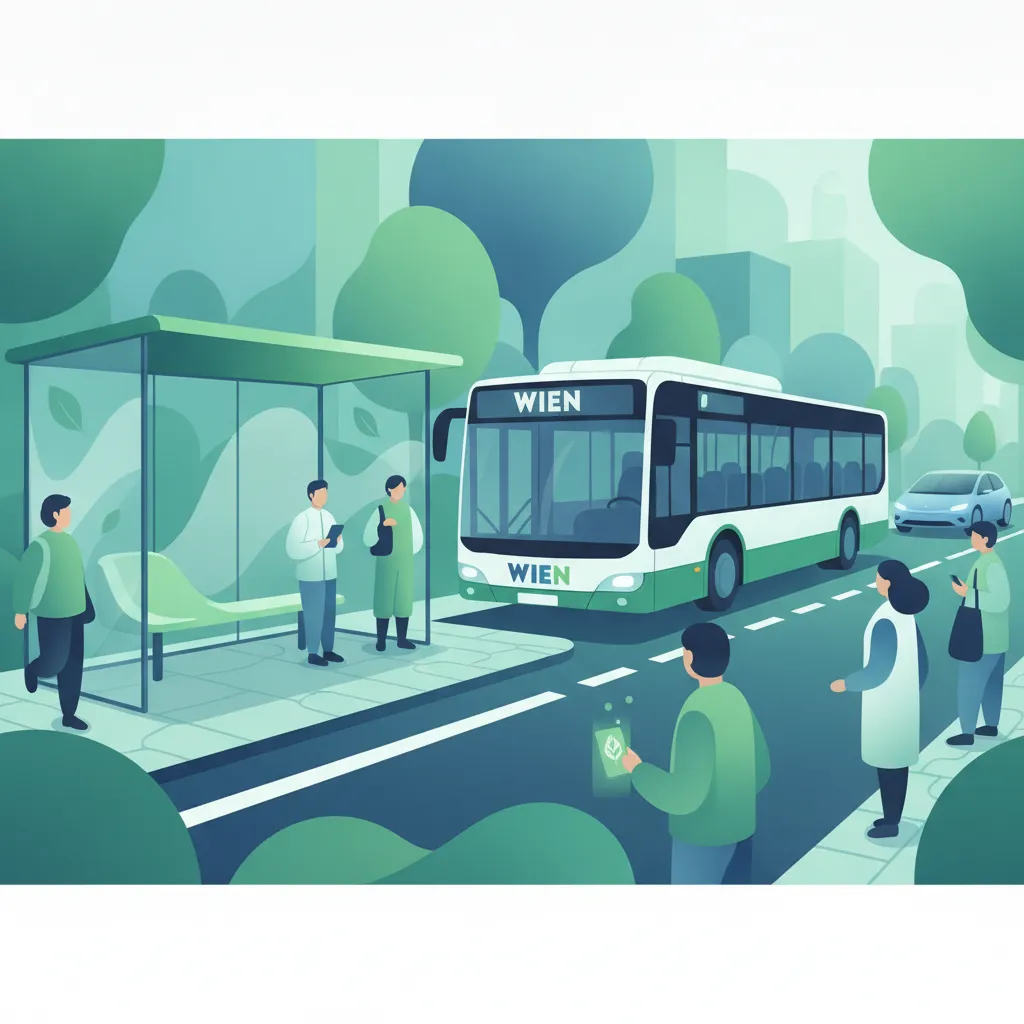
A safe stop begins with a planned approach. This lesson covers how to signal your intentions early, manage your speed, and scan for hazards like pedestrians and cyclists near the stop. It emphasizes the importance of aligning the bus parallel and close to the kerb to minimize the step for passengers, creating a safe platform for boarding and alighting.
Understand and avoid frequent mistakes drivers make during passenger alighting, focusing on mirror checks, stationary safety, and blind spot awareness. Learn from typical violations to enhance safety and compliance with Austrian traffic laws.
A safe stop begins with a planned approach. This lesson covers how to signal your intentions early, manage your speed, and scan for hazards like pedestrians and cyclists near the stop. It emphasizes the importance of aligning the bus parallel and close to the kerb to minimize the step for passengers, creating a safe platform for boarding and alighting.
Pedestrians have absolute priority on marked crossings in Austria, and a bus driver must always be ready to give way. This lesson covers the rules for approaching and stopping for pedestrians, and highlights the risk of pedestrians being hidden by the vehicle's structure. It also stresses the danger of passengers crossing the road after alighting from your bus.
Not all bus stops are created equal. This lesson trains you to assess a stop's environment and identify potential hazards, such as poor sightlines, proximity to a busy junction, or frequent presence of vulnerable road users. It encourages a proactive approach, where the driver heightens their observation and slows their approach when dealing with these known high-risk locations.
Transporting children carries the highest level of responsibility. This lesson covers the specific Austrian rules for school buses, including the use of warning signs and lights. It focuses on developing a mindset of extreme caution, anticipating that children may run into the road unexpectedly, and managing the chaotic traffic environment often found around schools during drop-off and pick-up times.
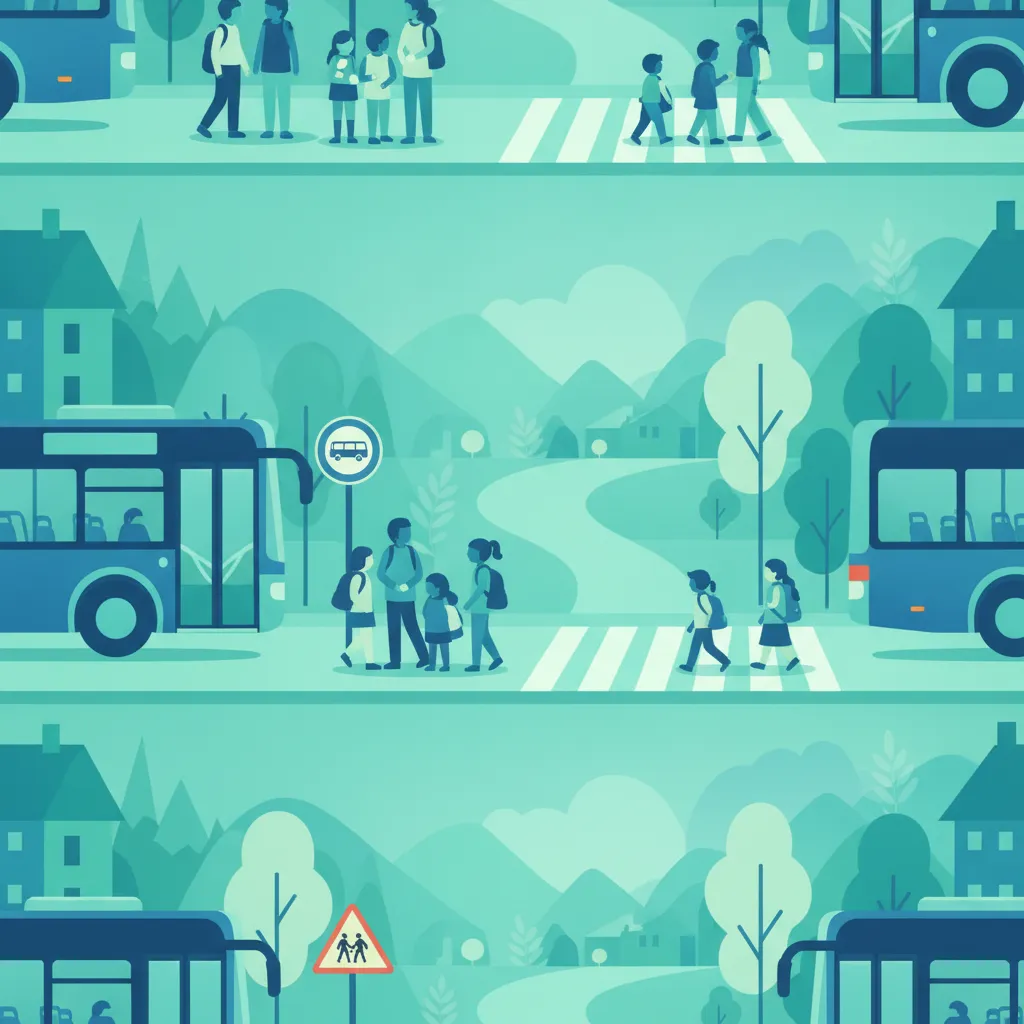
This lesson details the specific regulations and best practices for driving in areas with high pedestrian activity, such as bus stops and school zones. It explains the driver's obligation to stop for school buses with flashing lights and to yield to public buses pulling out from a stop. The content emphasizes the requirement to significantly reduce speed in marked school zones to ensure the safety of children.

The most critical moment at a stop is the final check before pulling away. This lesson teaches a non-negotiable safety routine: ensure all passengers are clear, close the doors, check all relevant mirrors and blind spots one last time, signal, and only then move off when safe. This systematic process is designed to prevent incidents with late-running passengers, pedestrians, or cyclists.
Providing safe and respectful access for all passengers is a legal and professional duty. This lesson details the correct operation of accessibility features like ramps, lifts, and kneeling systems. It covers how to secure wheelchairs and mobility aids, and how to communicate effectively and respectfully with passengers who may require assistance with boarding or alighting.

Rural Austrian roads present unique challenges, including lack of markings, tight spaces, and slow-moving agricultural vehicles. This lesson teaches how to read the road ahead, anticipate hazards around blind bends, and use passing places effectively when meeting other large vehicles. It emphasizes adjusting speed to suit the limited visibility and variable road conditions.

Driving in tourist hotspots in cities like Salzburg or alpine resorts requires extra patience and vigilance. This lesson explores common unpredictable behaviours, such as pedestrians stepping into the road to take photos or groups of tourists being unaware of traffic. It teaches drivers to slow down, be prepared for anything, and use communication tools like the horn sparingly and appropriately.
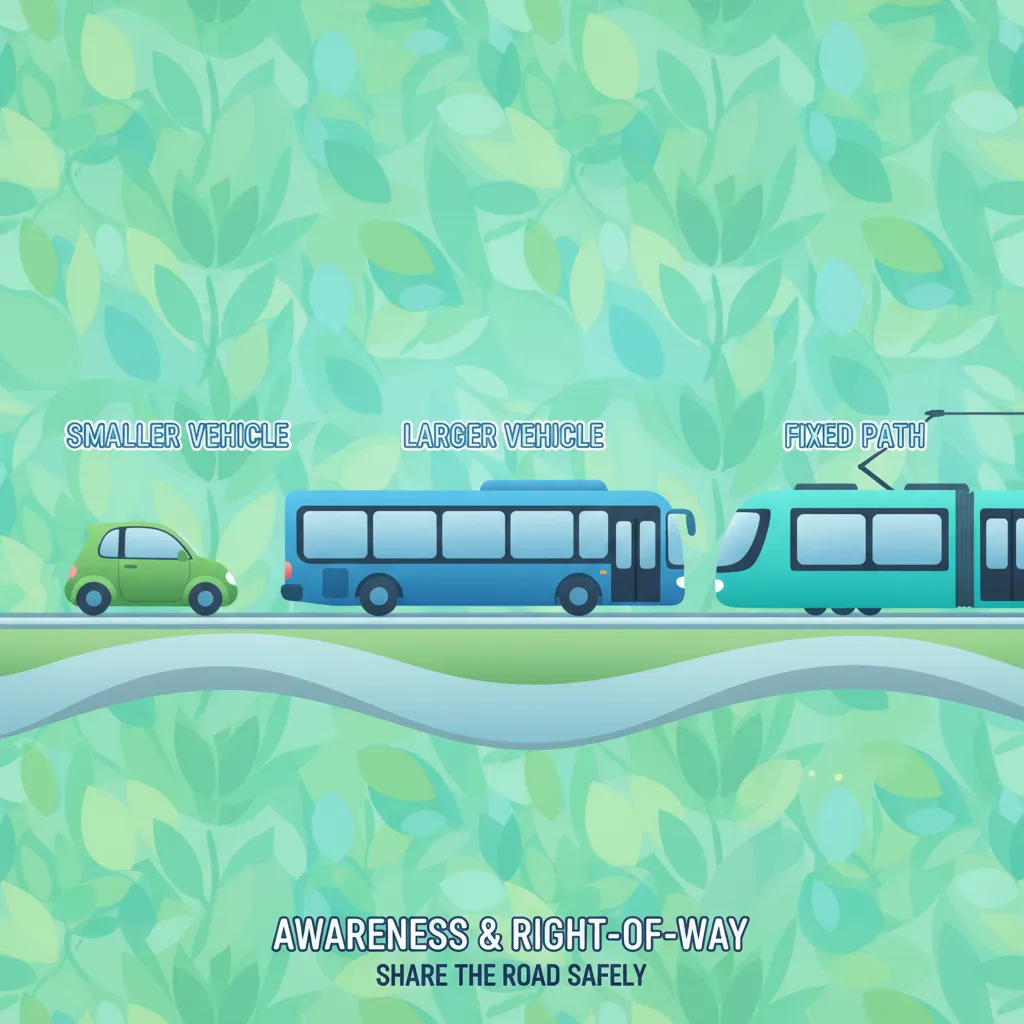
This lesson provides specific guidance for sharing the road with different types of vehicles in Austria. It covers the dangers of large vehicle blind spots, the rules for navigating near buses and dedicated tram tracks, and common conflict points at intersections. Understanding the behavior and limitations of other vehicles is key to safely navigating complex urban environments.
Find clear answers to common questions learners have about Ensuring Safe Alighting for All Passengers. Learn how the lesson is structured, which driving theory objectives it supports, and how it fits into the overall learning path of units and curriculum progression in Austria. These explanations help you understand key concepts, lesson flow, and exam focused study goals.
The final mirror check ensures that no passenger, pedestrian, or cyclist is still near the door or in the blind spot. Missing this check is a major cause of serious accidents and is a common failure point in theory and practical assessments.
You must ensure the bus is as close to the kerb as possible to minimize the gap and height difference. Always wait for them to be fully clear of the vehicle and stable on the pavement before moving the bus.
Yes, Austrian transport regulations require that doors must not close until you have verified that alighting is complete and the area is clear. You are legally responsible for the passenger's safety until they have reached the pavement safely.
Refine your study plan by searching for specific Austrian driving theory practice sets. Pinpoint questions related to particular road rules, signs, or challenge levels, and begin practicing immediately to reinforce your knowledge and excel in your official exam with confidence. Get started with focused revision today.