
This lesson focuses on the unique challenges of driving a bus or coach in tourist-heavy areas of Austria, such as historic city centres and alpine resorts. By learning to identify and anticipate the unpredictable movements of pedestrians and groups, you will significantly improve your defensive driving skills for the Category D theory exam.

Lesson content overview
Operating a bus or coach in Austria, particularly with a Category D licence, demands a high level of responsibility and skill. This is especially true when navigating areas bustling with tourists, such as Salzburg's historic city centre or the base stations of popular alpine resorts. These environments present unique challenges that differ significantly from regular city or rural driving, primarily due to the unpredictable behaviour of unfamiliar visitors.
This lesson is designed to equip future bus and coach drivers with the essential knowledge and strategies to anticipate, recognise, and safely respond to the actions of tourists. By understanding their typical behaviours and the underlying reasons for their unpredictability, you can maintain the highest standards of passenger duty of care, reduce accident risks, and uphold your professional responsibilities as a Category D driver. The focus will be on heightened vigilance, appropriate speed management, proactive vehicle positioning, and judicious use of communication tools.
Tourist hotspots, by their very nature, attract individuals who are often not familiar with local traffic rules, cultural norms, or even the immediate physical environment. Their primary focus is usually on sightseeing, photography, or reaching an attraction, rather than on traffic awareness. This diverted attention, coupled with unfamiliarity, can lead to impulsive and unexpected actions on or near the roadway. For a large passenger vehicle with longer stopping distances and significant blind spots, these behaviours pose a considerable collision risk.
Tourists often behave differently from local pedestrians. Their actions are frequently driven by curiosity, a desire to capture memorable moments, or simply being disoriented in a new place. Recognising these underlying motivations helps drivers predict potential hazards more effectively.
One of the most common unpredictable behaviours is "photo-stopping." Tourists may suddenly pause, slow down, or even step into the roadway to capture a photo of a landmark, a scenic view, or even another group member. Their attention is entirely focused on their camera or phone screen, making them oblivious to surrounding traffic. This can occur anywhere, but is especially prevalent near well-known attractions, viewpoints, or picturesque streetscapes. Drivers must assume that any group or individual holding a camera near the road might suddenly step out of the normal pedestrian flow.
Tourists frequently move in groups, which can create its own set of challenges. Whether it's an organised tour or a spontaneous gathering, groups tend to move collectively, sometimes blocking sight lines or occupying more roadway space than individual pedestrians. They may cross outside designated crossings, follow a group leader without checking for traffic, or simply be unaware of local pedestrian right-of-way rules or traffic signal meanings. The presence of a large group near the road should immediately trigger a reduction in speed and an increase in vigilance.
Beyond photography, many tourists are distracted by maps, navigation apps on their phones, or simply observing their surroundings with a heightened sense of wonder. This "distraction-induced crossing" means they may step onto the road without looking, misjudge distances, or have delayed reactions to approaching vehicles. They might be engrossed in conversation, trying to find their way, or simply admiring architecture, all of which reduce their awareness of traffic. As a driver, you must assume that a distracted tourist may not see your large vehicle, even if it is clearly visible.
To effectively manage the challenges posed by unpredictable tourist behaviour, Category D drivers must adopt a proactive and defensive driving approach. Several core principles guide safe operation in these high-risk zones.
Anticipatory driving is paramount. It involves continuously assessing the environment far ahead and to the sides to predict potential hazards before they fully materialise. In tourist areas, this means scanning not just the road, but also pavements, shop entrances, and areas around landmarks for signs of impending tourist movement. Look for individuals or groups slowing down, looking at maps, holding cameras, or appearing disoriented. This continuous forward scanning helps mitigate the reaction time deficit caused by a tourist's impulsivity, allowing you to react smoothly and safely.
Adjusting your speed based on traffic density, visibility, and pedestrian activity is crucial. Tourist hotspots often have reduced speed limits (e.g., 30 km/h zones), which must be strictly observed. However, even within posted limits, you may need to reduce your speed further to allow sufficient stopping distance and reaction time. This is particularly important where tourists are likely to cross unpredictably, such as near attractions, narrow streets, or designated bus stops. Driving slower provides more time to process information and respond to sudden actions, thereby enhancing safety for everyone.
The horn is a vital safety tool, but its use in tourist zones requires discipline. According to Austrian StVO §46, the horn may only be used to warn of immediate danger or to avoid accidents, not for general courtesy or to "clear the way." Overusing the horn in a dense tourist area can startle pedestrians, leading to panic and unpredictable evasive actions that could worsen a situation. Instead, a short, gentle tap on the horn can effectively alert a distracted tourist to your vehicle's presence without causing undue alarm. Combine this with clear, consistent signalling and careful vehicle positioning.
Defensive positioning involves maintaining a safe lateral and longitudinal distance from potential pedestrian crossing points and parked vehicles. This strategy reduces the likelihood of being forced into sudden stops or evasive manoeuvres. When approaching tourist attractions or bus stops, align your vehicle to maintain clear buffer zones around designated stopping areas and potential crossing paths. This means giving extra space to pedestrians on the pavement, anticipating they might step into the road, and leaving ample room when stopped behind other vehicles.
As a Category D driver, you have a legal and ethical duty of care towards both your passengers and all other road users, especially vulnerable ones like pedestrians, cyclists, and indeed, tourists. This obligation means prioritising safety over schedule adherence. In high-traffic tourist zones, this translates to exercising extra caution, even if it means delays. Your professionalism is reflected in your commitment to preventing accidents and ensuring the well-being of everyone on the road.
Recognising where unpredictable tourist behaviour is most likely to occur is the first step in preparing for it. These "hotspots" can be broadly categorised into urban and alpine settings.
Many Austrian cities, such as Salzburg, Vienna, or Innsbruck, boast historic centres filled with attractions, pedestrianised areas, and narrow streets. These urban tourist zones are characterised by high pedestrian density, sometimes reduced lane widths, and a complex mix of local traffic with tourist flows. Examples include:
Austria's alpine regions are equally popular, drawing tourists for skiing, hiking, and enjoying mountain scenery. In these areas, tourists may cross roads to access ski lifts, trailheads, or scenic viewpoints. These hotspots often involve:
Some locations are well-known for photo opportunities. These "photo-stoppage zones" can be officially designated with signage or arise organically due to popular demand. Whether marked or not, drivers should anticipate pedestrians lingering near the road, suddenly stopping, or stepping out to get the perfect shot. Examples include panoramic overlooks along a mountain road or specific architectural features in a city. Plan your approach, overtaking, and stopping manoeuvres accordingly, allowing ample space and time.
Understanding and strictly adhering to the Austrian Road Traffic Act (StVO) is fundamental for safe driving, especially in areas with unpredictable pedestrians. Several regulations are particularly relevant when encountering tourists.
According to StVO §70, pedestrians generally have priority at marked crossings. Crucially, this priority also extends to situations where pedestrians step onto the roadway in the absence of designated crossings, particularly if their movement is foreseeable or if stopping would not endanger other traffic. StVO §67 further clarifies that vehicles must yield to pedestrians who are already on the roadway. This means that if a tourist steps onto the road, even if it seems impulsive, you have a legal obligation to yield, slow down, and allow them to cross safely before proceeding.
Correct Application: The driver observes a tourist stepping onto the road from a pavement where there is no marked crossing. The driver immediately slows down, checks mirrors, and yields, allowing the pedestrian to complete their crossing without rushing. Incorrect Application: The driver assumes the tourist will wait and proceeds without yielding, forcing the tourist to hurry or causing a close encounter. This violates the duty of care and legal priority.
As mentioned earlier, StVO §46 specifies that the horn may only be used to warn of immediate danger or to prevent an accident. It is not to be used as a courtesy signal or to express impatience. In tourist areas, this regulation demands careful judgement. A gentle, short tap can effectively alert a distracted tourist, but prolonged or aggressive honking can cause panic and unpredictable reactions, potentially worsening a hazardous situation.
StVO §41 dictates that reduced speed limits apply in areas designated for pedestrians, tourist zones, or where traffic calming measures are in place. These limits are often significantly lower than standard urban speeds (e.g., 30 km/h or even 20 km/h). Such regulations are implemented to allow drivers more reaction time and to protect vulnerable road users. Always observe posted reduced speed signs and adapt your speed to the actual conditions, which may require driving even slower than the posted limit if crowds are dense or visibility is poor.
StVO §45 prohibits overtaking where it might endanger pedestrians, particularly near crossings and in crowded areas. This is vital in tourist hotspots where groups may be crossing or gathering. Attempting to overtake a group of pedestrians on a narrow street or near a landmark can dangerously reduce safe passing distances and force them into unsafe positions. It is always safer to wait for the group to clear the roadway or for a designated, safe overtaking zone to appear.
Large passenger vehicles inherently have significant blind spots – areas around the vehicle that are not visible through mirrors or windows. These include side blind spots (especially near doors and the rear right-hand side) and areas directly behind the vehicle. Tourists, being unfamiliar with large vehicles, may inadvertently step into these zones, making them invisible to the driver.
To mitigate this risk:
Important: Never rely solely on mirrors. They provide an incomplete view. Always combine mirror checks with direct physical observation, especially in pedestrian-dense areas.
Even experienced drivers can make mistakes, but certain errors are particularly hazardous in tourist zones. Being aware of these can help you avoid them.
Driving conditions can significantly impact how tourists behave and how you need to react. Adapting your driving to these variations is essential for safety.
The weight of your bus or coach, especially when fully loaded with passengers, directly impacts its braking distance. A heavy load significantly increases the distance required to stop safely. This means you must anticipate the need for earlier deceleration near tourist zones, giving yourself even more time and space to react to unpredictable movements. Regular brake checks are essential, particularly on long descents in alpine areas where brake fade can be a concern. If you experience any mechanical issues, particularly with braking, reduce speed immediately and consider pulling over in a safe, low-traffic area.
Understanding the direct consequences of your driving choices is key to developing safe habits.
Successfully navigating Austria's tourist hotspots as a Category D driver requires a heightened sense of awareness and a commitment to professional driving standards. By understanding the specific challenges posed by unpredictable tourist behaviour – from sudden photo-stops to large group movements and distraction-induced crossings – you can proactively mitigate risks.
The core principles of anticipatory driving, intelligent speed adaptation, disciplined communication, and defensive positioning are not just recommendations; they are fundamental elements of your duty of care. Adhering to relevant Austrian traffic laws, such as those governing pedestrian priority and horn usage, is non-negotiable. Furthermore, your ability to adapt your driving to varying weather, light, and road conditions, and to account for your vehicle's load, will significantly enhance safety for your passengers and all vulnerable road users. Embrace these strategies, and you will contribute to safer roads and a more positive experience for everyone in Austria's beautiful, but sometimes challenging, tourist regions.
Driving in Austria's tourist hotspots as a Category D driver requires heightened vigilance and defensive techniques to manage unpredictable pedestrian behaviour. Tourists frequently exhibit dangerous patterns such as sudden photo-stops, distraction-induced crossings, and group movements that can block sight lines. Austrian traffic law mandates yielding to pedestrians even outside marked crossings when their movement is foreseeable, and restricts horn use strictly to immediate danger warnings. The core professional responsibility is exercising duty of care toward all vulnerable road users, adapting speed to actual conditions rather than just posted limits, and maintaining defensive positioning with safe buffer zones.
A short set of high-value points that capture the most important learning from this lesson.
Anticipatory driving means continuously scanning pavements, shop entrances, and landmark areas for tourists holding cameras, maps, or appearing disoriented
Pedestrian priority under StVO §70 applies even outside marked crossings when movement is foreseeable, requiring you to yield
Horn usage is strictly limited to immediate danger warnings (StVO §46) - never use it as courtesy or to rush pedestrians
Tourist hotspots often have reduced speed limits (typically 30 km/h), but actual conditions may require driving even slower
Category D drivers have a legal duty of care to protect all vulnerable road users, prioritizing safety over schedule adherence
Explore all units and lessons included in this driving theory course.
Photo-stopping, group movement dynamics, and distraction-induced crossing are the three main unpredictable tourist behaviours to watch for
Large passenger vehicles have significant blind spots - always combine mirror checks with physical shoulder checks before any manoeuvre
StVO §45 prohibits overtaking pedestrians in crowded areas or narrow streets where safe passing distance cannot be maintained
In alpine tourist zones, tourists crossing to reach ski lifts, trailheads, or viewpoints create irregular crossing patterns requiring extra vigilance
Vehicle braking distance increases substantially when loaded, demanding earlier deceleration near pedestrian zones
Assuming tourists will always use marked crossings and failing to yield when they step out elsewhere (violates StVO §70)
Using the horn excessively to clear a path, which can startle pedestrians and cause panic reactions
Attempting to overtake groups of tourists in narrow urban streets, reducing safe passing distances
Relying solely on visual signals when tourists are distracted - a brief horn tap combined with signals improves awareness
Driving at posted speed limits without adjusting for dense crowds or poor visibility conditions
Lesson content overview
A short set of high-value points that capture the most important learning from this lesson.
Anticipatory driving means continuously scanning pavements, shop entrances, and landmark areas for tourists holding cameras, maps, or appearing disoriented
Pedestrian priority under StVO §70 applies even outside marked crossings when movement is foreseeable, requiring you to yield
Horn usage is strictly limited to immediate danger warnings (StVO §46) - never use it as courtesy or to rush pedestrians
Tourist hotspots often have reduced speed limits (typically 30 km/h), but actual conditions may require driving even slower
Category D drivers have a legal duty of care to protect all vulnerable road users, prioritizing safety over schedule adherence
Explore all units and lessons included in this driving theory course.
Photo-stopping, group movement dynamics, and distraction-induced crossing are the three main unpredictable tourist behaviours to watch for
Large passenger vehicles have significant blind spots - always combine mirror checks with physical shoulder checks before any manoeuvre
StVO §45 prohibits overtaking pedestrians in crowded areas or narrow streets where safe passing distance cannot be maintained
In alpine tourist zones, tourists crossing to reach ski lifts, trailheads, or viewpoints create irregular crossing patterns requiring extra vigilance
Vehicle braking distance increases substantially when loaded, demanding earlier deceleration near pedestrian zones
Assuming tourists will always use marked crossings and failing to yield when they step out elsewhere (violates StVO §70)
Using the horn excessively to clear a path, which can startle pedestrians and cause panic reactions
Attempting to overtake groups of tourists in narrow urban streets, reducing safe passing distances
Relying solely on visual signals when tourists are distracted - a brief horn tap combined with signals improves awareness
Driving at posted speed limits without adjusting for dense crowds or poor visibility conditions
Explore search topics learners often look for when studying Anticipating Unpredictable Tourist Behaviour. These topics reflect common questions about road rules, driving situations, safety guidance, and lesson level theory preparation for learners in Austria.
Browse additional driving theory lessons that cover connected traffic rules, road signs, and common driving situations related to this topic. Improve your understanding of how different rules interact across everyday traffic scenarios.
Learn to identify and manage specific driving hazards in Austrian tourist areas, covering unpredictable behaviour in both dense urban centres and scenic alpine locations. Understand risks related to pedestrians, photo-stopping, and group movements.

Rural Austrian roads present unique challenges, including lack of markings, tight spaces, and slow-moving agricultural vehicles. This lesson teaches how to read the road ahead, anticipate hazards around blind bends, and use passing places effectively when meeting other large vehicles. It emphasizes adjusting speed to suit the limited visibility and variable road conditions.

This lesson introduces the proactive mindset of defensive driving, which focuses on anticipating potential hazards rather than just reacting to them. It teaches techniques for systematic risk assessment, including scanning the road ahead, checking mirrors frequently, and being aware of the potential actions of other road users. By adopting these safe habits, drivers can create a buffer of safety around their vehicle and significantly reduce the likelihood of being involved in an accident.
This lesson provides advice for navigating popular scenic routes, which often feature heavy traffic, cyclists, and distracted drivers. It emphasizes maintaining focus on the road despite beautiful scenery and anticipating unpredictable actions from other tourists who may stop suddenly. Adopting a patient and defensive mindset is key to safely enjoying these remarkable roads.

This lesson explores the specific characteristics and hazards of rural roads (Landstraßen). It emphasizes the need for careful speed adjustment due to factors like narrow lanes, poor road surfaces, and hidden entrances. Learners will understand how to safely navigate blind curves, use passing places, and anticipate the presence of slow-moving agricultural vehicles or livestock on the road.
Cyclists and e-scooter riders are highly vulnerable and can be hard to see from a high driving position. This lesson focuses on the critical danger points, such as making right turns across cycle lanes and checking blind spots before pulling away from a stop. It teaches the importance of giving ample space when overtaking and anticipating their movements in busy city traffic.

This lesson provides advanced strategies for proactively managing interactions with vulnerable road users to prevent conflicts before they arise. It teaches drivers to predict the likely behavior of pedestrians, cyclists, and e-scooter riders, especially at intersections and in congested areas. Key techniques include maintaining larger safety distances, covering the brake, and making eye contact to ensure mutual awareness and avoid accidents.
This lesson explores the key psychological factors that influence a driver's performance and safety on the road. It covers topics such as risk perception, attention allocation, and the process of making sound decisions, especially when under stress or facing unexpected hazards. By understanding concepts like cognitive load and the importance of maintaining a defensive mindset, drivers can better anticipate dangers and avoid common mental errors that lead to collisions.

This lesson consolidates knowledge by applying it to common everyday driving situations. It offers practical tips on topics like smooth driving for fuel efficiency, managing distractions in the cabin, and maintaining courtesy in frustrating traffic. The content reinforces defensive driving principles as a constant habit, helping learners transition from theoretical knowledge to confident, safe, and responsible real-world driving.

This lesson focuses on the specialized skills required for navigating alpine roads safely. It covers techniques for managing steep gradients, such as using a lower gear for engine braking on descents, and how to safely negotiate hairpin turns. The content stresses the importance of being prepared for rapid weather changes and understanding the effects of altitude on both the driver and the vehicle's performance.
Driving a bus in a busy city like Vienna or Salzburg requires constant forward planning and anticipation. This lesson teaches techniques for maintaining adequate space around the vehicle, positioning correctly for upcoming junctions, and reading the flow of traffic. Adopting a defensive mindset is key to navigating complex urban environments without incident.
Understand the specific Austrian StVO regulations (StVO §70, §46, §41) that apply when driving around tourists. Learn how to safely manage blind spots and adhere to pedestrian priority rules in busy tourist zones.

Pedestrians have absolute priority on marked crossings in Austria, and a bus driver must always be ready to give way. This lesson covers the rules for approaching and stopping for pedestrians, and highlights the risk of pedestrians being hidden by the vehicle's structure. It also stresses the danger of passengers crossing the road after alighting from your bus.
Cyclists and e-scooter riders are highly vulnerable and can be hard to see from a high driving position. This lesson focuses on the critical danger points, such as making right turns across cycle lanes and checking blind spots before pulling away from a stop. It teaches the importance of giving ample space when overtaking and anticipating their movements in busy city traffic.
This lesson details the specific regulations and best practices for driving in areas with high pedestrian activity, such as bus stops and school zones. It explains the driver's obligation to stop for school buses with flashing lights and to yield to public buses pulling out from a stop. The content emphasizes the requirement to significantly reduce speed in marked school zones to ensure the safety of children.

This lesson explores the strict regulations governing pedestrian crossings in Austria, particularly marked zebra crossings known as Schutzweg. It emphasizes the absolute priority of pedestrians on these crossings and the driver's legal obligation to stop and allow them to cross safely. The content covers how to approach these areas with caution, the importance of visibility, and the rules at crossings controlled by traffic lights.

Cities like Vienna and Graz have extensive tram networks that require special attention from bus drivers. This lesson covers the rules of priority concerning trams, the dangers of crossing tracks, and the specific hazards at shared stops where passengers cross traffic lanes. It emphasizes the need for extreme caution and clear communication with other road users in these complex environments.

Transporting children carries the highest level of responsibility. This lesson covers the specific Austrian rules for school buses, including the use of warning signs and lights. It focuses on developing a mindset of extreme caution, anticipating that children may run into the road unexpectedly, and managing the chaotic traffic environment often found around schools during drop-off and pick-up times.
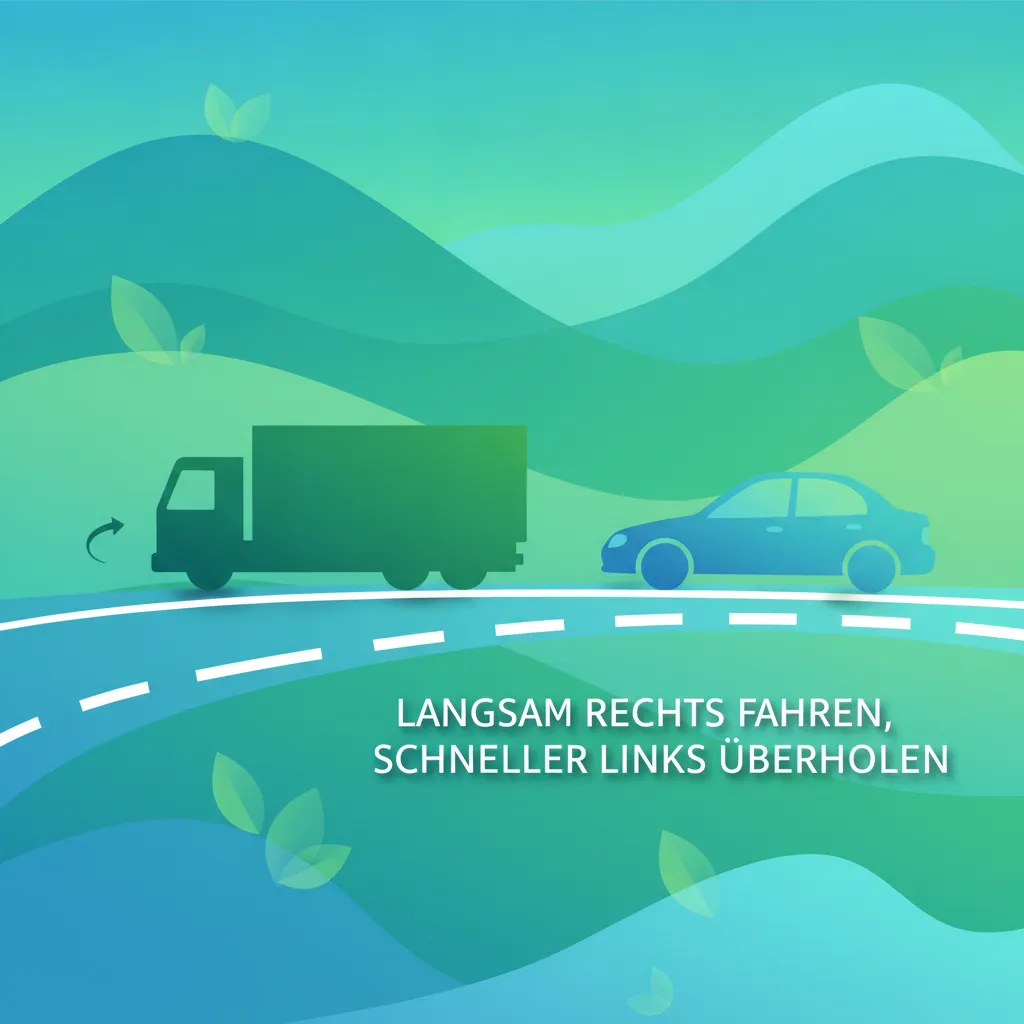
High-speed driving in a large vehicle requires excellent lane discipline and forward planning. This lesson covers Austrian speed limits for buses, rules for joining and leaving the motorway, safe overtaking procedures, and maintaining appropriate following distances. The critical importance of forming an emergency corridor ('Rettungsgasse') in traffic jams is also a key topic.
This lesson provides advice for navigating popular scenic routes, which often feature heavy traffic, cyclists, and distracted drivers. It emphasizes maintaining focus on the road despite beautiful scenery and anticipating unpredictable actions from other tourists who may stop suddenly. Adopting a patient and defensive mindset is key to safely enjoying these remarkable roads.
Driving a bus in a busy city like Vienna or Salzburg requires constant forward planning and anticipation. This lesson teaches techniques for maintaining adequate space around the vehicle, positioning correctly for upcoming junctions, and reading the flow of traffic. Adopting a defensive mindset is key to navigating complex urban environments without incident.
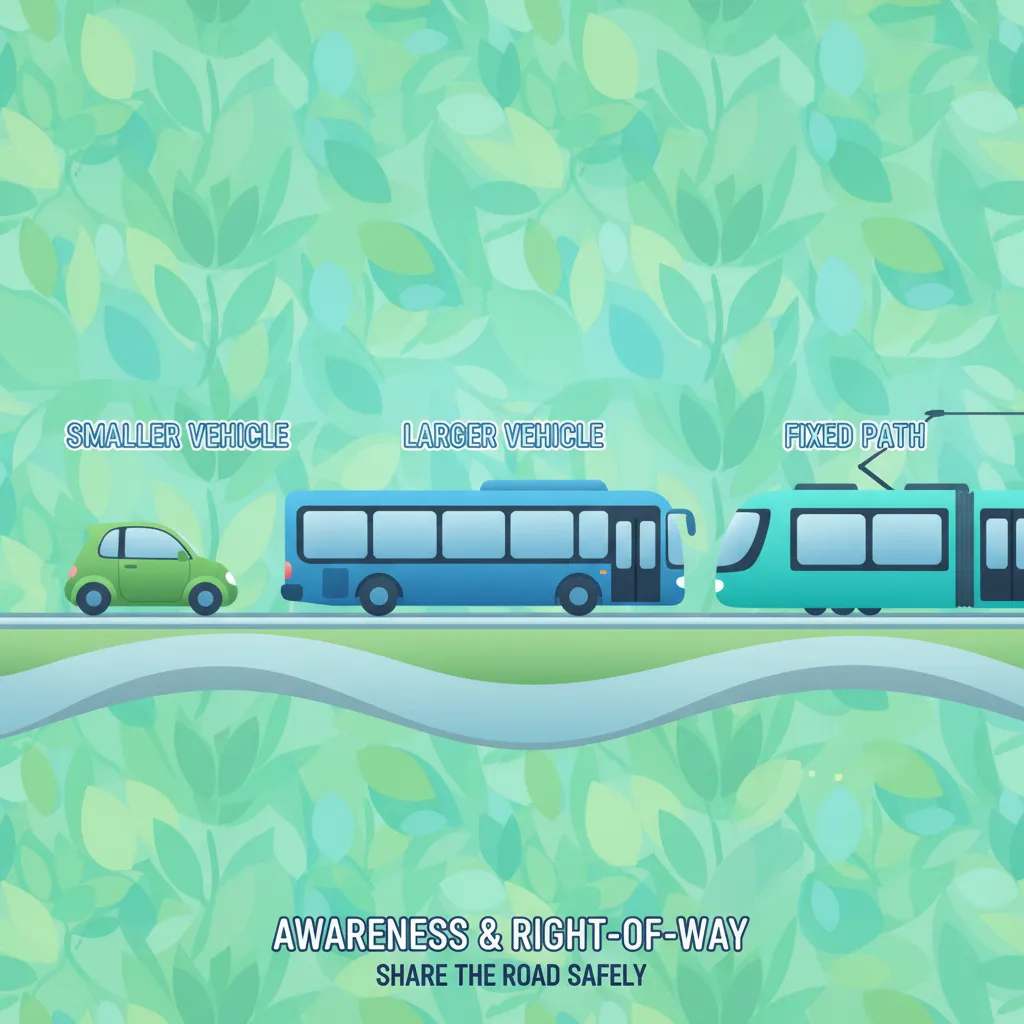
This lesson provides specific guidance for sharing the road with different types of vehicles in Austria. It covers the dangers of large vehicle blind spots, the rules for navigating near buses and dedicated tram tracks, and common conflict points at intersections. Understanding the behavior and limitations of other vehicles is key to safely navigating complex urban environments.
Find clear answers to common questions learners have about Anticipating Unpredictable Tourist Behaviour. Learn how the lesson is structured, which driving theory objectives it supports, and how it fits into the overall learning path of units and curriculum progression in Austria. These explanations help you understand key concepts, lesson flow, and exam focused study goals.
While the horn is a safety tool, excessive use in tourist-heavy city centres can cause panic or further unpredictable behaviour among pedestrians. As a professional Category D driver, you should rely on speed reduction and increased vigilance first.
Commuters usually follow predictable paths to work or transit. Tourists are often distracted by maps, cameras, or sightseeing, making them less likely to scan for traffic and more prone to stopping abruptly or crossing outside of marked areas.
Look for groups standing near the kerb who may suddenly step into the road to catch a bus or follow a guide. Watch for 'stragglers' who run to catch up with the rest of the group without checking for traffic.
Your professional duty of care extends to the safety of those outside your bus. Anticipating tourist errors allows you to avoid emergency stops that could cause injuries to your own passengers inside the vehicle.
Refine your study plan by searching for specific Austrian driving theory practice sets. Pinpoint questions related to particular road rules, signs, or challenge levels, and begin practicing immediately to reinforce your knowledge and excel in your official exam with confidence. Get started with focused revision today.