
This lesson focuses on the high-risk interactions between large passenger vehicles and vulnerable road users like cyclists and e-scooter riders. It provides essential strategies for navigating urban environments safely, building upon your professional duty of care as a Category D driver.
Lesson content overview
As a professional driver holding an Austrian Bus & Coach Licence (Category D), your responsibility extends to all road users, especially those most vulnerable. Cyclists and e-scooter riders are frequently encountered, particularly in urban environments, and present unique challenges due to their size, speed, and often unpredictable movements. This comprehensive lesson focuses on developing the critical awareness and skills needed to manage interactions with these vulnerable road users (VRUs) safely and effectively, preventing accidents and ensuring the well-being of everyone on Austria's roads.
This lesson connects foundational knowledge from earlier modules, such as understanding bus dimensions, managing blind spots, and navigating city traffic, to the specific challenges posed by cyclists and e-scooter riders. Mastering these interactions is crucial for your professional competence and public safety.
Vulnerable Road Users (VRUs) are defined as individuals who lack the protective enclosure of a motor vehicle and are therefore at a significantly higher risk of injury or death in a collision. For a bus or coach driver, this category prominently includes pedestrians, cyclists, and e-scooter riders. The inherent size and mass difference between a bus and a cyclist or e-scooter rider means that even a minor contact can have severe, life-altering consequences for the VRU.
Cyclists and e-scooter riders are exposed to significant danger due to several factors. Their smaller profiles make them less visible, especially from the elevated driving position of a bus. They also lack structural protection, meaning any impact directly affects the rider. Furthermore, their movements can sometimes be less predictable than motor vehicles, as they might navigate around obstacles, react to road conditions, or change direction more fluidly, often without clear signals.
Operating a bus or coach (Category D) presents specific difficulties when interacting with VRUs. The vehicle's sheer size creates extensive blind spots where cyclists and e-scooter riders can disappear from view. The long wheelbase and wide turning radius require extra space and careful planning for turns, which can conflict with cycle lanes or VRUs travelling straight. Additionally, the frequent stops and starts inherent in public transport routes increase the number of potential interaction points, particularly at bus stops and intersections.
One of the most significant hazards in urban driving, especially for large vehicles like buses and coaches, is the presence of blind spots. These are areas around your vehicle that cannot be seen through mirrors or by direct vision from the driver's seat. For cyclists and e-scooter riders, these zones are particularly perilous because they can easily be completely hidden, leading to collisions when you move, turn, or change lanes.
Buses have several critical blind spots:
These blind spots are dynamic; they change as the bus moves and as other road users approach. A cyclist who was visible a moment ago can quickly enter a blind spot without the driver noticing.
To mitigate the dangers of blind spots, bus drivers must adopt a systematic approach to observation:
Mirror Checks: Regularly check all mirrors (main, wide-angle, and close-up) to scan for VRUs, particularly before pulling away from a stop, changing lanes, or preparing to turn.
Shoulder Checks (Head Turns): This is paramount for large vehicles. Before moving off, turning, or changing lanes, physically turn your head to look into the side and rear-quarter blind spots that mirrors cannot cover. This brief but vital check can reveal a hidden cyclist or e-scooter rider.
Looking Ahead and Anticipating: Observe the general traffic flow and look for situations where VRUs might emerge or approach your vehicle, such as near intersections, parked cars, or bus stops.
Waiting for Clearance: If there is any doubt about a VRU's presence or movement, wait until the path is clear. It is always better to lose a few seconds than to cause an accident.
Overtaking cyclists and e-scooter riders is a common manoeuvre in city traffic. However, it requires significant care and adherence to specific regulations to ensure safety. An unsafe overtaking manoeuvre can easily lead to a side-swipe collision or force the VRU off balance and into danger.
In Austria, the law mandates a specific minimum lateral distance when overtaking cyclists and e-scooter riders.
According to the Austrian Road Traffic Regulations (Straßenverkehrsordnung, StVO § 33), drivers of motor vehicles must maintain a minimum lateral clearance of at least 1.5 metres when overtaking cyclists and e-scooter riders. This distance must be respected even at low speeds.
This 1.5-metre rule is a minimum. In certain conditions, such as high speeds, strong winds, poor road surfaces, or when the VRU appears unstable, an even greater distance should be provided. Failure to maintain this distance is not only dangerous but also a legal violation with potential penalties.
Before initiating an overtaking manoeuvre, always evaluate the situation thoroughly:
When overtaking, do so smoothly and progressively, avoiding sudden movements or excessive speed. Once past the VRU, ensure you have sufficient distance before returning to your original lane, allowing them ample space.
Intersections and designated cycle lanes are particularly high-risk areas for bus-VRU interactions. Understanding and respecting right-of-way rules is paramount to preventing collisions.
Dedicated cycle lanes are specifically designed to provide a safe passage for cyclists and e-scooter riders. According to Austrian traffic law (StVO § 30 Abs. 1), VRUs within these lanes generally have priority.
One of the most common and dangerous scenarios is a bus making a right turn while a cyclist or e-scooter rider is travelling straight on a cycle lane or the right side of the road. This is often referred to as a "right hook" collision.
To prevent this:
Bus stops are frequent points of conflict. Many stops are positioned directly next to or even partially within cycle lanes. When approaching and leaving such stops:
E-scooters have become a common sight in Austrian cities. While many rules applying to cyclists also apply to e-scooter riders, their unique characteristics warrant specific attention from bus drivers.
E-scooters are classified as "light motor vehicles" under Austrian law, meaning they generally follow bicycle traffic rules. This implies:
The primary challenge with e-scooter riders is their tendency for unpredictable behaviour. They might appear from sidewalks, suddenly swerve to avoid obstacles, or change direction without clear warning. Their small size makes them particularly hard to spot in heavy traffic.
As a bus driver, you must cultivate a heightened sense of anticipation when driving in areas where e-scooters are prevalent:
Compliance with the Austrian Straßenverkehrsordnung (StVO) is not only a legal obligation but also the cornerstone of safe driving. Understanding these specific rules regarding cyclists and e-scooter riders is essential for Category D drivers.
| Regulation | Rule Statement | Applicability | Rationale | Correct Example |
|---|---|---|---|---|
| StVO § 33 | Maintain a safe distance when overtaking cyclists and e-scooter riders, minimum 1.5 metres. | All motor vehicles on public roads. | Prevents side-swipe collisions and allows VRU stability. | A bus changes lanes to give a cyclist 2 metres clearance when overtaking. |
| StVO § 30 Abs. 1 | Cyclists and e-scooter riders have priority in designated cycle lanes. | When any vehicle intends to occupy a cycle lane. | Protects VRUs in their dedicated space. | A bus waits at a red light, ensuring it doesn't extend into the cycle lane ahead. |
| StVO § 6 Abs. 3 | Yield to traffic already on the road being entered, including cyclists and e-scooter riders. | When making turns onto a road with VRUs. | Ensures safe merging and respects right-of-way. | Before turning right, a bus yields to a cyclist travelling straight on the adjacent cycle path. |
| StVO § 16 Abs. 2 | When stopping, do not obstruct cyclists or pedestrians, especially near crossings. | At bus stops adjacent to crossings or cycle paths. | Maintains visibility and clear passage for VRUs. | A bus aligns perfectly at the stop, leaving the cycle lane completely free. |
| StVO § 70 Abs. 2 | Encroachment on cycle lanes is only permitted if necessary for accessing a stop, and the lane must be cleared quickly. | Bus stops situated next to cycle lanes. | Ensures predictable access to stops while minimizing VRU disruption. | A bus briefly edges into a cycle lane to reach the curb, then immediately pulls back out after stopping. |
Ignoring these regulations can lead to severe consequences, including accidents, injuries, legal penalties, and damage to your professional reputation. Common violations include:
Safe interaction with cyclists and e-scooter riders is not static; it requires constant adaptation to changing environmental and operational conditions.
Understanding the direct links between driver actions and potential consequences helps reinforce safe habits.
| Cause (Driver Action) | Effect (Result) | Reasoning |
|---|---|---|
| Insufficient overtaking distance (e.g., < 1.5m) | Side-swipe collision or VRU losing balance and falling. | Physical proximity eliminates VRU's necessary space for stability and error margin. |
| Neglecting shoulder checks before pulling away | Striking a hidden cyclist or e-scooter rider. | Blind spots conceal VRUs, making visual checks essential for detection. |
| Turning right without yielding to straight-moving VRUs | "Right hook" collision, forcing VRU to brake or swerve abruptly. | Violation of right-of-way creates a direct conflict path. |
| Encroaching on a cycle lane unnecessarily | Forces VRUs into general traffic, causing danger or frustration. | Reduces safe space for VRUs, disrupting their flow and safety. |
| Not anticipating e-scooter entry from sidewalks/paths | Sudden braking, near-miss, or collision. | E-scooters can emerge unexpectedly; failure to anticipate removes reaction time. |
Effective management of interactions with cyclists and e-scooter riders is built upon a few core principles:
By integrating these principles into your daily driving, you contribute significantly to road safety and uphold the high standards expected of an Austrian Bus & Coach Licence (Category D) holder. This proactive and safety-focused approach minimises risks and creates a safer environment for everyone on Austria's roads.
This lesson addresses the critical skills Category D bus drivers need to safely interact with cyclists and e-scooter riders in Austrian urban traffic. It emphasises the legal requirement of maintaining at least 1.5 metres lateral distance when overtaking, the necessity of systematic blind spot checks combining mirrors with shoulder turns, and the specific danger of 'right hook' collisions when turning across cycle lanes. The content covers Austrian traffic regulations (StVO) governing VRU priority, proper conduct near bus stops adjacent to cycle lanes, and the unpredictable movement patterns of e-scooter riders. Effective VRU management combines vulnerability awareness, regulatory compliance, anticipatory scanning, and situational adaptation to weather and road conditions.
A short set of high-value points that capture the most important learning from this lesson.
Cyclists and e-scooter riders are classified as Vulnerable Road Users (VRUs) who lack vehicle protection and require extra space from large buses.
The 1.5-metre lateral overtaking distance for cyclists and e-scooters is a legal minimum under Austrian StVO § 33 that must be maintained even at low speeds.
Bus blind spots exist in three main areas—front, sides, and rear—and require both mirror checks AND physical shoulder turns before any manoeuvre.
The 'right hook' collision occurs when a bus turns right across a cyclist or e-scooter rider travelling straight on a cycle lane, and yielding to VRUs is mandatory under StVO § 6 Abs. 3.
E-scooter riders, classified as light motor vehicles under Austrian law, frequently exhibit unpredictable behaviour and must be anticipated from sidewalks and driveways.
Explore all units and lessons included in this driving theory course.
StVO § 33 mandates 1.5m minimum lateral gap when overtaking cyclists/e-scooters; StVO § 30 Abs. 1 gives VRUs priority in designated cycle lanes.
Three blind spot types require attention: front (below driver's line of sight), sides (rear quarter panel and A-pillar), and rear (invisible without cameras).
Shoulder checks (head turns) are essential because mirrors alone cannot cover all blind spots on large vehicles.
Bus stops adjacent to cycle lanes require brief, necessary encroachment only—VRUs must be given clearance before pulling away.
E-scooters follow bicycle traffic rules in Austria, travel up to 25 km/h, and are prohibited from sidewalks except at walking pace.
Relying solely on mirrors without performing shoulder checks, allowing cyclists in side or rear-quarter blind spots to go undetected.
Passing cyclists or e-scooters with less than the required 1.5m lateral clearance, risking side-swipe collisions or destabilising the VRU.
Turning right at intersections without thoroughly checking for VRUs proceeding straight, causing 'right hook' collisions.
Encroaching on or blocking cycle lanes at bus stops when not necessary for accessing the stop, violating StVO § 16 Abs. 2.
Failing to anticipate e-scooter riders emerging from sidewalks, driveways, or between parked vehicles, especially in dense urban traffic.
Lesson content overview
A short set of high-value points that capture the most important learning from this lesson.
Cyclists and e-scooter riders are classified as Vulnerable Road Users (VRUs) who lack vehicle protection and require extra space from large buses.
The 1.5-metre lateral overtaking distance for cyclists and e-scooters is a legal minimum under Austrian StVO § 33 that must be maintained even at low speeds.
Bus blind spots exist in three main areas—front, sides, and rear—and require both mirror checks AND physical shoulder turns before any manoeuvre.
The 'right hook' collision occurs when a bus turns right across a cyclist or e-scooter rider travelling straight on a cycle lane, and yielding to VRUs is mandatory under StVO § 6 Abs. 3.
E-scooter riders, classified as light motor vehicles under Austrian law, frequently exhibit unpredictable behaviour and must be anticipated from sidewalks and driveways.
Explore all units and lessons included in this driving theory course.
StVO § 33 mandates 1.5m minimum lateral gap when overtaking cyclists/e-scooters; StVO § 30 Abs. 1 gives VRUs priority in designated cycle lanes.
Three blind spot types require attention: front (below driver's line of sight), sides (rear quarter panel and A-pillar), and rear (invisible without cameras).
Shoulder checks (head turns) are essential because mirrors alone cannot cover all blind spots on large vehicles.
Bus stops adjacent to cycle lanes require brief, necessary encroachment only—VRUs must be given clearance before pulling away.
E-scooters follow bicycle traffic rules in Austria, travel up to 25 km/h, and are prohibited from sidewalks except at walking pace.
Relying solely on mirrors without performing shoulder checks, allowing cyclists in side or rear-quarter blind spots to go undetected.
Passing cyclists or e-scooters with less than the required 1.5m lateral clearance, risking side-swipe collisions or destabilising the VRU.
Turning right at intersections without thoroughly checking for VRUs proceeding straight, causing 'right hook' collisions.
Encroaching on or blocking cycle lanes at bus stops when not necessary for accessing the stop, violating StVO § 16 Abs. 2.
Failing to anticipate e-scooter riders emerging from sidewalks, driveways, or between parked vehicles, especially in dense urban traffic.
Explore search topics learners often look for when studying Managing Interactions with Cyclists and E-Scooter Riders. These topics reflect common questions about road rules, driving situations, safety guidance, and lesson level theory preparation for learners in Austria.
Browse additional driving theory lessons that cover connected traffic rules, road signs, and common driving situations related to this topic. Improve your understanding of how different rules interact across everyday traffic scenarios.
Deepen your understanding of complex scenarios involving cyclists and e-scooters in Austrian traffic. Explore advanced strategies for navigating high-risk areas like busy intersections and bus stops, focusing on preventing 'right hook' collisions and managing blind spots effectively.
This lesson provides advanced strategies for proactively managing interactions with vulnerable road users to prevent conflicts before they arise. It teaches drivers to predict the likely behavior of pedestrians, cyclists, and e-scooter riders, especially at intersections and in congested areas. Key techniques include maintaining larger safety distances, covering the brake, and making eye contact to ensure mutual awareness and avoid accidents.

This lesson focuses on the critical skill of sharing the road safely with vulnerable users, such as pedestrians, cyclists, and e-scooter riders. It details the legally required distance buffers for overtaking and emphasizes heightened awareness in sensitive areas like school zones and designated pedestrian crossings. The content provides guidelines for interacting with bicycle lanes and shared spaces to foster a protective and respectful driving attitude towards those most at risk.
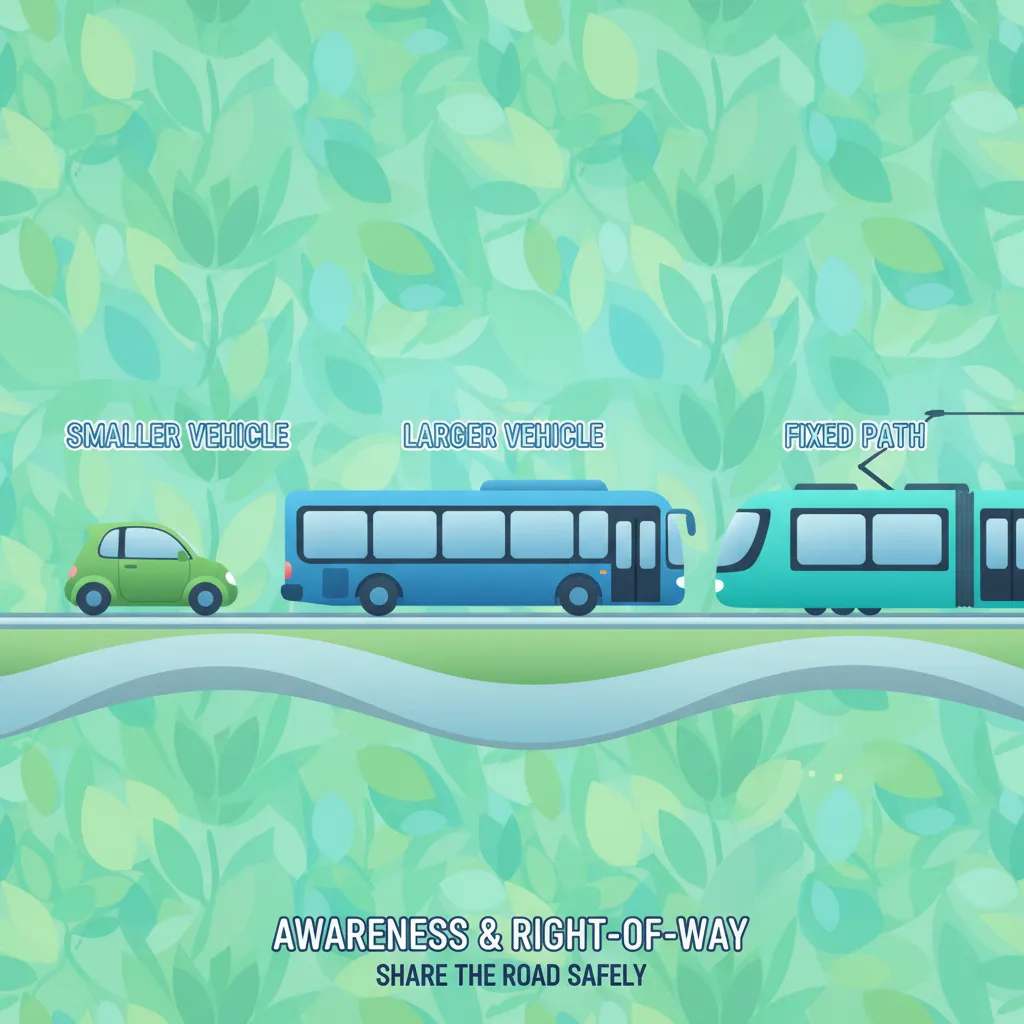
This lesson provides specific guidance for sharing the road with different types of vehicles in Austria. It covers the dangers of large vehicle blind spots, the rules for navigating near buses and dedicated tram tracks, and common conflict points at intersections. Understanding the behavior and limitations of other vehicles is key to safely navigating complex urban environments.
This lesson teaches drivers how to safely coexist with cyclists and pedestrians, who are prevalent in urban areas. It covers the rules for dedicated bike lanes (Radweg), the importance of yielding to pedestrians in designated zones, and the need for extra caution when turning or opening car doors. Maintaining safe overtaking distances and anticipating the movements of these vulnerable road users are key themes for preventing accidents.

This lesson reinforces the critical importance of protecting vulnerable road users in dense urban settings. It teaches drivers to be hyper-aware of pedestrians and cyclists, especially near intersections and crosswalks. Key techniques include reducing speed, making eye contact to confirm intentions, and giving ample space.

This lesson addresses the specific challenges of interacting with larger vehicles like buses and trams in an urban environment. It explains how to signal intentions clearly and predictably to avoid conflicts in shared spaces. Key topics include safely crossing tram tracks and maintaining awareness around public transport stops.

This lesson focuses on identifying and mitigating common hazards in dense urban settings. It explains how to maintain a safe distance from parked cars to avoid opening doors and how to navigate narrow streets. Additionally, it covers the special rules and heightened awareness required when riding in or near pedestrian zones and school areas.
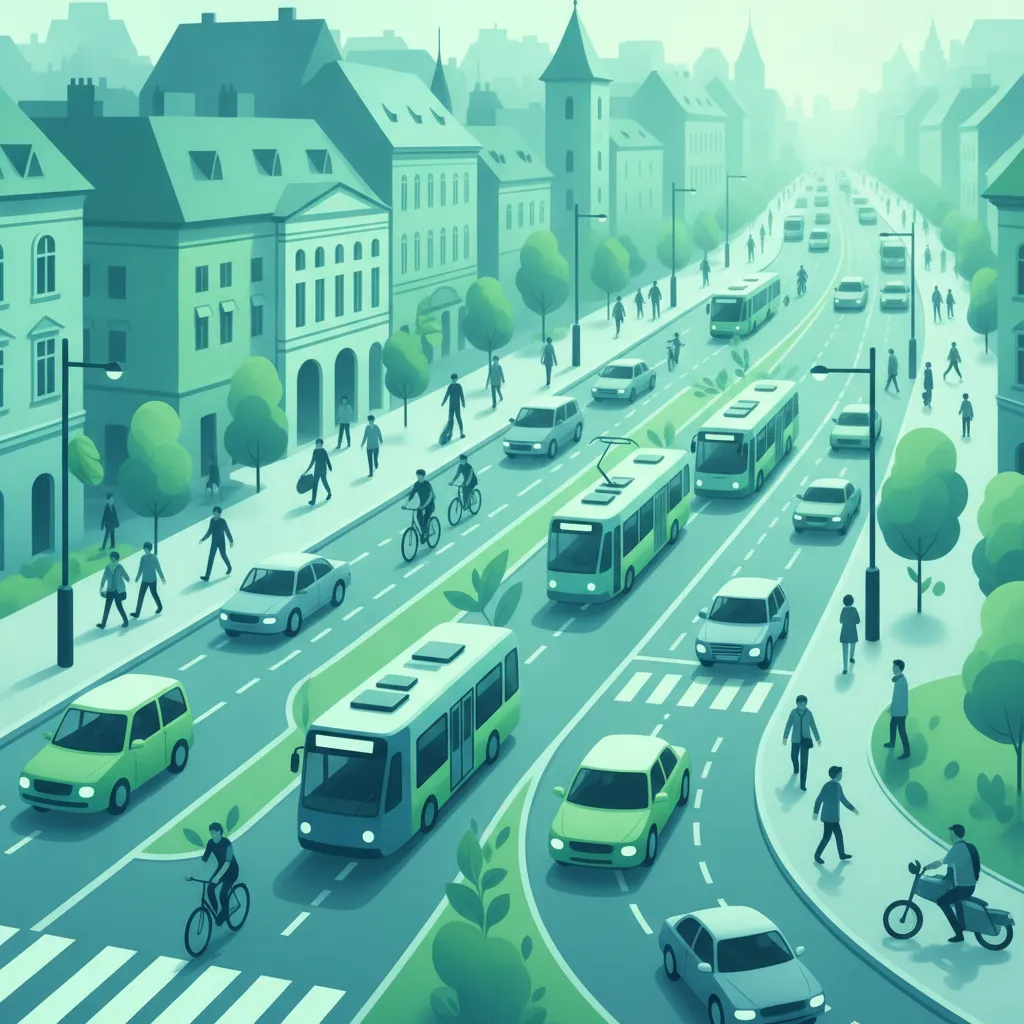
This lesson explores the distinct challenges of urban driving, focusing on managing the vehicle in dense, slow-moving, or stop-and-go traffic. It covers strategies for effective lane management, anticipating traffic signal changes, and navigating common city road features like one-way streets and traffic calming measures. Understanding these dynamics helps reduce stress and improve safety in congested environments.
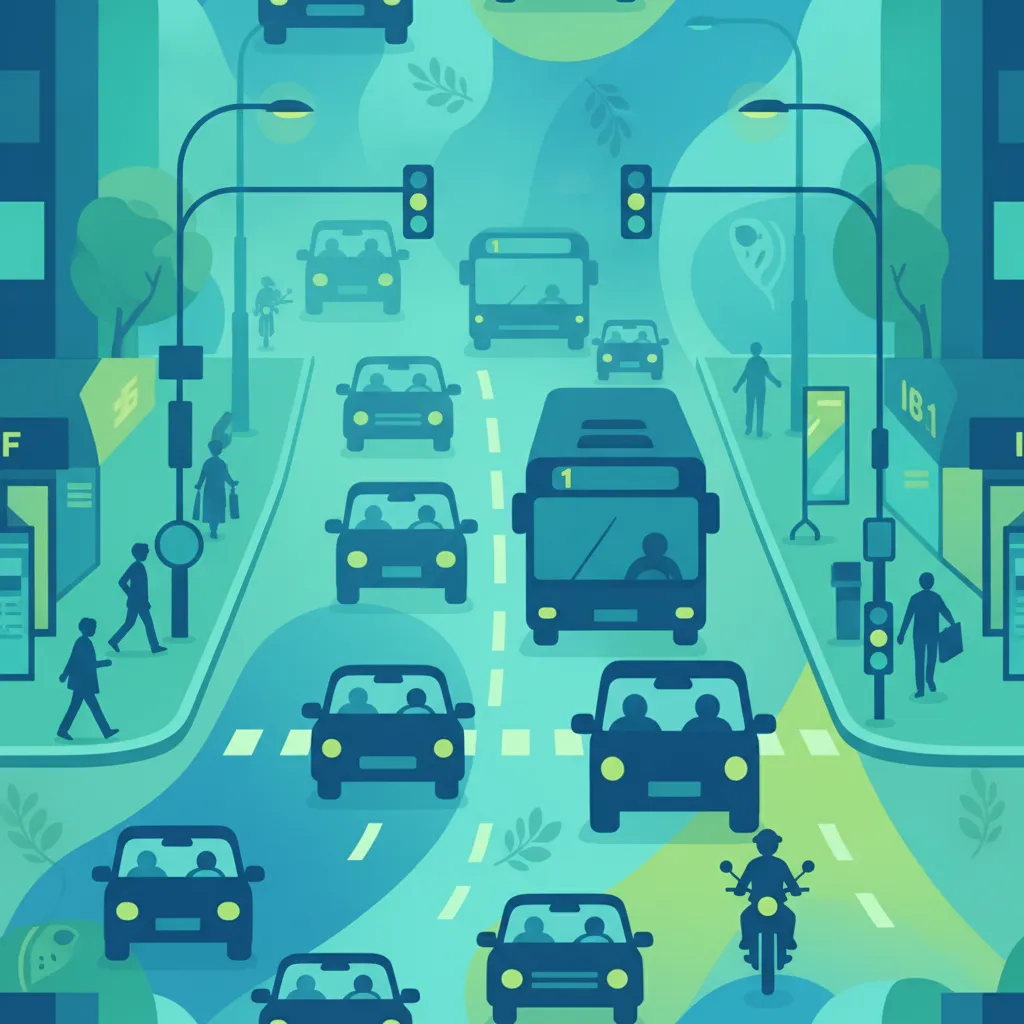
Driving a bus in a busy city like Vienna or Salzburg requires constant forward planning and anticipation. This lesson teaches techniques for maintaining adequate space around the vehicle, positioning correctly for upcoming junctions, and reading the flow of traffic. Adopting a defensive mindset is key to navigating complex urban environments without incident.

Driving in tourist hotspots in cities like Salzburg or alpine resorts requires extra patience and vigilance. This lesson explores common unpredictable behaviours, such as pedestrians stepping into the road to take photos or groups of tourists being unaware of traffic. It teaches drivers to slow down, be prepared for anything, and use communication tools like the horn sparingly and appropriately.
Understand the specific legal requirements from the Austrian StVO for interacting with cyclists and e-scooters. Learn predictive driving techniques to anticipate unpredictable movements and ensure compliance with safe overtaking distances and right-of-way rules for professional drivers.
This lesson focuses on the critical skill of sharing the road safely with vulnerable users, such as pedestrians, cyclists, and e-scooter riders. It details the legally required distance buffers for overtaking and emphasizes heightened awareness in sensitive areas like school zones and designated pedestrian crossings. The content provides guidelines for interacting with bicycle lanes and shared spaces to foster a protective and respectful driving attitude towards those most at risk.
This lesson provides advanced strategies for proactively managing interactions with vulnerable road users to prevent conflicts before they arise. It teaches drivers to predict the likely behavior of pedestrians, cyclists, and e-scooter riders, especially at intersections and in congested areas. Key techniques include maintaining larger safety distances, covering the brake, and making eye contact to ensure mutual awareness and avoid accidents.
This lesson provides specific guidance for sharing the road with different types of vehicles in Austria. It covers the dangers of large vehicle blind spots, the rules for navigating near buses and dedicated tram tracks, and common conflict points at intersections. Understanding the behavior and limitations of other vehicles is key to safely navigating complex urban environments.
This lesson addresses the specific challenges of interacting with larger vehicles like buses and trams in an urban environment. It explains how to signal intentions clearly and predictably to avoid conflicts in shared spaces. Key topics include safely crossing tram tracks and maintaining awareness around public transport stops.
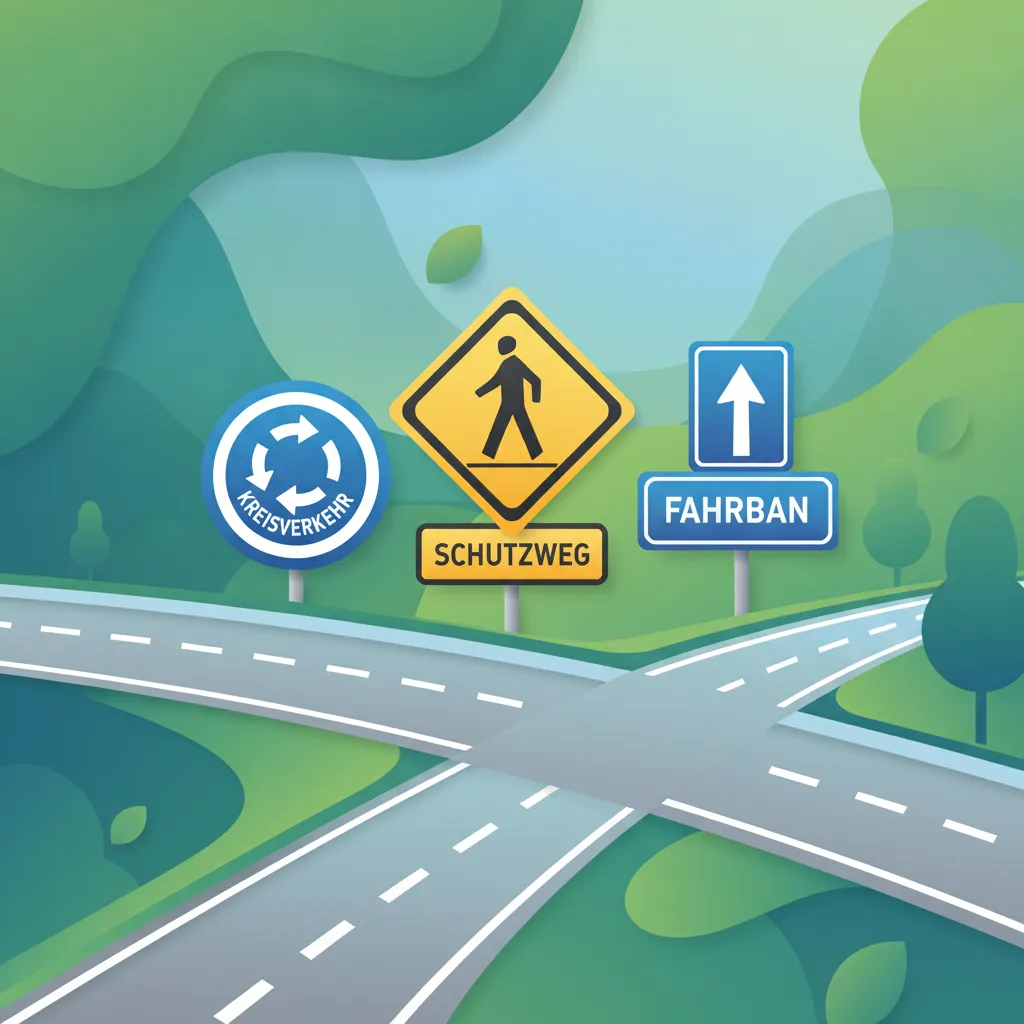
This lesson covers the specific regulations associated with special Austrian road signs and areas. It details the rules for 'Schutzweg' (protected pedestrian crossings), 'Kreisverkehr' (roundabouts), and the distinction between 'Fahrbahn' (road) and 'Fahrstreifen' (lane). Understanding these specific contexts is essential for safe navigation in urban and suburban environments.
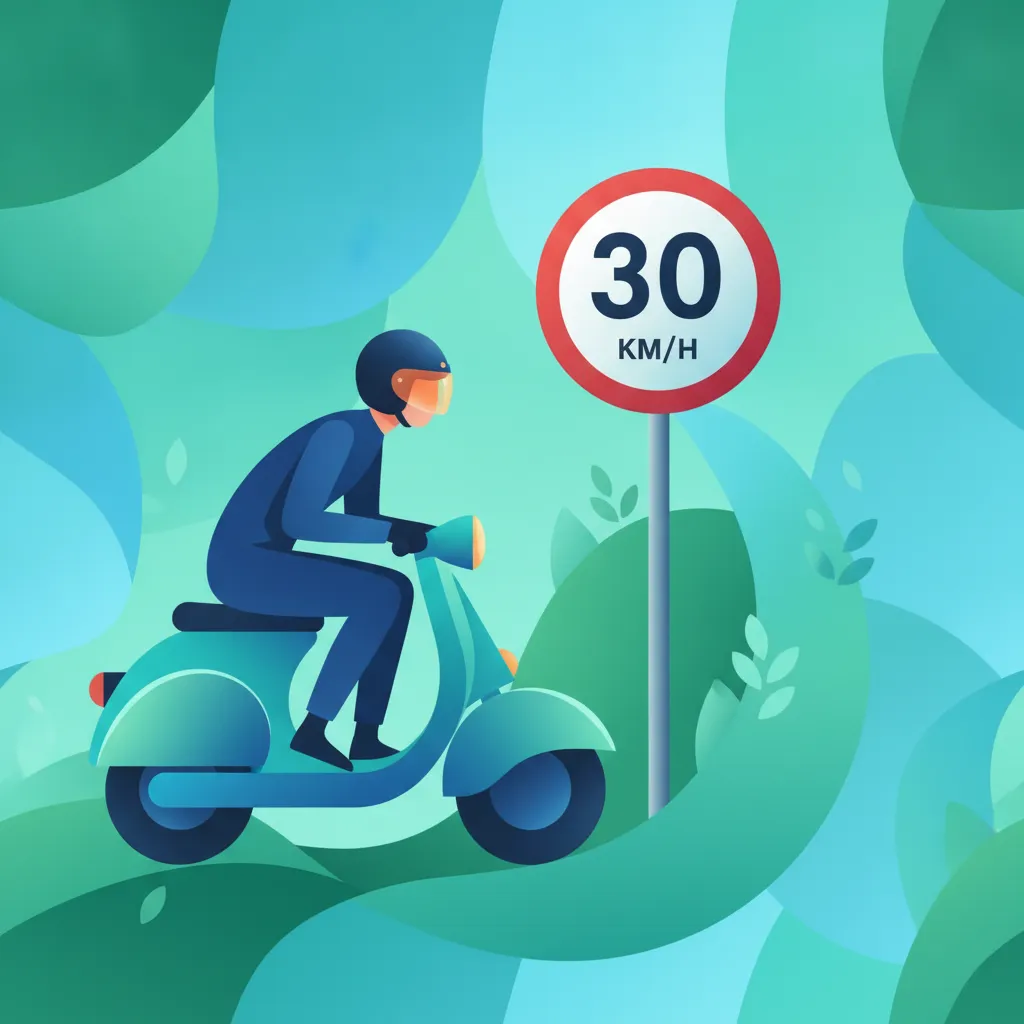
This lesson provides an overview of the Austrian Road Traffic Act (StVO) as it applies to AM riders. It introduces the hierarchy of road users and explains the fundamental principles of right-of-way, including the concepts of 'Vorfahrt' and 'Nachrang'. Learners will understand the meaning of basic road markings and priority signs to navigate traffic lawfully and safely.

Transporting children carries the highest level of responsibility. This lesson covers the specific Austrian rules for school buses, including the use of warning signs and lights. It focuses on developing a mindset of extreme caution, anticipating that children may run into the road unexpectedly, and managing the chaotic traffic environment often found around schools during drop-off and pick-up times.
This lesson teaches drivers how to safely coexist with cyclists and pedestrians, who are prevalent in urban areas. It covers the rules for dedicated bike lanes (Radweg), the importance of yielding to pedestrians in designated zones, and the need for extra caution when turning or opening car doors. Maintaining safe overtaking distances and anticipating the movements of these vulnerable road users are key themes for preventing accidents.
This lesson reinforces the critical importance of protecting vulnerable road users in dense urban settings. It teaches drivers to be hyper-aware of pedestrians and cyclists, especially near intersections and crosswalks. Key techniques include reducing speed, making eye contact to confirm intentions, and giving ample space.
This lesson details the specific regulations and best practices for driving in areas with high pedestrian activity, such as bus stops and school zones. It explains the driver's obligation to stop for school buses with flashing lights and to yield to public buses pulling out from a stop. The content emphasizes the requirement to significantly reduce speed in marked school zones to ensure the safety of children.
Find clear answers to common questions learners have about Managing Interactions with Cyclists and E-Scooter Riders. Learn how the lesson is structured, which driving theory objectives it supports, and how it fits into the overall learning path of units and curriculum progression in Austria. These explanations help you understand key concepts, lesson flow, and exam focused study goals.
The elevated driving position creates significant blind spots near the front and sides of the vehicle. You must rely on properly adjusted wide-angle mirrors and advanced camera systems to ensure no cyclists are positioned beside you before you pull away.
In Austria, you must ensure sufficient lateral distance. When driving a large vehicle, it is critical to leave extra room for the cyclist's own stability and to account for any sudden lateral movements, especially in wet or windy conditions.
The 'hook turn' hazard occurs when a bus turns across a cycle lane. You must perform a final shoulder and mirror check to ensure no cyclist is attempting to go straight while you are initiating your turn.
In the context of the theory exam, e-scooter riders are treated similarly to cyclists regarding vulnerability. Always anticipate unpredictable movements and treat them with the same caution you would a cyclist, especially near bus stops.
Refine your study plan by searching for specific Austrian driving theory practice sets. Pinpoint questions related to particular road rules, signs, or challenge levels, and begin practicing immediately to reinforce your knowledge and excel in your official exam with confidence. Get started with focused revision today.