
The moments before pulling away from a bus stop are among the most hazardous for a Category D driver. This lesson guides you through a strict, professional sequence for clearing passengers and checking mirrors to ensure safe movement in busy Austrian traffic.

Lesson content overview
For professional drivers holding an Austrian Bus & Coach Licence (Category D), the moment of moving off from any stop is among the most critical. It demands a systematic and non-negotiable safety routine to safeguard passengers, pedestrians, cyclists, and other road users. This lesson details the crucial final door and mirror checks, alongside blind spot verification and signaling, that must be completed before a bus or coach departs from a stationary position. Mastering this routine is fundamental to preventing incidents and upholding the high standards of passenger duty of care.
Departing from a bus stop, whether in a busy urban environment or a quiet rural setting, presents unique hazards. Passengers may be late, unaware of vehicle movement, or still in the process of alighting. Pedestrians, cyclists, and even smaller vehicles can approach from areas not immediately visible, particularly in blind spots. The final safety check routine is designed to mitigate these risks by providing a structured sequence of observations and actions. This systematic approach ensures that no critical safety step is overlooked, even under time pressure or challenging conditions. It builds directly upon your understanding of passenger duty of care from Unit 1 and your knowledge of vehicle dimensions, mirror adjustments, and door operations from Unit 2.
To ensure consistent safety, every bus and coach driver must adopt a fixed, non-negotiable sequence of checks before moving off. This routine minimizes cognitive load and reduces the chance of human error, ensuring all potential hazards are addressed. Adhering to this sequence creates muscle memory, allowing you to perform these vital checks consistently and effectively in all driving conditions.
Passenger Clearance Confirmation: Verify that all passengers have safely alighted and are completely clear of the doors and the vehicle's intended path.
Door Closure Confirmation: Ensure all passenger doors are fully closed and securely latched, both visually and audibly.
Blind Spot Verification: Perform comprehensive checks of all blind spots using mirrors and thorough over-the-shoulder glances.
Final Signal Confirmation: Activate the appropriate turn signal to communicate your intent to move, verifying its activation.
Safe Movement: Only when all preceding steps are confirmed safe, gently move the vehicle.
The first and paramount step is to confirm that all passengers who intended to alight have done so safely and are completely clear of the vehicle. This goes beyond a quick glance; it requires a deliberate pause and thorough observation.
Visual and verbal confirmation that all passengers have safely exited the vehicle and are clear of the doors and the vehicle's intended path before any movement.
Never assume passengers are clear simply because the doors have been open for a while. Always make a deliberate, visual check. A passenger's foot or clothing caught in a closing door can lead to severe injury and significant legal consequences for the driver.
Once passenger clearance is confirmed, the next step is to ensure that all passenger doors are fully closed and securely latched. An unsecured door poses a significant hazard, potentially opening during movement and endangering passengers inside or other road users.
Physical verification that all passenger doors are fully closed and securely latched before vehicle movement, often involving auditory cues or dashboard indicators.
Even with perfectly adjusted mirrors, every large vehicle has blind spots—areas around the vehicle that are not directly visible to the driver. These blind spots can conceal pedestrians, cyclists, motorcyclists, or smaller vehicles, making a final, thorough check absolutely essential before moving.
An area around a vehicle that is not visible directly through mirrors, requiring additional over-the-shoulder glances (headchecks) to verify.
The final preparatory step before moving is to activate the appropriate turn signal and confirm its operation. Signaling clearly communicates your intention to depart and move into traffic, providing other road users with critical information and time to react.
The vehicle's lighting system that communicates the driver's intended direction of movement or lane change to other road users.
Adhering to the systematic pre-departure checks is not merely good practice; it is a legal requirement under Austrian road traffic law. Several sections of the StVO (Straßenverkehrsordnung) underpin these obligations, emphasizing the driver's extensive duty of care.
| Regulation | Rule Statement | Applicability for Bus/Coach Drivers | Rationale | Implications for Drivers |
|---|---|---|---|---|
| StVO § 30 | The driver must have full control of the vehicle before moving. | Any start from a stop. | Ensures the vehicle can be safely maneuvered. | Requires completion of all checks before accelerating. |
| StVO § 31 | Driver must ensure that all passengers have safely alighted before moving. | Any stop where passengers alight. | Protects passengers from moving doors and vehicle motion. | Demands visual confirmation and appropriate pausing. |
| StVO § 38 | Before moving, the driver must check blind spots using mirrors and over-the-shoulder glances. | Any movement requiring lane change or departure from stop. | Blind spots are not covered by mirrors alone. | Mandatory headchecks and comprehensive mirror scans. |
| StVO § 41 | Use of turn signals is required to indicate intended movement. | All vehicle movements where direction change is evident. | Communicates driver intentions to other road users. | Activate signal well in advance (e.g., 3 seconds) and verify. |
| StVO § 101 | All passenger doors must be securely closed before vehicle movement. | Any start from a stop. | Prevents doors from opening unexpectedly, reducing injury risk. | Listen for closing click or check dashboard indicator. |
These regulations highlight that neglecting any part of the final safety check routine is not only reckless but also a violation of specific legal duties, potentially leading to fines, license penalties, or severe legal consequences in the event of an incident.
Understanding potential pitfalls is as crucial as knowing the correct procedure. Here are common mistakes and edge cases drivers might encounter:
Develop a consistent internal monologue for your checks: "Passengers clear? Doors closed? Mirrors, blind spots clear? Signal on? Okay, moving." This mental checklist helps reinforce the non-negotiable sequence.
Consider a scenario at a busy city bus stop during heavy rain. Passengers have just alighted, and there's a steady stream of cyclists in the bus lane.
The final safety check sequence remains constant, but its execution must adapt to varying conditions.
The systematic final checks before moving off are rooted in fundamental safety principles:
The critical final door and mirror check before moving is more than just a procedural step; it is a cornerstone of safe, professional bus and coach operation in Austria. By consistently applying the non-negotiable sequence—confirming passenger clearance, ensuring door closure, verifying blind spots, and confirming your signal—you actively prevent accidents, protect lives, and uphold your professional responsibilities under the Austrian StVO. Discipline in these vital checks transforms them into an ingrained habit, making every departure a safe and controlled maneuver.
This lesson teaches the mandatory five-step pre-departure safety routine for Category D bus and coach drivers in Austria: confirming passenger clearance, verifying door closure, checking all blind spots through mirrors and headchecks, activating and confirming the turn signal, and only then moving when fully safe. These systematic checks are legally required under Austrian StVO regulations (§§ 30, 31, 38, 41, 101) and are specifically designed to prevent incidents with late-running passengers, pedestrians, cyclists, and vehicles in blind spots. The lesson covers key blind spot areas, practical application techniques for both manual and automatic doors, environmental adaptations for weather and lighting conditions, and common violations that lead to accidents. Mastering this routine builds the safety-first mentality essential for the Category D theory exam and professional passenger transport.
A short set of high-value points that capture the most important learning from this lesson.
The pre-departure safety check follows a fixed non-negotiable sequence: confirm passenger clearance, verify door closure, check blind spots, activate signal, then move
Blind spots exist on the driver's side, passenger's side, and rear of the vehicle and require over-the-shoulder headchecks in addition to mirror checks
Passenger clearance requires deliberate visual confirmation, not assumptions based on how long doors have been open
Dashboard door status indicators must be checked visually, not just relying on closing sounds, especially in noisy environments
Turn signals must be activated for a minimum duration (approximately 3 seconds) before moving, not during or after movement begins
Explore all units and lessons included in this driving theory course.
StVO § 31 requires drivers to ensure passengers have safely alighted before moving; StVO § 101 mandates all doors are securely closed
The five-step sequence creates muscle memory that prevents critical safety steps from being skipped under time pressure
Left blind spot: along the driver's side from cab to rear wheel arch; Right blind spot: entire passenger side, especially when pulling from a curb
In adverse weather (rain, fog, snow), increase headcheck frequency since mirrors become less effective
Environmental factors (weather, lighting, traffic density) require adapting the thoroughness of checks while maintaining the same sequence
Skipping blind spot checks due to time pressure, assuming mirrors provide sufficient coverage
Moving off after doors have been open for a while without making a dedicated visual passenger clearance check
Relying solely on the sound of doors closing without checking dashboard door status indicator lights
Activating the turn signal only as the vehicle begins to move, or not signaling at all, which denies other road users reaction time
Failing to increase headcheck frequency in poor visibility conditions such as heavy rain, fog, or at night
Lesson content overview
A short set of high-value points that capture the most important learning from this lesson.
The pre-departure safety check follows a fixed non-negotiable sequence: confirm passenger clearance, verify door closure, check blind spots, activate signal, then move
Blind spots exist on the driver's side, passenger's side, and rear of the vehicle and require over-the-shoulder headchecks in addition to mirror checks
Passenger clearance requires deliberate visual confirmation, not assumptions based on how long doors have been open
Dashboard door status indicators must be checked visually, not just relying on closing sounds, especially in noisy environments
Turn signals must be activated for a minimum duration (approximately 3 seconds) before moving, not during or after movement begins
Explore all units and lessons included in this driving theory course.
StVO § 31 requires drivers to ensure passengers have safely alighted before moving; StVO § 101 mandates all doors are securely closed
The five-step sequence creates muscle memory that prevents critical safety steps from being skipped under time pressure
Left blind spot: along the driver's side from cab to rear wheel arch; Right blind spot: entire passenger side, especially when pulling from a curb
In adverse weather (rain, fog, snow), increase headcheck frequency since mirrors become less effective
Environmental factors (weather, lighting, traffic density) require adapting the thoroughness of checks while maintaining the same sequence
Skipping blind spot checks due to time pressure, assuming mirrors provide sufficient coverage
Moving off after doors have been open for a while without making a dedicated visual passenger clearance check
Relying solely on the sound of doors closing without checking dashboard door status indicator lights
Activating the turn signal only as the vehicle begins to move, or not signaling at all, which denies other road users reaction time
Failing to increase headcheck frequency in poor visibility conditions such as heavy rain, fog, or at night
Explore search topics learners often look for when studying The Critical Final Door and Mirror Check Before Moving. These topics reflect common questions about road rules, driving situations, safety guidance, and lesson level theory preparation for learners in Austria.
Browse additional driving theory lessons that cover connected traffic rules, road signs, and common driving situations related to this topic. Improve your understanding of how different rules interact across everyday traffic scenarios.
Understand the critical safety routine for moving off from a stop as a Category D driver in Austria. Covers essential mirror checks, blind spot awareness, door safety, and signaling protocols to ensure passenger and road user safety.
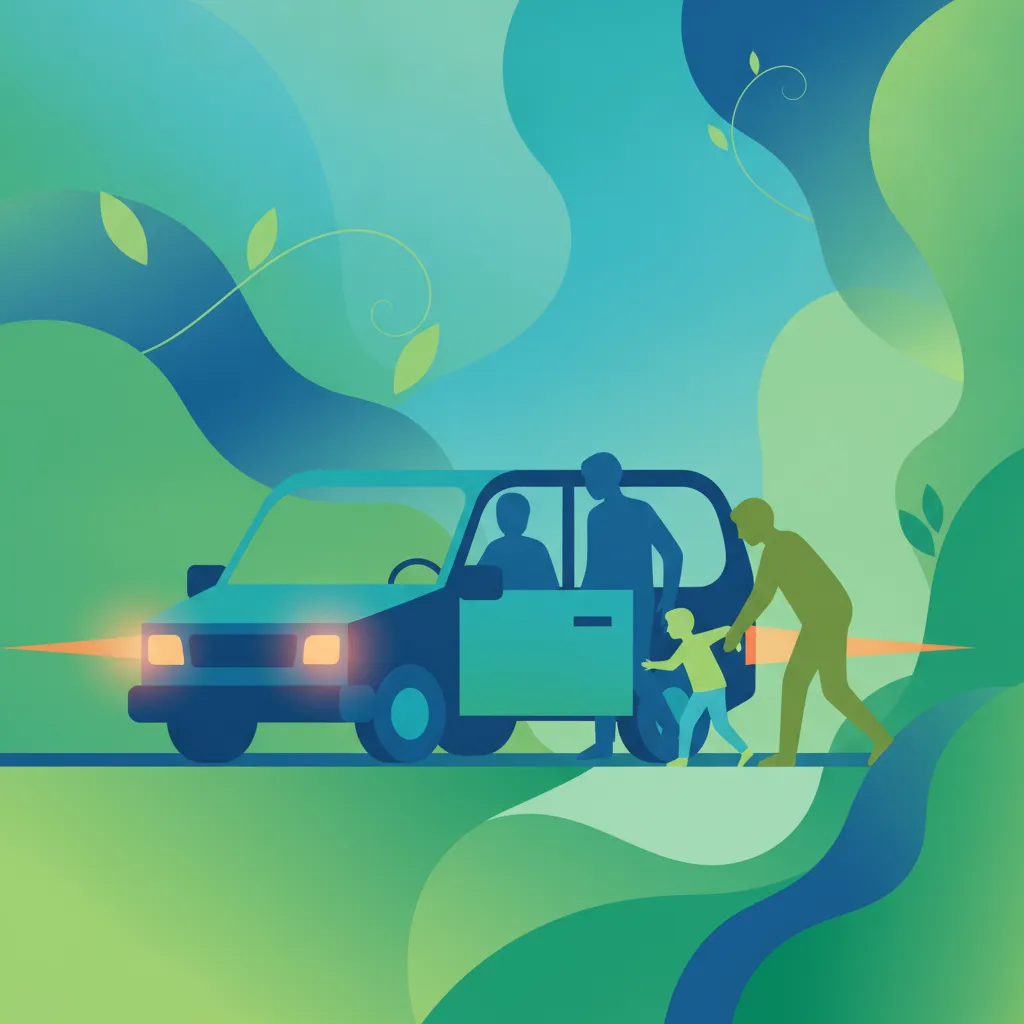
A driver's duty of care extends to passengers until they are safely away from the vehicle. This lesson stresses the importance of monitoring passengers as they step off, ensuring they have stable footing and are clear of the bus's path. It highlights the particular need for vigilance when children or elderly passengers are alighting, and the importance of checking mirrors before closing the doors.

The driver is responsible for supervising the entire boarding process. This lesson covers techniques for encouraging orderly queues and ensuring passengers use handrails. It also details the driver's role in assisting passengers with mobility aids, prams, or heavy luggage, ensuring they are able to board without rushing and find a seat or safe standing position.

Buses and coaches have significant blind spots that pose a major risk to pedestrians, cyclists, and other vehicles. This lesson teaches you how to correctly set up and systematically scan all mirrors, including wide-angle and kerb-view mirrors. It also covers the use of modern camera systems to gain a complete picture of the area surrounding the vehicle, especially before moving off.

Passive mirror use is not enough. This lesson teaches active, systematic scanning techniques, including moving your head to look around A-pillars and using all available mirrors and cameras in a set sequence. The focus is on building a constant mental map of the space around the vehicle, especially before any change of direction or speed, to account for unseen pedestrians or cyclists.
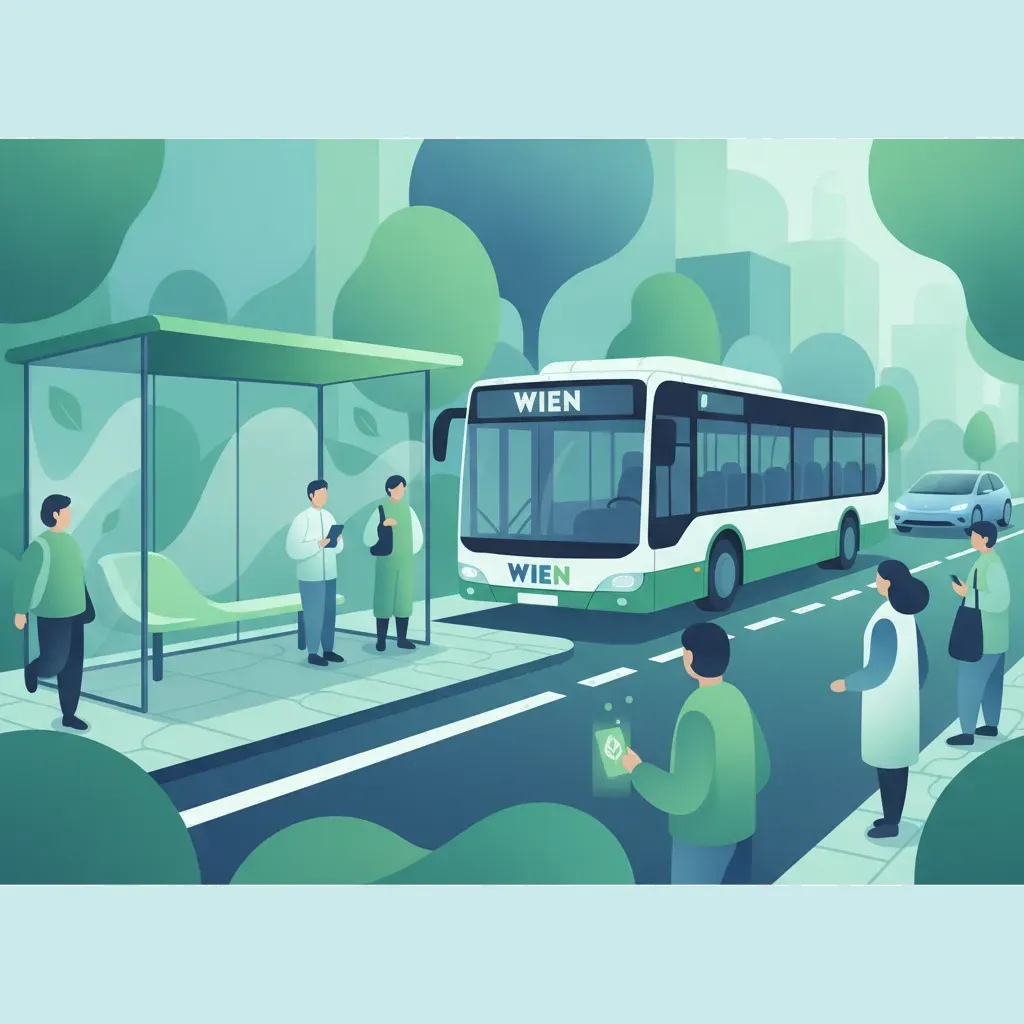
A safe stop begins with a planned approach. This lesson covers how to signal your intentions early, manage your speed, and scan for hazards like pedestrians and cyclists near the stop. It emphasizes the importance of aligning the bus parallel and close to the kerb to minimize the step for passengers, creating a safe platform for boarding and alighting.

Transporting children carries the highest level of responsibility. This lesson covers the specific Austrian rules for school buses, including the use of warning signs and lights. It focuses on developing a mindset of extreme caution, anticipating that children may run into the road unexpectedly, and managing the chaotic traffic environment often found around schools during drop-off and pick-up times.

Rural Austrian roads present unique challenges, including lack of markings, tight spaces, and slow-moving agricultural vehicles. This lesson teaches how to read the road ahead, anticipate hazards around blind bends, and use passing places effectively when meeting other large vehicles. It emphasizes adjusting speed to suit the limited visibility and variable road conditions.

Reversing is statistically one of the most dangerous manoeuvres. This lesson outlines a strict safety protocol: get out and check the area first, use a competent banksman (marshal) whenever possible, and proceed at a slow walking pace. It also covers the use of reversing cameras and alarms as aids, but stresses they are no substitute for a thorough physical check and direct assistance.

Carrying standing passengers significantly increases a driver's responsibility for smooth control. This lesson details the specific adjustments required, such as reducing speed before turns to minimize sideways forces and increasing following distances to avoid sudden braking. It emphasizes the importance of awareness and observation of passengers' stability before accelerating from a stop.
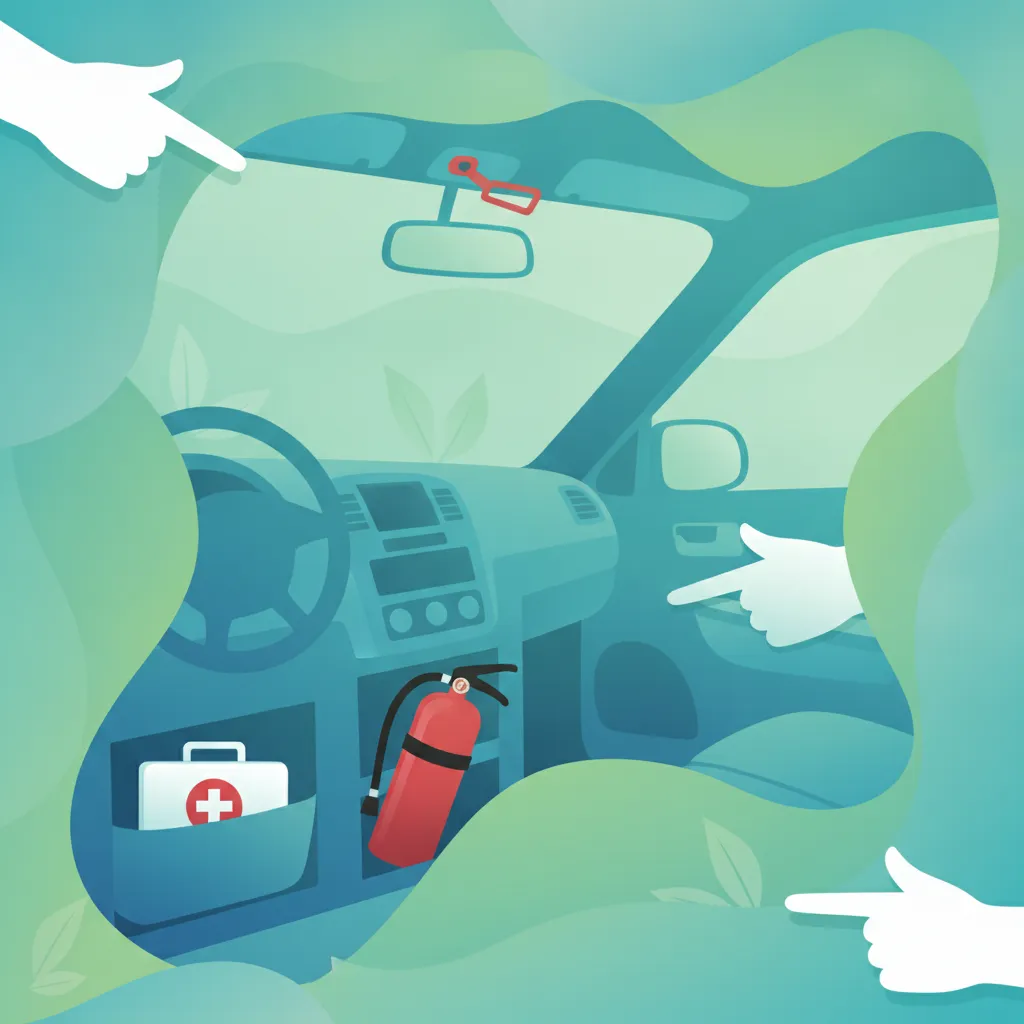
In an emergency, knowing the location and status of safety equipment is critical. This lesson details how to locate and inspect fire extinguishers, first aid kits, emergency hammers, and all designated emergency exits, including doors and roof hatches. It emphasizes the importance of ensuring these items are unobstructed and included in the daily pre-trip inspection.
Learn about typical errors and hazards drivers face when departing from bus stops in Austria. This lesson focuses on understanding critical risks, identifying blind spots, and applying StVO regulations to prevent incidents.
Transporting children carries the highest level of responsibility. This lesson covers the specific Austrian rules for school buses, including the use of warning signs and lights. It focuses on developing a mindset of extreme caution, anticipating that children may run into the road unexpectedly, and managing the chaotic traffic environment often found around schools during drop-off and pick-up times.
A safe stop begins with a planned approach. This lesson covers how to signal your intentions early, manage your speed, and scan for hazards like pedestrians and cyclists near the stop. It emphasizes the importance of aligning the bus parallel and close to the kerb to minimize the step for passengers, creating a safe platform for boarding and alighting.

Not all bus stops are created equal. This lesson trains you to assess a stop's environment and identify potential hazards, such as poor sightlines, proximity to a busy junction, or frequent presence of vulnerable road users. It encourages a proactive approach, where the driver heightens their observation and slows their approach when dealing with these known high-risk locations.

Driving a bus in a busy city like Vienna or Salzburg requires constant forward planning and anticipation. This lesson teaches techniques for maintaining adequate space around the vehicle, positioning correctly for upcoming junctions, and reading the flow of traffic. Adopting a defensive mindset is key to navigating complex urban environments without incident.

Pedestrians have absolute priority on marked crossings in Austria, and a bus driver must always be ready to give way. This lesson covers the rules for approaching and stopping for pedestrians, and highlights the risk of pedestrians being hidden by the vehicle's structure. It also stresses the danger of passengers crossing the road after alighting from your bus.
Rural Austrian roads present unique challenges, including lack of markings, tight spaces, and slow-moving agricultural vehicles. This lesson teaches how to read the road ahead, anticipate hazards around blind bends, and use passing places effectively when meeting other large vehicles. It emphasizes adjusting speed to suit the limited visibility and variable road conditions.
Carrying standing passengers significantly increases a driver's responsibility for smooth control. This lesson details the specific adjustments required, such as reducing speed before turns to minimize sideways forces and increasing following distances to avoid sudden braking. It emphasizes the importance of awareness and observation of passengers' stability before accelerating from a stop.

Driving in tourist hotspots in cities like Salzburg or alpine resorts requires extra patience and vigilance. This lesson explores common unpredictable behaviours, such as pedestrians stepping into the road to take photos or groups of tourists being unaware of traffic. It teaches drivers to slow down, be prepared for anything, and use communication tools like the horn sparingly and appropriately.
The driver is responsible for supervising the entire boarding process. This lesson covers techniques for encouraging orderly queues and ensuring passengers use handrails. It also details the driver's role in assisting passengers with mobility aids, prams, or heavy luggage, ensuring they are able to board without rushing and find a seat or safe standing position.

Bus stations and depots are complex, hazardous environments. This lesson covers the unique challenges, such as navigating tight spaces with other buses moving, adhering to site-specific speed limits and traffic flow systems, and being highly aware of staff and passengers walking in operational areas. Safe positioning in designated bays is a key focus.
Find clear answers to common questions learners have about The Critical Final Door and Mirror Check Before Moving. Learn how the lesson is structured, which driving theory objectives it supports, and how it fits into the overall learning path of units and curriculum progression in Austria. These explanations help you understand key concepts, lesson flow, and exam focused study goals.
The final check is your last opportunity to identify vulnerable road users like cyclists who may be hidden in blind spots. Failure to perform this check is a major cause of preventable accidents and will result in significant point deductions on your theory exam.
You must check your mirrors continuously throughout the process. A final, systematic scan of all relevant mirrors and camera systems must be conducted immediately after the doors are closed and locked, but crucially, just before you release the parking brake to move.
When stopping at shared transport nodes, your mirror and door checks must be even more intense. You are responsible for ensuring that no passenger is alighting or boarding when the tram doors are opening or closing, and you must verify that the path is clear of pedestrians using the crosswalk.
While modern Category D vehicles use advanced camera and mirror systems, the law requires the driver to verify the entire perimeter. You should use all available technology in combination with your observational skills to ensure 100% visibility of the bus's surroundings.
Refine your study plan by searching for specific Austrian driving theory practice sets. Pinpoint questions related to particular road rules, signs, or challenge levels, and begin practicing immediately to reinforce your knowledge and excel in your official exam with confidence. Get started with focused revision today.