
This lesson focuses on the absolute priority pedestrians have at marked crossings and the specific risks involved when passengers alight from your bus. You will learn how to safely manage stop approaches and anticipate the movements of vulnerable road users to ensure total compliance with Austrian law.

Lesson content overview
As a professional driver holding an Austrian Bus & Coach Licence (Category D), your paramount responsibility is the safety of all road users, especially vulnerable pedestrians. This comprehensive lesson delves into the critical rules and best practices for protecting pedestrians at marked crossings and during passenger operations at bus stops. Understanding and strictly adhering to these guidelines is not only a legal requirement under Austrian traffic law (Straßenverkehrsordnung, StVO) but a fundamental aspect of your professional duty of care.
Pedestrians are among the most vulnerable road users due to their limited speed, lack of protection, and inability to brake quickly. Austrian traffic law reflects this vulnerability by granting pedestrians absolute priority in specific situations, particularly at marked crossings. For bus drivers, this means a heightened level of vigilance and a constant readiness to yield.
At designated pedestrian crossings, such as zebra crossings, pedestrians have absolute right-of-way. This means that regardless of the traffic signal phase for vehicles, if a pedestrian is on, or clearly intending to step onto, a marked crossing, all vehicular traffic, including buses, must come to a complete stop. This rule is enshrined in Austrian traffic legislation (StVO § 46) and aims to eliminate ambiguity, ensuring the safety of slow-moving road users.
The practical implication for bus drivers is profound: you must always be prepared to stop before the crossing line. This preparedness extends to situations where pedestrians might not be immediately visible, requiring anticipation and defensive driving techniques. Failing to yield at a marked crossing is a serious offense that can lead to severe consequences, including pedestrian injury, legal liability, and significant fines.
Approaching any pedestrian crossing requires a systematic and cautious approach from bus drivers. The large size and weight of a bus necessitate early deceleration and a thorough assessment of the environment.
A core principle for all drivers, especially bus and coach operators, is the constant readiness to yield. This means that as you approach a marked crossing, your speed should be adjusted to allow for a safe stop at any moment. This is particularly crucial for buses, which require a longer stopping distance compared to smaller vehicles due to their mass.
Proactive Deceleration: Begin reducing your speed well in advance of a crossing, especially if visibility is poor or road conditions are challenging. This gives you more time to react to unexpected pedestrian movements and ensures a smooth, safe stop for your passengers.
This readiness also accounts for the possibility of hidden pedestrians. Even if no one is immediately visible, you must drive with the assumption that a pedestrian could emerge at any moment. This continuous observation of the crossing approach and the surrounding area is vital for preventing accidents.
The stopping distance of a bus is significantly influenced by several factors, including its weight, speed, the road surface, and prevailing weather conditions. A fully loaded bus, for instance, requires a substantially greater distance to stop than an empty one. Similarly, wet, icy, or gravel surfaces dramatically increase the required braking distance.
The total distance a vehicle travels from the moment a driver perceives a hazard and initiates braking until the vehicle comes to a complete halt. It is the sum of reaction distance and braking distance.
Factors Affecting Stopping Distance:
It is imperative that bus drivers begin deceleration early enough to ensure they can stop comfortably before the marked crossing line, preventing any encroachment into the pedestrian's right-of-way.
One of the most significant challenges for bus drivers is the presence of hidden pedestrians. These are individuals who are not immediately visible to the driver due to various obstructions. Ignoring this possibility can lead to severe collisions.
Buses, by their very design, have numerous blind spots where pedestrians, especially children or those approaching from the side, can be completely obscured. These zones exist around the vehicle's structure, particularly:
These blind spots are dynamic and change with the bus's position relative to other vehicles, parked cars, or street furniture. Drivers must perform continuous visual checks using all available mirrors and be acutely aware of these zones, especially when pulling away from a stop, turning, or approaching a crossing.
The principle of "if you can't see them, assume they are there" is fundamental. Even if your direct line of sight to a crossing is clear, a pedestrian might be obscured by a parked car, a bus stop shelter, or even another bus. Children, in particular, can appear suddenly and unexpectedly.
Strategies for Anticipating Hidden Pedestrians:
This proactive approach ensures you are prepared to react safely, even if a pedestrian suddenly steps into view from a blind spot.
The duty of care extends beyond external pedestrians to your own passengers, particularly during boarding and alighting. Ensuring their safety as they enter or exit the bus is a critical responsibility.
Opening and closing bus doors must always be executed with extreme caution. Before opening any door, the driver must verify that the area immediately surrounding the door is clear of pedestrians, cyclists, or other vehicles. This prevents direct collisions with the door itself and ensures passengers step out into a safe space.
Key Door Safety Practices:
Risk of Passengers Stepping into Traffic: After alighting, passengers may walk directly in front of or behind your bus to cross the road. This is extremely dangerous as your bus itself creates a significant blind spot for them and for oncoming traffic. Never pull away until you are certain that alighting passengers are safely on the pavement or have crossed the road without danger.
Certain areas demand an even higher level of vigilance from bus drivers due to the increased presence of vulnerable or unpredictable pedestrians.
School zones are areas around educational institutions, playgrounds, and parks where children are frequently present. These zones are often marked by specific signage and reduced speed limits. In Austria, additional requirements often apply in these areas (StVO § 61).
Children can be impulsive and unpredictable. They may dart into the road without looking, cross outside designated crossings, or be distracted by friends or games.
Specific Requirements in School Zones:
Some bus stops are inherently more dangerous than others due to their location, design, or surrounding environment. These "high-risk stop areas" require extra caution.
Characteristics of High-Risk Stop Areas:
In such areas, drivers must increase their vigilance, slow down even more, and potentially use additional signals to alert other road users to their presence and the presence of alighting passengers. Your professional judgement is key to assessing and mitigating risks at every stop.
Adherence to Austrian traffic laws (StVO) is non-negotiable for bus and coach drivers. These regulations are designed to protect pedestrians and ensure safe traffic flow.
| Rule No. | Rule Statement | Applicability | Legal Status | Rationale |
|---|---|---|---|---|
| 1 | Absolute pedestrian priority at marked crossings – All vehicles must stop before the crossing line if a pedestrian is present. | Marked zebra crossings, pedestrian islands, signal-controlled crossings. | Mandatory (StVO § 46). | Protects vulnerable road users; eliminates ambiguity. |
| 2 | Yield to hidden pedestrians – Drivers must be prepared to stop even if a pedestrian is not fully visible. | All marked crossings, especially where visibility is obstructed. | Mandatory (StVO § 46). | Accounts for obscured pedestrians, preventing collisions. |
| 3 | Door safety – Vehicle doors may only be opened when safe, i.e., no approaching vehicle or pedestrian in the trajectory of the door. | All passenger boarding/alighting situations. | Mandatory (StVO § 67). | Prevents door-related accidents and protects passengers. |
| 4 | Stopping distance compliance – Drivers must begin deceleration early enough to stop before the crossing line, considering load, road surface, and weather. | Any marked crossing, regardless of traffic signal phase. | Mandatory (StVO § 43). | Ensures safe braking without encroaching pedestrian space. |
| 5 | Additional school zone requirements – Reduced speed limits may apply; drivers must be extra vigilant for children crossing outside marked crossings. | School zones (indicated by signs), high-risk stops near schools. | Mandatory (StVO § 61). | Children's unpredictable behavior necessitates heightened caution. |
Failing to adhere to pedestrian safety rules can have severe repercussions for both the driver and the involved pedestrians. Understanding common violations helps reinforce correct driving behavior.
The consequences of these violations can range from significant fines and penalty points on your licence to severe legal liability, potential loss of employment, and, most tragically, serious injury or fatality to pedestrians.
Safe driving practices are not static; they must adapt to changing environmental and situational factors. For bus drivers, this adaptability is critical for pedestrian safety.
While pedestrians have absolute priority at marked crossings, bus drivers must also be aware of other vulnerable road users like cyclists and e-scooter riders. These users may be present in adjacent lanes or cycle paths and require careful monitoring to prevent conflicts, especially when opening doors or turning.
Protecting pedestrians at crossings and bus stops is a cornerstone of professional bus and coach driving in Austria. This responsibility encompasses not only strict adherence to traffic laws but also a proactive, anticipatory, and highly vigilant driving style. By consistently applying the principles of absolute pedestrian priority, blind-spot awareness, proper stopping distance management, and careful passenger supervision, you fulfil your duty of care and contribute to a safer road environment for everyone. Your actions directly impact the lives of countless individuals, making every decision at a crossing or bus stop critically important.
This lesson covers the critical Austrian traffic rules that give pedestrians absolute priority at marked crossings, requiring bus drivers to be perpetually ready to stop. The large size of buses creates substantial blind spots where pedestrians can be hidden, necessitating continuous mirror checks, proactive speed reduction, and the assumption that unseen pedestrians may be present. Safe passenger operations demand that doors open only after a full stop with clear visibility around all doors, and that drivers supervise egress to prevent passengers from stepping into traffic. Special vigilance is required in school zones where children may act unpredictably and where reduced speed limits apply. These rules, grounded in StVO § 46 and related provisions, form the legal and practical foundation for protecting vulnerable road users in professional bus operations.
A short set of high-value points that capture the most important learning from this lesson.
Pedestrians have absolute priority at marked crossings (Schutzweg) under Austrian law (StVO § 46), meaning you must stop regardless of traffic signals if a pedestrian is present or intending to cross.
Buses have significant blind spots near mirrors, A-pillars, wheel arches, and the vehicle sides where pedestrians—especially children—can be completely hidden from view.
Always begin deceleration early enough to stop safely before the crossing line, accounting for vehicle load, road surface, weather, and downhill gradients.
Never open bus doors until the vehicle is fully stopped and you have verified the area around the doors is clear of pedestrians and other traffic.
Passengers crossing the road after alighting are at extreme risk because the bus creates a blind spot for both the passengers and oncoming traffic.
Explore all units and lessons included in this driving theory course.
StVO § 46 establishes absolute pedestrian priority at marked crossings; StVO § 67 governs door safety; StVO § 61 requires heightened caution in school zones.
Stopping distance equals reaction distance plus braking distance, and increases with higher speed, heavier loads, wet/icy surfaces, and downhill gradients.
The principle 'if you cannot see them, assume they are there' applies to all blind spots and areas of reduced visibility near crossings.
Door safety requires full stop first, systematic mirror checks, signaling intent, and active supervision of passengers during egress.
School zones typically have reduced speed limits (often 20 km/h) and require continuous wide-range scanning for unpredictable child behavior.
Proceeding through a marked crossing without stopping, believing traffic signals take precedence over pedestrian right-of-way.
Encroaching into the pedestrian crossing space with the front of the bus, indicating insufficient stopping distance calculation.
Opening doors without checking mirrors for pedestrians or cyclists in the door's trajectory.
Assuming no pedestrians are present just because they are not immediately visible in the driver's line of sight.
Pulling away from a bus stop before confirming that alighting passengers have reached the pavement safely.
Lesson content overview
A short set of high-value points that capture the most important learning from this lesson.
Pedestrians have absolute priority at marked crossings (Schutzweg) under Austrian law (StVO § 46), meaning you must stop regardless of traffic signals if a pedestrian is present or intending to cross.
Buses have significant blind spots near mirrors, A-pillars, wheel arches, and the vehicle sides where pedestrians—especially children—can be completely hidden from view.
Always begin deceleration early enough to stop safely before the crossing line, accounting for vehicle load, road surface, weather, and downhill gradients.
Never open bus doors until the vehicle is fully stopped and you have verified the area around the doors is clear of pedestrians and other traffic.
Passengers crossing the road after alighting are at extreme risk because the bus creates a blind spot for both the passengers and oncoming traffic.
Explore all units and lessons included in this driving theory course.
StVO § 46 establishes absolute pedestrian priority at marked crossings; StVO § 67 governs door safety; StVO § 61 requires heightened caution in school zones.
Stopping distance equals reaction distance plus braking distance, and increases with higher speed, heavier loads, wet/icy surfaces, and downhill gradients.
The principle 'if you cannot see them, assume they are there' applies to all blind spots and areas of reduced visibility near crossings.
Door safety requires full stop first, systematic mirror checks, signaling intent, and active supervision of passengers during egress.
School zones typically have reduced speed limits (often 20 km/h) and require continuous wide-range scanning for unpredictable child behavior.
Proceeding through a marked crossing without stopping, believing traffic signals take precedence over pedestrian right-of-way.
Encroaching into the pedestrian crossing space with the front of the bus, indicating insufficient stopping distance calculation.
Opening doors without checking mirrors for pedestrians or cyclists in the door's trajectory.
Assuming no pedestrians are present just because they are not immediately visible in the driver's line of sight.
Pulling away from a bus stop before confirming that alighting passengers have reached the pavement safely.
Explore search topics learners often look for when studying Protecting Pedestrians at Crossings and Stops. These topics reflect common questions about road rules, driving situations, safety guidance, and lesson level theory preparation for learners in Austria.
Browse additional driving theory lessons that cover connected traffic rules, road signs, and common driving situations related to this topic. Improve your understanding of how different rules interact across everyday traffic scenarios.
Explore complex scenarios and hidden risks when ensuring pedestrian safety at Austrian marked crossings and bus stops. Essential knowledge for Category D drivers to prevent accidents with vulnerable road users.
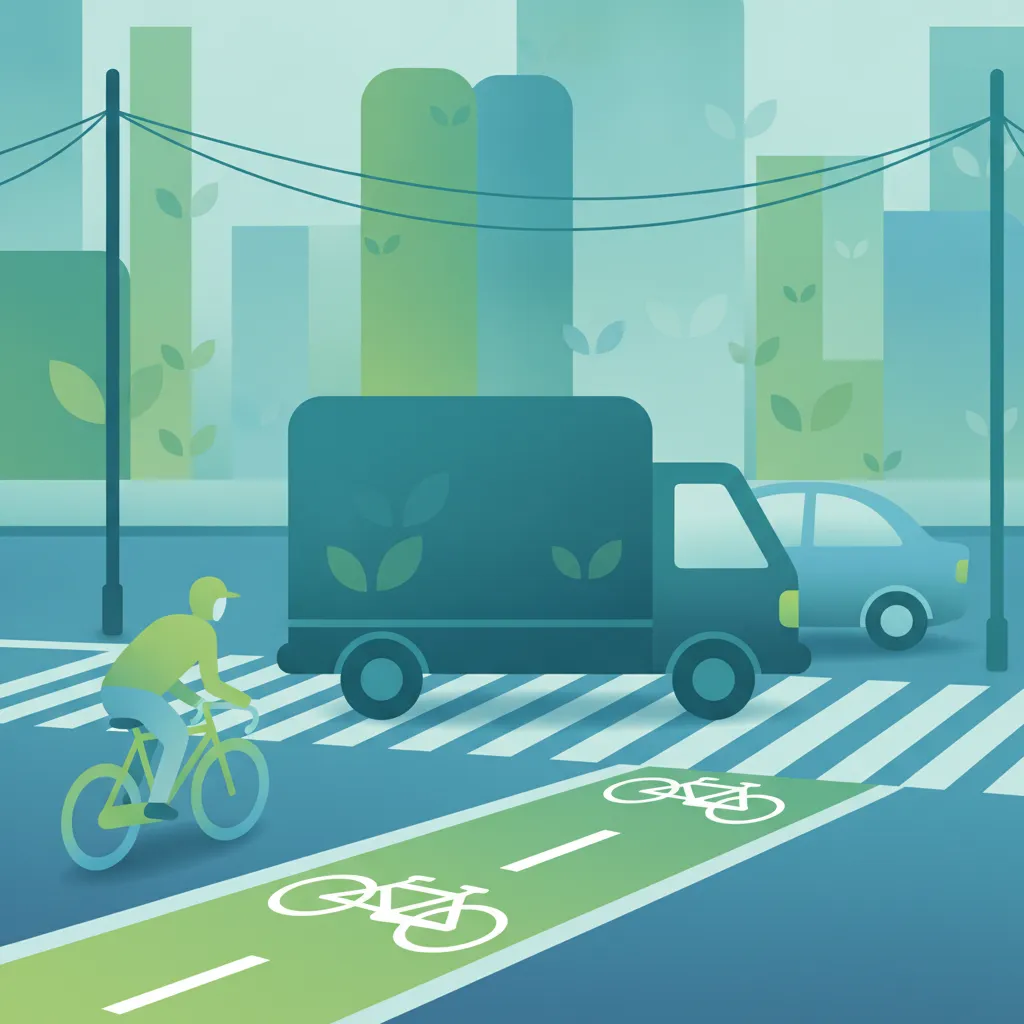
Not all bus stops are created equal. This lesson trains you to assess a stop's environment and identify potential hazards, such as poor sightlines, proximity to a busy junction, or frequent presence of vulnerable road users. It encourages a proactive approach, where the driver heightens their observation and slows their approach when dealing with these known high-risk locations.
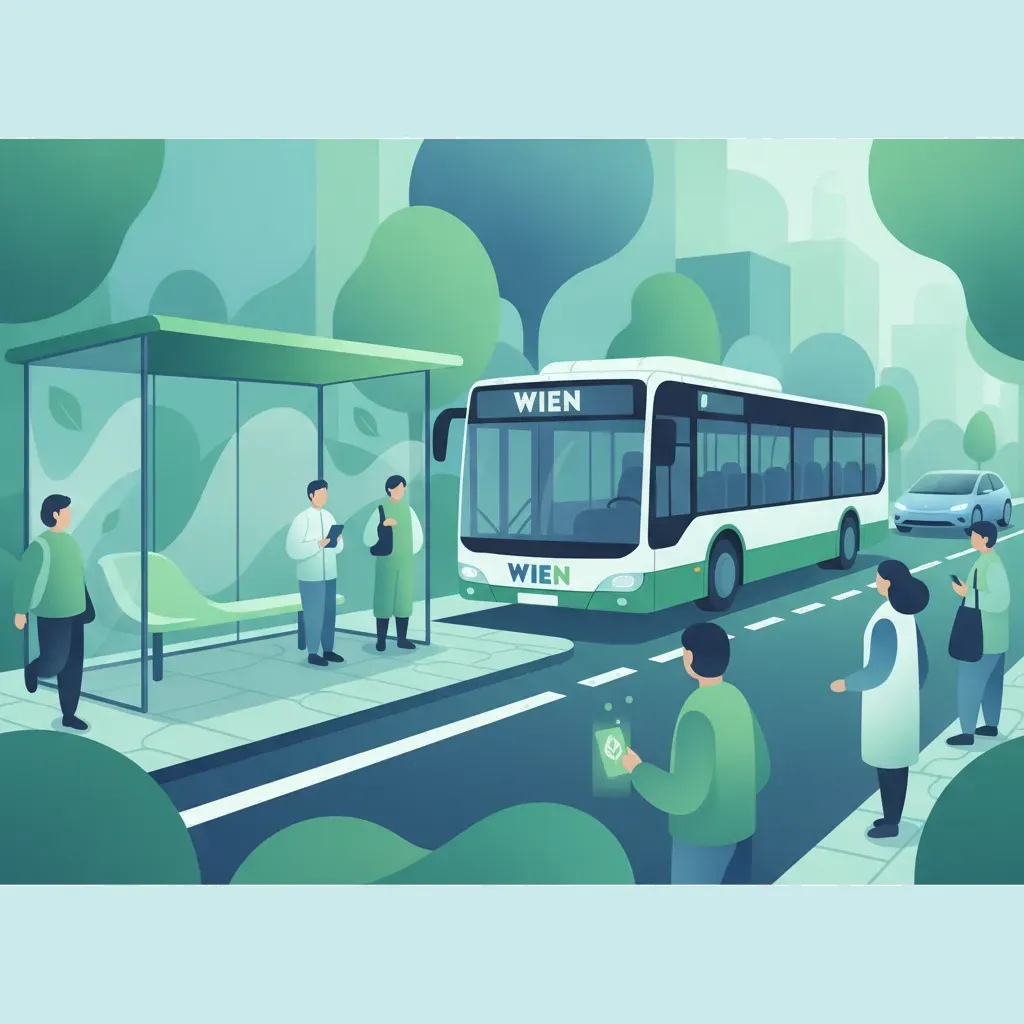
A safe stop begins with a planned approach. This lesson covers how to signal your intentions early, manage your speed, and scan for hazards like pedestrians and cyclists near the stop. It emphasizes the importance of aligning the bus parallel and close to the kerb to minimize the step for passengers, creating a safe platform for boarding and alighting.

Driving in tourist hotspots in cities like Salzburg or alpine resorts requires extra patience and vigilance. This lesson explores common unpredictable behaviours, such as pedestrians stepping into the road to take photos or groups of tourists being unaware of traffic. It teaches drivers to slow down, be prepared for anything, and use communication tools like the horn sparingly and appropriately.
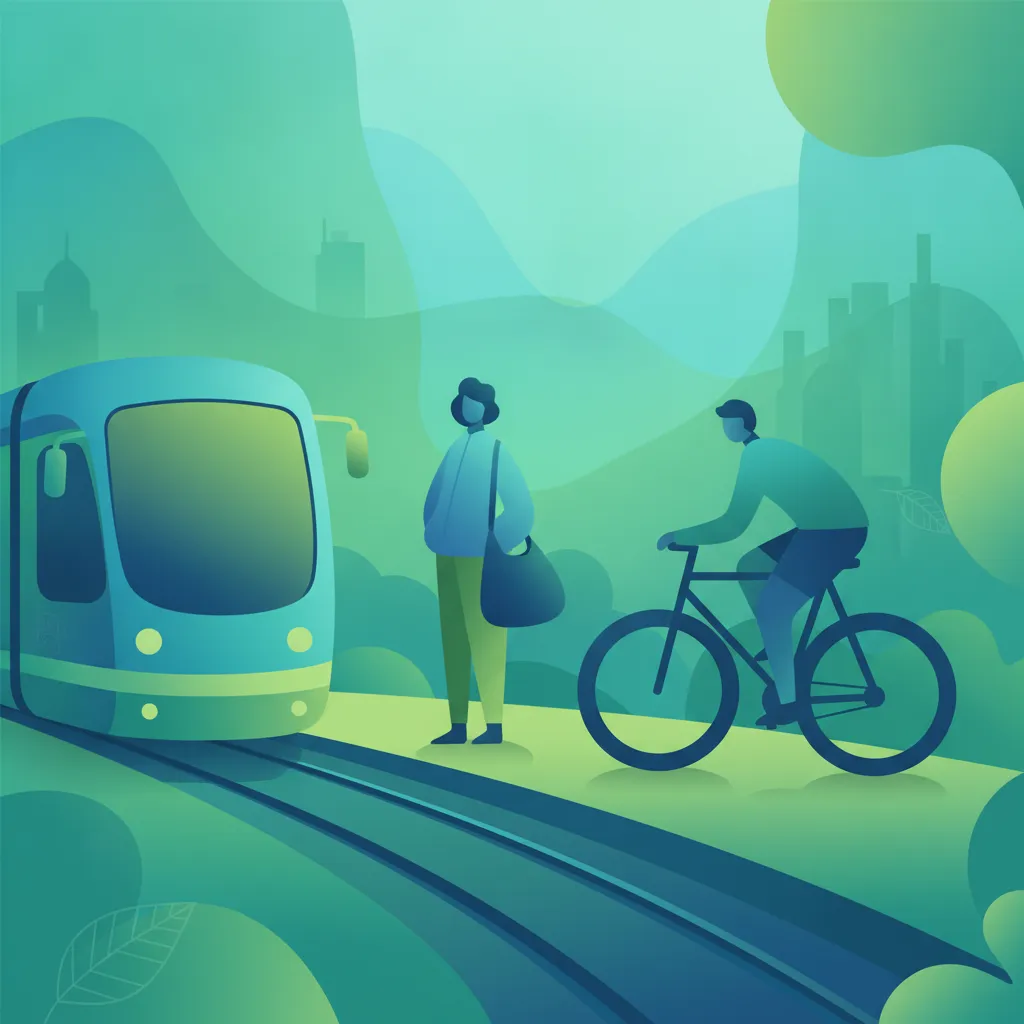
Cities like Vienna and Graz have extensive tram networks that require special attention from bus drivers. This lesson covers the rules of priority concerning trams, the dangers of crossing tracks, and the specific hazards at shared stops where passengers cross traffic lanes. It emphasizes the need for extreme caution and clear communication with other road users in these complex environments.
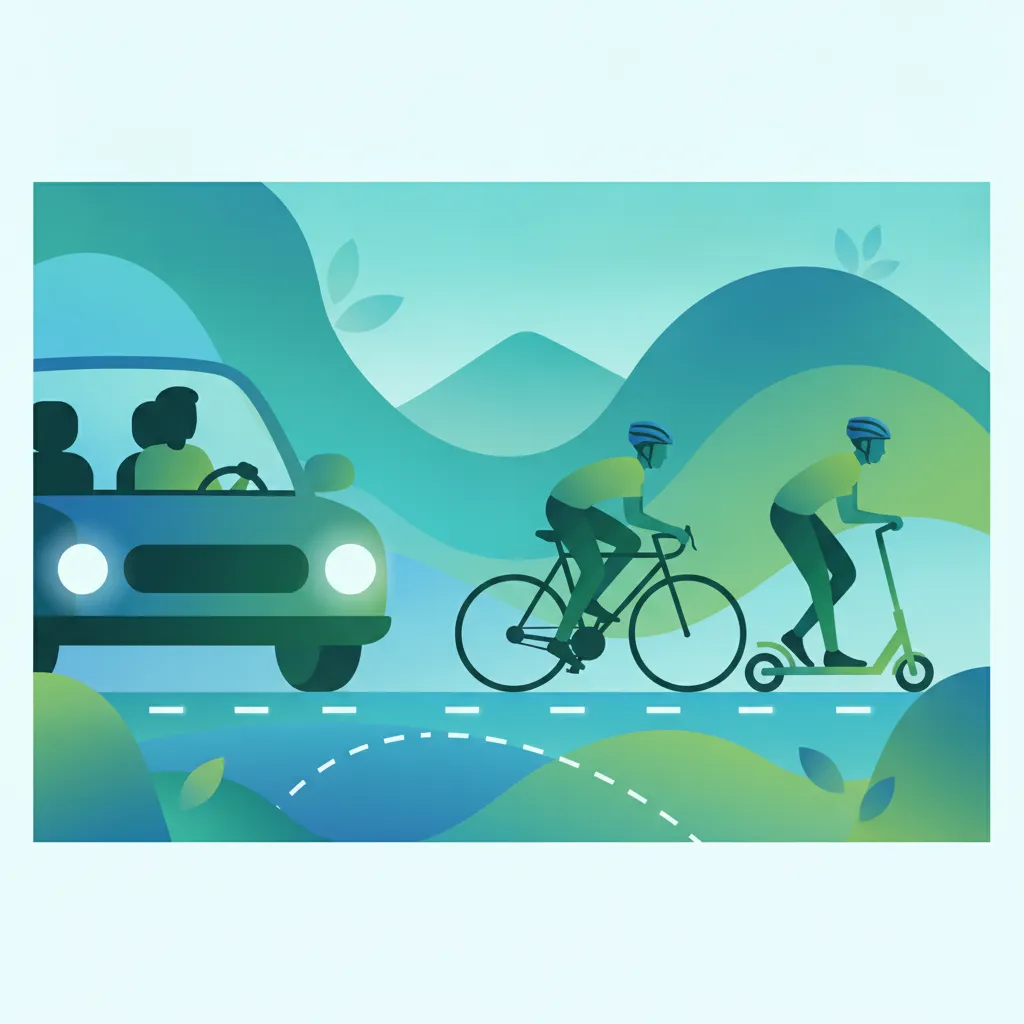
Cyclists and e-scooter riders are highly vulnerable and can be hard to see from a high driving position. This lesson focuses on the critical danger points, such as making right turns across cycle lanes and checking blind spots before pulling away from a stop. It teaches the importance of giving ample space when overtaking and anticipating their movements in busy city traffic.
Transporting children carries the highest level of responsibility. This lesson covers the specific Austrian rules for school buses, including the use of warning signs and lights. It focuses on developing a mindset of extreme caution, anticipating that children may run into the road unexpectedly, and managing the chaotic traffic environment often found around schools during drop-off and pick-up times.

This lesson explores the strict regulations governing pedestrian crossings in Austria, particularly marked zebra crossings known as Schutzweg. It emphasizes the absolute priority of pedestrians on these crossings and the driver's legal obligation to stop and allow them to cross safely. The content covers how to approach these areas with caution, the importance of visibility, and the rules at crossings controlled by traffic lights.
This lesson provides advanced strategies for proactively managing interactions with vulnerable road users to prevent conflicts before they arise. It teaches drivers to predict the likely behavior of pedestrians, cyclists, and e-scooter riders, especially at intersections and in congested areas. Key techniques include maintaining larger safety distances, covering the brake, and making eye contact to ensure mutual awareness and avoid accidents.

Rural Austrian roads present unique challenges, including lack of markings, tight spaces, and slow-moving agricultural vehicles. This lesson teaches how to read the road ahead, anticipate hazards around blind bends, and use passing places effectively when meeting other large vehicles. It emphasizes adjusting speed to suit the limited visibility and variable road conditions.
Driving a bus in a busy city like Vienna or Salzburg requires constant forward planning and anticipation. This lesson teaches techniques for maintaining adequate space around the vehicle, positioning correctly for upcoming junctions, and reading the flow of traffic. Adopting a defensive mindset is key to navigating complex urban environments without incident.
Understand the critical duty of care for bus drivers regarding passenger safety during boarding and alighting, and how to manage interactions with pedestrians near stops and crossings under Austrian law.

The driver is responsible for supervising the entire boarding process. This lesson covers techniques for encouraging orderly queues and ensuring passengers use handrails. It also details the driver's role in assisting passengers with mobility aids, prams, or heavy luggage, ensuring they are able to board without rushing and find a seat or safe standing position.
A driver's duty of care extends to passengers until they are safely away from the vehicle. This lesson stresses the importance of monitoring passengers as they step off, ensuring they have stable footing and are clear of the bus's path. It highlights the particular need for vigilance when children or elderly passengers are alighting, and the importance of checking mirrors before closing the doors.

Providing safe and respectful access for all passengers is a legal and professional duty. This lesson details the correct operation of accessibility features like ramps, lifts, and kneeling systems. It covers how to secure wheelchairs and mobility aids, and how to communicate effectively and respectfully with passengers who may require assistance with boarding or alighting.

This lesson defines the role of a professional driver beyond simply operating a vehicle. It covers the expectations of public trust, professional image, and the responsibilities inherent in transporting people. Key topics include ethical conduct, communication with the public, and understanding your position as a representative of a transport service within the Austrian legal framework.

Carrying standing passengers significantly increases a driver's responsibility for smooth control. This lesson details the specific adjustments required, such as reducing speed before turns to minimize sideways forces and increasing following distances to avoid sudden braking. It emphasizes the importance of awareness and observation of passengers' stability before accelerating from a stop.
A safe stop begins with a planned approach. This lesson covers how to signal your intentions early, manage your speed, and scan for hazards like pedestrians and cyclists near the stop. It emphasizes the importance of aligning the bus parallel and close to the kerb to minimize the step for passengers, creating a safe platform for boarding and alighting.
Cities like Vienna and Graz have extensive tram networks that require special attention from bus drivers. This lesson covers the rules of priority concerning trams, the dangers of crossing tracks, and the specific hazards at shared stops where passengers cross traffic lanes. It emphasizes the need for extreme caution and clear communication with other road users in these complex environments.

Effective communication is a key skill for any professional driver responsible for passengers. This lesson covers best practices for making clear announcements, assisting passengers with inquiries, and providing support to those with accessibility needs. It also introduces basic techniques for de-escalating tense situations and maintaining a calm, professional atmosphere on board the vehicle.

When a passenger becomes ill, the driver's role is to facilitate professional medical help as quickly as possible. This lesson covers how to safely stop the vehicle, make an emergency call to 112 with clear location and patient information, and provide basic comfort and reassurance. It clarifies that the driver's role is not to diagnose but to manage the scene and get help.
Transporting children carries the highest level of responsibility. This lesson covers the specific Austrian rules for school buses, including the use of warning signs and lights. It focuses on developing a mindset of extreme caution, anticipating that children may run into the road unexpectedly, and managing the chaotic traffic environment often found around schools during drop-off and pick-up times.
Find clear answers to common questions learners have about Protecting Pedestrians at Crossings and Stops. Learn how the lesson is structured, which driving theory objectives it supports, and how it fits into the overall learning path of units and curriculum progression in Austria. These explanations help you understand key concepts, lesson flow, and exam focused study goals.
In Austria, you must allow pedestrians to cross if they show a clear intention to use a marked crossing. As a professional driver, you must approach with caution and be prepared to stop promptly if a pedestrian steps onto or is waiting at the crossing.
The primary risk is passengers crossing the road immediately in front of or behind your bus, where they are invisible to oncoming traffic and potentially in your own blind spots. You must ensure they are clear and provide a safe environment before moving off.
The size of a bus creates significant blind spots, especially at the front left and right corners. You must adjust your seating and mirrors to ensure no pedestrians are hidden, particularly when pulling away from a stop or turning at a junction.
While the law applies to all pedestrians, as a professional driver you must exercise extra caution when approaching school zones or stops frequented by elderly or disabled passengers. Anticipating unpredictable movement is key to your duty of care.
Refine your study plan by searching for specific Austrian driving theory practice sets. Pinpoint questions related to particular road rules, signs, or challenge levels, and begin practicing immediately to reinforce your knowledge and excel in your official exam with confidence. Get started with focused revision today.