
This lesson focuses on the critical skills required to share the road safely with vulnerable users, such as pedestrians, cyclists, and e-scooter riders. By understanding how to predict their behaviour and manage potential conflict points, you will build the confidence needed for both your theoretical exam and real-world urban driving in Austria.
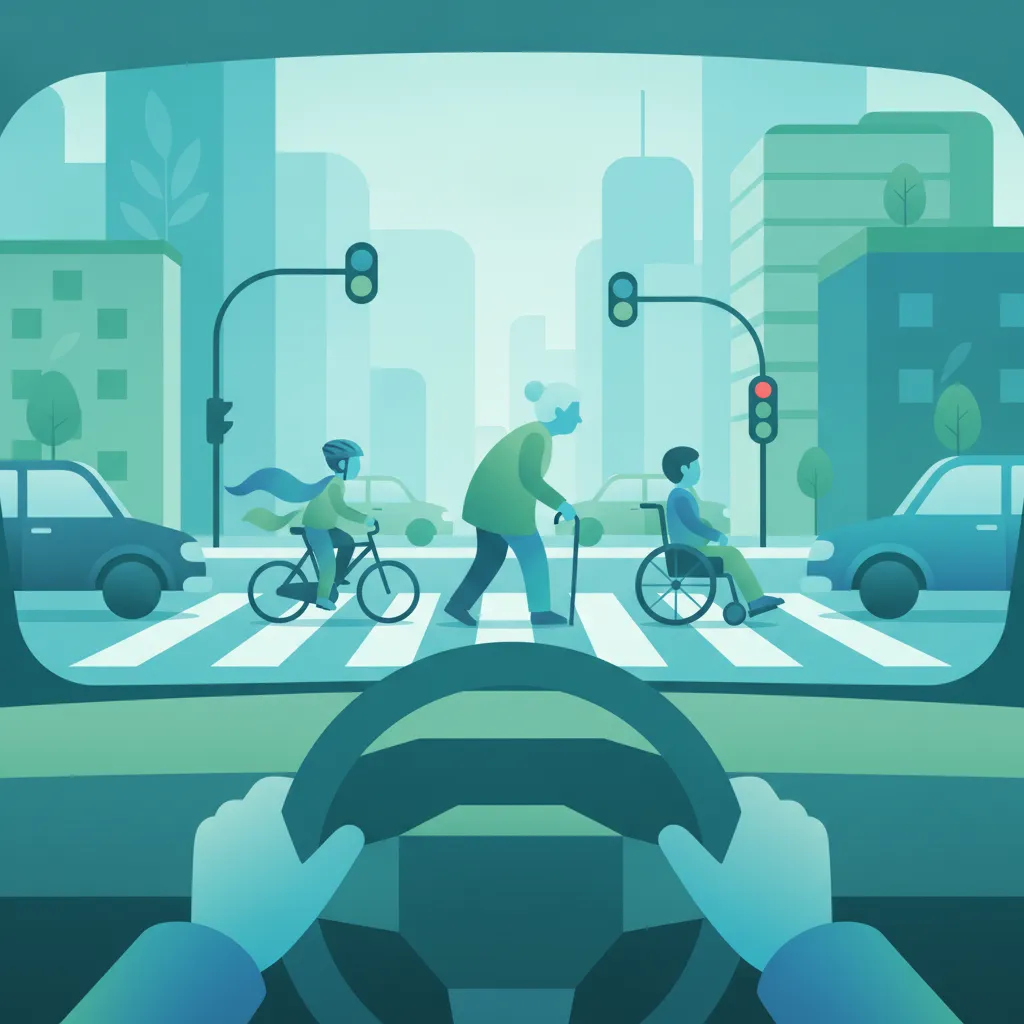
Lesson content overview
Navigating Austria's diverse road network requires more than just mastering vehicle controls and traffic laws; it demands a deep understanding of how to interact safely with all road users. This lesson provides advanced strategies for proactively managing interactions with Vulnerable Road Users (VRUs), such as pedestrians, cyclists, and e-scooter riders, to prevent conflicts before they even arise. By learning to predict their likely behavior, especially at intersections and in congested urban areas, you can significantly reduce accident risk and contribute to a safer environment for everyone.
The importance of these strategies cannot be overstated. Unlike vehicle occupants, VRUs lack the protective shell of a car and are far more susceptible to severe injury in the event of a collision. Understanding and anticipating their actions is paramount for all drivers aiming to obtain their Austrian Category B driver's license. This knowledge builds upon your understanding of basic traffic rules, priority guidelines, speed and stopping distances, and general road signs.
Road safety is a shared responsibility, but certain participants require extra vigilance due to their inherent lack of protection. These are known as Vulnerable Road Users.
Road users with minimal or no physical protection in a crash, including pedestrians, cyclists, and e-scooter riders.
VRUs are typically less visible, move at different speeds, and can be less predictable than other motor vehicles. Their presence requires drivers to adapt their behavior, increase their awareness, and maintain greater safety margins.
The fundamental reason VRUs demand special attention is their vulnerability. A collision between a vehicle and a pedestrian, cyclist, or e-scooter rider almost invariably results in severe injury or fatality for the VRU, whereas the vehicle occupant may sustain little to no injury. This stark imbalance places a greater responsibility on drivers.
Furthermore, VRUs may not always be aware of vehicle speeds, braking distances, or blind spots. They might make sudden movements, especially children or distracted individuals. Proactive driving, focused on anticipating and mitigating these risks, is crucial for promoting road safety and preventing serious incidents.
To effectively manage conflicts with vulnerable road users, drivers must adopt a set of core principles that prioritize safety and mutual awareness. These principles go beyond basic traffic rules, focusing on anticipatory driving and proactive prevention.
Actively scanning the driving environment to anticipate the movements and intentions of Vulnerable Road Users before they manifest.
Predictive observation is a cornerstone of defensive driving. It means constantly looking beyond the immediate area of your vehicle, scanning for potential hazards, and interpreting the subtle cues that indicate a VRU's next move. For instance, observe a pedestrian looking towards the road or shifting their weight, signaling an intent to cross. Pay attention to a cyclist glancing over their shoulder, which might indicate a lane change.
This active scanning compensates for the VRU's limited visibility and potentially unpredictable movements. It involves:
The standard two-second rule for following distance is a good general guideline, but it is often insufficient when vulnerable road users are present.
Maintaining a larger following distance than usual (typically extending the normal two-second rule to three seconds or more) when Vulnerable Road Users are present.
This extended safety gap provides critical additional reaction time, allowing you more space and time to stop safely if a VRU makes an unexpected move. It also reduces the kinetic energy of a potential impact, lessening the severity of injuries should an accident occur.
To estimate your following distance, pick a fixed point on the road (like a signpost). When the vehicle in front passes it, start counting "one-thousand-one, one-thousand-two, one-thousand-three." If you reach the point before finishing your count, you are too close.
Lightly positioning your foot over the brake pedal, or applying very gentle pressure to the brakes, to reduce reaction time and shorten stopping distance if an immediate stop becomes necessary.
This technique prepares you for a potential stop without actually slowing down significantly. By having your foot already in position and potentially initiating minor brake pressure, you shave off valuable milliseconds of reaction time. This is especially useful when approaching pedestrian crossings, busy intersections, or any area where VRUs might suddenly enter your path.
Covering the brakes requires precise foot control and a proactive mindset. It allows for a smoother, quicker response compared to reacting from an accelerator-on position, thereby helping to prevent abrupt, harsh braking that could lead to loss of control or a rear-end collision with following traffic.
One of the simplest yet most effective ways to prevent conflicts is to ensure mutual awareness between drivers and VRUs.
Establishing direct visual contact with a Vulnerable Road User to confirm that both parties are aware of each other's presence and intentions.
Before proceeding at a crossing, making a turn, or even when simply driving past a VRU, try to catch their eye. This visual confirmation goes a long way in reducing surprise and misinterpretation of intentions. If you can't make eye contact, assume the VRU has not seen you or is not aware of your intention, and adjust your speed and position accordingly.
This doesn't mean staring or lingering, but a brief, clear visual exchange. If a pedestrian looks away, or a cyclist seems distracted, do not assume they know you are there. Always err on the side of caution.
The legal obligation to allow another road user to proceed before you, as required by traffic signs, road markings, or specific traffic laws.
In Austria, traffic law places a strong emphasis on protecting VRUs by granting them priority in many situations. Understanding and strictly adhering to these rules is not only a legal requirement but also a fundamental safety measure.
Misjudging or ignoring these priority rules is a common cause of serious accidents involving VRUs. Always plan your deceleration and lane positioning in advance when approaching areas where VRUs might have priority.
Effective communication is key to preventing conflicts. As a driver, you have various tools to clearly signal your intentions to VRUs.
Explicitly signalling your intentions to Vulnerable Road Users through vehicle behavior, signaling devices (e.g., turn signals, brake lights), or gestures to inform them of forthcoming maneuvers.
Hand signals can also be used in specific situations, such as when your vehicle's turn signals are not easily visible or to provide an extra layer of clarity, though this is less common in modern driving.
Adhering to specific Austrian traffic regulations (Straßenverkehrsordnung – StVO) is crucial for ensuring the safety of vulnerable road users. These rules are designed to protect those with the least protection in traffic.
A marked pedestrian crossing (white stripes on the road, often accompanied by specific blue signs with a pedestrian symbol) where pedestrians legally have priority over motor vehicles.
In Austria, pedestrians have absolute priority at zebra crossings.
Cyclists and e-scooter riders often have their own infrastructure, and specific rules apply to protect their movement.
When overtaking vulnerable road users, maintaining a safe lateral distance is critical to prevent collisions caused by turbulence, sudden swerving, or loss of balance.
The horn is a safety device, not a tool for expressing impatience or frustration.
Managing conflicts with vulnerable road users often requires adapting your driving to specific environmental and conditional factors.
Urban areas, with their concentrated populations, pedestrian zones, and extensive cycling networks, naturally have a higher density of VRUs.
Poor weather and lighting significantly reduce visibility and increase stopping distances, amplifying the risk to VRUs.
The characteristics of the road itself can influence how you interact with VRUs.
The state of your vehicle can also affect your ability to react safely.
Understanding common violations and adopting best practices are key to becoming a responsible and safe driver around vulnerable road users.
Many accidents involving VRUs stem from preventable errors. Here are some common violations and their correct behaviors:
The strategies outlined in this lesson are all fundamental to defensive driving. By consistently applying predictive observation, maintaining increased safety gaps, covering your brakes, making eye contact, yielding when required, and communicating clearly, you actively reduce the risk of accidents with VRUs. This proactive approach ensures safer roads for everyone, reinforcing your role as a responsible driver in Austria.
Safely managing conflicts with vulnerable road users is a critical aspect of obtaining and maintaining an Austrian Category B driver's license. It requires a comprehensive understanding of their unique vulnerabilities, combined with a proactive and anticipatory driving style.
Key takeaways for effective conflict prevention include:
By integrating these principles and adhering to the Austrian StVO, you contribute significantly to reducing accidents, improving traffic flow, and fostering a safer, more considerate road environment for all participants.
This lesson teaches Category B learners in Austria how to safely interact with vulnerable road users—pedestrians, cyclists, and e-scooter riders—by applying proactive defensive driving strategies. Key techniques include predictive observation to anticipate VRU movements, maintaining increased safety gaps of three seconds or more, covering the brakes near conflict zones, and establishing eye contact for mutual awareness. Austrian traffic law (StVO) mandates specific protections such as absolute pedestrian priority at zebra crossings and minimum overtaking distances of 1.5 meters in urban areas and 2 meters on rural roads. The lesson emphasizes adapting driving behavior to environmental conditions and road types while respecting VRU priority rules to prevent serious accidents and build confidence for both the theory exam and real-world driving.
A short set of high-value points that capture the most important learning from this lesson.
Vulnerable road users (VRUs) include pedestrians, cyclists, and e-scooter riders who lack physical protection in a collision and require extra vigilance from drivers.
Predictive observation involves actively scanning for VRU movements and interpreting cues like body language, hand signals, and trajectory changes.
Covering the brakes—lightly positioning your foot over the pedal—reduces reaction time and stopping distance near potential conflict zones.
Eye contact with VRUs confirms mutual awareness; if you cannot establish it, assume they have not seen you.
Drivers must adapt their behavior based on road type, weather, and VRU density, maintaining lower speeds and increased safety gaps in complex environments.
Explore all units and lessons included in this driving theory course.
Pedestrians have absolute priority at zebra crossings—you must stop completely until they have fully cleared your lane.
Minimum overtaking distance for cyclists/e-scooters is 1.5 meters in built-up areas and 2 meters outside built-up areas.
Maintain at least a three-second following distance when VRUs are present, increasing it further in adverse conditions.
Cyclists and e-scooter riders in marked bike lanes typically have priority when their lane intersects with vehicle traffic.
The horn may only be used to prevent an immediate accident, never to intimidate or rush VRUs.
Failing to stop fully at zebra crossings, instead slowing and rolling through while pedestrians are crossing.
Squeezing past cyclists without moving into the adjacent lane, providing less than the required minimum lateral clearance.
Assuming a cyclist or e-scooter rider has seen you without establishing eye contact or clear visual confirmation.
Neglecting to cover brakes when approaching crossings or intersections where VRUs may appear suddenly.
Misjudging priority at bike lane intersections by not yielding to cyclists who have right-of-way in their designated lane.
Lesson content overview
A short set of high-value points that capture the most important learning from this lesson.
Vulnerable road users (VRUs) include pedestrians, cyclists, and e-scooter riders who lack physical protection in a collision and require extra vigilance from drivers.
Predictive observation involves actively scanning for VRU movements and interpreting cues like body language, hand signals, and trajectory changes.
Covering the brakes—lightly positioning your foot over the pedal—reduces reaction time and stopping distance near potential conflict zones.
Eye contact with VRUs confirms mutual awareness; if you cannot establish it, assume they have not seen you.
Drivers must adapt their behavior based on road type, weather, and VRU density, maintaining lower speeds and increased safety gaps in complex environments.
Explore all units and lessons included in this driving theory course.
Pedestrians have absolute priority at zebra crossings—you must stop completely until they have fully cleared your lane.
Minimum overtaking distance for cyclists/e-scooters is 1.5 meters in built-up areas and 2 meters outside built-up areas.
Maintain at least a three-second following distance when VRUs are present, increasing it further in adverse conditions.
Cyclists and e-scooter riders in marked bike lanes typically have priority when their lane intersects with vehicle traffic.
The horn may only be used to prevent an immediate accident, never to intimidate or rush VRUs.
Failing to stop fully at zebra crossings, instead slowing and rolling through while pedestrians are crossing.
Squeezing past cyclists without moving into the adjacent lane, providing less than the required minimum lateral clearance.
Assuming a cyclist or e-scooter rider has seen you without establishing eye contact or clear visual confirmation.
Neglecting to cover brakes when approaching crossings or intersections where VRUs may appear suddenly.
Misjudging priority at bike lane intersections by not yielding to cyclists who have right-of-way in their designated lane.
Explore search topics learners often look for when studying Managing Conflicts with Vulnerable Road Users. These topics reflect common questions about road rules, driving situations, safety guidance, and lesson level theory preparation for learners in Austria.
Browse additional driving theory lessons that cover connected traffic rules, road signs, and common driving situations related to this topic. Improve your understanding of how different rules interact across everyday traffic scenarios.
Learn advanced strategies for navigating complex interactions with vulnerable road users in busy Austrian urban traffic. This lesson focuses on predicting behavior at intersections and in congested areas to prevent conflicts.
Cyclists and e-scooter riders are highly vulnerable and can be hard to see from a high driving position. This lesson focuses on the critical danger points, such as making right turns across cycle lanes and checking blind spots before pulling away from a stop. It teaches the importance of giving ample space when overtaking and anticipating their movements in busy city traffic.
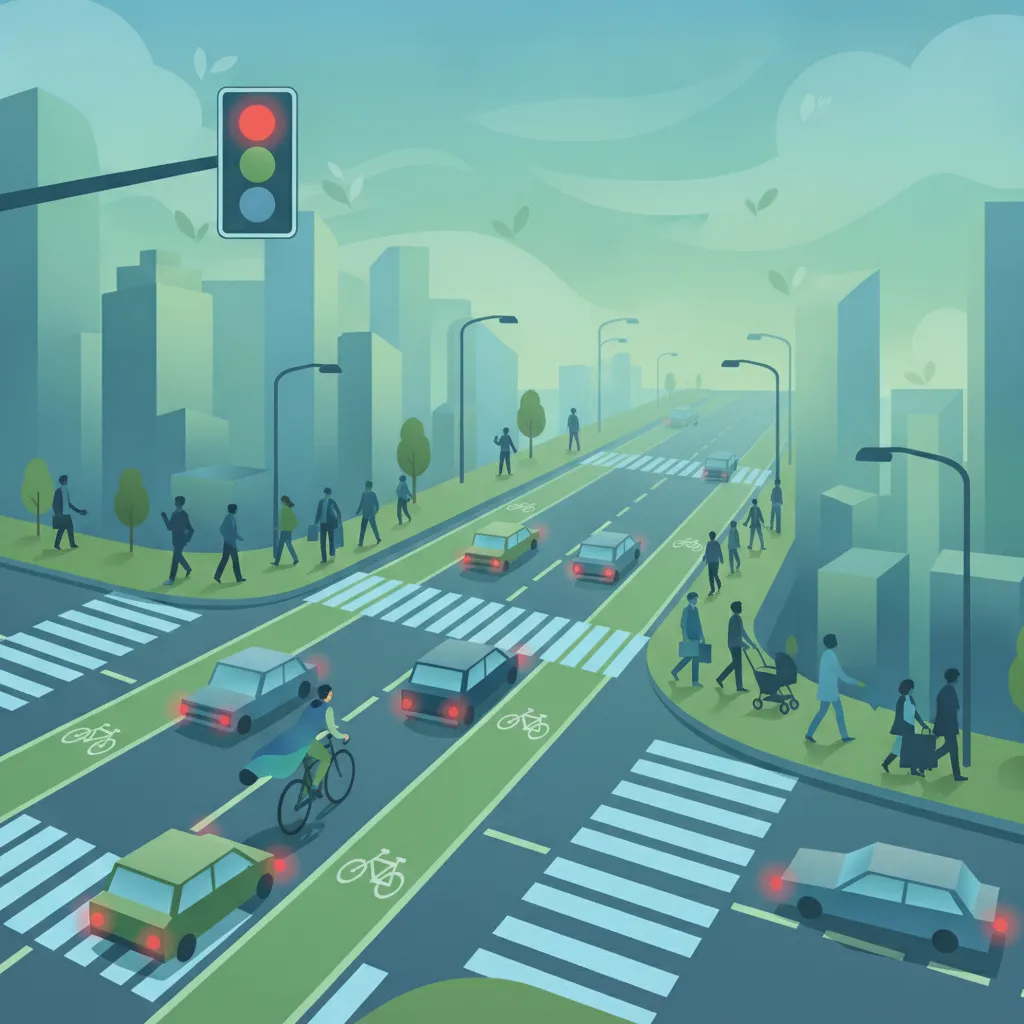
This lesson teaches drivers how to safely coexist with cyclists and pedestrians, who are prevalent in urban areas. It covers the rules for dedicated bike lanes (Radweg), the importance of yielding to pedestrians in designated zones, and the need for extra caution when turning or opening car doors. Maintaining safe overtaking distances and anticipating the movements of these vulnerable road users are key themes for preventing accidents.

This lesson focuses on the critical skill of sharing the road safely with vulnerable users, such as pedestrians, cyclists, and e-scooter riders. It details the legally required distance buffers for overtaking and emphasizes heightened awareness in sensitive areas like school zones and designated pedestrian crossings. The content provides guidelines for interacting with bicycle lanes and shared spaces to foster a protective and respectful driving attitude towards those most at risk.
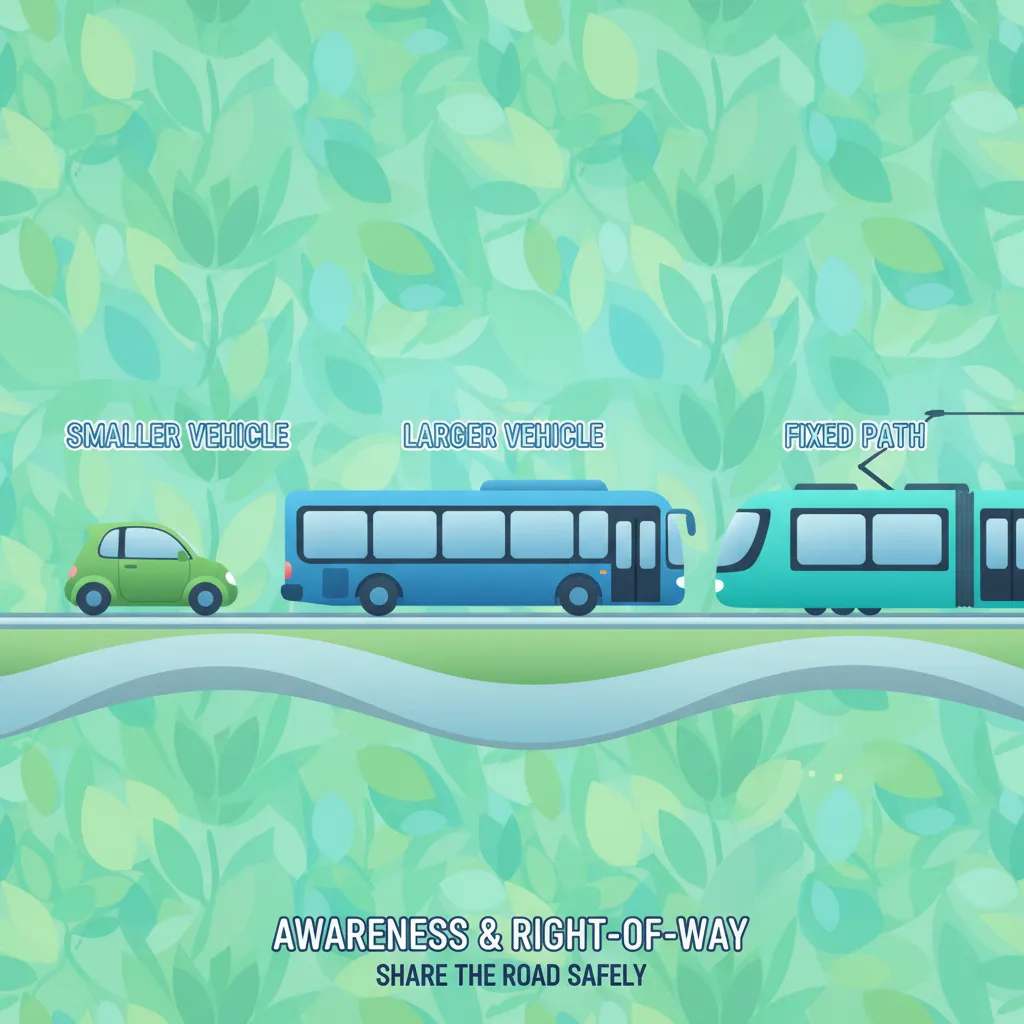
This lesson provides specific guidance for sharing the road with different types of vehicles in Austria. It covers the dangers of large vehicle blind spots, the rules for navigating near buses and dedicated tram tracks, and common conflict points at intersections. Understanding the behavior and limitations of other vehicles is key to safely navigating complex urban environments.
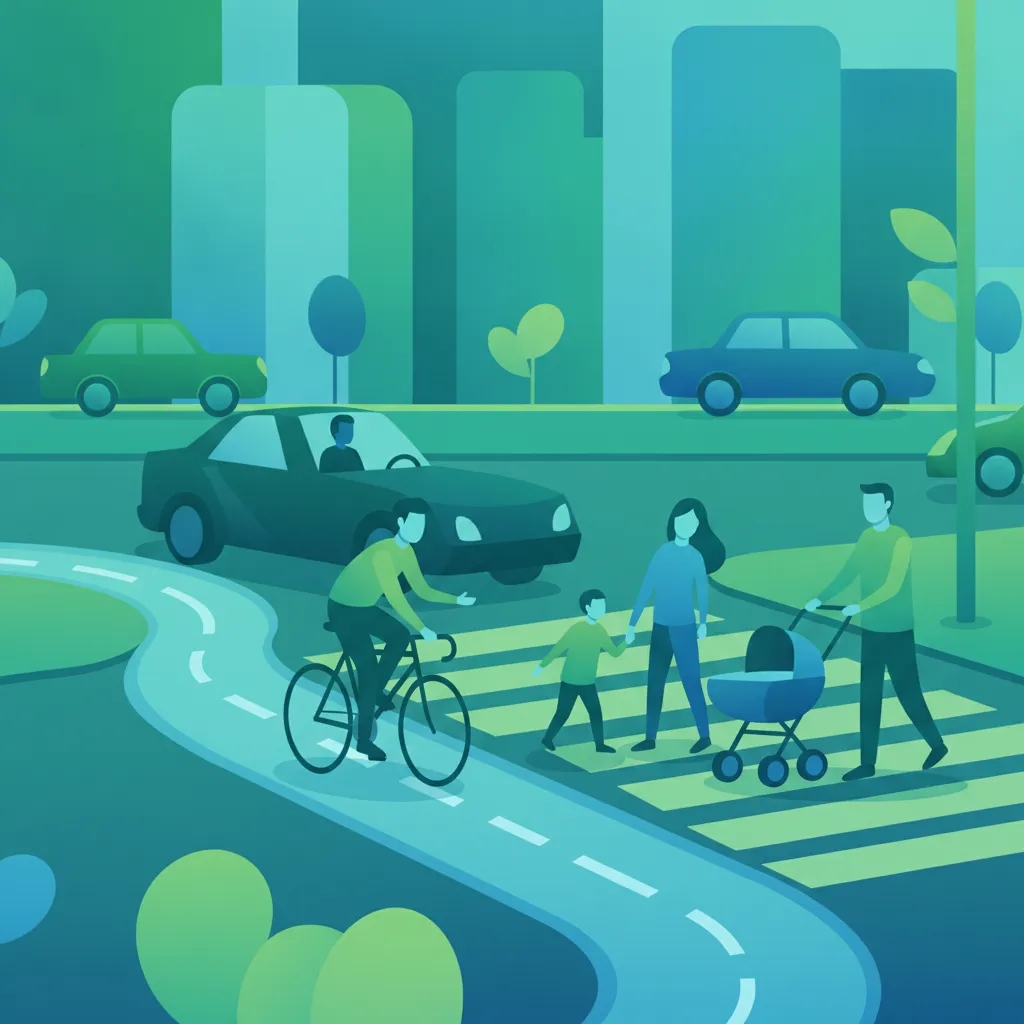
This lesson reinforces the critical importance of protecting vulnerable road users in dense urban settings. It teaches drivers to be hyper-aware of pedestrians and cyclists, especially near intersections and crosswalks. Key techniques include reducing speed, making eye contact to confirm intentions, and giving ample space.
This lesson addresses the specific challenges of interacting with larger vehicles like buses and trams in an urban environment. It explains how to signal intentions clearly and predictably to avoid conflicts in shared spaces. Key topics include safely crossing tram tracks and maintaining awareness around public transport stops.
Driving a bus in a busy city like Vienna or Salzburg requires constant forward planning and anticipation. This lesson teaches techniques for maintaining adequate space around the vehicle, positioning correctly for upcoming junctions, and reading the flow of traffic. Adopting a defensive mindset is key to navigating complex urban environments without incident.
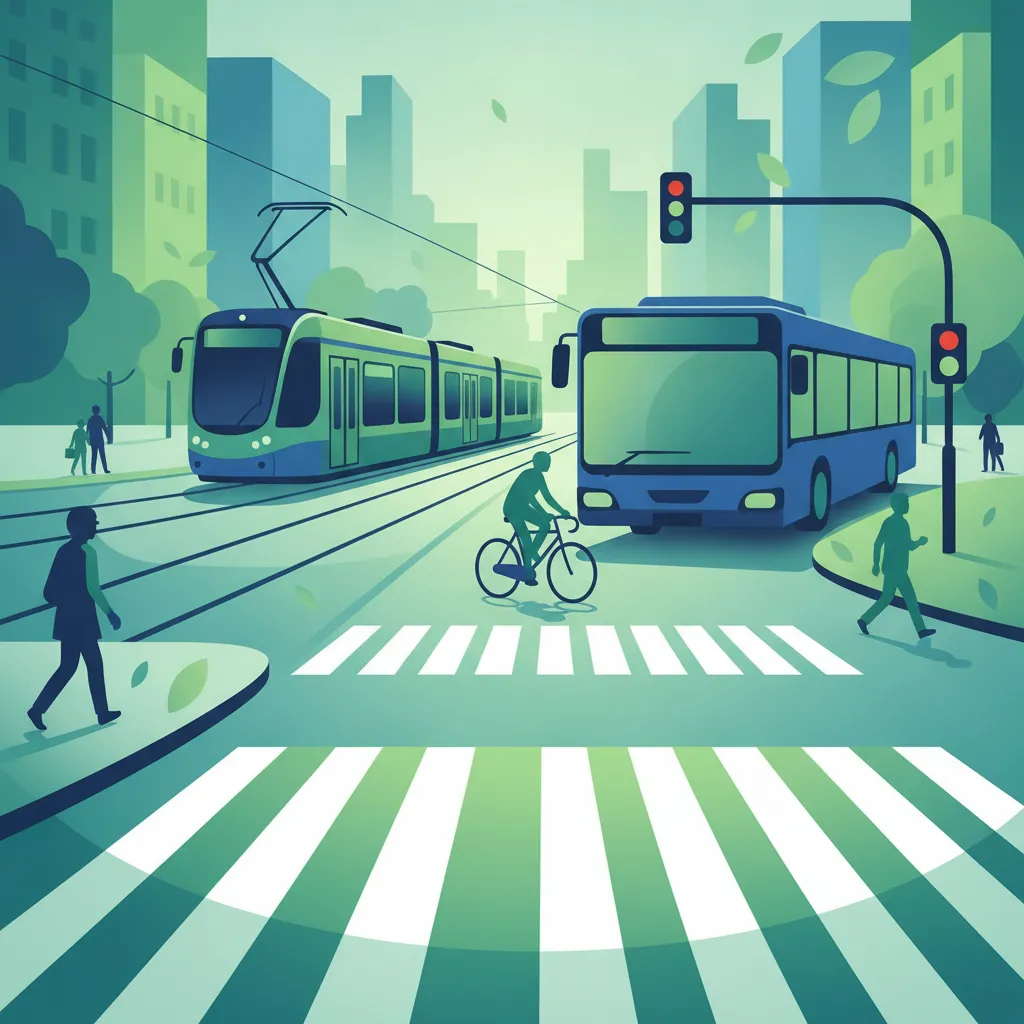
This lesson addresses the unique challenges and priority rules that apply when interacting with public transport and cyclists at intersections. It clarifies the specific right-of-way regulations for trams, which often have priority over other traffic, and the procedures for navigating around bus stops. The content also covers how to safely manage crossings with dedicated bicycle lanes, ensuring the protection of all road users.
Many Austrian towns and city centres feature narrow roads not designed for large vehicles. This lesson provides strategies for assessing tight spaces, positioning the vehicle to maximize clearance, and navigating complex, non-standard junctions. It emphasizes the importance of slow speeds, constant observation, and understanding the vehicle's swept path to avoid contact with buildings, street furniture, and other vehicles.
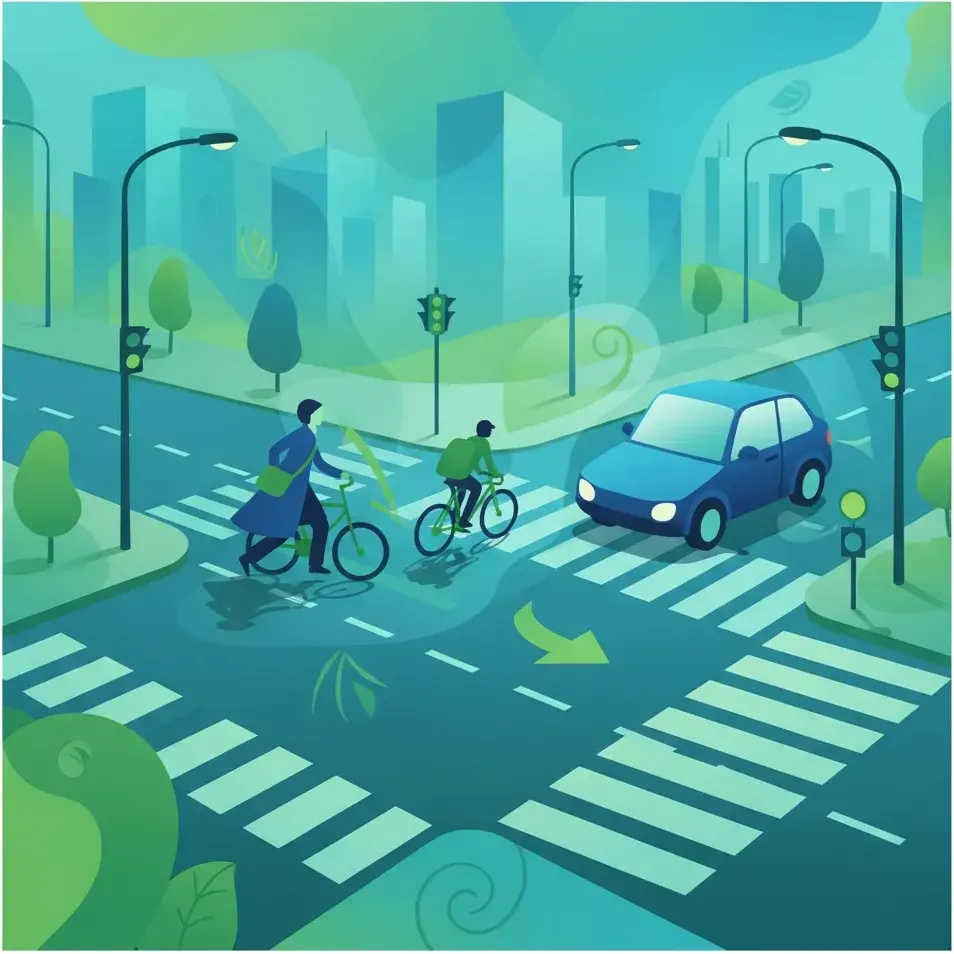
This lesson addresses the specific danger of right-hand turns, where cyclists and pedestrians in the vehicle's right-side blind spot are at high risk. It covers the defensive driving techniques required, including careful observation, slow speed, and yielding the right-of-way. These procedures are critical for preventing serious accidents in urban areas.
Understand common driving violations and learn best practices for safe interactions with vulnerable road users in Austria. This lesson covers legal requirements and defensive driving techniques to avoid conflicts.
This lesson focuses on the critical skill of sharing the road safely with vulnerable users, such as pedestrians, cyclists, and e-scooter riders. It details the legally required distance buffers for overtaking and emphasizes heightened awareness in sensitive areas like school zones and designated pedestrian crossings. The content provides guidelines for interacting with bicycle lanes and shared spaces to foster a protective and respectful driving attitude towards those most at risk.
This lesson teaches drivers how to safely coexist with cyclists and pedestrians, who are prevalent in urban areas. It covers the rules for dedicated bike lanes (Radweg), the importance of yielding to pedestrians in designated zones, and the need for extra caution when turning or opening car doors. Maintaining safe overtaking distances and anticipating the movements of these vulnerable road users are key themes for preventing accidents.
Cyclists and e-scooter riders are highly vulnerable and can be hard to see from a high driving position. This lesson focuses on the critical danger points, such as making right turns across cycle lanes and checking blind spots before pulling away from a stop. It teaches the importance of giving ample space when overtaking and anticipating their movements in busy city traffic.
This lesson reinforces the critical importance of protecting vulnerable road users in dense urban settings. It teaches drivers to be hyper-aware of pedestrians and cyclists, especially near intersections and crosswalks. Key techniques include reducing speed, making eye contact to confirm intentions, and giving ample space.
This lesson provides a comprehensive explanation of Austria's right-of-way laws, which are fundamental to intersection safety. It covers the meaning of different priority signs and clarifies the 'Rechts vor Links' (priority to the right) rule that applies at unmarked junctions. A clear understanding of these rules is essential to prevent conflicts and collisions in urban and rural settings.
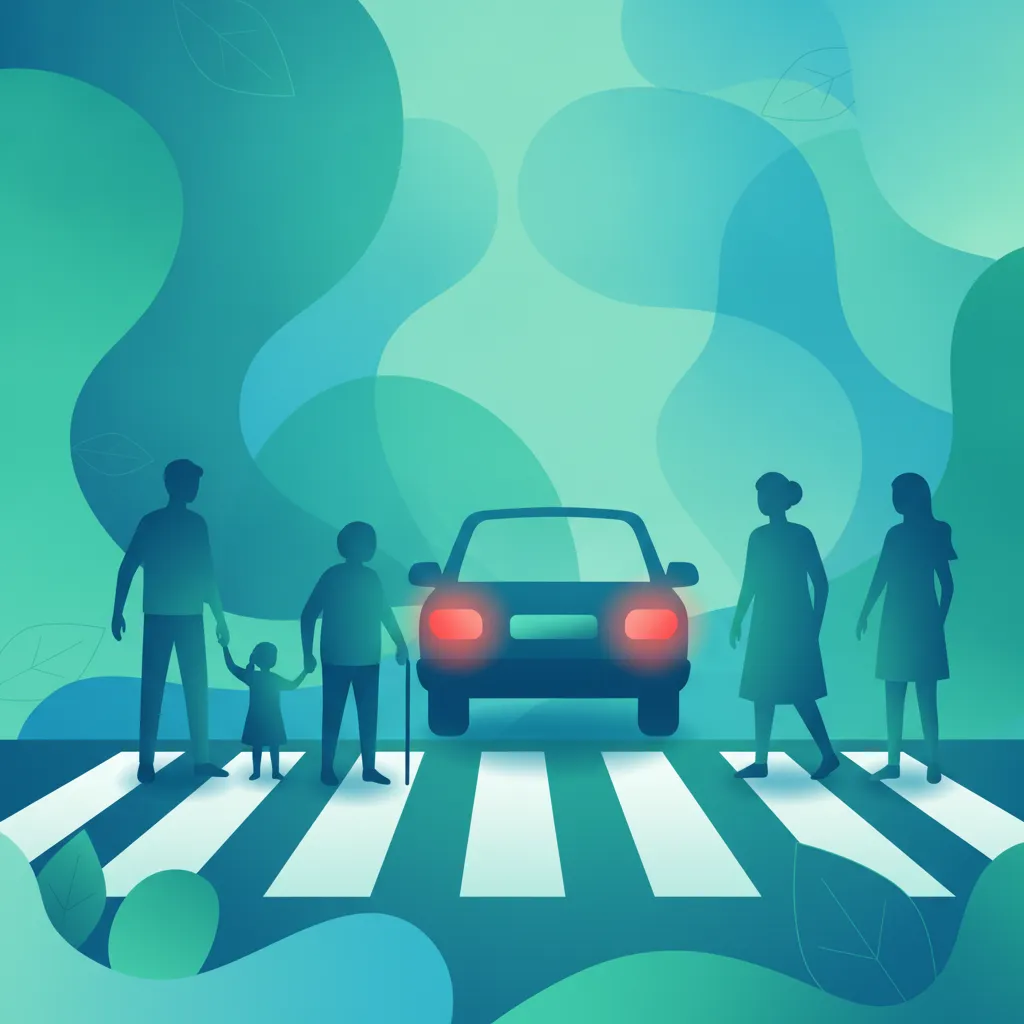
Pedestrians have absolute priority on marked crossings in Austria, and a bus driver must always be ready to give way. This lesson covers the rules for approaching and stopping for pedestrians, and highlights the risk of pedestrians being hidden by the vehicle's structure. It also stresses the danger of passengers crossing the road after alighting from your bus.
This lesson provides specific guidance for sharing the road with different types of vehicles in Austria. It covers the dangers of large vehicle blind spots, the rules for navigating near buses and dedicated tram tracks, and common conflict points at intersections. Understanding the behavior and limitations of other vehicles is key to safely navigating complex urban environments.
This lesson breaks down the overtaking maneuver into a safe, repeatable process: assess, signal, check, move, and return. It emphasizes the importance of ensuring a sufficient gap in oncoming traffic, checking mirrors and blind spots thoroughly, and maintaining a proper speed differential. Adherence to Austrian laws regarding where overtaking is prohibited is also covered in detail.
This lesson addresses the specific danger of right-hand turns, where cyclists and pedestrians in the vehicle's right-side blind spot are at high risk. It covers the defensive driving techniques required, including careful observation, slow speed, and yielding the right-of-way. These procedures are critical for preventing serious accidents in urban areas.

This lesson focuses on the high-risk manoeuvre of overtaking, outlining the strict rules and safety considerations involved. It covers how to assess if an overtaking manoeuvre is necessary, safe, and legal, emphasizing the need for a sufficiently long clear view of the road ahead. Learners will understand the correct procedure, from signaling and accelerating to safely returning to the lane, and will be able to identify signs and markings where overtaking is prohibited.
Find clear answers to common questions learners have about Managing Conflicts with Vulnerable Road Users. Learn how the lesson is structured, which driving theory objectives it supports, and how it fits into the overall learning path of units and curriculum progression in Austria. These explanations help you understand key concepts, lesson flow, and exam focused study goals.
Always maintain a sufficient lateral safety distance. If you are preparing to turn, check your blind spot carefully and never overtake a cyclist immediately before an intersection where you intend to turn.
In Austria, once a pedestrian has clearly indicated their intention to cross at a marked Schutzweg, drivers must stop and yield. However, always exercise caution and look for other road users who might not have stopped.
Treat e-scooter riders with the same caution as cyclists. They are often smaller, move faster than they appear, and can be unpredictable; give them plenty of space and anticipate sudden lane changes.
Covering the brake means moving your foot from the accelerator and positioning it lightly over the brake pedal without applying pressure. It allows for a faster reaction time if a pedestrian or cyclist steps into your path.
Refine your study plan by searching for specific Austrian driving theory practice sets. Pinpoint questions related to particular road rules, signs, or challenge levels, and begin practicing immediately to reinforce your knowledge and excel in your official exam with confidence. Get started with focused revision today.