
This lesson teaches you how to share the road safely with vulnerable groups like pedestrians, cyclists, and e-scooter riders. Mastering these interactions is essential for both your theory exam and becoming a responsible driver in the Austrian traffic environment. You will learn the legal requirements for distancing, overtaking, and navigating shared spaces.

Lesson content overview
Sharing the road safely with all participants is a cornerstone of responsible driving. This lesson, part of the Austrian Driving License B Theory Course, focuses specifically on protecting vulnerable road users (VRUs). These individuals, including pedestrians, cyclists, motorcyclists, e-scooter riders, and persons with reduced mobility, are at a significantly higher risk of severe injury or fatality in the event of a collision due to their lack of protective enclosures.
Understanding and applying the principles of safe interaction, adjusting your speed and position, and adhering to specific legal requirements are crucial for preventing accidents and fostering a respectful traffic environment. This guide will detail the Austrian traffic laws (StVO) that govern these interactions, emphasizing the heightened awareness required to ensure the safety of those most exposed.
Vulnerable Road Users (VRUs) are defined as individuals who share the roadway but lack the physical protection offered by a motor vehicle's structure. This inherent vulnerability means they are disproportionately affected in collisions, suffering more severe consequences even at lower impact speeds. Recognizing who constitutes a VRU and understanding their unique challenges is the first step towards safe road sharing.
The category of Vulnerable Road Users is broad and encompasses a variety of individuals utilizing public roads. It primarily includes:
Drivers must consider the unique characteristics of each VRU subcategory, such as their typical speed, maneuverability, and where they are likely to be found on the road network.
The core reason VRUs require special protection stems from fundamental safety physics and human physiology. When a motor vehicle collides with a VRU, the kinetic energy transferred results in severe injury or death for the VRU, even at relatively low speeds.
Therefore, the Austrian Straßenverkehrsordnung (StVO) places a significant legal and ethical responsibility on drivers of motor vehicles to exercise extra caution and provide additional safety buffers when interacting with all types of vulnerable road users.
Austrian traffic laws are designed to safeguard all road users, with specific provisions aimed at protecting VRUs. Adhering to these regulations is not only a legal obligation but also a critical aspect of safe and responsible driving. Understanding the specific articles of the StVO (Straßenverkehrsordnung) related to overtaking distances, priority at crossings, and speed limits is essential.
When overtaking a vulnerable road user, drivers must maintain a specific lateral distance to ensure their safety and provide sufficient space for unforeseen movements. This required overtaking distance is critical to prevent collisions and is explicitly defined by Austrian law.
The minimum lateral clearance required between a motor vehicle and a vulnerable road user (VRU) while passing them. This distance ensures safety and compliance with Austrian StVO regulations.
These distances are not merely suggestions; they are legally binding minimums under StVO § 31. Drivers must assess the situation carefully and only overtake when these distances can be safely maintained. If there isn't enough space, such as on a narrow road or when opposing traffic is present, overtaking is prohibited. In such cases, drivers must reduce speed and wait for a safe opportunity.
Always consider adverse conditions like strong winds or uneven road surfaces, which might cause a cyclist to swerve. In such situations, it's safer to increase the lateral distance even beyond the legal minimums.
Pedestrians are granted explicit priority at marked pedestrian crossings, also known as zebra crossings. This rule is fundamental to urban traffic safety and is governed by StVO § 32.
Failing to stop for pedestrians at a marked crossing is a serious traffic violation and significantly increases the risk of a severe accident.
Beyond explicit crossings, drivers must also yield to VRUs in other specific situations:
Reducing speed in areas with a high concentration of vulnerable road users is a highly effective way to prevent accidents and mitigate injury severity. The StVO mandates specific reduced speed limits in certain sensitive zones, which drivers must strictly observe.
These reduced speed limits are not merely advisory; they are legally enforced. Drivers must be highly attentive to signage and adapt their speed instantly upon entering such zones. The principle is simple: lower speeds mean shorter stopping distances and more time to react to unpredictable movements from vulnerable road users.
Effectively sharing the road requires understanding how to interact safely with each type of vulnerable road user in various situations. Each scenario presents unique challenges and demands specific driver behaviors to ensure safety.
Pedestrians are the most vulnerable group, with no protection against impact. Drivers must exercise maximum caution when pedestrians are present, particularly at crossing points or in shared spaces.
Cyclists and e-scooter riders share many vulnerabilities, being less visible and less protected than motor vehicles. Their presence requires drivers to be particularly mindful of lane usage, overtaking distances, and priority.
While motorcyclists are motorized, their minimal protection makes them highly vulnerable. Persons with reduced mobility face unique challenges that require heightened driver empathy and caution.
Different road environments present varying challenges for road sharing. Understanding the characteristics and specific rules for each type of zone is crucial for protecting vulnerable road users.
Areas where children live, learn, and play demand an extra layer of vigilance from drivers.
The concept of shared space is an urban design approach where traditional road markings, signs, and traffic lights are minimized or removed, encouraging all users to negotiate priority through mutual respect and eye contact. Pedestrian zones are areas primarily for pedestrians, with limited or no vehicle access.
Safe road sharing with vulnerable users is not static; it requires continuous adaptation to changing environmental conditions and vehicle characteristics. These factors can significantly impact a driver's ability to perceive and react to VRUs.
Adverse weather conditions like rain, fog, snow, or glare drastically reduce visibility and affect vehicle handling, making VRUs even harder to spot and increasing stopping distances.
The type and load of your vehicle also influence how you must interact with vulnerable road users.
Beyond rules and regulations, the most effective way to ensure the safety of vulnerable road users is to cultivate a proactive and defensive driving mindset. This involves anticipating risks, maintaining constant awareness, and prioritizing safety above all else.
Many collisions with VRUs occur because drivers fail to anticipate unexpected actions.
Effective communication, even non-verbal, is vital in shared traffic environments.
To summarize, here are the crucial articles of the Austrian Straßenverkehrsordnung (StVO) that underpin safe road sharing with vulnerable users:
Sharing the road safely with vulnerable users is a fundamental responsibility for every driver in Austria. This lesson has highlighted the critical importance of understanding their unique vulnerabilities and the specific legal obligations mandated by the StVO.
By consistently applying the principles of generous overtaking distances (2m for pedestrians, 1.5m for cyclists/e-scooters), unconditionally yielding at pedestrian crossings, diligently observing special speed limits in sensitive zones like schools, and always exercising heightened vigilance in shared spaces, drivers contribute significantly to a safer and more harmonious traffic environment.
A proactive, defensive driving attitude, coupled with awareness of how weather conditions and vehicle characteristics impact interactions, empowers you to mitigate risks and ensure the safety of everyone on the road. Remember, the goal is not just to avoid collisions, but to foster an atmosphere of mutual respect and protection for those who are most exposed.
This lesson covers the critical Austrian traffic regulations for protecting vulnerable road users (VRUs) including pedestrians, cyclists, e-scooter riders, motorcyclists, and persons with reduced mobility. Learners must memorize the legally binding overtaking distances—2 metres for pedestrians and 1.5 metres for cyclists and e-scooter riders—as specified in StVO §31. Pedestrian crossings grant unconditional priority to walkers under StVO §32, requiring drivers to stop even when pedestrians merely intend to cross. Sensitive zones mandate reduced speeds: 30 km/h in school zones and 20 km/h in pedestrian zones per StVO §41. Beyond rules, the lesson emphasizes defensive driving techniques such as anticipating unpredictable movements, establishing eye contact, scanning blind spots, and adapting behavior for adverse weather and vehicle type to prevent accidents with the most exposed road users.
A short set of high-value points that capture the most important learning from this lesson.
Austrian law mandates a minimum 2-metre lateral distance when overtaking pedestrians and 1.5 metres when overtaking cyclists or e-scooter riders (StVO §31).
Pedestrians have absolute priority at marked zebra crossings (Schutzweg); you must stop even if they are only intending to cross (StVO §32).
School zones enforce a 30 km/h limit and pedestrian zones a 20 km/h limit during designated times to protect vulnerable users.
In shared spaces and pedestrian zones, vehicles have no inherent priority and must proceed at walking pace while yielding to all VRUs.
Defensive driving requires anticipating unpredictable movements from VRUs and establishing eye contact before proceeding in ambiguous situations.
Explore all units and lessons included in this driving theory course.
Minimum overtaking distance: 2m for pedestrians, 1.5m for cyclists and e-scooter riders—these are legal minimums, not suggestions.
Zebra crossings grant pedestrians unconditional priority regardless of traffic signals; stopping is mandatory when they are on or approaching the crossing.
Speed limits in school zones (30 km/h) and pedestrian zones (20 km/h) are strictly enforced and apply even without continuous signage.
In poor visibility (rain, fog, darkness), increase all safety distances significantly as VRUs become much harder to detect.
When turning at any intersection, always check blind spots for cyclists and e-scooter riders who may be proceeding straight through.
Attempting to squeeze past a cyclist or pedestrian when the road is too narrow to maintain the required lateral distance safely.
Failing to stop at zebra crossings when a pedestrian is only approaching with clear intent to cross, believing they must wait until they step onto the road.
Assuming cyclists must stay at the far edge of a lane; they may position themselves centrally for visibility and safety reasons.
Forgetting to reduce speed in school zones outside of obvious school hours, as limits often apply during posted times only.
Not checking mirrors and blind spots thoroughly before turning, especially for motorcyclists and fast-moving cyclists who can appear quickly.
Lesson content overview
A short set of high-value points that capture the most important learning from this lesson.
Austrian law mandates a minimum 2-metre lateral distance when overtaking pedestrians and 1.5 metres when overtaking cyclists or e-scooter riders (StVO §31).
Pedestrians have absolute priority at marked zebra crossings (Schutzweg); you must stop even if they are only intending to cross (StVO §32).
School zones enforce a 30 km/h limit and pedestrian zones a 20 km/h limit during designated times to protect vulnerable users.
In shared spaces and pedestrian zones, vehicles have no inherent priority and must proceed at walking pace while yielding to all VRUs.
Defensive driving requires anticipating unpredictable movements from VRUs and establishing eye contact before proceeding in ambiguous situations.
Explore all units and lessons included in this driving theory course.
Minimum overtaking distance: 2m for pedestrians, 1.5m for cyclists and e-scooter riders—these are legal minimums, not suggestions.
Zebra crossings grant pedestrians unconditional priority regardless of traffic signals; stopping is mandatory when they are on or approaching the crossing.
Speed limits in school zones (30 km/h) and pedestrian zones (20 km/h) are strictly enforced and apply even without continuous signage.
In poor visibility (rain, fog, darkness), increase all safety distances significantly as VRUs become much harder to detect.
When turning at any intersection, always check blind spots for cyclists and e-scooter riders who may be proceeding straight through.
Attempting to squeeze past a cyclist or pedestrian when the road is too narrow to maintain the required lateral distance safely.
Failing to stop at zebra crossings when a pedestrian is only approaching with clear intent to cross, believing they must wait until they step onto the road.
Assuming cyclists must stay at the far edge of a lane; they may position themselves centrally for visibility and safety reasons.
Forgetting to reduce speed in school zones outside of obvious school hours, as limits often apply during posted times only.
Not checking mirrors and blind spots thoroughly before turning, especially for motorcyclists and fast-moving cyclists who can appear quickly.
Explore search topics learners often look for when studying Road Sharing with Vulnerable Users. These topics reflect common questions about road rules, driving situations, safety guidance, and lesson level theory preparation for learners in Austria.
Browse additional driving theory lessons that cover connected traffic rules, road signs, and common driving situations related to this topic. Improve your understanding of how different rules interact across everyday traffic scenarios.
Explore complex real-world scenarios involving vulnerable road users. Learn advanced techniques for safely navigating situations with pedestrians, cyclists, and e-scooters beyond basic rules. Essential for Austrian driving theory.
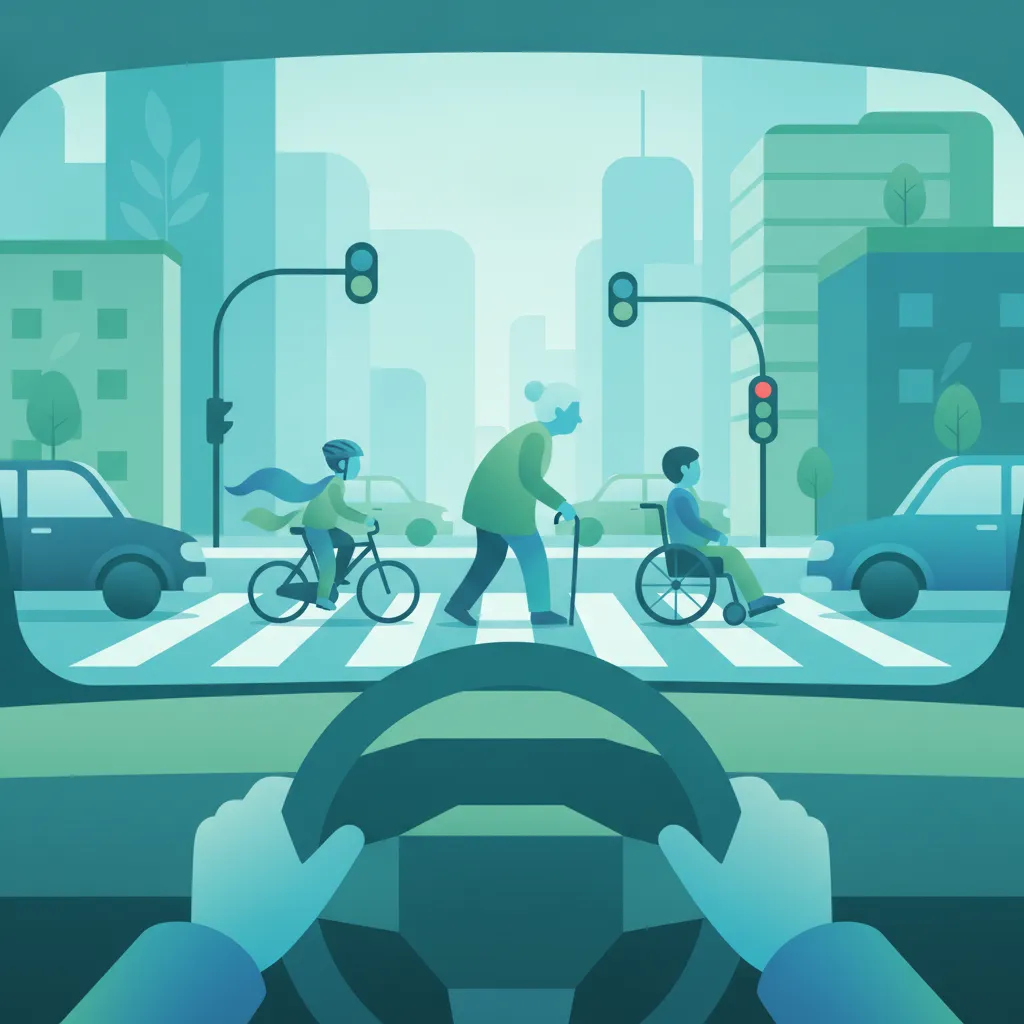
This lesson provides advanced strategies for proactively managing interactions with vulnerable road users to prevent conflicts before they arise. It teaches drivers to predict the likely behavior of pedestrians, cyclists, and e-scooter riders, especially at intersections and in congested areas. Key techniques include maintaining larger safety distances, covering the brake, and making eye contact to ensure mutual awareness and avoid accidents.
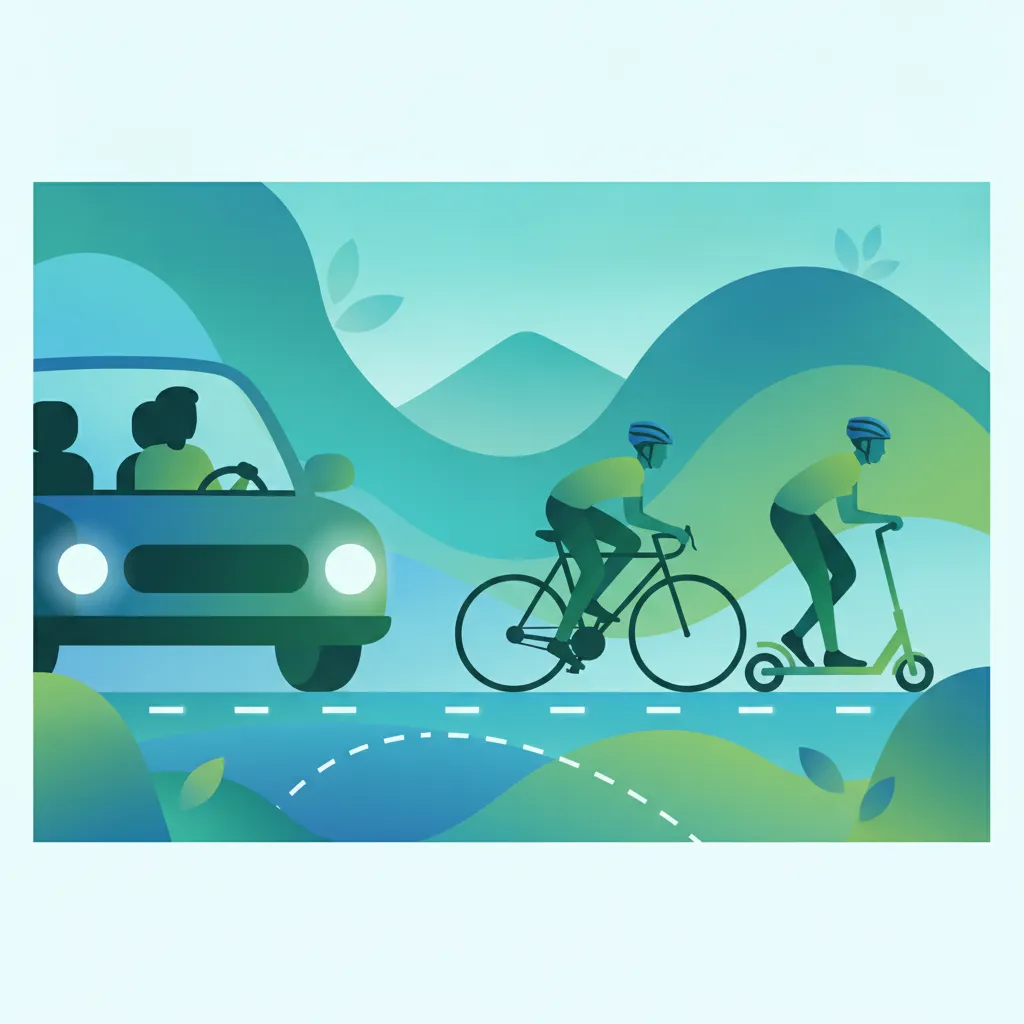
Cyclists and e-scooter riders are highly vulnerable and can be hard to see from a high driving position. This lesson focuses on the critical danger points, such as making right turns across cycle lanes and checking blind spots before pulling away from a stop. It teaches the importance of giving ample space when overtaking and anticipating their movements in busy city traffic.
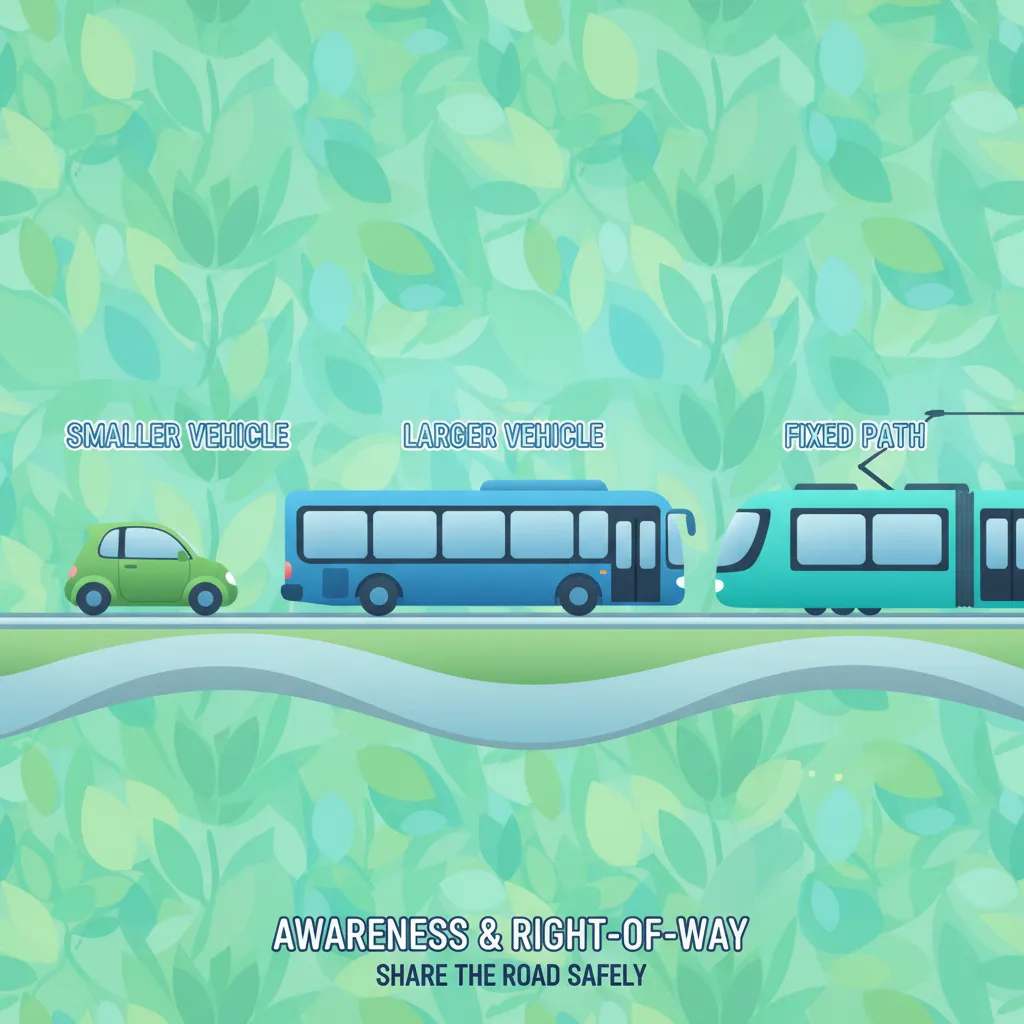
This lesson provides specific guidance for sharing the road with different types of vehicles in Austria. It covers the dangers of large vehicle blind spots, the rules for navigating near buses and dedicated tram tracks, and common conflict points at intersections. Understanding the behavior and limitations of other vehicles is key to safely navigating complex urban environments.
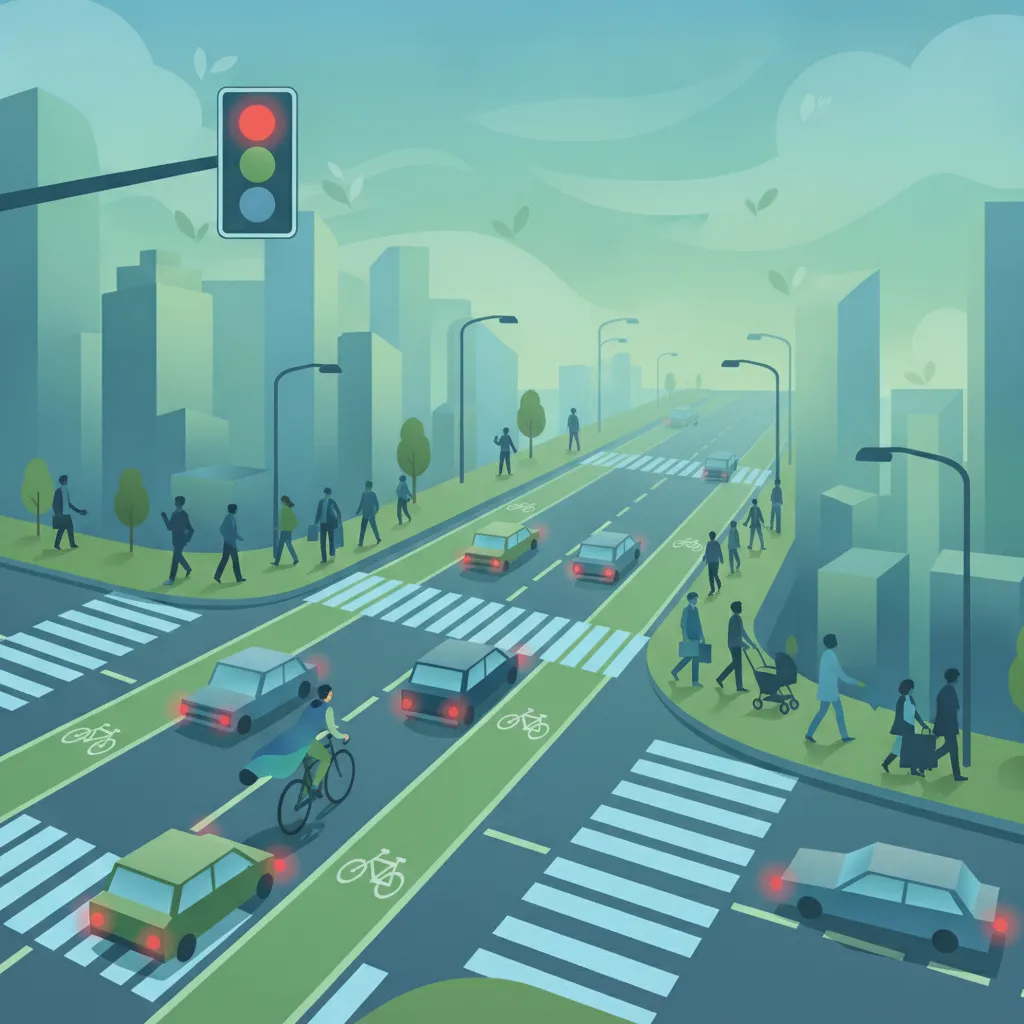
This lesson teaches drivers how to safely coexist with cyclists and pedestrians, who are prevalent in urban areas. It covers the rules for dedicated bike lanes (Radweg), the importance of yielding to pedestrians in designated zones, and the need for extra caution when turning or opening car doors. Maintaining safe overtaking distances and anticipating the movements of these vulnerable road users are key themes for preventing accidents.
This lesson addresses the specific challenges of interacting with larger vehicles like buses and trams in an urban environment. It explains how to signal intentions clearly and predictably to avoid conflicts in shared spaces. Key topics include safely crossing tram tracks and maintaining awareness around public transport stops.
This lesson reinforces the critical importance of protecting vulnerable road users in dense urban settings. It teaches drivers to be hyper-aware of pedestrians and cyclists, especially near intersections and crosswalks. Key techniques include reducing speed, making eye contact to confirm intentions, and giving ample space.
This lesson addresses the unique challenges and priority rules that apply when interacting with public transport and cyclists at intersections. It clarifies the specific right-of-way regulations for trams, which often have priority over other traffic, and the procedures for navigating around bus stops. The content also covers how to safely manage crossings with dedicated bicycle lanes, ensuring the protection of all road users.
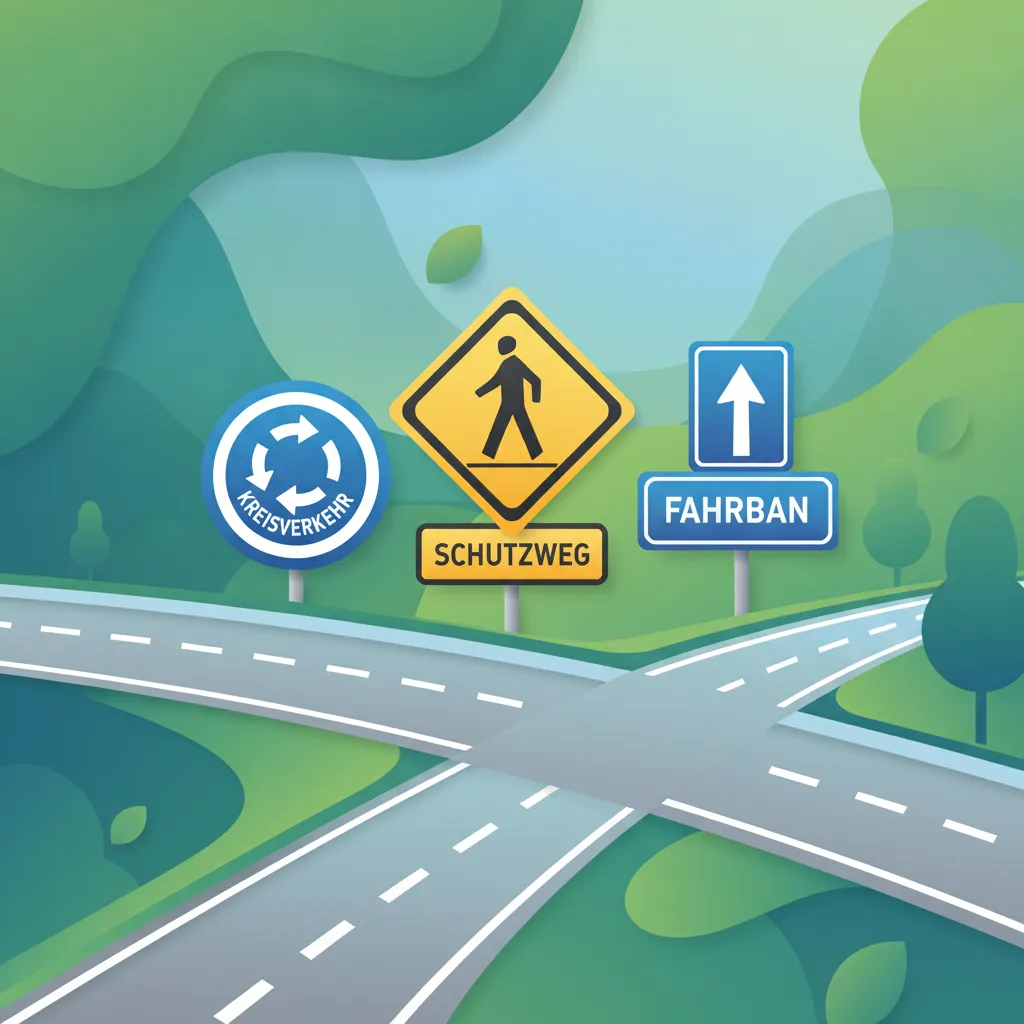
This lesson covers the specific regulations associated with special Austrian road signs and areas. It details the rules for 'Schutzweg' (protected pedestrian crossings), 'Kreisverkehr' (roundabouts), and the distinction between 'Fahrbahn' (road) and 'Fahrstreifen' (lane). Understanding these specific contexts is essential for safe navigation in urban and suburban environments.

This lesson explores the strict regulations governing pedestrian crossings in Austria, particularly marked zebra crossings known as Schutzweg. It emphasizes the absolute priority of pedestrians on these crossings and the driver's legal obligation to stop and allow them to cross safely. The content covers how to approach these areas with caution, the importance of visibility, and the rules at crossings controlled by traffic lights.
This lesson provides advice for navigating popular scenic routes, which often feature heavy traffic, cyclists, and distracted drivers. It emphasizes maintaining focus on the road despite beautiful scenery and anticipating unpredictable actions from other tourists who may stop suddenly. Adopting a patient and defensive mindset is key to safely enjoying these remarkable roads.
Master the specific traffic rules and speed requirements for sensitive areas like school zones, pedestrian crossings, and shared spaces. Learn how Austrian law protects vulnerable road users in these critical environments.
This lesson details the specific regulations and best practices for driving in areas with high pedestrian activity, such as bus stops and school zones. It explains the driver's obligation to stop for school buses with flashing lights and to yield to public buses pulling out from a stop. The content emphasizes the requirement to significantly reduce speed in marked school zones to ensure the safety of children.
This lesson explores the strict regulations governing pedestrian crossings in Austria, particularly marked zebra crossings known as Schutzweg. It emphasizes the absolute priority of pedestrians on these crossings and the driver's legal obligation to stop and allow them to cross safely. The content covers how to approach these areas with caution, the importance of visibility, and the rules at crossings controlled by traffic lights.
This lesson covers the specific regulations associated with special Austrian road signs and areas. It details the rules for 'Schutzweg' (protected pedestrian crossings), 'Kreisverkehr' (roundabouts), and the distinction between 'Fahrbahn' (road) and 'Fahrstreifen' (lane). Understanding these specific contexts is essential for safe navigation in urban and suburban environments.
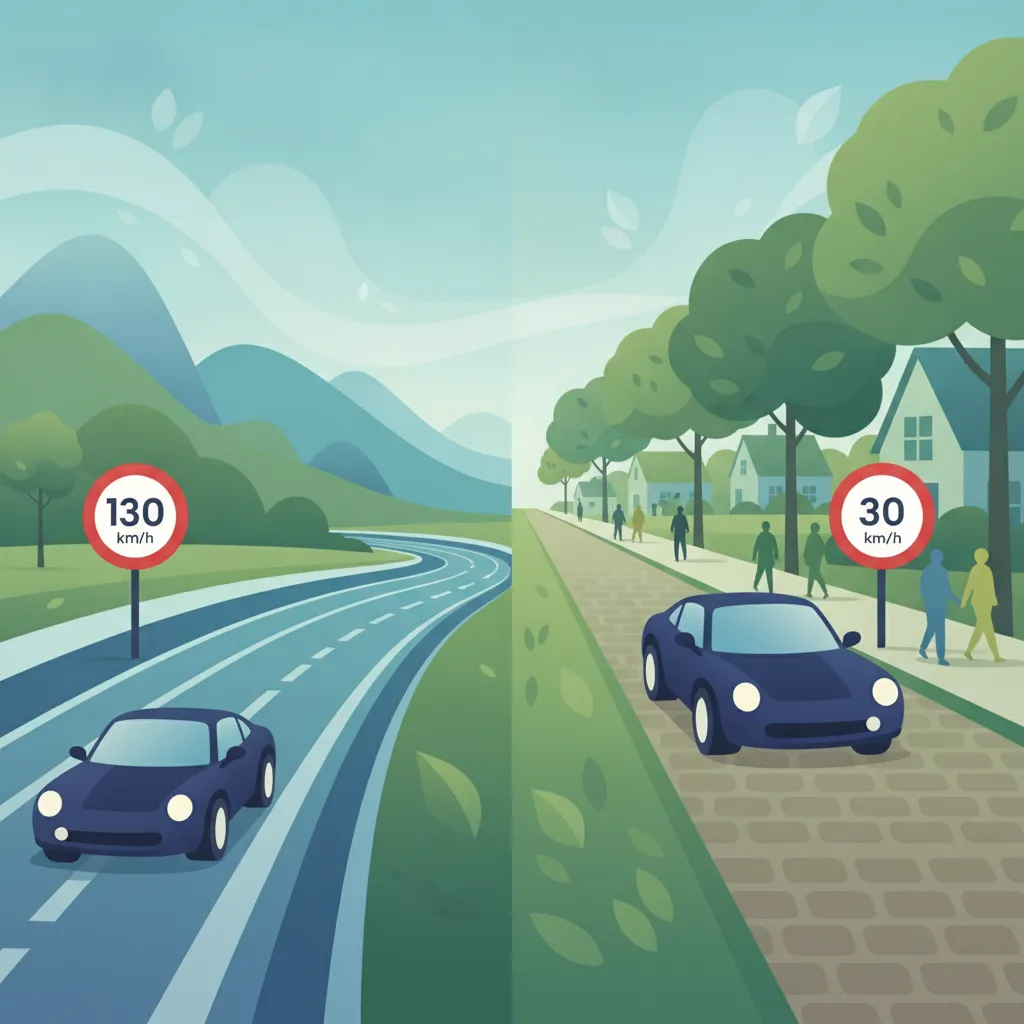
This lesson details the legally prescribed speed limits across Austria's road network, including the specific limits for urban areas (Ortsgebiet), rural roads (Landstraßen), motorways (Autobahnen), and expressways (Schnellstraßen). Learners will understand how to interpret speed limit signs, including those with supplementary conditions. Adherence to these legal requirements is a fundamental aspect of road safety and compliance with the Austrian road traffic act (StVO).

Pedestrians have absolute priority on marked crossings in Austria, and a bus driver must always be ready to give way. This lesson covers the rules for approaching and stopping for pedestrians, and highlights the risk of pedestrians being hidden by the vehicle's structure. It also stresses the danger of passengers crossing the road after alighting from your bus.
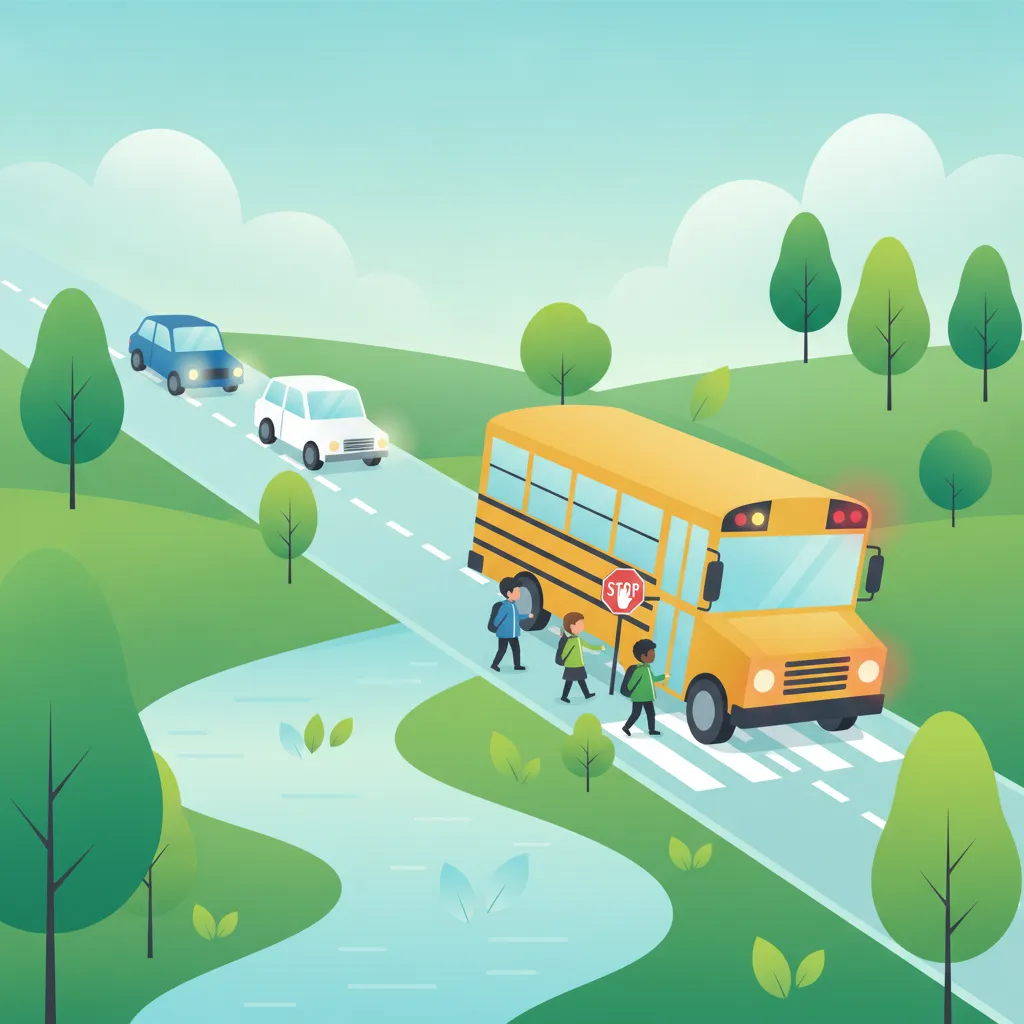
Transporting children carries the highest level of responsibility. This lesson covers the specific Austrian rules for school buses, including the use of warning signs and lights. It focuses on developing a mindset of extreme caution, anticipating that children may run into the road unexpectedly, and managing the chaotic traffic environment often found around schools during drop-off and pick-up times.
This lesson teaches drivers how to safely coexist with cyclists and pedestrians, who are prevalent in urban areas. It covers the rules for dedicated bike lanes (Radweg), the importance of yielding to pedestrians in designated zones, and the need for extra caution when turning or opening car doors. Maintaining safe overtaking distances and anticipating the movements of these vulnerable road users are key themes for preventing accidents.

This lesson provides a comprehensive explanation of Austria's right-of-way laws, which are fundamental to intersection safety. It covers the meaning of different priority signs and clarifies the 'Rechts vor Links' (priority to the right) rule that applies at unmarked junctions. A clear understanding of these rules is essential to prevent conflicts and collisions in urban and rural settings.
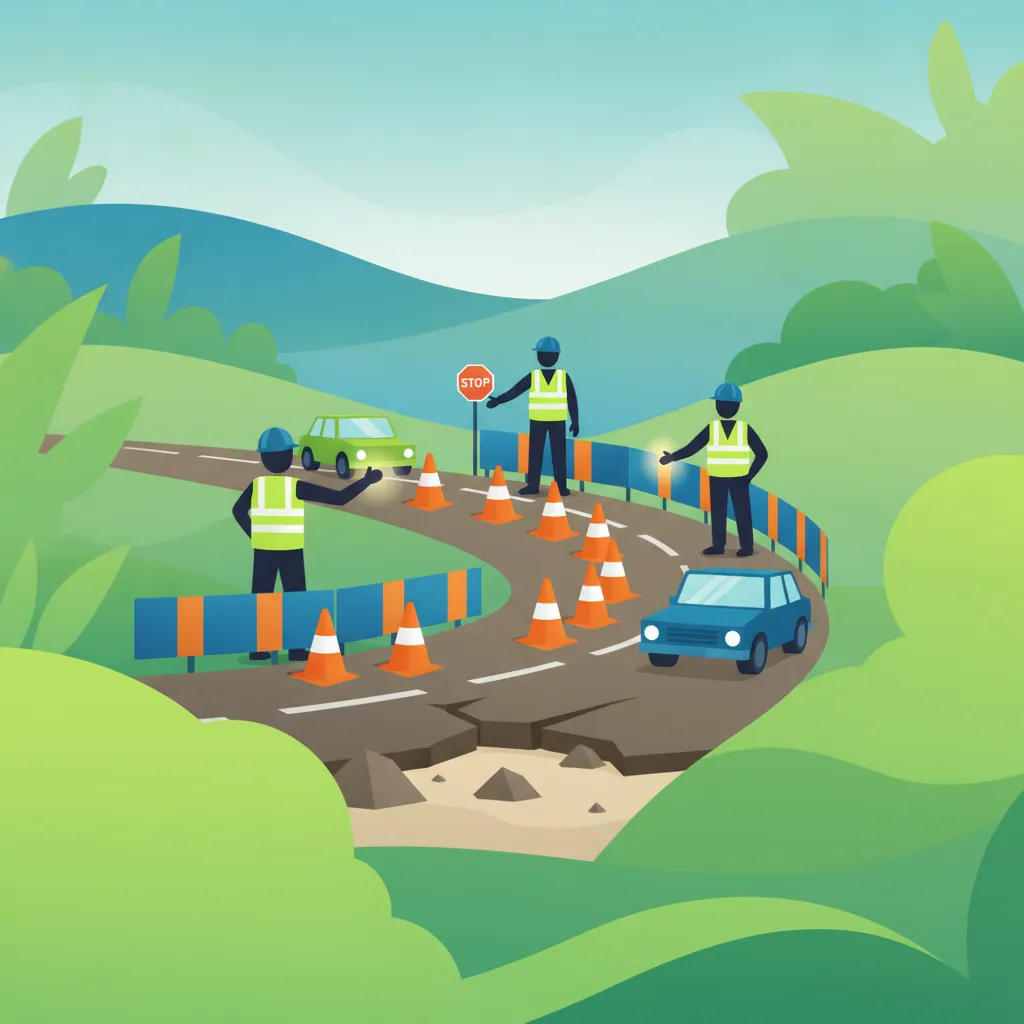
This lesson prepares riders for safely transiting through construction zones ('Baustellen'). It covers the interpretation of temporary signage, adherence to reduced speed limits, and awareness of hazards suchas altered lane markings, abrupt surface changes, and loose gravel. Respecting the safety of road workers and anticipating unpredictable traffic patterns are key themes.

This lesson outlines the legal speed limits for Category AM vehicles in Austria, covering urban, residential, and rural areas. It explains how to identify different speed zones through signage and the importance of adjusting speed based on traffic, weather, and road conditions. Adherence to these limits is a fundamental aspect of both legal compliance and safety.
Find clear answers to common questions learners have about Road Sharing with Vulnerable Users. Learn how the lesson is structured, which driving theory objectives it supports, and how it fits into the overall learning path of units and curriculum progression in Austria. These explanations help you understand key concepts, lesson flow, and exam focused study goals.
On roads outside built-up areas, you must maintain a lateral distance of at least 2 meters when overtaking cyclists. In built-up areas, the distance must be at least 1.5 meters.
Yes, if a pedestrian is waiting or clearly intends to enter the Schutzweg, you must stop early enough to allow them to cross safely. Never overtake or drive around another vehicle that has stopped at a pedestrian crossing.
Under Austrian law, e-scooters are generally treated like bicycles. This means they must use cycle lanes where available and follow the same rules as cyclists regarding priority and road positioning.
The exam often presents hazardous scenarios involving children near school zones. You are expected to demonstrate extreme caution, reduced speed, and readiness to brake, as children are considered unpredictable road users.
Refine your study plan by searching for specific Austrian driving theory practice sets. Pinpoint questions related to particular road rules, signs, or challenge levels, and begin practicing immediately to reinforce your knowledge and excel in your official exam with confidence. Get started with focused revision today.